10 Iconic Street Style Outfits You Can Copy Right Now
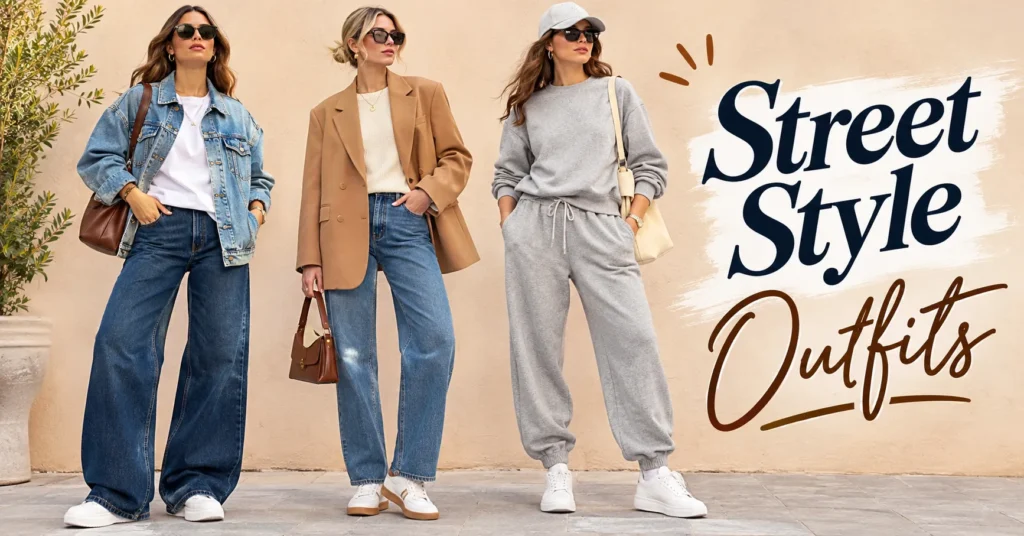
Most people don’t struggle with clothes. They struggle with combinations. You own jeans, sneakers, a jacket, and a stack of T-shirts, yet getting dressed still feels like guesswork. Street style outfits solve that problem. They turn everyday basics into looks that feel deliberate, current, and easy to wear.
This guide breaks down 10 street style outfits you can recreate with pieces you probably already own. Each look includes the exact items, the reason it works, and a way to adapt it. You’ll also get a comparison table, a seasonal guide, and the mistakes that make urban outfits look sloppy instead of styled.
What you’ll learn:
- 10 complete looks, from oversized denim to technical outdoor layers
- The difference between street style and streetwear
- A five-step method to build your own outfits
- How to adapt each look for any season
What Are Street Style Outfits?
Street style outfits are looks built for real life and worn in public spaces like sidewalks, campuses, coffee shops, and fashion week queues. The term describes how people actually dress. Runway fashion shows how designers want clothes to look. Street style shows how people make those clothes work on an ordinary Tuesday.
Where Street Style Came From
Street fashion grew out of subcultures. Skaters, punks, and hip-hop artists in the 1970s and 1980s built their own uniforms from what they could find or afford. Brands followed their lead. Shawn Stussy started Stüssy in California in the early 1980s, and James Jebbia opened the first Supreme store in New York in 1994.
Photographers then turned those looks into a genre. Bill Cunningham documented New Yorkers for The New York Times for decades in his “On the Street” column. In 2005, Scott Schuman launched The Sartorialist, a blog that made street photography a global source of fashion inspiration. Instagram later put the format in everyone’s pocket.
Why Street Style Is the Best Style Reference
Street style shows how trends perform on real bodies in real weather. A runway look is designed for a 30-second walk under perfect lighting. Street style outfits have to survive a commute, a lunch meeting, and eight hours on your feet.
That makes them the most practical reference for building a wardrobe you’ll actually wear. Every look in this guide passes that test.
Save five street style photos you like this week and note which pieces appear in more than one.
Street Style vs. Streetwear: The Key Difference
Street style and streetwear are related but not identical. Streetwear is a clothing category: hoodies, graphic tees, sneakers, and logo-driven pieces from brands like Supreme, Stüssy, and Palace. Street style is a way of dressing that can include streetwear, tailoring, vintage, workwear, or luxury pieces.
| Factor | Street Style | Streetwear |
| What it is | A styling approach | A clothing category |
| Typical pieces | Any mix: blazers, denim, coats, sneakers | Hoodies, graphic tees, sneakers, caps |
| Origin | Everyday dressing captured by photographers | Skate, surf, and hip-hop culture |
| Main goal | Personal expression through combinations | Brand identity and community |
| Example look | Blazer, white tee, straight jeans, loafers | Logo hoodie, cargo pants, Air Force 1s |
The distinction matters when you shop. You can wear streetwear in your street style outfits, but you don’t need a single logo to get the look right. Combinations matter more than labels.
Sort your closet into “streetwear” and “everything else” to see which direction you already lean.
The Three Building Blocks of Great Street Style Outfits
Every strong look relies on three elements: proportion, layering, and footwear. Get these right and simple pieces look intentional. Get them wrong and even expensive clothes look accidental.
Proportion
Proportion is the balance of volume between your top half and bottom half. The classic rule pairs one oversized piece with one fitted piece. A boxy hoodie works with slim trousers. Wide-leg jeans work with a cropped or tucked-in top.
Fully oversized looks also work, with one condition: the fabric must hang well and the hems must land cleanly. Baggy jeans that pool messily over your shoes look careless. Baggy jeans that stack neatly look styled.
Layering
Layering adds depth without new purchases. A hoodie under a coat, an open shirt over a tee, or a vest over a sweater creates visual interest from pieces you already own. Aim for two to three visible layers in cold weather and one to two in warm weather.
Each layer should be slightly longer or shorter than the one beneath it. Equal lengths stacked on top of each other look bulky.
Footwear
Shoes set the tone of the entire outfit. Sneaker culture dominates casual street style: the Nike Air Force 1 (first released in 1982), the Adidas Samba, and the New Balance 550 appear in countless urban outfits. Swap those sneakers for loafers, Chelsea boots, or Dr. Martens 1460 boots, and the same outfit shifts toward sharp, polished, or edgy.
| Essential Piece | Why It Matters | Appears in Outfits |
| White or grey T-shirt | Neutral base under any layer | 1, 3, 4, 5 |
| Straight-leg jeans | Works with nearly every top | 1, 3, 4 |
| Hoodie | Adds casual contrast to tailoring | 2, 4, 6 |
| Statement jacket | Becomes the hero piece | 1, 3, 7, 8 |
| Versatile sneakers | Ties casual looks together | 2, 5, 9, 10 |
Pick the pair of shoes you wear most and plan your first three outfits around it.
10 Street Style Outfits to Copy Right Now
These 10 street style outfits cover casual days, relaxed offices, nights out, and cold weather. Each one lists the pieces, explains the mechanics behind the look, and gives you a way to adapt it.
1. Oversized Denim
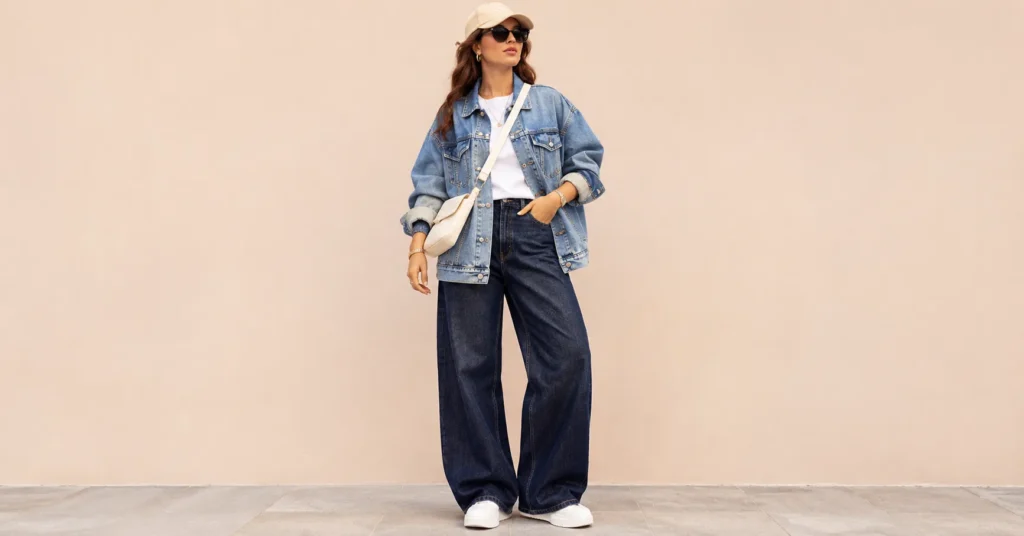
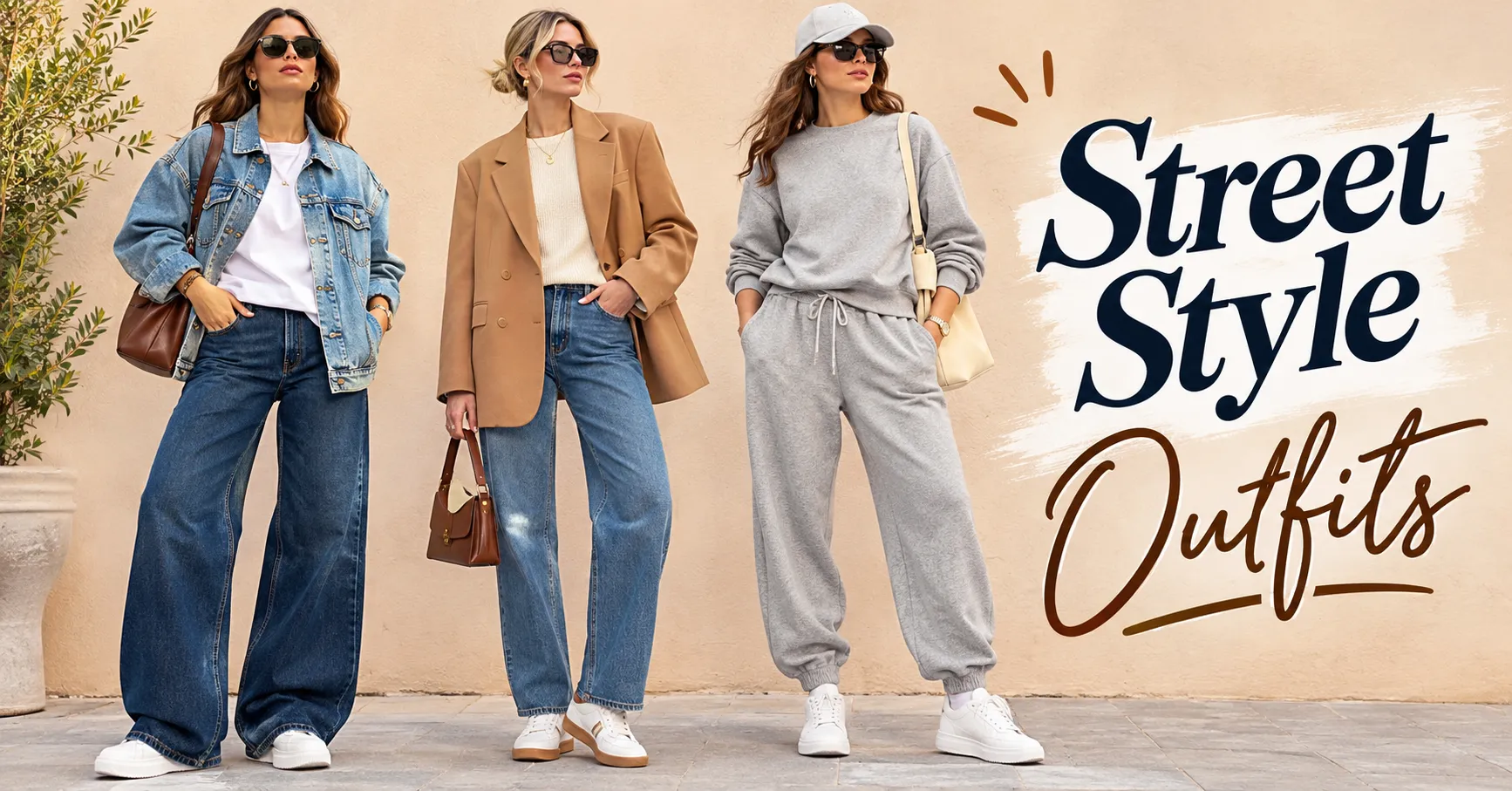
Oversized denim is a relaxed, roomy take on jeans and denim jackets. Wearing denim on top and bottom is called double denim, or the “Canadian tuxedo.”
The pieces: An oversized denim jacket, a white or heather-grey tee, baggy straight or wide-leg jeans in a different wash, chunky sneakers or Dr. Martens boots, and a cap or beanie.
Why it works: Two different washes create contrast, so the outfit doesn’t read as a jumpsuit. Volume on top and bottom creates a deliberate 1990s skate silhouette. Classic straight cuts like the Levi’s 501 or a looser baggy fit both suit this look.
Styling tip: Keep the washes at least one shade apart. A light jacket over dark jeans, or the reverse, works best. Let the jeans stack slightly over your shoes rather than pooling on the floor.
Among street style outfits, double denim is the easiest entry point. You likely own both pieces already.
2. Monochrome Athleisure
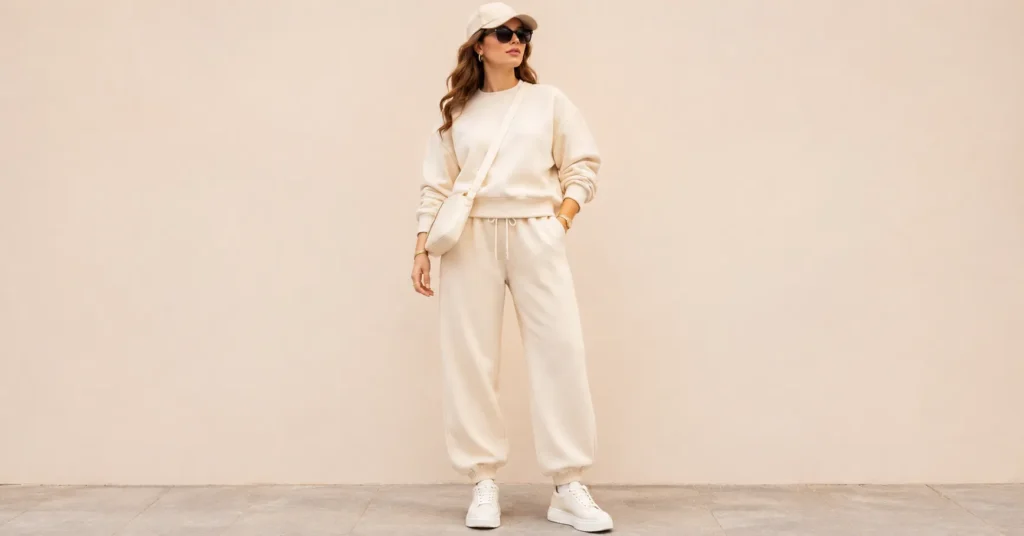
Athleisure is sportswear designed for everyday wear, not just the gym. Monochrome means wearing one colour from head to toe.
The pieces: A matching sweatshirt and joggers in grey, black, cream, or navy, tonal sneakers, a matching cap, and a small crossbody bag.
Why it works: One colour creates a long vertical line that makes you look taller and more put together. Sets like Nike Tech Fleece turned the matching tracksuit into a staple of casual street style. The uniform colour makes comfortable clothes look intentional.
Styling tip: Mix textures to stop the look from falling flat. Pair fleece with a nylon jacket or leather sneakers. In colder months, throw a long wool coat over the set for an instant upgrade.
Monochrome is one of the fastest ways to make casual street style outfits look expensive. It requires no colour matching skill at all.
3. Leather Jacket and Straight Leg Jeans
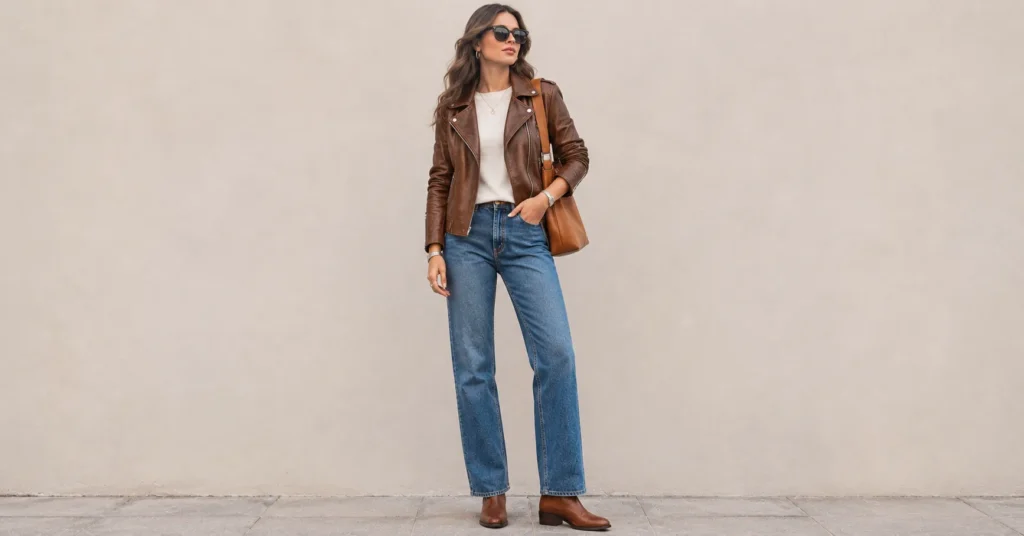
The leather biker jacket is the most enduring piece of rebel style. Schott introduced its Perfecto motorcycle jacket in 1928, and Marlon Brando made the style famous in The Wild One in 1953.
The pieces: A black leather or faux leather biker jacket, a white tee or black hoodie, straight leg jeans in black or mid blue, Chelsea boots or clean white sneakers, and simple silver jewelry.
Why it works: The jacket’s structure gives the outfit shape, while the plain tee keeps it relaxed. The straight leg balances the jacket’s sharp shoulders. It’s a formula that hasn’t changed in decades because it doesn’t need to.
Styling tip: Fit makes or breaks this look. The jacket should end at your hip, and the shoulder seams should sit at the edge of your shoulders. A jacket that’s too long or too boxy loses its edge.
Leather jackets anchor street style outfits for nights out, concerts, and cool autumn weekends.
4. Tailored Blazer with Casual Basics
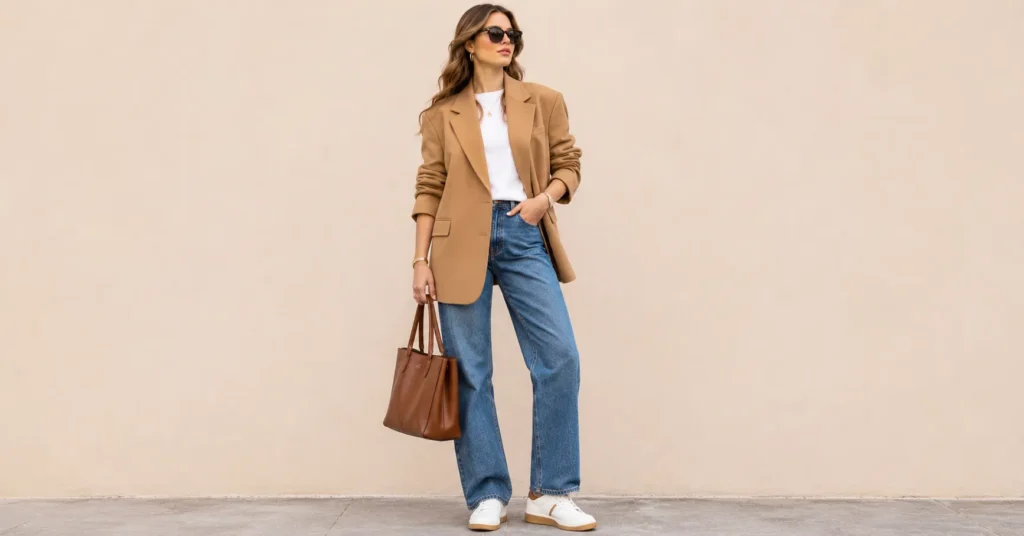
This outfit mixes tailoring (structured, fitted clothing) with casual pieces. Stylists call it high-low dressing, and it’s a fixture outside every major fashion week.
The pieces: A relaxed or oversized blazer in black, grey, or camel, a white tee or a hoodie, straight jeans or wide leg trousers, loafers or Adidas Sambas, and a leather tote.
Why it works: The contrast between formal and casual creates tension, and tension makes an outfit memorable. The blazer adds polish. The tee and sneakers keep it from looking stiff.
Styling tip: Push the sleeves up slightly to show your wrists. For an edgier version, layer the blazer over a hoodie with the hood pulled out over the collar.
It’s one of the most versatile street style outfits for offices with relaxed dress codes. Swap the sneakers for loafers on days with client meetings.
5. Graphic Tee and Cargo Pants
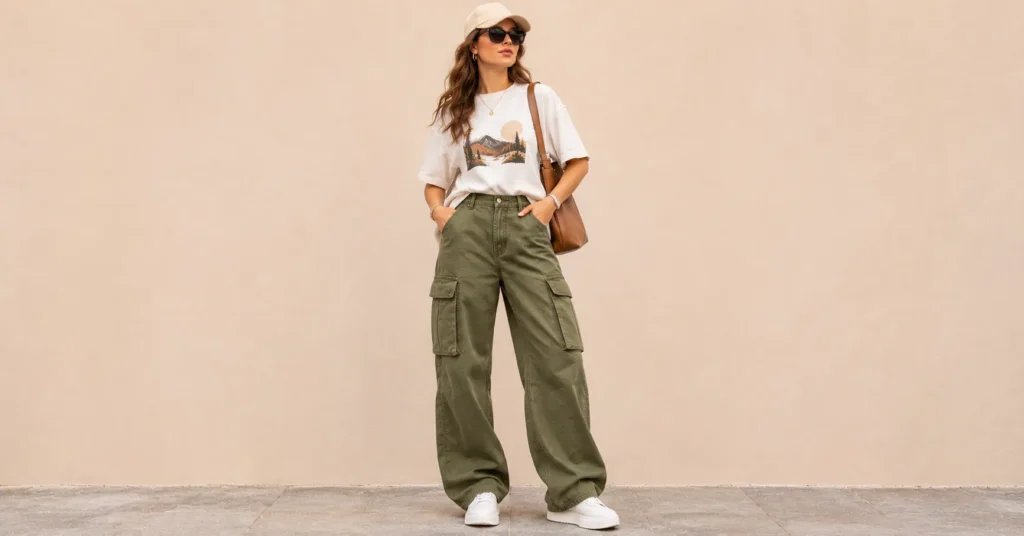
Cargo pants are utility trousers with large patch pockets on the thighs. The British Army introduced them in the late 1930s, and skaters and hip-hop artists adopted them in the 1990s.
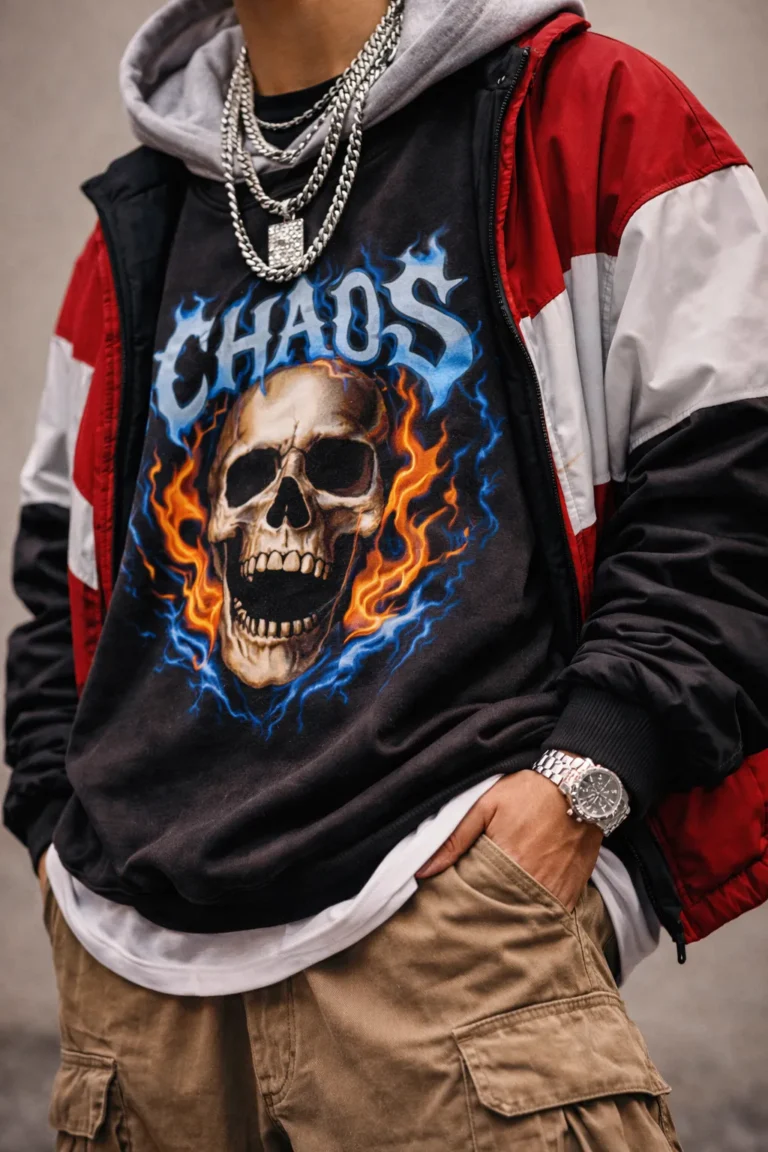
The pieces: A boxy graphic tee (band, vintage, or art print), cargo pants in olive, black, or khaki, Air Force 1s or skate shoes, a fitted cap, and a small shoulder bag.
Why it works: The boxy tee balances the width of the cargo pants. The utility details add texture and function, and the graphic adds personality. This look sits at the center of the Y2K revival in street fashion.
Styling tip: Choose graphics that mean something to you. A vintage tee from a band you love looks personal. A generic slogan tee looks like a costume.
This is one of the most comfortable street style outfits on the list. It works for travel days, festivals, and errands.
6. Hoodie Under a Long Coat
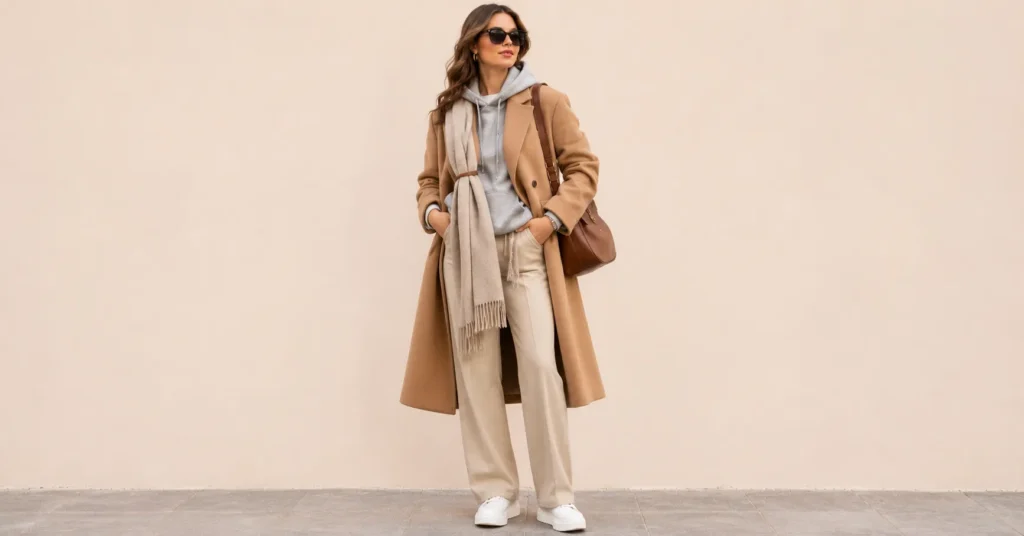
Layering a hoodie under a tailored overcoat is a cold-weather staple across fashion weeks in New York, London, Milan, and Paris. It’s sportswear and tailoring in a single look.
The pieces: A long wool overcoat in camel, grey, or black, a mid-weight hoodie, slim or straight trousers, leather boots or minimal sneakers, and a wool scarf.
Why it works: The hood breaks up the formality of the coat’s lapels and frames your face. The coat’s length creates a strong vertical line. The result looks polished but approachable.
Styling tip: Pull the hood out so it sits flat over the coat collar. Buy the coat one size up if you plan to layer heavy hoodies, or check that the shoulders don’t pull when you reach forward.
Few street style outfits deliver this much polish for so little effort. It’s the default winter commute uniform for good reason.
7. Bomber Jacket and Pleated Trousers
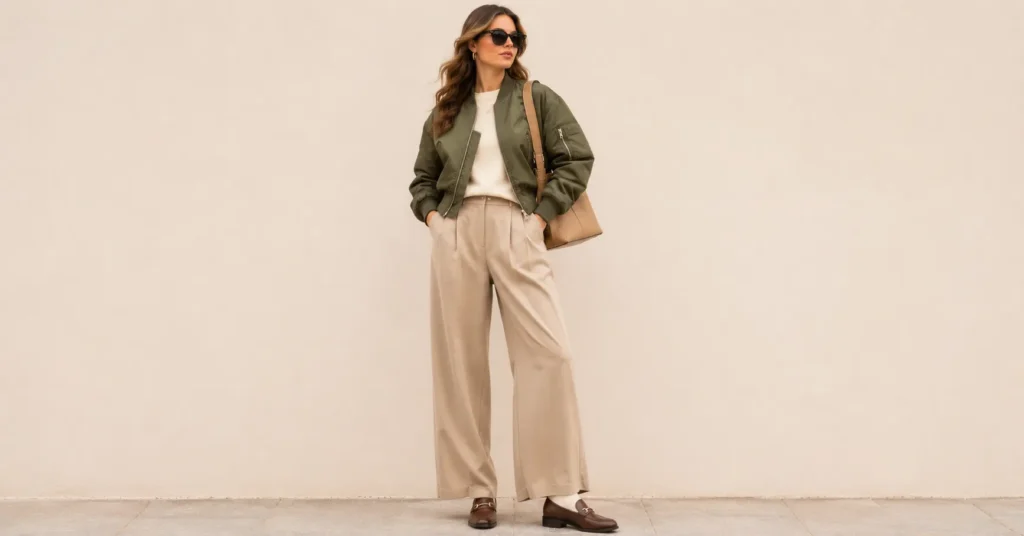
A bomber jacket (also called a flight jacket) is a short, zip-front jacket with ribbed cuffs and a ribbed hem. The MA-1 version was developed for U.S. Air Force pilots in the 1950s, and Alpha Industries still produces it today.
The pieces: An MA-1 bomber in olive or black, a knit polo or fine crewneck sweater, pleated wide-leg trousers, loafers or retro runners, and visible white or patterned socks.
Why it works: The bomber ends at your waist, which shows off the drape of the pleated trousers. Pleats (folds stitched at the waistband) add room through the hips and create a fluid shape. Military casual meets tailored relaxed.
Styling tip: Choose trousers with a slight crop so your socks show. That small detail makes the outfit look styled rather than borrowed from an office.
Bomber looks are among the best street style outfits for spring and early autumn.
8. Workwear Layers
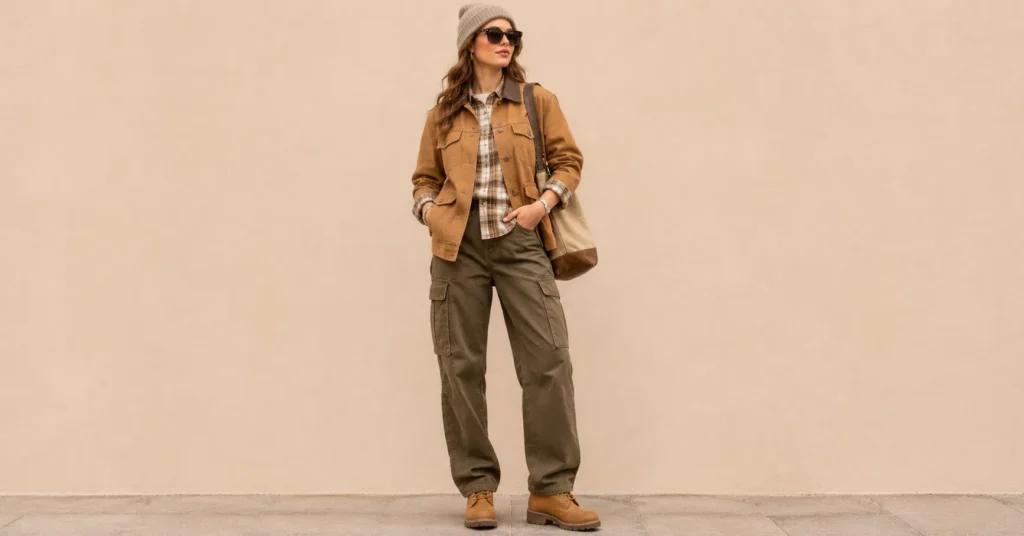
Workwear is clothing originally designed for manual labor, made from durable cotton canvas with reinforced seams. Carhartt (founded in Detroit in 1889) and Dickies (founded in Texas in 1922) are the core brands behind the trend.
The pieces: A canvas chore coat or Carhartt Detroit jacket, a flannel shirt or thermal top, Dickies 874 work pants or carpenter jeans, work boots like the Red Wing Moc Toe or Timberland 6-inch, and a ribbed beanie.
Why it works: Earth tones like brown, tan, and olive pair together naturally. Heavy fabrics hold their shape and look better as they age. The look feels honest and practical.
Styling tip: Keep the colours earthy and the fits relaxed. Avoid mixing workwear with flashy logos, which clashes with its utilitarian roots.
Workwear-based street style outfits last for years, since the fabrics are built to take a beating.
9. Midi Skirt with Chunky Sneakers
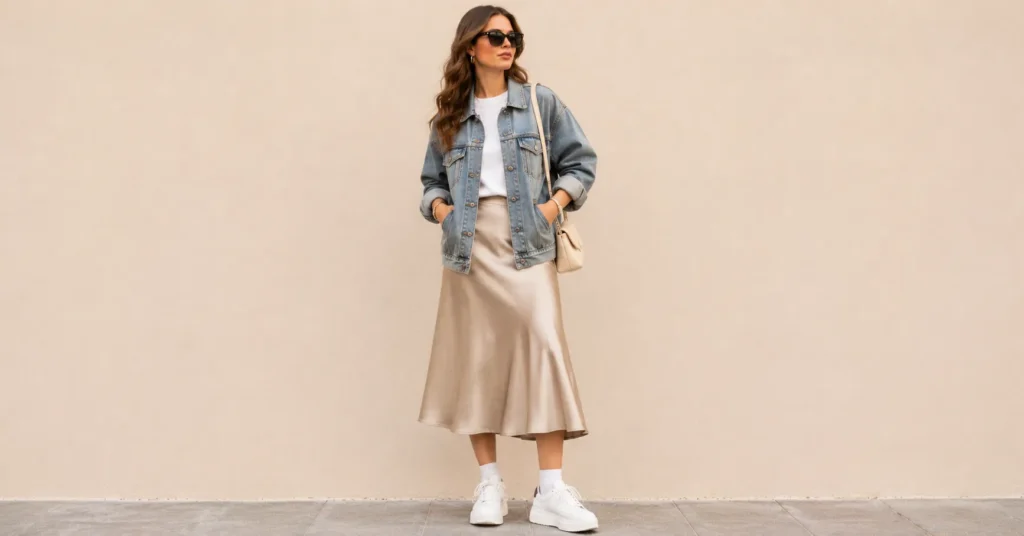
Pairing a soft, feminine skirt with chunky sneakers creates contrast. Soft meets sporty, and the outfit stays walkable all day.
The pieces: A satin slip skirt or pleated midi skirt, a fitted baby tee or chunky knit, an oversized leather or denim jacket, chunky sneakers like the New Balance 9060 or slim Adidas Sambas, and ankle socks.
Why it works: The sneakers ground the skirt and stop it from looking too formal. The oversized jacket adds structure on top. It’s the dress-down approach to pieces normally saved for evenings.
Styling tip: Balance the volume. A flowing skirt works best with a fitted top, while a sleek slip skirt can handle a chunky knit.
This is one of the most flattering street style outfits for warm city days and weekend brunches.
10. Gorpcore Technical Layers
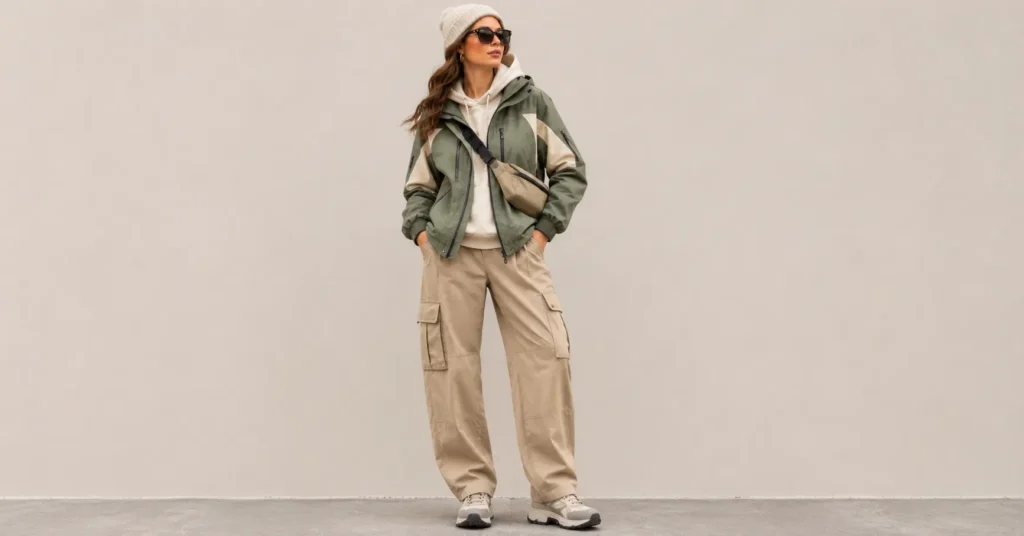
Gorpcore is a trend that turns outdoor and hiking gear into everyday fashion. New York Magazine’s The Cut popularized the term in 2017. “Gorp” is slang for trail mix (good old raisins and peanuts).
The pieces: A technical shell jacket from Arc’teryx or The North Face, or a Patagonia fleece, nylon or cargo trousers, trail runners like the Salomon XT-6, a beanie, and a sling bag.
Why it works: Every piece is functional. The gear is waterproof, breathable, and built for weather. Bold colour-blocking and technical details add visual interest without trying too hard.
Styling tip: Mix one technical piece with regular basics for city wear. A shell jacket over jeans and a hoodie looks urban. Head-to-toe hiking gear looks like you got lost on the way to a trail.
Gorpcore-inspired street style outfits are the most practical choice for rainy cities.
Pick two of these looks that fit your weekly routine and recreate them with what you own before you buy anything new.
Street Style Outfits Comparison Table
This table compares all 10 street style outfits by vibe, occasion, and effort. Use it to match a look to your plans in seconds.
| # | Outfit | Vibe | Best Occasion | Key Pieces | Footwear | Effort Level |
| 1 | Oversized denim | 90s skate | Weekends, errands | Denim jacket, baggy jeans | Chunky sneakers, Dr. Martens | Easy |
| 2 | Monochrome athleisure | Clean, sporty | Travel, casual days | Matching sweat set | Tonal sneakers | Easy |
| 3 | Leather jacket and jeans | Edgy, classic | Nights out, concerts | Biker jacket, straight jeans | Chelsea boots | Easy |
| 4 | Blazer with basics | Polished, high-low | Relaxed office | Blazer, tee, jeans | Loafers, Sambas | Medium |
| 5 | Graphic tee and cargos | Y2K, relaxed | Festivals, travel | Graphic tee, cargo pants | Air Force 1s | Easy |
| 6 | Hoodie under coat | Smart-casual | Winter commute | Overcoat, hoodie | Boots, minimal sneakers | Medium |
| 7 | Bomber and pleats | Military-tailored | Spring, autumn | MA-1 bomber, pleated trousers | Loafers, retro runners | Medium |
| 8 | Workwear layers | Rugged, earthy | Weekends, outdoor plans | Chore coat, work pants | Work boots | Medium |
| 9 | Midi skirt and sneakers | Soft meets sporty | Brunch, city days | Slip skirt, oversized jacket | Chunky sneakers | Medium |
| 10 | Gorpcore layers | Technical, outdoorsy | Rainy days | Shell jacket, nylon pants | Trail runners | Medium |
Screenshot this table and check it the next time you’re stuck in front of your closet.
How to Build Your Own Street Style Outfits
Building your own street style outfits is a repeatable process. Once you learn the method, you stop copying looks and start creating them.
Follow these five steps:
- Choose a hero piece. Start with one item you want to show off, such as a jacket, a pair of sneakers, or a graphic tee. Everything else supports it.
- Balance the proportions. Pair oversized with fitted, or commit to full volume with clean hems. Check your silhouette in a full-length mirror.
- Limit your palette to three colours. Two neutrals plus one accent colour keeps the outfit cohesive. Black, white, and olive is a reliable starting point.
- Add one texture contrast. Mix denim with leather, fleece with nylon, or knit with canvas. Texture makes a simple outfit look considered.
- Finish with shoes and one accessory. Choose footwear that matches the outfit’s mood, then add a single accessory like a cap, bag, or chain. More than two accessories competes with the hero piece.
Start with a Street Style Capsule Wardrobe
A capsule wardrobe is a small collection of interchangeable pieces that mix easily. A well-planned capsule of 15 items can produce more than 30 distinct looks.
| Category | Quantity | Suggested Pieces |
| Tops | 4 | White tee, grey tee, graphic tee, hoodie |
| Bottoms | 3 | Straight jeans, cargo pants, wide trousers |
| Outerwear | 3 | Denim jacket, leather or bomber jacket, long coat |
| Footwear | 3 | White sneakers, boots, loafers or retro runners |
| Accessories | 2 | Cap or beanie, crossbody bag |
Build from neutrals first. Add colour and trend pieces only after the basics are in place.
Write down the 15 capsule items you already own, then mark the gaps you need to fill.
How to Adapt Street Style Outfits for Every Season
Season changes the fabrics and layers, not the formulas. The same proportion and palette rules apply all year. Only the weight of the clothing shifts.
| Season | Key Layers | Best Fabrics | Footwear | Best Outfits From This Guide |
| Spring | Light jackets, open shirts | Cotton, denim, light nylon | Sambas, retro runners | Bomber and pleats, oversized denim |
| Summer | Single layer, tees | Linen, cotton jersey | Canvas sneakers, sandals | Graphic tee and cargos, midi skirt |
| Autumn | Jackets over knits | Leather, flannel, canvas | Chelsea boots, work boots | Leather jacket, workwear layers |
| Winter | Coats over hoodies | Wool, fleece, technical shells | Boots, trail runners | Hoodie under coat, gorpcore |
In summer, cut the layers and rely on proportion and accessories. In winter, the coat becomes your hero piece, since it’s the only item most people see.
Pick one outfit per season from the table and plan your next purchase around the season ahead.
Common Mistakes That Ruin Street Style Outfits
Small errors make well-chosen pieces look careless. Each one below has a simple fix.
Wearing too many logos. Three branded pieces in one outfit compete for attention. Limit yourself to one visible logo and let the rest stay plain.
Ignoring fit. Oversized is a deliberate choice, not an excuse for the wrong size. Shoulders, sleeve length, and hem length still matter in relaxed fits.
Wearing dirty sneakers. Scuffed white sneakers drag down an entire outfit. Clean them weekly with a sneaker cleaning kit like Jason Markk, or a soft brush and mild soap.
Chasing every trend at once. Combining micro-trends in one outfit looks like a costume. Pair one trend piece with timeless basics.
Skipping basic tailoring. Hemming jeans or taking in a jacket waist costs little and changes everything. A tailor can make affordable pieces look custom.
Copying a look exactly. Inspiration works best as a starting point. Swap at least one piece for something that reflects your personality.
Review your last three outfits against this list. One fix usually upgrades the whole rotation.
Where to Find Street Fashion Inspiration
Fashion inspiration is everywhere once you know where to look. The best sources show real people in real settings, not edited campaign images.
Fashion Weeks and Trade Shows
Street style photographers gather outside the major fashion weeks in New York, London, Milan, Paris, and Copenhagen. Pitti Uomo, a menswear trade fair held twice a year in Florence, is famous for its tailored street looks. Vogue Runway publishes street style galleries from each event.
City Style Hubs
Tokyo’s Harajuku and Shibuya districts set global trends in layering and colour. Copenhagen is known for practical, minimalist looks built for cycling. Seoul’s street fashion blends tailoring with oversized streetwear.
Digital Sources
Pinterest boards let you collect looks by theme. Instagram accounts from street style photographers show trends weeks before they reach stores. The Sartorialist archive still offers nearly two decades of reference images.
Use inspiration with a clear process:
- Save 20 looks you like over two weeks.
- Identify repeat pieces that show up in at least five of them.
- Shop your closet for those pieces before buying anything new.
Create a Pinterest board today called “My Street Style” and save your first five looks.
Conclusion
Great street style outfits come down to three skills: balancing proportions, layering with purpose, and choosing shoes that set the tone. The 10 looks in this guide range from oversized denim and monochrome athleisure to workwear and gorpcore, and each one works with pieces you can find in most closets.
Here’s what to remember:
- Start with a hero piece and build around it.
- Keep your palette to three colours and add one texture contrast.
- Prioritize fit, even in oversized looks.
Choose one outfit from this guide, build it from your own wardrobe this week, and take a mirror photo to see what works.
Frequently Asked Questions about Street Style Outfits
What are street style outfits?
Street style outfits are everyday looks worn in public spaces and often captured by photographers. They mix casual pieces, tailoring, streetwear, and vintage. The focus is on personal combinations rather than runway trends.
How do I start dressing in street style?
Start with neutral basics: white tees, straight jeans, a hoodie, a statement jacket, and clean sneakers. Learn to balance oversized and fitted pieces. Add trend items only once your foundation is in place.
What shoes go with street style outfits?
The Nike Air Force 1, Adidas Samba, and New Balance 550 are the most versatile sneaker choices. Chelsea boots, Dr. Martens, and loafers work for sharper or edgier looks. Match the shoe to the mood of the outfit.
Is street style the same as streetwear?
No. Streetwear is a clothing category rooted in skate and hip-hop culture, like hoodies and graphic tees. Street style is a way of dressing that can include streetwear alongside tailoring, workwear, or luxury pieces.
Can I wear street style to work?
Yes, in offices with relaxed dress codes. A tailored blazer over a tee with straight jeans and loafers works well. Avoid loud graphics and heavily distressed denim in professional settings.
How do I make cheap clothes look stylish?
Focus on fit and condition. Hem trousers, steam wrinkles, and keep sneakers clean. Simple pieces in neutral colours look more expensive than trend heavy items.
What colours work best for urban outfits?
Black, white, grey, navy, olive, and camel form the base of most urban outfits. Add one accent colour per look. Monochrome outfits in a single neutral look polished with no colour-matching required.
How many pieces do I need for a street style wardrobe?
A capsule of about 15 well chosen items can produce more than 30 outfits. Include four tops, three bottoms, three outerwear pieces, three pairs of shoes, and two accessories.