Timeless Old Hollywood Outfits: 13 Glamorous Looks to Recreate the Golden Age
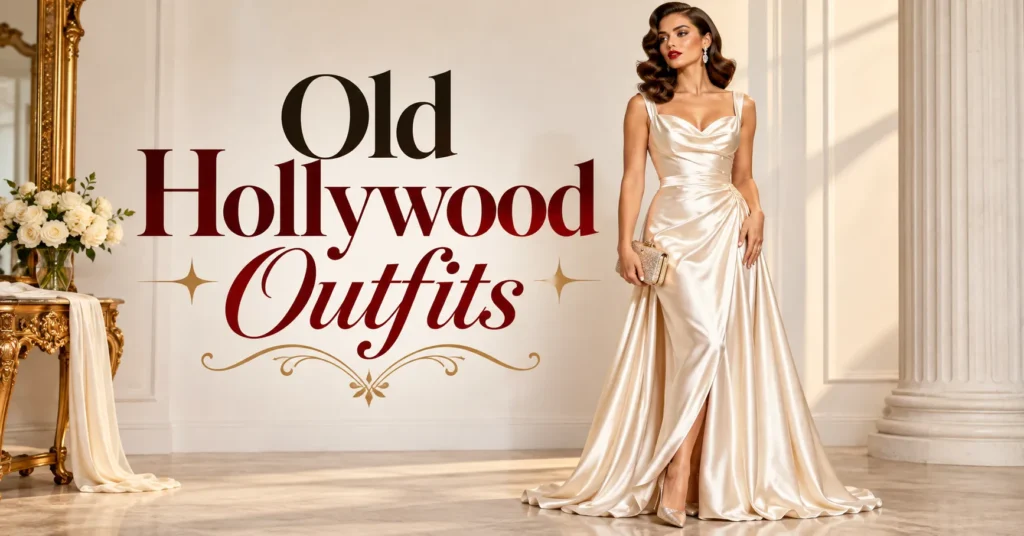
Old Hollywood outfits are built on structure and restraint. The style borrows from the film era roughly between the late 1920s and the early 1960s, when studio wardrobe departments dressed actors to look polished under bright lights. If you have ever admired the sculpted silhouettes and quiet drama of that period, you have already noticed the core idea at work. This guide breaks Old Hollywood outfits down into 13 ideas you can copy, adapt, and build on. Each idea explains what to wear, why it works, and how to make it your own without a studio budget.
The appeal of Old Hollywood outfits is not a single garment. It is a set of repeatable choices: clean lines, defined waists, and one point of glamour rather than many. Once you understand those choices, the looks become far easier to assemble.
What Defines Old Hollywood Outfits
Old Hollywood outfits reward polish over volume. The silhouette stays deliberate, the fabrics stay rich, and the finishing details stay controlled.
This does not mean the style is showy. It means glamour is concentrated in one place a neckline, a fabric, or a single accessory rather than spread across the whole outfit. A satin gown with bare accessories often reads as more authentic than a heavily embellished one.
The key distinction is this: modern eveningwear tends to layer effects, while the classic Hollywood look isolates a single focal point. Both approaches produce a dressed outfit. Only one produces the measured drama associated with Golden Age glamour.
Here are the traits that define the look:
- Defined silhouette nipped waists, structured shoulders, and clean lines.
- Luxe fabrics satin, silk, velvet, crepe, and lace.
- Controlled color black, ivory, red, gold, and deep jewel tones.
- One focal point a single statement piece, not several competing ones.
- Groomed finish sleek hair, red lips, and minimal but precise makeup.
The Role of Fit and Structure
Fit carries most of the weight in Old Hollywood outfits. The garments of the era relied on tailoring, boning, and bias cuts to shape the body rather than fabric alone.
This does not require vintage clothing. A modern bias cut dress or a well-tailored jacket can produce the same line. What matters is that the piece follows the body’s shape rather than hanging away from it.
Importantly, structure does not mean discomfort. Many period silhouettes can be recreated with contemporary construction that moves more easily than original garments did.
The Old Hollywood Color Palette at a Glance
Color discipline holds the style together. The table below shows how a restrained base supports occasional richer tones.
| Category | Core Colors | Role in the Outfit | Frequency |
| Base | Black, ivory, champagne | Foundation of most looks | Daily |
| Statement | Red, emerald, sapphire | One controlled focal color | Frequent |
| Metallic | Gold, silver, bronze | Adds shine and depth | Occasional |
| Neutral support | Grey, navy, blush | Softens the palette | Occasional |
| Texture | Deep burgundy, plum | Reads as richness in velvet | Occasional |
Keep statement tones concentrated. When most of the outfit stays restrained, a single red gown or a gold clutch reads as intentional rather than loud.
13 Old Hollywood Outfits to Recreate
Each outfit below follows the same logic. Start with a structured base, add one glamorous element, and finish with groomed, restrained details. You can adapt these Old Hollywood outfits for weddings, parties, themed events, or everyday wear with minor changes.
1. The Bias Cut Satin Gown
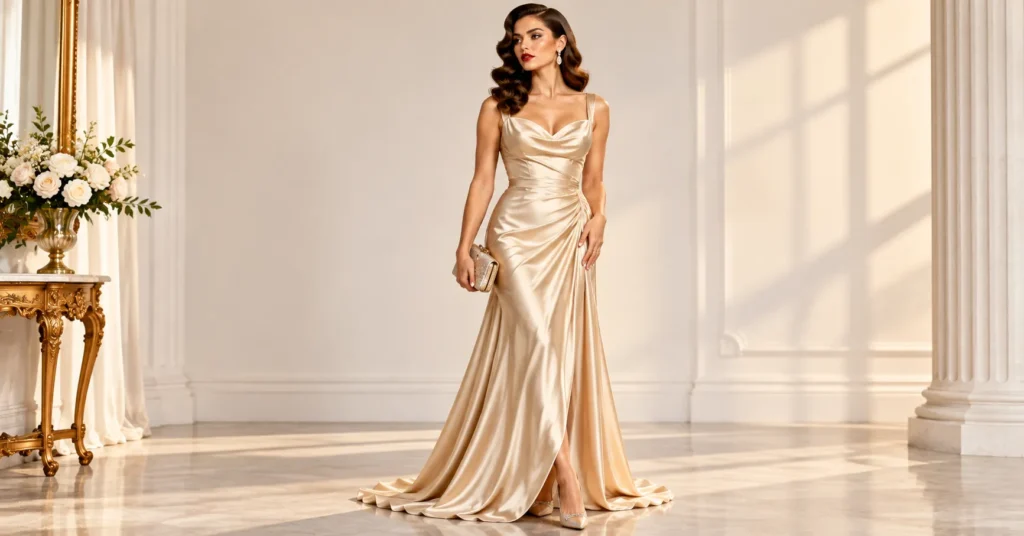
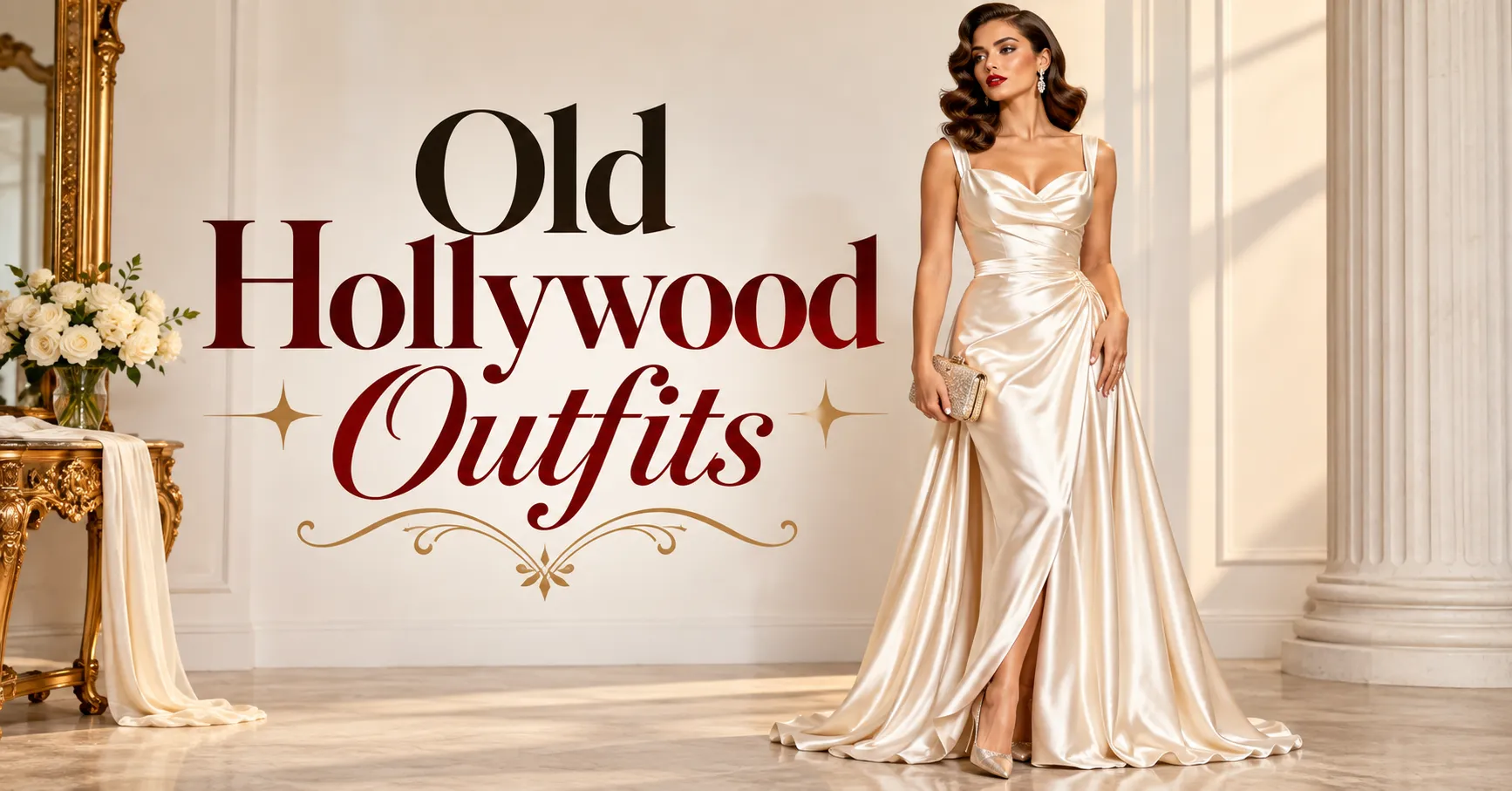
This is the most recognizable Old Hollywood look. A floor length satin gown cut on the bias skims the body and catches light as you move, which recreates the era’s screen glamour.
The gown does the talking, so keep everything else quiet. Add fine drop earrings and a small clutch.
- Bias-cut satin gown in ivory or champagne
- Fine drop earrings
- Small metallic clutch
- Red lip and sleek waves
Why it works: the bias cut produces movement without embellishment, which is central to vintage Hollywood style.
2. The Red Statement Dress
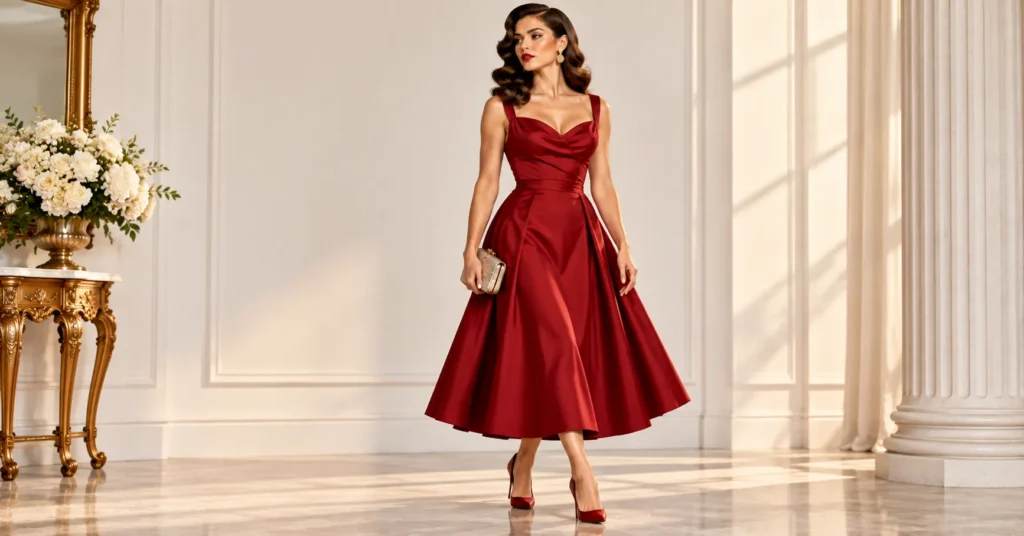
Red signals classic glamour without extra styling. A structured red dress in satin or crepe makes a clear focal point for a party or a formal dinner.
Keep the accessories neutral. When the color carries the outfit, the shoes and bag should stay understated.
This does not mean any red will work. A true or deep red reads as more period accurate than a bright orange red, so choose the tone with care.
3. The Little Black Dress with Gloves
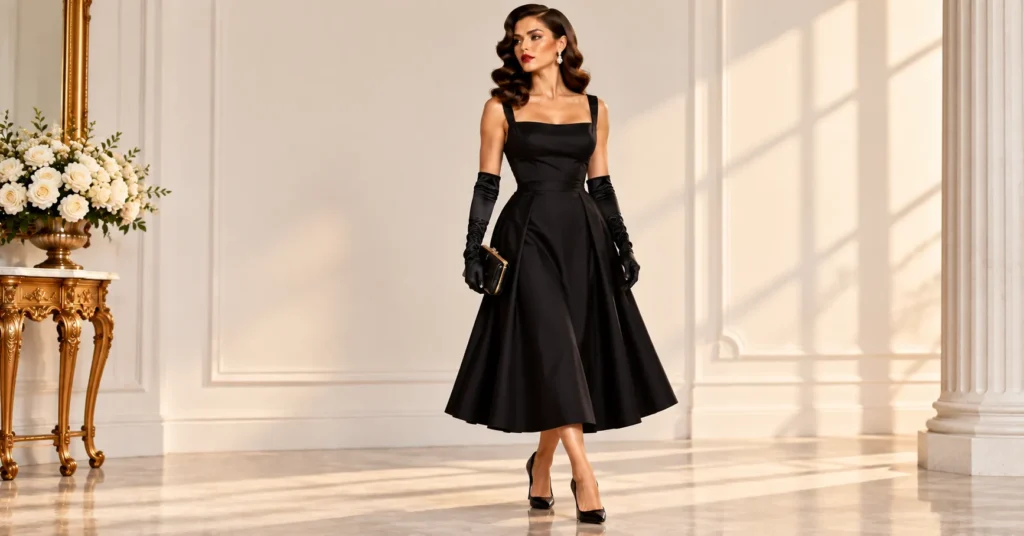
The little black dress sits at the center of Old Hollywood glam. A simple black dress paired with above the elbow gloves recreates the refined evening look of the era.
Keep the cut clean and let the gloves set the tone. A fitted sheath or a full-skirted dress both work, depending on the silhouette you prefer.
- Fitted or full skirted black dress
- Above the elbow gloves
- Pearl or crystal earrings
- Structured black clutch
Why it works: the gloves add period detail to a piece most people already own.
4. The Tailored Wide Leg Trouser Look
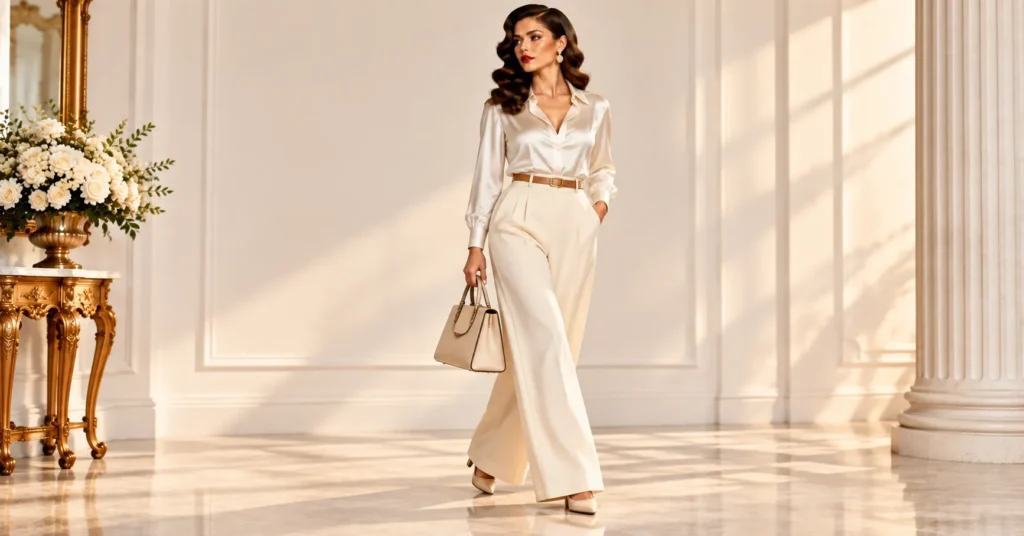
Not every Old Hollywood outfit is a gown. High waisted wide leg trousers with a tucked silk blouse recreate the relaxed off screen style associated with figures like Katharine Hepburn.
Choose trousers with a clean drape. A structured waist and a fluid leg create the long line the look depends on.
Add loafers or low heels and a simple belt. This is one of the more wearable Old Hollywood outfits for daytime.
5. The Velvet Evening Gown
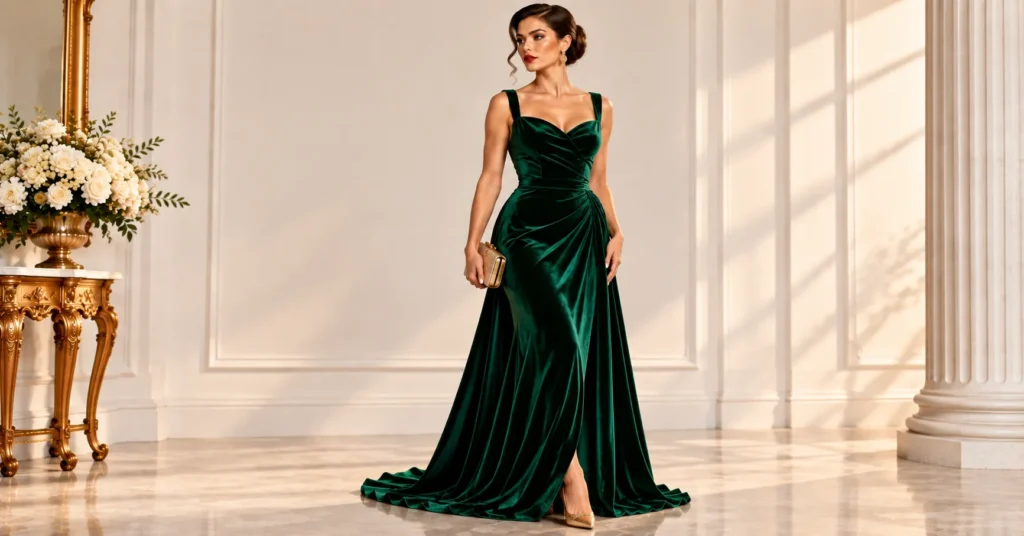
Velvet reads as richness without shine. A deep emerald or burgundy velvet gown creates depth under low light, which suits winter events and formal dinners.
Keep the silhouette simple. The fabric carries the drama, so heavy embellishment tends to crowd the look.
Finish with gold jewelry and a sleek updo. This pairing sits firmly within Golden Age glamour.
6. The Fur Trimmed Wrap and Gown
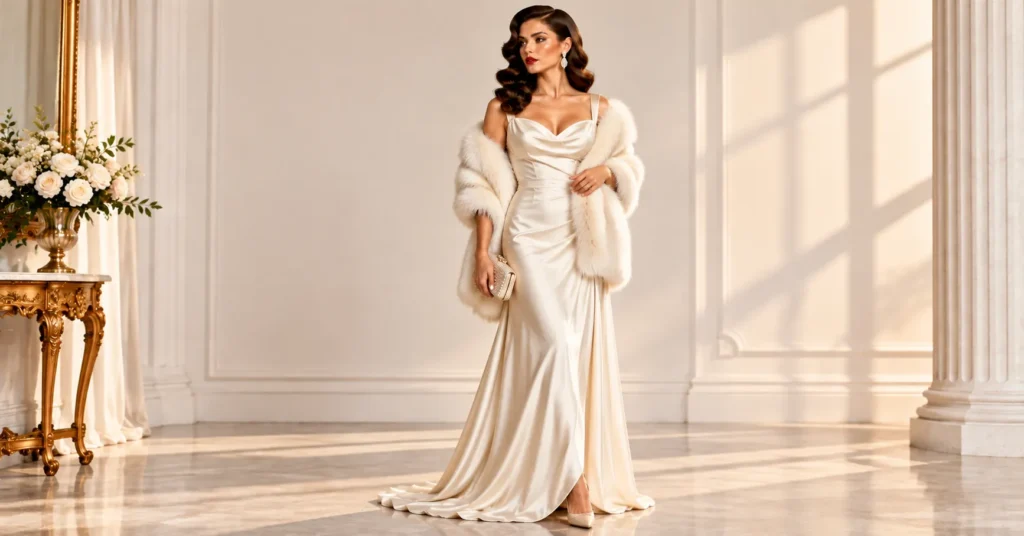
A wrap adds period drama over a simple base. A faux fur stole or trimmed wrap over a plain gown recreates the classic red carpet arrival of the era.
Choose the wrap to contrast the gown. A pale stole over a dark dress, or a dark stole over a pale dress, keeps the two pieces distinct.
- Simple floor length gown
- Faux fur stole or trimmed wrap
- Statement earrings
- Small evening bag
Why it works: the wrap delivers glamour while the gown beneath stays uncomplicated.
7. The Sweetheart Neckline Cocktail Dress
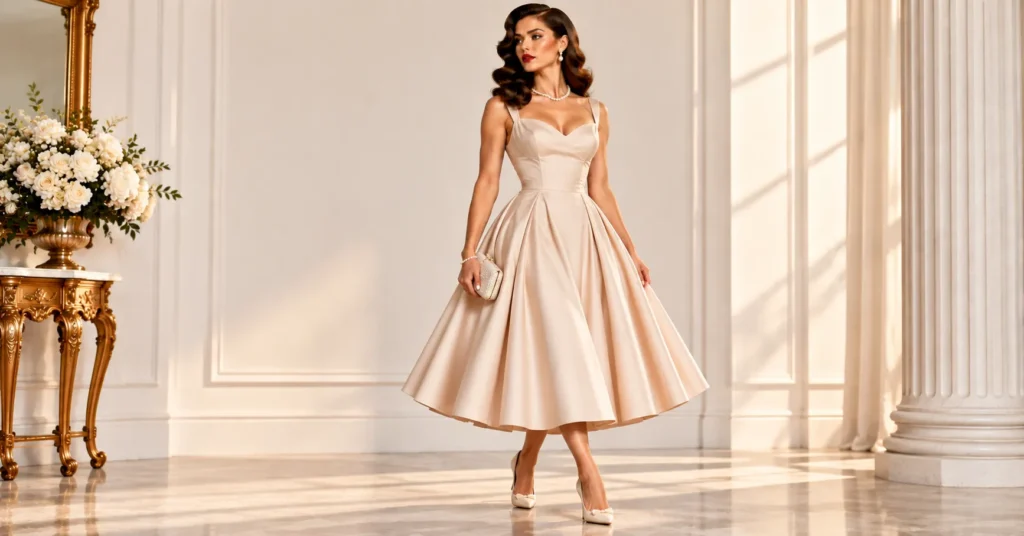
Necklines define much of the era’s style. A sweetheart neckline draws the eye upward and frames the shoulders, which recreates the softness of 1950s evening dresses.
Keep the length at knee or tea length. A fuller skirt suits the silhouette, though a fitted version works for a sleeker take.
Pair with pearl jewelry and low heels. This is a strong option for cocktail events that call for a retro fashion note.
8. The Sequined Column Dress
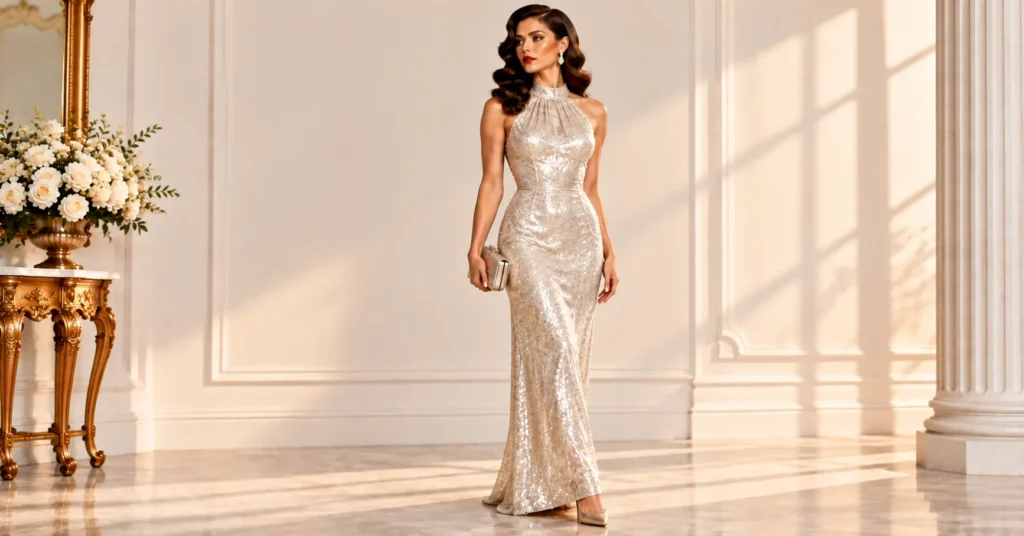
Sequins recreate the shimmer of screen lighting. A slim sequined column dress catches light much as satin does, which suits evening and black tie events.
Keep the shape narrow and the accessories minimal. When the fabric shines, additional sparkle competes rather than adds.
This does not mean sequins must cover the whole dress. A subtly beaded or partially sequined piece reads as more refined than head-to-toe shine.
9. The Pencil Skirt and Fitted Blouse
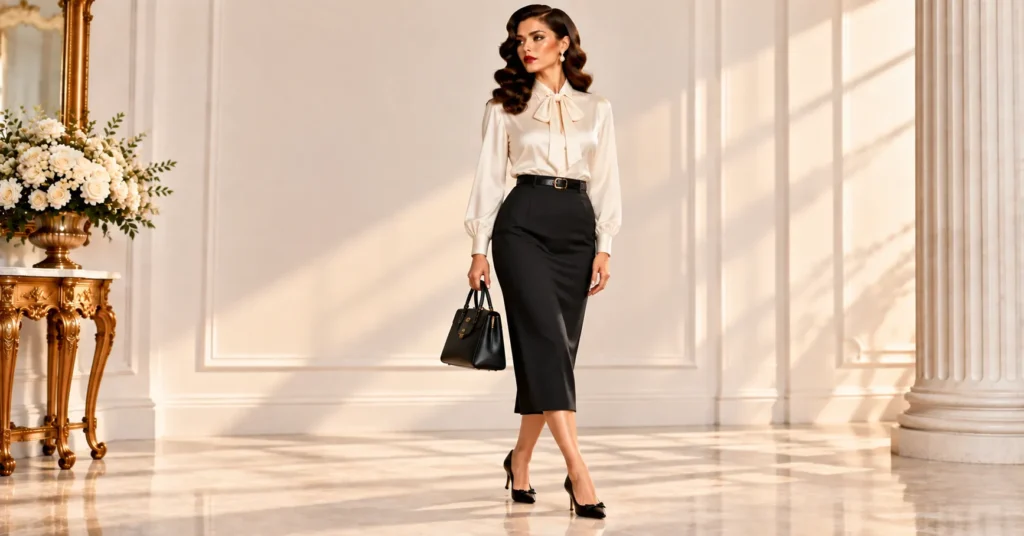
Daywear can carry the style too. A high waisted pencil skirt with a fitted blouse recreates the polished secretary chic look of the 1950s.
Tuck the blouse fully and define the waist with a slim belt. The fitted line is what makes the outfit read as period accurate.
- High waisted pencil skirt
- Fitted button or tie neck blouse
- Slim belt
- Kitten heels
Why it works: it translates the classic Hollywood look into workwear you can wear regularly.
10. The Halter Neck Gown
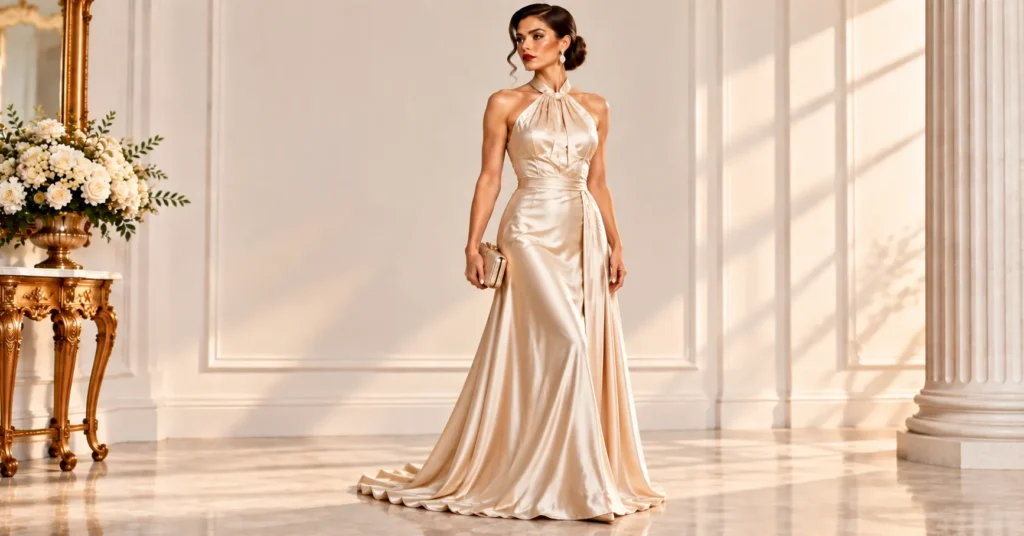
The halter neck frames the shoulders and back. A halter gown in a fluid fabric recreates the poolside and evening glamour of the late 1950s.
Keep the back detail as the focal point. A low or draped back means the front can stay simple.
Finish with a low bun and drop earrings. This is one of the more striking Old Hollywood outfits for warm weather events.
11. The Monochrome Suit for Women
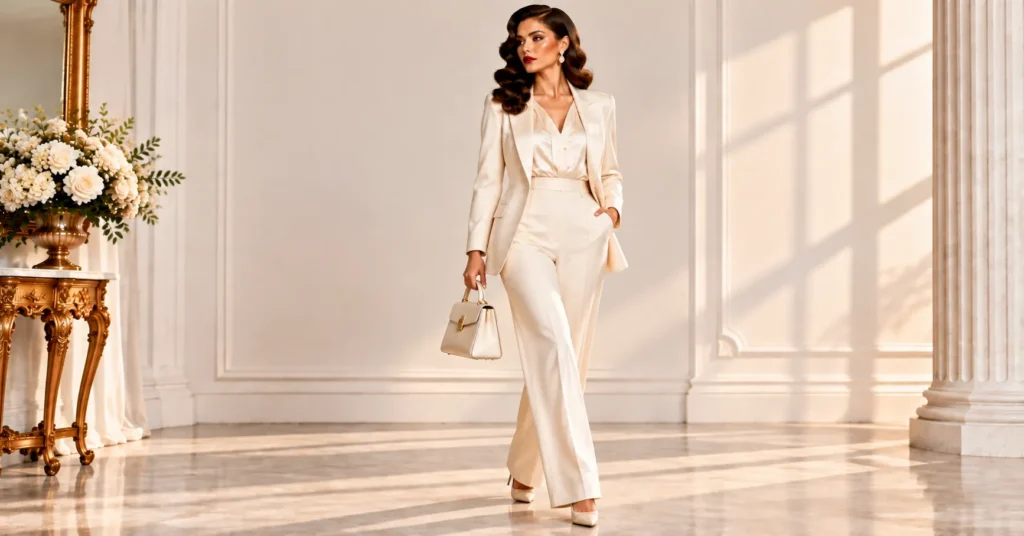
A matching suit reads as deliberate glamour. A tailored skirt suit or trouser suit in a single tone recreates the sharp daytime style of the era’s leading women.
Choose a clean cut in cream, black, or grey. The tailoring carries the look, so keep the blouse beneath plain.
Add structured heels and a top handle bag. This pairing shows how vintage Hollywood style extends beyond eveningwear.
12. The Classic Tuxedo Look
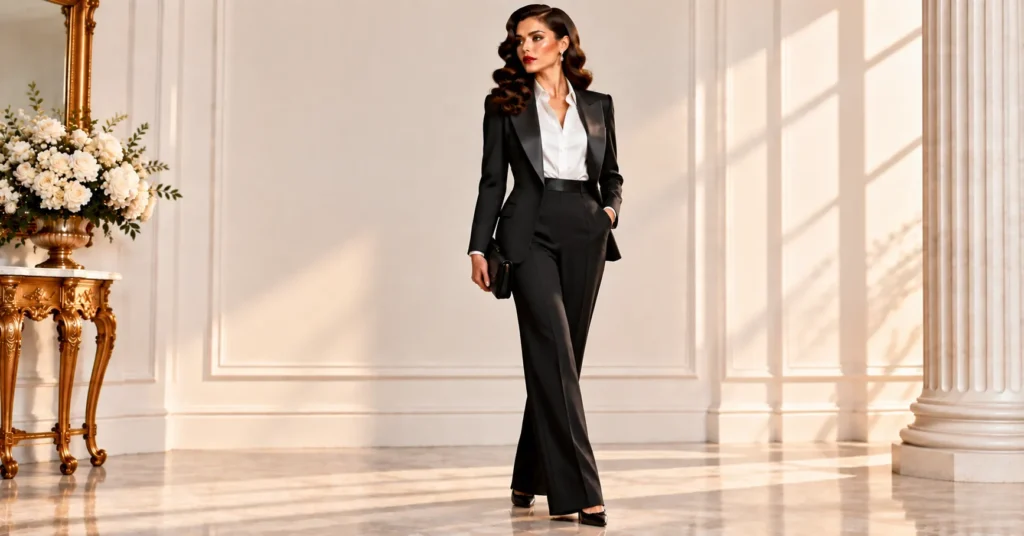
Old Hollywood outfits include menswear inspired tailoring. A well cut tuxedo, worn by any gender, recreates the sharp evening style of the era’s male stars and the tailored looks of women like Marlene Dietrich.
Fit at the shoulders first. A tuxedo depends on tailoring, and the shoulders are hardest to alter later.
- Tailored tuxedo in black or midnight blue
- Crisp white shirt
- Satin lapel detail
- Patent shoes
Why it works: the contrast of structure and simplicity is a recurring theme in the classic Hollywood look.
13. The Tea Length Full Skirt Dress
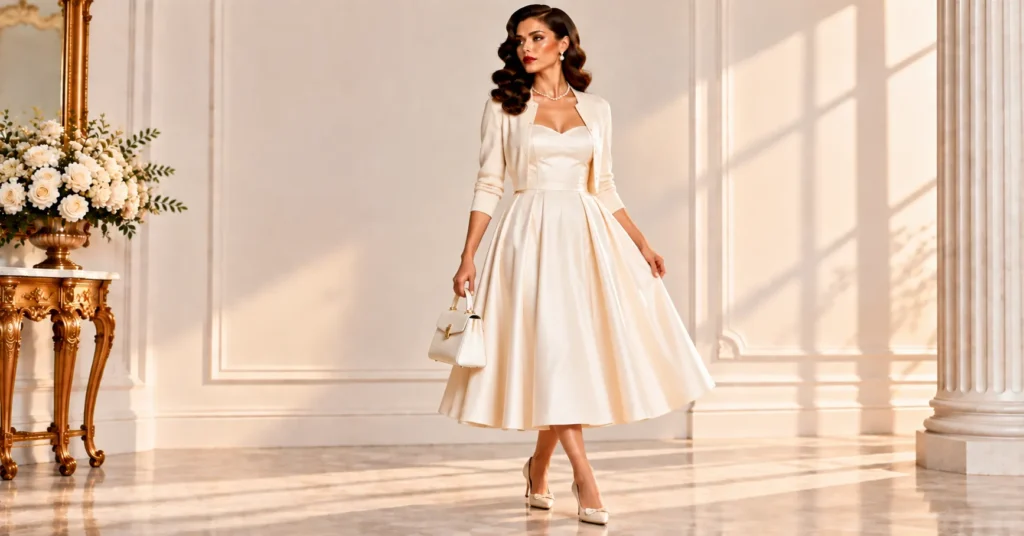
A fuller skirt recreates the softer side of the era. A tea length dress with a defined waist and a full skirt suits garden parties, weddings, and daytime events.
Choose a fabric with body, such as taffeta or structured cotton. The skirt needs to hold its shape to read as period accurate.
Add a fitted cardigan or a short jacket for coverage. This is one of the most versatile Old Hollywood outfits for daytime celebrations.
How to Recreate Old Hollywood Outfits on a Budget
Start with silhouette, then add detail. Recreating the style is a process of choosing shape and fabric before spending on anything rare.
The steps below give a clear order to follow.
- Prioritize fit. Choose pieces that follow the body’s line, or have them altered.
- Choose the right fabric. Satin, velvet, crepe, and lace carry the look.
- Add one focal point. A red lip, a stole, or gloves is enough.
- Groom the finish. Sleek hair and precise makeup complete the outfit.
- Shop secondhand where possible. Vintage and resale sources supply period detail affordably.
Fabrics Ranked by Impact
Not every fabric serves the style equally. The table below groups common fabrics by how strongly they recreate Old Hollywood glam.
| Impact | Fabric | Why It Matters |
| High | Satin, silk | Catch light and drape like screen gowns |
| High | Velvet | Reads as depth and richness under low light |
| Medium | Crepe, lace | Add structure and period detail |
| Medium | Taffeta | Holds full skirt shapes |
| Low | Heavy cotton, denim | Rarely reads as period accurate |
Spend most of your budget on high-impact fabrics. They do the most to recreate the era’s line and shine.
Common Misconceptions About Old Hollywood Outfits
Several myths surround this style. Correcting them makes the look easier to achieve.
Old Hollywood outfits require genuine vintage clothing. They do not. Modern pieces with the right cut and fabric recreate the silhouette accurately.
The style is only for formal events. It is not. Trousers, pencil skirts, and tea-length dresses translate the look into daywear.
More embellishment means more glamour. It does not. The era relied on one focal point, and additional detail often reduces the effect.
Old Hollywood glam suits only one body type. It does not. The style depends on fit rather than a fixed silhouette, and tailoring adapts any base to your proportions.
Conclusion
Old Hollywood outfits are a method, not a costume. The style relies on structured silhouettes, rich fabrics, a controlled palette, and a single point of glamour. The 13 ideas above all follow the same structure: a tailored base, one glamorous element, and a groomed, restrained finish.
Start small. Pick two or three looks that suit your events, assemble the pieces you can, and refine the fit before adding detail. Over time, you can build a small set of pieces that recreate Golden Age glamour without a studio wardrobe. The goal is not to copy a single film star exactly. The goal is to capture the era’s polish on your own terms.
FAQs About Old Hollywood Outfits
What are Old Hollywood outfits?
Old Hollywood outfits recreate the film era style of roughly the late 1920s to the early 1960s. The look relies on structured silhouettes, rich fabrics such as satin and velvet, a controlled color palette, and a single point of glamour rather than many competing details.
Do I need vintage clothing to recreate the look?
No. Modern pieces with the right cut and fabric recreate the silhouette accurately. A bias cut satin dress or a tailored suit from a current brand can produce the same line as an original garment.
What colors define vintage Hollywood style?
Restrained tones define the palette. Black, ivory, and champagne form the base, with red, gold, and deep jewel tones used as a single focal point. Keeping statement colors concentrated makes them read as intentional.
What fabrics work best for Old Hollywood glam?
Satin and silk catch light and drape like screen gowns. Velvet reads as depth under low light, while crepe, lace, and taffeta add structure and period detail. These fabrics do the most to recreate the era’s look.
Can Old Hollywood outfits work for daytime?
Yes. Wide leg trousers, pencil skirts, monochrome suits, and tea length dresses translate the classic Hollywood look into daywear. The same principles of fit and restraint apply across formal and casual settings.
How do I finish an Old Hollywood look?
Focus on grooming. Sleek hair, a red lip, and precise but minimal makeup complete the outfit. The finishing details matter as much as the garment in recreating Golden Age glamour.
Are Old Hollywood outfits expensive to achieve?
No. The style depends on fit and fabric more than price. Secondhand and resale sources supply period detail affordably, and a well-fitted mid range piece serves the look better than a poorly fitted designer one.
Do Old Hollywood outfits suit every body type?
Yes. The style depends on fit rather than a fixed silhouette. Tailoring pieces to your own proportions matters more than following a single cut, and the look adapts to any frame.