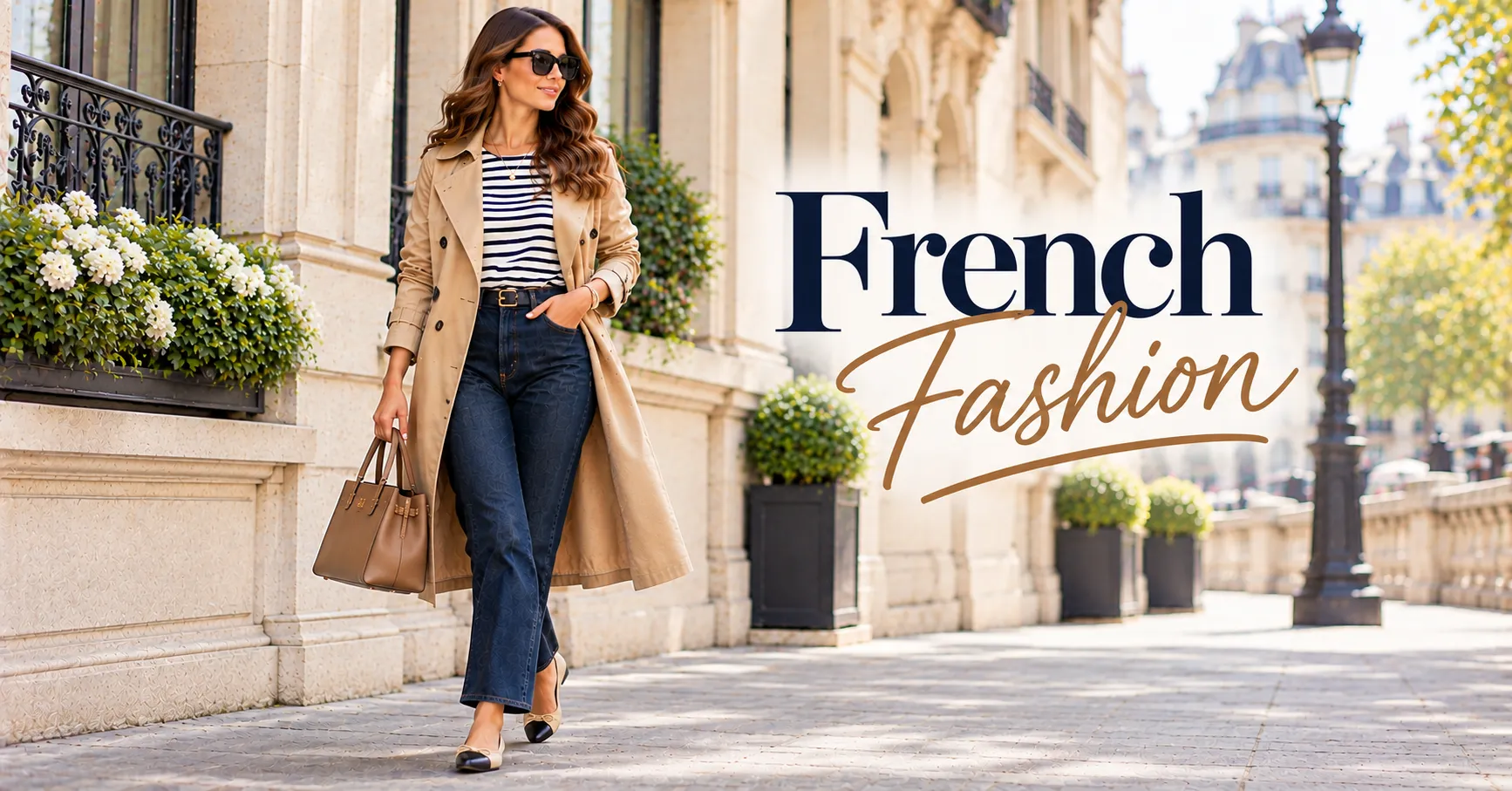
Effortless French Fashion: 12 Timeless Outfit Ideas to Master Parisian Style
French fashion is built on restraint. It favors quality over quantity, fit over flash, and a small set of trusted pieces over a crowded closet. If you have ever admired the way Parisian women look polished without appearing to try, you have already noticed the core principle at work. This guide breaks French fashion down into 12 outfit ideas you can copy, adapt, and build on. Each idea explains what to wear, why it works, and how to make it your own without spending a fortune.
The appeal of French fashion is not about a single trend. It is about a repeatable formula. Once you understand the formula, the outfits become easy to assemble.
What Makes French Fashion Different
French fashion rewards consistency over novelty. The wardrobe stays small, the colors stay neutral, and the silhouettes stay familiar year after year.
This does not mean French style is boring. It means the foundation is stable, so individual pieces can do more work. A single well-cut blazer appears in dozens of outfits rather than one.
The key distinction is this: fast fashion chases what is new, while French chic protects what already works. Both approaches fill a closet. Only one produces the effortless elegance associated with Parisian style.
Here are the traits that define the look:
- Neutral color palette navy, black, white, cream, grey, and camel dominate.
- Quality fabrics natural fibers such as cotton, wool, silk, and leather.
- Tailored fit clothes skim the body rather than cling or drown it.
- Minimal accessories a few refined pieces, not many competing ones.
- Low-effort finish hair and makeup stay understated.
The Role of the Capsule Wardrobe
A capsule wardrobe sits at the center of French fashion. It is a small collection of versatile pieces that mix and match easily.
The goal is coverage, not volume. Roughly 30 to 40 items should carry a full season, including shoes and outerwear. Because each piece coordinates with the others, the number of possible outfits far exceeds the number of items.
Importantly, a capsule wardrobe does not require expensive labels. It requires deliberate choices. A well fitted item from a mid-range brand serves the look better than a poorly fitted designer piece.
The French Fashion Color Palette at a Glance
Color discipline holds the whole system together. The table below shows how a neutral base supports occasional accent tones.
| Category | Core Colors | Role in the Outfit | Frequency |
| Base | Black, navy, white, cream | Foundation of most outfits | Daily |
| Neutral support | Grey, camel, beige, brown | Adds warmth and depth | Frequent |
| Denim | Mid and dark indigo | Casual anchor piece | Frequent |
| Accent | Red, forest green, burgundy | One controlled pop of color | Occasional |
| Breton stripe, subtle check | Pattern without noise | Occasional |
Keep accents rare. When most of the wardrobe stays neutral, a single red lip or a burgundy bag reads as intentional rather than loud.
12 French Fashion Outfit Ideas
Each outfit below follows the same logic. Start with a neutral base, add one defining piece, and finish with restrained accessories. You can rotate these ideas across seasons with minor swaps.
1. The Breton Stripe and Straight Leg Jeans
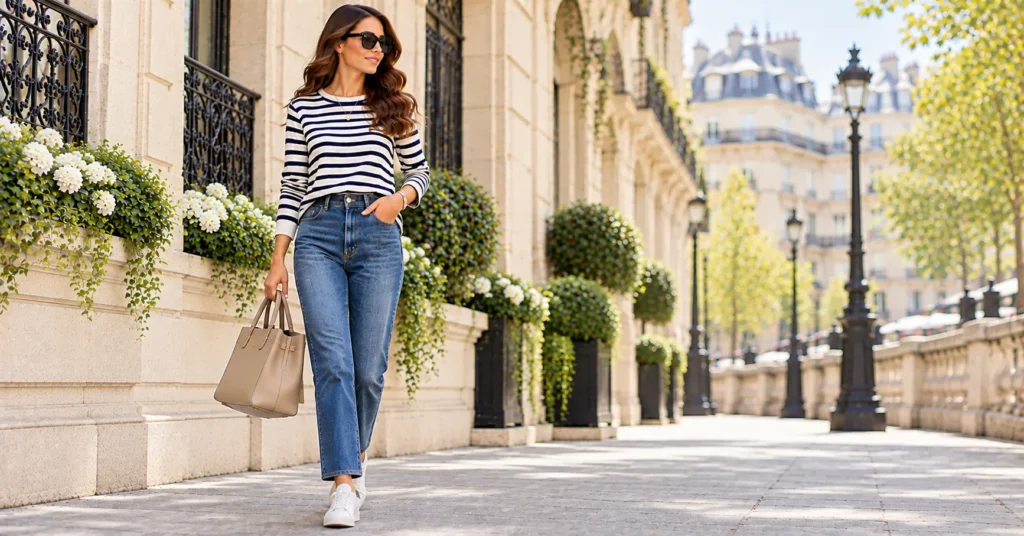
This is the most recognizable French look. A navy and white Breton top paired with straight leg or slim jeans reads as classic Parisian style without effort.
The top does the talking, so keep everything else quiet. Add white sneakers or ballet flats and a structured tote.
- Breton striped long sleeve top
- Mid wash straight leg jeans
- White leather sneakers
- Small gold hoop earrings
Why it works: the stripe is a print that behaves like a neutral, so it pairs with almost anything.
2. The Trench Coat Over Everything
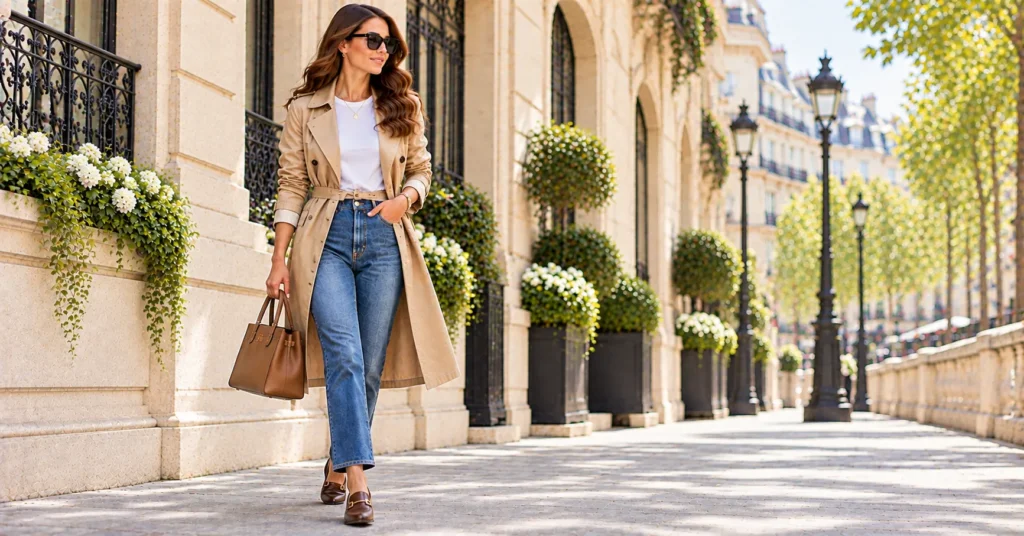
A trench coat is a cornerstone of French fashion. It layers over jeans, dresses, and tailored trousers alike.
Choose a classic beige or stone shade in a knee length cut. Belt it at the waist rather than buttoning it fully for a softer line.
The trench does not need a complicated outfit beneath it. A plain tee and jeans are enough. That contrast between casual base and refined coat is the point.
3. The Little Black Dress, Kept Simple
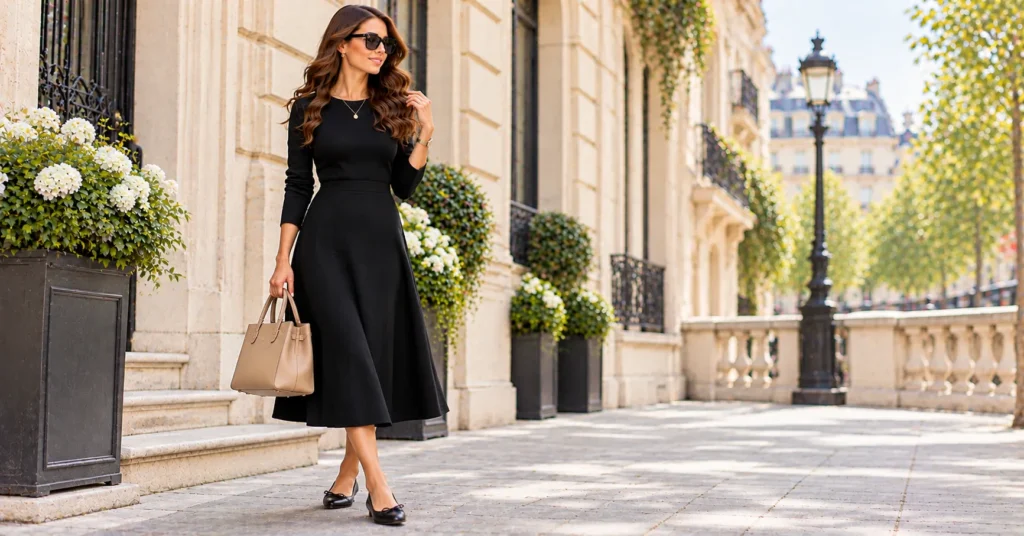
The little black dress remains a fixture of French chic. A simple silhouette in a matte fabric works for day and evening.
Keep the cut clean. Avoid heavy embellishment, and let the fit carry the dress.
- Knee length or midi black dress
- Bare legs or sheer tights
- Black ballet flats or low heels
- One thin gold necklace
For daytime, add a denim jacket or blazer. For evening, swap in a leather jacket and a red lip.
4. The Blazer and White Shirt Combo
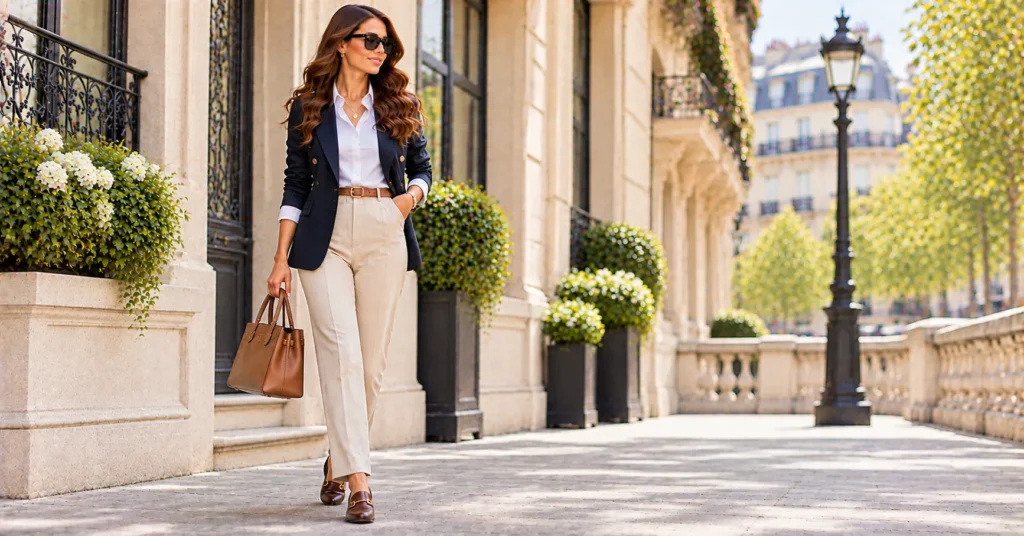
A tailored blazer over a crisp white shirt defines the polished side of Parisian style. This pairing bridges work and weekend.
The blazer should fit at the shoulders first. Sleeves and length can be tailored later, but shoulders are hard to alter.
Pair with straight trousers for the office or with jeans for a relaxed take. Both sit firmly within the French fashion tradition of dressing pieces up or down.
5. The Silk Blouse and Tailored Trousers
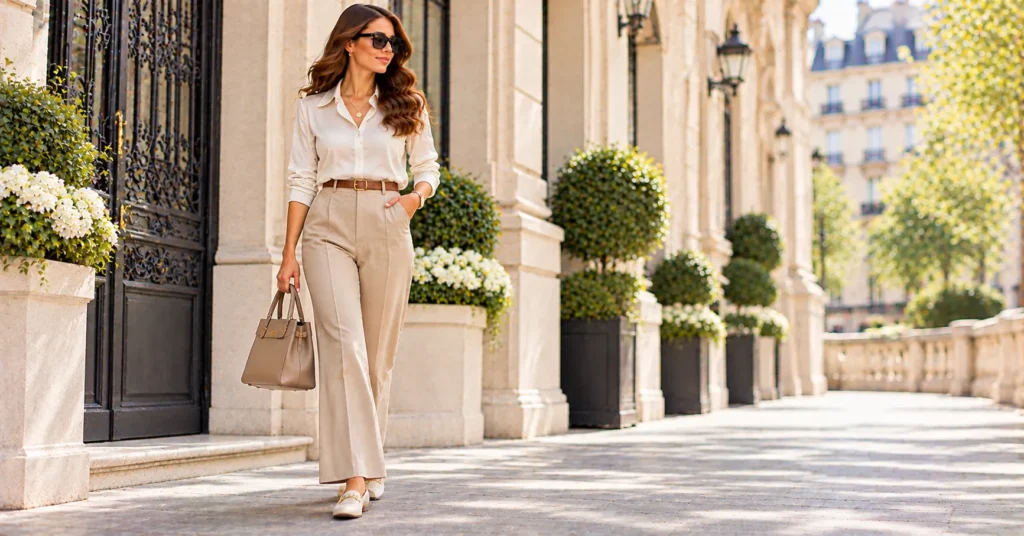
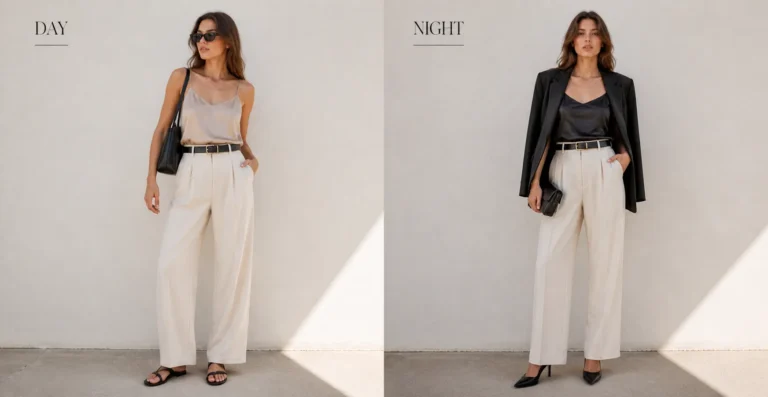
Silk adds quiet luxury without shine overload. A cream or ivory silk blouse tucked into high waisted trousers creates a long, clean line.
Choose trousers with a straight or wide leg. Tuck the blouse loosely so the waist stays defined but not tight.
Why it works: the outfit looks considered while using only two main pieces. That efficiency is central to French fashion.
6. The Knit Sweater and Midi Skirt
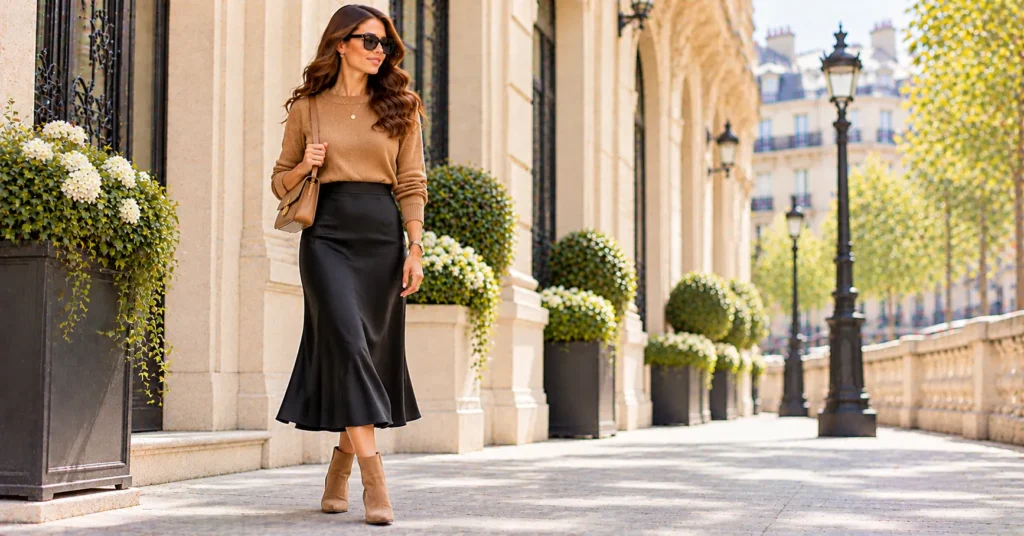
Texture replaces color in this cold weather look. A fine gauge knit tucked into a satin or A-line midi skirt balances soft and structured.
Keep both pieces in the neutral family. A camel knit with a black midi skirt reads as effortless elegance rather than a styled event.
- Fine knit crewneck or turtleneck
- Satin or wool midi skirt
- Ankle boots or loafers
- Structured shoulder bag
7. The Denim on Denim, Done Right
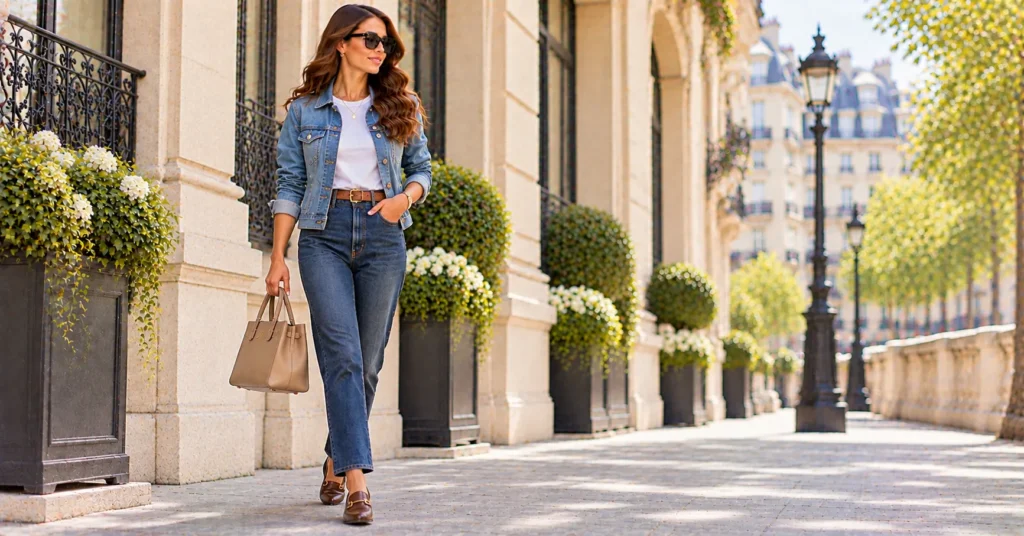
Double denim can work within French chic when the tones differ slightly. Pair a mid wash jacket with darker jeans to avoid a matching suit effect.
Break up the denim with a white tee or a striped top. Add loafers or white sneakers to keep it grounded.
This does not mean any two denim pieces will pair well. The tones must contrast enough to read as two separate items.
8. The Ballet Flats and Cropped Trousers
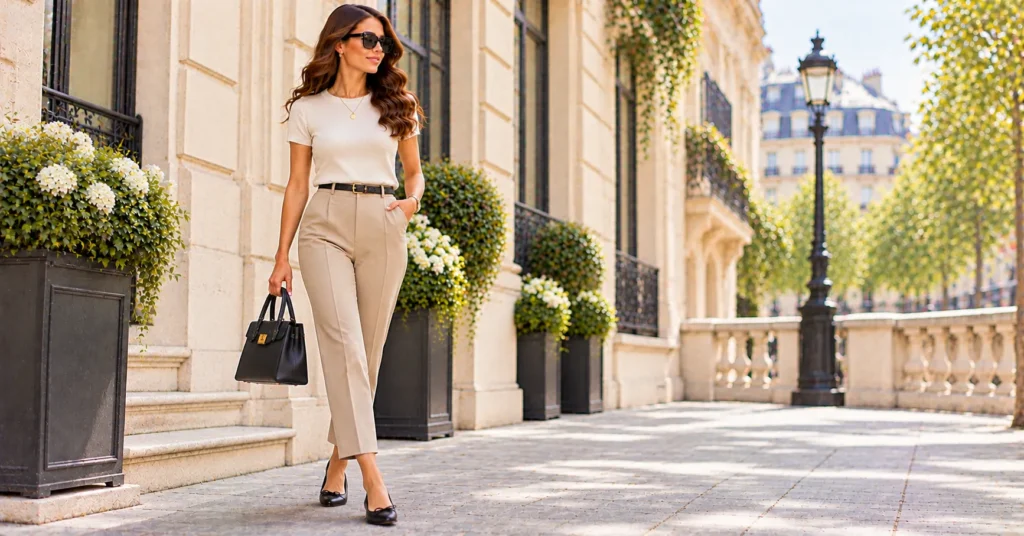
Footwear can define an outfit. Ballet flats with cropped or ankle length trousers expose a sliver of ankle, which lengthens the leg.
This is a warm weather staple of French fashion. It stays comfortable while looking deliberate.
Pair with a fitted tee or a tucked blouse. Add a slim belt to mark the waist.
9. The Leather Jacket and Feminine Dress
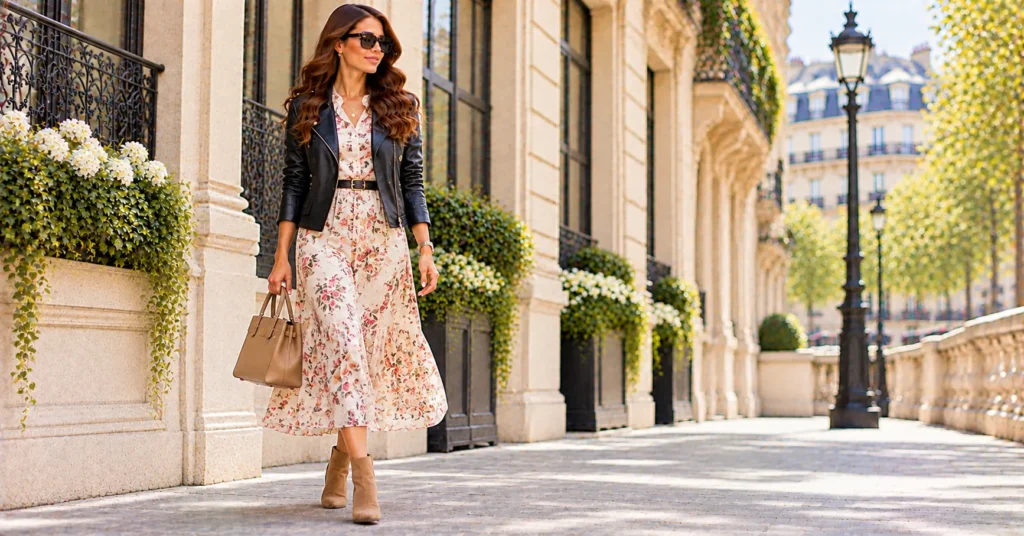
Contrast drives this look. A leather biker jacket over a floral or slip dress balances toughness with softness.
The jacket should fit close to the body. A boxy leather jacket over a delicate dress can overwhelm the frame.
Finish with ankle boots for a look that carries from afternoon into evening. This blend of hard and soft is a recurring theme in Parisian style.
10. The Camel Coat and Monochrome Base
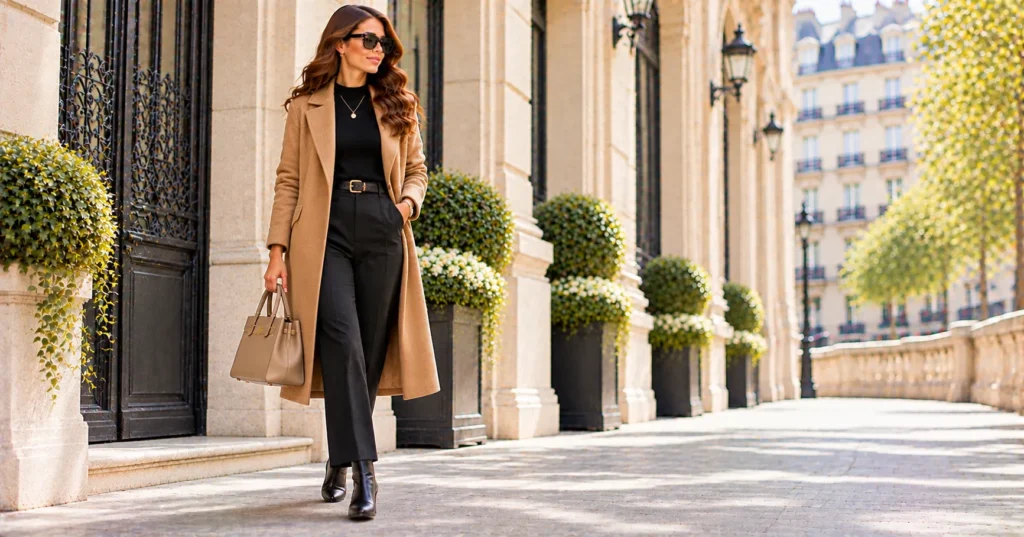
A camel coat elevates almost any neutral outfit. Worn over black or cream separates, it reads as quietly expensive.
Keep the base tonal. Black trousers, a black knit, and black boots under a camel coat create a clean column of color.
Why it works: the coat becomes the single focal point, and everything else supports it. That hierarchy defines effective French fashion.
11. The Slip Skirt and Simple Tee
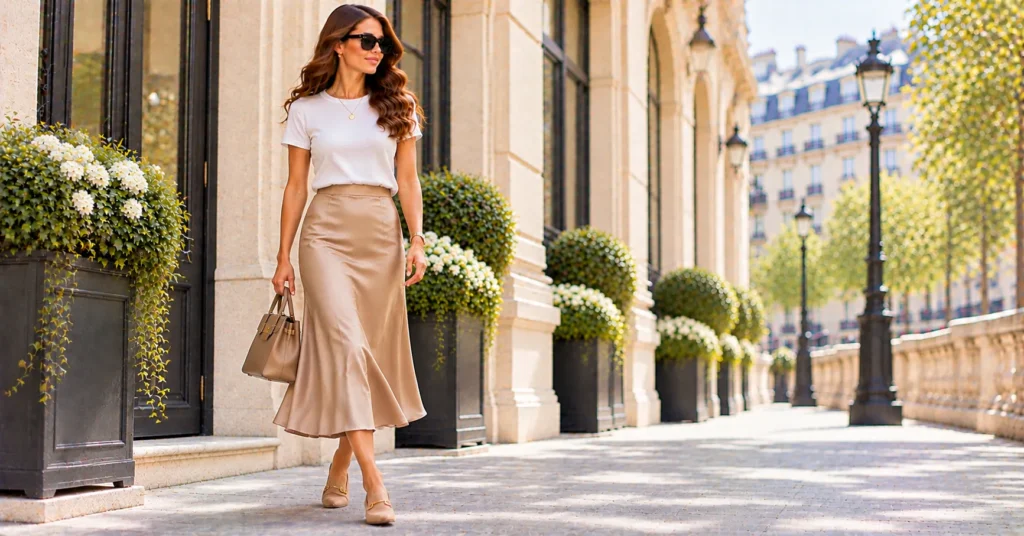
A bias-cut slip skirt looks refined with the plainest of tops. A white cotton tee tucked into a satin midi skirt is a study in contrast.
The fabric does the work. The skirt catches light and moves, while the tee keeps the look casual.
- White or grey cotton tee
- Satin bias-cut midi skirt
- Mules or sandals
- Delicate layered necklaces
This pairing shows how French chic mixes high and low without strain.
12. The Tailored Suit, Worn Relaxed
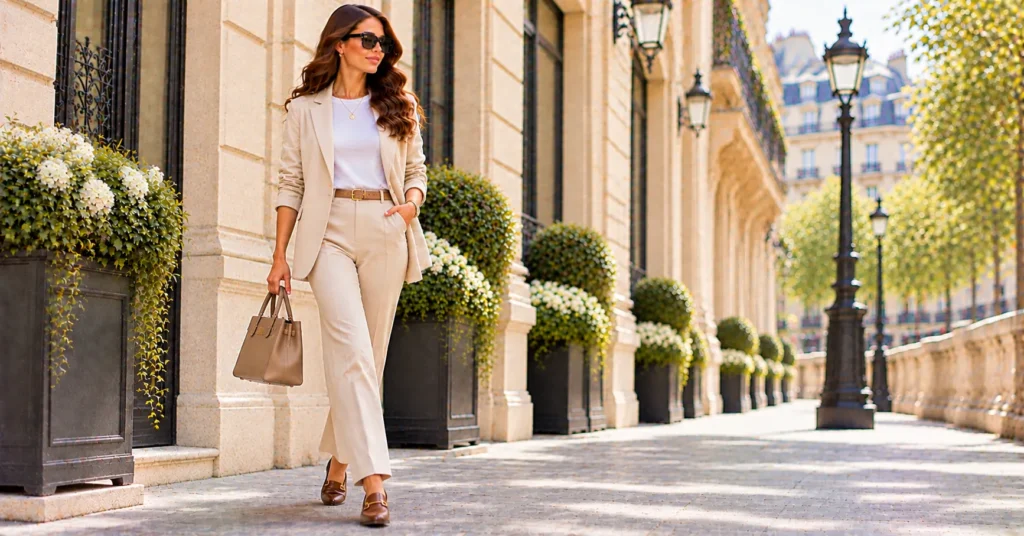
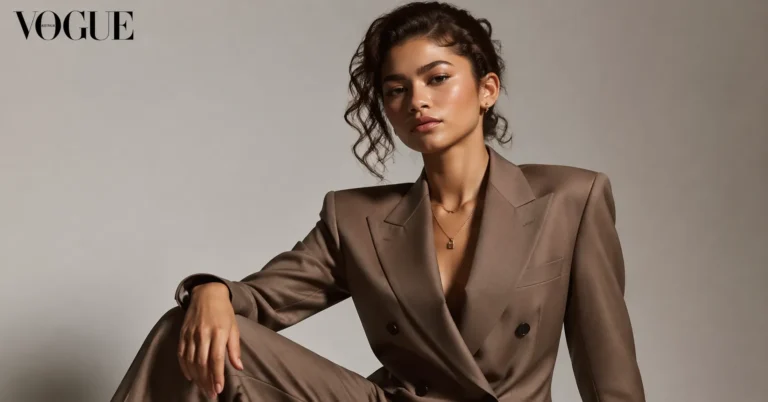
A matching suit need not look corporate. Worn with a tee or bare underneath, a well-cut suit becomes a modern staple of French fashion.
Choose a relaxed cut in navy, grey, or cream. Roll the sleeves and skip the tie-adjacent formality.
Add loafers or clean sneakers to soften the tailoring. The result sits between formal and casual, which is exactly where French style tends to live.
How to Build Your Own French Fashion Wardrobe
Start with the base, then add pieces slowly. Building a French wardrobe is a process of subtraction as much as addition.
The steps below give a clear order to follow.
- Audit what you own. Remove anything that does not fit or match the neutral palette.
- Fill the gaps. Buy missing basics first: a white shirt, straight jeans, a blazer.
- Invest in outerwear. A trench and a wool coat carry entire seasons.
- Add one accent. A single colored bag or scarf introduces personality.
- Refine over time. Replace worn basics with better versions as budget allows.
Essential Pieces Ranked by Priority
Not every item deserves equal spend. The table below groups the core French fashion wardrobe by how often you will wear each piece.
| Priority | Piece | Why It Matters |
| High | White shirt, straight jeans, blazer | Worn across most outfits |
| High | Trench coat, ballet flats | Season-spanning staples |
| Medium | Silk blouse, midi skirt, knit sweater | Adds range and texture |
| Medium | Leather jacket, camel coat | Defines seasonal looks |
| Low | Accent bag, printed scarf | Personal touches |
Spend most of your budget on high-priority pieces. They appear in the greatest number of outfits, so cost per wear stays low.
Common Misconceptions About French Fashion
Several myths surround this style. Correcting them makes the look easier to achieve.
French fashion requires designer labels. It does not. The system relies on fit and coordination, not price tags.
The palette must be entirely neutral. It does not have to be. One controlled accent color is welcome and often expected.
Parisian style means no effort. The finish looks effortless, but the planning behind it is deliberate. The ease is the result of a well edited wardrobe, not the absence of thought.
You need a new wardrobe to start. You do not. Most people already own several qualifying pieces and only need to edit and refine.
Conclusion
French fashion is a method, not a mood board. It relies on neutral colors, good fabrics, precise fit, and a compact wardrobe that mixes with itself. The 12 outfit ideas above all follow the same structure: a plain base, one defining piece, and restrained finishing touches.
Start small. Pick two or three outfits that suit your life, assemble the pieces, and wear them until the formula feels natural. Over time, you can expand the wardrobe without losing the discipline that makes French chic work. The goal is not to copy Paris exactly. The goal is to build a wardrobe that looks considered, lasts for years, and reflects effortless elegance on your own terms.
FAQs about French Fashion
What colors define French fashion?
Neutrals define the palette. Black, navy, white, cream, grey, and camel form the base, with occasional accents such as red or burgundy. Keeping accents rare makes them read as intentional.
Is French fashion expensive to achieve?
No. French fashion prioritizes fit and coordination over labels. A well-fitted mid range piece serves the look better than a poorly fitted designer item. Careful editing matters more than budget.
How many pieces should a French capsule wardrobe contain?
Roughly 30 to 40 items per season, including shoes and outerwear. Because each piece coordinates with the others, a small number of items produces a large number of outfits.
What is the single most important French fashion piece?
There is no single item that works alone, but the blazer and the trench coat carry the most outfits. Both layer over casual and formal bases, which makes them high value staples.
Can I wear prints in French fashion?
Yes, within limits. The Breton stripe and subtle checks behave like neutrals and pair easily. Bold or busy prints sit outside the usual French chic approach and are used sparingly.
Does French fashion suit every body type?
Yes. The style depends on fit rather than a specific silhouette. Tailoring pieces to your own proportions matters more than following a fixed cut.
How do I make an outfit look effortless rather than plain?
Focus on fit, fabric, and one defining piece. Effortless elegance comes from clothes that skim the body, natural fibers that hold their shape, and a single standout item supported by neutral basics.
Is French girl style the same as Parisian style?
The terms are often used interchangeably. Both describe the same neutral based, fit focused approach. Any difference is one of phrasing rather than substance.