10 Stunning A-Line Dress Ideas: Flattering Outfits for Every Occasion
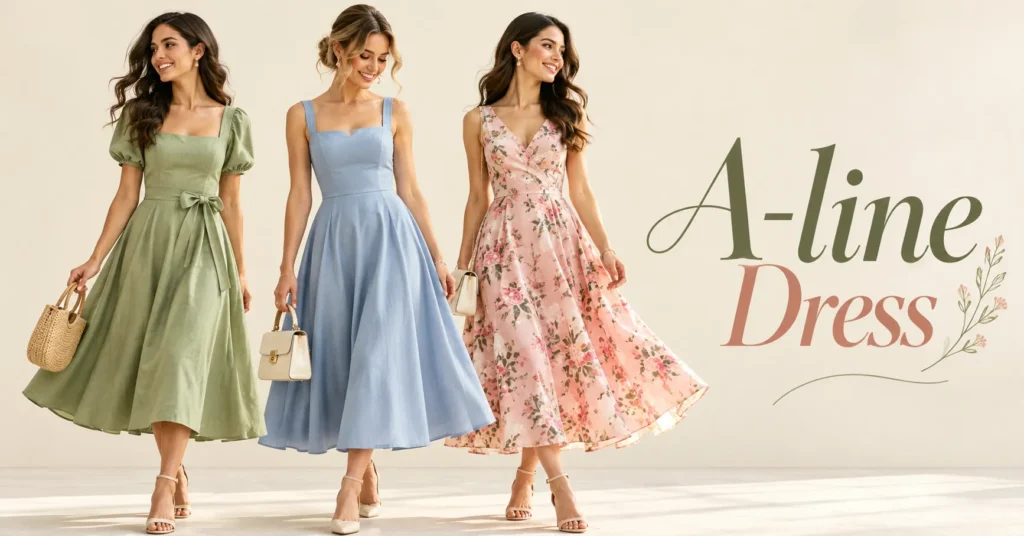
It’s hard to find a dress that flatters your shape, works for more than one event, and still feels comfortable after six hours. The A-line dress solves that problem. It’s fitted at the bodice and flares gently from the waist to the hem, tracing the shape of a capital letter “A.” That simple silhouette suits almost every body type, season, and setting.
This guide covers 10 A-line dress ideas you can wear anywhere from a weekend brunch to a black tie wedding. Each idea includes the right fabric, length, shoes, and accessories. You’ll also find comparison tables, a step by step buying framework, and the styling mistakes that make a good dress look wrong.
What Is an A-Line Dress?
An A-line dress is a dress with a fitted top and a skirt that widens gradually toward the hem. The flare starts at the natural waist or just below the bust. It stays smooth, with no heavy gathers and no dramatic volume. The result is a clean, balanced outline that skims the body instead of clinging to it.
Christian Dior gave the shape its name. His Spring/Summer 1955 collection, called the “A-Line,” introduced skirts that flared from a narrow shoulder line into a triangular form. In the 1960s, designers like Mary Quant shortened the style into the mod mini, and it has stayed in women’s dresses ever since.
That staying power has a practical reason: the cut works on real bodies. It doesn’t depend on a single trend, fabric, or length.
A-Line vs. Fit and Flare vs. Skater Dress
These three silhouettes look similar on a hanger. On the body, they behave differently. The table below shows where each one fits, flares, and works best.
| Feature | A-Line | Fit and Flare | Skater Dress |
| Where it fits | Bodice, sometimes loosely | Bodice and waist, closely | Bodice and waist, closely |
| Where the flare begins | Waist or just below the bust | Natural waist, sharply | Natural waist, sharply |
| Skirt volume | Gradual, subtle | Full, pronounced | Full, circular |
| Typical length | Mini to maxi | Knee to midi | Mini to above the knee |
| Typical fabric | Woven cotton, linen, crepe, satin | Structured cotton, scuba, taffeta | Stretch jersey, knit |
| Best for | Every body type, all-day comfort | Highlighting a defined waist | Casual, youthful looks |
A flared dress isn’t automatically an A-line. A fit and flare cuts in sharply at the waist before it opens. A skater dress is a fit and flare made in stretchy knit with a circle skirt. The true A-line flares in one steady line from top to hem.
When you shop online, filter by “A-line silhouette” instead of “flared.” You’ll get more accurate results.
Why the A-Line Silhouette Flatters Almost Every Body Type
The A-line silhouette balances proportions. It defines the narrowest part of your upper body, then releases fabric over the hips and thighs. An A-line dress draws the eye to your waist and shoulders while the skirt moves freely instead of hugging the hips.
Here’s how that balance works for common body shapes:
- Pear (hips wider than shoulders): The skirt skims the hips, and a fitted bodice brings attention upward.
- Apple (fuller midsection): An empire waistline, which sits just under the bust, lets fabric flow past the stomach.
- Hourglass (defined waist): A seam at the natural waist highlights your curves without tight fabric.
- Rectangle (straight shape): The flare adds the look of curves at the hips.
- Petite (5’4″ and under): Shorter lengths and a high waistline make your legs look longer.
Comfort is the other advantage. The skirt doesn’t restrict movement, so you can sit, walk, dance, and climb stairs without tugging at the hem. That’s why the cut shows up in school uniforms, bridal salons, and corporate wardrobes alike.
Before you shop, stand in front of a mirror and find your narrowest point above the hips. That’s where your dress’s waistline should sit.
10 A-Line Dress Ideas for Every Occasion
Each idea below includes the right fabric, length, and pairings. Use them as complete outfit ideas, or mix elements to build your own.
1. The Casual Cotton A-Line Dress
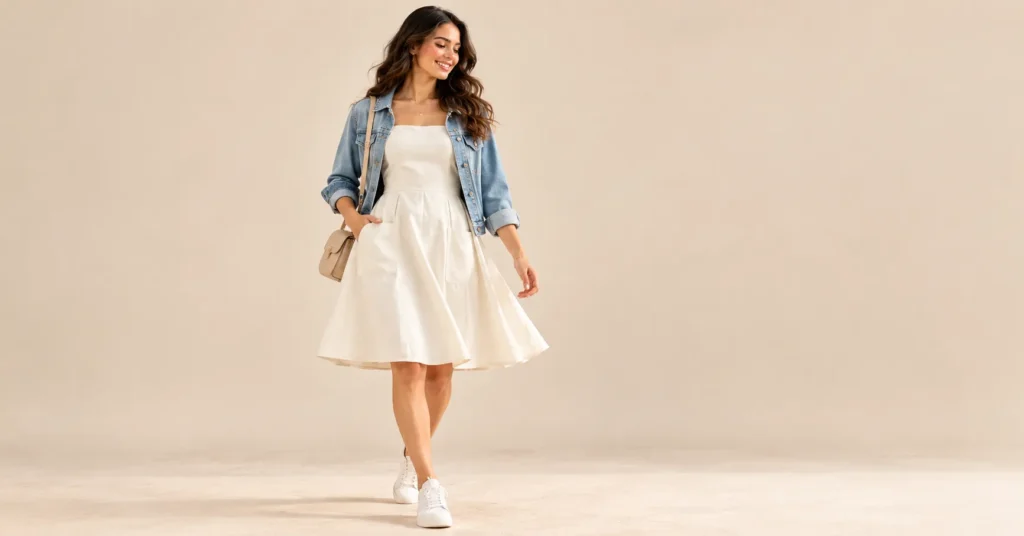
A casual A-line dress in cotton or linen is the easiest warm weather outfit you can own. Natural fibers breathe, so you stay cool. The relaxed cut means you don’t have to think about fit once you’re out the door.
Choose a knee length or just above the knee hem for everyday wear. Look for details that add interest without fuss, like patch pockets, a square neckline, or button front closures. Brands like Boden and Madewell offer cotton versions built for daily use, often with pockets that actually hold a phone.
How to style it:
Pair it with white leather sneakers such as Adidas Stan Smiths or Vejas for errands and coffee dates. Add a cropped denim jacket when the evening cools down. A canvas tote or small crossbody bag keeps the look relaxed.
Gingham, stripes, and solid neutrals work best in this category. They pair with almost anything in your closet, which makes the dress a true wardrobe workhorse.
Check the fabric label before you buy. Look for 100% cotton, linen, or a cotton linen blend for the best breathability.
2. The Formal Floor Length Gown
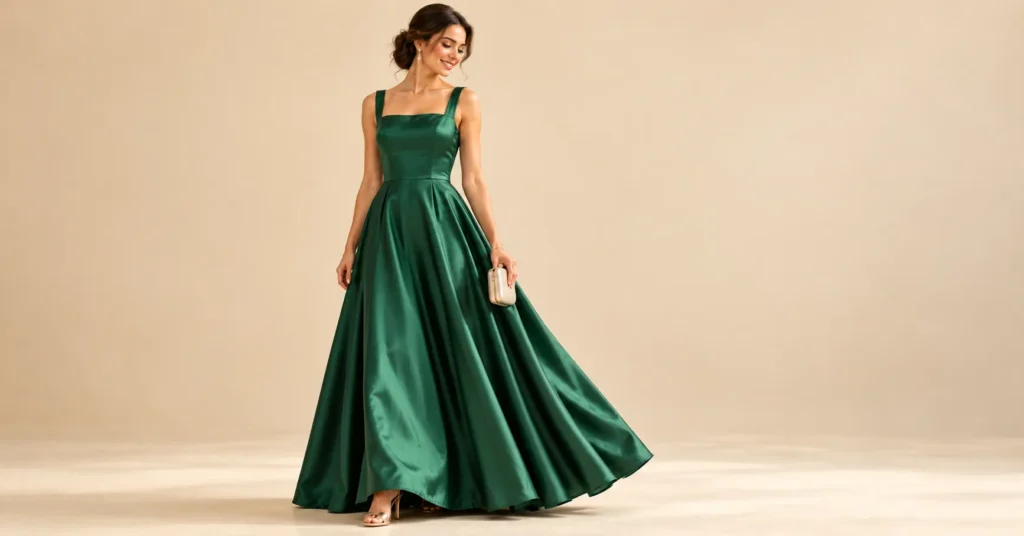
A floor length A-line gown is one of the most reliable formal silhouettes. It looks elegant in photos, moves gracefully on a dance floor, and doesn’t require shapewear to look polished.
For a formal A-line dress, the fabric does most of the work. Satin and silk charmeuse give a liquid sheen. Chiffon floats, and crepe drapes with quiet sophistication. Bridal designers use this cut so often that most bridal salons list “A-line” as one of their core shapes, next to ball gown and mermaid.
How to style it:
- Choose a strappy heeled sandal or a pointed pump. The hem should just graze the top of your shoe.
- Pick one statement accessory, such as chandelier earrings or a bold cuff, not both.
- Carry a structured clutch in a metallic or matching tone.
Necklines change the mood. A V-neck elongates the torso. An off the shoulder neckline frames the collarbones. A high halter feels modern and sleek.
Have your formal gown hemmed while you wear the exact shoes you’ll use on the day. Even a half inch difference changes how the skirt falls.
3. The Floral Print for Spring and Summer
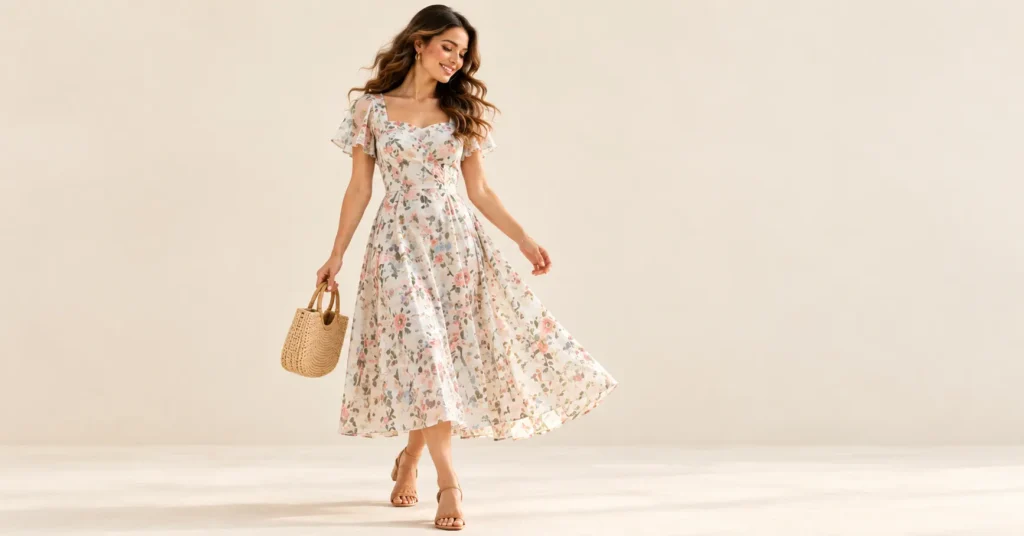
A floral A-line dress is the definition of easy charm. The flared skirt gives prints room to show. On a bodycon cut, the same pattern would stretch and distort.
Print scale matters more than color. Small, dense florals (often called ditsy prints) suit petite frames and casual settings. Large, painterly blooms suit taller figures and make a stronger statement at garden parties. Laura Ashley built its identity on romantic florals in this shape, and Reformation regularly releases modern takes in breezy viscose and linen.
How to style it:
Keep accessories quiet so the print stays the focus. Woven raffia bags, simple gold hoops, and tan sandals all work. For a sharper contrast, add a white cropped cardigan or a crisp denim jacket.
During fall, you can wear dark florals like burgundy, navy, and forest green. Add opaque tights and ankle boots to extend the dress past summer.
Hold the dress at arm’s length in the store or zoom out on the product photo. If the print blurs into one color, it will read as a solid from across a room.
4. The Wedding Guest A-Line Dress
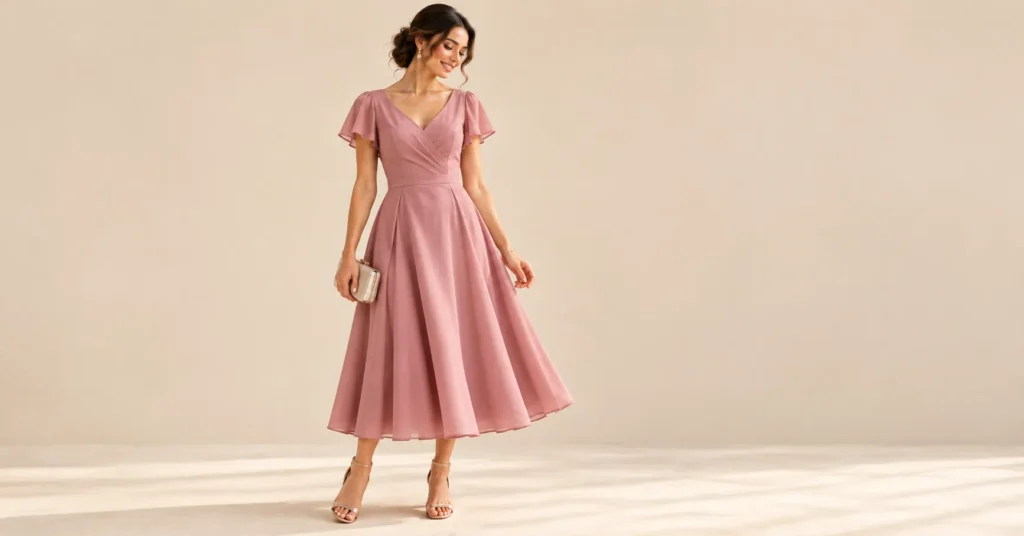
The wedding guest A-line dress is the safest choice when you don’t know the venue, the weather, or how long you’ll be on your feet. It photographs well, it’s modest enough for a ceremony, and it’s comfortable enough for the reception.
Match your choice to the dress code on the invitation:
| Dress Code | Length | Fabric | Example Look |
| Casual / Daytime | Knee or midi | Cotton, linen, light crepe | Pastel midi with block heel sandals |
| Cocktail | Knee to midi | Crepe, satin, chiffon | Jewel-tone satin midi with strappy heels |
| Semi-Formal | Midi to tea length | Silk, chiffon, lace | Navy lace midi with a metallic clutch |
| Black Tie | Floor length | Satin, silk, embellished tulle | Emerald satin gown with drop earrings |
Some wedding guest rules apply everywhere. Avoid white, ivory, and cream, which can read as bridal. Skip sequins at daytime ceremonies. If the ceremony takes place in a place of worship, bring a shawl or bolero to cover your shoulders.
Jewel tones like sapphire, emerald, and ruby look rich in photos and work in every season. Dusty rose, sage, and lavender suit spring and summer celebrations.
Read the invitation twice before you shop. Then search the venue’s photos online to check whether you’ll be on grass, sand, or a dance floor. That detail decides your shoes.
5. The Plus Size A-Line Dress
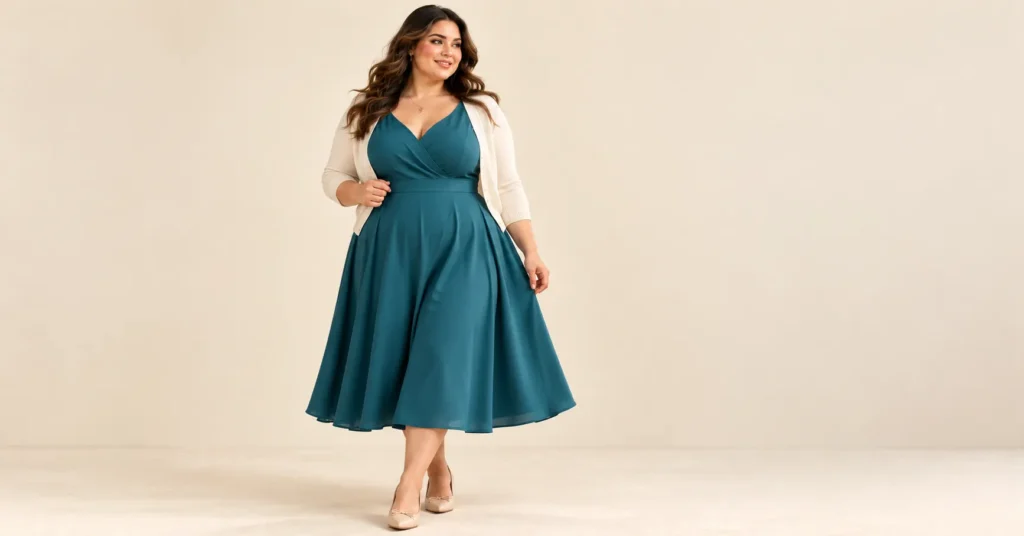
The plus size A-line dress earns its reputation as a flattering dress for curves. The cut defines the waist, skims the hips, and avoids the clingy fit that makes many dresses uncomfortable.
The right details make the difference. A wrap or faux wrap bodice adjusts to your bust and creates a V-neck that elongates your torso. Structured fabrics such as ponte, scuba, and medium weight crepe hold their shape instead of clinging. A defined waist seam or a self tie belt gives you a clear focal point.
Several brands design specifically for curvy bodies rather than scaling up straight sizes. Eloquii, Torrid, Universal Standard, and ASOS Curve all offer A-line styles cut for fuller busts and hips.
How to style it:
Pair a knee length or midi version with pointed flats or block heels for balance. Add a long pendant necklace to draw the eye vertically. Pick a lightweight duster cardigan for a long, unbroken line.
Check the brand’s size chart against your actual measurements, not your usual size. Fit varies widely between labels, especially at the bust.
6. The Boho Tiered Style
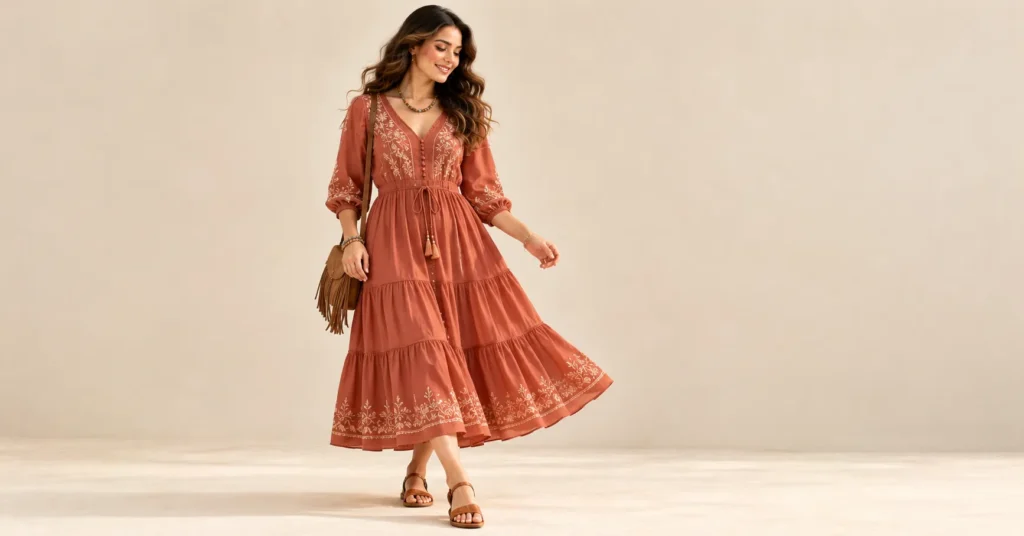
The boho A-line dress is relaxed, romantic, and made for movement. It usually has tiered skirts, airy cotton voile, and handcrafted details like embroidery, smocking, or lace inserts.
Tiers, which are horizontal panels of fabric that widen as they move down the skirt, add volume while keeping the A-line shape. Smocked bodices stretch to fit, so this style forgives size changes and feels comfortable all day. Free People and Spell are known for this aesthetic, often pairing earthy tones with peasant sleeves and tassel ties.
How to style it:
Lean into texture. Suede ankle boots or flat leather sandals, a fringed crossbody bag, and layered beaded necklaces complete the look. A wide brim felt hat works for outdoor festivals and fall weekends.
Choose earthy colors like rust, mustard, terracotta, olive, and cream. They pair easily with brown leather and natural fibers.
To keep the volume under control, choose a style with a defined waist or add a thin leather belt. Without some definition, tiered fabric can overwhelm a petite frame.
7. The Midi A-Line Dress
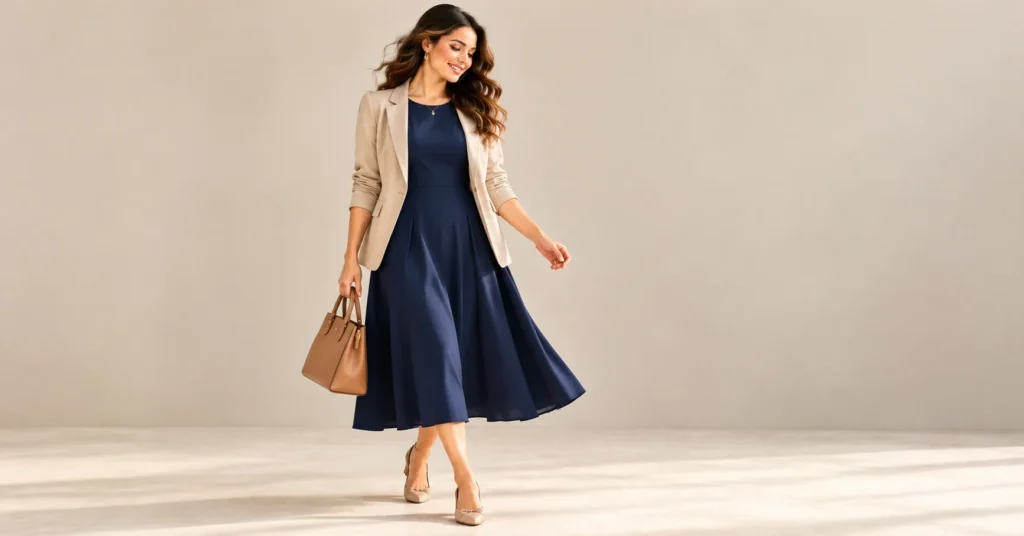
The midi A-line dress is the most versatile length you can buy. It falls between the knee and the ankle, usually around mid calf. It looks right at the office, at dinner, and at a daytime wedding.
The best midi hem hits just below the knee or at the narrowest part of your calf. If it lands at the widest part, your legs can look shorter. Petite women often do best with a hem that falls just below the knee. Taller women can carry a lower, mid calf length.
How to style it:
Shoes shape the midi length more than any other. Pointed toe flats and block heels lengthen the leg. Ankle strap sandals can cut the line, so pick nude or skin tone straps if you love the style. In cooler months, knee high boots tucked under the hem create a sleek, continuous look.
A midi in a solid neutral like black, camel, navy, or olive becomes a base you can restyle all week. Wear it with a blazer on Monday, sneakers on Saturday, and statement earrings for date night.
Measure from your waist to the narrowest point of your calf. Then compare that number to the “skirt length” listed on the product page before you order.
8. The Flowing Maxi
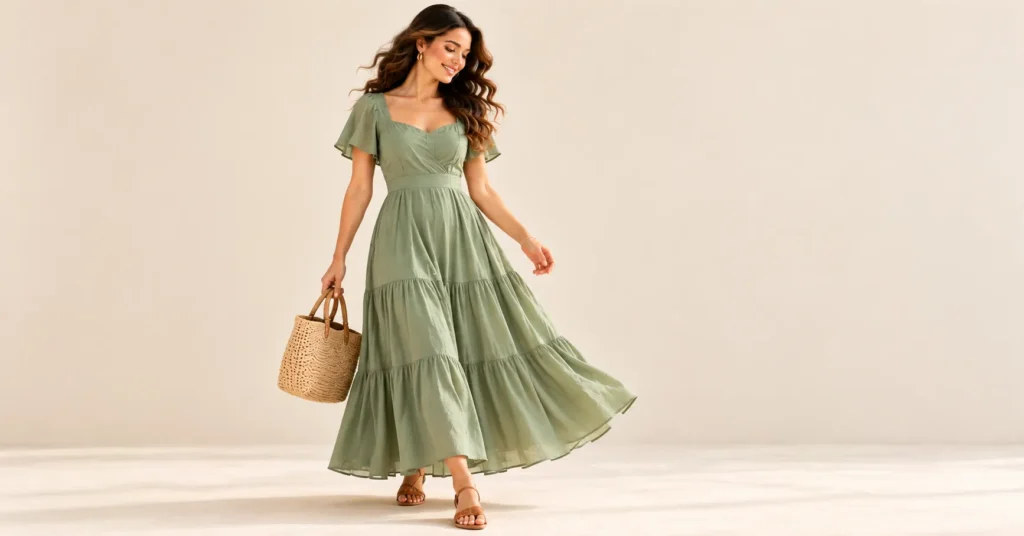
An A-line maxi dress gives you drama without effort. The ankle or floor length skirt flows as you walk. Because the cut flares gradually, it never looks stiff or heavy.
Maxi lengths suit beach vacations, summer evenings, and outdoor weddings. Lightweight fabrics such as chiffon, rayon, and cotton gauze keep the skirt airy. Heavier knits and velvet bring the same shape into fall and winter.
Petite women can wear maxi lengths with two adjustments. Choose a high or empire waistline to lengthen the leg line, and add a slim platform or wedge so the hem doesn’t drag.
How to style it:
Flat sandals and a straw tote suit beach days. For evening, switch to metallic heels and statement earrings. A cropped denim or leather jacket breaks up the long line and adds structure.
Walk up and down a flight of stairs in the dress before you commit. If you need to lift the hem to avoid stepping on it, have it shortened by an inch.
9. The Flirty Mini
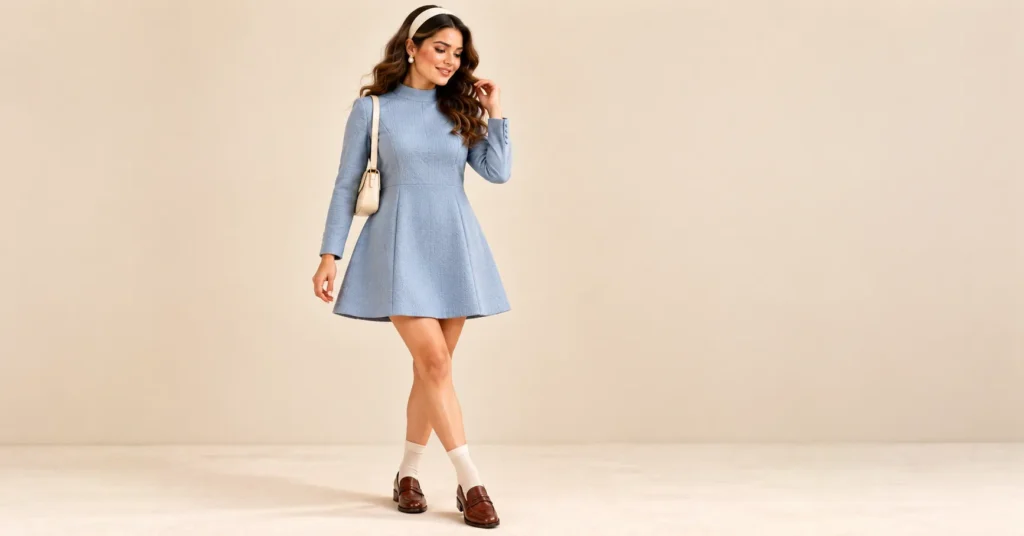
The mini is where the A-line went mainstream. Mary Quant and other London designers made short, trapeze like shapes the defining look of 1960s mod fashion. The style still feels fresh today.
A mini A-line dress differs from a skater dress in one key way: it flares gradually rather than from a tight waist, so it looks structured rather than bouncy. Woven fabrics like denim, corduroy, tweed, and structured cotton hold this crisp shape best.
How to style it:
- Day: Loafers or white sneakers with crew socks for an easy, retro feel.
- Night: Knee high boots or sling back heels with a mini shoulder bag.
- Cold weather: Opaque black tights, a turtleneck underneath, and Chelsea boots.
Proportion keeps the mini polished. A short hem pairs best with a higher neckline or longer sleeves. Showing leg and full shoulders together reads as more casual.
Sit down in front of a mirror before you buy. If the hem rises more than a few inches above mid thigh, size up or choose a slightly longer cut.
10. The Office Ready A-Line Dress
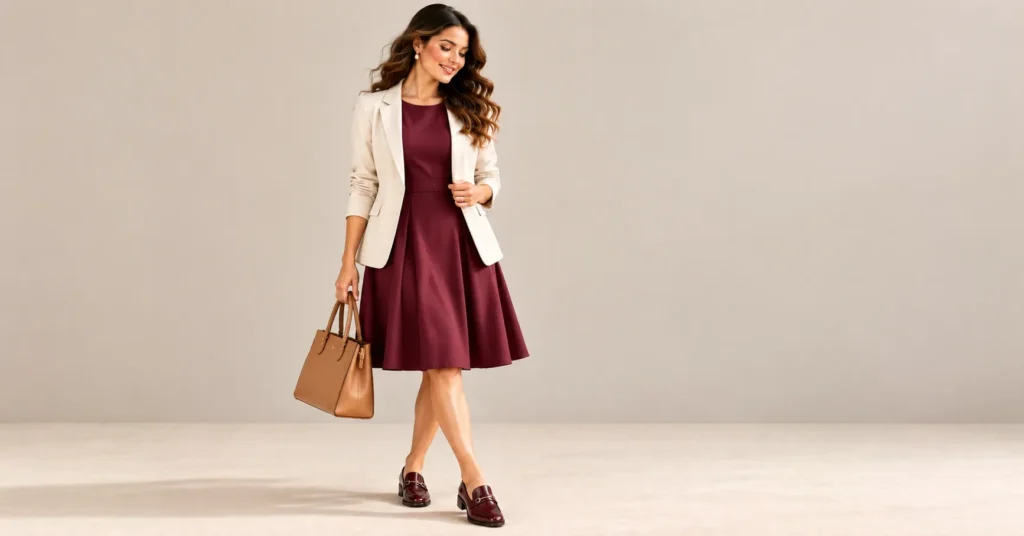
The office ready A-line dress is a professional uniform in one piece. It looks polished, allows full movement through a long workday, and saves you from coordinating separates every morning.
Work wear calls for structured fabrics. Ponte knit resists wrinkles and feels like a sweat pant while looking like tailoring. Wool crepe drapes cleanly in conservative offices, and cotton sateen gives a crisp finish for warmer months. Ann Taylor, Banana Republic, and M.M.LaFleur all build work wear collections around this cut because it suits so many body types and dress codes.
How to style it:
Layer a tailored blazer or a fine knit cardigan over the dress. Add pointed pumps, loafers, or low block heels. A structured leather tote and simple stud earrings finish the look. Choose a knee length or just below the knee hem and a neckline that sits no lower than a few inches below the collarbone.
Navy, charcoal, black, burgundy, and deep green work in nearly every office. Add a patterned silk scarf to change the look without buying another dress.
Build a three dress rotation in neutral colors. With two blazers and two pairs of shoes, you’ll have more than ten distinct outfits.
A-Line Dress Styling Cheat Sheet
This table gathers all ten ideas into a quick reference. Save it, screenshot it, or keep it open while you shop.
| Style | Best Length | Ideal Fabric | Shoes | Key Accessory | Occasion |
| Casual Cotton | Knee | Cotton, linen | White sneakers | Denim jacket | Errands, brunch |
| Formal Gown | Floor | Satin, chiffon, silk | Strappy heels | Statement earrings | Galas, black tie |
| Floral | Knee to midi | Viscose, cotton | Tan sandals | Raffia bag | Garden parties, picnics |
| Wedding Guest | Midi to floor | Crepe, satin, lace | Block heels | Metallic clutch | Ceremonies, receptions |
| Plus Size | Knee to midi | Ponte, crepe | Pointed flats | Pendant necklace | Everyday, events |
| Boho | Midi to maxi | Cotton voile | Suede ankle boots | Fringed bag | Festivals, weekends |
| Midi | Mid-calf | Crepe, cotton | Pointed flats | Tailored blazer | Work, dinner |
| Maxi | Ankle to floor | Chiffon, rayon | Flat sandals | Straw tote | Vacations, evenings |
| Mini | Mid thigh | Denim, tweed | Loafers, knee boots | Opaque tights | Casual, nights out |
| Office-Ready | Knee | Ponte, wool crepe | Pumps, loafers | Leather tote | Work, interviews |
How to Choose the Right A-Line Dress
The right A-line dress fits at three points: the shoulders, the bust, and the waist. The skirt takes care of the rest, which makes buying simpler than with most silhouettes. Follow these steps to get the fit right the first time.
- Measure your bust, waist, and hips. Use a soft tape measure and record each number in inches. Compare them to the brand’s size chart rather than relying on your usual size.
- Find your best waistline. Choose a natural waist if you want to highlight curves. Choose an empire waist if you want fabric to flow past your midsection.
- Pick a length for your height. Petite frames suit mini, knee, and just below the knee hems. Taller frames can carry mid calf midis and full maxis.
- Check the fabric weight. Hold the fabric up to light. If you can see through it clearly, plan on a slip or check that it’s lined.
- Test the fit in motion. Sit, walk, raise your arms, and bend forward. The bodice shouldn’t gape, pull, or ride up.
- Inspect the construction. Look for a lining, a smooth invisible zipper, and finished seams. These details decide whether the dress lasts one season or five.
Shoulder fit matters most because it’s the hardest part for a tailor to change. If the shoulders and bust fit, a tailor can easily adjust the hem or take in the waist.
Save this list on your phone and run through it in the fitting room before you head to the register.
Fabric Guide: Matching Material to the Moment
Fabric decides how the skirt drapes, how it handles heat, and how formal it looks. The same cut in two different fabrics can feel like two completely different dresses.
| Fabric | Drape | Best Season | Formality | Care Level |
| Cotton | Crisp, structured | Spring, summer | Casual | Easy, machine wash |
| Linen | Relaxed, textured | Summer | Casual to smart | Moderate, wrinkles easily |
| Crepe | Smooth, fluid | All year | Smart to formal | Moderate |
| Satin | Glossy, liquid | All year | Formal | High, often dry clean |
| Chiffon | Light, floaty | Spring, summer | Semi-formal to formal | High, delicate |
| Ponte Knit | Structured, stretchy | Fall, winter, spring | Office, smart casual | Easy, wrinkle resistant |
| Velvet | Rich, heavy | Fall, winter | Evening, holiday | High |
| Denim | Stiff, structured | Fall, spring | Casual | Easy |
Stiffer fabrics like cotton, denim, and tweed hold the triangle shape crisply. Fluid fabrics like chiffon, crepe, and satin soften it into a gentle flow. Neither is better. They simply serve different moods.
Before you buy, scrunch a corner of the fabric in your fist for five seconds. If it stays heavily creased, expect to steam it before every wear.
How to Wear Your Dress Year Round
This silhouette isn’t only a summer style. A few layering choices carry the same dress through all four seasons.
Fall and Winter
Layer a fine gauge turtleneck under a sleeveless or short sleeve dress. Add opaque tights and knee high boots or Chelsea boots. A long wool coat should be at least as long as the hem, so the skirt doesn’t peek out awkwardly below it.
Rich fabrics extend the look. Velvet, corduroy, wool, and heavy ponte all keep the flare while adding warmth.
Spring and Summer
Shed the layers and let the fabric breathe. Choose linen, cotton, and chiffon in lighter colors and soft prints. Swap boots for espadrilles, slides, or minimalist sneakers. A wide brim straw hat and sunglasses finish the outfit.
Plan your next seasonal swap by picking one dress you already own. Then list the three layering pieces that will carry it into the next season.
Common Styling Mistakes to Avoid
A flattering dress can still look off when the details clash with the silhouette. These are the most frequent missteps:
- Choosing the wrong size to “hide” your shape. An oversized bodice erases your waist and turns the flare into a tent.
- Pairing it with bulky outerwear. Puffy jackets that end at the hip fight the skirt’s line. Choose cropped or knee length coats instead.
- Ignoring the hem to shoe relationship. Midi hems with chunky ankle straps visually shorten your legs.
- Over accessorizing busy prints. A bold floral needs simple jewelry, not three competing statement pieces.
- Skipping the slip. Unlined, lightweight fabrics can turn sheer in sunlight.
The fix for nearly every mistake is the same: let the dress lead and keep everything else supporting it. A well chosen A-line dress needs very little extra help to look polished.
Take a full length mirror photo of your outfit before you leave. A camera often catches proportion problems your eye misses.
Conclusion
The A-line dress has lasted for seventy years because it solves a real problem: it flatters different bodies without asking you to sacrifice comfort. From Dior’s 1955 debut to the mod minis of the 1960s and today’s office staples, the shape keeps adapting to new fabrics, lengths, and occasions.
The ten ideas above give you a starting point for almost any event in your calendar. A cotton version covers weekends, and a floor length satin gown covers black tie. A boho tiered style handles festivals, and a ponte office dress takes care of Monday mornings. With the right fabric, length, and shoes, one silhouette can carry an entire wardrobe.
Start with the occasion you dress for most often. Pick the matching idea from the cheat sheet, take your measurements, and shop for that one dress first.
Frequently Asked Questions about A-line dress
What body type looks best in an A-line dress?
Nearly every body type looks good in this silhouette. It flatters pear shapes by skimming the hips, apple shapes when cut with an empire waist, and rectangle shapes by adding the look of curves. Hourglass figures benefit from a defined waist seam.
What is the difference between A-line and fit and flare?
An A-line flares gradually from the bust or waist in one smooth line. A fit and flare hugs the waist tightly and then flares out sharply. The A-line feels looser and more relaxed, while the fit and flare highlights a defined waist more dramatically.
Can petite women wear A-line maxi dresses?
Yes. Petite women should choose a high or empire waistline to lengthen the leg line and add a slim platform or wedge heel. Hemming the maxi so it just grazes the top of the shoe keeps the length from overwhelming the frame.
What shoes go best with an A-line midi?
Pointed toe flats, block heels, and knee high boots work best because they lengthen the leg. If you love ankle strap sandals, choose a nude or skin tone strap so it doesn’t visually cut your leg at the ankle.
Is an A-line dress appropriate for work?
Yes. Choose a knee length or just below the knee hem in a structured fabric like ponte knit or wool crepe. Layer a blazer or cardigan on top and stick to neutral shades such as navy, charcoal, or black for a polished, professional look.
How do I make a casual dress look more formal?
Swap sneakers for heels or pointed flats, add a structured blazer, and choose one statement accessory such as bold earrings or a metallic clutch. Fabric matters too. A satin or crepe version will always read as more formal than cotton.
Is a skater dress the same as an A-line?
No. A skater dress is a type of fit and flare made from stretchy knit, with a fitted waist and a full circle skirt. An A-line flares more gradually and is often made from woven fabrics, giving it a more structured, classic shape.
What should I wear over a flared dress in winter?
Choose a long wool coat that covers the hem fully, or a cropped jacket that ends at the waist. Avoid hip-length puffer jackets, which fight the skirt’s line. Add opaque tights and boots for warmth.