10 Stunning Atonement Green Dress Styles That Capture Timeless 1930s Glamour
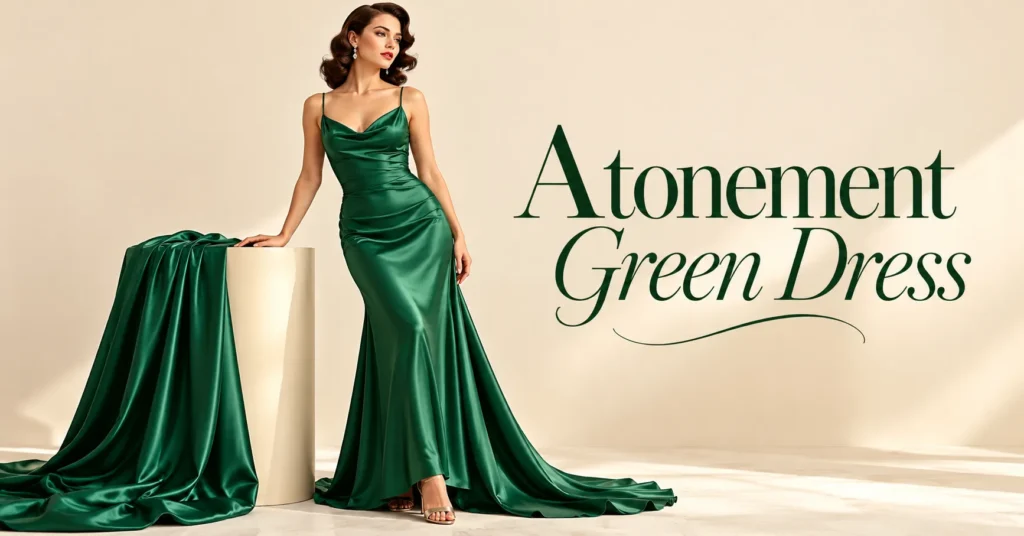
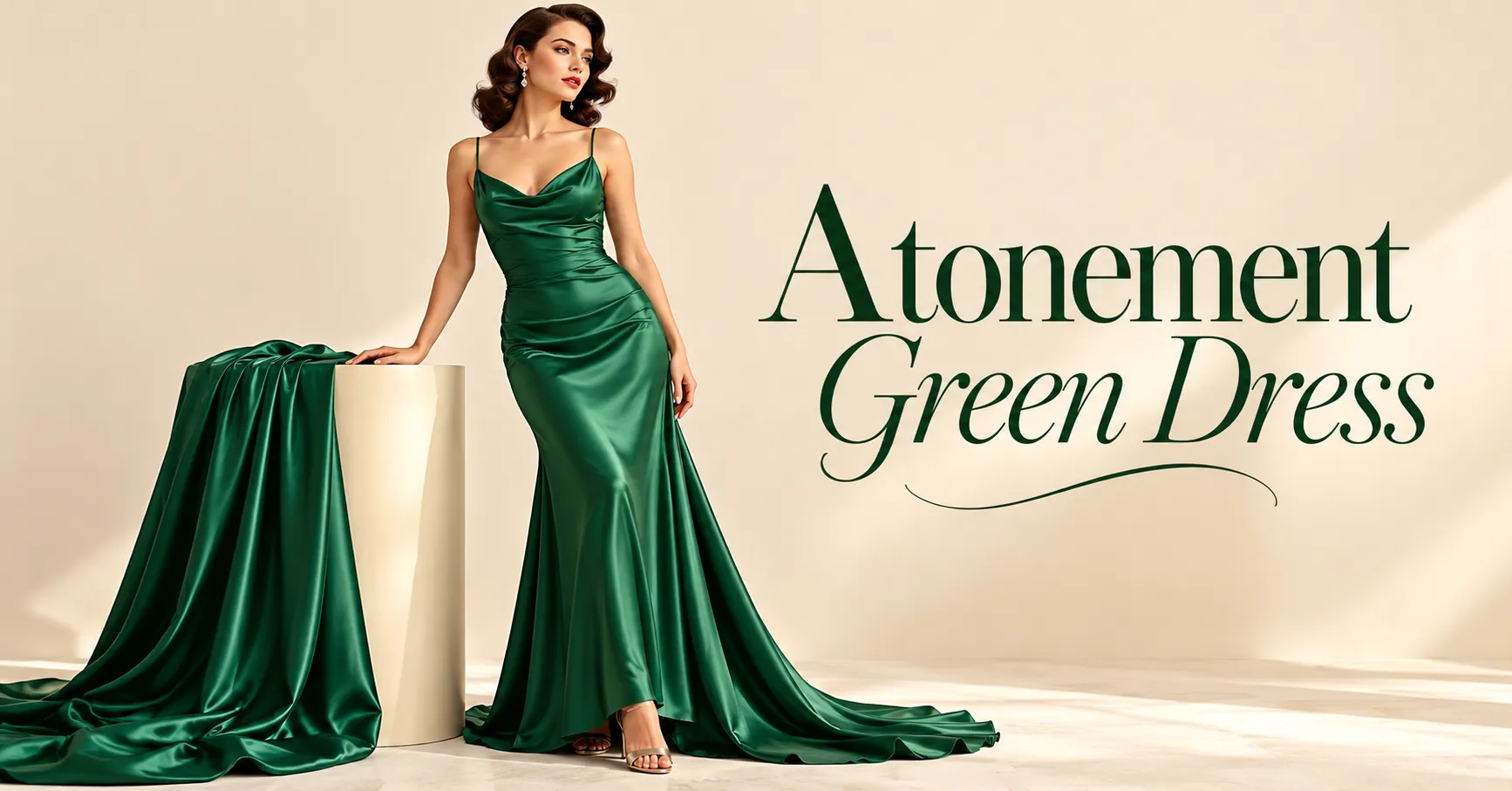
Most people who see it once remember it. The atonement green dress is the emerald silk gown Keira Knightley wore as Cecilia Tallis in the 2007 film Atonement. It remains one of the most recognized costumes in film history. It is backless, fluid, and elegant, and it shows up every year at proms, galas, and weddings.
Recreating it is the hard part. The original was a custom piece cut on the bias from layered silk. Most off the rack copies miss the drape, the color, or the back.
This guide covers 10 atonement green dress styles, from faithful bias-cut replicas to modern satin slips and winter velvet versions. For each one, you’ll see what defines the style, who it suits, and how to choose the fabric, fit, and accessories. The goal is a dress that looks deliberate, not like a costume.
What Is the Atonement Green Dress?
The atonement green dress is a backless, bias cut emerald gown. Jacqueline Durran designed it for Joe Wright’s film adaptation of Ian McEwan’s 2001 novel. A bias cut dress is a garment cut diagonally across the fabric’s grain. Cut that way, the fabric stretches over the body and then falls in soft ripples toward the floor. That technique explains how the gown moves on screen.
The film is set in 1935 at the Tallis family’s English country house. Cecilia wears the gown on the evening of a family dinner, the night the story turns on a single misunderstanding. The dress frames her scenes with Robbie Turner (James McAvoy), including the famous library scene.
The Costume Design Story Behind the Gown
The film’s costumes earned Durran an Academy Award nomination for Best Costume Design. She later won Oscars for Anna Karenina (2012) and Little Women (2019), so her period work carries real weight.
Durran started from authentic 1930s evening dress shapes and adjusted them for the camera and the character. The gown layers fine silk and chiffon in slightly different greens. As Knightley moves, the color shifts from deep emerald to almost jade. Thin spaghetti straps, a plunging open back, a fitted waist, and a floor-length skirt complete the silhouette.
A few small details define the look:
- A deep back opening that drops toward the lower spine
- A narrow band that defines the waist
- A softly gathered bodice with a low front neckline
- A hem that pools slightly on the floor
Why the Dress Still Ranks Among Iconic Movie Dresses
The Keira Knightley green dress is still a reference point nearly two decades after the film’s release. In 2008, a poll by Sky Movies and InStyle magazine named it the greatest film costume of all time. It beat Audrey Hepburn’s black Givenchy dress from Breakfast at Tiffany’s.
The reason is simple: the dress tells the story. Green signals desire, envy, and life. Cecilia’s gown captures one perfect evening just before everything falls apart. The film’s fashion holds up because it pairs period accuracy with emotion, and that combination doesn’t date.
Your next step: save a few high resolution stills from the library and dinner scenes to use as a visual reference while you shop.
What Makes an Atonement Green Dress Authentic?
An authentic atonement green dress combines four elements: color, cut, back, and length. Miss one, and the look drifts toward generic green formalwear.
Use this checklist when you evaluate any dress:
- Check the color. Look for true emerald or a deep jewel green with blue undertones, not olive or lime.
- Confirm the cut. A bias cut skirt drapes and follows the body. A straight grain skirt hangs stiffly.
- Inspect the back. The original is open low, with thin straps crossing the bare skin.
- Measure the length. Floor length with a slight pool or a short train matches the film.
- Feel the fabric. Silk, silk charmeuse (a lightweight silk with a satin face), or a quality satin reflects light the way the original does.
Each of the 10 styles below changes one or more of these elements. That flexibility lets you match the gown to your body, budget, and event.
10 Atonement Green Dress Styles You Can Wear Today
1. The Classic Backless Bias Cut Gown
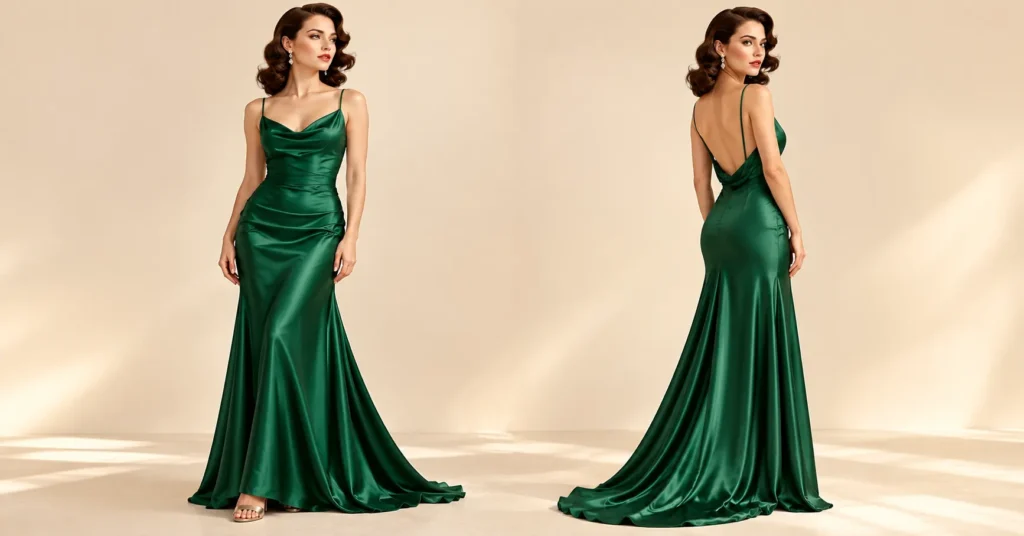
The classic backless bias cut gown is the closest you can get to the original atonement green dress. It copies every key feature: emerald silk, spaghetti straps, a plunging back, and a floor length bias cut skirt.
This style demands precision. Bias cut fabric shows every seam and every line underneath, so fit matters more here than with almost any other silhouette. A good replica uses silk charmeuse or crepe back satin and has a lining that doesn’t fight the drape.
Best for: Black tie weddings, formal galas, themed events, and anyone who wants the full film effect.
Styling tip: Keep jewelry minimal. In the film, Cecilia wears almost no accessories, which makes the back the focal point.
Before you buy, ask the seller whether the skirt is truly cut on the bias. Many listings use the term loosely.
2. The Halter Neck Emerald Gown
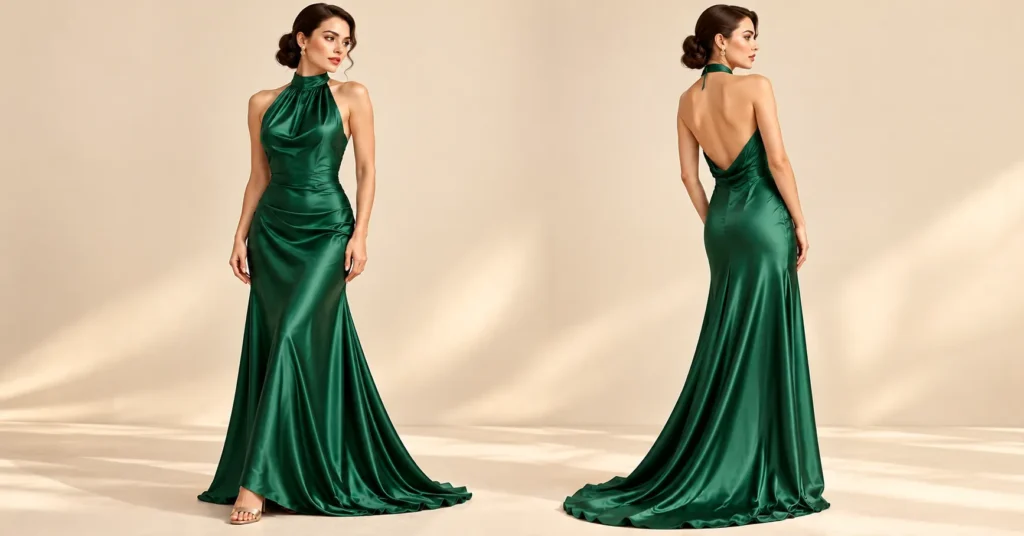
A halter neck emerald gown replaces spaghetti straps with a strap that fastens behind the neck. It keeps the open back and adds support across the bust.
This is the most practical variation if you want more security without giving up the low back. The halter shape also draws the eye to the shoulders and collarbones. That matches the clean lines of late 1930s eveningwear, when halter necklines became a fashionable choice for evening gowns.
Best for: Fuller busts, events with a lot of dancing, and outdoor summer parties.
Look for: A strap wide enough to spread the weight, and a back closure that lies flat under the fabric.
Try the dress on with your intended shoes to check that the hem still clears the floor when you walk.
3. The Green Satin Slip Dress
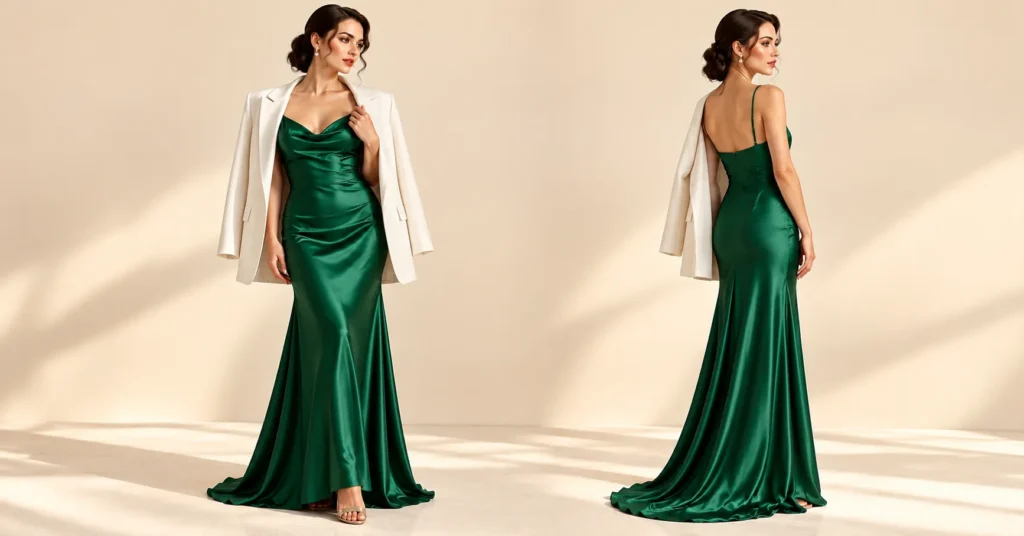
A green satin slip dress is a simpler, lighter take on the gown. It usually has thin straps, a bias cut body, and a cowl or V neckline. Many versions drop the dramatic open back but keep the fluid drape.
The slip dress is the most versatile style on this list. Wear it floor length for evening events, or choose a midi length for cocktail parties. Contemporary labels such as Reformation and Réalisation Par regularly release bias cut satin slips in jewel tones, so a ready made option is easy to find.
Best for: Cocktail parties, rehearsal dinners, date nights, and layering under a tailored blazer.
Watch out for: Thin polyester satin. It shows every crease and clings in the wrong places.
Pack a fitted cashmere cardigan if the venue runs cold.
4. The Vintage 1930s Reproduction Gown
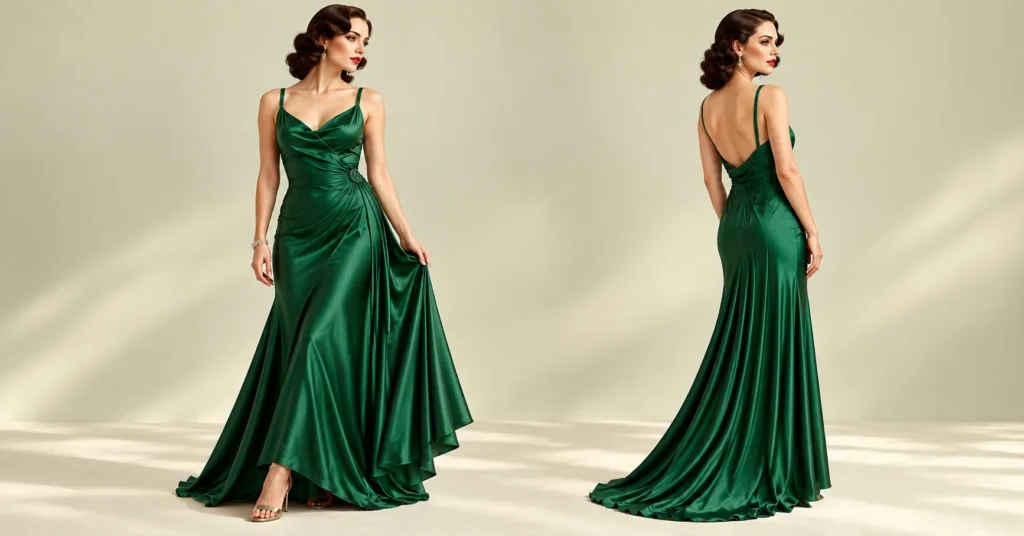
A vintage 1930s reproduction gown follows authentic period construction instead of copying only the movie version. It is a vintage formal gown made from historical patterns, with period seaming, side closures, and period appropriate fabrics.
Real 1930s evening dresses depended on Madeleine Vionnet’s bias cut technique, which she developed and popularized in the 1920s and 1930s. Hollywood stars like Jean Harlow made clinging satin gowns the defining image of the decade. A reproduction gives you that history plus the green the film made famous.
Best for: Vintage lovers, Art Deco or Gatsby themed events, and period weddings.
Look for: Reproduction pattern companies, specialist dressmakers, or vintage inspired brands that list construction details openly.
If you plan to hire a dressmaker, search sewing pattern archives for “1930s bias evening gown.”
5. The A-Line Atonement Green Dress
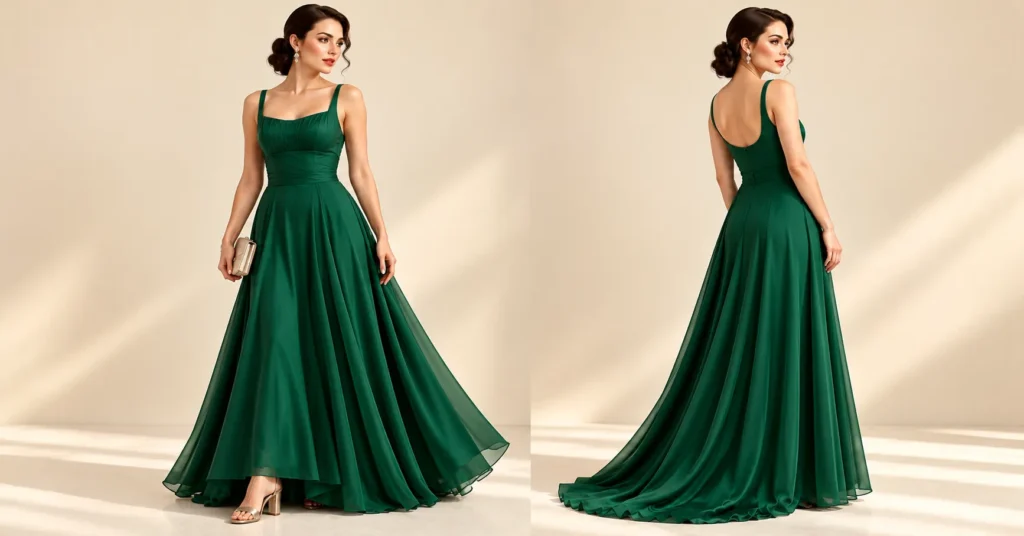
An A-line atonement green dress fits through the bodice and flares gradually from the waist to the hem. It keeps the emerald color and the open back but swaps the clinging bias skirt for a more forgiving shape.
This style suits more body types because it skims the hips instead of hugging them. It also hides the undergarment lines that bias cut silk exposes. The trade off is drape: an A-line skirt moves less fluidly than the original.
Best for: Proms, bridesmaids, and anyone who wants comfort and coverage through the hips.
Look for: A chiffon or crepe skirt, which keeps some of the softness of the film version.
Request a fabric swatch before ordering online so you can compare the green against stills from the film.
6. The Cowl Neck Draped Gown
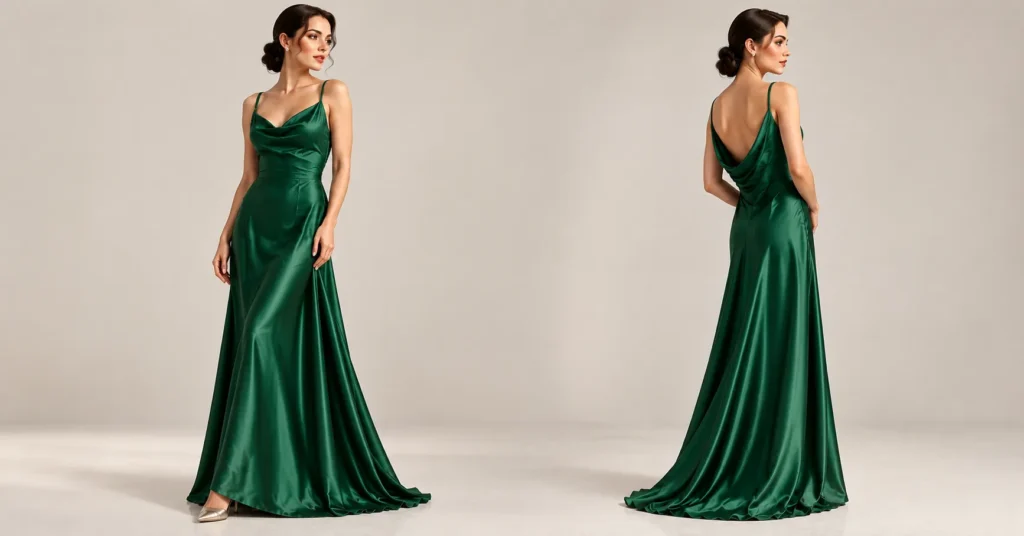
A cowl neck draped gown has fabric that falls in soft folds at the neckline or the back. Cowls form naturally when fabric is cut on the bias, so they fit the period.
A cowl back is a popular twist on the atonement green dress. Instead of a sharp V, the fabric hangs in loose curves across the lower back, which adds movement and a softer line. A front cowl adds volume at the bust, which balances wider hips or narrow shoulders.
Best for: Evening weddings, opera nights, and anyone who wants drama with a little more coverage.
Styling tip: Skip the necklace with a front cowl. The draping already does the work.
Check how the cowl sits when you raise your arms. A well weighted cowl stays in place.
7. The Midi Length Cocktail Version
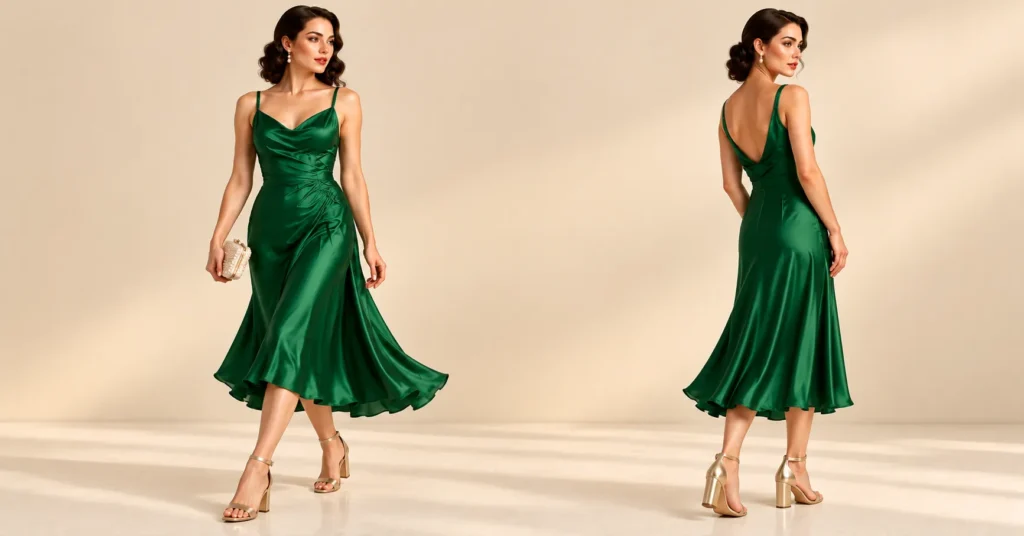
A midi length cocktail version shortens the gown to mid calf. It keeps the emerald tone, the slim straps, and the bias drape. The result is an evening gown you can wear to a daytime or early evening event.
The midi atonement green dress works well for garden parties and semi formal weddings where floor length feels like too much. Pair it with strappy sandals, or with block heels for outdoor venues. You keep the recognizable color and line without the full formality.
Best for: Semi-formal weddings, cocktail hours, and holiday parties.
Look for: A hem that hits at the narrowest part of your calf. That length gives the most flattering line.
Read the dress code on the invitation before you choose between midi and floor length.
8. The Emerald Velvet Winter Gown
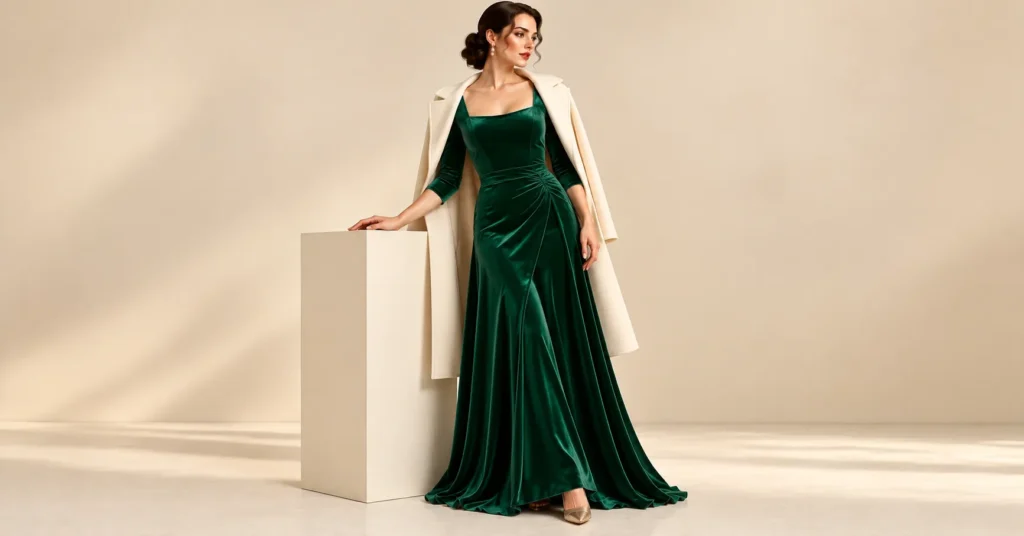
An emerald velvet winter gown recreates the silhouette in a heavier fabric made for cold weather events. Velvet absorbs light, so the green looks richer and darker than it does in silk.
Velvet changes the mood of the atonement green dress. It feels opulent rather than ethereal, which makes it a strong choice for December galas, New Year’s Eve parties, and winter weddings. Choose stretch velvet or silk velvet. Silk velvet drapes closer to the original.
Best for: Winter formal events and evening receptions in cool climates.
Watch out for: Stiff, heavy velvet that adds bulk. A bias-cut velvet should still move.
Steam velvet instead of ironing it so you don’t crush the pile (the raised fibers that give velvet its texture).
9. The Layered Chiffon Gown
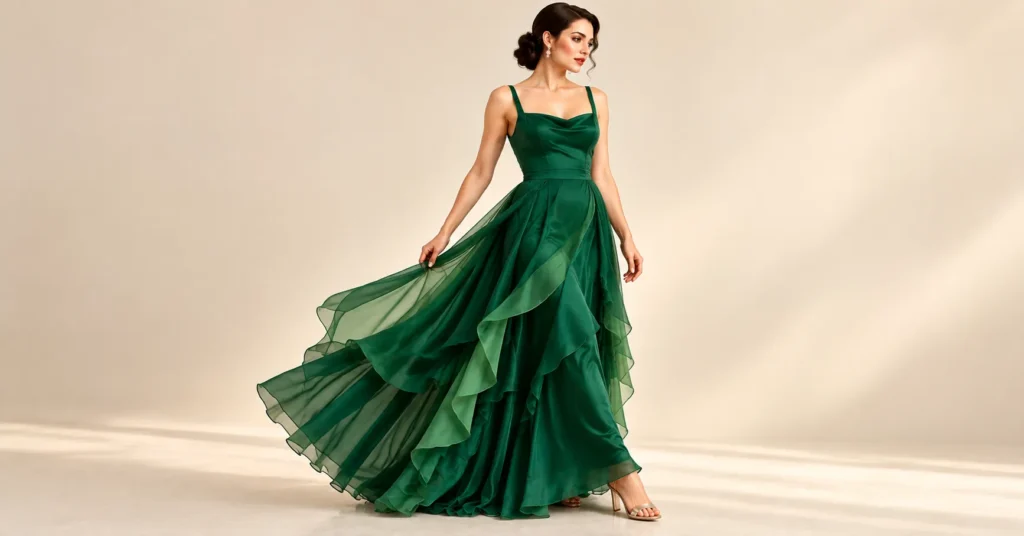
A layered chiffon gown stacks sheer fabric over a silk or satin base. This construction copies the original’s layered approach, where several shades of green combine to create depth.
A chiffon atonement green dress floats more than satin and photographs well in motion. It suits outdoor events and beach weddings, where heavier fabric would feel hot. The sheer layers also soften the color into a slightly lighter emerald.
Best for: Summer weddings, outdoor photo shoots, and bridal parties.
Look for: At least two layers, with the outer chiffon a shade lighter or darker than the base.
Hold the fabric up to natural light before you buy to see how the layers work together.
10. The Bridesmaid and Wedding Guest Adaptation
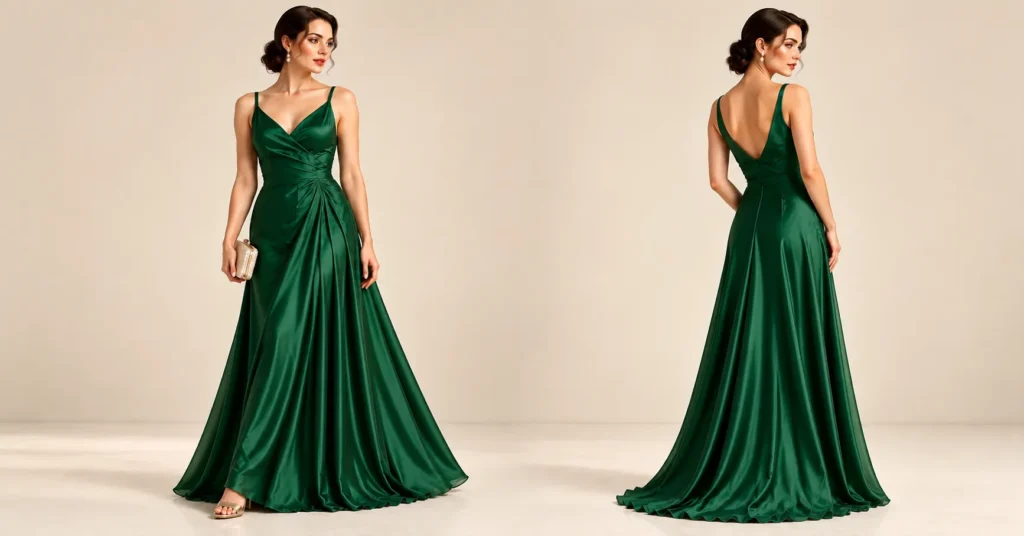
A bridesmaid and wedding guest adaptation adjusts the gown for group settings and wedding etiquette. These versions often have a more modest back, adjustable straps, and coordinated lengths.
Emerald bridesmaid dresses are a popular choice, and the atonement green dress gives bridal parties a shared reference point. Brands such as Azazie and Birdy Grey offer emerald satin and chiffon options in several necklines. Each bridesmaid can pick a cut that suits her while the group still looks unified.
Wedding guests can wear the style too. Just confirm the couple hasn’t chosen emerald for the bridal party.
Best for: Bridal parties, formal wedding guests, and engagement parties.
Send one film still to your whole bridal party so everyone matches against the same color.
Atonement Green Dress Styles Compared
Each style trades some authenticity for comfort, coverage, or seasonality. Use this table to narrow your shortlist.
| Style | Silhouette | Back Detail | Best Fabric | Best Occasion | Fit Difficulty |
| Classic Backless Bias Cut | Body skimming, floor length | Deep open back | Silk charmeuse | Black tietie, galas | High |
| Halter Neck | Fitted bodice, fluid skirt | Open back | Satin, crepe | Dancing, summer parties | Medium |
| Green Satin Slip | Straight, fluid | Low or moderate | Silk or heavy satin | Cocktail, rehearsal dinners | Medium |
| Vintage 1930s Reproduction | Period bias cut | Varies by pattern | Silk, rayon crepe | Themed events, period weddings | High |
| A-Line | Fitted top, flared skirt | Open back | Chiffon, crepe | Prom, bridesmaids | Low |
| Cowl Neck Draped | Fluid with soft folds | Cowl back | Silk, satin | Evening weddings, opera | Medium |
| Midi Cocktail | Mid-calf bias-cut | Low back | Satin | Semi-formal events | Medium |
| Emerald Velvet | Body-skimming | Low back | Silk velvet | Winter galas | Medium |
| Layered Chiffon | Floaty, layered | Open back | Chiffon over satin | Summer and beach weddings | Low |
| Bridesmaid Adaptation | Varies | Modest | Satin, chiffon | Weddings | Low |
The pattern is clear: the more faithful the style, the harder it is to fit. If you want the exact film look, budget for professional alterations.
How to Choose the Right Atonement Green Dress for You
Choosing the right atonement green dress starts with your event, then your body, then your budget. Working in that order keeps you from buying a beautiful gown that doesn’t suit the occasion.
Follow these steps:
- Define the occasion. Black tie events call for floor length. Semi-formal and daytime events suit midi lengths.
- Identify your fit priorities. Decide whether you need bust support, hip coverage, or freedom to dance.
- Match the fabric to the season. Choose silk or chiffon for warm months and velvet for winter.
- Set a budget. Include the cost of alterations, which can add 15–30% to the total.
- Book alterations early. Bias-cut gowns often need two or three fittings, so schedule them at least four weeks before your event.
Matching Styles to Body Types
Fit is personal, but a few patterns hold true across the 10 styles.
| Priority | Best Styles | Why It Works |
| Hip coverage | A-line, layered chiffon | Skirts flare away from the hips |
| Bust support | Halter neck, cowl front | Wider straps or added fabric give structure |
| Height and length | Classic bias-cut, velvet | Unbroken vertical lines elongate the frame |
| Petite frame | Midi cocktail, slip dress | Shorter hems stop fabric from overwhelming you |
| Comfort | A-line, bridesmaid adaptation | Looser cuts allow easy movement |
Take your bust, waist, and hip measurements before you shop. Then compare them against each brand’s size chart instead of relying on your usual size.
Fabric Guide: Silk vs. Satin vs. Velvet vs. Chiffon
Fabric decides whether your dress looks like the film or like a costume shop copy. An emerald green silk gown remains the gold standard because silk drapes, breathes, and reflects light with a soft glow instead of a harsh shine.
| Fabric | Drape | Shine | Typical Price Range | Care Level | Closest to Original? |
| Silk charmeuse | Excellent | Soft luster | High | Dry clean only | Yes |
| Polyester satin | Fair | High gloss | Low | Machine-washable (often) | Partially |
| Crepe-back satin | Very good | Moderate | Medium | Dry clean recommended | Close |
| Silk velvet | Good | Deep, matte glow | High | Steam and dry clean | Seasonal alternative |
| Chiffon | Floaty | Low | Low to medium | Hand wash or dry clean | Partially (as overlay) |
A green satin dress in crepe back satin is the best middle ground. It costs less than pure silk but drapes far better than thin polyester. Rub the fabric between your fingers before you commit: quality satin feels cool and weighty, while cheap satin feels slippery and thin.
Order swatches from two or three suppliers and compare them side by side in daylight.
How to Style Your Atonement Green Dress
Styling turns a green gown into an atonement green dress moment. The film’s look is restrained: it lets the color and the cut do the talking.
Hair
Cecilia wears her hair in soft, sculpted waves set close to the head, a classic 1930s finger-wave style. To recreate it:
- Apply setting lotion to damp hair.
- Create a deep side part on your preferred side.
- Set the waves with pin curls or a curling iron.
- Brush the curls out gently once they cool, then pin them softly at the nape.
Shorter hair works well here, and longer hair can be pinned into a low, loose chignon.
Makeup
Keep the makeup clean and luminous. Use dewy skin, softly defined brows, neutral eyeshadow, and a muted rose or berry lip. A red lip also fits the period, but a softer tone matches Cecilia’s look in the film more closely.
Accessories and Shoes
Less is more. Choose small drop earrings, a delicate bracelet, or no jewelry at all. Metallic strappy sandals in gold or silver keep the eye on the dress. A beaded clutch nods to 1930s eveningwear without competing with the gown.
Undergarments
An open back limits your options. Silicone adhesive cups, backless body tape, or a low-back convertible bra keep lines invisible. Choose seamless underwear in a shade close to your skin tone, because bias cut silk shows everything.
Do a full dress rehearsal at home, with every layer and accessory, at least a week before your event.
Where to Buy: Custom, Ready Made, or Vintage
Where you buy matters as much as what you buy. Each route trades cost against accuracy and fit.
| Option | Typical Cost | Accuracy to Film | Fit | Lead Time |
| Ready-made retail | $80–$400 | Moderate | Standard sizing | Days |
| Custom dressmaker (e.g., Etsy sellers) | $250–$900 | High | Made to measure | 3–8 weeks |
| Couture or bespoke | $1,000+ | Very high | Perfect | 2–4 months |
| Vintage original (1930s) | $300–$2,000+ | Period-authentic | Rarely exact | Varies |
Custom dressmakers offer the best balance for most people. Look for sellers who post photos of finished gowns on real customers rather than the film still alone. Read reviews for comments on color accuracy and drape.
Before you order a custom atonement green dress, ask the dressmaker to confirm the fabric, the cut, and the number of fittings included.
How to Care for Your Gown
Proper care protects your investment. Silk and satin damage easily, and the bias cut can stretch out of shape if you store the dress badly.
- Read the care label before you clean anything.
- Spot-clean small marks with a damp cloth and no rubbing.
- Dry clean silk through a cleaner experienced with delicate fabrics.
- Store the dress flat or folded in acid-free tissue. Long-term hanging can stretch bias-cut fabric.
- Keep it away from sunlight, which fades emerald dye over time.
A breathable cotton garment bag protects your atonement green dress far better than plastic dry cleaning covers.
Conclusion
The atonement green dress earned its place among iconic movie dresses for one reason: every detail serves the story. The emerald color, the bias cut, and the open back still look modern nearly 20 years later.
You don’t need a film wardrobe budget to wear it well. Start with the occasion, choose the style that suits your body and season, and put most of your money into fabric and fit. A well fitted crepe back satin gown will always beat an ill fitting silk one.
Pick one of the 10 styles above, order fabric swatches this week, and book your first fitting so your atonement green dress is ready well before your event.
Frequently Asked Questions about Atonement Green Dress
What color is the Atonement green dress exactly?
The atonement green dress is a deep emerald green with blue undertones. Layers of silk and chiffon in slightly different shades give it depth, so it reads as darker emerald in shadow and lighter jade in bright light.
Who designed the Atonement green dress?
Costume designer Jacqueline Durran created the atonement green dress for Joe Wright’s 2007 film. Her work on the film earned an Academy Award nomination for Best Costume Design.
What fabric was the original dress made from?
The original Cecilia Tallis dress used layered silk and chiffon. For a replica, silk charmeuse comes closest, and crepe back satin is a strong budget friendly alternative.
Can I wear an Atonement green dress to a wedding?
Yes, you can wear an atonement green dress to a wedding when the dress code is formal or black tie. Check first that the bridal party isn’t wearing emerald, and choose a slightly more modest back for religious ceremonies.
Is a bias cut dress flattering on every body type?
A bias cut dress flatters many body types, but it follows every curve and shows every undergarment line. If you want more coverage through the hips, an A-line or layered chiffon style gives the same color and mood with a more forgiving fit.
How much does a good replica cost?
Ready made versions start around $80, while custom dressmaker replicas usually cost $250 to $900. Fabric choice drives most of the price difference, with pure silk costing the most.
What shoes go best with an emerald green gown?
Metallic strappy sandals in gold or silver pair best with an emerald gown. Nude heels also work and keep attention on the dress. Avoid heavy platforms, which clash with the delicate 1930s silhouette.
What should I wear under a backless green dress?
Use silicone adhesive cups, body tape, or a low back convertible bra with seamless underwear. Test everything with the dress before your event, because satin and silk show lines easily.