10 Bold Two Tone Jeans Styles That Instantly Upgrade Any Outfit
Plain blue jeans blend in. Two tone jeans do the opposite. Picture one leg in light wash and the other in deep indigo, a black yoke over a faded blue leg, or a cream panel running down the side seam. Each version uses two distinct shades of denim in one pair, and each one turns a basic outfit into something people notice.
The trend is not new. Color block denim was a staple of late 1980s and early 1990s fashion, and it came back through reworked designer denim from labels such as Re/Done. What has changed is the range. You can now find two tone jeans at nearly every price point, from fast fashion chains to Japanese denim specialists.
This guide breaks down 10 styles, explains why each one works, and shows you how to wear them. You’ll also find a comparison table, a fit guide by body type, care steps, a simple DIY method, and answers to common questions.
What Are Two Tone Jeans?
Two tone jeans are jeans made with two clearly different colors or washes of denim in a single pair. The contrast can split the legs vertically, separate the front from the back, or sit in smaller sections such as the yoke, pockets, or cuffs.
The fabric itself makes this possible. Denim is a twill weave with an indigo dyed warp (the lengthwise yarns) and an undyed weft (the crosswise yarns). That construction gives designers several ways to create contrast:
- Joining two different denim fabrics with a seam
- Bleaching or fading one section
- Flipping a panel so the lighter reverse side faces out
Each method produces a different look, from crisp lines to soft gradients.
Two Tone vs. Patchwork vs. Color Block Jeans
These three terms overlap. They are not identical.
- Two tone denim: exactly two shades, usually in large, clean sections.
- Color block jeans: bold geometric sections of solid color, sometimes including non denim shades like red, green, or tan.
- Patchwork jeans: many smaller pieces stitched together, often in three or more washes.
The distinction matters when you shop. Search “two tone” or “contrast wash jeans” when you want a clean split, and search “patchwork” when you want a busier, handcrafted look.
Why Two Tone Denim Is Everywhere Right Now
Two tone denim sits at the intersection of three larger shifts in fashion: upcycling, relaxed fits, and a return to statement pieces. Each shift pushes contrast denim forward in a different way.
Upcycling Made Contrast Mainstream
Reworked denim normalized visible seams and mismatched washes. Re/Done built its reputation by taking apart vintage Levi’s and recutting them into new jeans. Marine Serre’s regenerated collections apply similar logic to upcycled fabrics. When you combine two old pairs into one, two tones appear naturally, and shoppers have learned to see that contrast as a feature.
Relaxed Silhouettes Give Contrast Room
Wide leg, barrel, and baggy cuts use more fabric. More fabric means bigger panels, and bigger panels make the contrast read clearly from across a room. Skinny jeans compress the effect. Relaxed fits show it off.
One Piece Does the Work
A pair of two tone jeans acts as the focal point of an outfit. You can wear a plain white tee and still look styled. That makes contrast denim efficient: fewer pieces, more impact, and less time deciding what to wear.
Before you buy, pull your solid tees and knits from your closet. Those basics will carry most of your outfits.
10 Two Tone Jeans Styles to Wear Now
The ten styles below range from subtle to loud. Each one includes a definition, a named example where relevant, styling steps, and the reason it flatters.
1. Split Leg Jeans
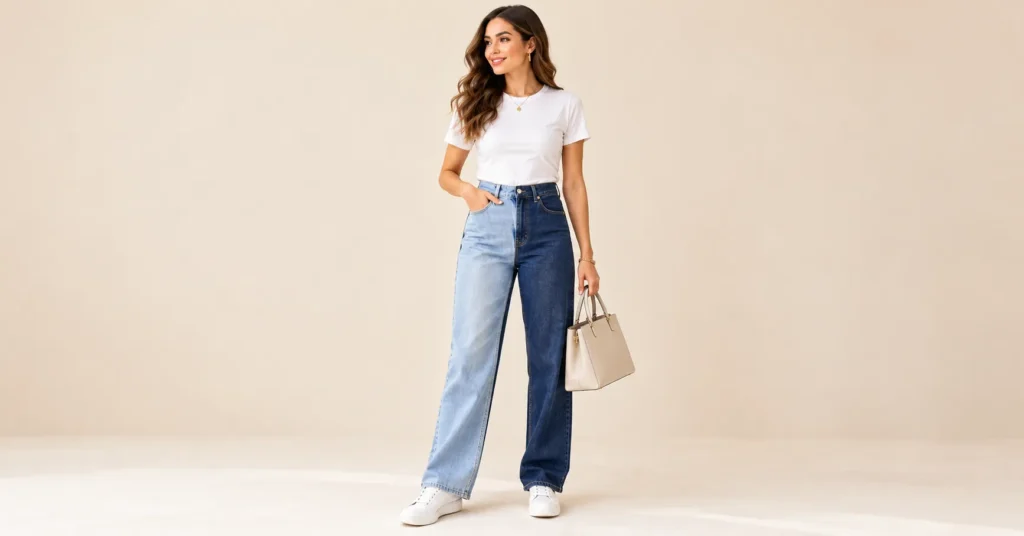
Split leg jeans use one color on the left leg and a different color on the right. The seam runs straight down the center front and back, creating a clean half and half effect.
This is the most recognizable version of the trend. Experimental designer labels such as Y/Project helped bring paneled, unconventional denim to the runway, and high-street brands followed with light and dark indigo versions that cost far less.
How to style it:
- Wear a solid top that matches one of the two leg colors.
- Keep shoes neutral, like white sneakers or black loafers.
- Skip prints entirely. The jeans already provide the pattern.
Why it works: The vertical split creates bold symmetry. Tying your top to one leg’s color makes the outfit look intentional rather than random.
2. Contrast Side Panel Jeans
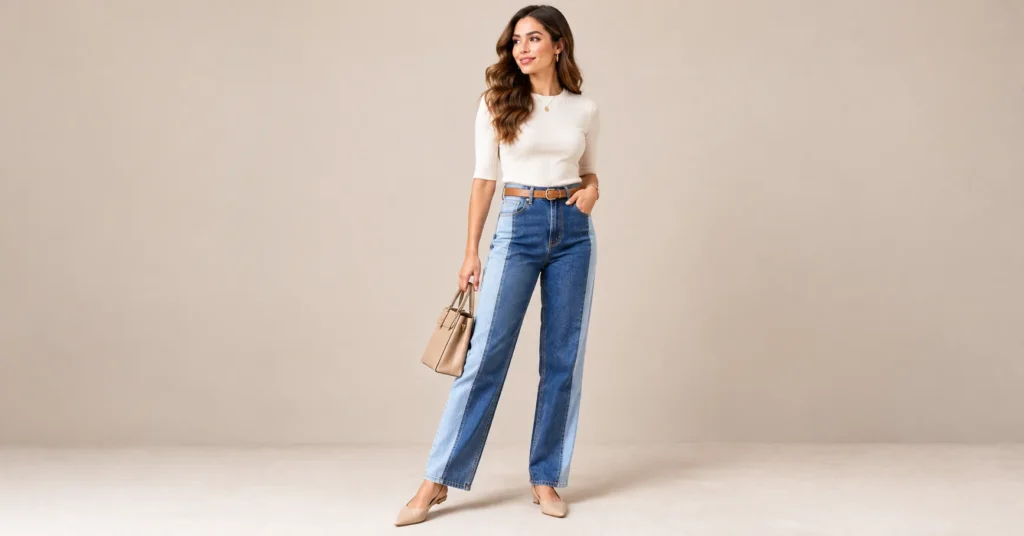
Side panel jeans add a strip of contrasting denim along the outer seam of each leg. The panel can be narrow like a tuxedo stripe or wide enough to cover a third of the leg.
This is the easiest entry point into contrast denim. From the front, the panel acts as a long vertical line that makes your legs look longer.
How to style it:
- Choose a panel width of 2 to 4 inches for everyday wear.
- Pair the jeans with a tucked in tee or bodysuit to show the full line.
- Add pointed toe flats or heeled ankle boots to extend the stripe.
Why it works: Vertical stripes pull the eye up and down. You get a lengthening effect and visual interest in one piece.
3. Two Wash Patchwork Jeans
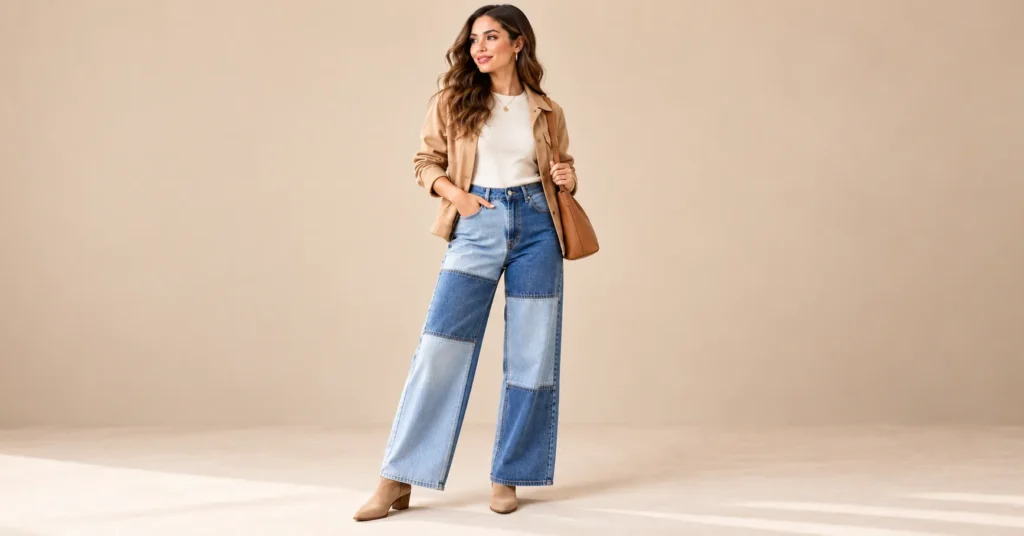
Two wash patchwork jeans alternate two shades in larger patches, such as knee panels, thigh blocks, or diagonal sections. They borrow from patchwork but stay limited to two washes.
Kapital, the Japanese label known for boro inspired patching (a traditional Japanese mending technique that layers fabric scraps), shows how crafted denim can look deliberate rather than messy.
How to style it:
- Pair with a heavy knit or canvas chore jacket for texture.
- Choose earthy colors on top, such as olive, rust, or cream.
- Wear chunky boots or suede sneakers to ground the look.
Why it works: The handmade feel looks personal. Keeping it to two washes keeps it wearable for daily life.
4. Front and Back Color Block Jeans
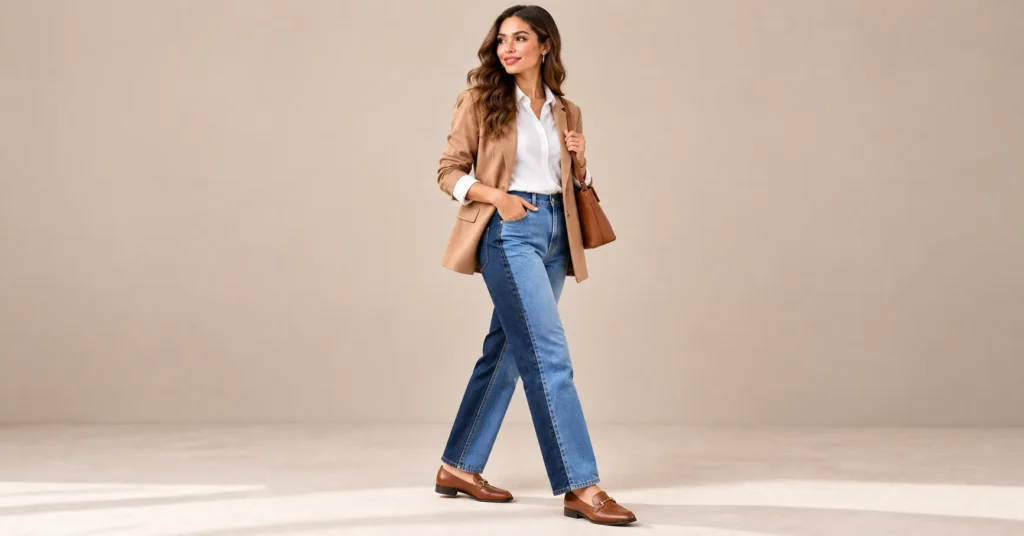
Front and back styles use one wash on the front and another on the back. From the front, they look like regular jeans. From the side or back, the contrast appears.
This is the quiet option. Ideal for offices with relaxed dress codes.
How to style it:
- Treat them like standard jeans from the front.
- Wear a cropped jacket or tucked top so the back contrast stays visible.
- Keep the rest of the outfit minimal and tailored.
Why it works: You get a surprise detail without committing to a loud look. People notice it only when you walk away.
5. Contrast Yoke and Waistband Jeans
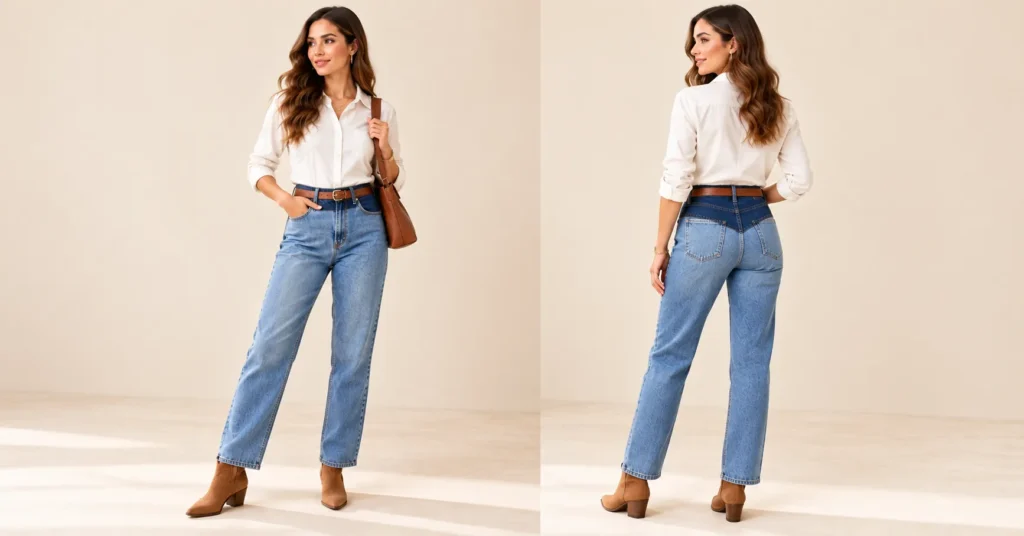
The yoke is the V-shaped panel across the back of the jeans, just below the waistband. Contrast yoke jeans use a different wash on the yoke, the waistband, or both.
Western wear made this detail popular. Wrangler built its reputation on rodeo and ranch denim, and contrast yokes still appear in modern Western inspired collections.
How to style it:
- Tuck your top in fully so the waistband shows.
- Add a leather belt in brown or black.
- Finish with cowboy boots or square toe ankle boots.
Why it works: The contrast sits at the waist, so it defines your middle and adds a tailored finish to a casual piece.
6. Ombré and Dip Dye Jeans
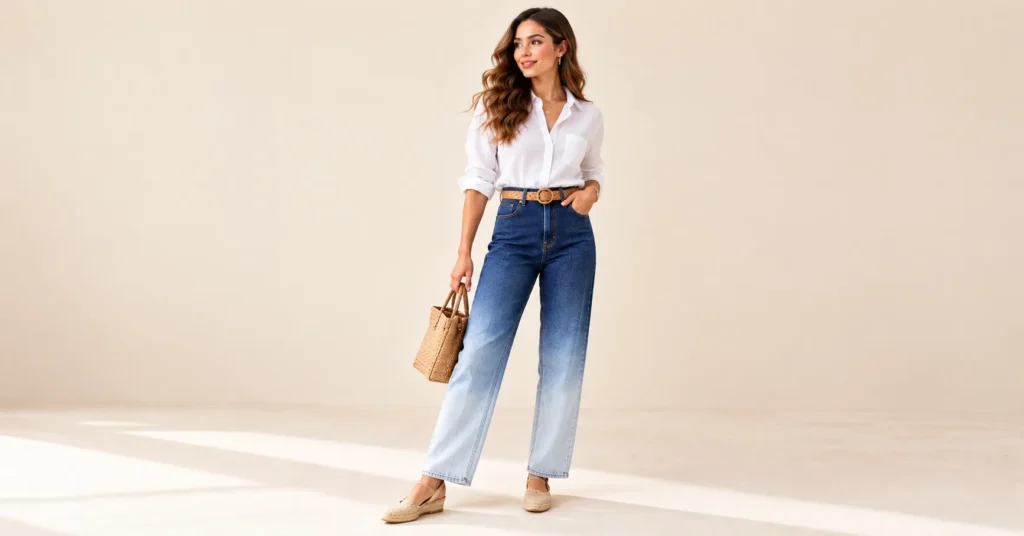
Ombré jeans fade gradually from one shade to another, usually dark at the waist and light at the hem, or the reverse. Dip
dyed versions create the effect by soaking part of the jeans in dye or bleach.
These are the softest two tone jeans on this list. There is no hard seam, only a gradient.
How to style it:
- Match your top to the darkest shade for balance.
- Choose a lightweight blouse or linen shirt in summer.
- Wear sandals or espadrilles to keep the look relaxed.
Why it works: The gradient feels organic. It moves the eye along the leg without a harsh break.
7. Contrast Cuff Jeans
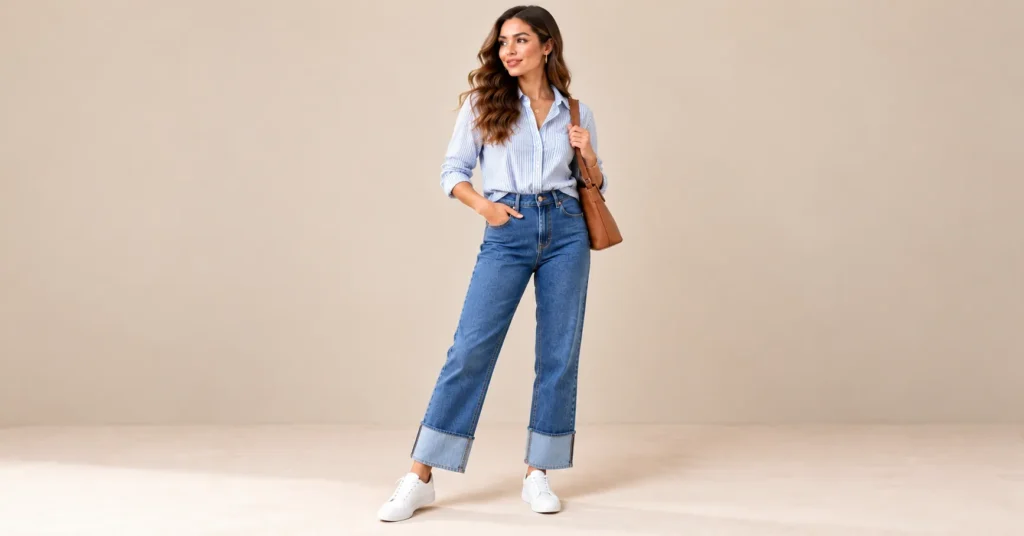
Contrast cuff jeans show a second color at the hem. Some brands sew on a cuff in a different wash, while others rely on the lighter inside of the denim, which appears when you roll the hem.
Selvedge denim (fabric woven on traditional shuttle looms, with a self-finished edge often marked by a colored thread) is famous for this detail. Roll the hem once, and the clean edge and lighter reverse side appear.
How to style it:
- Roll a 1.5 to 2 inch cuff on straight leg jeans.
- Show a little ankle or a contrasting sock.
- Pair with loafers, low top sneakers, or leather work boots.
Why it works: The cuff frames your shoe and adds detail at the lowest point of the outfit, where most people expect nothing.
8. Black and Blue Two Tone Jeans
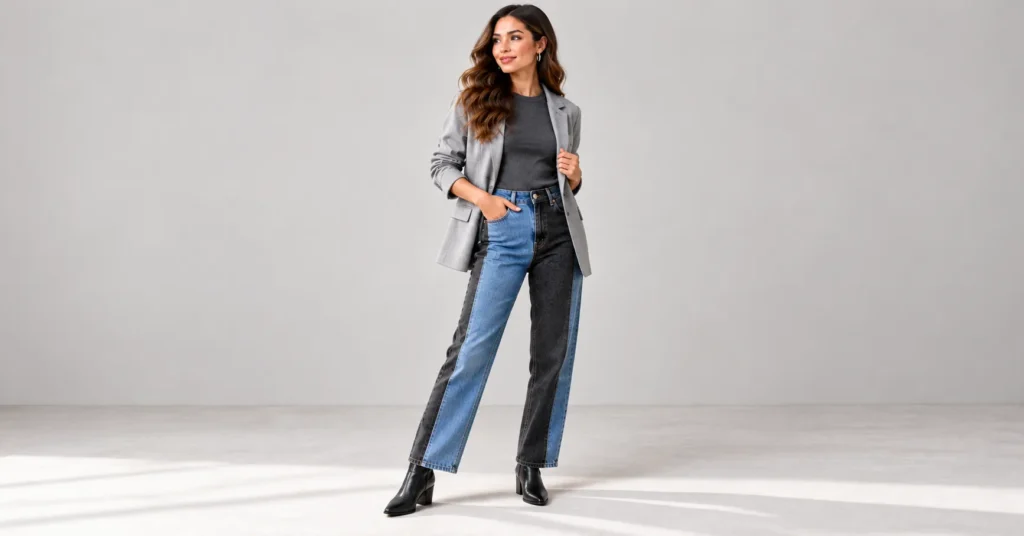
This style pairs black denim with blue denim, usually in a split leg or panel layout. It delivers strong contrast while staying inside a classic denim palette.
Black and blue sit well together because both are dark, cool tones. The contrast comes from depth and texture rather than brightness, which keeps the look sharp instead of loud.
How to style it:
- Wear an all black top and shoes to anchor the outfit.
- Add a gray or charcoal layer for a softer transition.
- Choose silver jewelry to match the cool palette.
Why it works: It looks edgy without looking costume like. This pairing suits concerts, nights out, and casual dinners.
9. Cream and Indigo Jeans
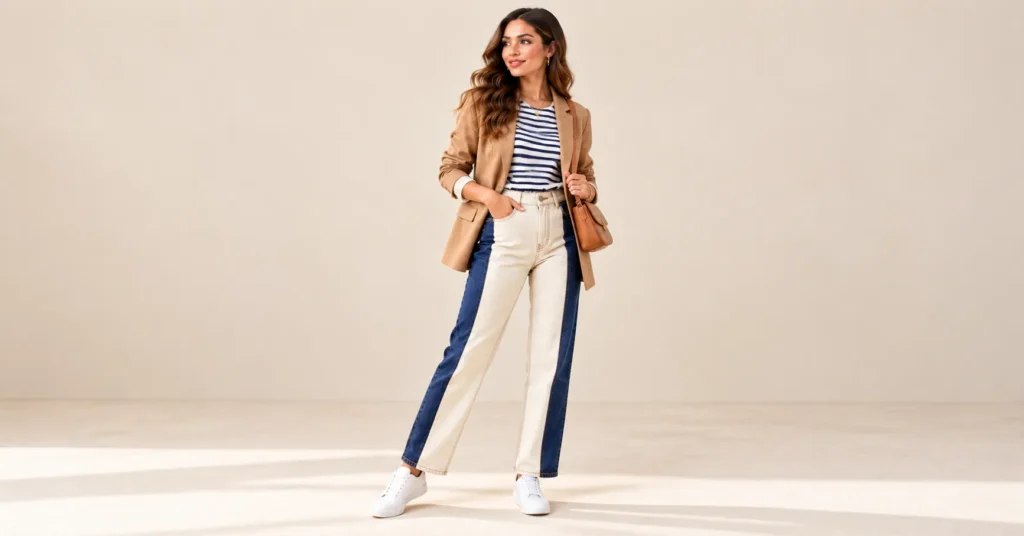
This style combines ecru denim with deep indigo. Ecru denim is undyed or lightly treated cotton with a natural off
white color. Paired with dark blue, it creates a clean, nautical feel.
How to style it:
- Wear a navy and white striped Breton top.
- Add a camel trench coat or tan suede jacket.
- Choose white leather sneakers or tan loafers.
Why it works: Light and dark balance each other, and both colors pair with nearly every neutral in your wardrobe. It’s a strong choice for spring and early summer.
10. Reworked Vintage Jeans
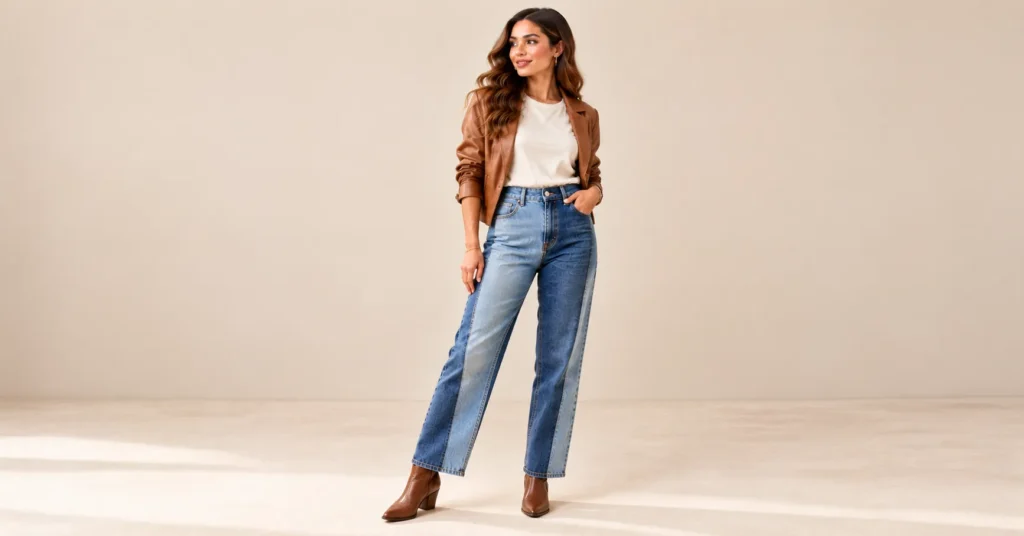
Reworked jeans are made by cutting two or more existing pairs apart and sewing them back together as one. Each pair is unique because the donor jeans carry different fades, whiskering, and wear marks.
Re/Done popularized this approach at the designer level. Independent sellers on Etsy and Depop also offer one of a kind reworked pairs, often at lower prices.
How to style it:
- Pick a pair with natural fading for a lived in look.
- Pair it with a vintage band tee or simple tank.
- Add a worn leather jacket and boots.
Why it works: Every pair has its own history. You also reduce textile waste by buying something built from jeans that already exist.
Pick one subtle style (front and back or contrast cuff) and one bold style (split leg or black and blue) to test which level of contrast suits you.
Two Tone Jeans Comparison Table
The table below compares all ten styles by contrast level, occasion, and easy pairings.
| # | Style | Contrast Level | Best For | Easy Top Pairing | Best Shoes |
| 1 | Split-leg | High | Casual, streetwear | Solid tee matching one leg | White sneakers |
| 2 | Side panel | Medium | Everyday, dinners | Tucked bodysuit | Pointed flats, heeled boots |
| 3 | Two wash patchwork | Medium-high | Weekends, creative work | Chunky knit | Chunky boots |
| 4 | Front and back | Low | Smart-casual office | Tucked blouse | Loafers |
| 5 | Contrast yoke | Low-medium | Western, casual | Tucked tee + leather belt | Cowboy boots |
| 6 | Ombré / dip dye | Medium | Summer, travel | Linen shirt | Sandals, espadrilles |
| 7 | Contrast cuff | Low | Everyday, office | Oxford shirt | Loafers, work boots |
| 8 | Black and blue | High | Nights out | Black knit | Black boots |
| 9 | Cream and indigo | Medium | Spring, brunch | Breton top | White sneakers |
| 10 | Reworked vintage | Medium-high | Casual, vintage looks | Band tee | Leather boots |
The “Contrast Level” column is your fastest filter. Start with a low contrast style if statement denim is new to you.
How to Style Two Tone Jeans: The Core Rules
Styling two tone jeans comes down to one principle: let the jeans lead. Every other piece in the outfit supports them.
Follow these five rules:
- Pick up one color. Match your top, shoes, or jacket to one of the two denim shades. This ties the outfit together.
- Keep tops solid. Prints compete with the contrast. Choose plain tees, knits, and shirts.
- Show the waist when contrast lives there. Tuck in tops for yoke and waistband styles.
- Balance the volume. Wide or baggy jeans need a fitted or cropped top. Slim jeans can take a looser top.
- Limit accessories. One statement piece is enough, whether that’s a belt, bag, or pair of boots.
Best Tops for Two Tone Jeans
Plain white tees, black bodysuits, ribbed tanks, crisp button downs, and fine-knit sweaters all work. Each one gives you a clean base that lets the denim stand out.
For a more polished two tone jeans outfit, choose a silk camisole or a tailored vest. For relaxed days, a heavyweight tee or a cropped sweatshirt keeps the mood easy.
Best Shoes for Two Tone Jeans
Shoes should echo one of the denim colors or stay neutral.
- White sneakers: work with light washes and cream styles.
- Black boots: anchor black and blue pairs.
- Brown loafers or cowboy boots: suit Western yoke details.
- Strappy sandals: fit ombré and summer looks.
Jackets and Layers
A third denim wash usually looks accidental. Three shades of blue in one outfit blur the contrast you paid for. Choose leather, suede, wool, or a canvas chore coat instead.
If you want a Canadian tuxedo (a denim jacket worn with denim jeans), match the jacket exactly to one of the two tones in your pants.
Test these rules tonight with your jeans and a plain white tee, then photograph the look in natural light to check the balance.
Two Tone Jeans Outfit Ideas by Occasion
The occasion decides the supporting pieces. The jeans stay the same.
Casual Weekends
Pair split leg or two wash patchwork jeans with a plain tee, a zip hoodie, and clean sneakers. Add a baseball cap and canvas tote for errands. Comfort comes first, and the denim adds personality.
Office and Smart Casual
Choose a subtle style: front and back, contrast cuff, or cream and indigo. Wear a tucked blouse or fine merino sweater, a structured navy or camel blazer, and leather loafers. Check your workplace dress code first, because some offices still restrict denim.
Date Nights and Evenings
Black and blue styles shine here. Add a black satin top or fitted knit, heeled boots, and small silver hoops. The cool palette looks polished under evening light.
Festivals and Travel
Ombré and reworked styles handle long days well. Pair them with a tank, a light overshirt, and broken-in boots or sneakers. Stretch blend denim helps on long flights.
Menswear Styling
Contrast denim works just as well in menswear. Straight or relaxed fits with a contrast cuff, side panel, or yoke detail pair well with an oxford shirt, a crewneck sweater, or a workwear jacket. Finish with leather boots or minimal sneakers, and keep the color story to two or three shades.
Plan two outfits from this section before your next weekend so your new pair earns its place in your rotation.
How to Choose the Right Pair of Two Tone Jeans
The right pair depends on fit, fabric, and where the contrast sits on your body. Use these steps before you buy.
- Decide your contrast level. Start subtle if statement denim is new for you.
- Pick your cut. Wide leg and straight cuts show contrast best. Slim cuts suit side panels.
- Check the fabric. 100% cotton denim holds its shape and fades with character. Stretch denim (usually 1–3% elastane) feels softer but can bag at the knees over time.
- Study seam placement. A center split draws the eye to the middle of your body. A side panel draws it along the outer leg.
- Read the rise. Mid rise suits most frames. High rise pairs well with cropped tops.
- Confirm the care label. Contrast panels can bleed into each other. Look for “pre washed” or “colorfast” in the product details.
Fit Guide by Body Shape
Body shape changes which contrast placement flatters you most. Use this table as a starting point.
| Body Shape | Best Contrast Style | Why It Works |
| Petite | Side panel, dark at waist ombré | Vertical lines and darker tops lengthen the frame |
| Tall | Split leg, wide leg patchwork | A longer frame carries large color blocks easily |
| Hourglass | Contrast yoke, high-rise side panel | Draws attention to a defined waist |
| Pear | Front and back, dark-hip ombré | Darker shades near the hips create balance |
| Rectangle | Two wash patchwork, color block | Adds shape and visual curves |
Read the fabric composition and rise measurement on the retailer’s product page before you check out.
How to Care for Two Tone Denim
Two tone denim needs extra care because the darker section can bleed into the lighter one. Indigo dye rubs off easily, especially on new, raw, or deeply dyed fabric.
Follow these steps:
- Wash less often. Wash only when visibly dirty or after several wears. Levi’s has long encouraged customers to wash jeans less often to save water and preserve color.
- Turn them inside out. This reduces friction on the outer surface.
- Use cold water. Hot water releases more dye.
- Add a color catcher sheet. Products such as Shout Color Catcher trap loose dye in the wash water.
- Wash alone or with darks. Never mix light clothing with new two tone jeans.
- Air dry. Hang them out of direct sun. Dryer heat fades color and can shrink cotton.
Spot-clean small stains with mild soap and a soft cloth instead of running a full cycle.
Buy a pack of color catcher sheets with your jeans so the first wash goes right.
Can You DIY Two Tone Jeans?
You can make two tone jeans at home with bleach or with two old pairs. Bleach is the faster method.
- Choose a dark pair. Cotton rich indigo jeans react best to bleach.
- Mask one section. Cover the half you want to keep dark with painter’s tape and plastic bags.
- Mix the solution. Combine one part bleach with two parts water in a spray bottle.
- Spray evenly. Work outdoors, wear gloves, and check progress every few minutes.
- Rinse thoroughly. Rinse in cold water, then wash with mild detergent so the bleach stops weakening the fibers.
Sewing two pairs together takes more skill. If you go that route, use donor jeans in the same size and cut so the panels line up cleanly.
Test your bleach mix on an inside seam before you spray the full leg.
Conclusion
Two tone jeans turn an everyday staple into a statement. The ten styles in this guide cover every level of contrast, from a quiet rolled cuff to a bold black and blue split.
The rules stay simple. Match one color, keep tops solid, balance the volume, and protect the colors when you wash. Follow those four habits, and your two tone jeans will work for weekends, offices, and evenings alike.
Start with one pair that matches your comfort level. Then build two or three outfits around it this week, beginning with a plain white tee and neutral shoes.
Frequently Asked Questions About Two Tone Jeans
Are two tone jeans still in style in this year?
Yes. Contrast denim continues to appear in both designer and high street collections, supported by the popularity of reworked denim and relaxed fits. Subtle versions like contrast cuffs and yokes also have staying power because they work beyond a single trend cycle.
What tops go with two tone jeans?
Solid tops work best. White tees, black bodysuits, ribbed tanks, button downs, and fine knits all keep the focus on the denim. Match the top to one of the two washes for the most cohesive look.
How do I stop color block jeans from bleeding?
Wash them inside out in cold water with a color catcher sheet, and wash them alone for the first few cycles. Air dry instead of tumble drying. Washing less often also slows dye loss.
Can men wear two tone jeans?
Absolutely. Contrast cuffs, side panels, and Western style yokes suit menswear well. Pair them with oxford shirts, crewneck sweaters, or workwear jackets, and finish with boots or minimal sneakers.
Are contrast wash jeans the same as patchwork jeans?
No. Contrast wash styles use exactly two shades, usually in large, clean sections. Patchwork jeans combine many smaller pieces, often in three or more washes, for a busier look.
Can I wear contrast denim to the office?
Yes, in smart casual workplaces. Choose low contrast styles such as front and back blocking, contrast cuffs, or cream and indigo. Pair them with a blazer, a tucked blouse or sweater, and loafers.
What shoes look best with color block denim?
White sneakers, black boots, loafers, and cowboy boots cover nearly every style. Match the shoe to one of the denim shades, or keep it neutral so the jeans stay the focal point.
Which contrast style flatters petite frames?
Side panel jeans and ombré styles that are darker at the waist work best. Both create vertical lines that make the legs look longer. Avoid wide horizontal color breaks at the knee.