

10 Proven -10 Degree Weather Outfits That Keep You Warm and Safe
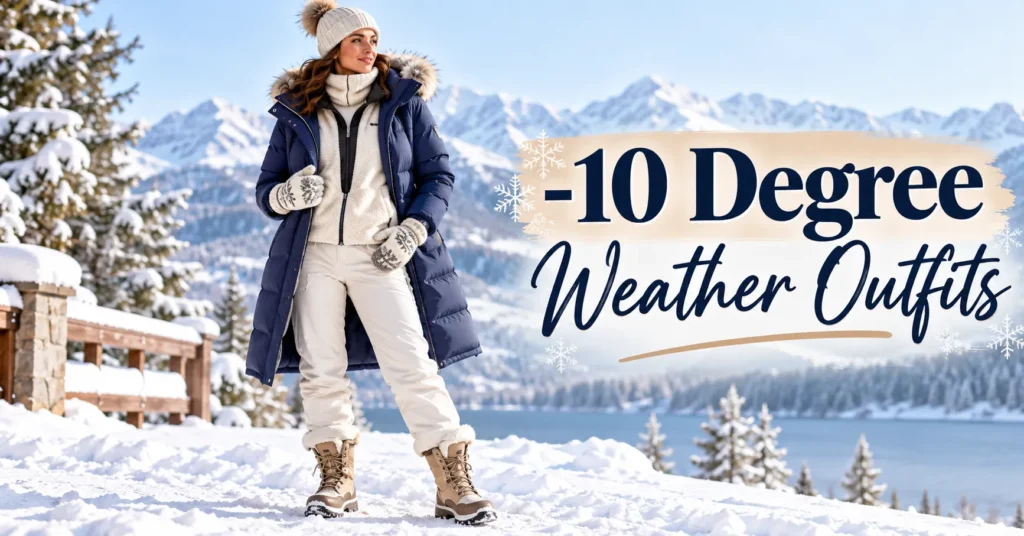
At -10 degrees, cold stops being an inconvenience and becomes a real risk. Fingers go numb in minutes and eyelashes frost over. The wool coat that worked fine in November suddenly feels like paper. The right -10 degree weather outfits keep you warm, dry, and safe without making you feel like you’re packing for Antarctica.
This guide covers 10 complete outfits for real winter life: commuting, office days, shoveling snow, hiking, school drop-offs, nights out, outdoor work, ice fishing, and travel. You’ll learn how cold weather layering works, which fabrics trap heat best, and how to protect your hands, feet, and face from frostbite. Each look explains why it works and what to wear, and it includes an example you can copy.
First, let’s clear up what “-10” means, because the answer depends on where you live.
What Counts as -10 Degree Weather?
In the United States, -10 usually means -10°F, which is about -23°C. In Canada, Europe, and most of the world, it means -10°C, or 14°F. That’s a 24-degree gap, and it changes what you need to wear.
| Reading | Fahrenheit | Celsius | How It Feels | Outfit Approach |
| -10°C | 14°F | -10°C | Bitterly cold, manageable for short trips | Three layers, insulated coat, hat, and gloves |
| -10°F | -10°F | -23°C | Dangerous, especially with wind | Heavy base layers, expedition-style parka, full face coverage |
Every outfit below is built to handle -10°F, so each one will keep you more than warm at -10°C. If you live somewhere milder, simply remove a layer. These -10 degree weather outfits are designed to scale down easily.
Why Wind Chill Matters More Than the Thermometer
Wind strips away the thin pocket of warm air that surrounds your body. At -10°F with a 15 mph wind, the wind chill drops to about -32°F. At that level, exposed skin can develop frostbite in 30 minutes or less.
That’s why the best -10 degree weather outfits focus on windproof outer layers and full face coverage, not just thick sweaters. Always check the “feels like” temperature before you head out. It tells you far more than the forecast number alone.
Know the Warning Signs
Good clothing lowers your risk, but it helps to know what trouble looks like:
- Frostbite: Numbness, tingling, and skin that turns white, grayish-yellow, or waxy. It usually hits the nose, ears, cheeks, fingers, and toes first.
- Hypothermia: Intense shivering, confusion, slurred speech, clumsiness, and drowsiness.
If you notice these signs, get indoors and warm up gradually. Seek medical help for anything beyond mild symptoms. Frostbite prevention starts with covering skin before it gets cold, not after.
The Layering System Behind All -10 Degree Weather Outfits
Every good extreme cold weather outfit follows one rule: several thinner layers beat one thick layer. Air trapped between layers acts as insulation. Layers also let you adjust when you step into a heated store, train, or office.
Base Layer: Manage Moisture
Your base layer sits against your skin. Its main job is pulling sweat away from your body, because damp skin loses heat fast. Thermal underwear made from merino wool or synthetic fabrics works best. Choose midweight for daily wear and heavyweight for long periods outdoors.
Mid Layer: Trap Heat
The mid layer holds the warmth your body produces. Fleece jackets, wool sweaters, down vests, and thick flannel shirts all do this well. On very cold days, you can wear two mid layers, such as a merino sweater under a fleece.
Outer Layer: Block Wind and Snow
Your outer layer protects everything underneath. At -10°F, that usually means an insulated parka with a windproof shell, a hood, and coverage past your hips. For active days, a lighter shell over a warm mid layer can work better.
Once you understand these three jobs, building -10 degree weather outfits gets much simpler.
Fabric Comparison: What Actually Keeps You Warm
| Fabric | Warmth | Moisture Handling | Best Layer | Key Notes |
| Merino wool | High | Excellent; stays warm when damp | Base, mid | Soft, resists odor, pricier |
| Synthetic (polyester, polypropylene) | Medium high | Excellent; dries fastest | Base | Affordable, great for active days |
| Silk | Medium | Good | Thin base | Very slim; ideal under office wear |
| Fleece | Medium high | Good | Mid | Light, breathable, budget-friendly |
| Heavy wool | High | Good | Mid, outer | Durable, wind resistant when dense |
| Down (600–800+ fill) | Very high | Poor when wet | Outer | Best warmth to weight ratio |
| Synthetic insulation | High | Keeps warming when wet | Outer, mid | Ideal for snow, sweat, or damp climates |
| Cotton | Low | Poor; holds moisture | Avoid outdoors | Pulls heat away when damp |
Cotton deserves a clear warning. It soaks up sweat and holds it against your skin, which makes you colder over time. Keep jeans, cotton tees, and hoodies for indoor layers, or pair them with thermals underneath.
Protect Your Extremities
Even the warmest -10 degree weather outfits fail if your fingers, toes, or face are left exposed. Your body pulls blood toward your core in extreme cold, so your hands and feet get cold first.
| Body Part | What to Wear | Why It Matters |
| Head | Wool or fleece-lined beanie, or insulated hood | Covers ears, which frostbite easily |
| Face | Balaclava or fleece neck gaiter | Protects nose and cheeks from wind |
| Neck | Wool scarf or gaiter | Seals the gap at your collar |
| Hands | Insulated mittens, or liner gloves under mittens | Mittens let fingers share warmth |
| Feet | Merino socks and insulated waterproof boots | Wet or cramped feet lose heat quickly |
| Eyes | Sunglasses or goggles in wind and snow | Prevents snow glare and stinging wind |
Boots deserve special attention. Many list a temperature rating, like -25°F or -40°F. Treat those numbers as a rough guide, since they usually assume you’re moving. If you’ll stand still for long periods, choose a rating well below the temperatures you expect, and leave room to wiggle your toes.
1. The Everyday Commuter: Insulated Parka, Merino Base, and Lined Pants
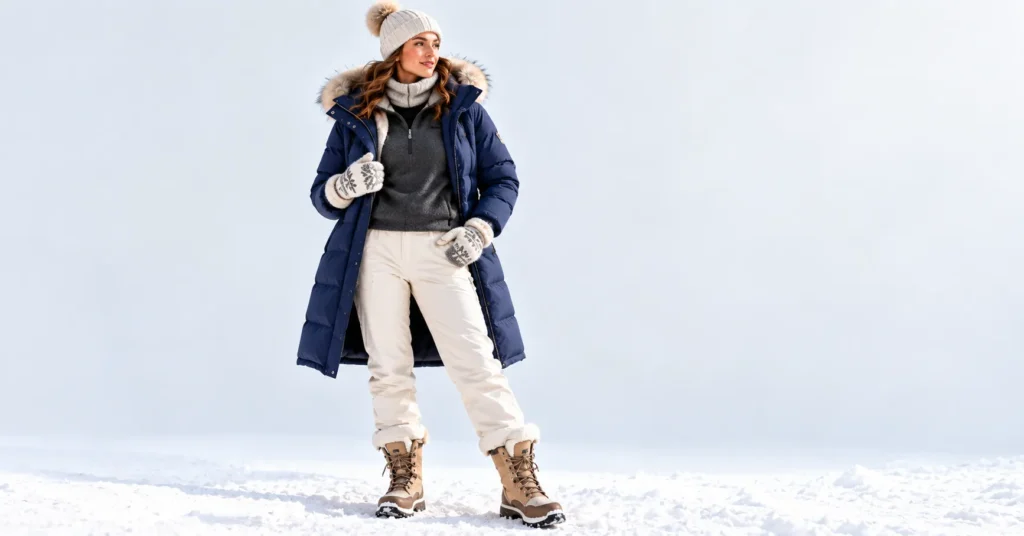
If you walk to the train, wait at bus stops, or cross a big parking lot every morning, this is your daily uniform. It’s one of the most practical -10 degree weather outfits because it handles 20 to 30 minutes outside without overheating you on a crowded train.
Why It Works
A long down parka covers your hips and upper thighs, where shorter jackets leave a cold gap. An insulated hood blocks wind from your neck and ears. Underneath, a merino base layer controls sweat as you move between frigid sidewalks and heated stations.
What to Wear
- Midweight merino top and leggings
- Fleece quarter-zip or wool sweater
- Fleece-lined or flannel-lined pants
- Knee-length down parka with a windproof shell
- Insulated waterproof boots, mittens, beanie, and neck gaiter
Example: A black merino base layer, a charcoal fleece quarter zip, flannel lined chinos, a navy knee length parka with a faux fur hood trim, waterproof boots rated to -25°F, a wool beanie, and a fleece gaiter. Pull the gaiter over your nose at the bus stop, then tug it down once you’re on board.
Pro tip: Pick a parka with a two way zipper. You can open it from the bottom when you sit, so the coat doesn’t bunch up.
2. The Office Professional: Wool Trousers Over Thermals and a Long Down Coat
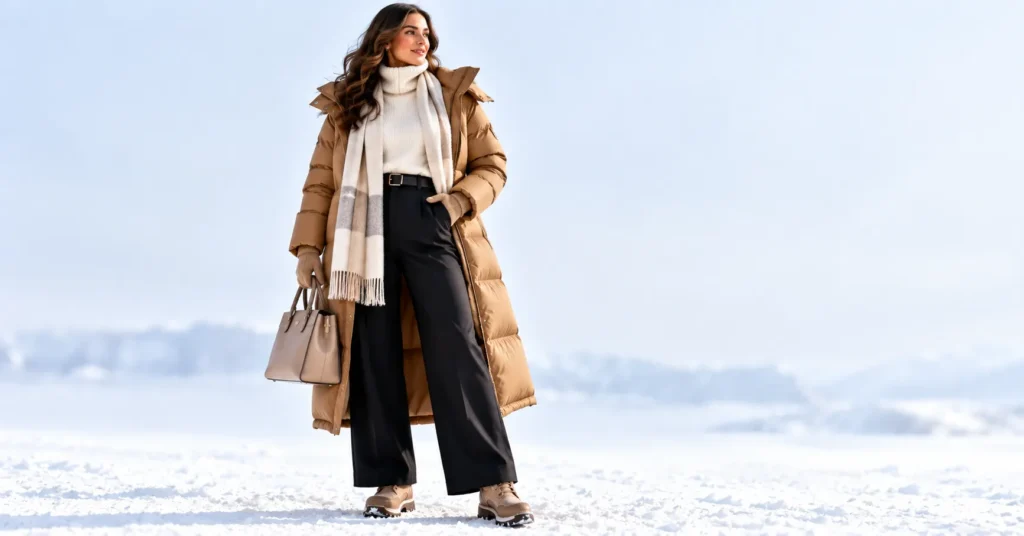
Workwear is where many -10 degree weather outfits fall apart. You need to look polished at your desk, but you still have to survive the walk from the car or station.
Why It Works
Thin silk or merino thermals disappear under wool trousers, and wool insulates far better than cotton. A cashmere or merino sweater adds warmth without bulk. A long down coat in a tailored cut looks professional while delivering real cold weather protection.
What to Wear
Wear lightweight thermal leggings and a fitted thermal top under your work clothes. Add wool trousers and a merino or cashmere sweater over a collared shirt. Top it with a long, slim down coat or a wool coat with a down liner. Choose insulated leather boots, and keep dress shoes at your desk.
Example: For men, a white oxford shirt, a navy merino crewneck, charcoal wool trousers over silk long johns, and a black tailored down coat. For women, a cream cashmere turtleneck, black wide-leg wool trousers over fleece-lined tights, shearling-lined leather boots, and a camel down coat that falls below the knee.
Office tip: Keep a cardigan or vest at work. Many offices feel chilly when it’s bitterly cold outside, and you can remove your thermal top in the restroom if the heat is cranked high.
3. Snow Shoveling and Outdoor Chores: Bibs, Softshell, and Work Gloves
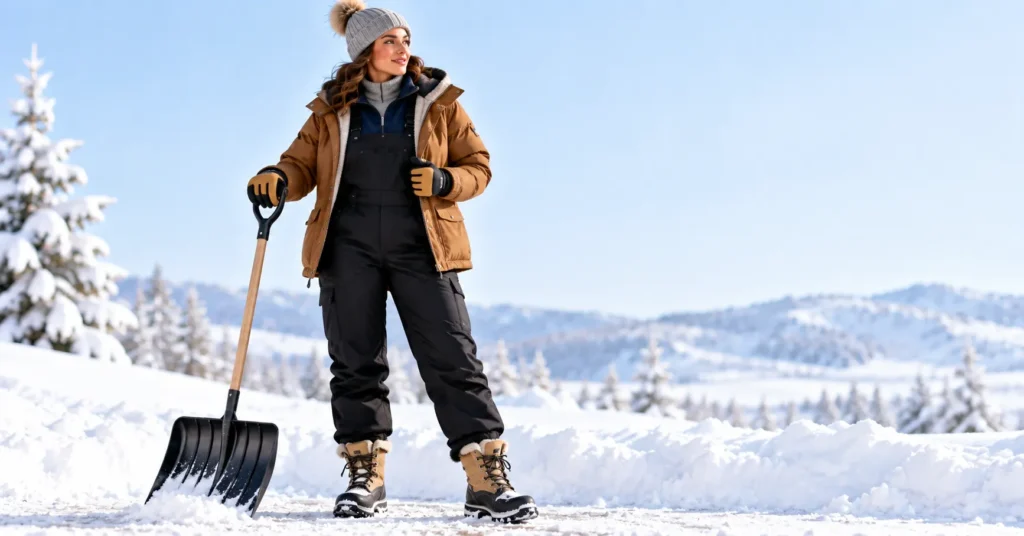
Shoveling, clearing ice, and scraping car windows are hard work. The biggest risk isn’t always the cold itself. It’s sweating heavily, then freezing once you stop moving.
Why It Works
Insulated bib snow pants protect your lower back and keep snow out of your waistband when you bend. A synthetic base layer wicks sweat quickly. A softshell or insulated work jacket breathes better than a heavy parka, so you don’t overheat. This makes it one of the smartest -10 degree weather outfits for physical labor.
What to Wear
Start with a synthetic base top and bottom. Add a light fleece mid layer, insulated bibs, and a softshell or work jacket. Waterproof insulated work gloves give you grip on the shovel. Pac boots with removable liners keep your feet dry in deep snow.
Example: A gray synthetic thermal set, a navy fleece pullover, black insulated bibs, a brown canvas work jacket with quilted lining, waterproof leather work gloves, and pac boots.
Safety note: Shoveling heavy snow is strenuous exercise. Take frequent breaks, push snow instead of lifting when possible, and head inside if your base layer gets soaked.
4. Winter Hiking and Snowshoeing: Technical Layers for Active Days

Moving through snowy trails at -10 degrees feels incredible when you’re dressed right. Many hikers follow one simple rule: start slightly cool. If you feel cozy at the trailhead, you’ll be sweating within 10 minutes.
Why It Works
Technical layers move moisture away fast and let you adjust on the go. A breathable shell blocks wind without trapping steam. A warm puffy jacket in your pack covers you during stops, when your body cools quickly. These –10 degree weather outfits balance warmth and breathability better than any casual look.
What to Wear
- Lightweight synthetic or merino base layer
- Grid fleece or light insulated jacket
- Windproof softshell or hardshell
- Insulated or softshell pants over thermal leggings
- Liner gloves under overmitts, plus a balaclava and goggles
- A packable down or synthetic jacket for breaks
Example: A merino base layer, a red grid fleece, a black softshell jacket, softshell pants over midweight thermals, insulated hiking boots with gaiters, and a puffy jacket stuffed in the top of your pack.
Trail tip: Put on your puffy the moment you stop, before you feel cold. Rewarming takes far more energy than staying warm.
5. School Drop Off and Dog Walks: Long Puffer and Fleece Lined Leggings

Some trips outside last 15 minutes but happen twice a day. You need sub-zero outfits that go on fast and come off just as quickly.
Why It Works
An ankle-length “sleeping bag” puffer covers almost your entire body in one step. Fleece-lined leggings stretch for easy movement. Slip-on insulated boots save precious minutes when you’re rushing out the door. Among all -10 degree weather outfits, this one wins on convenience.
What to Wear
Wear fleece-lined leggings and a thermal top, then add a cozy half-zip or sweater. Zip on a long puffer with a hood. Finish with insulated slip-on or pull-on boots, mittens, and a beanie.
Example: Black fleece-lined leggings, a cream thermal turtleneck, a gray half-zip fleece, a black ankle-length puffer, tan insulated pull-on boots, a pom-pom beanie, and convertible mittens that flip open for phone use or poop bags.
Time saver: Keep your hat, gloves, and gaiter in your coat pockets. You’ll never waste a cold morning hunting for them.
6. The Polished Night Out: Warm Layers Under a Dressy Coat

Dinner reservations, theater tickets, and holiday parties don’t stop for a cold snap. You can still look elegant, as long as you plan for the walk between the car and the door.
Why It Works
Hidden warmth is the key. Fleece-lined tights and thermal shorts sit invisibly under a dress. A thin down vest fits under a tailored overcoat. Shearling-lined boots look refined while protecting your feet. These -10 degree weather outfits keep you stylish indoors and safe outside, as long as outdoor time stays brief.
What to Wear
For women, pair a wool midi dress or knit dress with fleece-lined tights and thermal shorts. Add shearling lined knee high boots and a long wool coat with a down liner, or a sleek long down coat. For men, wear a merino turtleneck, wool trousers over thermals, and a thin down vest under a wool overcoat.
Example: A burgundy wool midi dress, black fleece-lined tights, black shearling-lined knee boots, a charcoal maxi down coat, a faux fur hat, and leather gloves with cashmere lining. A men’s version could pair a black merino turtleneck, gray wool trousers, a slim navy down vest, and a camel overcoat.
Smart move: Use a rideshare or valet on the coldest nights. Dressy outfits work best when you’re outside for five minutes, not 25.
7. The Rugged Weekend Look: Shearling Jacket, Flannel Lined Jeans, and a Union Suit

Weekend errands, hardware store runs, and quick trips into town call for something relaxed. This outfit brings classic outdoor style with real warmth for short exposure.
Why It Works
A one-piece thermal union suit seals the gap at your waist, where heat often escapes. Flannel-lined jeans add insulation and block wind better than standard denim. A shearling jacket traps air in its fleecy lining. This is one of the most comfortable -10 degree weather outfits for casual days, though it works best for outings under 20 minutes.
What to Wear
Start with a heavyweight thermal union suit. Add flannel-lined jeans and a thick flannel shirt. Top it with a shearling or sherpa-lined jacket. Finish with lined leather boots, a wool beanie, and insulated gloves.
Example: A gray waffle knit union suit, dark flannel-lined jeans, a red buffalo check flannel, a tan shearling trucker jacket, brown lined work boots, and a navy wool beanie.
Limit to know: Most shearling jackets end at the waist and don’t have hoods. For longer outdoor time, swap to a parka or add an insulated hood and scarf.
8. The Outdoor Worker: Insulated Coveralls and a Complete Glove System

Construction crews, delivery drivers, farmers, and utility workers can spend hours outside at -10°F. For them, winter survival outfits aren’t optional. They’re essential safety gear.
Why It Works
Insulated coveralls cover you neck to ankle with no gaps for snow or wind. Heavyweight thermal underwear and a fleece mid layer build serious warmth underneath. A glove system lets you swap between dexterity and maximum warmth. Of all the -10 degree weather outfits here, this is the one built for endurance.
What to Wear
- Heavyweight thermal underwear top and bottom
- Fleece jacket or thick wool shirt
- Insulated coveralls, or insulated bibs with a heavy work jacket
- Insulated safety-toe boots with wool socks
- Liner gloves, insulated work gloves, and a spare dry pair
- A hard hat liner or balaclava
Example: A black heavyweight thermal set, a gray fleece jacket, brown insulated duck coveralls, insulated steel-toe boots, merino socks, a fleece balaclava, and two pairs of insulated gloves rotated through the day.
Worker tip: Bring spare socks and gloves. Damp gear loses insulation fast, and a dry swap at lunch can make the afternoon far more bearable.
9. Ice Fishing and Outdoor Spectating: Expedition Parka and Insulated Bibs

Standing still is the coldest thing you can do in winter. Ice fishing, outdoor hockey games, and winter festivals keep you outside for hours with little movement, so your body produces far less heat.
Why It Works
An expedition style parka with 700-fill down or more delivers maximum insulation. Insulated bibs protect your core and legs. Boots rated for -40°F, paired with thick wool socks and warmers, guard against the cold creeping up from frozen ground. Among all -10 degree weather outfits on this list, this is the warmest.
What to Wear
Wear an expedition-weight base layer and a heavy fleece. Add insulated bibs and an expedition parka with a fur-trimmed or deep hood. Choose heavily insulated boots with thick liners. Bring hand and toe warmers, a balaclava, and insulated mittens.
Example: A heavyweight merino base layer, a thick sherpa fleece, black insulated bibs, an orange expedition parka, boots rated to -40°F, a wool balaclava, insulated mittens, and air-activated toe warmers tucked into your socks.
Ground tip: Stand on a foam pad or piece of cardboard. It creates a barrier between your boots and the ice, which keeps your feet noticeably warmer.
10. Winter Travel: Packable Layers for Road Trips and Airports
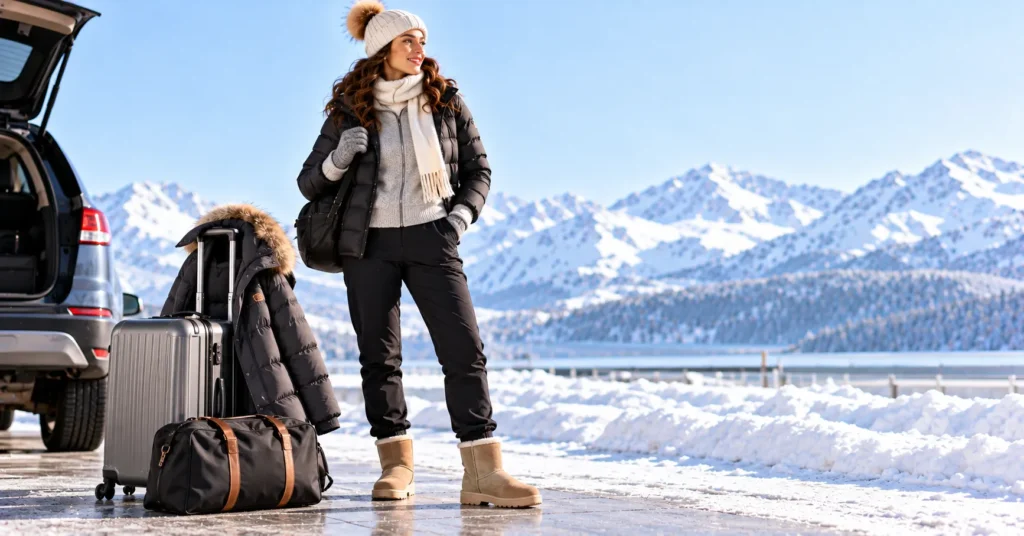
Traveling in extreme cold creates a strange challenge. You’ll sit in heated cars, terminals, and planes, but you could also face a breakdown, delay, or long walk through a frozen parking lot.
Why It Works
Packable layers let you strip down in warm spaces without losing protection. A compressible down jacket fits in your bag. A full parka stays in the car for emergencies. This approach makes these -10 degree weather outfits ideal for anyone on the move.
What to Wear
Wear a merino base layer, a comfortable sweater, and stretchy lined pants. Bring a packable down jacket for terminals and quick stops. Keep a full parka, boots, and spare winter accessories in your car. Slip-on insulated boots make security lines easier.
Example: A merino base layer, a gray zip cardigan, fleece-lined travel joggers, a black packable down jacket, insulated slip-on boots, and a parka folded in the trunk with extra gloves and a hat.
Road safety: Pack a winter car kit with a blanket, hand warmers, water, snacks, a flashlight, and a phone charger. If your car stalls at -10°F, those extras can protect you while you wait for help.
10 -10 Degree Weather Outfits at a Glance
Use this table to match each outfit to your plans, your activity level, and how long you’ll be outside.
| # | Outfit | Best For | Outdoor Time | Activity Level | Key Piece |
| 1 | Everyday Commuter | Train, bus, walking to work | 20–30 min | Light | Knee-length parka |
| 2 | Office Professional | Work, meetings | 10–20 min | Light | Slim long down coat |
| 3 | Snow Shoveling | Chores, yard work | 30–60 min | High | Insulated bibs |
| 4 | Winter Hiking | Trails, snowshoeing | 1–4 hours | High | Breathable shell |
| 5 | School Run & Dog Walks | Quick daily trips | 10–20 min | Light | Ankle-length puffer |
| 6 | Polished Night Out | Dinners, events | Under 10 min | Very light | Lined boots + long coat |
| 7 | Rugged Weekend | Errands, casual outings | 10–20 min | Light | Union suit |
| 8 | Outdoor Worker | Jobs outside | 4–8+ hours | Moderate to high | Insulated coveralls |
| 9 | Ice Fishing & Spectating | Stationary outdoor events | 2–6 hours | Very low | Expedition parka |
| 10 | Winter Travel | Road trips, airports | Varies | Low | Packable down jacket |
Takeaway: The less you move and the longer you stay out, the heavier your insulation should be. Active plans need breathability more than bulk.
Common Mistakes to Avoid With -10 Degree Weather Outfits
Even experienced cold weather dressers make these slip-ups. Avoiding them can make a bigger difference than buying expensive gear.
Wearing cotton next to your skin. A cotton tee or jeans without thermals will hold sweat and pull heat from your body. Switch to merino or synthetic base layers.
Buying boots that fit too snugly. Tight boots squeeze blood flow, and cold feet follow. Leave room for thick socks and a little toe wiggle.
Overdressing for activity. Sweating heavily during a hike or shoveling session leaves you damp and chilled later. Remove a layer before you start to overheat.
Leaving skin exposed. A bare strip of wrist or a few inches of neck can become painfully cold within minutes. Cover everything, especially in wind.
Choosing gloves over mittens. Gloves offer dexterity, but mittens are warmer because your fingers share heat. Try thin liner gloves inside mittens for the best of both.
Ignoring wet gear. Snow melting into your socks or gloves drains warmth fast. Swap damp items for dry ones as soon as you can.
Where to Spend and Where to Save
You don’t need to spend a fortune on -10 degree weather outfits. Focus your budget on the pieces that face the harshest conditions and protect you most.
| Item | Spend or Save? | Why |
| Insulated parka | Spend | Your main shield against wind and cold; lasts for years |
| Winter boots | Spend | Warm, dry feet affect your comfort more than almost anything |
| Mittens and gloves | Spend moderately | Quality insulation prevents frostbite on fingers |
| Base layers | Mix | Merino is worth it for long exposure; synthetics work for most days |
| Fleece mid layers | Save | Affordable fleece performs very well |
| Hats, gaiters, and scarves | Save | Inexpensive wool or fleece options work great |
| Hand and toe warmers | Save | Cheap, effective boosts for long outdoor days |
Budget tip: Shop end of season sales in late winter and early spring. Parkas and boots often drop significantly in price once the cold season winds down.
Conclusion
Extreme cold demands more than a thick coat. The best -10 degree weather outfits combine moisture-wicking base layers, warm mid layers, and a windproof outer shell, plus full coverage for your hands, feet, and face. Match your insulation to your activity level and outdoor time, and you’ll stay comfortable whether you’re commuting, shoveling, hiking, or watching a game on the ice.
Your next step is simple. Look at your plans for the coldest week ahead and pick the outfit that fits your day. Check what you already own against the layering system, then fill the biggest gap first, usually a warm parka, boots, or mittens. With the right -10 degree weather outfits ready to go, a bitter forecast won’t keep you indoors.
FAQs about -10 Degree Weather Outfits
What are the best -10 degree weather outfits for everyday wear?
A midweight merino base layer, a fleece or wool sweater, lined pants, and a knee-length insulated parka make a reliable daily outfit. Add insulated waterproof boots, mittens, a beanie, and a neck gaiter. This combination handles commutes, errands, and short walks comfortably.
Is it possible to look stylish in -10 degree weather outfits?
Yes absolutely. The key is layering fitted, high quality pieces rather than oversized bulky ones. A tailored coat, leather gloves, and a sleek scarf elevate practicality into elegance.
How many layers should I wear at -10 degrees?
Most people need three layers: a base layer, a mid layer, and an insulated outer layer. At -10°F or during long periods of standing still, add a second mid layer or switch to heavyweight thermals. At -10°C, three lighter layers are usually enough.
How long can you safely stay outside at -10°F?
It depends on wind and clothing. With proper -10 degree weather outfits and full skin coverage, many people stay comfortable for an hour or more while moving. With a strong wind, exposed skin can develop frostbite in 30 minutes or less, so cover your face and hands completely.
Are mittens or gloves better in extreme cold?
Mittens are warmer because your fingers share heat inside one compartment. Gloves offer better dexterity. Many people wear thin liner gloves inside mittens, so they can slip the mittens off briefly for tasks like using a phone or unlocking a door.
What is the warmest base layer material?
Merino wool is one of the best choices because it insulates well, handles moisture, and stays warm even when slightly damp. Synthetic base layers dry faster and cost less, which makes them great for high sweat activities. Avoid cotton as a base layer.
Can I wear jeans in -10 degree weather?
Regular jeans alone aren’t warm enough, since cotton denim lets wind through and holds moisture. Choose flannel-lined or fleece-lined jeans, or wear thermal leggings underneath. Many casual -10 degree weather outfits use this trick to keep denim wearable in deep cold.
How do I keep my feet warm at -10 degrees?
Wear merino or wool blend socks and insulated, waterproof boots with enough room to wiggle your toes. Avoid doubling up socks if it makes your boots tight. For long outdoor sessions, add toe warmers and stand on a foam pad to block cold from the ground.