Multicolored Manis Are Palette Perfection: Your Complete Color Guide
Single-shade nails will always have a place, but multicolored manis are palette perfection when you want your hands to tell a richer story. Mixing tones, finishes, and patterns turns ten small canvases into a coordinated piece of wearable art. The trick isn’t slapping random colors together and hoping for the best. It’s understanding how shades relate, which combinations flatter your skin, and how to apply them cleanly.
This guide walks you through color theory made simple, the trends worth trying, practical at-home techniques, and the nail care that keeps your work looking fresh. By the end, you’ll be able to plan, paint, and protect a multicolor manicure that looks salon-finished, even if you’ve never moved past one bottle of polish.
Why Multicolored Manicures Work So Well
A multicolor manicure does more than add visual interest. It gives you flexibility, personality, and a way to match your nails to outfits, seasons, or moods without committing to a single look.
Here’s what makes the style so appealing:
- Versatility: One set of nails can hold five complementary shades, so you’re never locked into a single vibe.
- Self-expression: Color choices signal personality faster than almost any accessory.
- Forgiveness: A small mistake on one nail blends into the overall design instead of ruining a uniform look.
- Trend-friendly: Multicolor designs adapt easily to seasonal palettes and viral aesthetics.
If you’ve ever felt bored halfway through a solid-color manicure, this is the cure. The variety keeps the look interesting from every angle.
Summary: Multicolor manis combine flexibility and personality, making them one of the most rewarding nail styles to master.
Color Theory for Nails: The Foundation of Palette Perfection
Great color combinations rarely happen by accident. They follow rules that artists have used for centuries. Color theory is the study of how colors interact, and a few core ideas will instantly sharpen your nail choices.
The Color Wheel Basics
The color wheel organizes hues into a circle, showing how they relate to one another. Three groups matter most:
- Primary colors: Red, blue, and yellow. These can’t be mixed from other shades.
- Secondary colors: Green, orange, and purple. Each comes from mixing two primaries.
- Tertiary colors: Blends like teal, coral, and chartreuse that sit between primary and secondary shades.
Once you can locate colors on the wheel, choosing combinations that work becomes far easier.
Four Reliable Color Schemes
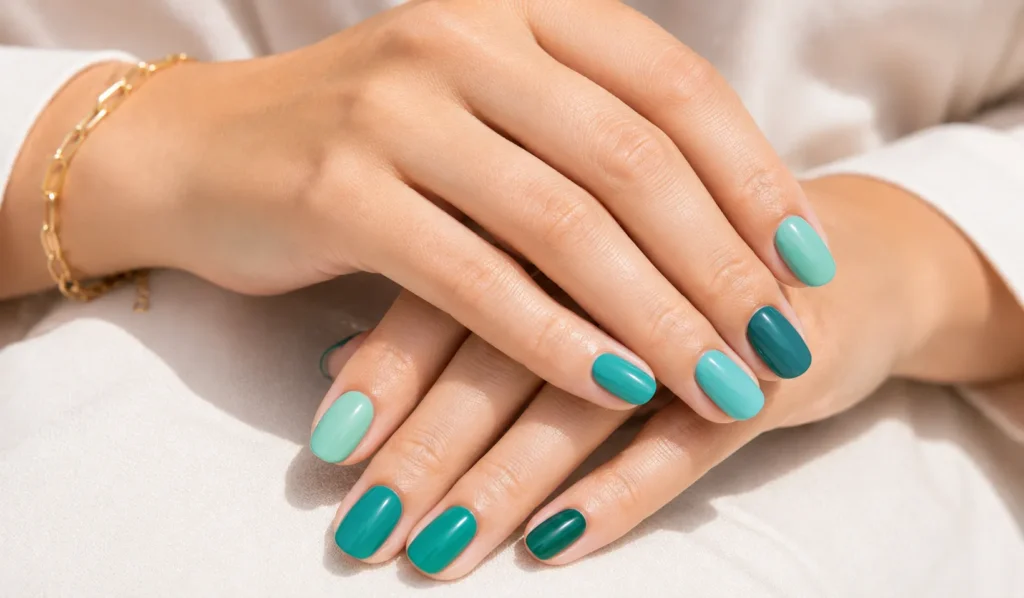
You don’t need an art degree to build a flattering palette. Stick to these proven schemes and your nails will look intentional every time.
| Scheme | How It Works | Example Combination | Best For |
| Complementary | Two colors opposite on the wheel | Blue + orange | Bold, high-contrast looks |
| Analogous | Three colors next to each other | Pink, coral, peach | Soft, harmonious gradients |
| Triadic | Three colors evenly spaced | Purple, green, orange | Playful, balanced variety |
| Monochromatic | Shades and tints of one color | Light to deep teal | Elegant, modern minimalism |
Warm vs. Cool Tones
Colors carry temperature, and matching them to your skin makes a noticeable difference.
- Warm tones (reds, oranges, yellows) flatter golden and olive skin.
- Cool tones (blues, purples, greens) suit pink or fair undertones.
- Neutral tones (taupe, soft gray, blush) work across nearly all skin tones.
Checkpoint: If a combination feels “off” but you can’t say why, check whether you’ve mixed clashing temperatures. Pulling everything warm or everything cool usually fixes it.
Summary: Color theory gives you a repeatable system for choosing shades that look deliberate rather than random.
Multicolor Nail Trends Worth Trying
Trends give you a starting point when inspiration runs dry. The styles below have proven staying power and adapt to almost any skill level.
Rainbow Manicure Ideas
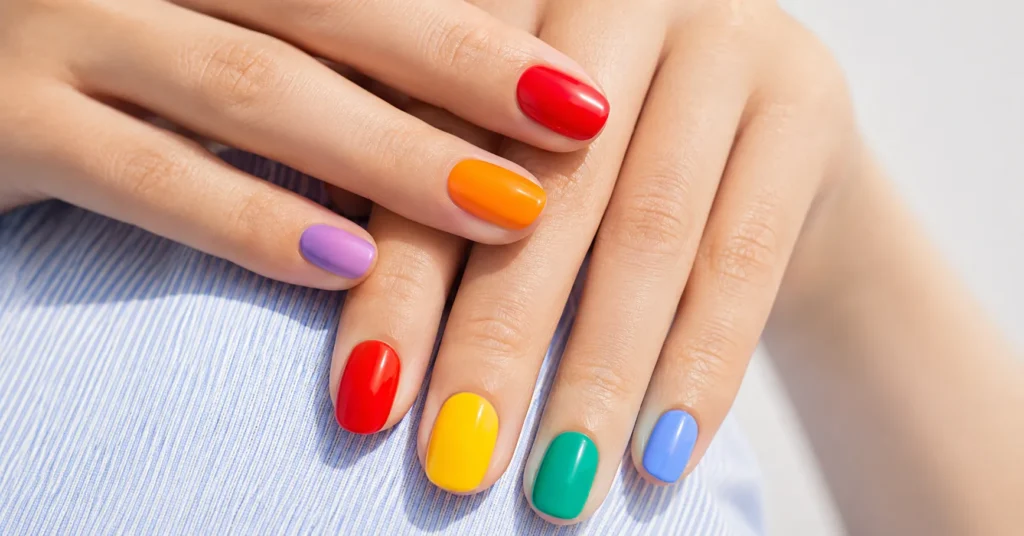
Rainbow nails remain a fan favorite because they’re cheerful and endlessly customizable.
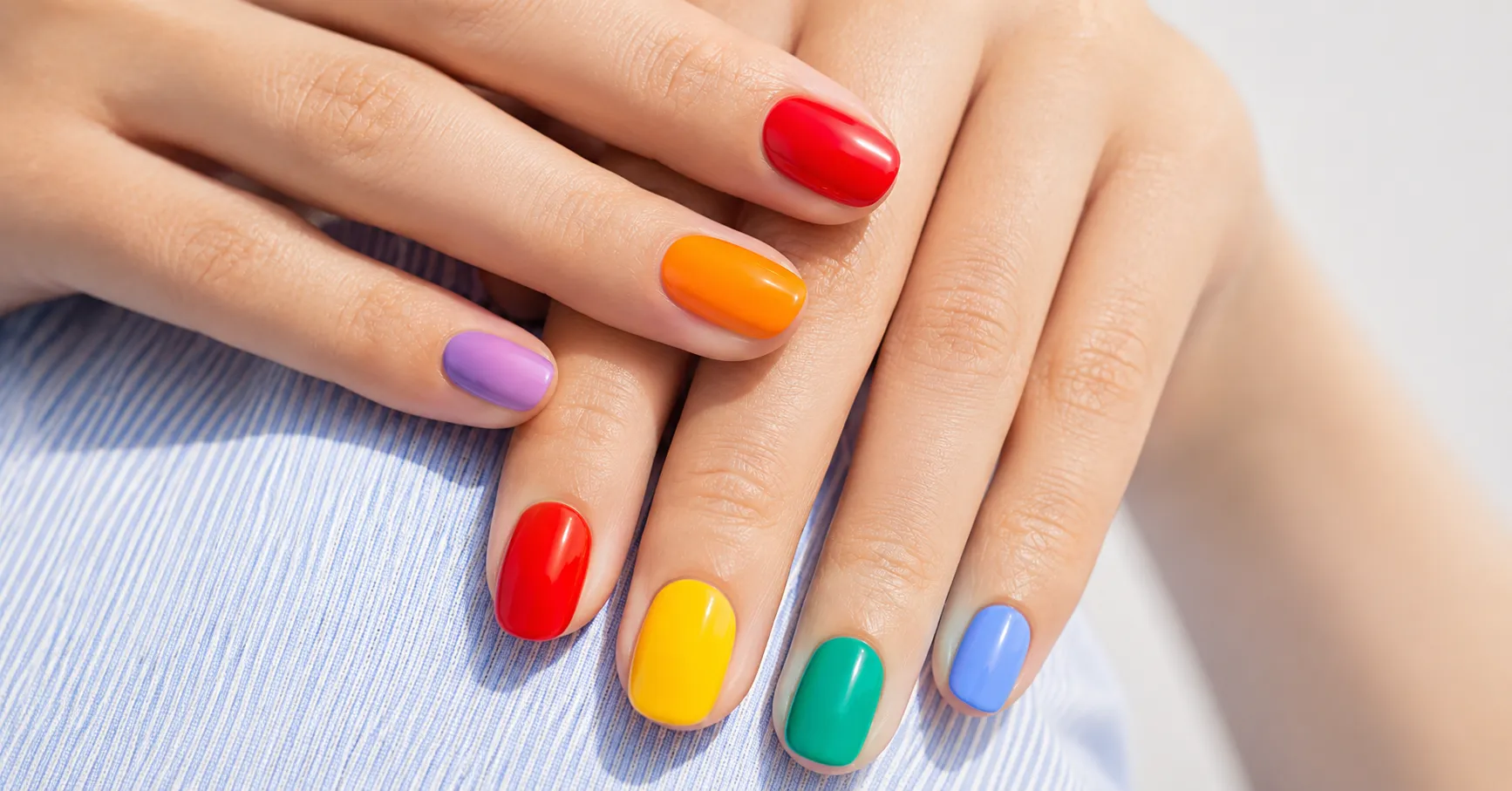
- Classic rainbow: One spectrum color per nail, moving red to violet across the hand.
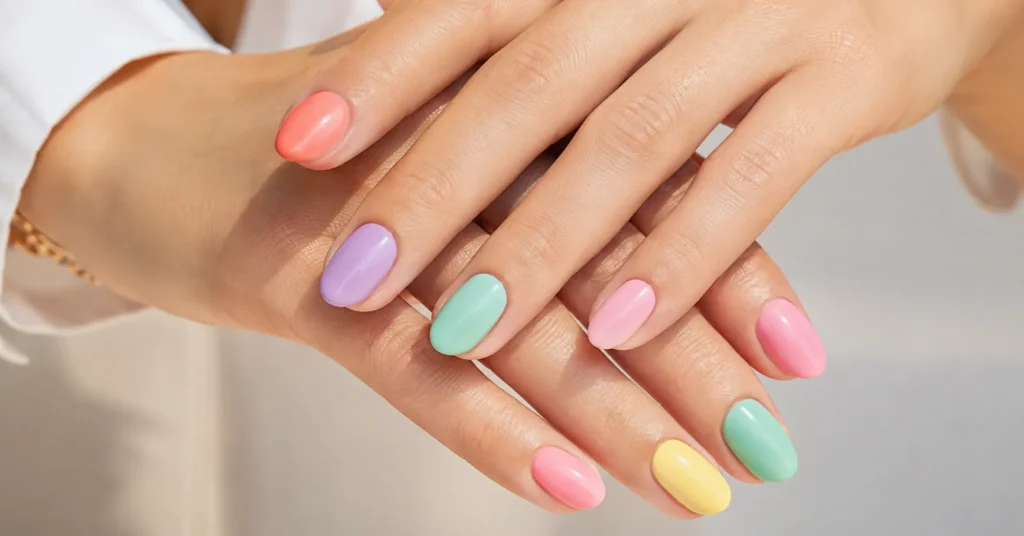
- Pastel rainbow: Softer, muted versions for a gentler effect.
- Gradient rainbow: Colors blend into one another for a smooth ombre flow.
- Negative-space rainbow: Thin rainbow lines or tips over bare nails for a minimalist twist.
Skittle Nails
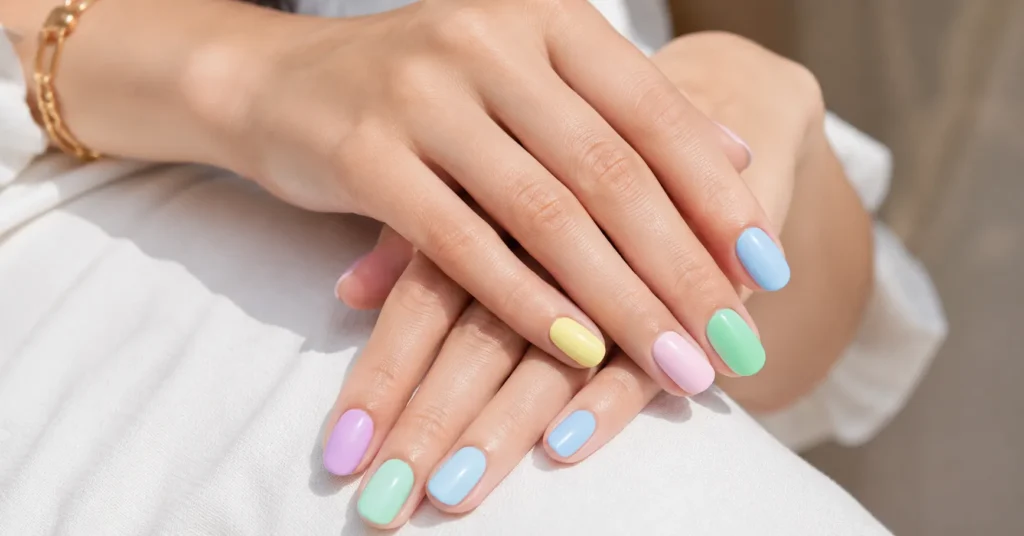
Named after the candy, skittle nails feature a different color on each finger. They’re the easiest entry point into multicolor manis because each nail is its own simple project. Choose five shades from the same scheme to keep the look cohesive rather than chaotic.
Color-Blocking
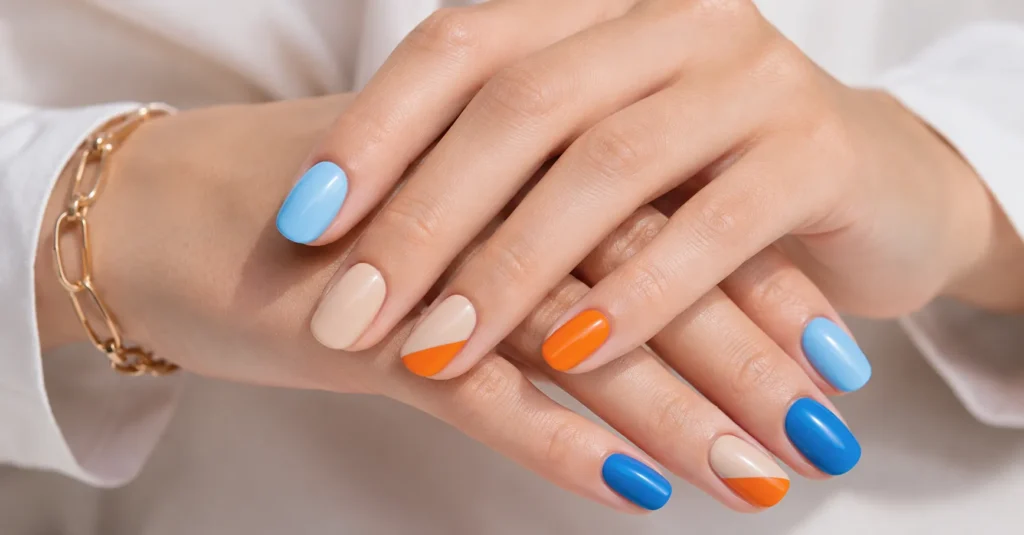
Color-blocking pairs two or more solid shades on a single nail, divided by clean geometric lines. Diagonal splits, half-moons, and vertical bands all fall under this category. It reads modern and graphic, especially with high-contrast pairings.
French Tip Variations
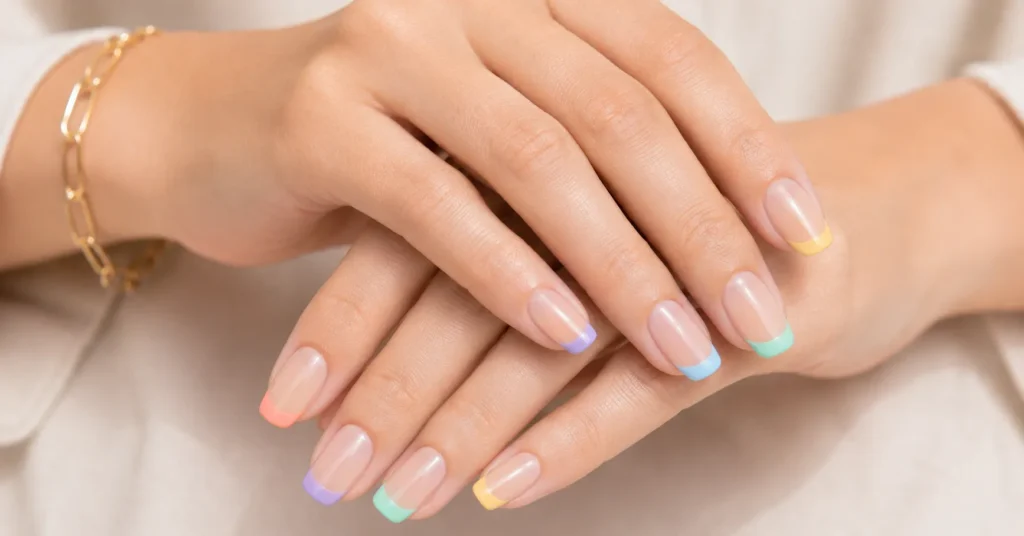
The classic French manicure goes multicolor when you swap the white tip for bright or pastel hues. Try a different tip color on each nail, or stack two tones on a single tip for depth.
Ombre and Gradient Blends
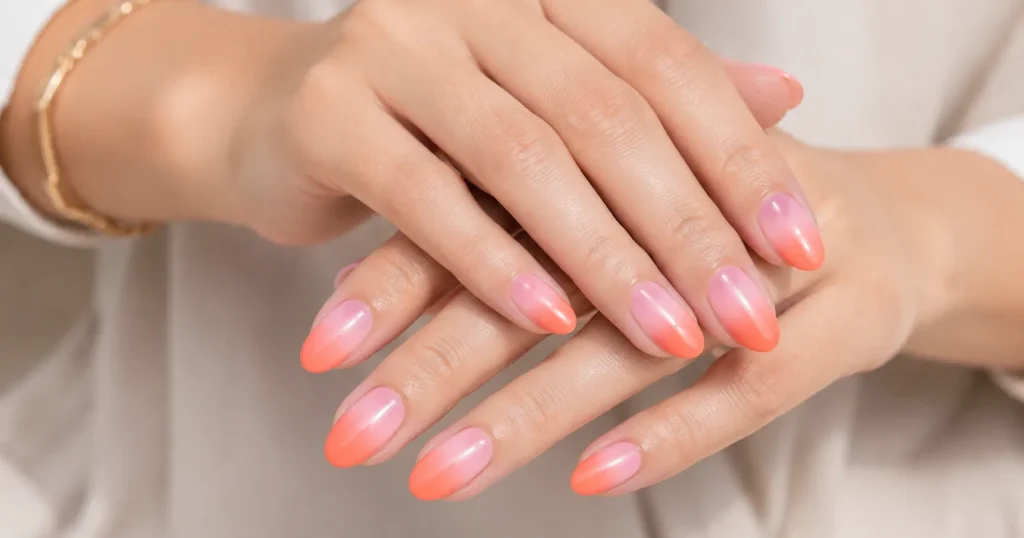
Gradients fade one color into another across a nail or hand. Sunset oranges into pinks, or blues into purples, create a soft, dimensional finish that photographs beautifully.
Summary: From rainbow to color-blocking, today’s trends let you scale the look to your time and skill.
How to Choose the Right Palette for You
A palette that works on someone else may not suit you. Use these factors to narrow your options.
Match the Occasion
- Everyday wear: Neutrals with one accent color stay professional and low-maintenance.
- Events and parties: Bold complementary or triadic schemes draw the eye.
- Seasonal looks: Warm earth tones for autumn, pastels for spring, jewel tones for winter.
Consider Your Wardrobe
Pick shades that appear often in your closet. Nails that coordinate with what you actually wear get more compliments and feel more intentional.
Factor in Nail Length and Shape
- Short nails: Fewer colors and simple patterns prevent a crowded look.
- Long nails: More room for gradients, detailed art, and three-plus shades.
- Almond and stiletto shapes: Flatter vertical designs and ombre blends.
Build a Quick Mood Board
Before you paint, gather two or three reference images. Seeing your palette in context helps you spot clashes early and commit with confidence.
Summary: The best palette reflects your lifestyle, wardrobe, and nail shape, not just current trends.
Tips for Achieving Palette-Perfect Nails at Home
You don’t need a salon appointment to get clean, professional results. The difference between messy and polished usually comes down to prep and technique.
Step 1: Prep Your Nails Properly
- Remove all old polish with an acetone-free remover when possible.
- Trim and file nails into a consistent shape.
- Gently push back cuticles after a warm soak.
- Buff the surface lightly so polish grips evenly.
- Wipe nails with a little rubbing alcohol to remove oils.
Clean prep is the single biggest predictor of how long your manicure lasts.
Step 2: Always Use a Base Coat
A base coat protects the nail from staining, especially with dark or saturated colors. It also creates a smooth surface so each shade goes on evenly.
Step 3: Apply Thin, Even Layers
Thick polish bubbles, smudges, and takes forever to dry. Two thin coats beat one heavy coat every time. Let each layer dry before adding the next.
Step 4: Use the Right Tools for Multicolor Work
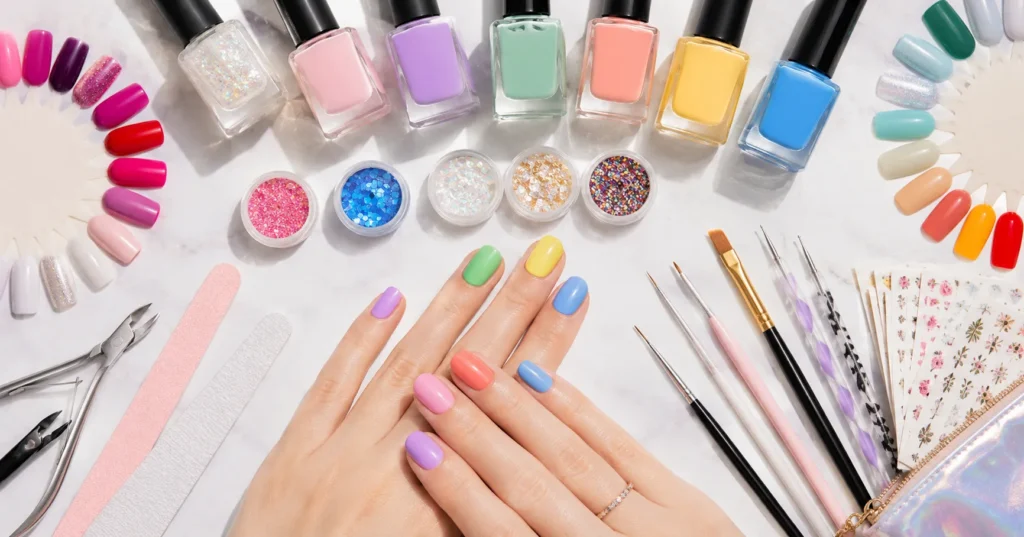
| Tool | Purpose |
| Thin striping brush | Clean lines and color-blocking edges |
| Dotting tool | Polka dots and small accents |
| Makeup sponge | Smooth gradient and ombre blends |
| Striping tape | Sharp geometric divisions |
| Cleanup brush + remover | Fixing edges and stray polish |
Step 5: Work Color by Color
Paint all the nails that share one color before switching shades. This saves time, reduces brush cleaning, and keeps your hand steady on each motion.
Step 6: Seal With a Top Coat
A quality top coat locks in your colors, adds shine, and prevents chipping. Reapply a thin layer every two to three days to extend wear.
Checkpoint: If your gradients look streaky, dab the colors onto a sponge first, then press the sponge onto the nail in light layers rather than one heavy stamp.
Summary: Solid prep, thin layers, and the right tools turn an at-home multicolor manicure into a salon-level result.
Common Multicolor Manicure Mistakes to Avoid
Even great color choices fall flat with the wrong execution. Watch for these frequent missteps.
- Skipping the base coat: Leads to staining and shorter wear.
- Mixing clashing temperatures: Warm and cool shades fighting for attention.
- Overloading short nails: Too many colors on a small surface looks busy.
- Rushing dry time: Smudges ruin clean lines between colors.
- Ignoring undertones: Colors that don’t suit your skin tone read dull.
- Forgetting to clean up edges: Stray polish around the cuticle reads sloppy.
Avoid these and your manicure instantly looks more deliberate and professional.
Summary: Most “failed” multicolor manis come from execution errors, not bad color choices.
Nail Care That Keeps Your Manicure Looking Fresh
A beautiful manicure means little if your nails underneath are weak or damaged. Healthy nails hold polish longer and look better bare, too.
Daily Habits
- Apply cuticle oil once a day to keep edges soft and hydrated.
- Wear gloves while cleaning or washing dishes to protect polish and nails.
- Avoid using your nails as tools to open or scrape things.
Weekly Habits
- Moisturize hands and nails with a rich cream.
- File gently in one direction to prevent splits and peeling.
- Reapply top coat to refresh shine and seal small chips.
Long-Term Nail Health
- Take occasional breaks from polish to let nails breathe.
- Eat a balanced diet with protein, biotin, and healthy fats.
- Stay hydrated, since brittle nails often signal dryness.
Healthy nails are the foundation of every great manicure, multicolor or not.
Summary: Consistent care keeps nails strong, which makes every multicolor look last longer and shine brighter.
Palette Inspiration by Season
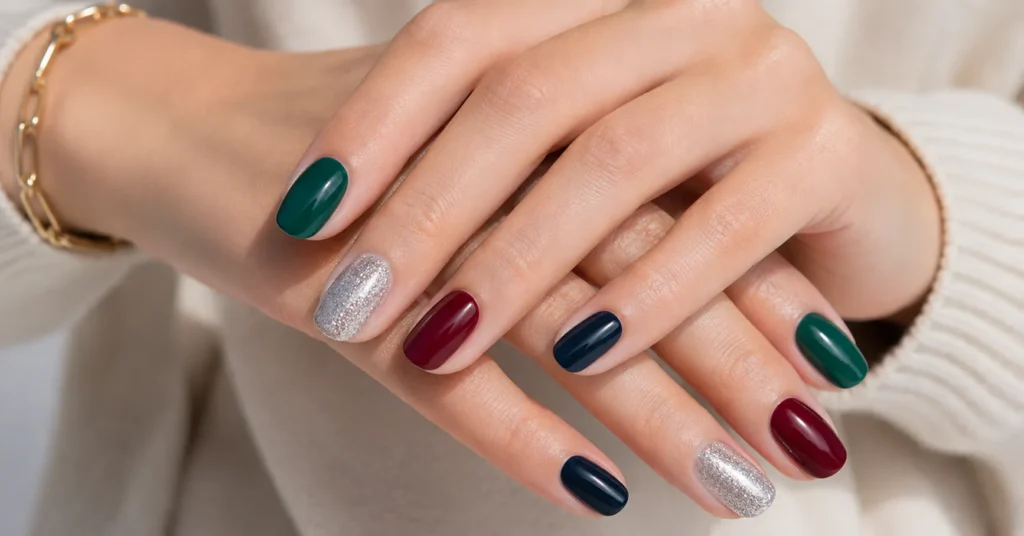
Seasonal palettes give your multicolor manis a timely, cohesive feel. Use this quick reference to plan ahead.
| Season | Suggested Palette | Mood |
| Spring | Blush, mint, lavender, butter yellow | Fresh and soft |
| Summer | Coral, turquoise, hot pink, white | Bright and playful |
| Autumn | Rust, mustard, olive, deep plum | Warm and earthy |
| Winter | Emerald, navy, silver, burgundy | Rich and elegant |
Match these to the occasion factors above and you’ll have a year-round system for choosing colors.
Conclusion
Multicolored manis are palette perfection because they blend creativity with strategy. When you understand a little color theory, choose shades that suit your skin and wardrobe, and apply them with clean technique, your nails become a polished extension of your style. Trends like rainbow gradients, skittle nails, and color-blocking give you endless starting points, while solid prep and nail care keep every look fresh.
Start small with two complementary shades, then build toward bolder combinations as your confidence grows. Pick a palette from the seasonal guide above, gather your tools, and give yourself the practice time to refine your lines. Your perfect multicolor manicure is only a few thin coats away.
Frequently Asked Questions (FAQs)
1. What are multicolored manis?
Multicolored manis are manicures that use two or more polish colors across your nails, whether one shade per nail, blended gradients, or patterns within a single nail.
2. How many colors should I use in one manicure?
Two to five colors works best for most people. Stick to a single color scheme so the shades feel coordinated rather than random.
3. Are multicolor nails hard to do at home?
Not at all. Skittle nails, which use one color per finger, are beginner-friendly. Gradients and detailed art take more practice, but the right tools make them achievable.
4. How do I keep my colors from blending where I don’t want them to?
Let each color dry fully before painting the next, and use striping tape for sharp divisions. A cleanup brush dipped in remover fixes any stray edges.
5. Which colors look best together for nails?
Complementary pairs (like blue and orange) create bold contrast, while analogous shades (like pink, coral, and peach) give a soft, harmonious flow.
6. How long do multicolor manicures last?
With proper prep, a base coat, and a top coat, regular polish lasts five to seven days. Reapplying top coat every few days extends wear.
7. Do multicolor nails work on short nails?
Yes. Keep designs simple, use fewer colors, and favor patterns like skittle nails or color-blocking that don’t overwhelm a small surface.
8. How do I choose colors that suit my skin tone?
Warm tones flatter golden and olive skin, cool tones suit fair and pink undertones, and neutrals work for nearly everyone.
9. What tools do I need for multicolor nail art?
A thin striping brush, dotting tool, makeup sponge, striping tape, and a cleanup brush cover most multicolor techniques.
10. How can I make my at-home manicure look professional?
Prep your nails thoroughly, apply thin even layers, clean up your edges, and finish with a glossy top coat for a salon-quality result.