Squoval Nails: The Flattering Shape That Balances Strength and Style
Squoval nails have quietly become one of the most requested shapes in salons and at-home manicures alike. The name blends “square” and “oval,” and that mash-up tells you everything. You get the flat, clean edge of a square nail with the softened, rounded corners of an oval. The result is a shape that looks polished without feeling harsh, and it flatters almost every hand and finger type. If you’ve ever loved the neat structure of square tips but hated how they snag or look boxy, this is the answer.
By the end of this guide, you’ll know exactly what squoval nails are, how they differ from other shapes, who they suit best, and how to file them at home. We’ll also cover length and polish choices, seasonal looks, acrylic and gel options, common mistakes, and a full care routine.
Let’s start with the basics.
What Are Squoval Nails?
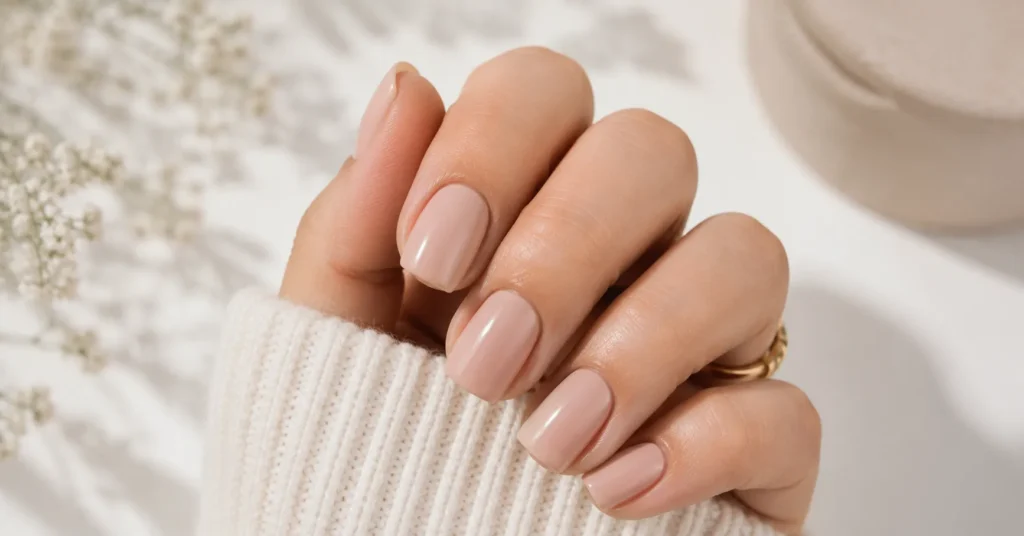
The squoval shape is a hybrid. You file the free edge of the nail straight across, just like a square, then gently round off the two sharp corners. That small change removes the pointy edges that make square nails prone to catching on fabric or chipping.
The finished look reads as clean and structured, yet soft enough to feel modern. It sits between the boldness of a square and the gentleness of a round or oval nail. That middle ground is exactly why so many people reach for squoval nails when they want something versatile.
Here’s what defines the shape:
- Straight free edge: the tip is filed flat across the top.
- Rounded corners: the two side edges are softened, not sharp.
- Balanced silhouette: neither too boxy nor too tapered.
Understand those three traits, and the rest of your styling choices get easier.
Squoval Nails vs. Square vs. Oval: What’s the Difference?
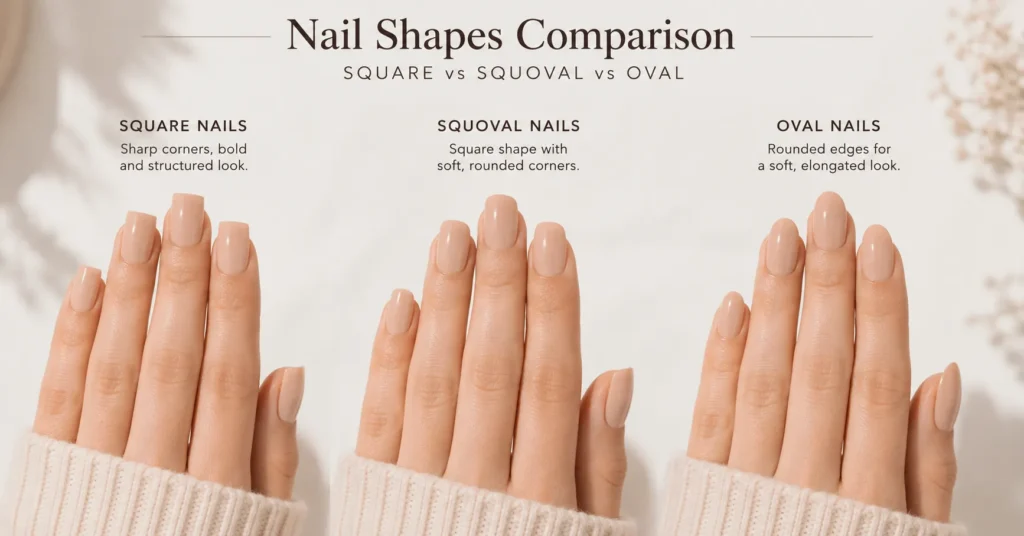
The confusion is understandable. All three shapes share DNA, but small differences change how they look and wear. Knowing the distinctions helps you pick the shape that suits your hands and lifestyle.
A square nail has a flat tip and sharp 90-degree corners. It looks crisp and bold, but those corners catch easily and can feel severe on shorter fingers. An oval nail curves in from the sides and finishes in a soft, rounded tip, which lengthens the finger but sacrifices some of that structured edge.
Squoval nails split the difference. You keep the straight edge for a neat, defined look while the rounded corners add comfort and durability. That combination makes them practical for everyday wear.
Here’s a quick comparison:
| Nail Shape | Tip Style | Corners | Best For | Durability |
| Square | Flat | Sharp, 90° | Bold, structured looks | Corners chip easily |
| Oval | Rounded | Curved away | Lengthening the finger | Strong, few weak points |
| Squoval | Flat | Softly rounded | Everyday versatility | High, resists snags |
The takeaway is simple. If you want structure without the fragility of sharp corners, the squoval shape wins.
Who Do Squoval Nails Suit Best?
Here’s the key selling point: squoval nails flatter nearly everyone. Because the shape sits between two extremes, it adapts to a wide range of hand and nail types. Still, a few details help you tailor it.
- Short, wide nail beds: the straight edge adds length and structure without looking stubby.
- Long fingers: the shape keeps a clean line and feels balanced rather than exaggerated.
- Wide fingers: the rounded corners soften the look and slim the overall appearance.
- Active hands: the durable shape resists snagging during work, typing, or chores.
If you’re wondering whether the shape works for very short natural nails, it does. You just need enough free edge to file a defined straight tip. Even a small amount of length lets you shape a neat squoval.
That flexibility is the biggest reason squoval nails stay popular across so many nail lengths and lifestyles.
The Right Nail Length for Squoval Nails
Length changes how the squoval shape reads. Too short, and the rounded corners can blur the straight edge. Too long, and the shape starts to feel unwieldy or square-heavy. The right length keeps the balance intact.
For most people, a short to medium length works best. This range shows off the defined tip while keeping the nails practical for daily tasks. Longer squoval nails look striking but demand more upkeep and care.
Here’s a length guide to help you choose:
| Length | Look | Best For | Upkeep |
| Short | Neat, practical | Busy hands, natural nails | Low |
| Medium | Balanced, versatile | Everyday elegance | Moderate |
| Long | Bold, dramatic | Special occasions, statements | High |
So what does this mean for you? If you want a low-fuss manicure that still looks intentional, aim for short to medium squoval nails. Save the longer version for when you have time to maintain them.
How to File Squoval Nails at Home: Step by Step
Filing squoval nails yourself sounds tricky until you break it into steps. The shape is actually one of the more forgiving ones to create because you start from a square base and simply refine it. Follow this order and you’ll get a clean result.
- Start with clean, dry nails. Remove old polish and wash your hands. Filing wet nails can cause peeling.
- Trim to your target length. Use clippers to get close to the length you want before filing.
- File the tip straight across. Hold the file flat and work in one direction to create a square edge. Avoid a sawing motion, which weakens the nail.
- Check that all tips are level. Look at your nails straight on to confirm the flat edges match.
- Round the corners. Gently angle the file at each corner and soften it with a few light strokes.
- Refine and smooth. Run the file lightly along the edge to remove any roughness, then buff the tip.
A quick note on tools: use a fine-grit file (around 240 grit) on natural nails to prevent splitting. Coarser files suit acrylics and gels. File in one direction rather than back and forth to protect the nail’s layers.
Common mistake: over-rounding the corners. If you file too much, your squoval nails start to look oval. Take off small amounts and check often.
Polish Colors and Finishes That Flatter Squoval Nails
The clean lines of squoval nails make a great canvas for almost any polish. That said, some colors and finishes highlight the shape better than others. The flat tip draws the eye, so tip-focused designs and clean applications shine here.
Best Everyday Colors
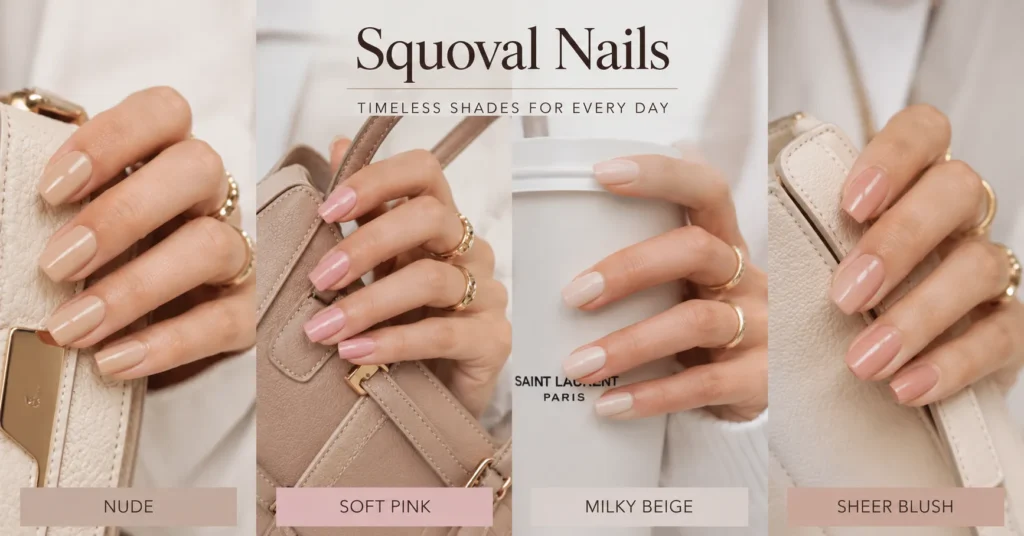
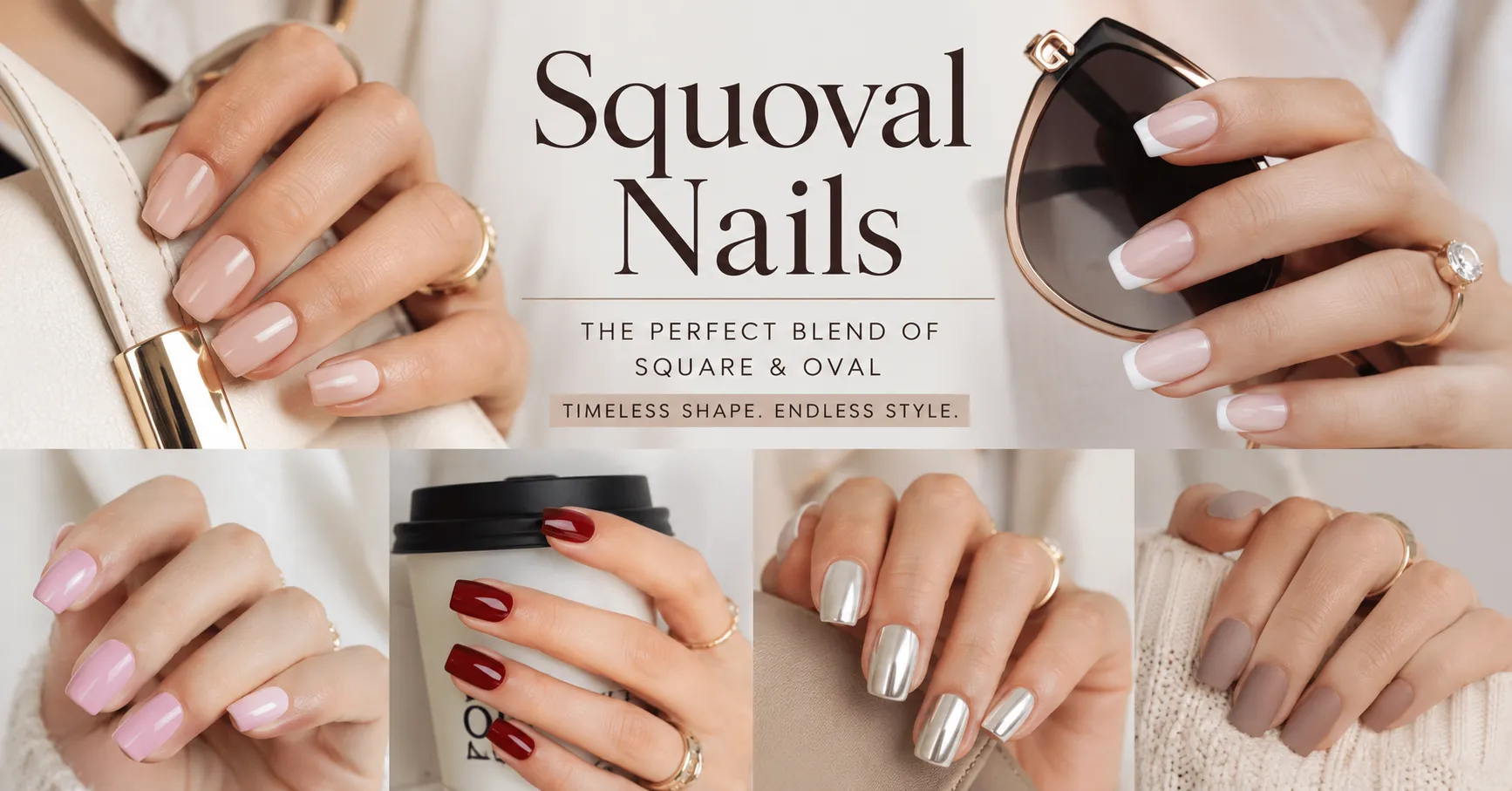
Neutrals and soft tones keep the look elegant and office-appropriate. Nudes, soft pinks, and sheer finishes let the shape lead. These also make small imperfections less noticeable, which helps for at-home manicures.
Bold Statement Shades
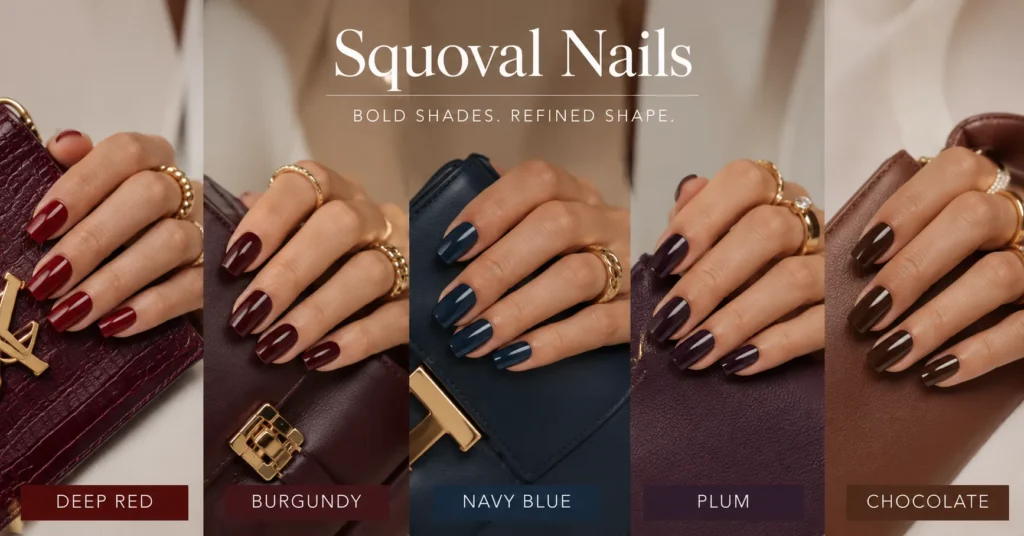
Deep reds, berry tones, and dark navy pop against the structured tip. The straight edge gives these rich colors a crisp finish that feels intentional and sharp.
Finishes to Try
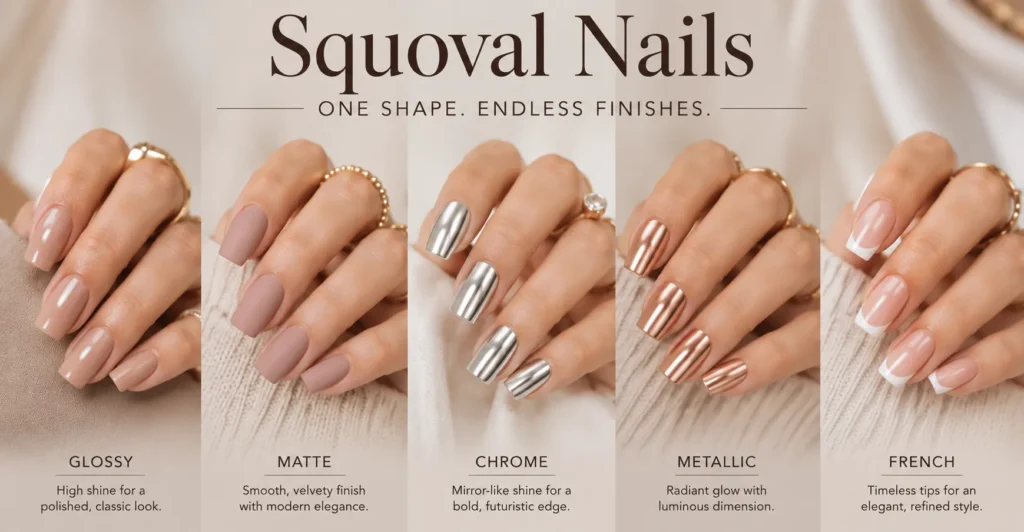
- Glossy: classic and reflective, it sharpens the clean lines.
- Matte: modern and understated, great for darker shades.
- Chrome or metallic: eye-catching and trend-forward for special occasions.
A French manicure works especially well on squoval nails. The straight smile line follows the flat tip beautifully, giving that timeless, polished result.
Seasonal Squoval Nail Looks
One shape carries you through the whole year with the right color and design shifts. Squoval nails adapt to every season, which makes them a reliable base for trend-driven looks.
Spring
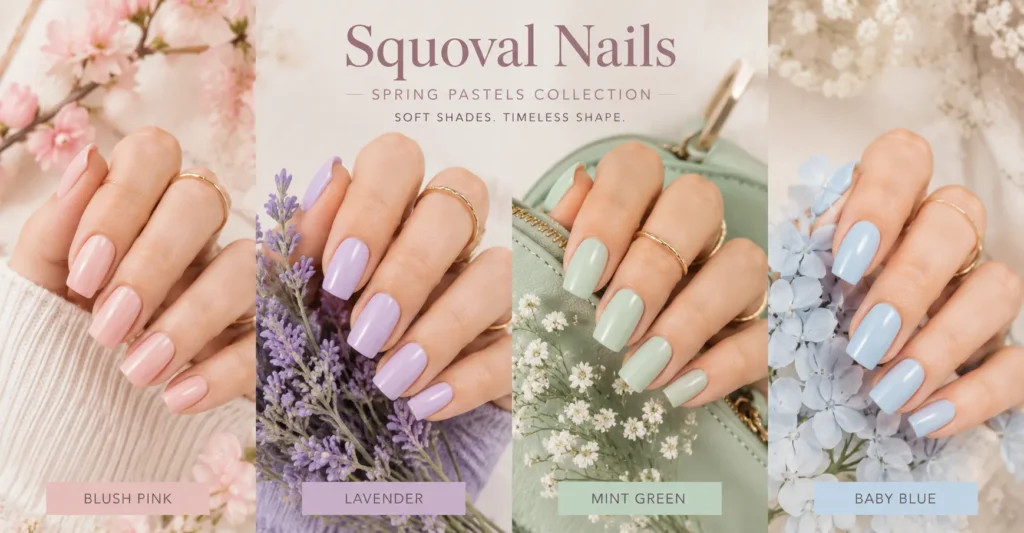
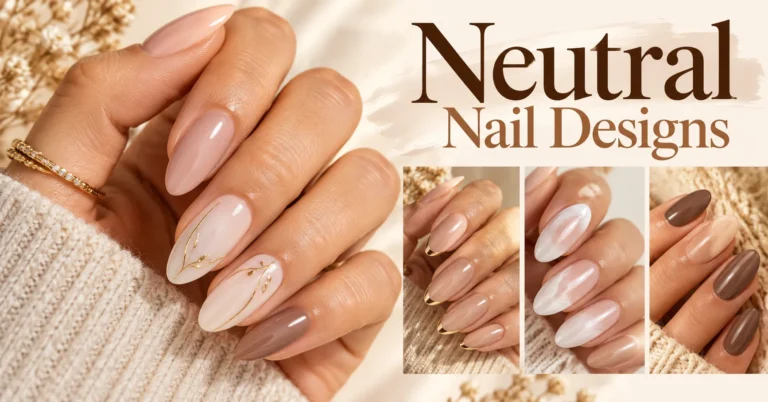
Lean into soft pastels, sheer pinks, and delicate floral accents. A milky base with a single accent nail feels fresh and light.
Summer
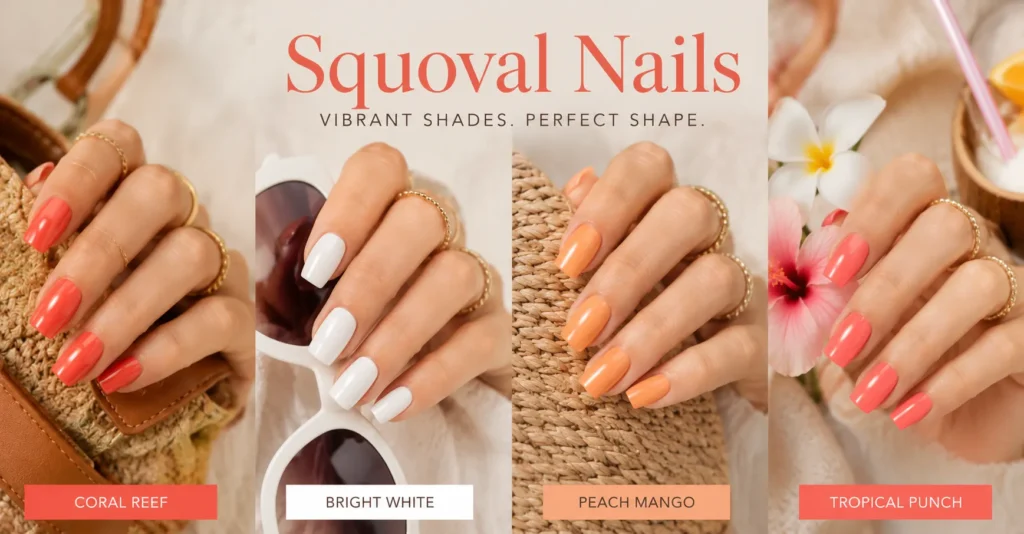
Go brighter and bolder. Corals, warm oranges, and glossy whites suit the season. Try a subtle chrome finish for a sunny, reflective effect.
Fall
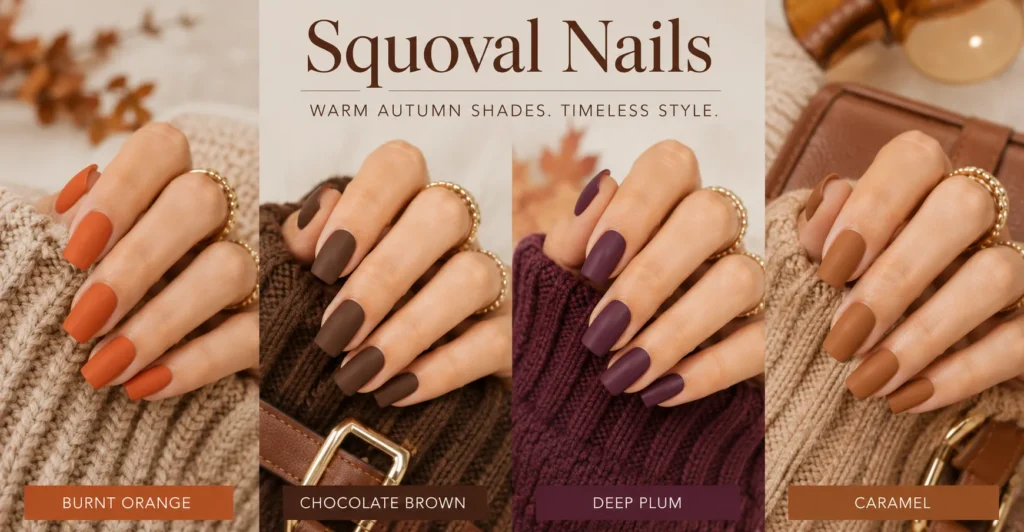
Shift to warm, moody tones. Burnt orange, deep plum, and chocolate brown pair perfectly with the structured shape. Matte finishes feel right for autumn.
Winter
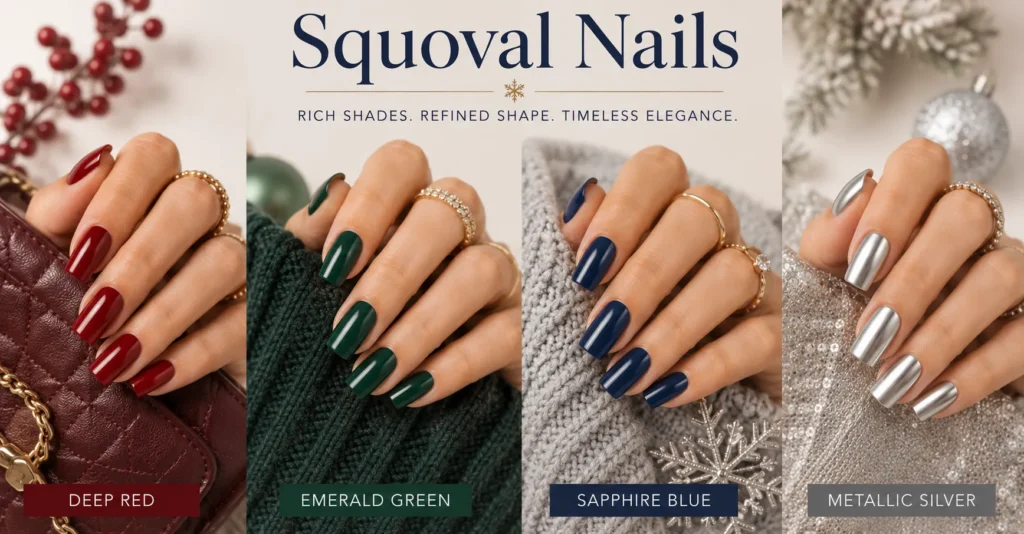
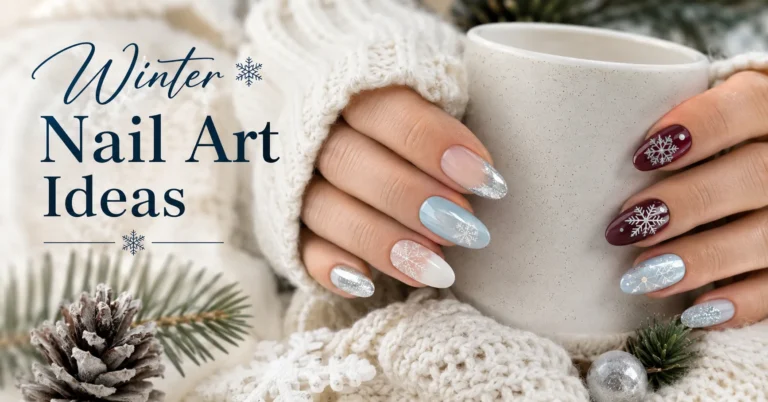
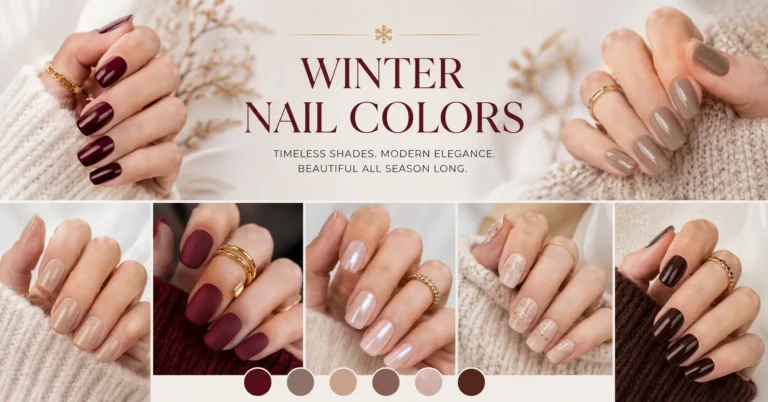
Reach for rich jewel tones, deep reds, and metallics. A dark base with a touch of shimmer looks elegant for the holidays.
| Season | Color Palette | Finish | Vibe |
| Spring | Pastels, sheer pink | Glossy | Fresh, light |
| Summer | Coral, bright white | Chrome or glossy | Bold, sunny |
| Fall | Plum, burnt orange | Matte | Warm, moody |
| Winter | Jewel tones, red | Metallic | Rich, festive |
Squoval Nails in Acrylic and Gel
Natural nails aren’t your only option. If you want extra length or strength, acrylic and gel both work beautifully for squoval nails. Each has its own benefits, and the right choice depends on your goals.
Acrylic Squoval Nails
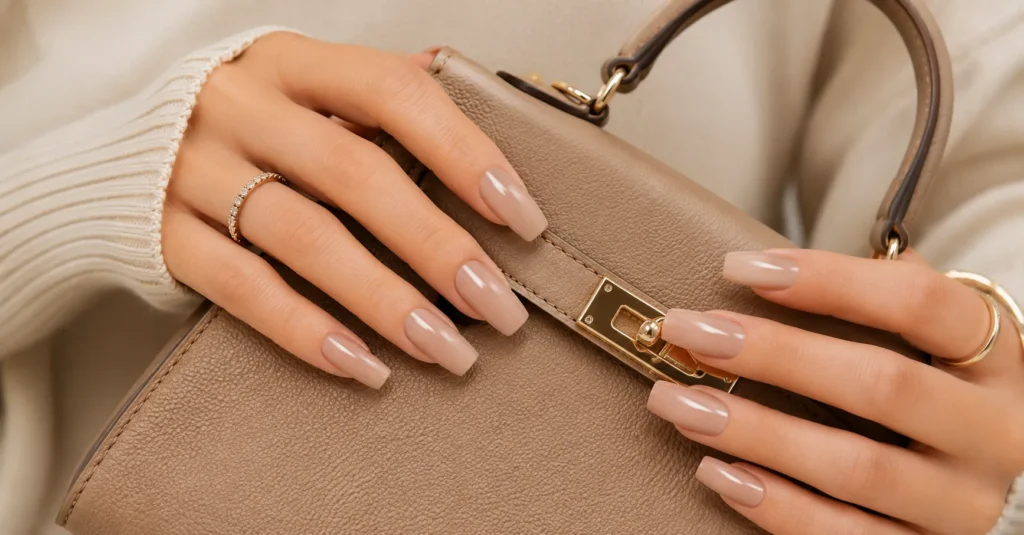
Acrylics add durable length and hold the squoval shape well. A technician shapes the extension by filing the flat tip and rounding the corners, just like on natural nails. Acrylics suit anyone who wants strength and a bold, lasting shape.
The trade-off is upkeep. You’ll need fills every two to three weeks as your natural nails grow out.
Gel Squoval Nails
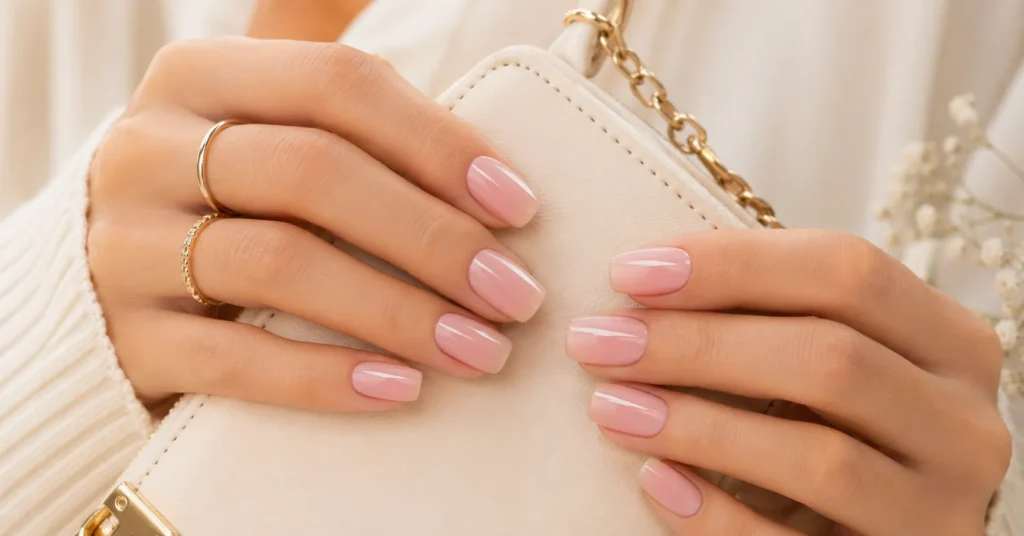
Gel offers a more flexible, natural feel with a glossy finish. Gel polish over natural nails or gel extensions both take the squoval shape well. Gel tends to feel lighter and looks more natural than acrylic.
Here’s how the two compare:
| Feature | Acrylic Squoval Nails | Gel Squoval Nails |
| Strength | Very strong | Strong, flexible |
| Feel | Firmer, thicker | Lighter, natural |
| Finish | Matte until topcoat | Glossy |
| Best for | Length and durability | Natural look, shine |
| Upkeep | Fills every 2–3 weeks | Refresh every 2–3 weeks |
So what’s the right pick? Choose acrylic for maximum strength and dramatic length. Choose gel for a lighter, more natural finish with plenty of shine.
Common Squoval Nail Mistakes to Avoid
Even an easy shape can go wrong with a few slips. Knowing the pitfalls helps you get a cleaner result whether you file at home or ask your technician.
- Over-rounding the corners. File too much and your squoval nails drift into oval territory. Soften lightly and check often.
- Uneven tips. If the flat edges don’t match across nails, the set looks messy. Line them up before rounding.
- Filing back and forth. A sawing motion frays the nail layers and causes splitting. File in one direction.
- Skipping the base coat. Bare nails stain and weaken. Always start with a protective base.
- Going too long too fast. Longer squoval nails need more care. Build up length gradually if your nails are weak.
Fix these, and your manicure reads intentional rather than accidental.
How to Care for Your Squoval Nails
A great shape only lasts if the nails underneath stay healthy. Because squoval nails resist snagging, they already have a durability advantage. A simple routine keeps them strong and looking sharp for longer.
Follow these habits:
- Moisturize daily: rub cuticle oil and hand cream into the nails and skin to prevent brittleness.
- Wear gloves for chores: protect your nails from water and harsh cleaners.
- Use a base coat: it shields against staining and adds a smooth surface for polish.
- File gently and often: small touch-ups keep the shape crisp between manicures.
- Avoid using nails as tools: opening cans or scratching labels causes breaks.
If you use acrylic or gel, keep up with fills and avoid picking at lifted edges. Peeling off product takes your natural nail layers with it and weakens the bed.
With consistent care, your squoval nails stay resilient, and the shape holds its clean line between salon visits.
Conclusion
Squoval nails give you the best of two worlds: the crisp structure of a square with the soft, snag-resistant comfort of an oval. That balance makes them flattering across hand types, practical for busy lifestyles, and endlessly adaptable through colors, finishes, and seasons. Whether you file them at home, choose gel for shine, or opt for acrylic for length, the shape rewards you with a polished, versatile look.
Your next step is simple. Grab a fine-grit file, shape one nail using the steps above, and see how the squoval silhouette suits your hands. Once you’ve nailed the technique, build out a full set and pick a polish that matches your season.
Frequently Asked Questions about Squoval Nails
What are squoval nails?
Squoval nails combine a square and oval shape. The tip is filed straight across like a square, then the sharp corners are gently rounded. The result is a structured yet soft, snag-resistant shape.
How are squoval nails different from square nails?
Square nails have sharp 90-degree corners, while squoval nails have those corners softened and rounded. This makes squoval nails more comfortable, less likely to catch on fabric, and more durable overall.
Do squoval nails suit short nails?
Yes, As long as you have a little free edge to file a straight tip, the shape works. Squoval nails add structure and the look of length, which flatters shorter natural nails well.
How do I file squoval nails at home?
File the tip straight across to create a flat edge, check that all tips are level, then gently round each corner with light strokes. Use a fine-grit file and always file in one direction.
What nail length works best for squoval nails?
Short to medium lengths suit most people. This range shows the defined tip while staying practical. Longer squoval nails look dramatic but need more upkeep and care.
Can you get squoval nails in acrylic or gel?
Yes, Both work well. Acrylic squoval nails offer strong, lasting length, while gel squoval nails give a lighter, more natural feel with a glossy finish.
What polish colors look best on squoval nails?
Neutrals and nudes keep the look elegant, while deep reds and berry tones make a bold statement against the straight tip. A French manicure also suits the shape beautifully.
How long do squoval nails last?
Natural squoval nails hold their shape with light touch-ups between manicures. Acrylic and gel versions typically need fills or a refresh every two to three weeks as your nails grow out.
Are squoval nails low maintenance?
Relatively, yes. The rounded corners resist snagging and chipping, so the shape holds up well. Short to medium lengths need the least upkeep, making them a practical everyday choice.
What is the most common mistake with squoval nails?
Over-rounding the corners. If you file too much off the sides, the shape drifts into an oval. Remove small amounts at a time and check the straight edge often.