Lightweight Jeans: Denim Weight, Fabrics, and 10 Cool Outfit Ideas
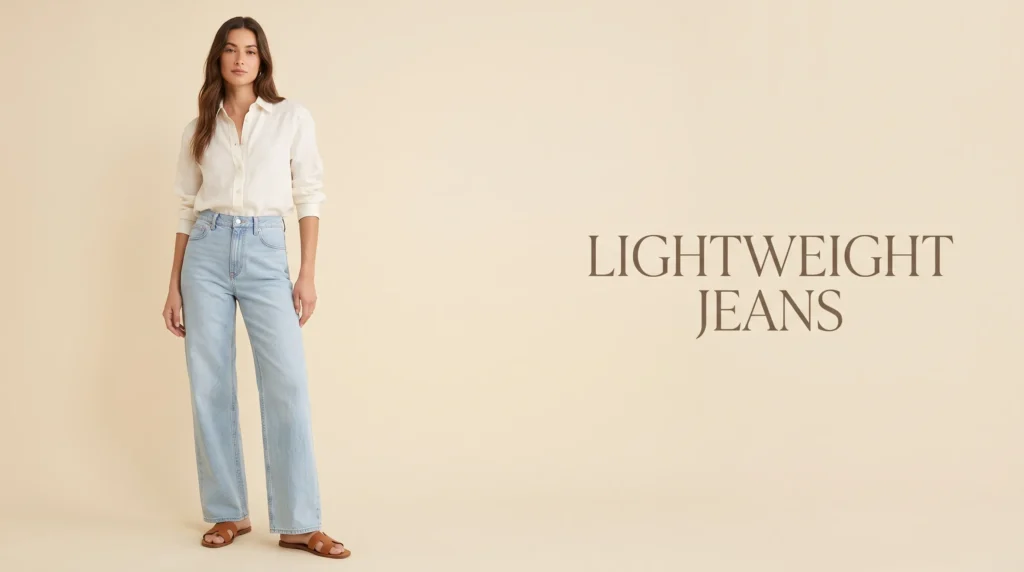
Classic jeans often fail in July. Heavy denim traps heat, clings to damp skin, and takes hours to dry after a sudden storm. Lightweight jeans fix all three problems. They give you the look of denim with the comfort of chinos, and they work from late spring through early fall.
Great summer jeans come down to four things you can check: fabric weight, fiber blend, weave, and fit. Once you know what to look for, you can judge a pair from its product page in under a minute.
What Are Lightweight Jeans?
Lightweight jeans are jeans made from denim that weighs less than 12 ounces per square yard. That single number separates a breathable summer pair from the stiff, heavy denim most people picture when they think of jeans.
Denim itself is a sturdy cotton twill (a weave that creates fine diagonal lines on the fabric surface). The word traces back to “serge de Nîmes,” a fabric from the French city of Nîmes. Levi Strauss and Jacob Davis patented riveted denim work pants in 1873, and those early pairs used thick, heavy cloth built for miners and laborers.
Modern mills spin finer yarns and weave them more loosely. The result is light denim that keeps the classic twill look at a fraction of the weight.
How Denim Weight Is Measured
Denim weight is measured in ounces per square yard (oz/yd²). A higher number means a thicker, denser fabric. Mills measure this weight before the fabric is washed, so the finished pair can feel slightly lighter than the label suggests.
Some brands, especially in Europe and Asia, list weight in GSM (grams per square meter). One ounce per square yard equals about 34 GSM, so a 10-oz denim weighs roughly 340 GSM.
| Weight Class | Ounces per Square Yard | Approximate GSM | Feel | Best Season |
| Very light | Under 9 oz | Under 305 | Soft, drapey, close to chambray | Peak summer |
| Lightweight | 9–11.9 oz | 305–405 | Breathable, flexible, little break-in | Spring, summer, early fall |
| Midweight | 12–15.9 oz | 405–540 | Classic jean feel | Year-round |
| Heavyweight | 16 oz and up | 540+ | Stiff, structured, long break-in | Fall, winter |
Where to Find the Weight
Many denim brands list fabric weight in the product details. Levi’s, Madewell, and most selvedge specialists include it on select styles. If a listing doesn’t show the weight, search the reviews for words like “thin,” “light,” or “summer weight.”
Check the product details of the next pair in your cart for an oz or GSM number before you buy.
Why Lightweight Jeans Belong in Your Wardrobe
Lightweight jeans extend denim season by several months. Heavy jeans sit in your drawer from June to September. A lighter pair keeps working.
They Keep You Cooler
Thinner fabric lets more air and moisture pass through. Breathable denim (denim woven loosely enough to release body heat) dries faster after sweat or rain. On a humid 85°F day, the difference between 9-oz and 14-oz denim is obvious within an hour.
They Need Almost No Break-In
Break-in is the period when stiff denim softens and molds to your body. Heavyweight raw denim can take weeks of wear. Lightweight jeans feel comfortable from the first day, because the thinner fabric bends easily at the knees and hips.
They Travel Well
Light denim packs smaller, weighs less in a suitcase, and dries overnight if you rinse it in a hotel sink. That makes it the better choice for vacations, business trips, and long flights.
They Layer Year Round
A thin pair doesn’t retire in October. Add a wool sweater and boots in fall, or wear thermal leggings underneath on cold days. One pair can cover nine or ten months of the year with the right layers.
Count how many pairs of jeans you skip wearing in summer. If the answer is all of them, a lightweight pair is your most useful next purchase.
Lightweight vs. Heavyweight Denim
Lightweight and heavyweight denim serve different jobs. Neither is better overall: each wins in specific conditions.
| Feature | Lightweight Denim | Heavyweight Denim |
| Weight | Under 12 oz | 16 oz and up |
| Breathability | High | Low |
| Break-in time | Little to none | Weeks to months |
| Durability | Good, wears faster at stress points | Excellent |
| Structure | Soft, drapes on the body | Holds its own shape |
| Fading | Even, gentle fades | High-contrast fades |
| Drying time | Fast | Slow |
| Best for | Heat, travel, everyday comfort | Cold weather, workwear, denim collectors |
The Durability Trade Off
Thinner fabric wears faster at friction points. The inner thighs, back pockets, and knees show stress first. A quality pair still lasts several years with proper care. Denim fans who chase dramatic fades prefer heavyweight raw denim, while comfort-first shoppers choose lighter weights.
Decide which column matches your daily life. Most people need one pair from each.
Fabrics, Blends, and Weaves Explained
Fiber content matters as much as weight. Two pairs of lightweight jeans at the same 10 oz can feel completely different depending on the blend.
| Composition | Feel | Stretch | Breathability | Best For |
| 100% cotton | Crisp, softens with wear | None | High | Vintage fits, rigid looks |
| Cotton + 1–2% elastane | Soft, flexible | Moderate | High | Everyday wear, slim fits |
| Cotton + 3–5% elastane | Very stretchy | High | Medium | Skinny and contour fits |
| Cotton + Tencel lyocell | Silky, cool, drapey | Low | Very high | Hot climates, wide legs |
| Cotton + hemp | Textured, sturdy | None | Very high | Eco-conscious wardrobes |
| Cotton + linen | Slubby, airy | None | Very high | Peak-summer relaxed fits |
| Cotton + polyester + elastane | Smooth, quick-drying | High | Medium | Performance and travel jeans |
Stretch Denim: 2 Way vs. 4 Way Stretch
Stretch denim contains elastane (a stretch fiber also sold as spandex or Lycra). The amount and placement change how the jeans move.
2-way stretch denim stretches side to side only. It feels like classic denim with extra give through the hips and thighs. 4-way stretch denim stretches both widthwise and lengthwise. It moves like activewear, which makes it popular for cycling, travel, and long days of sitting.
Recovery (a fabric’s ability to snap back after stretching) decides whether stretch jeans keep their shape. Low-quality stretch denim bags out at the knees by afternoon. Look for brands that mention recovery or name a specific stretch technology on the label.
Chambray vs. Denim
Chambray looks like light denim but uses a different weave. Chambray is a plain weave, with yarns crossing over and under one at a time. Denim is a twill weave, which creates the diagonal ridges you see on jeans. The name comes from Cambrai, the French town where the fabric originated.
Chambray is lighter, softer, and smoother than denim. It shows up mostly in shirts and summer pants. Some brands sell chambray “jeans,” which are excellent for heat but lack the structure and durability of true denim.
Tencel and Lyocell Blends
Tencel is a brand name for lyocell, a fiber made from wood pulp by the Austrian company Lenzing. Blended with cotton, it creates soft denim that feels cool against the skin and drapes beautifully. Tencel blends suit wide-leg and relaxed fits, where fluid movement looks best.
Read the composition label before the price tag. The blend tells you how a pair will feel by 3 p.m. on a hot day.
Lightweight Jeans Fits and Styles
The right fit makes lightweight jeans comfortable in heat. Looser cuts let air circulate. Slim cuts work best with a touch of stretch.
| Fit | Shape | Best Fabric | Airflow | Best For |
| Wide-leg | Loose from hip to hem | Tencel blend, 100% cotton | Excellent | Peak summer, polished casual |
| Straight-leg | Even from knee to hem | 1–2% stretch cotton | Good | Everyday, office |
| Relaxed / loose | Roomy through hip and thigh | 100% cotton, hemp blend | Excellent | Weekends, travel |
| Slim | Close through the leg | 2-way stretch | Fair | Smart casual |
| Skinny | Tight to the ankle | High-stretch blend | Low | Cooler evenings |
| Barrel | Curved at knee, tapered hem | 100% cotton | Good | Fashion-forward looks |
| Cropped / ankle | Ends above the ankle | Any | Good | Sandals, loafers, hot days |
| Athletic taper | Roomy seat and thigh, narrow ankle | 4-way stretch | Good | Men with muscular legs |
Fit Notes for Women
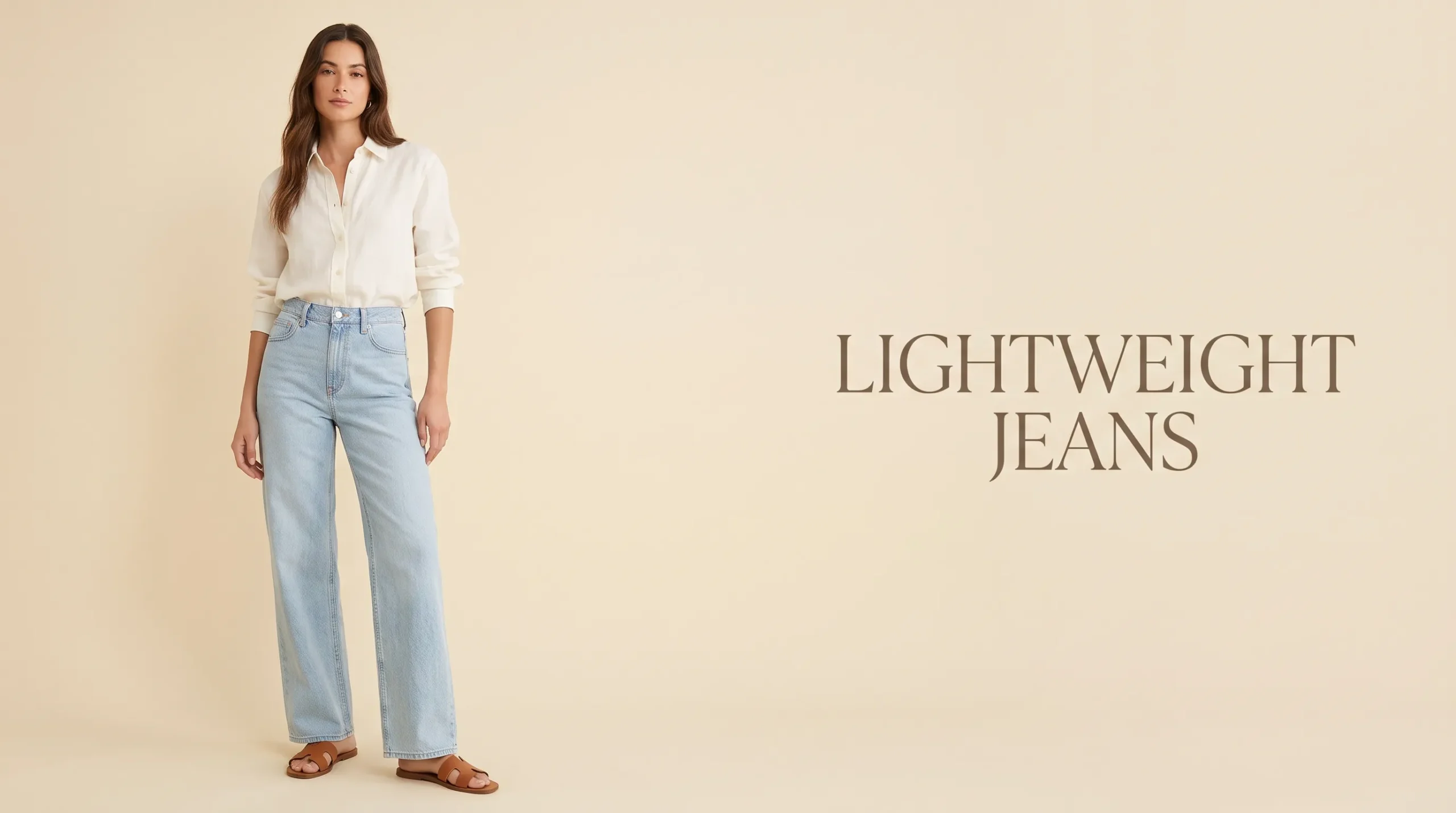
High rise wide leg and straight leg cuts lead women’s summer jeans for good reason. The high rise defines the waist, and the open leg keeps fabric away from your skin. Cropped lengths show off sandals and loafers and reduce bulk at the ankle.
Fit Notes for Men
Straight and relaxed tapered fits suit most men in warm weather. They avoid the clingy feel of skinny jeans while still looking sharp. Athletic taper fits give extra room through the seat and thigh, which helps on long walks and humid days.
Pick the fit that matches your most common summer plans, and filter your next search by that cut.
How to Choose Lightweight Jeans in 6 Steps
Choosing lightweight jeans follows a clear sequence. These six steps narrow hundreds of options down to the two or three pairs worth trying.
- Define the main job. Decide whether the pair is for heat, travel, the office, or all three. Office pairs need a darker wash and cleaner cut.
- Check the weight. Look for 9 to 11.9 oz for everyday summer wear. Go under 9 oz only for peak heat.
- Read the blend. Choose 1–2% elastane for comfort, Tencel for drape, or 100% cotton for a vintage look.
- Match fit to climate. Choose wide-leg or relaxed cuts for humid weather. Save skinny fits for cooler evenings.
- Test the opacity. Hold light-wash pairs up to a window. Very thin denim can show pocket linings or undergarments.
- Inspect the stress points. Check the crotch seam, belt loops, and pocket corners for reinforced stitching.
This framework puts function before trend. A pair that does its main job well earns its place, no matter the price.
Write your answer to step one in your phone’s notes app before you shop.
Quality Signs: Cheap vs. Well-Made Thin Jeans
Thin jeans expose weak construction faster than heavy denim. Cheap pairs fail at the seams before the fabric wears out.
| Feature | Low Quality | High Quality |
| Crotch seam | Single row of stitching | Double or triple stitching, often flat-felled |
| Rivets and bar tacks | Missing or loose | Present at pocket corners |
| Stretch recovery | Bags at knees within hours | Snaps back after sitting |
| Pocket bags | Thin, see-through lining | Sturdy cotton twill |
| Belt loops | Narrow, single-stitched | Wide, reinforced |
| Fabric surface | Fuzzy, pills quickly | Smooth with clear twill lines |
| After washing | Twists, shrinks unevenly | Holds shape and size |
Why Leg Twist Happens
Leg twist is when the outer seam spirals toward the front of your shin after washing. It comes from twill fabric that wasn’t stabilized or cut on the correct grain. Well-made jeans use sanforized denim (fabric pre-shrunk during finishing) and careful cutting to prevent it.
Turn any pair inside out in the fitting room and check the crotch seam for at least two rows of stitching.
How to Style Lightweight Jeans: 10 Outfit Ideas
Styling lightweight jeans comes down to breathable partner pieces. The denim stays the same: the top, layer, and shoes set the tone. These 10 ideas cover work, weekends, travel, and evenings.
1. The Office Polish: Dark Straight Leg and a Linen Shirt
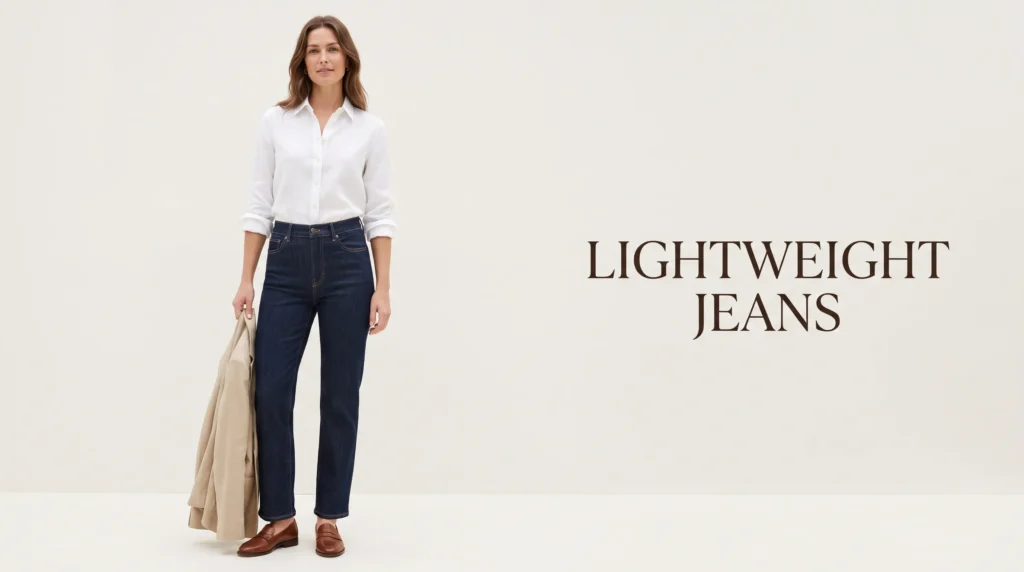
Pair dark wash straight leg jeans with a crisp white linen shirt and brown leather loafers. Add a lightweight unstructured blazer for meetings. The dark wash keeps the look professional, and the linen keeps you cool.
2. The Weekend Classic: Light Wash Wide Leg and a White Tee
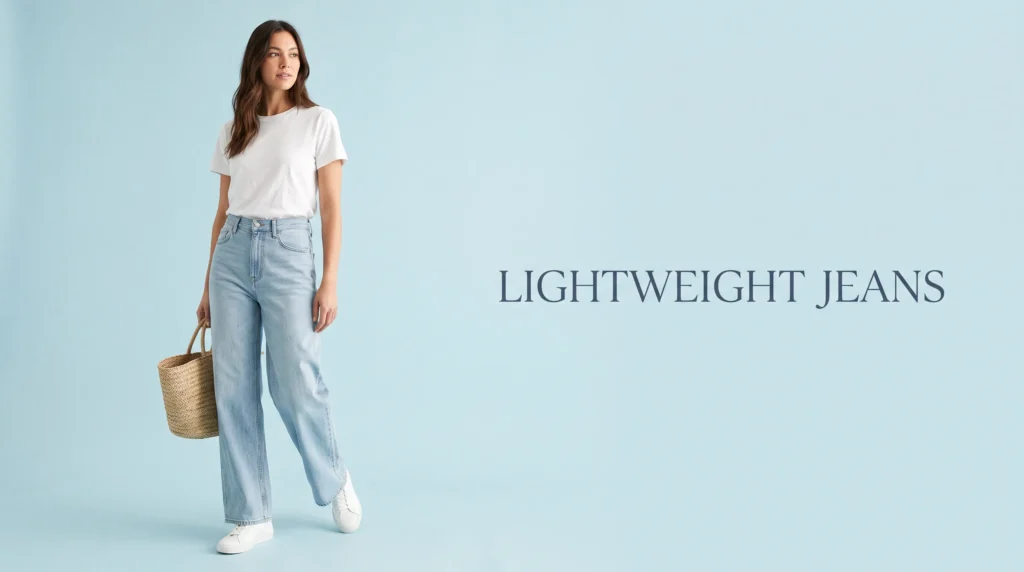
Tuck a white cotton tee into high rise light wash wide leg jeans. Finish with white sneakers and a woven tote. This formula takes two minutes and works for errands, brunch, and the farmers’ market.
3. The Vacation Uniform: Relaxed Jeans and Espadrilles
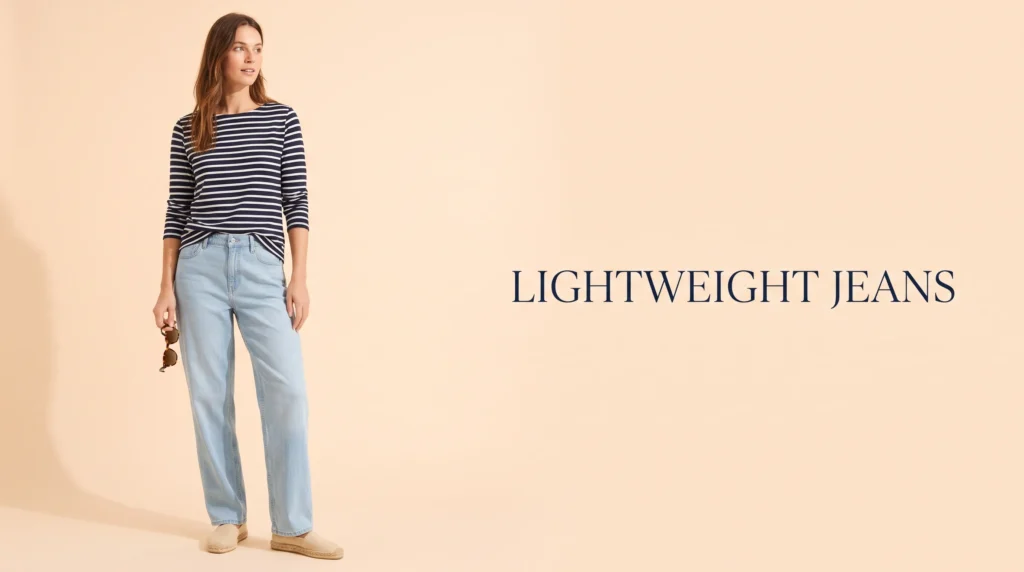
Wear relaxed light denim with a striped Breton top and espadrilles. Add a straw hat and sunglasses. The loose cut lets air move, which matters on cobblestone walking days.
4. The Canadian Tuxedo, Updated: Chambray Shirt and Dark Denim
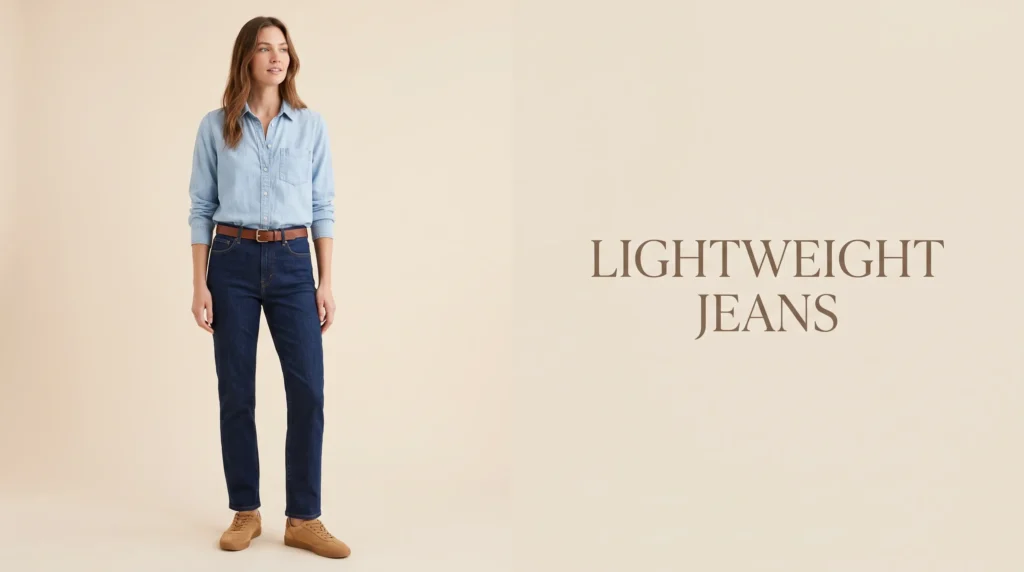
A chambray shirt with darker jeans creates a modern take on double denim. The contrast in shades keeps it intentional. Roll the sleeves, add a brown belt, and finish with suede sneakers.
5. The Date Night: Slim Black Jeans and a Silk Camisole
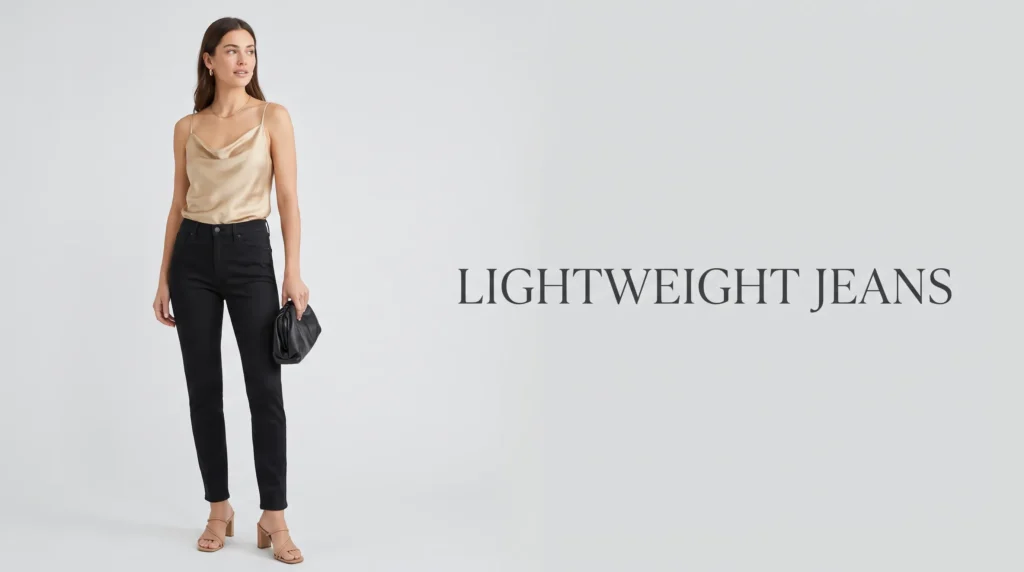
Pair slim black lightweight jeans with a silk camisole or a fine knit polo and heeled sandals or leather loafers. The black wash reads as dressier after dark.
6. The Smart Casual for Men: Tapered Jeans and a Knit Polo
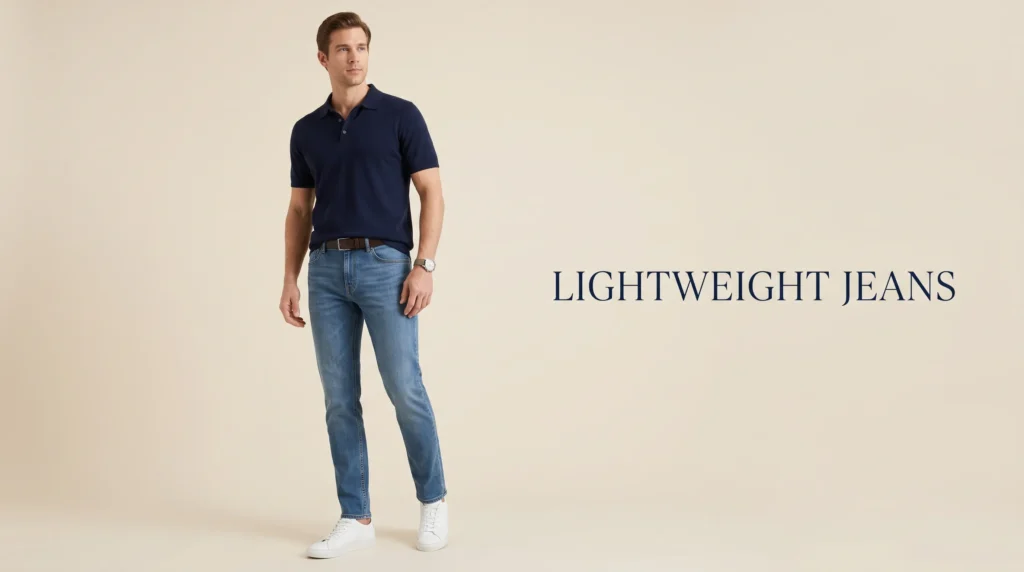
Wear mid-wash tapered jeans with a navy knit polo and white leather sneakers. Add a canvas watch strap. This outfit works for casual Fridays, dinners, and summer weddings with relaxed dress codes.
7. The Travel Day: 4 Way Stretch Jeans and a Hoodie
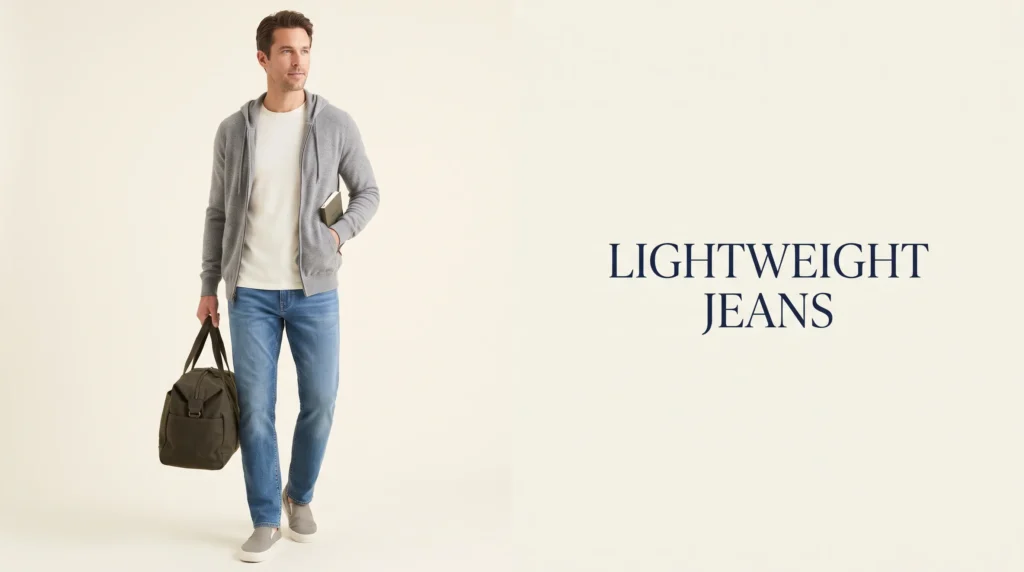
Pair 4 way stretch jeans with a lightweight hoodie, a long cardigan, and slip on sneakers. The stretch makes long flights comfortable, and the thin denim dries fast if you need to rinse it.
8. The Cropped Look: Ankle Jeans and Sandals
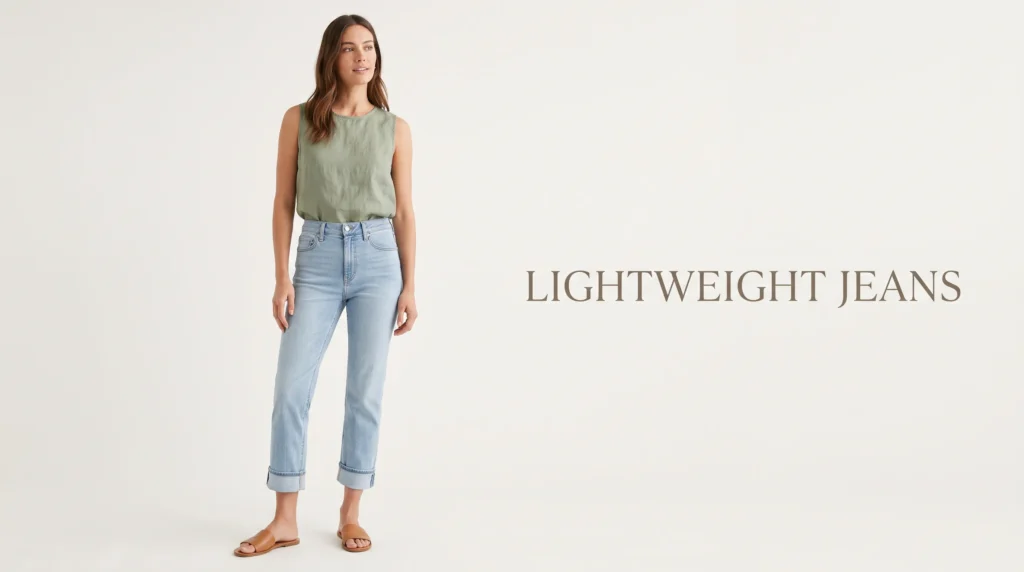
Cropped straight jeans with flat leather sandals and a sleeveless blouse show a little ankle and keep you cooler. Choose a cuffed hem for a relaxed finish.
9. The Monochrome Summer: White Jeans and a Cream Knit
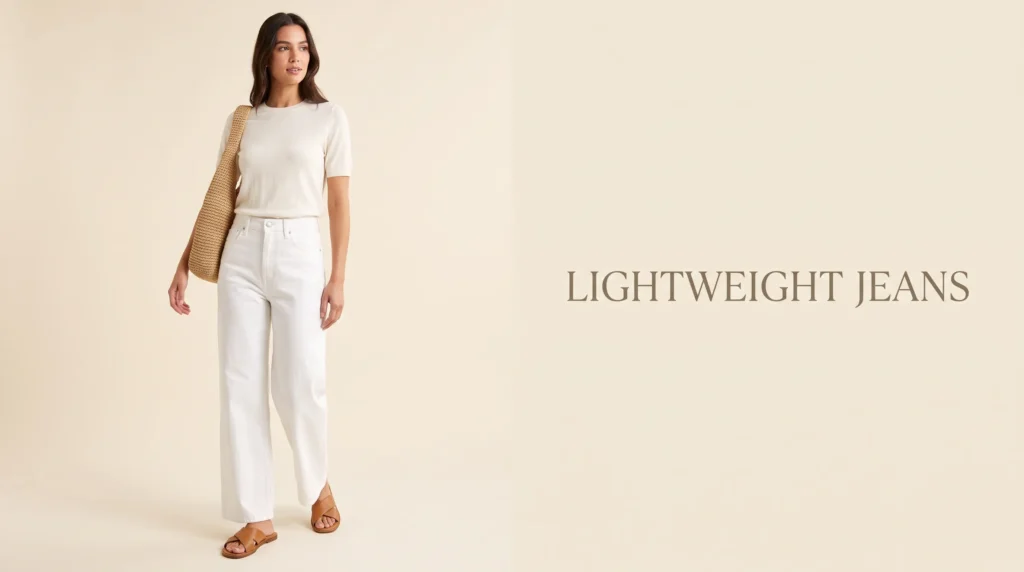
White lightweight jeans with a cream short-sleeve knit and tan sandals create a tonal outfit (several shades of one color) that looks polished in heat. Wear skin-toned underwear, since thin white denim shows more.
10. The Fall Transition: Lightweight Jeans and a Chunky Sweater
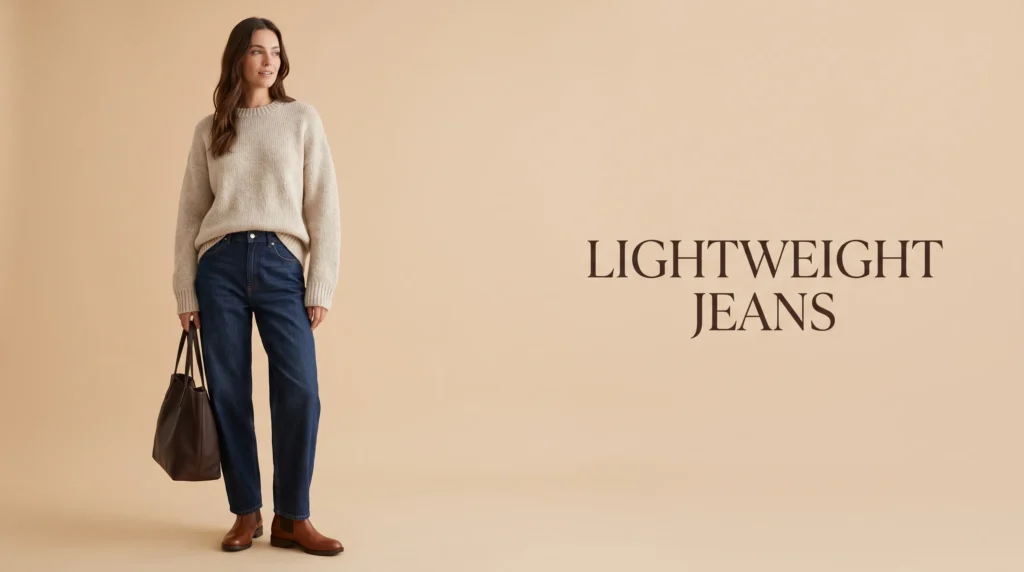
Add a wool crewneck, a suede jacket, and Chelsea boots to your summer pair in September. Light denim under a heavier knit balances the outfit and stretches the jeans into a second season.
Outfit Ideas by Occasion
| Occasion | Best Fit | Best Wash | Top Pairing | Shoes |
| Office | Straight-leg | Dark rinse | Linen shirt, blazer | Loafers |
| Weekend | Wide-leg, relaxed | Light or mid wash | Tee, tank | Sneakers |
| Vacation | Relaxed, cropped | Light wash | Striped tee, linen shirt | Espadrilles, sandals |
| Date night | Slim | Black, dark indigo | Silk cami, knit polo | Heeled sandals, loafers |
| Travel | Straight or tapered with stretch | Mid wash | Hoodie, cardigan | Slip-on sneakers |
| Summer wedding (casual) | Tapered, straight | Dark rinse | Knit polo, blouse | Leather sneakers, block heels |
Choose two ideas from this list and wear them this week using pieces you already own.
Seasonal Styling Guide
Lightweight jeans cover three seasons with simple swaps. Change the wash, layers, and shoes, and the same pair carries you from April to November.
| Season | Best Wash | Top Pairings | Layers | Shoes |
| Spring | Mid wash | Light knits, button-downs | Denim or utility jacket | Sneakers, loafers |
| Summer | Light wash, white | Tees, tanks, linen shirts | None | Sandals, espadrilles, slides |
| Early fall | Dark rinse, black | Long-sleeve tees, sweaters | Suede jacket, cardigan | Chelsea boots, loafers |
| Winter (mild climates) | Dark rinse | Chunky knits, turtlenecks | Wool coat, thermal base layer | Lug-sole boots |
Washes and Their Effects
Wash describes the color and finish of the denim after dyeing and treatment. Indigo is the traditional blue dye for denim, and lighter washes have had more indigo removed.
| Wash | Look | Formality | Best Season |
| Light wash | Pale blue, vintage | Casual | Summer |
| Mid wash | Classic blue | Casual to smart casual | Spring, summer |
| Dark rinse | Deep indigo, uniform | Smart casual, office | Year-round |
| Black | Sleek, modern | Smart casual, evenings | Year-round |
| White / ecru | Crisp, fresh | Casual to smart casual | Spring, summer |
Mark your current season in the table and plan one outfit using only pieces from your closet.
Lightweight Jeans for Hot and Humid Climates
Humid heat changes the rules. Sweat makes stretch denim cling, and dark dyes absorb more sunlight. These adjustments keep lightweight jeans wearable in places like Houston, Miami, or Singapore.
Choose Light Colors
Light washes and white denim reflect more sunlight than dark indigo and black. Your legs stay cooler as a result.
Go Loose
A relaxed or wide-leg cut keeps fabric off your skin. Air circulates with every step, which a skinny fit can’t match.
Pick Natural Fibers
Cotton, Tencel, hemp, and linen blends absorb and release moisture better than high-polyester blends. Save polyester-heavy performance denim for travel days with air conditioning.
Wear Breathable Layers Underneath
Moisture-wicking underwear made from cotton modal or merino reduces chafing and sweat build-up under denim.
Swap your next summer purchase to a light-wash, relaxed fit if you live somewhere with high humidity.
How to Care for Lightweight Jeans
Thin denim lasts for years with the right routine. It also wears out faster than heavy denim if you wash it hot and dry it on high. Follow these steps every time:
- Wash less often. Wash after five to ten wears, or when the jeans smell or look dirty. Spot-clean small marks in between.
- Turn them inside out. This protects the dye and the outer surface from friction.
- Use cold water. Cold water limits shrinkage and fading.
- Choose a gentle cycle. Light denim tears more easily at stress points under heavy agitation.
- Use a dye-safe detergent. Detergents made for dark clothes help indigo stay vivid.
- Air-dry. Hang by the waistband or lay flat. High dryer heat shrinks cotton and breaks down elastane.
- Repair early. Patch thinning inner thighs before they tear. A tailor can reinforce the area for about $15 to $30.
Protect the Stretch
Elastane loses its snap with heat. Skip the dryer on stretch jeans, and avoid ironing them directly on high heat. If they bag out slightly, a short cold wash and air-dry restores much of the shape.
Prevent Inner-Thigh Wear
Thigh friction is the most common failure point for thin denim. Relaxed fits reduce rubbing, and reinforced crotch panels on some performance jeans extend lifespan.
Hang a drying rack or a set of clip hangers near your washer. Air-drying alone can add years to every pair you own.
Common Mistakes to Avoid
Most problems with summer denim come from ignoring the weight or the care label. Avoid these five mistakes:
- Buying by wash instead of weight. A light-wash color doesn’t mean light fabric. Some pale jeans use 14-oz denim.
- Choosing too much stretch for heat. High-elastane skinny jeans cling to damp skin and trap heat.
- Skipping the opacity check. Very thin white or light denim can show pocket linings and undergarments.
- Machine-drying on high. Heat shrinks cotton and weakens elastane in a single cycle.
- Ignoring reinforcement. Thin jeans without double-stitched seams split at the crotch first.
Check the product details and seams of your next pair against this list before you buy.
Conclusion
The right lightweight jeans make denim a true three-season staple. Check the weight first, aiming for 9 to 11.9 oz. Then confirm the blend, match the fit to your climate, and inspect the seams. Those four checks matter more than any brand name.
Start with a mid-wash straight-leg pair with 1–2% stretch. It works for offices, weekends, and travel, and it layers easily into fall. Add a light-wash wide-leg or a white pair once you know where your summer wardrobe has gaps.
Your next step: open the product page of one pair you’re considering and find its fabric weight before you add it to your cart.
Frequently Asked Questions about lightweight jeans
What weight are lightweight jeans?
Lightweight jeans use denim that weighs under 12 ounces per square yard. Most summer pairs fall between 9 and 11.9 oz. Anything under 9 oz feels very light and close to chambray.
Are lightweight jeans good for summer?
Yes. Lighter denim breathes better, dries faster, and needs little break-in. Choose a light wash and a relaxed or wide leg fit for the coolest feel in hot weather.
Do lightweight jeans wear out faster?
Thin denim shows wear sooner at the inner thighs, crotch, and pockets. A well made pair with reinforced seams still lasts several years when you wash it cold and air dry it.
What is the difference between chambray and light denim?
Chambray uses a plain weave, while denim uses a twill weave with diagonal ridges. Chambray is softer and lighter. Denim has more structure and durability.
What are the best lightweight jeans for women?
High rise wide leg and straight leg styles in 9 to 11 oz denim suit the most women. Madewell, Levi’s, Everlane, and Uniqlo all offer summer weight options at different price points.
What are the best lightweight jeans for men?
Straight and relaxed tapered fits with 1–2% stretch work best for most men. Levi’s, Gap, and DUER offer lighter denim options, and DUER focuses on performance stretch for active days.
Is 4 way stretch denim better than 2 way stretch?
It depends on the job. 4 way stretch moves in every direction, which suits travel, cycling, and long days of sitting. 2 way stretch feels more like classic denim and holds a cleaner shape.
Can you wear lightweight jeans in winter?
Yes, in mild climates or with layers. Add thermal leggings underneath, a heavy knit on top, and boots. Choose dark washes for a more seasonal look.