The Celestial Outfit Guide Stylists Wish You Had
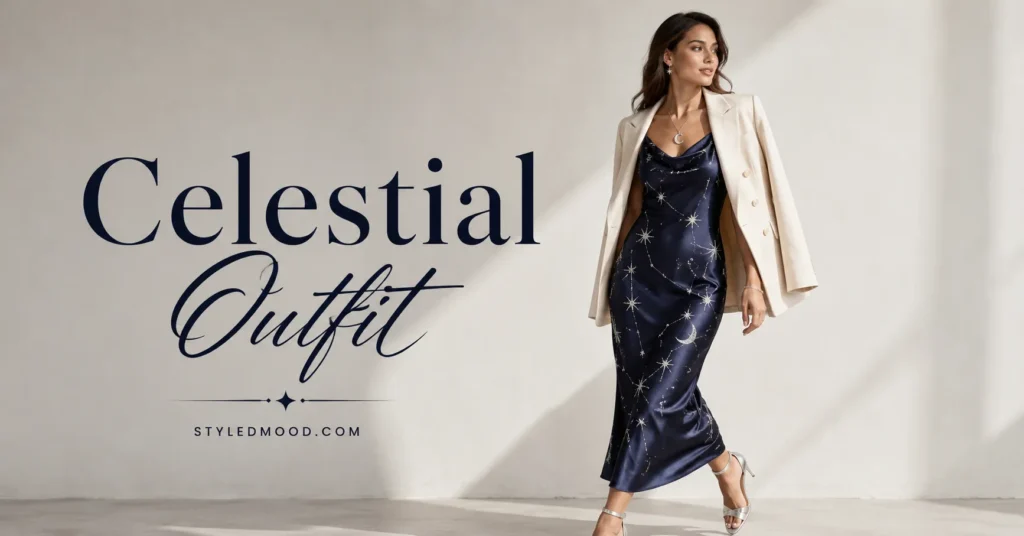
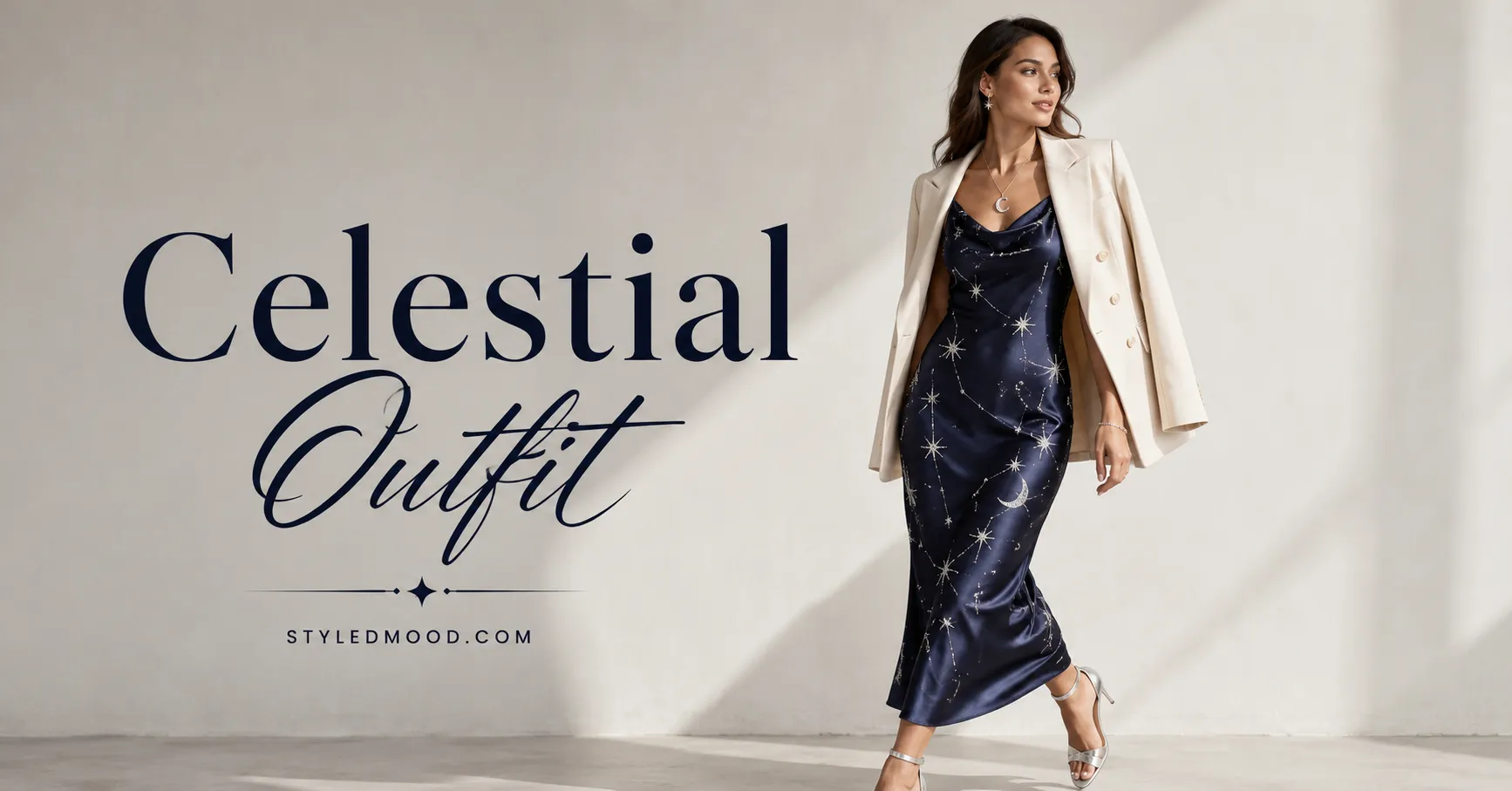
Most celestial outfits fall apart in the mirror. You buy the star-print dress, clip on a moon necklace, add some glitter, and the whole thing reads like a costume rack instead of a considered look. I have watched this happen on dozens of clients, and I have done it to myself more than once.
The gap between a celestial outfit that looks expensive and one that looks like leftover party supplies is narrower than most guides admit. It usually comes down to three or four decisions made before you ever leave the house.
I have spent the better part of a decade styling people for editorial shoots, weddings, and the occasional festival, and the celestial trend keeps coming back to my chair. So this guide is built from what actually works on real bodies, in real light, photographed by real cameras. Not what looks good on a hanger.
What Is a Celestial Outfit, Really?
A celestial outfit is any look built around night-sky imagery. Stars, moons, planets, constellations, galaxy gradients. The motifs show up as prints, embroidery, metallic detail, beading, or a single quiet accessory.
That definition sounds broad because it is. The problem starts when people read “celestial” as a permission slip for maximalism. Head-to-toe galaxy print, three moon pendants, glitter from the lashes down. More motif does not mean more style. It usually means less.
The strongest celestial looks I have ever styled used restraint. One bold piece carried the theme. Everything else stayed grounded and let that piece breathe. That is the single most useful idea in this entire guide, and most people skip past it.
The Four Directions the Trend Splits Into
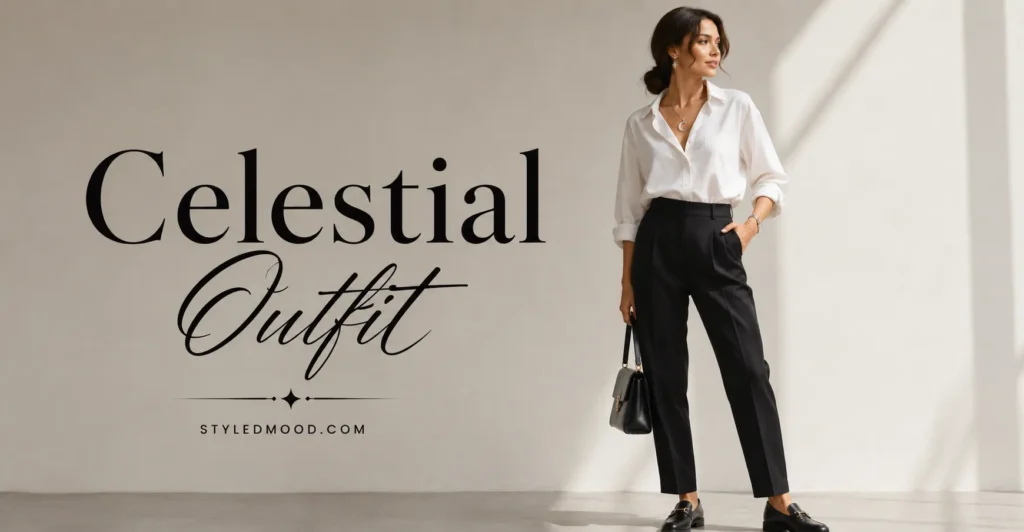
When a client says they want “celestial,” they almost never mean the same thing. Pin down the direction first, because each one calls for different fabrics, colors, and accessory choices.
- Dark cosmic: Deep navy, black, and plum bases with metallic star detailing. Reads sophisticated and seasonless.
- Soft celestial: Pastel skies, lavender, blush, and rose-gold moons. Gentler, more romantic, easier for daytime.
- Galaxy fashion: Bold nebula prints in purple, teal, and magenta. High impact, best for festivals and statement moments.
- Minimal celestial: A plain outfit anchored by a single moon or star piece. The most wearable version, and the one I recommend to beginners.
Where the Look Actually Comes From
Sky-inspired clothing is not a TikTok invention. Star motifs appear in Renaissance court dress, where embroidered constellations signaled education and status. Art Nouveau jewelers like René Lalique built crescent moons and stars into pieces now sitting in museum collections. Disco in the 1970s ran on metallic stars and shimmer.
Fashion editors tend to frame the current revival as a blend of all three, updated with holographic foils and gradient dyeing techniques that simply did not exist before. That history matters for a practical reason. A trend with this many roots does not vanish in a season. It cycles. So learning to wear it well is a long-term skill, not a disposable one.
Why the Celestial Aesthetic Keeps Coming Back
Most aesthetic trends burn out once the novelty fades. The celestial look does not, and after watching it return season after season, I have a working theory about why.
- It flatters most palettes. Deep blues, plums, and silvers suit a wide range of skin tones. I rarely meet someone a midnight palette cannot work for.
- It scales by occasion. A galaxy slip belongs at a festival. A small moon pendant belongs in a boardroom. Same theme, completely different volume.
- It photographs beautifully. Metallic detail and gradients catch light, which is half the reason it spreads so fast on social platforms.
- It carries personal meaning. Constellations map to birth charts, moon phases mark anniversaries. People attach stories to these pieces, and they keep them longer.
That combination of flattering, flexible, photogenic, and meaningful is genuinely rare. Most trends hit two of those at best. The celestial look hits all four, and that is the real reason it refuses to die.
Bottom line: You are not chasing a fad. You are learning a vocabulary you will reuse for years.
Building Your First Celestial Outfit
A celestial look fails when every piece fights for attention. Star top, galaxy pants, moon bag, planet earrings, and suddenly the eye has nowhere to land. The outfit reads chaotic, and chaotic always reads cheap.
The fix is hierarchy. I use the same three-step structure on every client, regardless of budget or body type. It has never let me down.
Step 1: Choose Your Hero Piece
The hero carries the theme. It is the one thing someone remembers about the outfit. Pick exactly one.
- A galaxy-print maxi dress.
- A constellation-embroidered blazer.
- A metallic star jacquard skirt.
- A moon-phase graphic sweater.
In practice, I tell clients to choose the hero based on the occasion’s volume, not their mood. A festival can carry a loud hero. A dinner cannot.
Step 2: Ground It With Neutrals
Once the hero is set, everything else should calm down. Black, charcoal, cream, and deep navy all work as a base. These colors do the unglamorous job of letting the celestial piece stay the star of the look.
This is the step people resist most. They want every layer to “do something.” But a great outfit needs quiet space, the same way a photograph needs negative space. The neutrals are that quiet.
Step 3: Add One or Two Accents
Now layer in small cosmic touches. A star stud. A crescent moon ring. A clutch with a subtle metallic shimmer. Stop at two.
A third accent is almost always where it tips. I have watched a genuinely elegant outfit collapse into “theme party” with the addition of one extra moon brooch. When in doubt, remove the last thing you added. Coco Chanel’s old advice about taking one accessory off before you leave the house was built for exactly this trend.
Celestial Outfit Formulas by Occasion
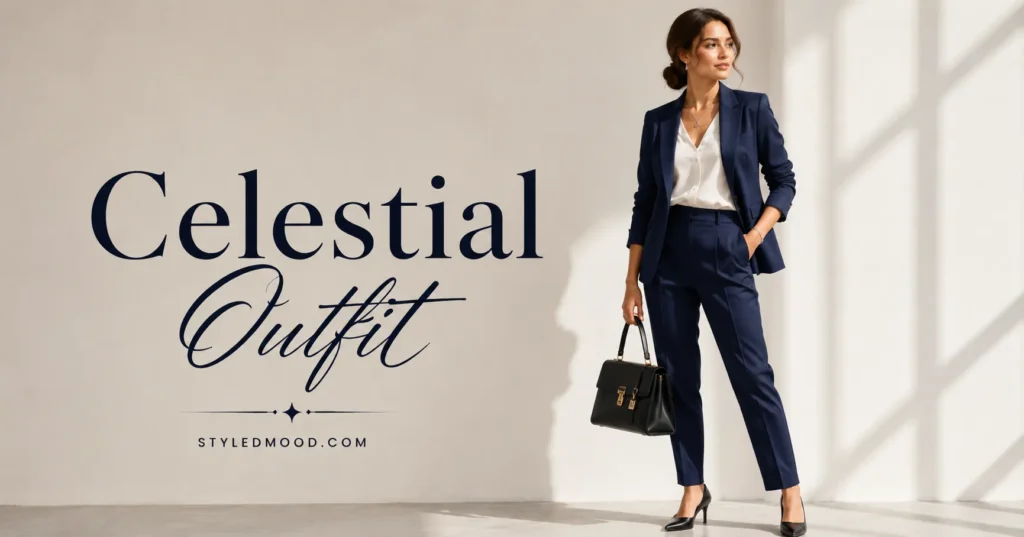
You do not need a separate wardrobe for every event. You need to know how much celestial volume each setting can carry. Here is the cheat sheet I work from.
| Occasion | Hero Piece | Base Neutrals | Accent Limit | Read |
| Casual day | Moon-phase tee | Denim, white sneakers | 1 accent | Relaxed, subtle |
| Office | Constellation pendant | Tailored navy suit | 1 accent | Professional |
| Date night | Star-foil slip dress | Black heels, clutch | 2 accents | Elevated |
| Festival | Galaxy print set | Combat boots | 2–3 accents | Bold, expressive |
| Formal event | Beaded celestial gown | Metallic clutch | 2 accents | Statement |
Casual Celestial Style
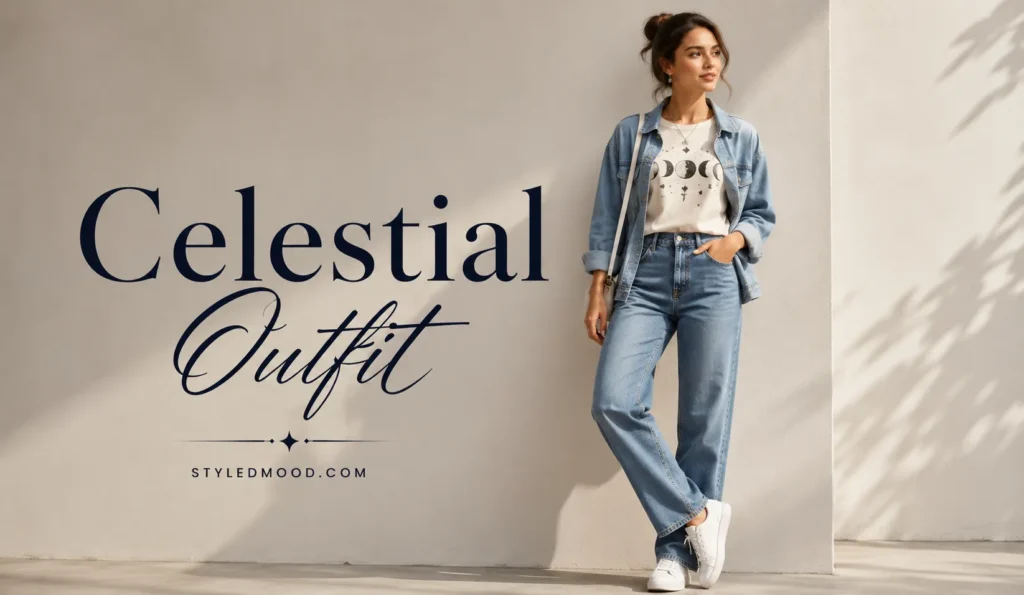
Daytime is where I see the most overcorrection. A full galaxy jumpsuit at brunch looks like you are trying too hard, and trying too hard is the one thing that always shows. Keep it quiet instead.
- A simple moon graphic tee with straight-leg jeans.
- White sneakers and a single star earring.
- A canvas tote with a small embroidered constellation.
That reads as personal style, not a theme. People will ask where you got the pieces instead of wondering what the occasion is.
Evening and Date Night
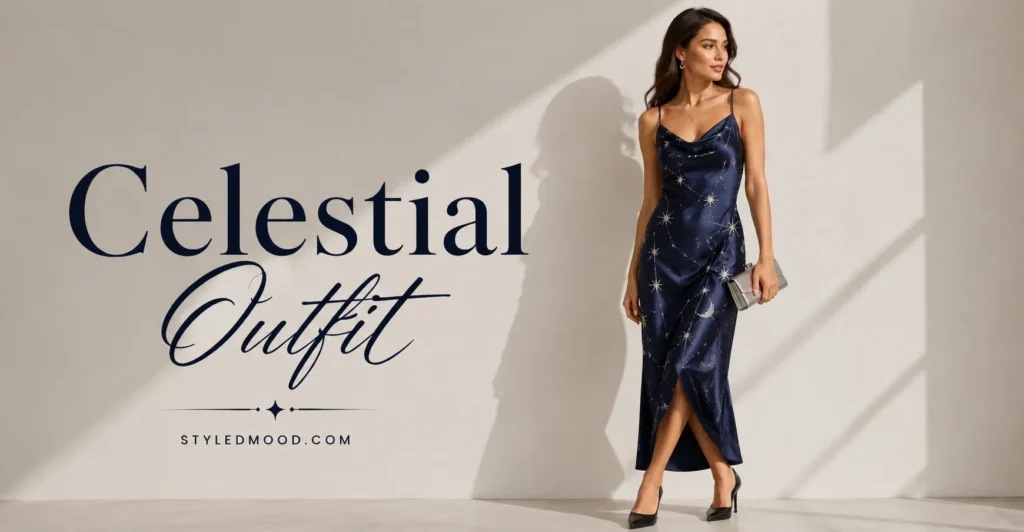
Evening light is far kinder to metallics, which means you can push harder after dark. A star-foil slip dress catches candlelight and low restaurant lighting in a way that looks intentional rather than flashy.
Keep the shoes and bag plain. The dress is already the conversation. Adding a sparkly heel just splits the attention and weakens both pieces.
Festival and Concert Looks
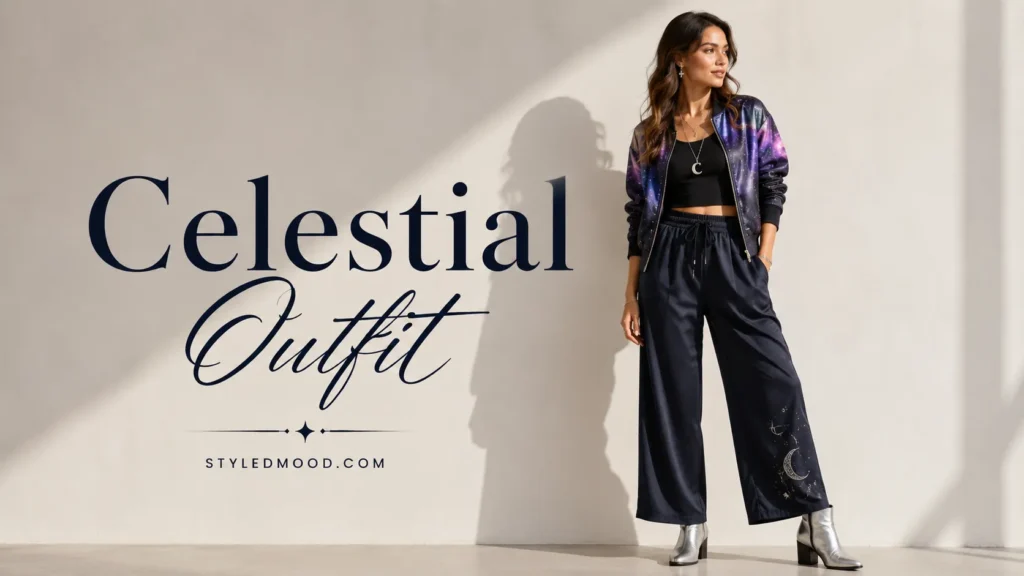
Festivals are the one place I tell clients to ignore my restraint rules. The setting rewards volume. A full galaxy two-piece, layered moon necklaces, shimmer across the cheekbones, all of it belongs here.
The reason is context. Bold cosmic style reads as costume only when it clashes with its surroundings. At a festival, the surroundings match it. So the look finally has room to be as big as it wants.
Formal and Black-Tie
A celestial gown handles formal events beautifully, but only when the detailing stays refined. I steer clients toward beaded star patterns or a subtle ombré that fades from black into midnight blue. Both read as couture-adjacent rather than themed.
Skip the loud nebula prints here. At black-tie, a busy gradient tips elegant into “rented for the night” faster than almost anything else. Restraint is the whole game in formalwear.
Color Palettes That Actually Work
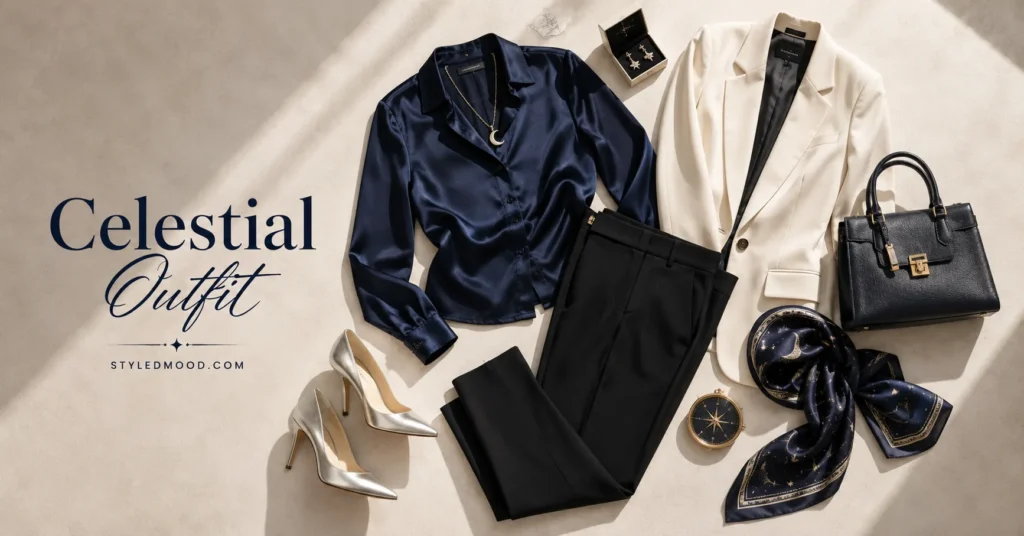
Color is where a celestial outfit either elevates or collapses. The wrong gradient looks like a tie-dye accident. The right one looks deliberate. After years of pulling pieces for shoots, here is what I trust.
| Palette | Core Colors | Best For | Avoid Pairing With |
| Midnight | Black, navy, silver | Formal, evening | Neon accents |
| Nebula | Purple, teal, magenta | Festivals, casual | Earth tones |
| Soft sky | Lavender, blush, gold | Daytime, spring | Heavy black |
| Cosmic neutral | Charcoal, cream, bronze | Office, minimal | Bright prints |
Why Midnight Tones Read Most Expensive
There is real color theory behind why deep navy and plum look costlier than bright purple. Saturated, darker tones absorb light unevenly, which creates depth and dimension the eye reads as quality. Bright, flat colors reflect light evenly and read as synthetic.
Fashion editors lean on this constantly. Look at how often a magazine’s “luxe” celestial editorial sits in midnight blues and blacks rather than vivid galaxy print. That is not an accident. It is the safest path to looking expensive on a normal budget.
Metallics and Finishes
Metallic detail sells the celestial theme, but the finish matters far more than the amount. Matte gold and brushed silver read expensive. High-gloss plastic foil reads cheap, full stop.
Here is the test I use in stores. Rub the metallic surface between two fingers. If it feels like a sticker or peels at the edge, put it back. Woven or foil-bonded metallics stay put and catch light softly. Glued-on shine flakes within a few wears and looks plastic from day one.
Fabric Choices: What Holds the Look
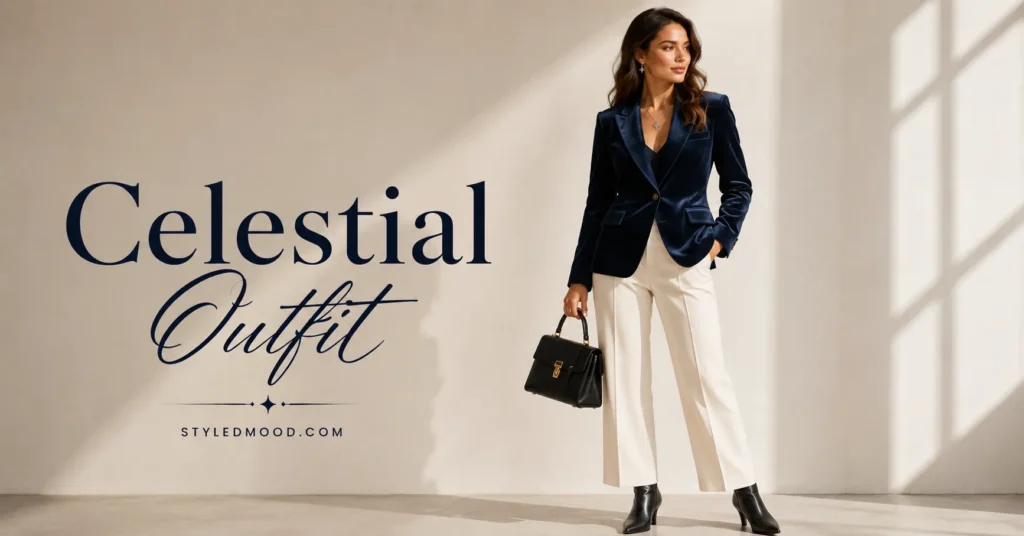
A celestial print can look stunning on the hanger and fall apart on the body. Fabric is almost always the reason. The same nebula pattern reads luxe on silk and reads like pajama bottoms on thin polyester.
| Fabric | Look | Best Use | Watch For |
| Silk / satin | Fluid, light-catching | Slip dresses, evening | Wrinkles easily |
| Velvet | Deep, rich color | Blazers, gowns | Heat in summer |
| Sequin / beaded | High shine | Statement pieces | Heavy, scratchy |
| Cotton jersey | Soft, casual | Tees, sweaters | Print can fade |
| Tulle / mesh | Airy, layered | Overlays, festival | Snags easily |
Why Velvet Wins for Deep Celestial Tones
Velvet deserves its own note because it does something no other common fabric does. The cut pile absorbs and reflects light at the same time, which is why a midnight-blue velvet blazer looks costly even when the price tag says otherwise.
Textile specialists describe this as directional light reflection. Run your hand one way and the color deepens. Run it the other and it lightens. That shifting depth is exactly what makes celestial colors look like an actual night sky rather than a flat swatch. If you only invest in one celestial piece, a velvet one earns its keep.
Where Cheap Polyester Gives You Away
Thin, glossy polyester is the fabric I pull off clients most often. It photographs flat, wrinkles into hard creases, and gives the whole look a costume edge no styling can fully fix. The print might be identical to a silk version, but the hand and the drape tell the truth.
In practice, that means checking fabric content before you fall for a photo. A gorgeous galaxy print on 100% thin poly is still going to disappoint you in person.
Accessories That Complete the Theme
Accessories are where restraint pays off most, and where I spend most of my editing energy on a client. One well-chosen piece does more than five competing ones.
- Jewelry: Crescent moon rings, constellation pendants, star studs.
- Bags: Metallic clutches, beaded shoulder bags, subtle shimmer totes.
- Shoes: Metallic heels, star-buckle flats, or plain black to balance a loud outfit.
- Hair: Star pins, celestial headbands, a touch of glitter at the roots.
The One-Statement Rule
This is the rule I repeat most often, because it solves the majority of celestial styling problems on its own.
- If your outfit already carries a celestial print, your accessories should whisper.
- If your outfit is plain, one bold celestial accessory becomes the hero.
- Never let both compete. The look reads cluttered every single time.
In practice, that means a galaxy dress wants plain studs, and a plain black dress wants one striking moon cuff. Pick which element does the talking, then quiet the other one down.
Common Celestial Outfit Mistakes
Most celestial looks fail for the same handful of reasons. I have made several of these myself, which is exactly why I can spot them fast now.
- Stacking prints. Galaxy on galaxy turns the outfit into visual noise the eye cannot settle on.
- Cheap foil finishes. Sticker-like metallics read as costume on sight, no matter the silhouette.
- Ignoring fit. A baggy galaxy dress drowns both the wearer and the theme. Fit always outranks print.
- Over-accessorizing. More than two cosmic accents tips into theme-party territory.
- Wrong occasion. Festival-level boldness at a work meeting reads as misjudged, even if every piece is gorgeous.
That last one is worth sitting with. The same outfit can succeed or fail purely based on where you wear it. Context is part of the styling, not separate from it.
How to Shop Smart for Celestial Pieces
Shopping for celestial pieces online is risky because screens flatter metallics and prints in ways the real garment cannot match. What looks deep navy on a backlit screen often arrives a flat, dull black. Here is the checklist I actually use before buying.
- Read the fabric content, not just the product photo.
- Scan reviews specifically for color-accuracy complaints.
- Confirm the metallic finish is woven or foil-bonded, not glued.
- Look for the print shown on a person, not only flat-lay shots.
- Verify the return policy before you commit, in case the color misses.
For broader context on which palettes editors and brands are leaning into each year, the Pantone Color Institute tracks the seasonal colors that filter directly into celestial collections.
Seasonal Celestial Styling
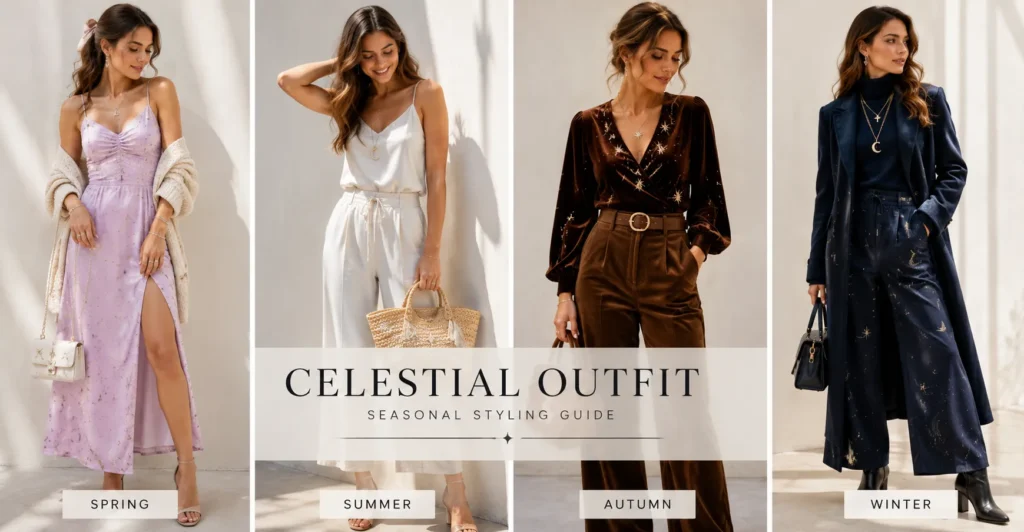
The celestial look shifts with the seasons, and forcing a winter palette into July is one of the most common errors I correct. Match your fabric weight and color depth to the calendar and the whole thing stays cohesive.
- Spring: Soft sky palettes, lavender, pastel moons, lightweight tulle.
- Summer: Lighter cotton, smaller prints, metallic sandals over heavy velvet.
- Fall: Deeper plums, layered constellation knits, the first velvet blazers.
- Winter: Full midnight palettes, beaded gowns, rich satin and velvet.
In practice, the same client who looks incredible in a velvet celestial blazer in November will overheat and look out of step in it come June. Season is not a detail. It is part of whether the look lands.
Conclusion
A celestial outfit works when one idea leads and everything else supports it. Choose a single hero piece, ground it in neutrals, stop at two accents, and match the volume to the occasion. That discipline is the entire difference between a polished look and a costume, and it is the lesson that took me the longest to learn on the job.
The trend lasts because it flatters most palettes, scales by setting, photographs well, and carries real personal meaning. Use the tables here to match fabric, color, and accent level to where you are headed. Then check finishes and fit before you spend a cent.
Start small tonight. Pick one celestial piece you already own and build a full look around it using the formulas above. Keep it intentional, trust the restraint, and let the night sky do the rest.
Frequently Asked Questions (FAQs)
What exactly counts as a celestial outfit?
Any outfit built around night-sky imagery: stars, moons, planets, constellations, or galaxy gradients. The theme can live in prints, embroidery, metallic detail, beading, or a single accessory. You do not need all of it. One clear reference is enough.
How do I wear a celestial outfit without looking like a costume?
Pick one hero piece, ground the rest in neutrals, and stop at two cosmic accents. Costumes happen when every piece competes for attention at the same volume. Restraint is what reads as fashion.
What colors work best for a star and moon outfit?
Deep navy, black, plum, and silver read most expensive because darker saturated tones create depth the eye associates with quality. Lavender and rose gold suit softer daytime looks. Avoid stacking too many bright gradient tones at once.
Can I wear galaxy fashion to the office?
Yes, but keep the volume low. A constellation pendant or a single star earring with a tailored suit reads professional. Save full galaxy prints for casual outings or festivals, where the setting can carry them.
Which fabrics hold the celestial look best?
Silk, satin, and velvet read most luxe because they catch and hold light. Velvet is the standout, since its pile shifts color as it moves. Avoid thin, glossy polyester, which photographs flat and edges the look toward costume.
Is the celestial fashion trend going out of style?
It shows no real signs of fading. The look keeps cycling back because it draws on centuries of design history, flatters most palettes, photographs well, and lets people attach personal meaning through constellations and moon phases. Learning it is a long-term skill, not a seasonal gamble.
How many celestial accessories should one outfit have?
Two at most if your clothing is plain. One at most if your clothing already carries a celestial print. A third accent almost always tips the look into theme-party territory. When unsure, remove the last thing you added.
What is the easiest way to start with celestial style?
Add a single moon or star accessory to an outfit you already own. It introduces the theme with no commitment and teaches you how much detail you actually like wearing before you invest in a statement piece.
How do I tell a quality metallic finish from a cheap one while shopping?
Rub the metallic surface between two fingers. Woven or foil-bonded finishes stay put and catch light softly. Glued-on shine feels like a sticker, flakes within a few wears, and looks plastic from day one. The finish matters far more than how much metallic is on the piece.