The Complete Asymmetrical Top Outfit Guide: Styling That Actually Works
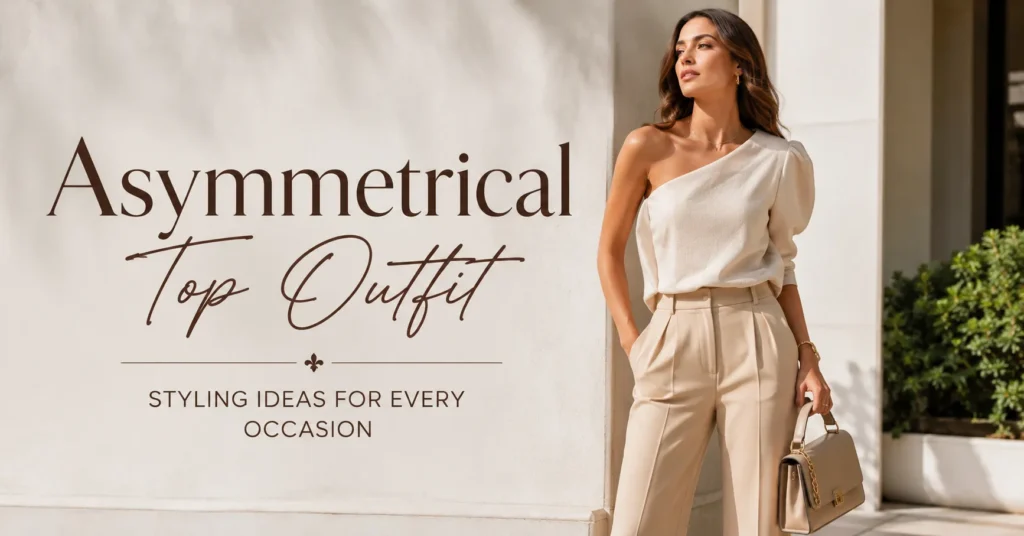
An asymmetrical top outfit looks effortless on the hanger. Then you wear it. One shoulder slips all day, the uneven hem reads sloppy instead of intentional, and the whole look fights your proportions instead of flattering them. The gap between an asymmetric blouse that looks designed and one that looks like a wardrobe accident is smaller than most styling guides admit.
This guide closes that gap. You will learn what separates a sharp asymmetrical look from a messy one, which silhouettes pair with which bottoms, how fabric weight makes or breaks the drape, and where most people go wrong. Expect outfit formulas, body-type pairings, and comparison tables you can use while shopping.
What Counts as an Asymmetrical Top Outfit?
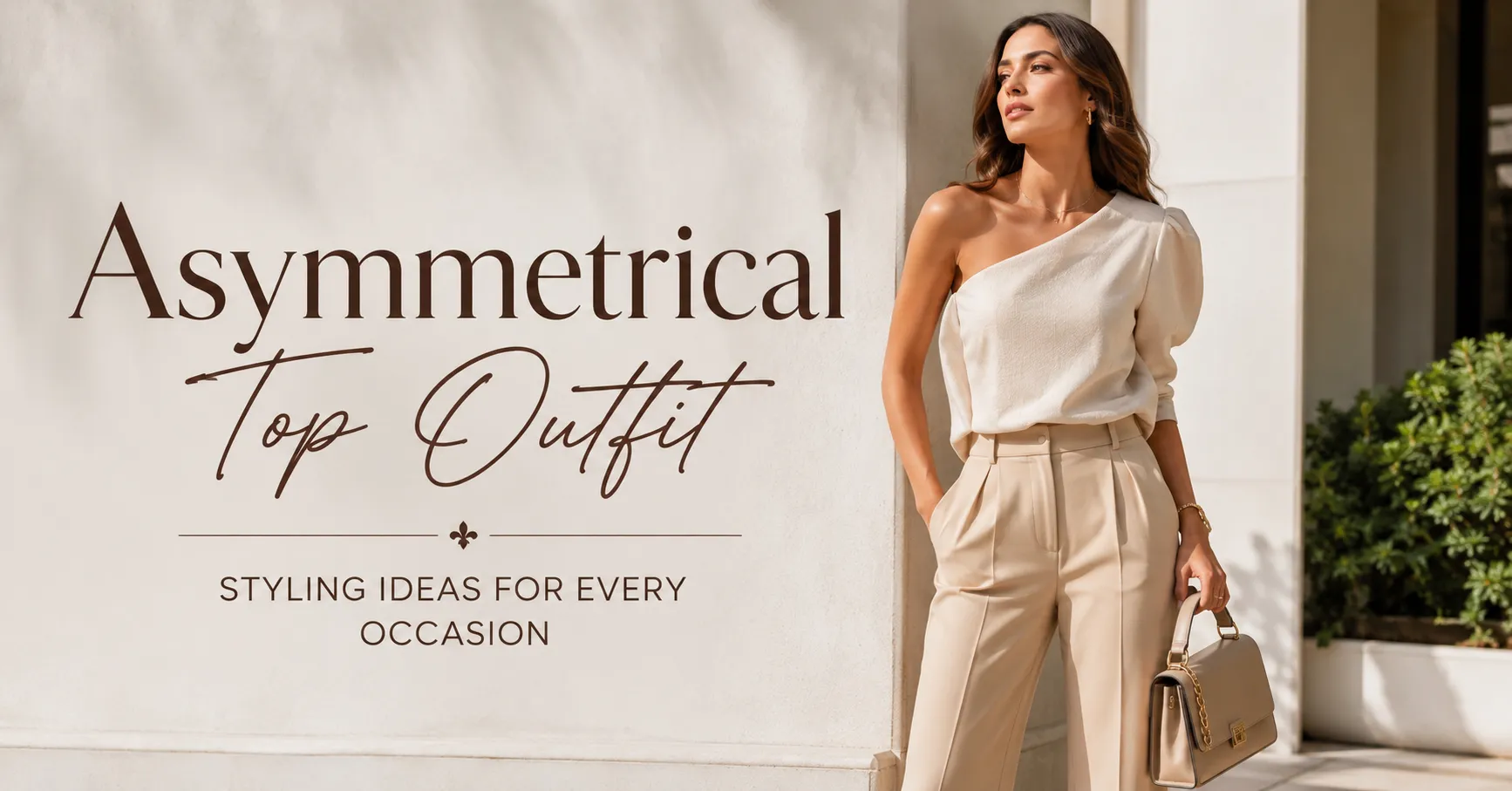
An asymmetrical top is any top where the two sides do not mirror each other. One shoulder bare, a diagonal hemline, a draped neckline that falls heavier on one side. The cut breaks symmetry on purpose, and that broken line is the entire point.
Most people assume asymmetry means “complicated.” It does not. The strongest asymmetric blouse styling usually relies on one clean diagonal, not five competing ones. One disrupted line reads as design. Three disrupted lines read as confusion.
The asymmetrical top outfit splits into a few recognizable cuts:
- One shoulder: A single strap or sleeve, the other shoulder bare. The most common version.
- Off-shoulder asymmetrical: One side sits on the shoulder, the other drops down the arm.
- Diagonal hem: A high-low or slanted hemline that cuts across the torso.
- Draped neckline: Fabric gathered to one side, creating an uneven fold.
Why the Cut Keeps Returning Each Season
Asymmetry is not a passing micro-trend. Grecian draping built entire garments around uneven folds thousands of years ago. The one-shoulder gown ran through 1980s eveningwear. Designers keep reaching for the diagonal because it does one thing reliably.
It draws the eye along a line instead of across a block. A straight hem stops the eye. A diagonal hem moves it. That movement is why the cut photographs well and why it survives season after season instead of fading.
Why an Asymmetrical Top Flatters More Than You Expect
A symmetrical top splits your frame into even halves. That can read flat. An asymmetrical top breaks that evenness, and the break does real work for your proportions.
- It creates a focal point. A bare shoulder or diagonal line pulls attention to one spot instead of spreading it.
- It lengthens the torso. A high-low hem or slanted line adds vertical movement, which reads taller.
- It balances wider hips. Drawing the eye up to one shoulder shifts weight away from the lower body.
- It dresses up plain bottoms. A one shoulder top outfit turns basic jeans into something intentional.
That combination of focal point, length, balance, and easy elevation is rare in a single cut. Most tops do one of those things. An asymmetric blouse can do all four at once.
Bottom line: The cut is not just decorative. It changes how your whole frame reads.
Building Your First Asymmetrical Top Outfit
An asymmetric look fails when the rest of the outfit competes with the cut. Busy print, loud bottoms, three statement accessories. The diagonal line gets buried, and the outfit reads cluttered instead of deliberate.
The fix is hierarchy. Let the top carry the interest, then keep everything else quiet. The same three-step structure works regardless of budget or body type.
Step 1: Let the Top Lead
The asymmetric cut is your focal point. Treat it that way. Common starting pieces:
- A one-shoulder ribbed knit top.
- A draped-neckline satin blouse.
- A high-low hem cotton tee.
- An off-shoulder asymmetrical jersey top.
Step 2: Keep the Bottom Clean
Once the top is set, the bottom should calm down. Straight-leg jeans, tailored trousers, a plain pencil skirt. Solid colors and clean lines let the asymmetry stay the story.
This is the step people resist. They want the bottom to “do something” too. But the cut needs negative space around it. Loud bottoms cancel the effect.
Step 3: Add One Accent, Not Three
Now add a single finishing piece. A small hoop earring on the bare-shoulder side. A thin belt to mark the waist. Stop there. A second statement accessory usually pulls focus away from the cut and flattens the whole look.
Asymmetrical Top Outfit Formulas by Occasion
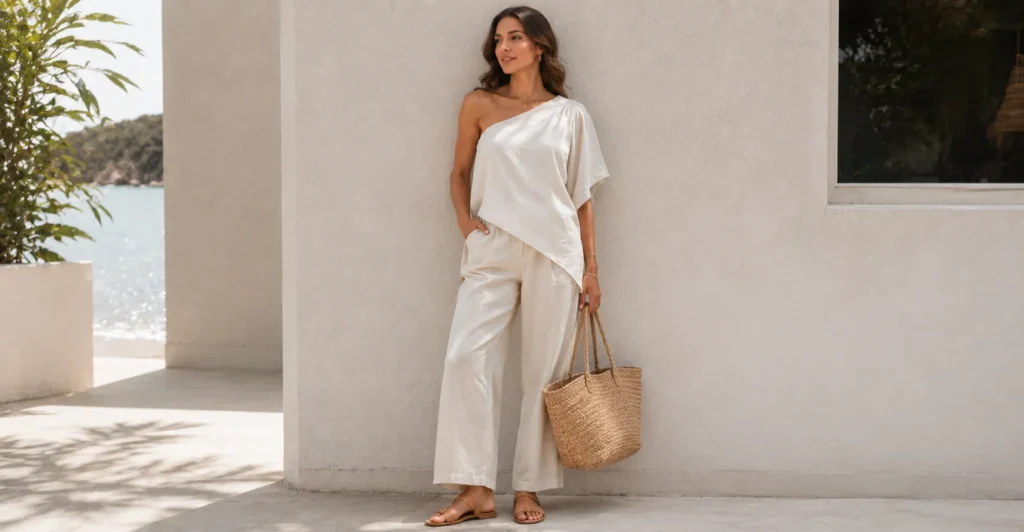
You do not need a separate wardrobe for every setting. You need to know how much asymmetry each occasion can carry. The table below breaks that down.
| Occasion | Hero Top | Best Bottom | Accent Limit | Read |
| Casual day | High-low hem tee | Straight jeans, sneakers | 1 accent | Relaxed, easy |
| Office | Draped-neckline blouse | Tailored trousers | 1 accent | Professional |
| Date night | One shoulder satin top | Slim skirt, heels | 2 accents | Elevated |
| Event | Off-shoulder asymmetrical top | Wide-leg pants | 2 accents | Statement |
| Beach / resort | Asymmetric linen top | Linen shorts, sandals | 1 accent | Effortless |
Casual Asymmetric Styling
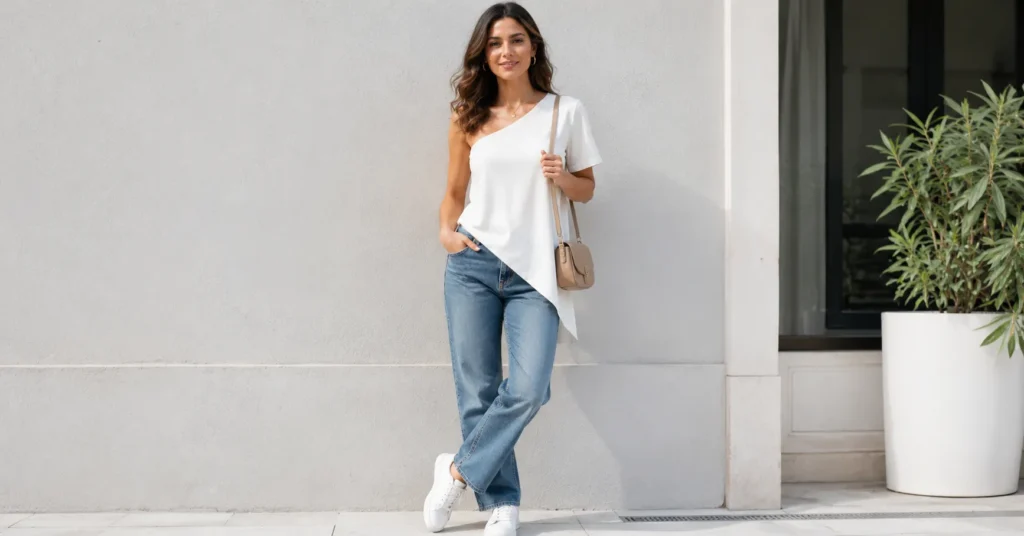
Daytime is where people overthink it. A heavily draped one-shoulder top at brunch reads like you came from a different event. Keep it low-key instead.
- A high-low hem tee with straight-leg jeans.
- White sneakers and a single stud earring.
- A simple crossbody bag worn on the covered shoulder.
This reads as personal style, not as overdressing.
Office and Workwear
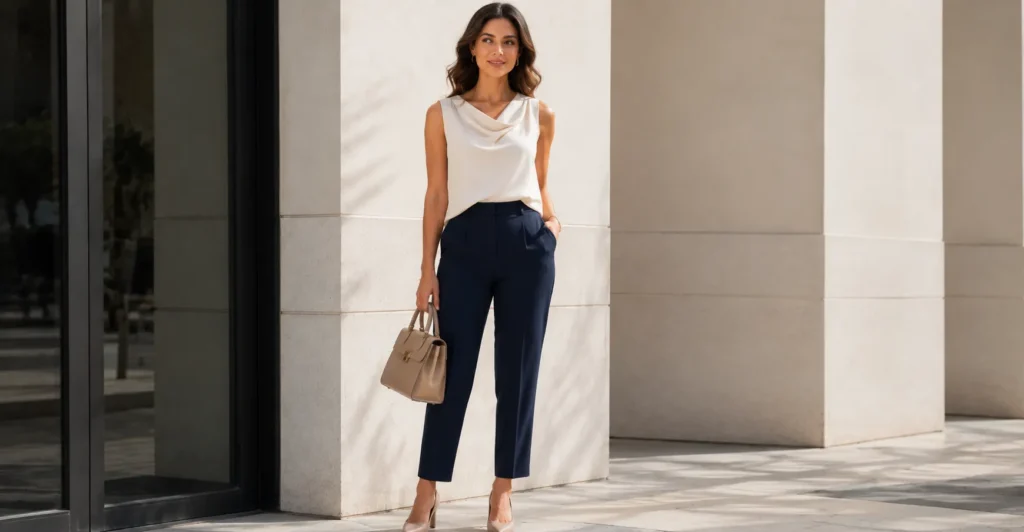
An asymmetric blouse works at the office when the cut stays subtle. A draped neckline or a slight diagonal hem reads polished under a blazer. Skip the bare-shoulder versions for most workplaces.
Pair it with tailored trousers and closed shoes. The asymmetry adds quiet interest without tipping into eveningwear.
Evening and Date Night
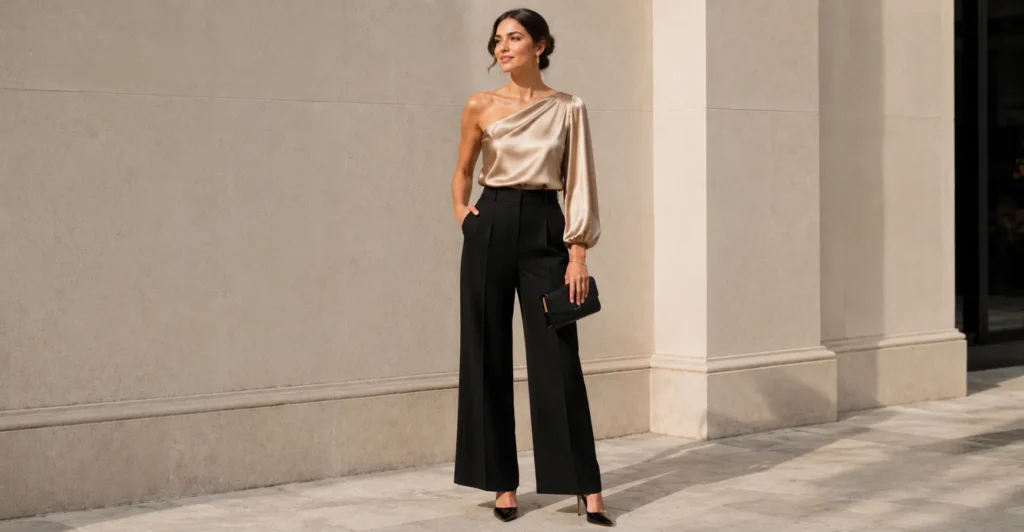
Evening is where the one-shoulder cut earns its keep. A satin one shoulder top outfit catches low light and frames the collarbone. Keep the skirt or trousers plain so the top stays the focus.
One refined accent works here. A drop earring on the bare side, nothing more.
Events and Formal Settings
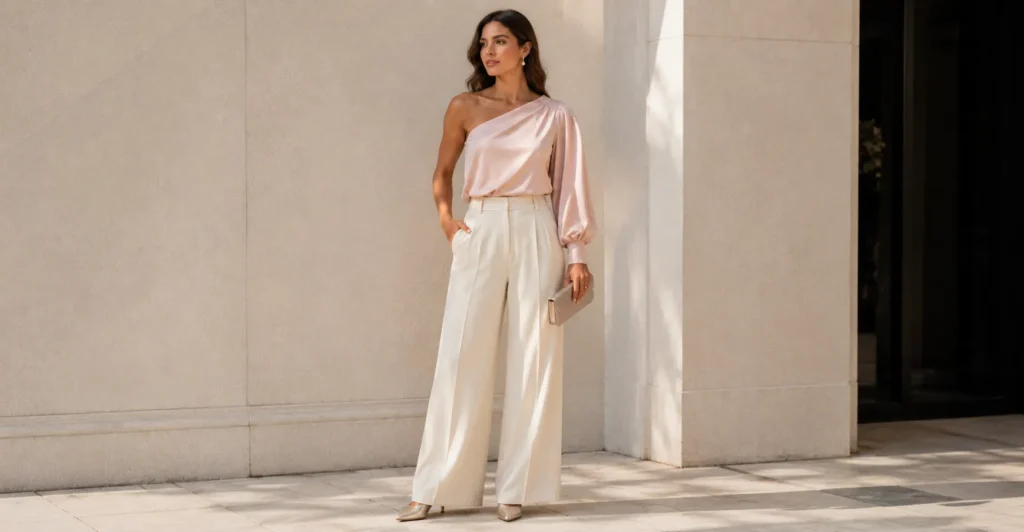
An off-shoulder asymmetrical look handles events well when the fabric holds its shape. Look for structured satin or crepe that keeps the diagonal crisp. Avoid thin jersey that collapses and loses the line.
Pair it with wide-leg trousers or a fitted maxi skirt. Two accents at most.
Pairing by Body Type
The same asymmetrical top outfit can flatter or fight your frame depending on the pairing. The cut interacts with your proportions, so the bottom you choose matters as much as the top.
| Body Type | Best Asymmetric Cut | Pair With | Avoid |
| Pear | One shoulder, draped neck | Straight or wide-leg | Tight high-low over hips |
| Apple | Diagonal hem, soft drape | Mid-rise trousers | Clingy off-shoulder |
| Hourglass | Fitted one shoulder | Pencil skirt, slim jeans | Boxy oversized cuts |
| Rectangle | Draped neckline | High-waist bottoms | Straight symmetrical hems |
| Petite | Single diagonal line | Cropped or high-rise | Long sweeping high-low |
Why the Pairing Logic Works
A bare shoulder pulls the eye up. That helps if you want to draw focus away from the hips. A high-low hem adds vertical movement, which helps shorter frames read taller, but only if the hem does not sweep past the hip and break the line.
The principle is simple. Use the diagonal to direct the eye where you want it. Then choose the bottom that supports that direction instead of fighting it.
Fabric Choices: What Holds the Cut
An asymmetric top can look sharp on the hanger and collapse on the body. Fabric is the reason. The same one-shoulder pattern reads designed in crepe and reads like a slipped strap in thin jersey.
| Fabric | Look | Best Use | Watch For |
| Satin / silk | Fluid, light-catching | Evening one-shoulder | Shows every line |
| Crepe | Structured, holds shape | Office, events | Can feel stiff |
| Ribbed knit | Snug, body-skimming | Casual one-shoulder | Stretches over time |
| Cotton jersey | Soft, relaxed | High-low casual tees | Drapes, loses line |
| Linen | Crisp, breathable | Resort, summer | Wrinkles fast |
Crepe deserves a note. It holds a diagonal hem and a draped neckline better than almost any other everyday fabric because it has structure without stiffness. That balance is what keeps the asymmetric line crisp through a full day of wear.
Where Thin Jersey Gives You Away
Thin, stretchy jersey is the fabric that ruins most asymmetric tops. It clings, it sags, and a one-shoulder strap migrates down the arm within an hour. The cut might be identical to a crepe version, but the drape tells the truth.
Check the fabric weight before you fall for a photo. A gorgeous draped neckline on thin poly will disappoint you in person.
Accessories and Layering
Accessories are where restraint pays off most on an asymmetric look. The cut already creates interest. Piling on more competes with it.
- Jewelry: A single earring or asymmetric pair, a thin neck chain.
- Belts: A slim belt to define the waist under a draped top.
- Bags: Crossbody worn on the covered shoulder to avoid clashing with the bare one.
- Layers: An open blazer or denim jacket that frames the cut without hiding it.
The Covered-Shoulder Rule
This one solves most accessory problems on its own. If your top bares one shoulder, keep straps and bag handles on the covered side. A bag strap cutting across a bare shoulder kills the clean line the cut is built to create.
Same logic for layering. An open jacket frames an asymmetric top. A buttoned-up cardigan hides it. Pick layers that reveal the cut, not ones that cancel it.
Common Asymmetrical Top Outfit Mistakes
Most asymmetric looks fail for predictable reasons. Knowing them upfront saves money and frustration.
- Doubling the asymmetry. An uneven hemline outfit with a diagonal top and a slanted skirt cancels itself out.
- Wrong fabric. Thin jersey collapses the line a structured fabric would hold.
- Ignoring fit. A baggy one-shoulder top slides and reads sloppy, not relaxed.
- Bag strap across the bare shoulder. It breaks the one clean line the cut depends on.
- Over-accessorizing. More than two accents buries the diagonal you built the outfit around.
That fabric point matters most. The same cut succeeds in crepe and fails in thin jersey, and no styling fixes a fabric that will not hold the line.
How to Shop Smart for Asymmetric Tops
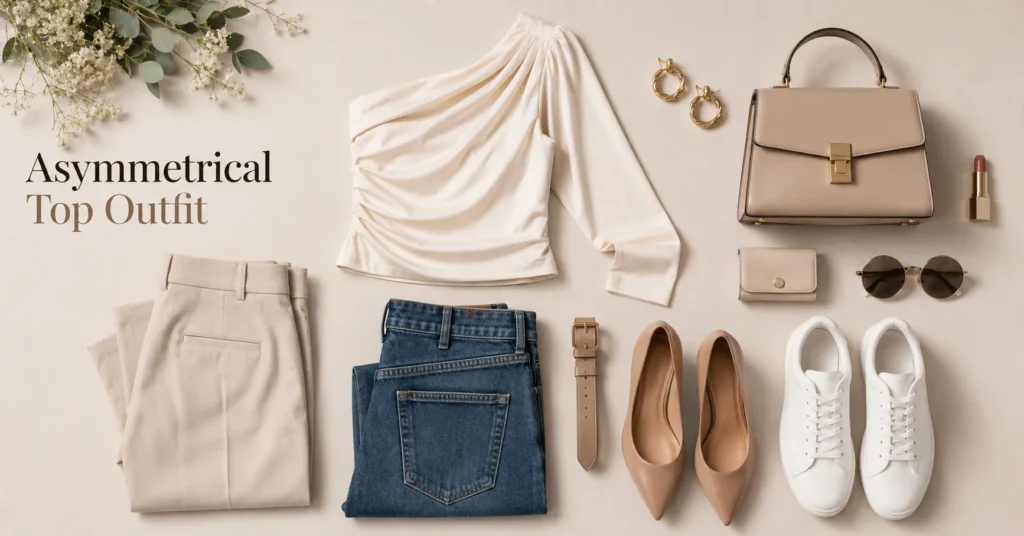
Shopping for asymmetric tops online is risky because flat photos hide how a cut behaves on the body. A draped neckline looks structured on a styled model and collapses on thin fabric in real life. Use these checks before you buy.
- Read the fabric content, not just the photo.
- Check reviews for “strap slips” or “loses shape” complaints.
- Look for the top shown on a moving body, not only flat-lay shots.
- Confirm the hem length against your own torso, not the model’s.
- Verify the return policy in case the drape misses.
For broader context on how silhouette and proportion trends shift each season, the Council of Fashion Designers of America tracks the runway directions that filter into everyday cuts.
Seasonal Styling
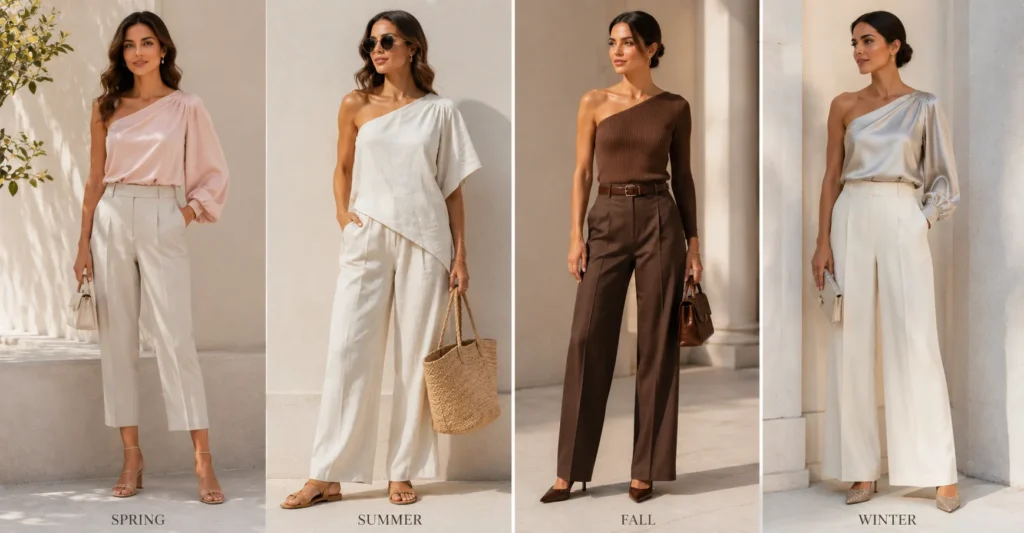
An asymmetric top outfit shifts with the season, and forcing a winter fabric into summer is a common error. Match the fabric weight and coverage to the calendar and the look stays cohesive.
- Spring: Light crepe, soft draped necklines, cropped trousers.
- Summer: Linen and cotton, high-low hems, bare-shoulder cuts.
- Fall: Ribbed knits, one-shoulder layered under open jackets.
- Winter: Structured satin for events, asymmetric knits with tailored bottoms.
In practice, a satin one-shoulder top that looks right at a fall event will feel out of step at a summer barbecue. Season is part of whether the look lands, not an afterthought.
Conclusion
An asymmetrical top outfit works when the cut leads and everything else supports it. Let the top be the focal point, keep the bottom clean, and stop at one or two accents. That discipline is the difference between a designed look and a wardrobe accident.
The cut lasts because it creates a focal point, adds length, balances proportions, and elevates plain bottoms in one move. Use the tables here to match fabric, bottom, and accent level to your body type and your destination. Then check fabric weight and fit before you buy.
Start small. Pick one asymmetric top you already own and build a full look around it using the formulas above. Keep it intentional, trust the single clean line, and let the cut do the work.
Frequently Asked Questions (FAQs)
What exactly counts as an asymmetrical top outfit?
Any outfit built around a top where the two sides do not mirror each other. That includes one-shoulder cuts, off-shoulder asymmetrical styles, diagonal hems, and draped necklines. The broken symmetry is the defining feature.
How do I keep a one shoulder top outfit from slipping all day?
Choose a structured fabric like crepe or ribbed knit over thin jersey. Structured fabric holds the strap in place. Thin, stretchy fabric migrates down the arm within an hour no matter how it fits in the store.
What bottoms work best with an asymmetric blouse?
Clean, solid bottoms that do not compete with the cut. Straight-leg jeans, tailored trousers, and plain pencil skirts all work. Loud prints or a second uneven hemline cancel the effect of the top.
Can I wear an asymmetrical top to the office?
Yes, if the cut stays subtle. A draped neckline or a slight diagonal hem reads polished under a blazer with tailored trousers. Save bare-shoulder and off-shoulder versions for casual or evening settings.
Which fabrics hold the asymmetric look best?
Crepe and structured satin hold a diagonal hem and draped neckline best because they have shape without stiffness. Avoid thin jersey and lightweight poly, which cling and collapse the line.
Is the asymmetrical top trend going out of style?
No real sign of it fading. The cut draws on centuries of draped design, photographs well, and flatters most frames by creating a focal point. It cycles back season after season rather than disappearing.
How do I style an off-shoulder asymmetrical look without it falling flat?
Use a fabric that holds its shape, keep the bottom plain, and limit accessories to two. Structured satin or crepe keeps the diagonal crisp. Thin fabric and busy bottoms are what make the look collapse.
How many accessories should an asymmetrical top outfit have?
One accent if the look is casual, two at most for evening. The cut already creates interest. A third statement piece buries the diagonal you built the outfit around. When unsure, remove the last thing you added.
What is the easiest way to start wearing asymmetric tops?
Begin with a simple high-low hem tee and straight jeans. It introduces one clean asymmetric line with no commitment and teaches you how much asymmetry you actually like before you invest in a statement one-shoulder piece.