Horse Riding Outfit Essentials: What to Wear in the Saddle
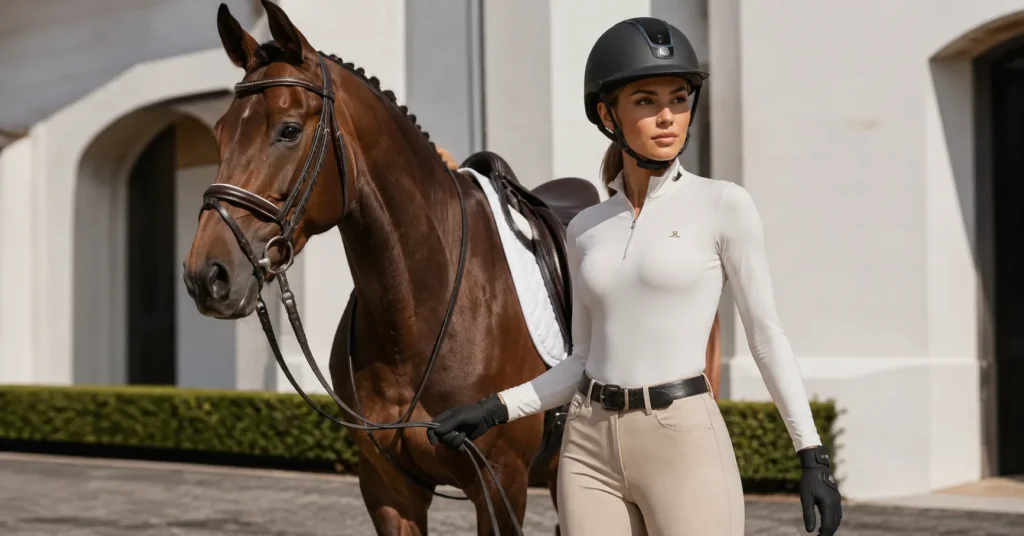
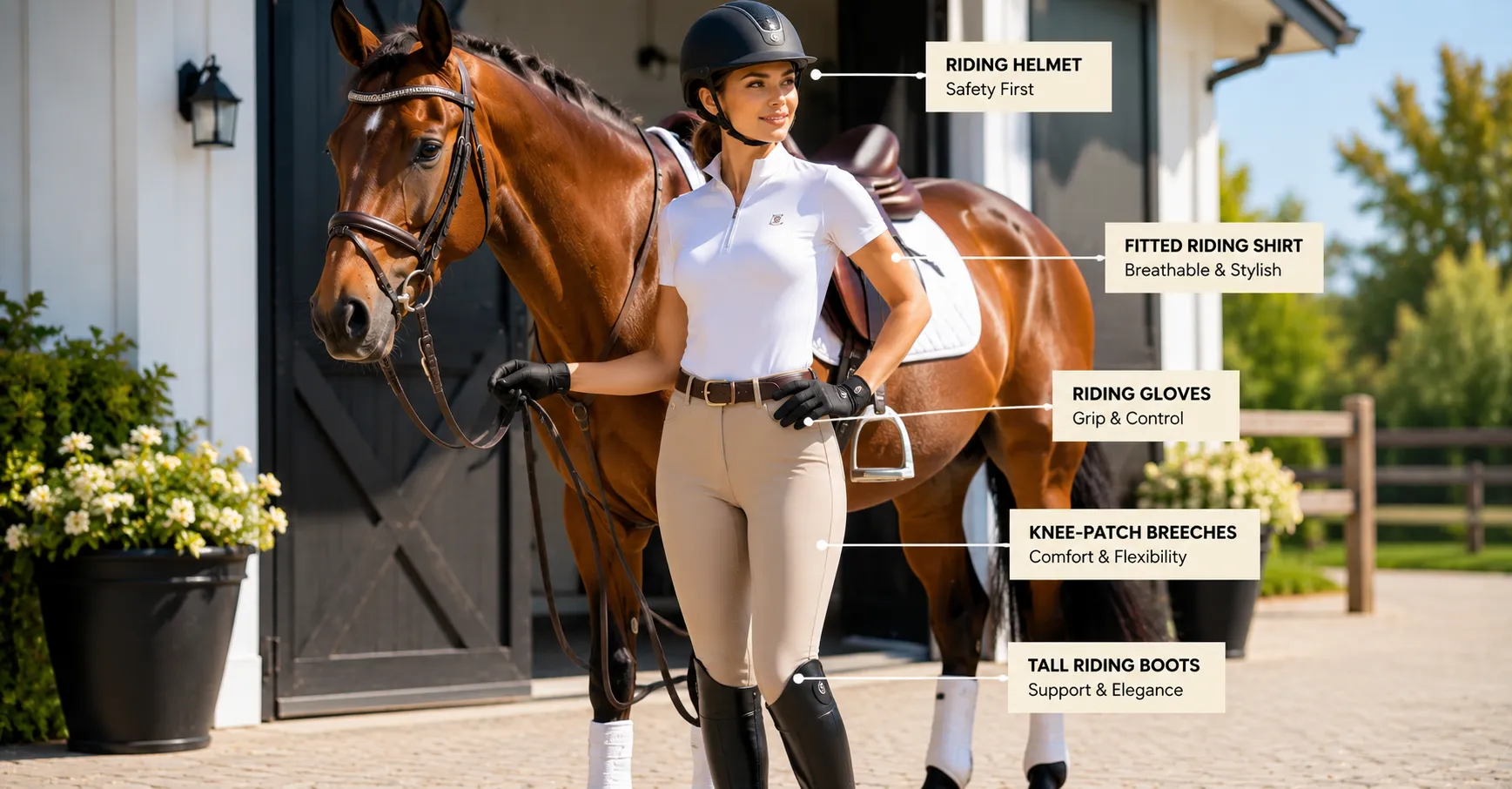
A horse riding outfit is about far more than looking the part. The right clothing keeps you safe, comfortable, and in control every time you swing into the saddle. From a properly fitted riding helmet to grippy boots and flexible breeches, each piece serves a real purpose. Get it right, and you ride with confidence. Get it wrong, and you risk chafing, slipping, or worse.
This guide breaks down exactly what to wear horse riding, whether you’re a complete beginner or a seasoned rider refining your kit. We’ll cover the must-have gear, how to dress for different disciplines and seasons, and the common mistakes that trip people up.
Here’s what’s ahead:
- The core pieces every rider needs
- How to choose boots, breeches, and a helmet
- Beginner-friendly outfit ideas on a budget
- Seasonal riding wear for year-round comfort
- Mistakes to avoid and answers to common questions
Why Your Riding Outfit Matters
Horseback riding clothes aren’t a fashion statement first. They’re safety equipment that happens to look sharp. Riding involves a large, powerful animal and plenty of unpredictable movement, so what you wear directly affects how safely and comfortably you ride.
The right gear protects you from injury, prevents painful rubbing, and helps you communicate clearly with your horse. Loose or unsuitable clothing can snag, slip, or distract you at the worst possible moment.
Safety comes first
Certain pieces exist purely to keep you protected:
- A riding helmet guards against serious head injury in a fall.
- Riding boots with a heel stop your foot from sliding through the stirrup.
- Fitted clothing avoids snagging on tack or equipment.
- Gloves protect your hands and improve your grip on the reins.
Comfort keeps you riding longer
Even a short ride turns miserable in the wrong clothes. Seams in the wrong place cause chafing, while stiff fabrics restrict movement. Purpose-made equestrian clothing uses smooth seams, stretch panels, and breathable materials so you stay focused on your ride, not your discomfort.
So what? Comfortable, safe gear lets you concentrate on technique and enjoyment, which is exactly how you improve as a rider.
The Essential Horse Riding Outfit Checklist
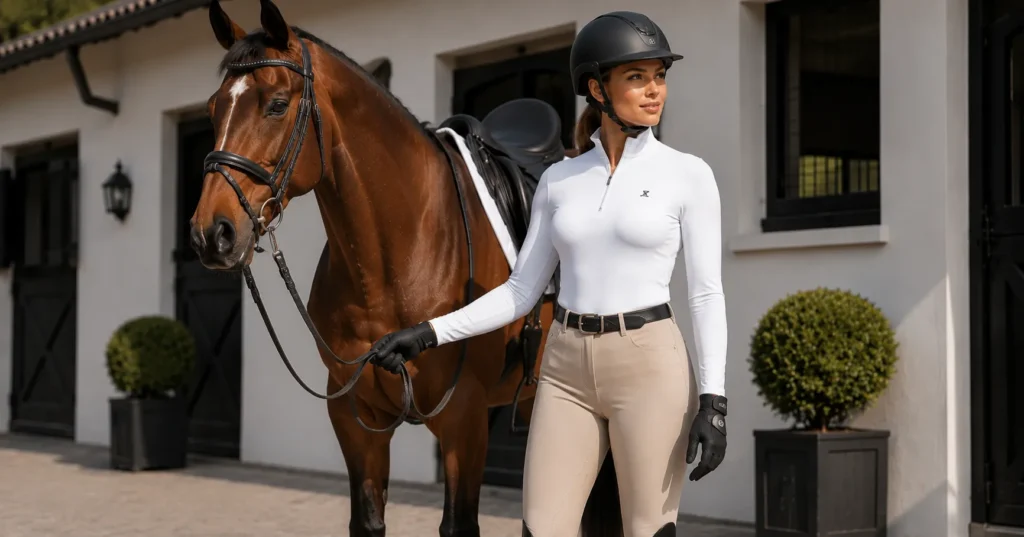
Before diving into details, here’s a quick overview of the core pieces that make up a complete equestrian outfit. Think of this as your foundation.
| Item | Purpose | Priority |
| Riding helmet | Head protection in falls | Essential |
| Riding boots | Heel stops foot slipping through stirrup | Essential |
| Breeches or riding tights | Grip, comfort, no chafing | Essential |
| Fitted top or shirt | Freedom of movement, no snagging | Essential |
| Riding gloves | Grip and hand protection | Highly recommended |
| Body protector | Torso protection for jumping/eventing | Discipline-dependent |
| Half chaps | Lower-leg grip and protection | Optional but useful |
The non-negotiables
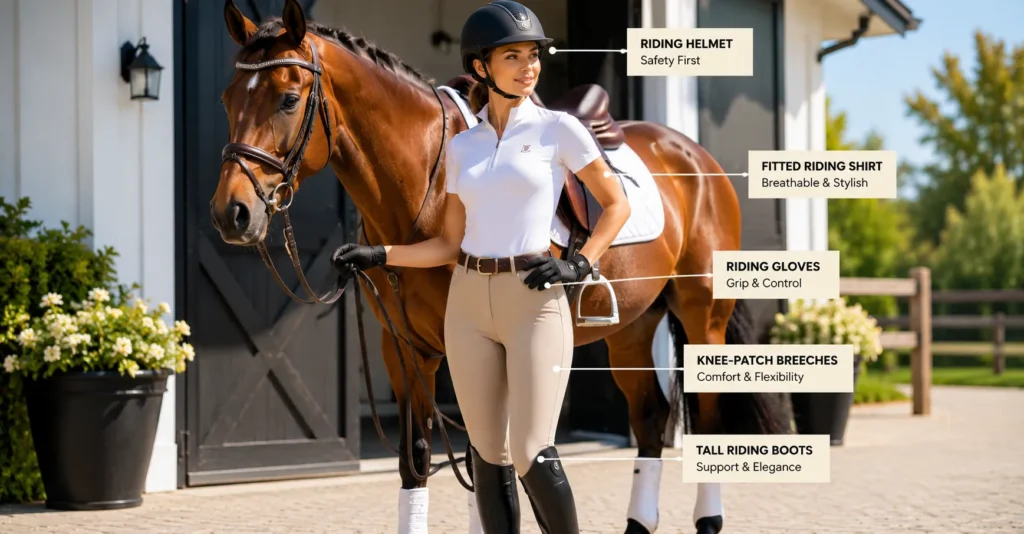
If you only invest in three things, make them a helmet, proper boots, and breeches. These cover the biggest safety and comfort needs. Everything else builds on this base over time.
Building up gradually
You don’t need a full wardrobe on day one. Most beginners start with the essentials, then add gloves, half chaps, and discipline-specific gear as they progress. This keeps costs manageable while you find your footing.
Choosing the Right Riding Helmet

Your helmet is the single most important piece of equestrian gear. No matter your experience level or discipline, a well-fitted helmet protects you from the most serious injuries.
Why fit is everything
A helmet only works if it fits correctly. A loose helmet shifts on impact, while a tight one causes headaches and distraction.
Follow these steps for a proper fit:
- Measure your head around the widest point, just above your eyebrows.
- Try it on level, sitting low on your forehead, not tilted back.
- Check the snugness so it moves your skin slightly without sliding.
- Fasten the harness and ensure it sits comfortably under your chin.
- Shake your head gently to confirm it stays securely in place.
Safety standards to look for
Always choose a helmet certified to recognized safety standards. Look for current certification labels inside the helmet, and replace it after any significant fall or every few years, since the protective materials degrade over time.
Style without sacrificing safety
Modern riding helmets come in plenty of finishes, from matte black to suede-look brims and vented designs. You can look polished and stay protected at once, so never trade safety for appearance.
Selecting the Best Riding Boots
Riding boots are your second safety essential. Their defining feature is a small heel, usually around one inch, that prevents your foot from sliding all the way through the stirrup, a leading cause of dangerous accidents.
Main types of riding boots
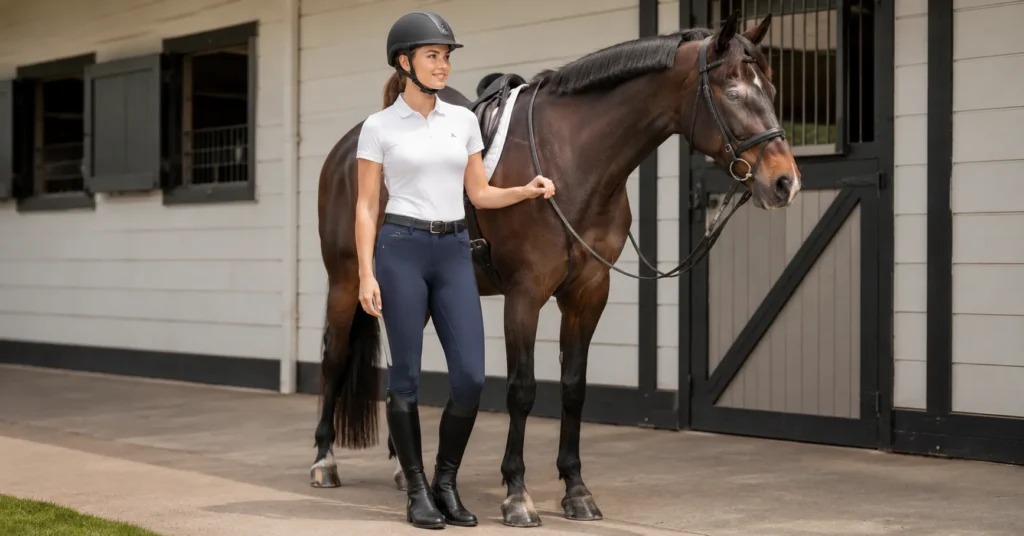
Different boots suit different needs and budgets:
- Paddock boots: Short, ankle-length boots ideal for everyday riding and beginners.
- Tall riding boots: Reach the knee, offering grip and a polished look for shows.
- Field boots: Tall boots with laces at the ankle for flexibility, popular in jumping.
- Dress boots: Sleek tall boots without laces, favored in dressage.
- Yard boots: Durable, weatherproof boots for barn work and casual riding.
Key features to check
When choosing boots, look for:
- A defined heel of about one inch for stirrup safety.
- A smooth sole or lightly treaded sole that slides easily in and out of the stirrup.
- A comfortable, snug fit that supports your ankle without pinching.
- Durable materials like leather or quality synthetics that withstand wear.
Pairing boots with half chaps
Many beginners pair short paddock boots with half chaps. These wrap around the lower leg to provide the grip and protection of tall boots at a fraction of the cost. It’s a smart, budget-friendly combination.
Understanding Breeches and Riding Bottoms
Breeches are purpose-built riding trousers designed for grip, comfort, and freedom of movement. They sit at the heart of any functional horse riding outfit.
What makes breeches special
Regular jeans or leggings have thick seams that cause painful chafing against the saddle. Breeches solve this with flat seams, stretchy fabric, and grip panels that help you stay secure.
Common types include:
- Full-seat breeches: Grip material across the whole seat for maximum stability.
- Knee-patch breeches: Grip at the knees, popular for jumping and general riding.
- Riding tights: Pull-on, legging-style bottoms that are comfortable and beginner-friendly.
Choosing the right pair
Consider these factors when selecting riding bottoms:
| Factor | What to Look For |
| Fit | Snug but not restrictive, with room to bend |
| Grip | Knee patches for beginners, full-seat for security |
| Fabric | Breathable, stretchy, moisture-wicking |
| Waist style | Mid or high rise for comfort in the saddle |
| Season | Lightweight for summer, fleece-lined for winter |
A beginner-friendly tip
If you’re not ready to invest in breeches, riding tights offer a comfortable, affordable starting point. They pull on like leggings, include grip where you need it, and work well for lessons as you decide whether riding is for you.
Tops, Layers, and Jackets
Your upper-body clothing should allow full freedom of movement while staying close enough to avoid snagging on tack. The goal is comfort and practicality.
Everyday riding tops
For casual riding and lessons, choose:
- Fitted t-shirts or polo shirts that move with you
- Moisture-wicking fabrics to stay cool and dry
- Stretchy, breathable materials for unrestricted movement
Avoid baggy tops, loose scarves, or anything that flaps and could spook your horse or catch on equipment.
Layering for changing weather
Weather shifts fast around the barn, so layering is key:
- Base layer: A moisture-wicking top to manage sweat.
- Mid layer: A fleece or light sweater for warmth.
- Outer layer: A water-resistant, breathable jacket for wind and rain.
Choose fitted layers that don’t add bulk, and look for jackets designed for riding with stretch panels and a longer cut at the back.
Show and competition attire
Formal riding events call for specific dress, such as a tailored show jacket, a shirt with a collar, and discipline-appropriate colors. If you plan to compete, check the rules for your discipline early so you can build the right wardrobe.
Don’t Forget Riding Gloves
Riding gloves are an easy piece to overlook, yet they make a real difference. They improve your grip on the reins, protect your hands from blisters, and keep you comfortable in cold weather.
Benefits of riding gloves
- Better grip on reins, especially when wet or sweaty
- Blister prevention during longer rides
- Hand protection from rope burn and rough reins
- Warmth in cold-weather riding
Choosing the right pair
Look for gloves that fit snugly without restricting movement. Breathable, stretchy fabrics work well in summer, while insulated, waterproof options suit winter. Reinforced palms add durability and grip where you need it most.
Common mistake: Buying gloves too thick for the season. Bulky gloves reduce your feel of the reins, which affects communication with your horse.
Beginner Horse Riding Outfit on a Budget
Starting out doesn’t have to break the bank. You can assemble a safe, functional beginner riding outfit without buying every premium piece at once.
What to prioritize first
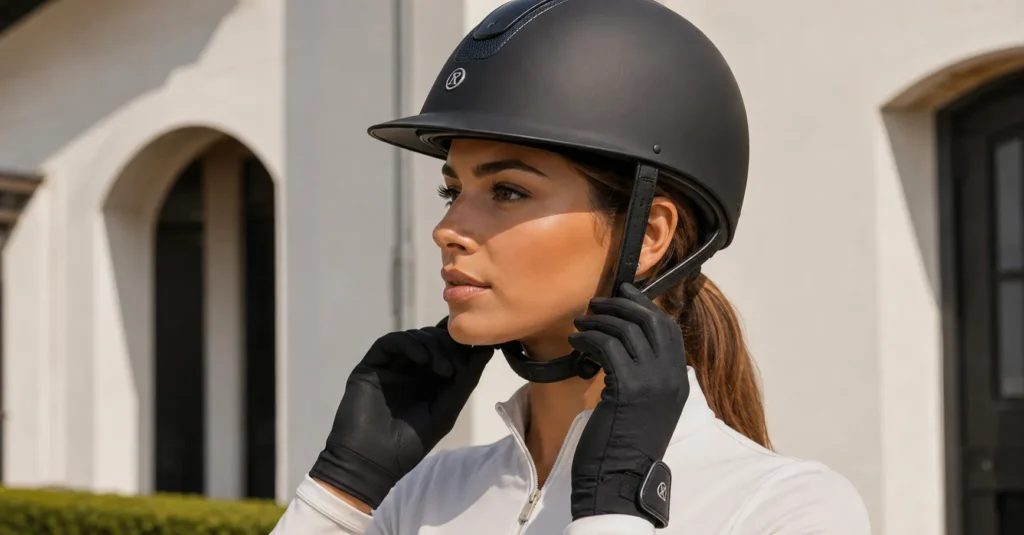
Spend your money where safety and comfort matter most:
- A certified riding helmet (never buy this secondhand).
- Boots with a defined heel, even basic paddock boots.
- Riding tights or affordable breeches for comfort.
- A fitted top you likely already own.
Smart ways to save
- Borrow or rent gear when trying lessons for the first time.
- Buy half chaps instead of expensive tall boots early on.
- Choose riding tights over premium breeches at the start.
- Shop end-of-season sales for jackets and layers.
A sample beginner outfit
Here’s a complete, affordable starting kit:
- Certified helmet
- Paddock boots with half chaps
- Riding tights or knee-patch breeches
- A fitted moisture-wicking top
- Simple riding gloves
This setup keeps you safe and comfortable while you learn, with room to upgrade as your skills and commitment grow.
Seasonal Riding Wear for Year-Round Comfort
One outfit won’t carry you through every season. Adjusting your riding wear for the weather keeps you comfortable and protected all year.
| Season | Key Adjustments | Recommended Pieces |
| Spring | Layer for changeable weather | Light jacket, breathable base layer |
| Summer | Stay cool and sun-safe | Moisture-wicking top, lightweight breeches, vented helmet |
| Autumn | Add warmth, prepare for rain | Fleece mid-layer, water-resistant jacket |
| Winter | Insulate and stay dry | Fleece-lined breeches, insulated gloves, warm layers |
Summer riding
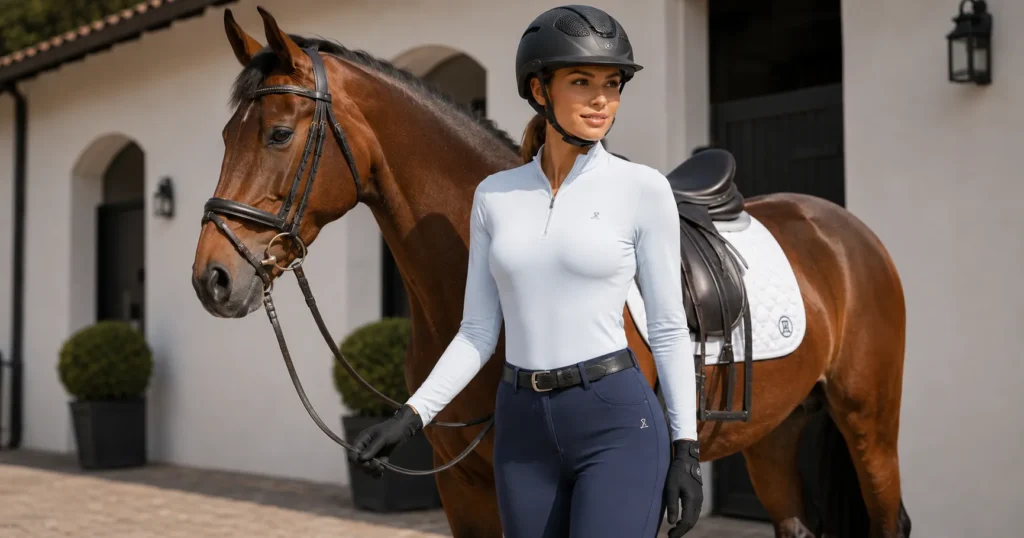
Heat builds fast in the saddle. Reach for breathable, moisture-wicking fabrics, lightweight breeches, and a vented helmet. Don’t forget sun protection for exposed skin and a water bottle to stay hydrated.
Winter riding
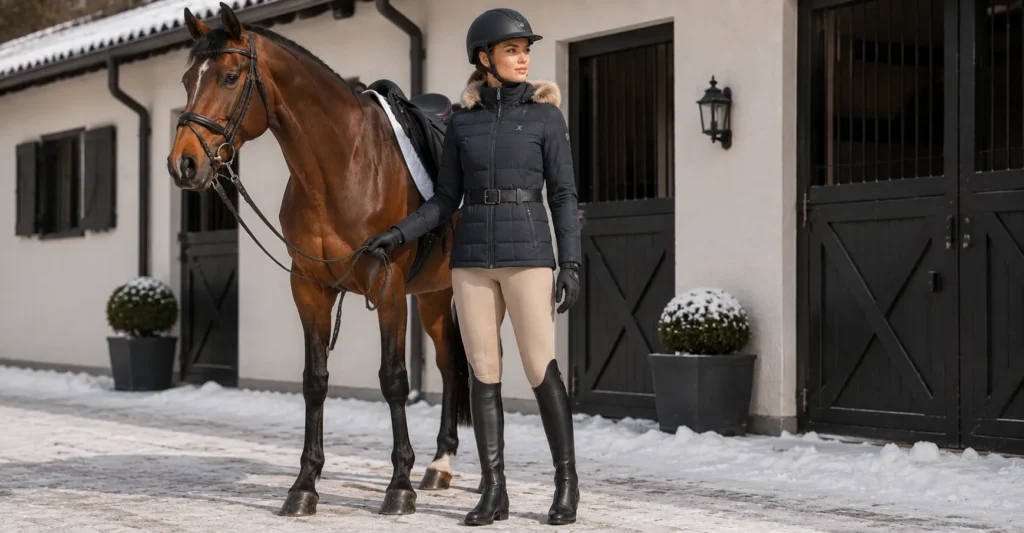
Cold-weather riding calls for smart layering rather than one heavy coat. Fleece-lined breeches, insulated waterproof gloves, and thermal base layers keep you warm without restricting movement. Choose boots with extra insulation, and add a neck warmer on the coldest days.
Wet weather
Rain is part of riding life. A water-resistant, breathable jacket and waterproof gloves keep you comfortable, while a helmet with a brim helps shield your eyes. Quick-drying fabrics make a real difference when conditions turn damp.
Matching Your Outfit to Your Discipline
Equestrian fashion varies by discipline, and each style has practical roots. Knowing the basics helps you dress appropriately whether you ride English or Western.
English riding
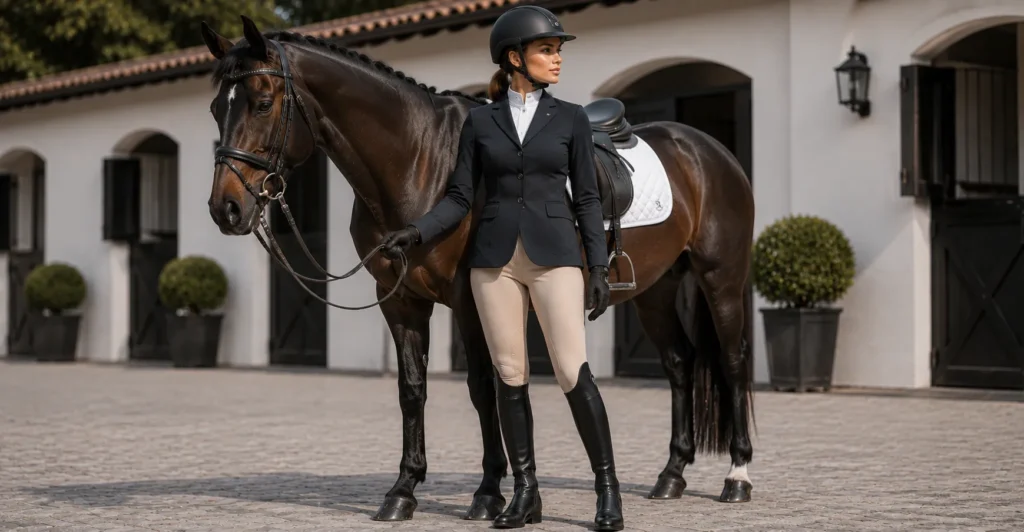
English disciplines like dressage, jumping, and eventing favor:
- Fitted breeches with knee or full-seat grip
- Tall boots or paddock boots with half chaps
- A fitted top or show shirt
- A body protector for jumping and cross-country
Western riding
Western riding has its own relaxed, rugged style:
- Durable jeans designed for riding
- Western boots with a defined heel
- A comfortable shirt
- A cowboy hat or, increasingly, a safety helmet
Casual and trail riding
For relaxed trail rides, comfort and practicality lead. Riding tights or jeans made for the saddle, sturdy boots, gloves, and weather-appropriate layers all work well. A helmet remains essential regardless of how casual the ride.
Common Riding Outfit Mistakes to Avoid
Even experienced riders slip up on gear choices. Watch out for these frequent mistakes that affect safety and comfort.
- Skipping the helmet. No ride is worth the risk. Always wear a certified helmet.
- Wearing the wrong shoes. Sneakers and flat-soled shoes can slip through the stirrup dangerously.
- Choosing loose clothing. Baggy layers snag on tack and can spook your horse.
- Riding in jeans with thick seams. They cause painful chafing over time.
- Buying a used helmet. Past impacts may have weakened it invisibly.
- Ignoring the weather. Dressing wrong for conditions cuts your ride short.
- Picking the wrong glove thickness. Bulky gloves reduce your feel of the reins.
Avoiding these errors keeps you safer and far more comfortable in the saddle.
Caring for Your Riding Gear
Quality equestrian clothing is an investment, so a little care keeps it performing and looking good for years.
- Clean boots regularly with appropriate leather or synthetic care products.
- Wash breeches inside out on a gentle cycle to protect grip panels.
- Air dry technical fabrics rather than using high heat.
- Store your helmet in a cool, dry place away from direct sunlight.
- Check stitching and fastenings periodically for wear.
Treating your gear well preserves both its protective qualities and its appearance, saving you money in the long run.
Putting Your Riding Outfit Together
The real strength of a good riding wardrobe is its versatility. With a few core pieces, you can adapt to almost any ride:
- Lesson day: Helmet, paddock boots, half chaps, riding tights, fitted top, gloves
- Summer hack: Vented helmet, lightweight breeches, moisture-wicking top, light gloves
- Winter ride: Helmet, insulated boots, fleece-lined breeches, layered top, warm gloves
- Show day: Helmet, tall boots, show breeches, tailored jacket, show shirt, gloves
Build around the essentials first, then expand as your riding grows. A thoughtful kit keeps you safe, comfortable, and confident every time you mount up.
Conclusion
A great horse riding outfit balances safety, comfort, and practicality. Start with the non-negotiables, a certified helmet, boots with a defined heel, and proper breeches or riding tights, then add gloves, layers, and discipline-specific gear as you progress. Dress for the season, avoid common mistakes like loose clothing or the wrong footwear, and care for your gear so it lasts.
Ready to ride? Begin by securing the three essentials that protect you most: a well-fitted helmet, suitable boots, and comfortable breeches. With those in place, you’ll be set to focus on what really matters, enjoying your time in the saddle.
Frequently Asked Questions
What should a beginner wear horse riding?
A beginner needs a certified riding helmet, boots with a defined one-inch heel, and comfortable riding tights or breeches. Add a fitted top you already own and a pair of simple gloves. This safe, affordable setup covers the essentials while you learn the basics.
Can I wear leggings instead of breeches?
Riding-specific tights are a great alternative to breeches, since they offer grip and flat seams. Regular fashion leggings work for very short rides but lack grip and can wear thin quickly. For comfort and safety, choose tights designed for riding.
Do I really need riding boots, or will any shoes work?
You need boots with a small heel, around one inch, to stop your foot sliding through the stirrup. Flat sneakers and other shoes can slip through dangerously in a fall. Even basic paddock boots paired with half chaps will do the job safely.
Why are riding helmets so important?
A riding helmet protects against serious head injuries, which are the most dangerous risk in a fall. Always choose a certified helmet that fits snugly, never buy one secondhand, and replace it after any significant impact or every few years as materials degrade.
What should I wear horse riding in summer?
In summer, choose breathable, moisture-wicking fabrics, lightweight breeches, and a vented helmet to stay cool. Add sun protection for exposed skin and stay hydrated. Avoid heavy or dark clothing that traps heat, and keep layers light for quick adjustments.
How do I dress for horse riding in winter?
Layer smartly with thermal base layers, fleece-lined breeches, and a water-resistant jacket. Choose insulated, waterproof gloves and boots with added warmth. A neck warmer helps on cold days. Avoid bulky single coats that restrict your movement in the saddle.
Are riding gloves necessary?
Gloves aren’t strictly essential, but they’re highly recommended. They improve your grip on the reins, prevent blisters, protect your hands, and keep you warm in winter. Choose a thickness suited to the season so you don’t lose feel of the reins.
What’s the difference between English and Western riding outfits?
English riding favors fitted breeches, tall or paddock boots, and a fitted top, often with a body protector for jumping. Western riding uses durable jeans, Western boots with a heel, and a comfortable shirt. Both should include a safety helmet whenever possible.
How much does a starter riding outfit cost?
Costs vary widely, but you can build a safe beginner kit affordably by prioritizing a certified helmet and boots, choosing riding tights over premium breeches, and using half chaps instead of tall boots. Borrowing or renting gear for first lessons also helps.