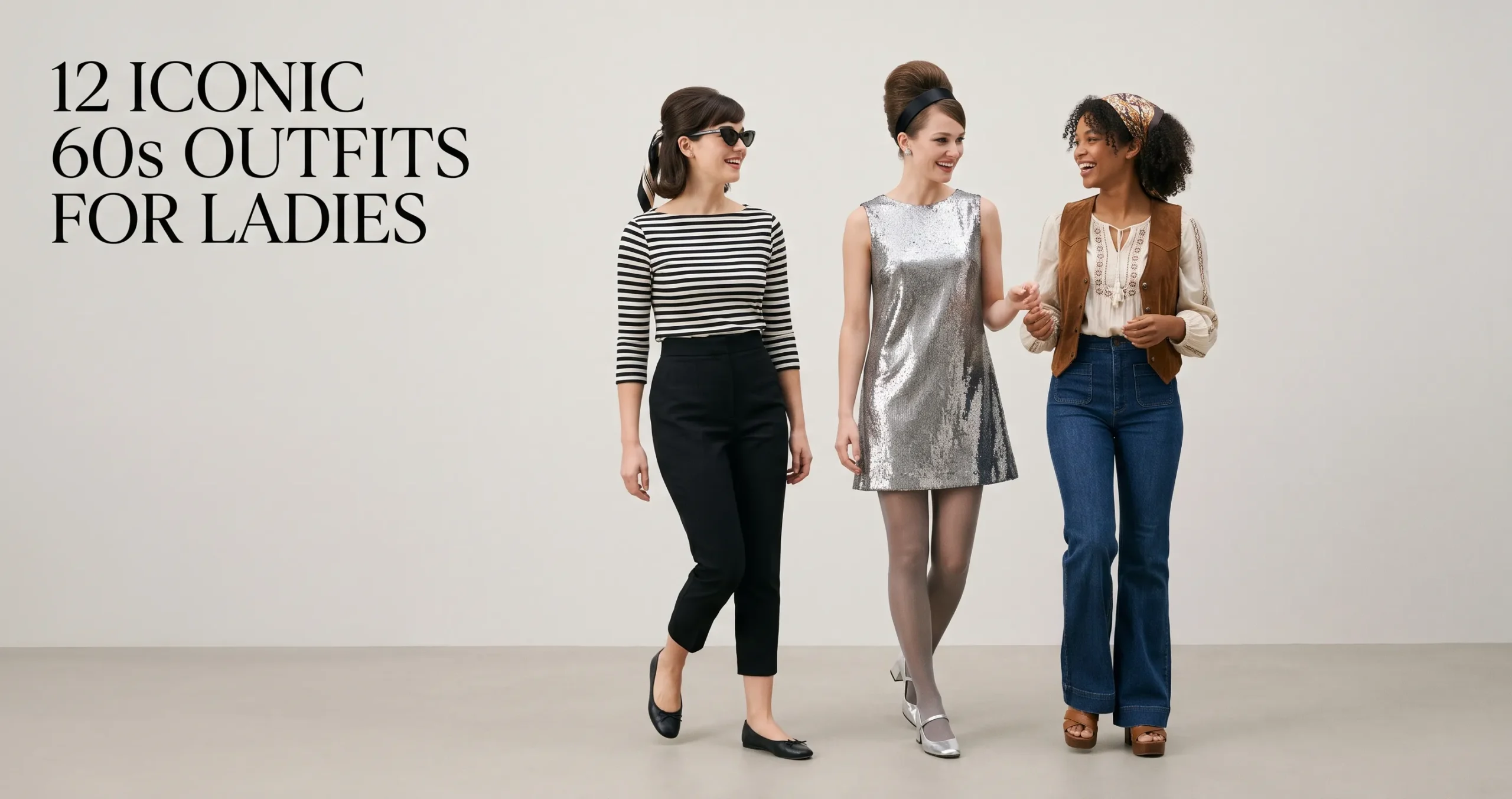
12 Iconic 60’s Outfits for Ladies: Mod, Retro, and Vintage Looks to Recreate
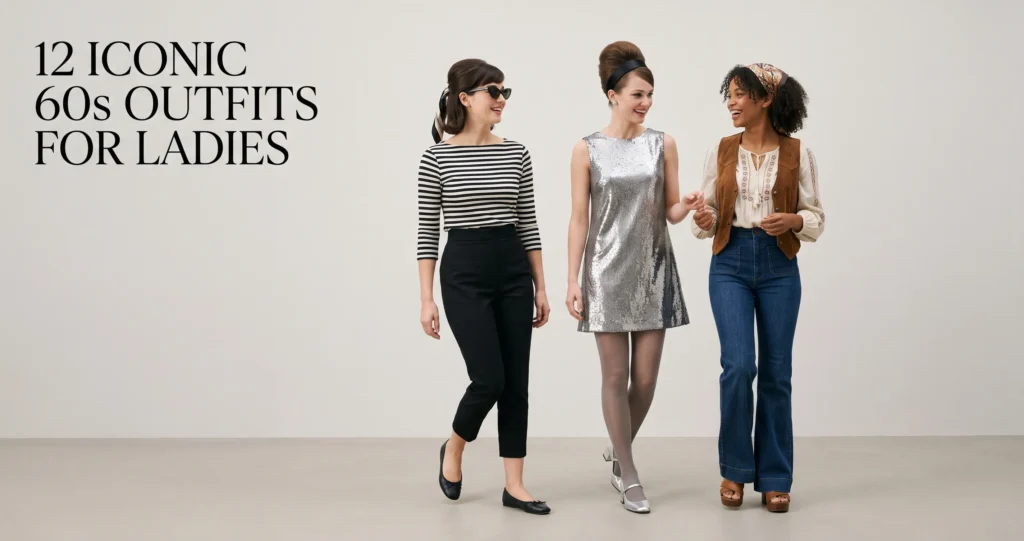
Maybe you have a themed party coming up, a vintage dress you never know how to style, or a wardrobe that needs more personality. 60’s outfits for ladies fit all three situations. The decade gave us the miniskirt, the shift dress, go go boots, and the bold geometric prints designers still borrow every season.
The 1960s moved fast. Women started the decade in Jackie Kennedy’s polished skirt suits and ended it in flared jeans and fringe at Woodstock. That range is why the era still works today: there is a 60s look for every body type, budget, and occasion.
This guide gives you 12 complete 60’s outfits for ladies, with the key pieces, the history behind each look, and practical steps to wear them now. You will also find hair and makeup pairings, a shopping table, and the most common mistakes to avoid.
What Defines 60’s Outfits for Ladies?
60’s outfits for ladies are defined by clean shapes, shorter hemlines, and bold color. The decade broke away from the cinched waists and full skirts of the 1950s. It introduced looser silhouettes that let women move, dance, and work more freely.
Young people drove the change. In 1965, Vogue editor Diana Vreeland coined the term “youthquake” to describe how teenagers and twenty-somethings were now setting trends instead of following Paris couture. London’s Carnaby Street and King’s Road became the new fashion capitals almost overnight.
Two terms come up again and again in vintage 1960s style:
- Mod fashion: the style of the “mods” (short for modernists), a London youth subculture known for sharp tailoring, graphic prints, and short hemlines
- Shift dress: a straight cut dress that hangs from the shoulders with no defined waist
Early, Mid, and Late 1960s Fashion Compared
The 1960s were not one look. They were three. Knowing which phase you want to channel makes every styling decision easier.
| Era | Years | Silhouette | Signature Pieces | Style Icons |
| Early 60s | 1960–1963 | Structured, ladylike | Skirt suits, pillbox hats, capri pants | Jackie Kennedy, Audrey Hepburn |
| Mid 60s (Mod) | 1964–1967 | Straight, short, graphic | Shift dresses, miniskirts, go-go boots | Twiggy, Jean Shrimpton, Edie Sedgwick |
| Late 60s (Hippie) | 1967–1969 | Loose, flowing, bohemian | Bell-bottoms, peasant blouses, maxi dresses | Pattie Boyd, Janis Joplin |
Early 60s looks suit formal events and offices. Mod looks work best for parties and statement outfits. Late 60s looks fit festivals, weekends, and relaxed summer days.
Pick one row from this table before you shop it narrows your search to the right pieces fast.
12 Iconic 60’s Outfits for Ladies to Recreate
These 12 outfits cover every phase of the decade, from first lady polish to psychedelic prints. Each one lists the key pieces and the simplest way to wear it today.
1. The Mod Shift Dress
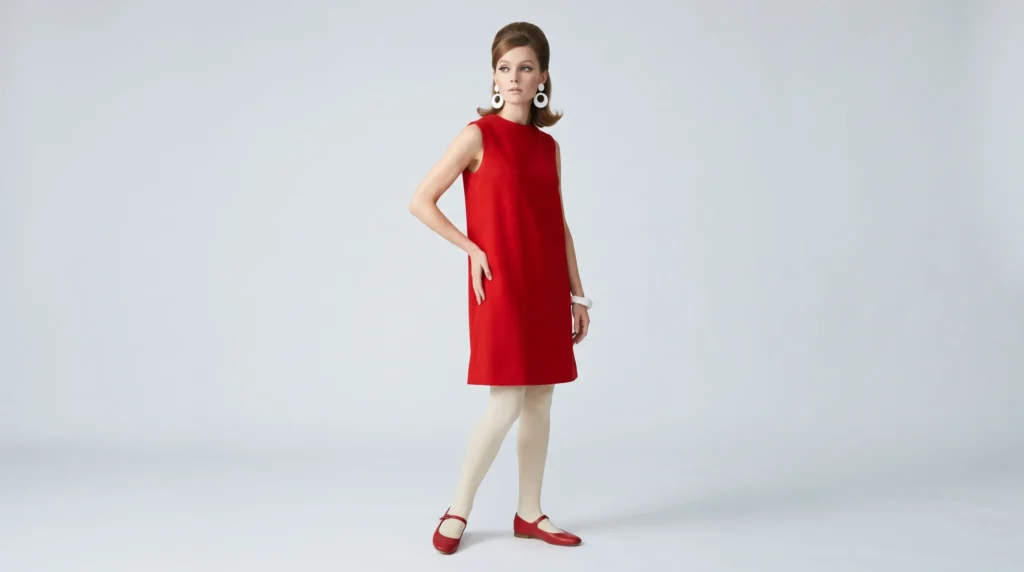
The mod shift dress is the foundation of 60s fashion. Its straight cut skims the body rather than hugging it, which made it radical after a decade of corsetry and fitted waists.
Designers like Mary Quant and boutiques like Biba, founded by Barbara Hulanicki in London in 1964, sold shift dresses in bright solids and bold patterns. The shape flatters most figures because it does not depend on waist definition.
Key pieces:
- Above the knee shift dress in a solid color or geometric print
- Opaque tights or bare legs
- Low block heels or flat Mary Janes
- Large hoop or drop earrings
Keep the dress the focus. If you buy only one item for 60’s outfits for ladies, make it a solid color shift in navy, red, or mustard.
2. Mary Quant Miniskirt With Colored Tights
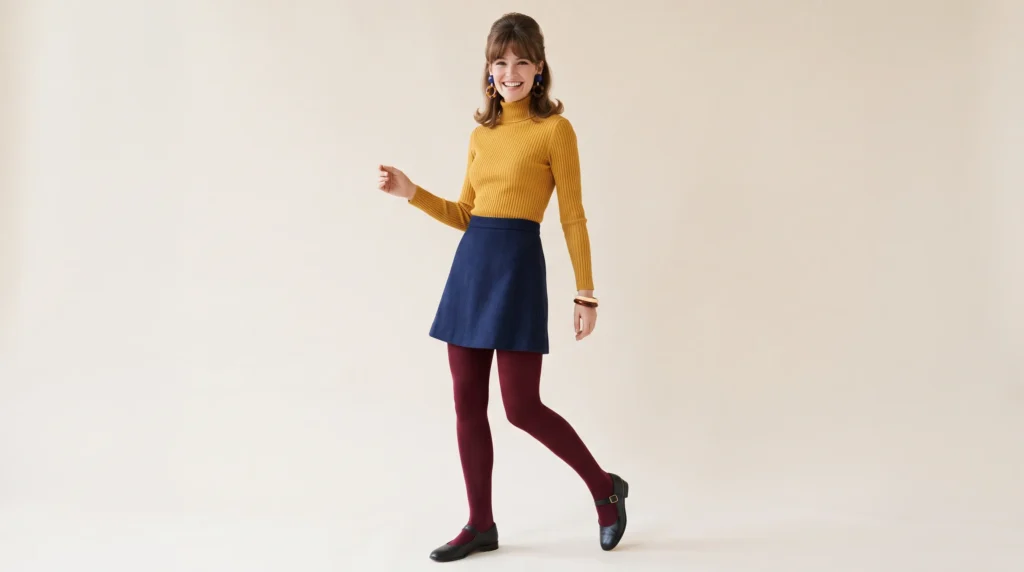
The miniskirt defined the mid 60s. British designer Mary Quant popularized it in her King’s Road boutique, Bazaar, and named it after her favorite car, the Mini.
Tights made the miniskirt wearable. Before tights became widely available, stockings and garters made short skirts impractical.
How to build the outfit:
- Choose a skirt that hits mid thigh, in wool, denim, or corduroy
- Add opaque tights in a matching or contrasting color, such as burgundy or ivory
- Tuck in a fitted ribbed sweater or a skinny turtleneck
- Finish with Mary Jane flats or low heeled pumps
Matching tights to your skirt lengthens the leg. Contrasting tights look more playful. Test both combinations in front of a mirror before you commit.
3. The Mondrian Color Block Dress
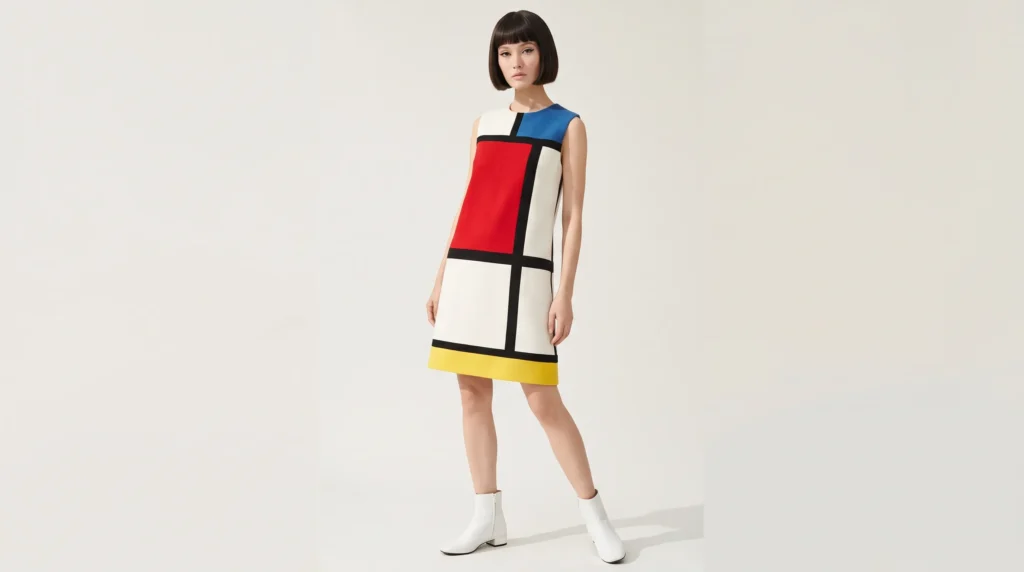
The Mondrian dress is wearable art. Yves Saint Laurent introduced it in his Fall 1965 collection, using the grid paintings of Dutch artist Piet Mondrian as inspiration.
Color blocking (pairing solid panels of contrasting colors in one outfit) became a hallmark of mod fashion. The Mondrian version uses white panels, black lines, and blocks of red, yellow, and blue.
How to style it:
- Keep accessories minimal the dress is already busy
- Choose white ankle boots or simple black pumps
- Wear hair sleek or in a neat bob
- Skip patterned bags and jewelry
Search “color block shift dress” on resale apps for affordable versions inspired by the original.
4. Jackie Kennedy Skirt Suit and Pillbox Hat
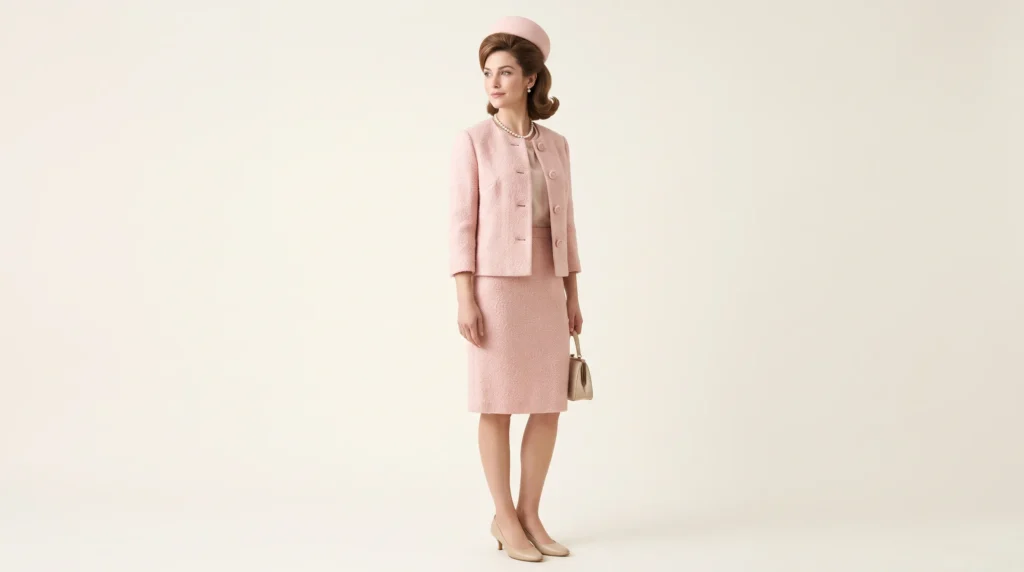
The Jackie Kennedy skirt suit is the most polished look of the early decade. As First Lady, Kennedy wore boxy, collarless jackets with knee length skirts, many designed by Oleg Cassini. Halston designed the pillbox hat she wore at the 1961 inauguration.
This is the most office ready of all 60’s outfits for ladies. It reads professional today with almost no adjustment.
Key pieces:
- Boxy, collarless jacket with three quarter sleeves
- Matching knee length pencil or A-line skirt
- Single strand of pearls
- Low heeled pumps
- Structured top handle bag
Swap the pillbox hat for a headband if you plan to wear this to work. Start with a pastel tweed or bouclé jacket it captures the look instantly.
5. Babydoll Dress With Peter Pan Collar
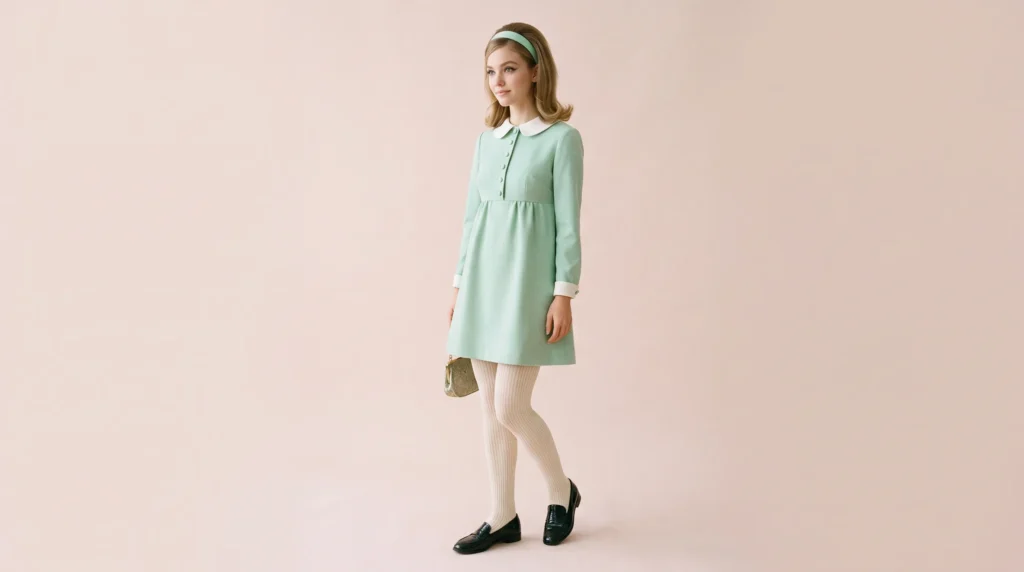
The babydoll dress is sweet, short, and youthful. It uses an empire line (a seam placed just below the bust) and flares out into a loose skirt.
A Peter Pan collar a flat collar with rounded corners gives it the classic 60s finish. The combination appeared constantly in mid decade fashion magazines aimed at teenagers and young women.
How to wear it:
- Choose a dress in a solid pastel or small floral print
- Add white or cream tights for a true vintage feel
- Pick Mary Janes or loafers to keep the look grounded
- Add a hair bow or headband for extra retro detail
Balance the sweetness with one modern piece. A leather jacket or chunky loafers keep the babydoll dress from looking too costume like.
6. Space Age Mini With Go Go Boots
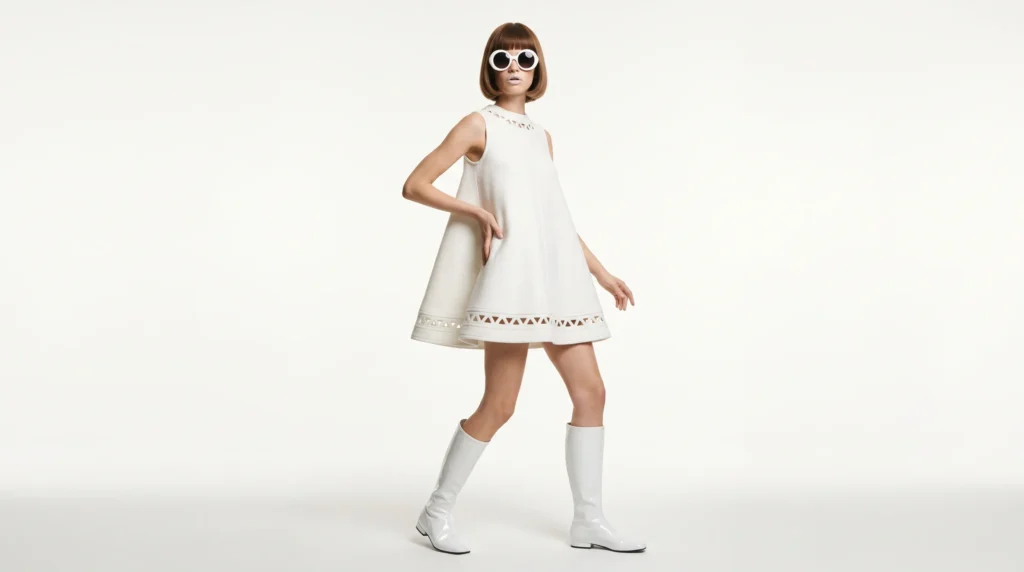
The space age look came from the race to the moon. French designer André Courrèges launched his “Space Age” collection in 1964, featuring white trapeze dresses, cut-outs, and flat white boots. Pierre Cardin followed with futuristic shapes and vinyl fabrics.
Go go boots are low heeled boots, usually white and calf length, named after the go go dancers who wore them on TV and in clubs. Nancy Sinatra’s 1966 hit “These Boots Are Made for Walkin'” turned them into a pop culture symbol.
How to build the outfit:
- Choose a white or silver A-line mini in a structured fabric
- Add white go go boots in patent leather or vinyl
- Keep jewelry geometric, such as round plastic earrings
- Finish with sleek hair or a short bob
This is the boldest look on the list. Wear it for themed parties, concerts, or any event that calls for a full statement.
7. The Twiggy Look
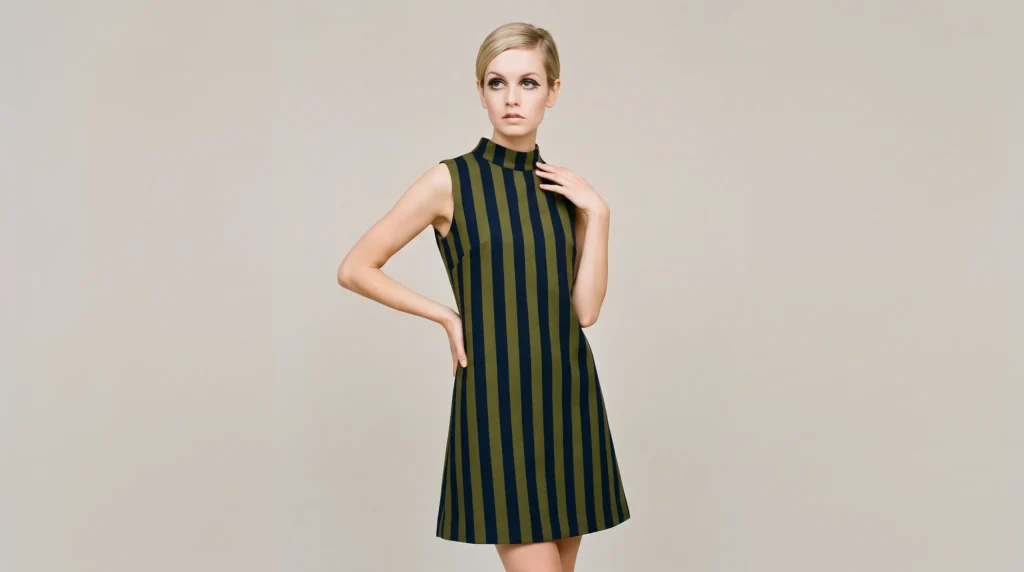
The Twiggy look is the purest expression of mod style. Lesley Hornby, known as Twiggy, was named “The Face of 1966” by the Daily Express at just 16 years old.
Twiggy fashion centered on a slim silhouette, short A-line dresses, and a cropped pixie cut by London hairdresser Leonard of Mayfair. Her makeup was the real signature: heavy lashes on top and individual lashes painted onto the lower lid.
Key pieces:
- Short A-line or shift dress in stripes or a geometric print
- Flat shoes or low heeled boots
- Opaque tights
- Graphic eye makeup with exaggerated lower lashes
Try the makeup first. A black liquid liner and a fine brush let you draw lower lashes in about five minutes.
8. Capri Pants and Ballet Flats
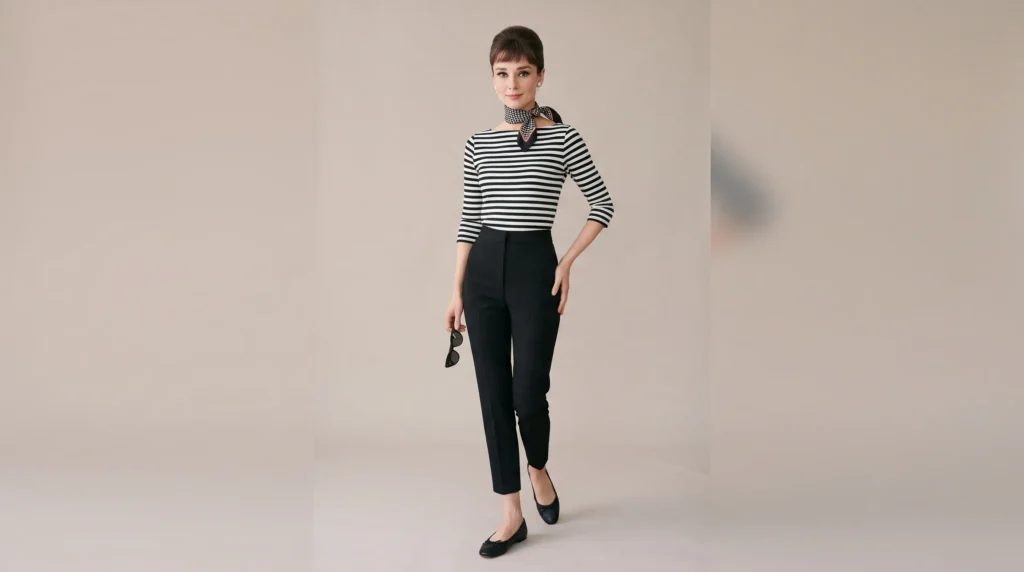
Capri pants are slim, cropped trousers that end between the calf and the ankle. They defined casual early 60s style, worn by Audrey Hepburn off screen and by Mary Tyler Moore on The Dick Van Dyke Show (1961–1966).
Moore’s capris were notable. Women on TV rarely wore trousers at the time, and her choice made pants feel acceptable for everyday wear.
How to wear them:
- Pair capris with a fitted boat neck top or a Breton stripe shirt
- Add ballet flats in black or nude
- Tie a silk scarf around your hair or neck
- Finish with cat eye sunglasses
This is the easiest of all 60’s outfits for ladies to wear daily. Start with black capris and build from what you already own.
9. Pucci Psychedelic Print Dress
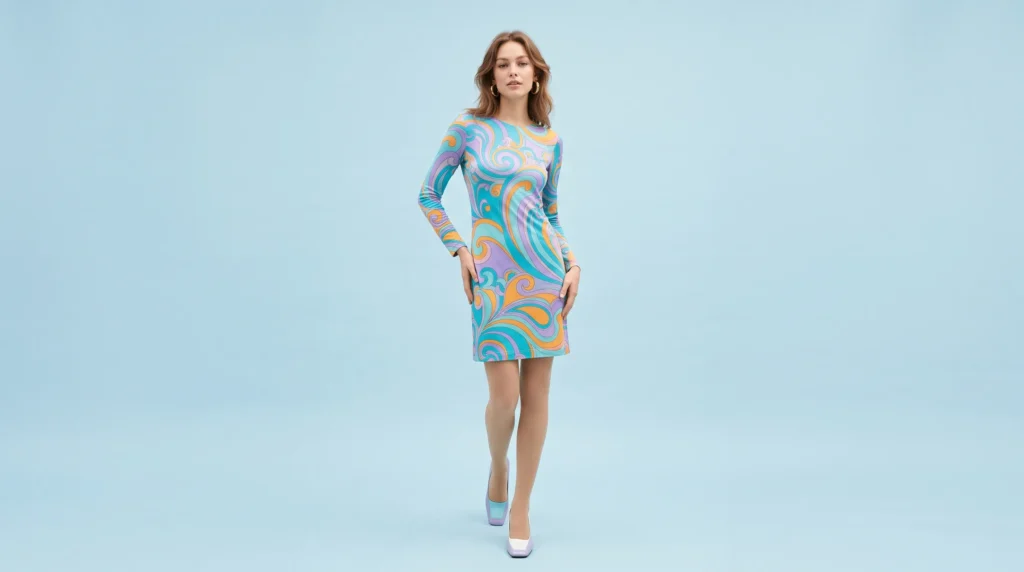
The psychedelic print captured the late 60s mood. Psychedelic patterns use vivid, swirling shapes and saturated colors inspired by the counterculture art of the time.
Italian designer Emilio Pucci led this trend with bright prints on lightweight silk jersey. His dresses were packable and wrinkle resistant, which made them a favorite of jet set travelers.
How to style it:
- Choose a shift or tunic dress with a bold swirling print
- Pull one color from the print for your shoes or bag
- Keep jewelry simple, such as gold hoops or a single bangle
- Let your hair fall loose or tie it back with a headscarf
The print does the talking. Hold back on everything else.
10. Edie Sedgwick Stripes and Black Tights
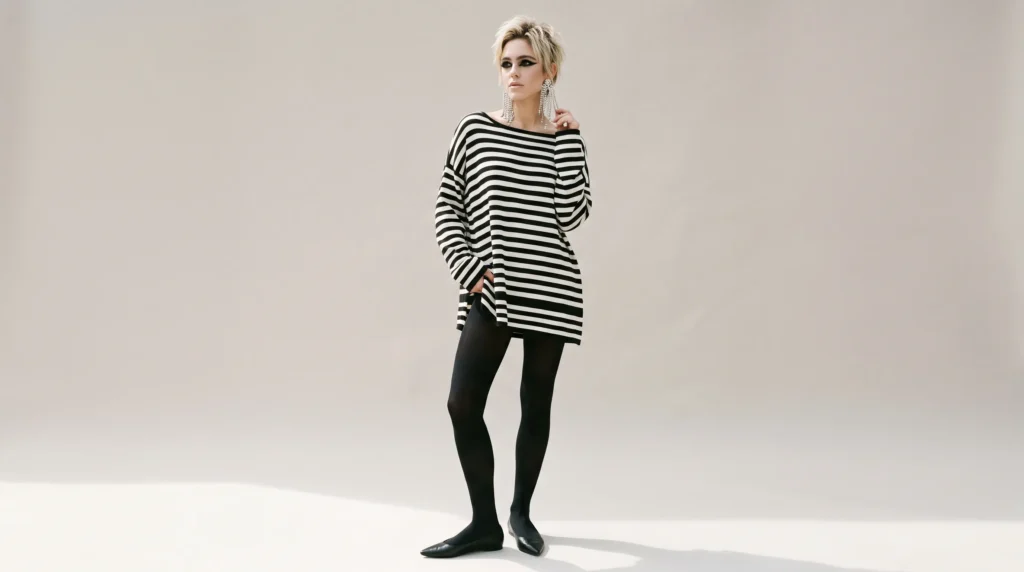
Edie Sedgwick defined downtown New York cool in 1965. As a muse in Andy Warhol’s Factory scene, she wore black opaque tights, striped tops, oversized chandelier earrings, and dramatic eyeliner.
Her look proves vintage 1960s style can be minimal and edgy at the same time. It relies on a few strong pieces instead of color.
Key pieces:
- Long striped top or striped mini dress
- Black opaque tights
- Oversized statement earrings
- Bold winged eyeliner and pale lips
Add a faux fur coat in winter for the full Sedgwick effect. Pull a striped top and black tights from your closet tonight to test it.
11. Bell Bottoms and Peasant Blouse
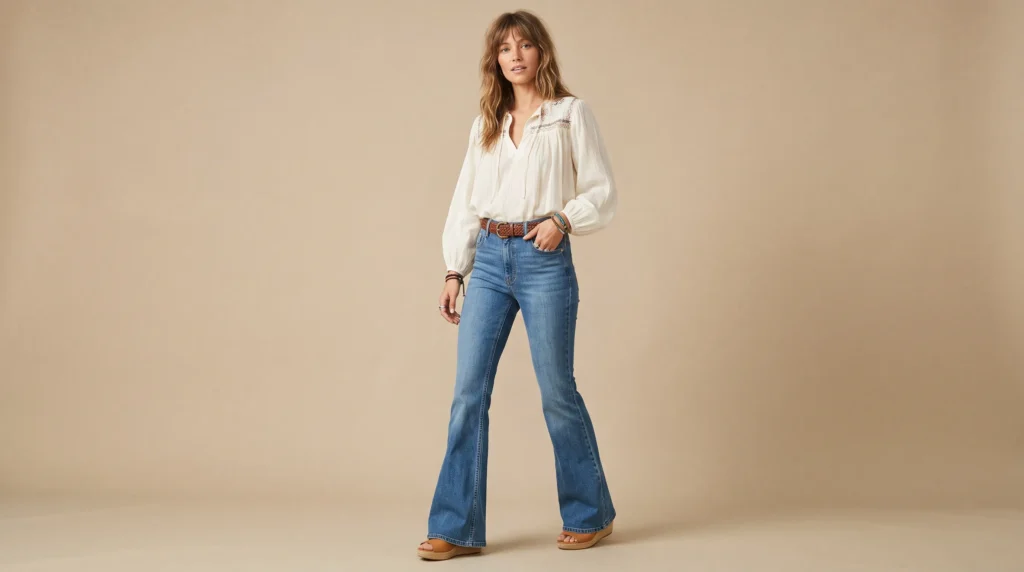
Bell bottoms mark the move from mod to hippie. These trousers fit through the thigh and flare dramatically from the knee down.
The peasant blouse a loose top with a gathered neckline, often embroidered completed the late 60s bohemian look. The 1969 Woodstock festival made this combination iconic.
How to build the outfit:
- Choose high waisted bell bottoms in denim or corduroy
- Tuck in a white or embroidered peasant blouse
- Add a fringe vest or suede jacket
- Finish with a headband, round sunglasses, and sandals or platforms
This is the most comfortable of all 60’s outfits for ladies. Wear it to festivals, outdoor concerts, or relaxed weekends.
12. Metallic Mini for Evening
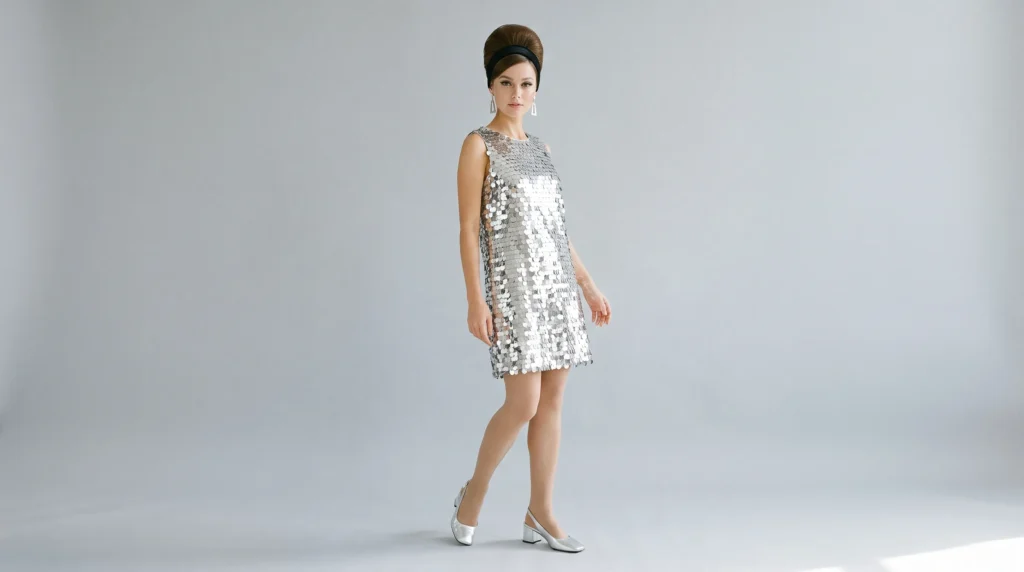
The metallic mini is the decade’s party dress. In 1966, Paco Rabanne showed a collection called “12 Unwearable Dresses in Contemporary Materials,” made from plastic discs and metal links.
Sequins, lamé, and metallic fabrics followed. The look suited the new discotheques opening in London, Paris, and New York.
Key pieces:
- Silver or gold metallic mini dress
- Sheer or nude tights
- White go go boots or low metallic heels
- Geometric earrings
Keep makeup bright and eyes graphic to match. Look for sequin shift dresses during holiday sales, when party styles drop in price.
Quick Comparison: All 12 60’s Outfits for Ladies
This table compares each outfit by era, key piece, and occasion so you can choose quickly.
| # | Outfit | Era | Key Piece | Best Occasion | Difficulty |
| 1 | Mod shift dress | Mid 60s | Shift dress | Work, parties | Easy |
| 2 | Miniskirt with tights | Mid 60s | Mini skirt | Weekends, nights out | Easy |
| 3 | Mondrian dress | Mid 60s | Color-block dress | Art events, parties | Medium |
| 4 | Jackie Kennedy suit | Early 60s | Skirt suit | Office, formal events | Medium |
| 5 | Babydoll dress | Mid 60s | Empire-line dress | Brunch, daytime | Easy |
| 6 | Space age mini | Mid 60s | Go-go boots | Themed parties | Bold |
| 7 | Twiggy look | Mid 60s | A-line mini | Parties, photo shoots | Medium |
| 8 | Capri pants | Early 60s | Cropped trousers | Everyday wear | Easy |
| 9 | Pucci print dress | Late 60s | Psychedelic print | Vacations, events | Medium |
| 10 | Edie Sedgwick look | Mid 60s | Black tights | Nights out | Easy |
| 11 | Bell bottoms | Late 60s | Flared trousers | Festivals, weekends | Easy |
| 12 | Metallic mini | Mid late 60s | Sequin dress | Evening, holidays | Bold |
Easy outfits use pieces you likely already own. Bold outfits need one statement item, such as go go boots or a metallic dress.
Save this table to your phone and use it as a shopping checklist.
Hair and Makeup to Complete Your 60s Look
Hair and makeup finish the outfit. A modern hairstyle with a 60s dress reads as “vintage inspired,” while a period hairstyle reads as fully retro.
| Look | Hair | Makeup | Pairs With |
| Beehive | Teased, tall, rounded crown | Winged liner, pale lips | Shift dress, metallic mini |
| Sassoon bob | Sharp, geometric five point cut | Defined brows, neutral lips | Mondrian dress, space age mini |
| Pixie cut | Short, side parted | Painted lower lashes | Twiggy look |
| Flipped bob | Shoulder-length, curled out at ends | Soft liner, pink lips | Jackie Kennedy suit, babydoll dress |
| Long and straight | Center part, often with headband | Minimal, natural skin | Bell bottoms, Pucci dress |
The beehive was created by Chicago hairdresser Margaret Vinci Heldt in 1960. Vidal Sassoon introduced his five-point bob in 1964, and it became the go to cut for mod fashion.
Practice your chosen hairstyle once before the event teasing and pinning take longer than most people expect.
How to Wear 60s Fashion Today Without Looking Like a Costume
Wearing 60s fashion today means mixing one vintage element with modern pieces. Head to toe period styling works for themed parties. For daily wear, one or two retro details are enough.
Follow these steps to keep 60’s outfits for ladies wearable:
- Choose one hero piece, such as a shift dress or go go boots
- Pair it with modern basics, like straight jeans or a plain T-shirt
- Keep makeup current unless you are dressing for a theme
- Limit accessories to one retro item, such as a headscarf or cat eye sunglasses
- Check the fit, since vintage pieces often need tailoring
Common Mistakes to Avoid
| Mistake | Why It Fails | Fix |
| Mixing early and late 60s | Clashing moods confuse the look | Stick to one era per outfit |
| Too many prints | Patterns compete for attention | Use one print, keep the rest solid |
| Ignoring vintage sizing | Pieces fit poorly or tear | Measure bust, waist, and hips before buying |
| Full period hair for everyday | Reads as costume | Use a modern cut with a headband |
| Cheap costume fabrics | Look shiny and flat in photos | Choose wool, cotton, or quality polyester |
Pick one outfit from this guide and swap one item for a modern piece the first time you wear it.
Where to Shop for Retro Women’s Clothing
Retro women’s clothing comes from two sources: authentic vintage and modern reproductions. Authentic pieces offer history and unique fabrics. Reproductions offer modern sizing and easier care.
| Source | Best For | Typical Price (USD) | Tip |
| Local vintage stores | Authentic dresses and coats | About $30–$150 | Try pieces on vintage sizes run small |
| Etsy | Specific items and accessories | About $25–$200 | Filter by “vintage” and check measurements |
| eBay | Rare designer pieces | Varies widely | Search exact terms like “1960s shift dress” |
| Depop and Poshmark | Affordable vintage and retro styles | About $15–$80 | Message sellers for fabric details |
| Reproduction brands (Collectif, Hell Bunny) | Modern sizing, retro cuts | About $50–$120 | Read size charts carefully |
Vintage sizing differs from modern sizing. A dress labeled size 12 in the 1960s often fits closer to a modern size 6 or 8. Always compare garment measurements instead of the label.
Keep a note on your phone with your bust, waist, and hip measurements before you shop for 60’s outfits for ladies.
Conclusion
60’s outfits for ladies remain popular because the decade offered something for everyone. Jackie Kennedy’s suits bring polish. Mod fashion brings color and confidence. Late 60s bohemian style brings ease and comfort.
The 12 looks in this guide cover the full range: shift dresses, miniskirts, Mondrian color blocking, baby doll dresses, go go boots, Twiggy fashion, capri pants, psychedelic prints, Edie Sedgwick stripes, bell bottoms, and metallic party dresses. Each follows the same core principle clean shapes, bold choices, and one clear focal point.
Choose the era that fits your style, find one hero piece, and build your first 60s outfit around it this week.
Frequently Asked Questions about 60’s Outfits for Ladies
What did ladies wear in the 60s?
Women in the 1960s wore skirt suits and capri pants in the early decade, shift dresses and miniskirts in the mod years, and bell bottoms and peasant blouses by the late 60s. Go go boots, opaque tights, and bold prints were common throughout the middle of the decade.
What is the most iconic 60s outfit?
The mod shift dress with go go boots is the most iconic look of the decade. It combines the era’s two biggest innovations: shorter, straighter silhouettes and futuristic footwear.
How can I dress 60s for a party?
Choose a bold mod look, such as a Mondrian dress, a metallic mini, or a space age dress with white go go boots. Add a beehive or Sassoon style bob and graphic eyeliner to complete the outfit.
What shoes go with 60’s outfits for ladies?
Go go boots, Mary Janes, ballet flats, low block heels, and kitten heels all suit 60s style. Choose flats for mod and early 60s looks, and sandals or platforms for late 60s hippie outfits.
Who were the biggest fashion icons of the 1960s?
Twiggy, Jackie Kennedy, Audrey Hepburn, Edie Sedgwick, Jean Shrimpton, and Pattie Boyd were among the most influential style icons. Designers Mary Quant, André Courrèges, Pierre Cardin, and Yves Saint Laurent shaped the decade’s fashion.
What is the difference between mod and hippie fashion?
Mod fashion is structured, short, and graphic, with shift dresses, miniskirts, and geometric prints. Hippie fashion is loose and natural, with flared jeans, peasant blouses, fringe, and earthy colors.
Can I wear 60’s outfits for ladies every day?
Yes. Capri pants, shift dresses, and skirt suits work for daily wear and the office. Pair one retro piece with modern basics to keep the look current rather than costume like.
How do vintage 1960s sizes compare to modern sizes?
Vintage 1960s sizes run smaller than modern sizes, often by two to three sizes. Always check bust, waist, and hip measurements instead of relying on the size label.