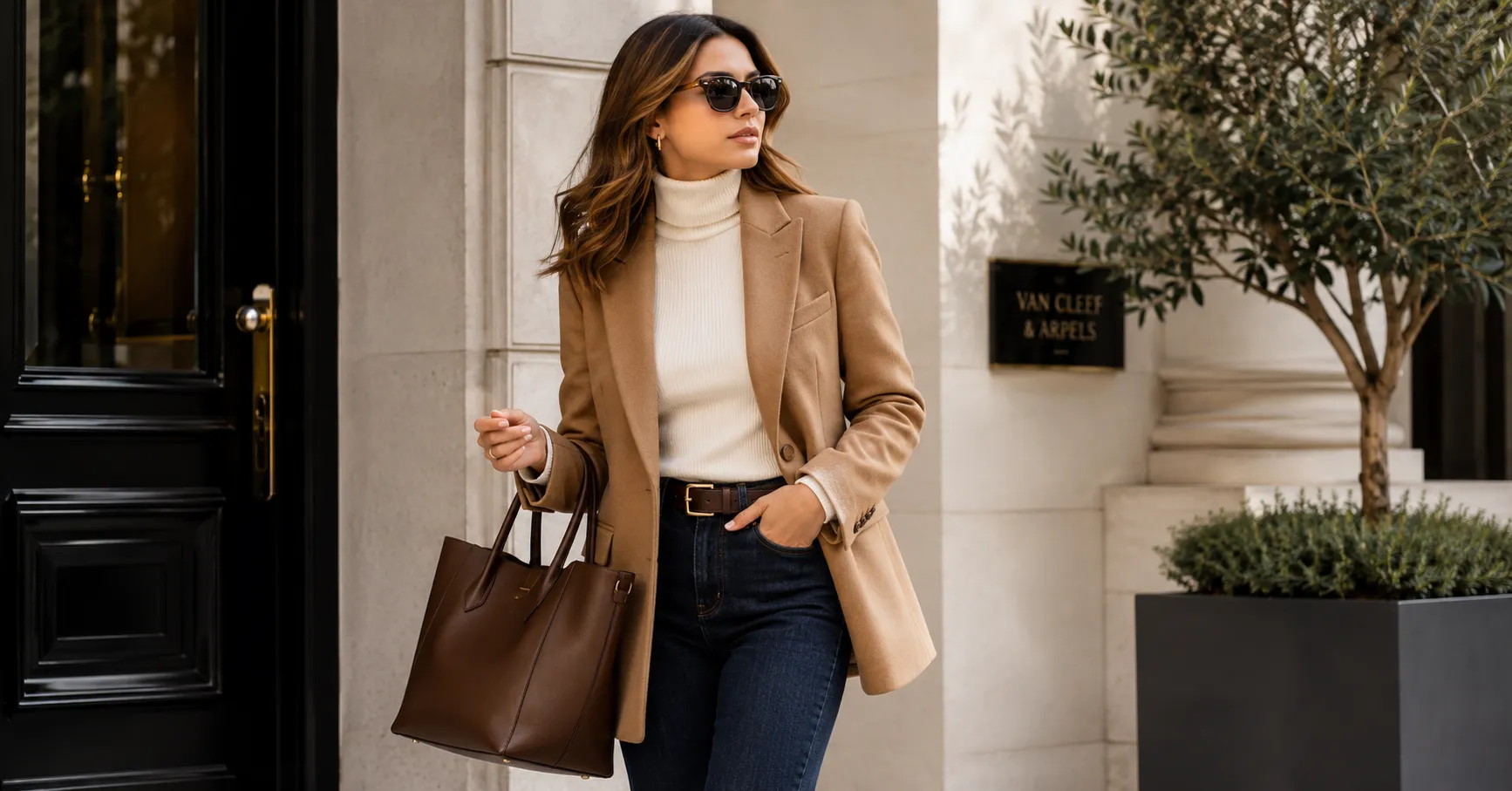
Wool Blazers for Women: The Complete Style & Buying Guide
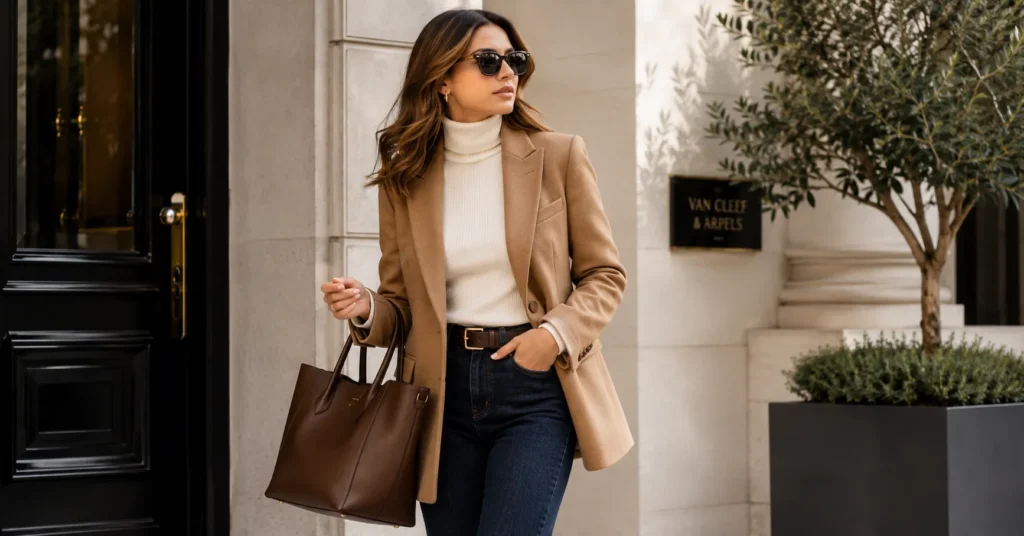
Wool blazers for women are one of the most reliable investments in a modern wardrobe and not just for the office. A well-chosen wool blazer transitions from work meetings to weekend outings to evening events with minimal effort. It adds structure to casual pieces, polish to simple outfits, and warmth to layered looks without the bulk of a full coat.
Why a Wool Blazer Deserves a Place in Every Woman’s Wardrobe
Before the outfit formulas and buying advice, it’s worth understanding what separates a wool blazer from cheaper alternatives and why that difference matters.
Fabric That Works Harder
Wool is one of the most functional natural fibers available. It regulates temperature — keeping you warm in cold air and preventing overheating indoors. It resists wrinkles naturally, which means a wool blazer looks presentable at the end of a long day in a way that synthetic alternatives rarely do. And it improves with age when cared for correctly, developing a subtle softness and patina that enhances rather than diminishes its appearance.
These aren’t abstract qualities. They’re the reason a quality wool blazer bought at 28 can still look excellent at 38.
Structure Without Formality
The blazer’s inherent structure defined shoulders, a front closure, lapels creates a polished silhouette without demanding a formal context. That’s a relatively rare quality in clothing. A wool blazer worn over a plain T-shirt and jeans looks intentional in a way that few other garments can manage over the same casual base.
The Main Wool Blazer Styles Worth Knowing
Not every wool blazer suits every purpose. Understanding the main style variations helps you identify which version belongs in your wardrobe — and how to use each one.
The Single-Breasted Tailored Wool Blazer
The most common and versatile option. It closes with one or two buttons down the center front, typically features notched lapels, and sits at hip length. This is the foundational wool blazer that covers the widest range of occasions.
Best for: Work environments, smart casual settings, everyday layering, and anyone building their first blazer wardrobe.
The Double-Breasted Wool Blazer
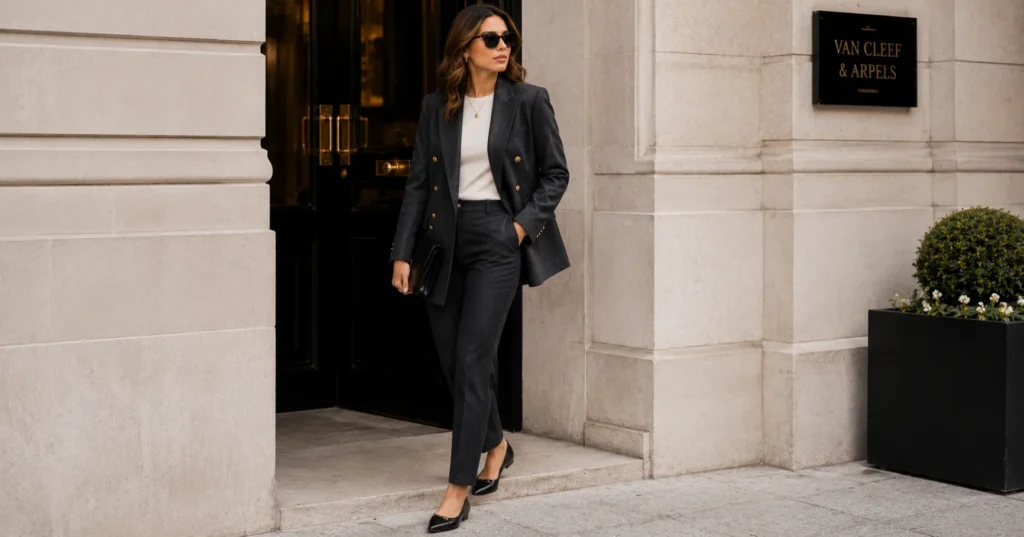
A wider button panel, overlapping front, and often peak lapels give the double-breasted version a more structured, editorial silhouette. It reads as more formal and fashion-forward than its single-breasted counterpart.
Best for: Creative professionals, smart casual to formal occasions, and those who want their blazer to be the focal point of an outfit.
The Oversized Wool Blazer
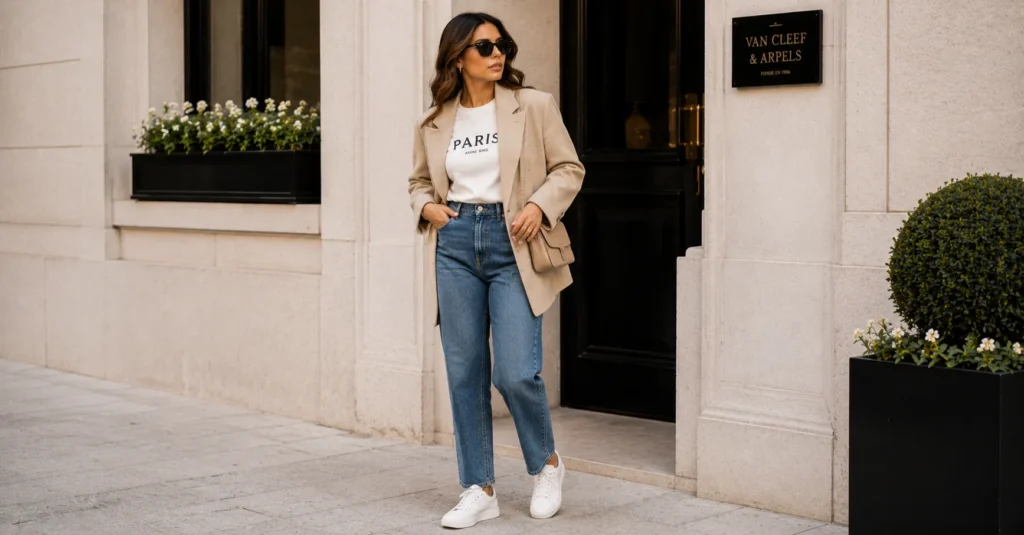
A relaxed, boxy cut that sits away from the body. Contemporary and street-style-adjacent, it works with fitted basics underneath and high-waisted bottoms to create deliberate volume contrast.
Best for: Casual dressing, fashion-forward looks, layering over chunky knitwear, and transitional season styling.
The Collarless Wool Blazer
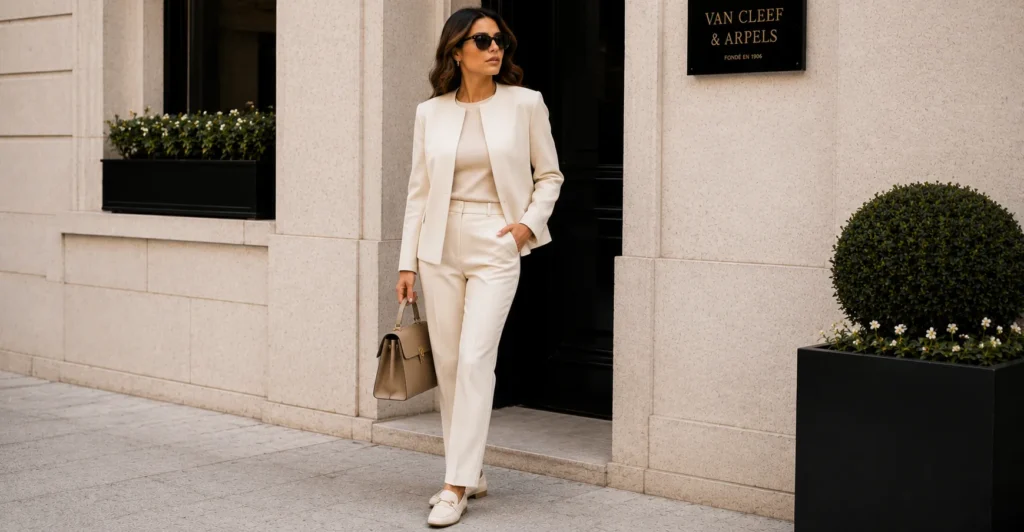
No lapels, no collar just a clean, straight neckline. This version is one of the most minimalist blazer silhouettes available and suits tonal dressing and modern tailoring aesthetics particularly well.
Best for: Minimalist wardrobes, creative offices, smart casual occasions, and those who want a refined alternative to the traditional blazer look.
The Cropped Wool Blazer
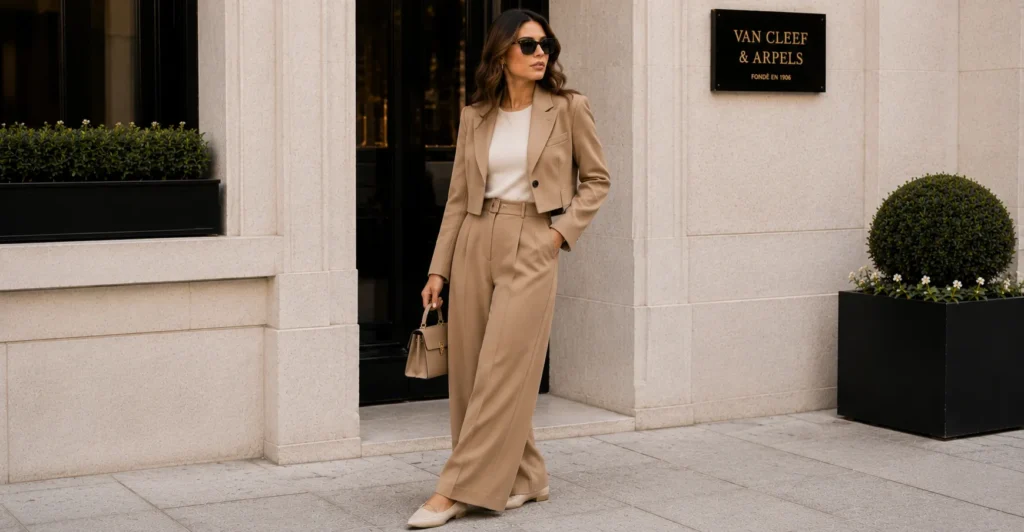
Hits at or above the natural waist. Works best with high-waisted bottoms trousers, skirts, or jeans because the crop and the high waist create a defined silhouette together.
Best for: Fashion-forward styling, pairing with wide-leg or high-waisted trousers, and those who prefer a more contemporary silhouette.
Wool Blazer Style Comparison at a Glance
| Style | Silhouette | Occasion Range | Best Pairing | Season Range |
| Single-breasted tailored | Classic, defined | Casual to formal | Trousers, jeans, skirts | All year |
| Double-breasted | Structured, editorial | Smart casual to formal | Tailored trousers, midi skirts | Autumn/winter |
| Oversized | Relaxed, boxy | Casual to smart casual | Fitted basics, wide-leg trousers | Autumn/winter/spring |
| Collarless | Minimal, clean | Smart casual to formal | Tonal sets, tailored trousers | All year |
| Cropped | Short, contemporary | Casual to smart casual | High-waisted bottoms | All year |
Women’s Wool Blazer Outfits: Formulas That Work
These configurations cover the most common situations where a wool blazer earns its place and performs best.
Work and Office Outfits

The wool blazer is arguably the strongest single piece for professional dressing. It adds authority and polish to almost any outfit without demanding full formal attire.
- Tailored wool blazer in navy or charcoal + matching or complementary wide-leg trousers + a fitted silk blouse + pointed-toe loafers. The suit-adjacent look delivers maximum professional impact. A silk blouse beneath the blazer elevates the combination above standard office basics.
- Single-breasted black wool blazer + a pencil midi skirt + a fitted turtleneck + block-heeled ankle boots. A smart alternative to the trouser suit the midi skirt and turtleneck are both seasonally appropriate and office-ready.
- Collarless wool blazer in camel or ivory + tailored straight-leg trousers + a simple fitted top + leather loafers. The tonal approach blazer and trousers in the same color family reads as deliberately modern in professional settings.
Key principle for work outfits: Keep the fabric clean and the fit sharp at the shoulders. In professional contexts, the shoulder seam placement communicates more about the blazer’s quality and fit than any other single point.
Smart Casual Looks
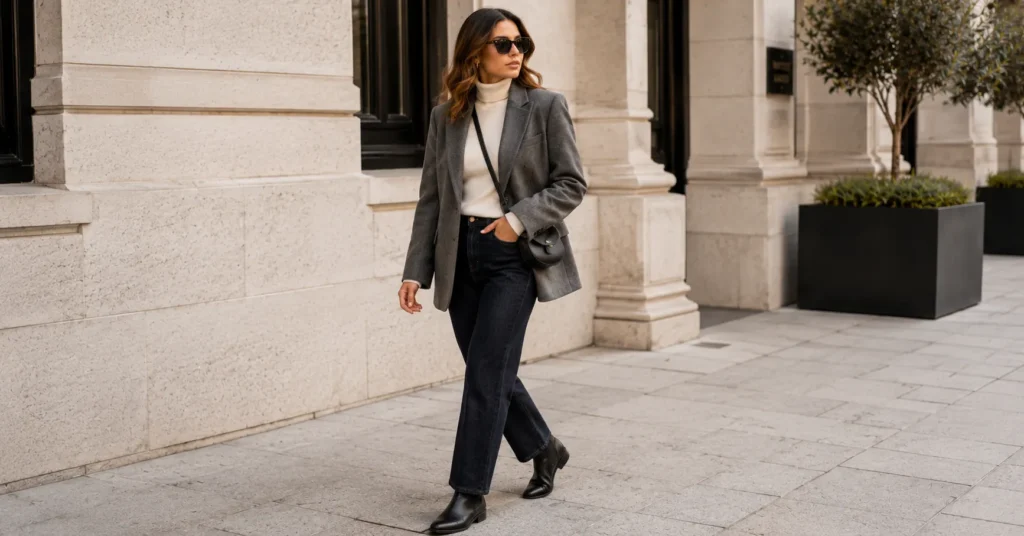
Smart casual is where the wool blazer truly earns its reputation as a versatile wardrobe essential. The jacket does the professional lifting while the pieces beneath stay relaxed.
- Oversized wool blazer in grey + dark straight-leg jeans + a fitted ribbed turtleneck + Chelsea boots. One of the most reliable smart casual formulas available. The relaxed blazer, clean denim, and fitted knit create a balanced three-part silhouette.
- Tailored wool blazer + dark wash jeans (half-tucked fitted tee) + clean white leather sneakers. The sneaker is the key move here it drops the blazer’s formality into smart casual territory without looking underdressed.
- Double-breasted wool blazer in a rich tone + tailored slim trousers + simple leather flats. The double-breasted closure handles the visual interest; everything else stays clean and minimal.
Fall Layering Outfits
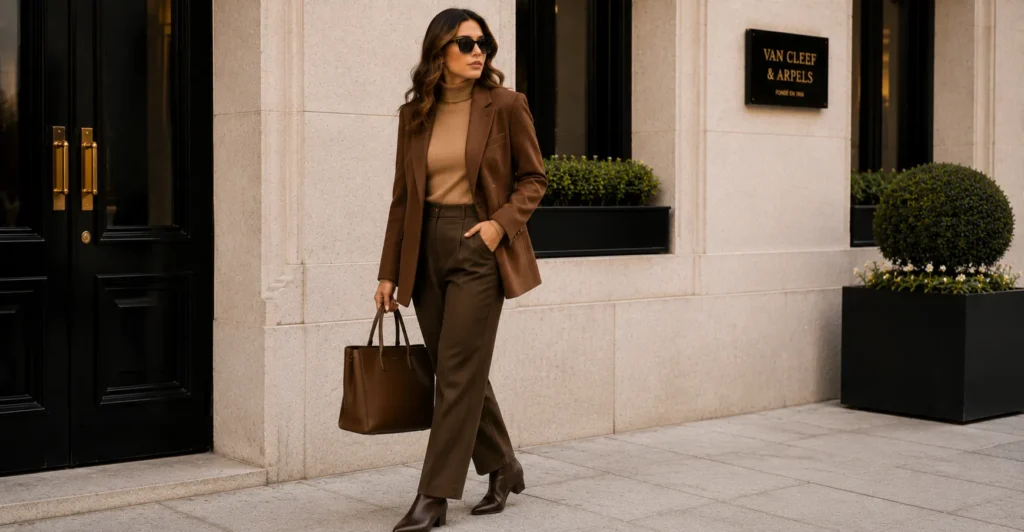
Autumn is the wool blazer’s strongest season. The fabric’s natural warmth, texture, and weight all feel most appropriate in cooler transitional weather warm enough to function as a primary layer, structured enough to sit cleanly under a coat when temperatures drop further.
- Wool blazer worn open over a ribbed turtleneck + high-waisted straight-leg trousers + ankle boots + a structured tote. This is the core autumn blazer formula. The turtleneck provides warmth below; the blazer provides structure above.
- Cropped wool blazer + a fine-knit sweater layered underneath + wide-leg trousers + Chelsea boots + a longline wool coat worn over everything. The blazer functions as a structured mid-layer between the knit and the coat. This three-layer approach handles genuinely cold autumn days without any single layer becoming too heavy.
- Oversized wool blazer belted at the waist + a thin base layer + high-waisted midi skirt + knee-high boots. Belting an oversized blazer creates waist definition and transforms it into a more deliberate, complete look. The knee-high boot anchors the midi length below.
Winter Workwear Essentials
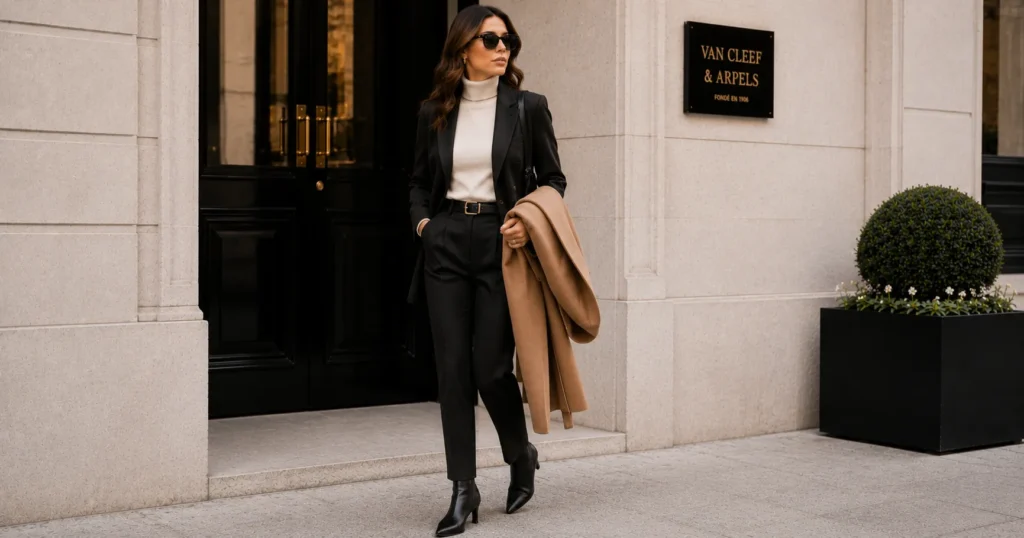
A quality wool blazer in a heavier weight 300–400 gsm wool or a wool-cashmere blend transitions from autumn into genuine winter wear when layered correctly.
- Heavyweight wool blazer + a fine merino or cashmere turtleneck + slim dark trousers + leather ankle boots. The turtleneck provides a fitted thermal layer that adds warmth without adding visible bulk beneath the blazer.
- Double-breasted wool blazer in a deep jewel tone + matching trousers + a fitted long-sleeve top + heeled ankle boots. A powerful winter work outfit that uses the blazer and matching trousers to create a tone-on-tone suit effect without requiring an identical suit set.
- Tailored wool blazer worn under a longline camel or black coat. The blazer adds a structured mid-layer that improves the coat’s warmth without changing its external appearance.
Casual Weekend Looks
With the right supporting pieces, a wool blazer works in casual weekend settings without looking overdressed.
- Relaxed wool blazer + a graphic tee (slightly tucked at the front) + straight-leg jeans + clean white sneakers. The graphic tee drops the blazer’s formality instantly. A partial front tuck ensures the waistline reads as intentional.
- Oversized wool blazer worn as a layer over a simple hoodie or sweatshirt + dark jeans + chunky sneakers. Treating the blazer as a casual outer layer — rather than a structured jacket is one of the most underused weekend styling approaches.
- Cropped wool blazer + high-waisted mom jeans + a fitted tank (tucked) + loafers. Relaxed denim with a cropped blazer creates a balanced casual silhouette enough structure to look considered, enough ease to feel comfortable.
Season-by-Season Wool Blazer Styling Guide
| Season | Best Wool Weight | Fabric Type | Layering Approach | Footwear |
| Spring | Lightweight (180–220 gsm) | Fine wool, wool-linen blend | Wear alone over a blouse or tee | Loafers, ballet flats, clean sneakers |
| Summer | Very light (150–180 gsm) | Wool-linen, tropical wool | Worn open as a light outer layer | Flat sandals, mules, leather sneakers |
| Autumn | Medium (240–300 gsm) | Pure wool, wool-cotton | Layer over knits, under light coats | Ankle boots, Chelsea boots |
| Winter | Heavy (300–400 gsm) | Wool-cashmere, heavyweight wool | Under overcoats, over turtlenecks | Heeled boots, leather ankle boots |
Spring and autumn are the natural home of the wool blazer. Summer calls for very lightweight constructions. Winter works best with heavier weights layered under a proper coat.
How to Style a Wool Blazer: Core Principles
Beyond specific outfit formulas, a few underlying rules make a wool blazer consistently look its best.
Shoulder Fit First
In any blazer, shoulder seam placement is the most critical fit point. It should sit at the edge of your natural shoulder no further in, no further out. A shoulder seam that drops off the shoulder or sits too far toward the neck is the single most visible indicator of poor fit, and it cannot be corrected through tailoring without significant cost.
Everything else the sleeve length, the body length, the button stance can be adjusted. The shoulder cannot.
Balance the Silhouette
A blazer adds volume and structure to the upper half. The lower half should respond accordingly.
- Fitted blazer: Works with both slim and wide bottoms the jacket doesn’t compete either way.
- Oversized blazer: Pair with fitted or slim bottoms to maintain balance. An oversized blazer over very wide trousers creates a shapeless outcome.
- Cropped blazer: Pair with high-waisted bottoms specifically the crop and the high waist work together to define the waist and elongate the leg line.
Keep the Base Layer Simple
A wool blazer has enough structural detail lapels, buttons, pocket flaps to carry visual interest on its own. The top layer underneath should be clean and unfussy. A fitted ribbed turtleneck, a plain silk blouse, a simple fitted tee these support the blazer without competing with it.
Avoid heavily printed, textured, or embellished tops beneath a wool blazer. They either disappear entirely or create a cluttered combination of competing elements.
Footwear Determines the Register
More than any other variable, footwear shifts a wool blazer outfit between casual and formal.
- Clean white sneakers or leather trainers: Drops the blazer into smart casual or weekend territory
- Loafers or pointed-toe flats: Smart casual and work-appropriate
- Ankle or Chelsea boots: Transitional season versatility across casual and smart casual
- Pointed-toe heels or kitten heels: Elevates the blazer toward formal and evening occasions
One footwear swap can transform the same blazer outfit into an entirely different register without changing anything else.
Buying Guide: What to Look for in a Wool Blazer
Not all wool blazers are equal. A few specific quality markers separate a piece that lasts for years from one that looks tired after a season.
Wool Content and Weight
Check the care label before buying. 100% wool is the benchmark. Common blended alternatives include:
- Wool-cashmere blend: Softer, more expensive, slightly less structured worth the premium for a luxury feel
- Wool-polyester blend: More wrinkle-resistant, easier care, but less breathable and less durable long-term
- Wool-linen blend: Lightweight and breathable good for spring and summer blazers
- Wool-cotton blend: More casual texture, slightly less formal, very durable
For autumn and winter, target 250–350 gsm in wool content. For spring, 180–220 gsm works.
Construction Quality Markers
When you’re evaluating a specific piece, check these:
- Lapel roll: Press the lapel flat and release. A quality lapel rolls back naturally and holds its shape. A poor one lies flat or springs unevenly.
- Button quality: Buttons on quality wool blazers are heavy, well-attached, and made from horn, corozo, or reinforced resin not lightweight plastic.
- Stitching at the seams: Tight, even stitching with no loose threads at visible seams.
- Lining: A fully lined blazer moves more comfortably and drapes better. A half-lined blazer is acceptable; an unlined wool blazer in cheaper construction feels rough against the skin.
- Shoulder padding: Should be thin and supportive enough to define the shoulder line, not enough to create a stiff, 1980s silhouette.
Price Tiers to Know
| Budget Range | Brands to Consider | What to Expect |
| Under $100 | ASOS, Zara, H&M | Lower wool content, lighter fabric, shorter lifespan |
| $100–$250 | Mango, & Other Stories, COS | Better wool percentage, improved construction, reliable fit |
| $250–$500 | Arket, Club Monaco, Reiss | Quality wool blends, refined tailoring, multi-season durability |
| $500+ | Theory, Equipment, Max Mara | Investment-grade fabric, exceptional construction, decade-long wear |
Classic Women’s Outerwear: Where the Wool Blazer Fits
It helps to understand how the wool blazer sits within the broader outerwear and layering category. It’s not a coat it doesn’t replace one. But it fills a specific gap that coats and lighter jackets both leave.
- Lighter than a coat: Allows for indoor wear without overheating
- More structured than a cardigan: Adds the silhouette and polish that knitwear cannot
- More versatile than a suit jacket: Works with denim and casual pieces in a way that a suit jacket rarely does
That specific positioning between casual knitwear and outerwear is what makes the wool blazer so practically useful in everyday dressing.
Common Styling Mistakes to Avoid
Even a quality wool blazer can look off if the surrounding decisions don’t support it.
Poor shoulder fit accepted as normal. Many women accept a shoulder seam that drops off the shoulder slightly, assuming it’s the blazer’s intended silhouette. It almost never is. A poorly fitting shoulder is the most visible sign that a jacket hasn’t been chosen or altered correctly. Prioritize this over everything else when buying.
Fully untucked tops under a fitted blazer. A long untucked top beneath a fitted blazer creates a bunched, awkward volume at the hips. Either tuck the top fully, use a partial front tuck, or choose a top with a hemline that sits at or above the blazer’s hem.
Over-layering underneath. A thick chunky knit under a tailored wool blazer creates shoulder and collar bulk that prevents the blazer from lying flat. Use fitted knits, thin turtlenecks, or slim base layers beneath structured jackets.
Treating wool blazers as dry-clean-only when they aren’t. Many wool blazers can be hand-washed in cold water on a gentle cycle. Check the care label before defaulting to expensive dry cleaning for every wear. Spot clean where possible; full washing once or twice a season is usually sufficient.
Matching too precisely. A blazer and trousers in the exact same fabric from different garments often creates a slightly mismatched tone particularly noticeable in grey and navy wool. Either buy a proper matching set or create deliberate contrast between the jacket and the trouser. The middle ground of near-matching-but-not-quite is where the least flattering results tend to live.
Conclusion
Wool blazers for women justify their price and their place in a wardrobe because they genuinely work harder than most other single pieces. They add structure to casual outfits, warmth to layered looks, and polish to professional settings without requiring a full formal wardrobe built around them.
Start with one tailored wool blazer in a neutral color camel, navy, charcoal, or black in a quality fabric with a clean shoulder fit. Wear it with dark jeans and sneakers for smart casual, with tailored trousers and loafers for work, and with a fitted turtleneck and ankle boots for autumn layering.
Your next step: Check your shoulder measurement before buying online, or make time to try at least two sizes in-store. The shoulder fit makes or breaks a blazer — everything else can be adjusted. Get that right, and the rest of the styling decisions take care of themselves.
Frequently Asked Questions
1. What makes a wool blazer better than a synthetic alternative?
Wool breathes naturally, regulates temperature, resists wrinkles without pressing, and improves in quality with careful wear and age. Synthetic blazers lack all of these qualities they trap heat, wrinkle more easily, pill faster, and lose their shape more quickly. For a blazer you plan to wear consistently for multiple seasons, wool is the only fabric that genuinely delivers long-term value.
2. How do you style a wool blazer for work?
Pair a tailored wool blazer with wide-leg or straight-leg trousers and a fitted silk blouse or ribbed turtleneck. Add pointed-toe loafers or block-heeled ankle boots. Keep the underlying outfit clean and unfussy the blazer provides the professional structure; the pieces beneath simply support it. In creative offices, substitute dark jeans for trousers and clean leather sneakers for loafers without losing the professional quality.
3. Can you wear a wool blazer casually?
Yes. An oversized wool blazer over a graphic tee, straight-leg jeans, and white sneakers is a completely casual outfit. A relaxed wool blazer worn open over a hoodie with dark jeans and chunky sneakers works equally well. The key to casual wool blazer styling is choosing a relaxed-fit version and pairing it with footwear that drops the formality level sneakers and loafers do this most effectively.
4. What colors are most versatile for a wool blazer?
Camel, navy, charcoal, and black are the four most versatile starting points. Camel pairs with virtually every other wardrobe color and works across all four seasons. Black is the most universally practical. Navy sits between formal and casual more naturally than black. Charcoal is an excellent alternative to black with a slightly softer appearance. For a second blazer, consider a check or plaid pattern in neutral tones it adds personality without sacrificing versatility.
5. How do you care for a wool blazer?
Spot clean minor marks with a damp cloth and mild soap. Air the blazer between wears rather than washing after every use. For a full wash, check the care label many wool blazers are hand-washable in cold water on a gentle cycle. Use a wool-specific detergent. Air dry flat to prevent stretching. Steam rather than iron to remove creases. Store on a wide-shouldered hanger in a breathable garment bag to maintain shape and prevent moth damage.
6. What’s the difference between a wool blazer and a tweed blazer?
Both are wool-based, but tweed refers specifically to a rough, textured weave with a characteristically flecked or herringbone pattern. A standard wool blazer uses a smoother, finer weave that reads as more formal. Tweed blazers are more casual and textured excellent for autumn and countryside-adjacent aesthetics. Standard wool blazers cover a wider range of occasions from casual to formal.
7. Are wool blazers appropriate for all body types?
Yes, with the right cut and fit. Petite frames benefit most from cropped or hip-length blazers very long versions can overwhelm a shorter silhouette. Curvier figures suit single-breasted tailored cuts with a defined waist or a belted option. Athletic or straight figures can use double-breasted and structured versions to add definition. The most important variable for every body type is shoulder fit a blazer that fits correctly at the shoulder flatters every frame more effectively than any specific cut.
8. How do I know if a wool blazer fits correctly?
Check these five points: the shoulder seam sits at the edge of your natural shoulder; the sleeves reach the base of your thumb when your arms hang naturally; the lapels lie flat against the chest without gaping; you can fasten the buttons without pulling; and there’s enough room through the back to move without the jacket riding up. If the shoulder fits correctly, most other adjustments can be made by a tailor.
9. Can you wear a wool blazer in summer?
Yes in a lightweight wool or wool-linen blend at 150–180 gsm. These fabrics are genuinely breathable and prevent overheating in warm conditions. They’re often labelled “tropical wool” or “summer wool.” A lightweight wool blazer worn open over a simple blouse in warm weather is more comfortable than most people expect the natural fiber manages temperature in a way that synthetic alternatives cannot.
10. Where can I find the best wool blazers for women?
COS, Arket, and & Other Stories offer well-constructed mid-range options with good wool content. Reiss and Club Monaco carry premium mid-market pieces with refined tailoring. For investment-level quality, Theory and Max Mara produce wool blazers with exceptional fabric weight, construction, and longevity. ASOS and Zara carry accessible options for trend-testing a specific style before committing to a higher-quality version.