Business Attire: The Complete Guide to Dressing for Professional Success
Business attire shapes the first impression you make before you ever say a word. The right outfit signals competence, respect, and attention to detail, whether you’re walking into a job interview, leading a boardroom meeting, or simply showing up to a Monday morning at the office. Get it right, and you project confidence. Get it wrong, and you risk sending the wrong message about your professionalism.
In this guide, you’ll learn exactly how to navigate every professional dress code with ease. We’ll break down the difference between business professional and business casual, cover the essential pieces for both men and women, and share practical styling tips that work in real workplaces. By the end, you’ll know how to build a corporate wardrobe that fits any situation.
Here’s what you’ll take away:
- A clear breakdown of every common dress code
- Essential wardrobe pieces for men and women
- Outfit examples for interviews, meetings, and daily office wear
- Grooming and accessory tips that polish your look
- Common mistakes that quietly undermine your image
What Is Business Attire?
Business attire refers to the clothing standards expected in professional and corporate settings. It covers a spectrum that ranges from highly formal suits to relaxed yet polished business casual outfits. The goal is always the same: to look credible, prepared, and appropriate for your environment.
Different workplaces interpret professional dress code differently. A law firm or investment bank may expect formal office attire daily, while a tech startup might embrace smart casual. Understanding where your workplace falls on this spectrum is the first step to dressing well.
Why business attire still matters
Even as workplaces grow more relaxed, how you dress carries weight. Research consistently shows that appearance influences perceptions of competence and authority. Dressing well can:
- Boost your own confidence and focus
- Earn respect from colleagues and clients
- Signal that you take your role seriously
- Help you fit into your company culture
In short, the way you present yourself becomes part of your professional reputation.
Understanding the Different Dress Codes
The biggest source of confusion in workplace fashion is the dress code itself. Terms like “business professional” and “business casual” get used loosely, but they have distinct meanings. Here’s a clear comparison.
| Dress Code | Formality Level | Typical Pieces | Best For |
| Business Formal | Highest | Dark suit, tie, dress shoes, conservative dress | Boardrooms, legal settings, executive events |
| Business Professional | High | Suit or blazer with trousers/skirt, dress shirt, closed-toe shoes | Interviews, client meetings, traditional offices |
| Business Casual | Medium | Blazer optional, chinos or trousers, collared shirt, blouse, loafers | Everyday office wear, modern workplaces |
| Smart Casual | Relaxed | Polished separates, dark jeans (sometimes), neat knitwear | Creative offices, casual Fridays |
Business formal
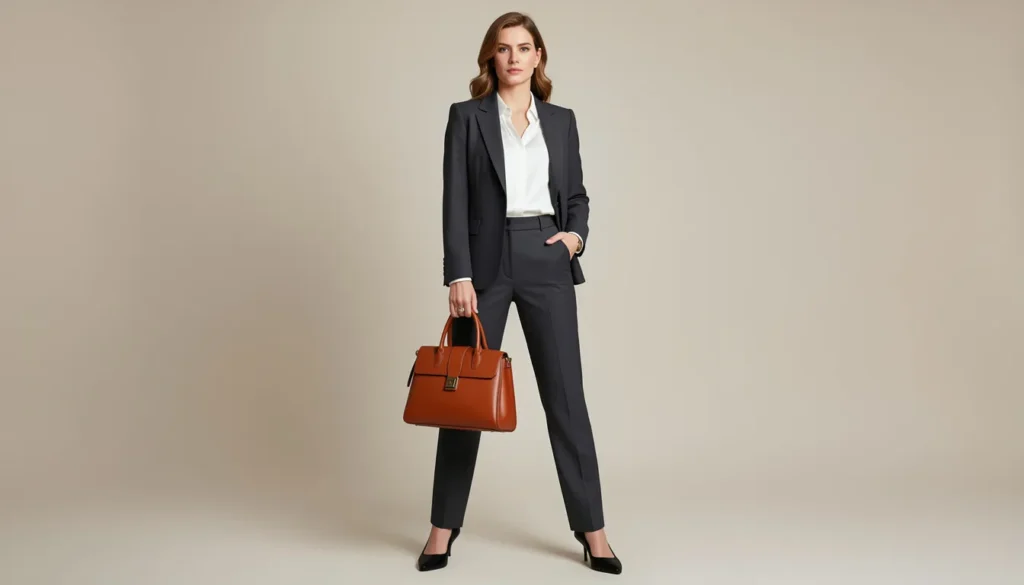
This is the most conservative end of the spectrum. Think tailored dark suits, crisp white shirts, silk ties for men, and sharp pantsuits or knee-length dresses for women. It’s reserved for high-stakes settings where authority and tradition matter most.
Business professional
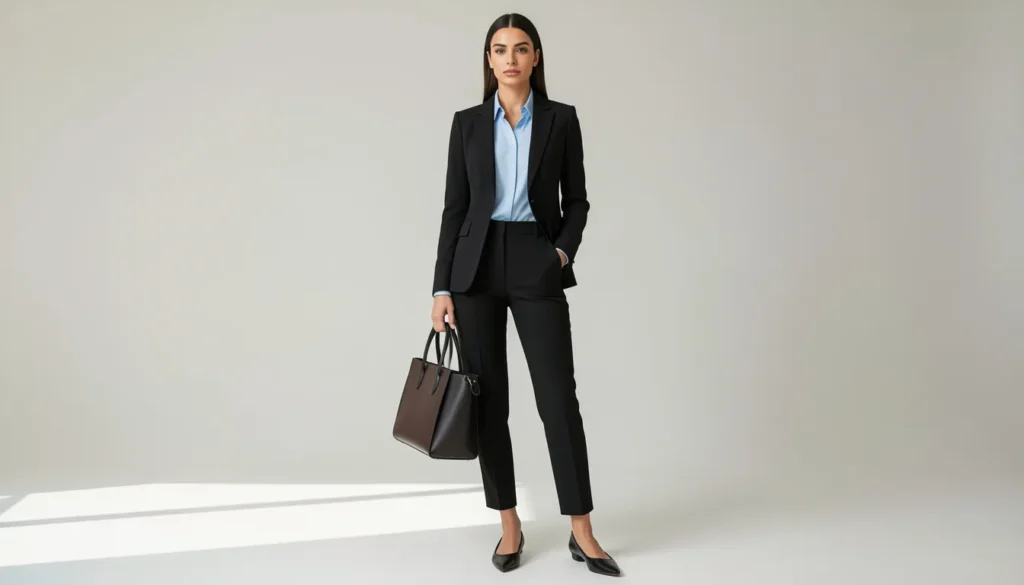
Slightly less rigid than formal, this remains the standard for interviews and traditional industries like finance, law, and government. A matching suit isn’t always required, but a blazer paired with coordinated trousers or a skirt is expected.
Business casual
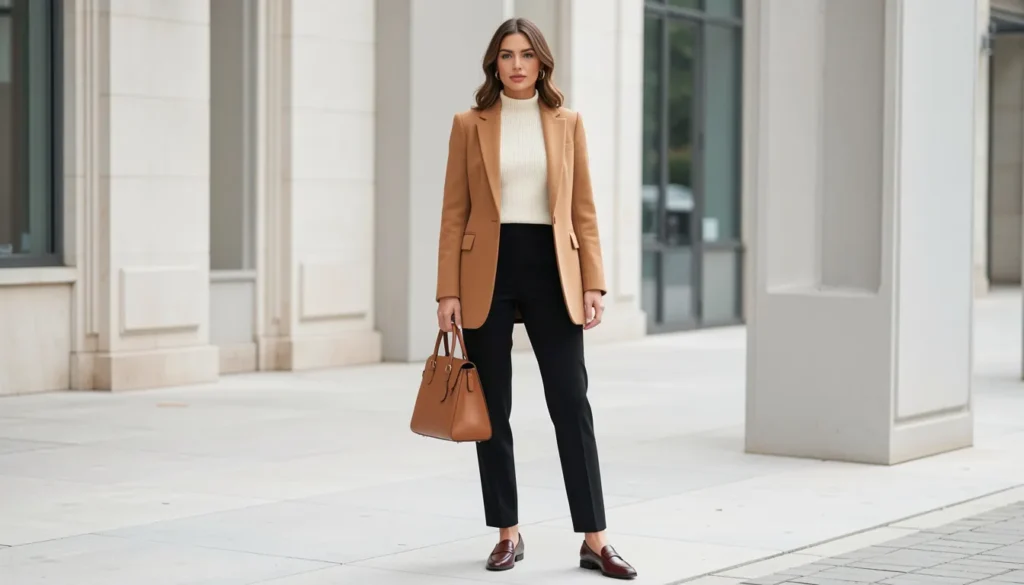
The most common dress code in modern offices, business casual balances polish with comfort. You can skip the tie and the full suit, but everything should still look intentional and pressed. This is where most professionals spend their working days.
Smart casual
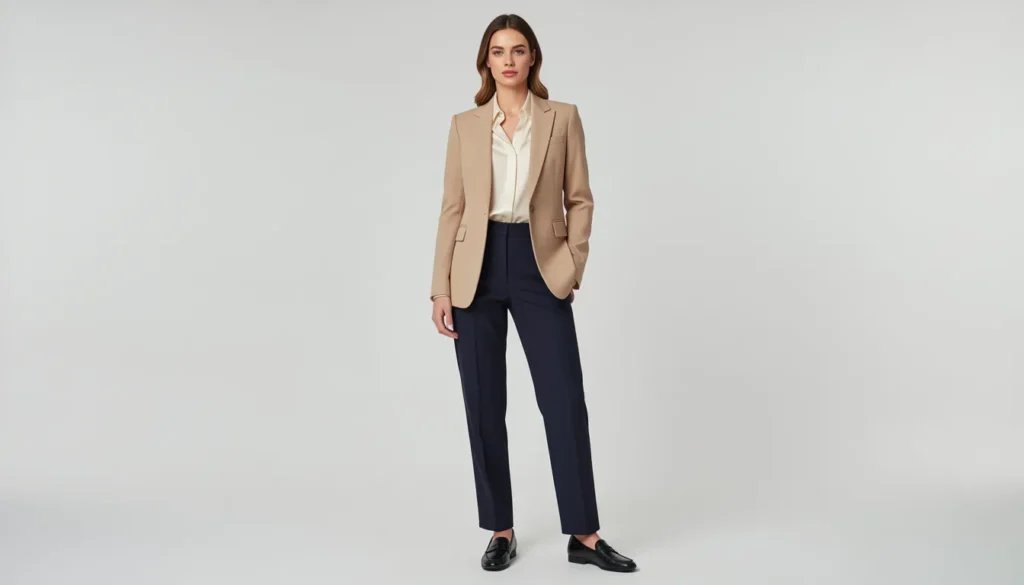
A step down again, smart casual gives you room to express personality while staying neat. Dark, well-fitting jeans may be acceptable, paired with a blazer or quality knit. Always check your company norms before reaching for denim.
Essential Business Attire for Men
A well-built corporate wardrobe for men starts with a handful of versatile pieces. Quality and fit matter far more than quantity. Below are the staples worth investing in.
Suits and blazers
The suit is the backbone of formal office attire. Start with these foundations:
- A navy suit: the most versatile option, suitable for interviews and meetings
- A charcoal gray suit: a strong second choice for formal settings
- A standalone blazer: navy or gray, perfect for business casual days
A good suit should fit cleanly at the shoulders, with sleeves ending at the wrist bone and trousers breaking lightly over the shoes.
Dress shirts
Shirts do heavy lifting across every dress code. Build a base of:
- White and light-blue dress shirts for formal wear
- Subtle patterns like fine stripes or checks for variety
- Quality cotton that holds a press
Trousers and chinos
For business casual, dress trousers and chinos in neutral colors give you flexibility. Stick to gray, navy, beige, and stone. Make sure the hem sits neatly without bunching.
Dress shoes
Footwear completes the look and often gets noticed first. Essential options include:
- Black oxfords for formal occasions
- Brown derbies or brogues for business casual
- Leather loafers for relaxed yet polished days
Keep your shoes clean and polished. Scuffed footwear undermines an otherwise sharp outfit.
Ties and accessories
A few quality ties in solid colors and simple patterns cover most needs. Add a leather belt that matches your shoes, a classic watch, and minimal extras. The rule is restraint.
Essential Business Attire for Women
Women’s professional dress code offers more variety, which can be both an advantage and a challenge. The key is assembling pieces that mix and match while staying appropriate.
Suits, blazers, and separates
A tailored blazer instantly elevates any outfit. Core pieces include:
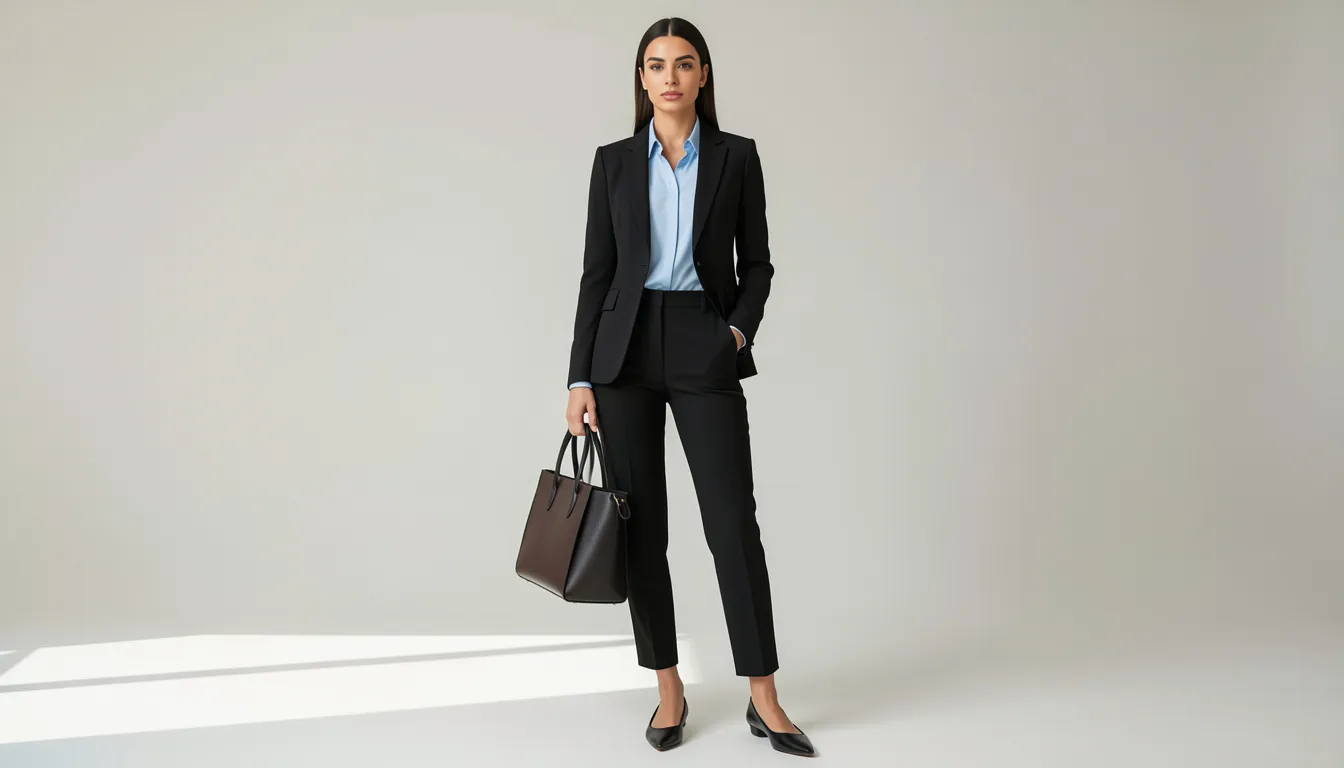
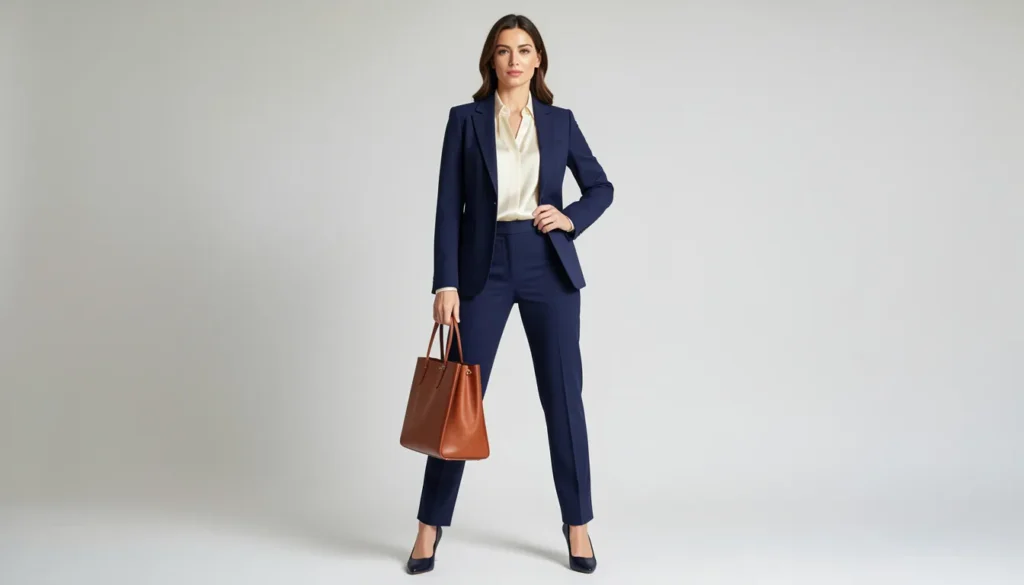
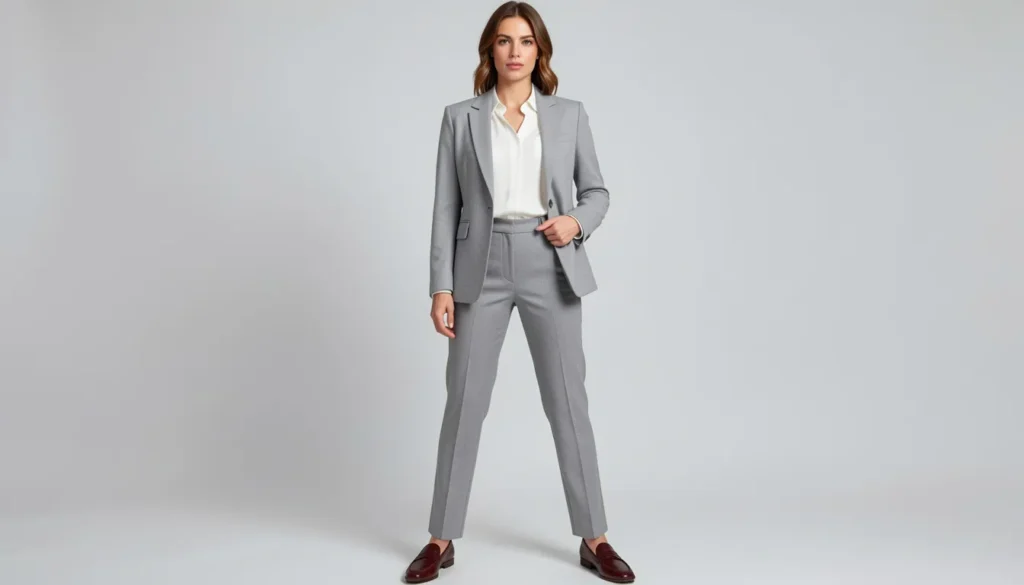
- A matching pantsuit or skirt suit in navy, black, or gray
- Standalone blazers that pair with trousers, skirts, or dresses
- Coordinated separates for flexible business casual looks
Blouses and tops
Blouses bridge formal and casual settings. Choose:
- Silk or cotton blouses in neutral and soft tones
- Fitted knit tops for layering under blazers
- Tops that stay modest in cut and length
Trousers, skirts, and dresses
Variety here keeps your wardrobe fresh:
- Tailored trousers in classic colors
- Pencil or A-line skirts at knee length
- Sheath dresses that work alone or under a blazer
Ensure skirts and dresses sit at a professional length, generally at or near the knee.
Dress shoes
Comfortable yet polished footwear matters for long workdays. Reliable choices include:
- Closed-toe pumps with a moderate heel
- Ballet flats for comfort without sacrificing style
- Loafers for business casual settings
Accessories and bags
A structured handbag, a simple watch, and understated jewelry complete the look. A quality tote that fits a laptop blends function with professionalism.
Dressing for a Job Interview
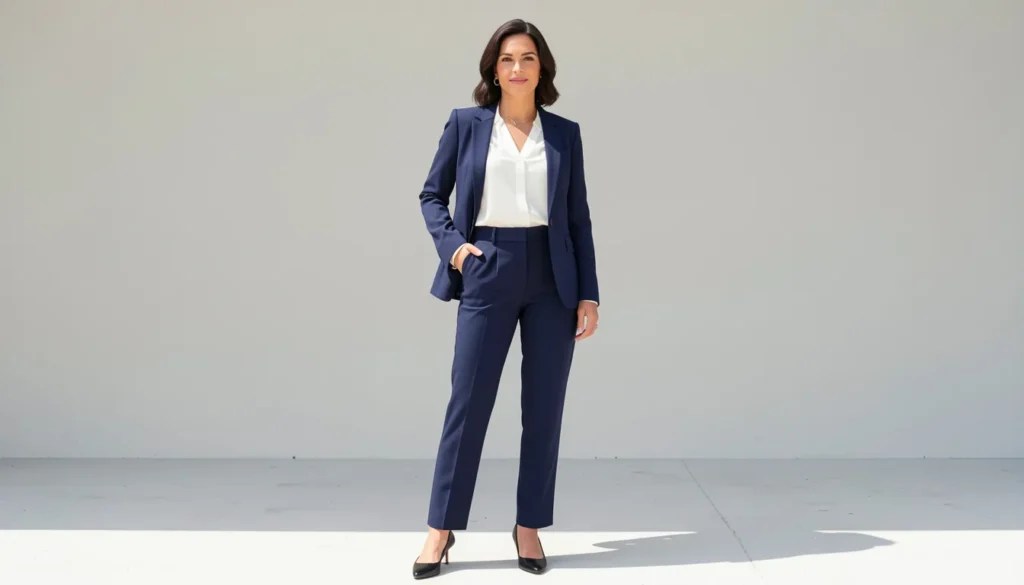
Interview outfits deserve special attention because the stakes are high. When in doubt, dress one level more formal than the everyday code of the company.
Research the company culture
Before choosing your outfit, learn how the company dresses. Check their website, social media, or ask your recruiter. A bank interview calls for business professional, while a startup may expect smart business casual.
Interview outfit guidelines
Follow these principles for a strong first impression:
- Choose conservative colors like navy, gray, and white.
- Prioritize fit above everything else.
- Keep accessories minimal so the focus stays on you.
- Ensure everything is clean and pressed the night before.
- Wear comfortable, polished shoes you can walk in confidently.
Sample interview outfits
For men
- Navy suit, white dress shirt, simple tie, black oxfords, leather belt and watch
For women
- Tailored navy pantsuit or skirt suit, light blouse, closed-toe pumps, minimal jewelry
A polished interview outfit shows respect for the opportunity and helps you feel prepared from the moment you arrive.
Building a Versatile Corporate Wardrobe
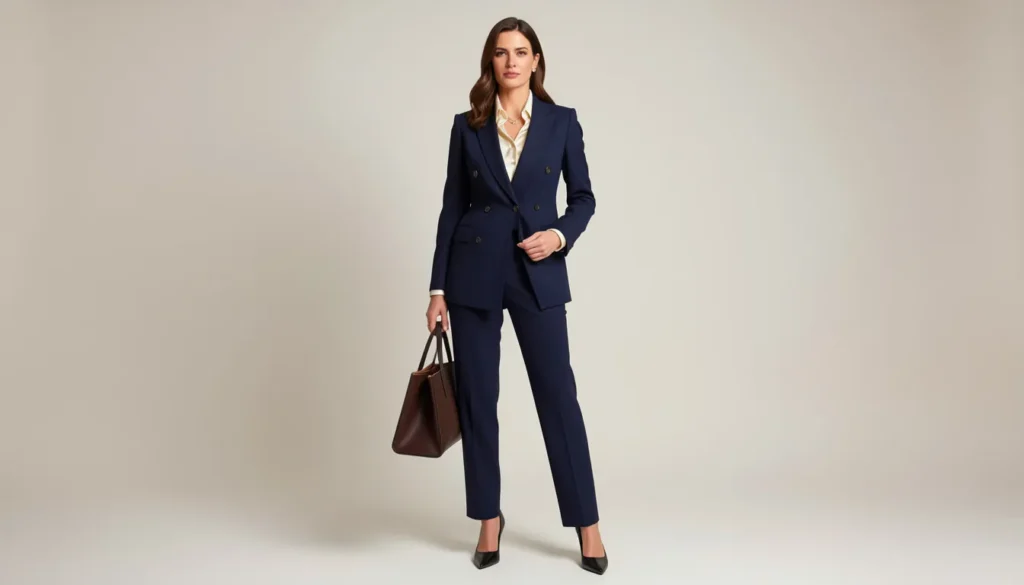
The smartest approach to office wear is a capsule wardrobe: a small collection of coordinating pieces that create many outfits. This saves money, reduces decision fatigue, and ensures you always look put-together.
A sample capsule for men
| Item | Quantity | Notes |
| Suits | 2 | Navy and charcoal |
| Blazer | 1 | Navy, for casual days |
| Dress shirts | 5 | White, blue, and patterns |
| Trousers/chinos | 3 | Neutral tones |
| Dress shoes | 2 | Black oxfords, brown derbies |
| Ties | 3 | Solid and simple patterns |
| Belt | 1 | Matches shoes |
| Watch | 1 | Classic style |
A sample capsule for women
| Item | Quantity | Notes |
| Suit/separates | 2 | Navy and black |
| Blazers | 2 | Neutral colors |
| Blouses | 5 | Mix of tones |
| Trousers | 2 | Tailored, classic colors |
| Skirts/dresses | 3 | Knee-length, professional |
| Shoes | 3 | Pumps, flats, loafers |
| Handbag | 1 | Structured, neutral |
| Jewelry set | 1 | Understated pieces |
Mixing and matching
The beauty of a capsule wardrobe is flexibility. A single blazer can pair with trousers for a meeting, a skirt for a presentation, or a dress for a formal event. Stick to a cohesive color palette so everything works together.
Grooming and Presentation
Even the best business attire falls flat without proper grooming. Presentation is the finishing layer that ties everything together.
Grooming essentials
- Keep hair neat and styled appropriately for your workplace
- Maintain trimmed, clean nails
- Use fragrance sparingly, if at all
- Ensure facial hair is tidy and well-groomed
Clothing care
Well-maintained clothes make an enormous difference:
- Iron or steam garments to remove wrinkles
- Check for loose threads, missing buttons, and stains
- Store suits on proper hangers to keep their shape
- Rotate shoes to extend their lifespan
A small grooming routine costs little time but pays off in a consistently polished appearance.
Common Business Attire Mistakes to Avoid
Even experienced professionals slip up. Watch out for these common errors that quietly damage your image.
- Ignoring fit. Clothes that are too tight or too baggy look careless, no matter how expensive.
- Wrinkled or stained clothing. Poor maintenance undermines any outfit instantly.
- Over-accessorizing. Too much jewelry or loud accessories distract from professionalism.
- Wearing worn-out shoes. Scuffed or run-down footwear gets noticed quickly.
- Misreading the dress code. Underdressing for a formal setting can hurt your credibility.
- Choosing comfort over appropriateness. Casual habits like sneakers or athleisure rarely belong in formal offices.
Avoiding these missteps keeps your professional image consistent and reliable.
Adapting to Modern and Remote Workplaces
Workplace fashion has evolved, especially with the rise of remote and hybrid work. Standards have relaxed, but presentation still counts.
Dressing for video calls
On camera, the top half of your outfit matters most. Choose solid colors that read well on screen and avoid busy patterns. A collared shirt or simple blazer signals professionalism even from home.
Hybrid work flexibility
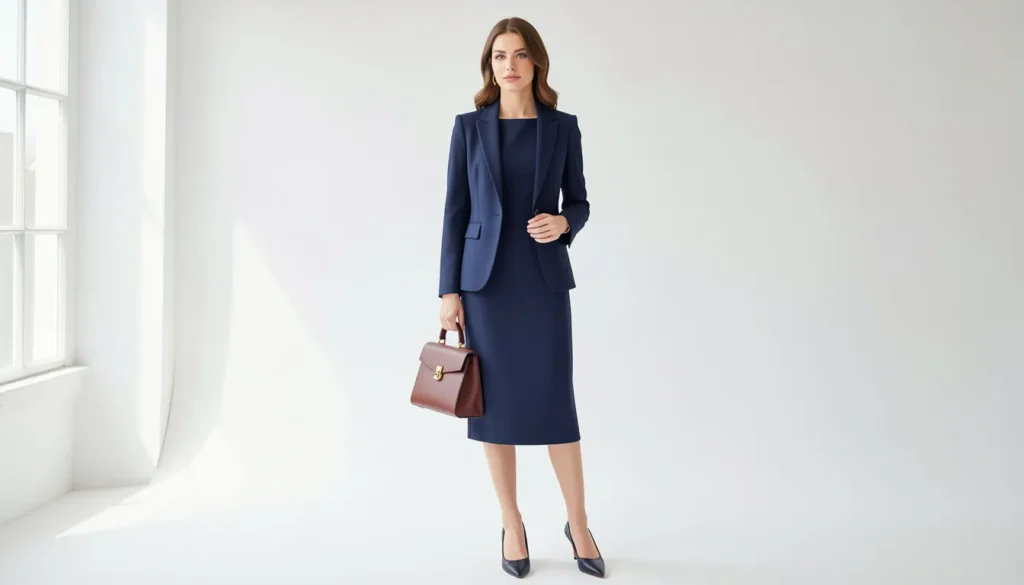
When you split time between home and the office, build a wardrobe that transitions easily. Smart separates that look good on video and in person give you the most versatility.
Reading the room
Company culture varies widely. Pay attention to how leaders and respected colleagues dress, and use that as your benchmark. Dressing slightly above the norm rarely hurts.
Conclusion
Business attire is about more than following rules. It’s a tool for projecting confidence, earning respect, and presenting your best self in any professional setting. When you understand the dress codes, invest in well-fitting staples, and pay attention to grooming, you build an image that works for you every day.
Start by identifying your workplace dress code, then audit your closet against the capsule wardrobe lists above. Fill the gaps with quality, versatile pieces, prioritize fit, and keep everything clean and pressed. Your next step is simple: choose one outfit you can wear confidently tomorrow, and build your professional wardrobe from there.
Frequently Asked Questions
What is the difference between business professional and business casual?
Business professional calls for a suit or coordinated blazer with trousers or a skirt, dress shirts, and closed-toe shoes. Business casual relaxes those rules, allowing collared shirts or blouses with chinos or trousers, often without a tie or full suit, while still looking polished.
What should I wear to a job interview if I don’t know the dress code?
When in doubt, dress one level more formal than you expect the company to be. A navy suit for men or a tailored pantsuit for women is a safe, professional choice that works for almost any interview.
Can I wear jeans as business attire?
It depends on the workplace. Dark, well-fitting jeans may be acceptable in smart casual or creative environments, especially on casual Fridays. In business professional or formal settings, jeans are not appropriate.
What colors are best for business attire?
Stick to conservative, versatile colors like navy, charcoal, gray, black, white, and light blue. These tones look professional, coordinate easily, and form the backbone of a flexible corporate wardrobe.
How many suits do I need for work?
For most professionals, two suits in navy and charcoal cover the majority of formal needs. Add a standalone blazer for business casual days, and you’ll have enough versatility for a full work rotation.
What shoes are appropriate for the office?
Men should rely on black oxfords for formal wear and brown derbies or loafers for business casual. Women can choose closed-toe pumps, ballet flats, or loafers. Keep all footwear clean and well-maintained.
How do I dress professionally for video calls?
Focus on the upper half of your outfit since that’s what shows on camera. Wear solid colors, choose a collared shirt or simple blazer, and avoid busy patterns that distract on screen.
How important is grooming with business attire?
Grooming is essential. Even the best outfit looks unfinished with messy hair, untidy nails, or wrinkled clothes. Neat grooming and well-maintained garments complete a polished, professional appearance.