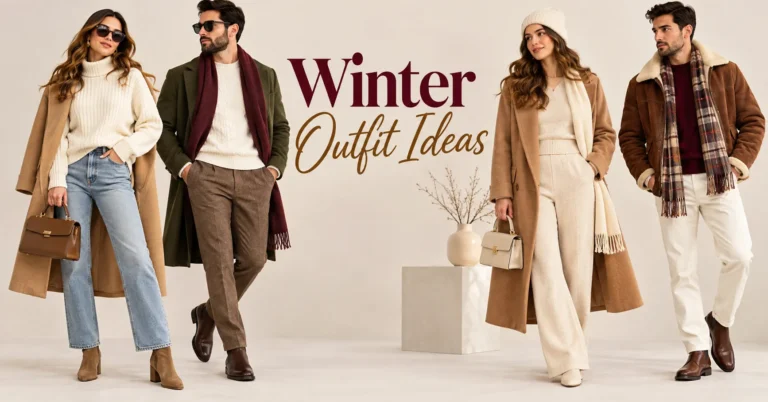

Women Winter Wear Jackets: 10 Stunning Outfit Ideas for Warmth and Style

Cold weather forces a trade off most women know well: stay warm or look put together. The right women winter wear jackets remove that trade off. A well chosen jacket traps body heat, blocks wind, and still works with jeans, dresses, and office clothes.
Women winter wear jackets cover a wide range of shapes and materials, from insulated puffers to tailored wool coats. Each style solves a different problem. A long down parka handles a Chicago January. A belted trench with a zip out liner suits a mild Atlanta winter.
This guide gives you:
- A clear breakdown of the seven main winter jacket styles
- A six-step framework for choosing the right jacket
- 10 complete outfit ideas with styling notes
- Comparison tables for season, style, occasion, and temperature
- Layering, care, and budget advice that extends the life of your coat
Why the Right Winter Jacket Matters
The right winter jacket protects you and your budget. Your outerwear is the piece people see most often from November through March. It goes on over every outfit, every day, for months.
A quality coat also lasts. Well-made women winter wear jackets hold up for five to ten winters with basic care. That changes the math on price. A $300 coat worn 100 days a year for five years costs $0.60 per wear. A $70 coat that loses its shape after one season costs more in the long run.
Comfort is the other half of the equation. A jacket that is too thin leaves you cold at the bus stop. A jacket that is too heavy leaves you sweating on the train. Matching insulation to your climate keeps you comfortable in both settings.
Before you shop, check your city’s average January low on a weather site like Weather.com. That single number shapes every decision that follows.
Types of Women Winter Wear Jackets
Women winter wear jackets fall into seven main categories. Each one balances warmth, weight, and style in a different way. Knowing the differences helps you pick the right jacket instead of the most popular one.
Puffer Jacket
A puffer jacket is a quilted coat filled with down or synthetic insulation. The fill sits inside baffles (stitched compartments that keep insulation evenly spread). The puffy pockets trap warm air close to your body.
The North Face Nuptse, first released in 1992, made the boxy puffer a street-style staple. Uniqlo’s Ultra Light Down line shows the other end of the range: thin, packable puffers that fold into a small pouch.
Puffers are the warmest option per ounce. They are also the most casual.
Wool Coat
A wool coat is a tailored outer layer woven from sheep’s wool or a wool blend. Wool insulates even when slightly damp, and it resists wrinkles and odors.
Max Mara’s 101801 camel coat, designed in 1981, remains one of the most copied women’s winter coats in fashion. Look for at least 70% wool on the label. Blends with more polyester than that pill faster and hold less heat.
Parka
A parka is a hooded, insulated jacket that falls between hip and knee. It often includes a fur or faux fur hood trim, a drawstring waist, and a water-resistant shell. The design traces back to the Arctic, where Inuit and Yupik peoples made parkas from caribou and seal skin.
Canada Goose’s Expedition Parka was built for scientists at McMurdo Station in Antarctica. That origin explains why parkas are the go-to choice for extreme cold.
Trench Coat
A trench coat is a belted, usually double-breasted coat made from tightly woven cotton gabardine. Thomas Burberry invented gabardine in 1879 as a breathable, weather-resistant fabric.
A classic trench is not warm enough for deep winter on its own. Models with a zip-out wool or quilted liner bridge the gap for mild climates.
Shearling and Teddy Coats
Shearling is sheepskin with the wool still attached. The suede side faces out and the fleece faces in, which makes shearling extremely warm.
A teddy coat uses a thick faux-fur or alpaca pile to create a plush, textured look. Max Mara’s Teddy Bear Icon Coat, introduced in 2013, launched the trend.
Quilted Jacket
A quilted jacket is a thin, lightly insulated coat with diamond or channel stitching. Barbour’s quilted jackets, popular across the UK countryside, set the standard for this style.
Quilted jackets work best as a mid-layer in deep cold or as a standalone coat on mild days.
Leather and Bomber Jackets
A leather or bomber jacket is a waist-length jacket built for style first and warmth second. Shearling-lined bombers add real insulation. Unlined leather needs a heavy knit underneath to work in winter.
Use this table to compare winter jacket styles at a glance.
| Jacket Type | Warmth Level | Style | Best Season | Best Occasion |
| Puffer jacket | Very high | Sporty, casual | Deep winter | Commuting, errands, travel |
| Wool coat | High | Classic, tailored | Early to deep winter | Office, dinners, events |
| Parka | Extreme | Functional, rugged | Deep winter | Extreme cold, snow, outdoor work |
| Trench coat (lined) | Low to medium | Polished, timeless | Late fall, early spring | Office, travel, date nights |
| Shearling / teddy coat | Very high | Luxe, cozy | Deep winter | Weekends, brunch, city outings |
| Quilted jacket | Medium | Preppy, country | Late fall, mild winter | Weekend outings, layering |
| Leather / bomber jacket | Low to medium | Edgy, casual | Mild winter | Nights out, casual weekends |
Circle the two jacket types from this table that match your climate and daily routine. Those two styles are your shortlist.
How to Choose Women Winter Wear Jackets in 6 Steps
Choosing women winter wear jackets follows a clear order: climate first, style second. Work through these six steps before you add anything to your cart.
- Identify your climate. Note your average winter low and how often it snows or rains. A city that averages 15°F needs a parka. A city that averages 40°F needs a wool coat or lined trench.
- Choose your insulation. Pick down for dry cold and synthetic fill for wet cold. The next section explains why.
- Check the shell fabric. Look for a water-resistant finish such as DWR (durable water repellent, a coating that makes water bead off fabric). Nylon and polyester shells block wind better than cotton.
- Pick the right length. Hip-length jackets suit driving and active days. Knee-length or longer coats keep your legs warm on walks and commutes.
- Test the fit with layers. Try the jacket on over your thickest sweater. You should be able to cross your arms and raise them overhead without the hem riding up.
- Inspect the details. Check for two-way zippers, storm flaps, adjustable hoods, and rib-knit cuffs. These small features block drafts and add years of use.
This process works because it starts with facts you can’t change, such as weather and daily routine. Your personal style then fills in the details. Write your answers to steps one and four on your phone before you go shopping.
Down vs. Synthetic Insulation
Down and synthetic fill both trap heat, but they behave differently. Down is the soft undercoat of ducks and geese. Synthetic insulation, such as PrimaLoft or 3M Thinsulate, uses polyester fibers that mimic down.
Fill power measures how much space one ounce of down fills, in cubic inches. Higher fill power means more warmth for less weight. Most quality warm jackets for women use 600 to 800 fill power down.
The key difference is moisture. Down loses most of its insulating power when wet. Synthetic fill keeps much of its warmth in rain and wet snow.
| Feature | Down Insulation | Synthetic Insulation |
| Warmth to weight ratio | Excellent | Good |
| Performance when wet | Poor | Strong |
| Packability | Compresses very small | Bulkier |
| Price | Higher | Lower |
| Lifespan | 10+ years with care | 5–7 years |
| Best climate | Dry, very cold | Damp, mild to cold |
| Examples | Patagonia Down Sweater, Canada Goose | PrimaLoft-filled jackets, Uniqlo HEATTECH-lined coats |
For ethically sourced down, look for the RDS (Responsible Down Standard) label on the tag.
10 Outfit Ideas Featuring Women Winter Wear Jackets
These 10 outfits pair women winter wear jackets with clothes you likely already own. Each idea includes how to style it and where it fits best. Swap colors and accessories to match your wardrobe.
1. Long Puffer Coat with Leggings and Snow Boots
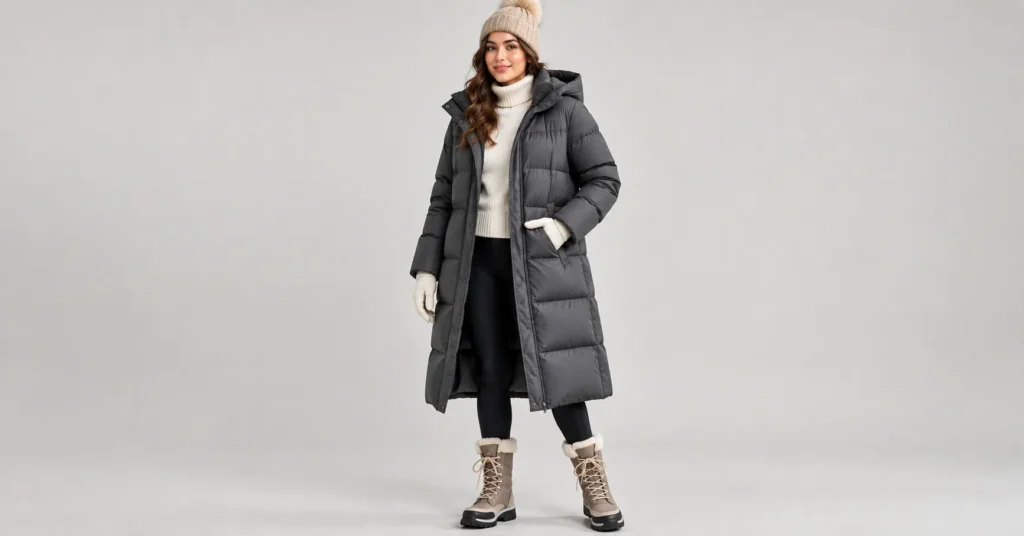
A long puffer coat is the warmest everyday option you can wear. It covers you from shoulders to knees and blocks wind from every angle. For cold commutes, this is the most practical of all women winter wear jackets.
How to style it:
- Pair a black or charcoal knee length puffer with fleece-lined leggings
- Add a fitted turtleneck and a knit beanie
- Finish with waterproof snow boots like Sorel Joan of Arctic
Best for: Daily commutes, school drop offs, and errands in sub freezing weather.
Choose a puffer with a two way zipper. You can unzip the bottom to sit or walk comfortably without opening the whole coat.
2. Camel Wool Coat with Turtleneck and Tailored Trousers
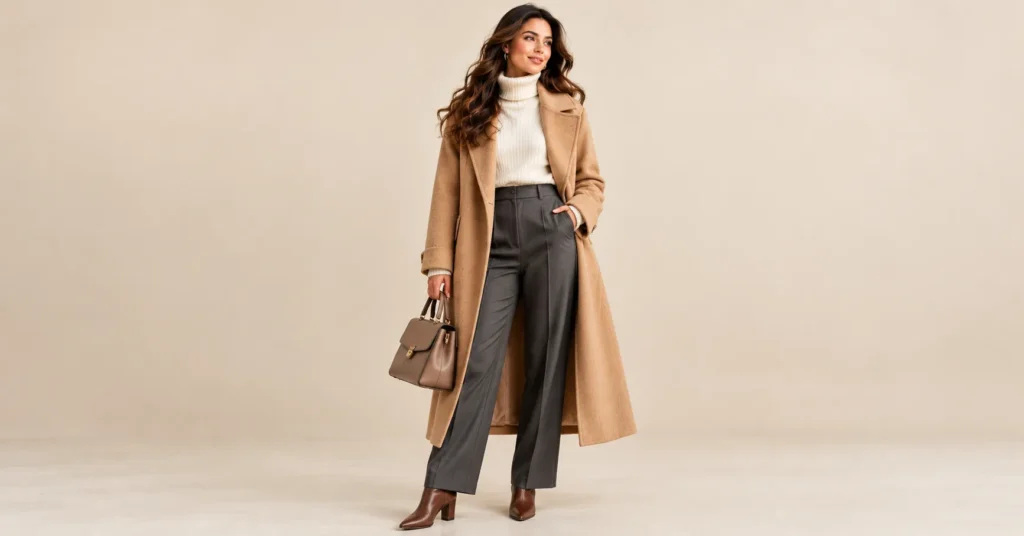
A camel wool coat is the most versatile piece in winter outerwear. It works with workwear, jeans, and evening outfits. Neutral camel also pairs with nearly every color.
How to style it:
- Layer a cream or black fine knit turtleneck under the coat
- Add high waisted tailored trousers in charcoal or black
- Wear pointed ankle boots or loafers and carry a structured tote
Best for: Office days, business meetings, and dinner reservations.
Women winter wear jackets in camel hide everyday wear better than black, which shows lint and dust. Keep a lint roller in your work bag.
3. Parka with Skinny Jeans and a Chunky Knit
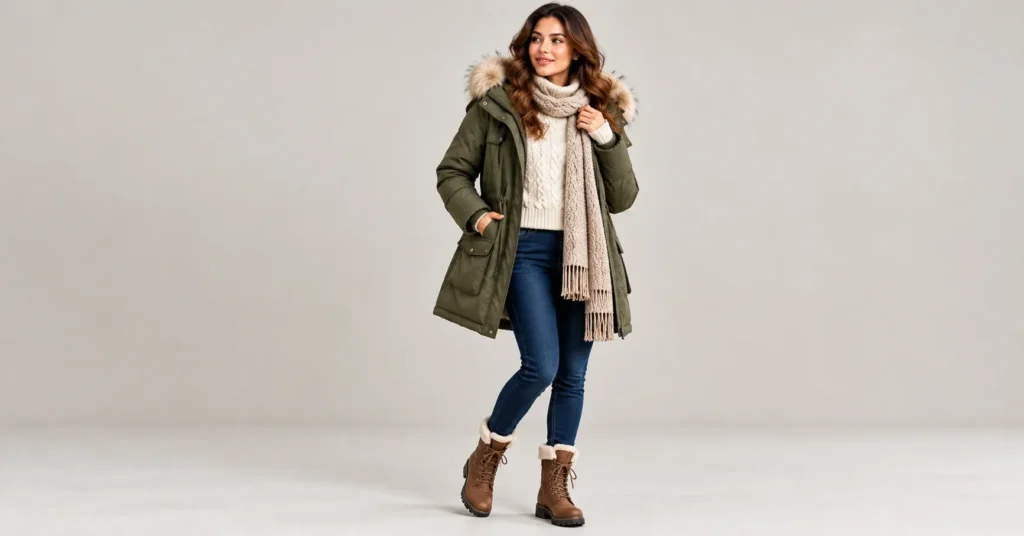
A hooded parka handles the harshest days of winter. Its longer length and insulated hood keep your neck and ears warm when temperatures drop below 10°F.
How to style it:
- Wear an olive or navy parka with a faux fur hood trim
- Layer a chunky cable knit sweater over a thermal base layer
- Add dark skinny jeans and lug sole boots
Best for: Extreme cold, snowy weekends, and outdoor activities.
Check the temperature rating before you buy a parka. Brands like Canada Goose and Columbia list a recommended temperature range on each product page.
4. Lined Trench Coat with a Midi Dress and Knee High Boots
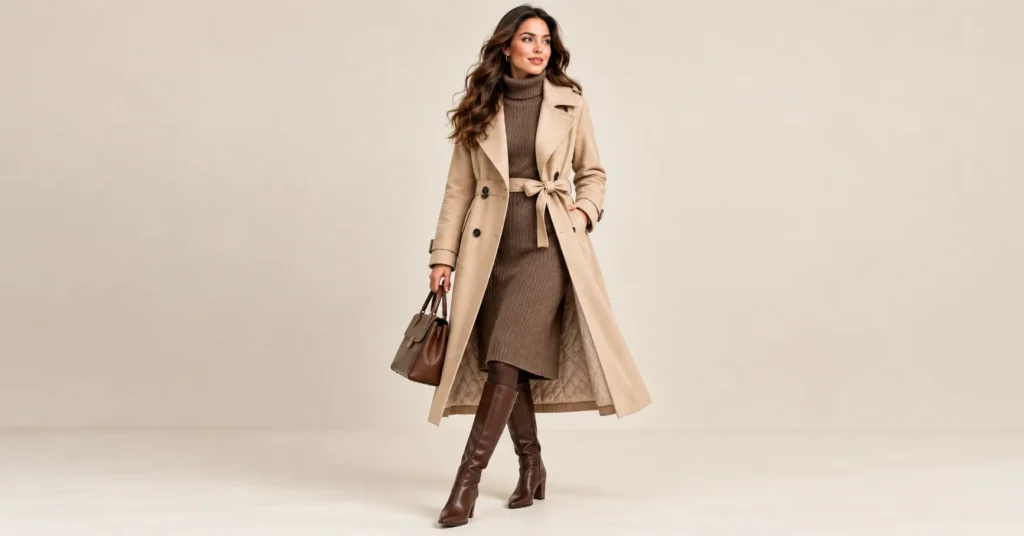
A lined trench coat brings polish to mild winter days. The zip-out liner adds warmth in December and comes out in March. Among women winter wear jackets, the trench offers the longest wear season.
How to style it:
- Pair a beige trench with a knit or long sleeve midi dress
- Add opaque black tights and knee high leather boots
- Tie the belt at the back for a clean look, or knot it in front to define the waist
Best for: Date nights, office days, and late fall or early spring travel.
5. Teddy Coat with a Monochrome Knit Set
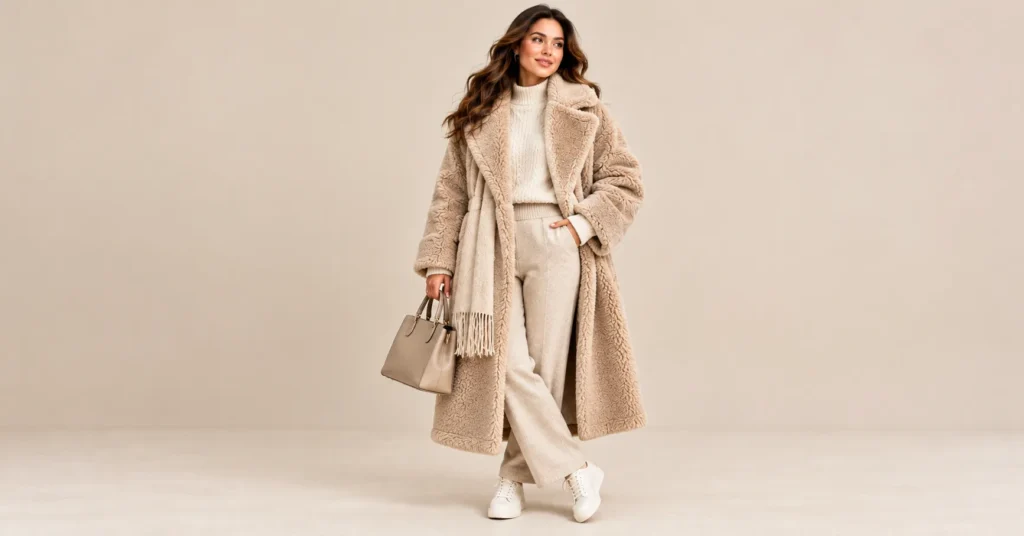
A teddy coat turns a simple outfit into a statement. Its plush texture adds visual warmth, and it pairs best with clean, simple layers underneath.
How to style it:
- Wear an oatmeal or cream teddy coat over a matching knit sweater and jogger set
- Keep the palette in one color family for a polished, tonal look
- Add white leather sneakers or shearling lined boots
Best for: Weekend brunch, coffee runs, and relaxed city outings.
Teddy coats shed lightly in the first few wears. Shake yours out outdoors before wearing it over dark clothes.
6. Shearling Aviator Jacket with Straight Leg Jeans
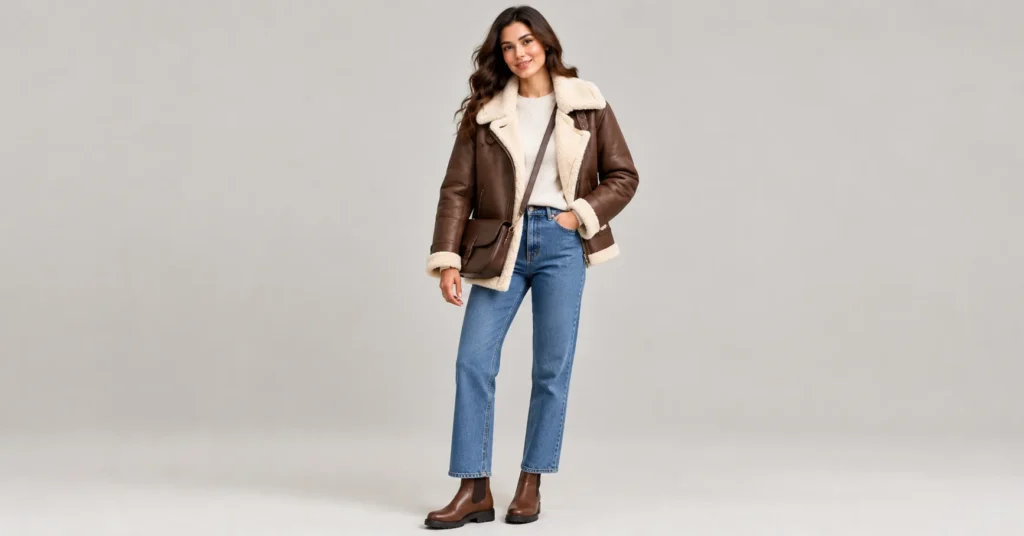
A shearling aviator jacket blends rugged style with serious warmth. The design comes from World War II bomber pilots who needed insulation at high altitudes.
How to style it:
- Choose a brown or black aviator with a cream shearling collar
- Pair with straight leg jeans and a simple knit top
- Finish with Chelsea boots and a leather crossbody bag
Best for: Casual weekends, road trips, and mild-to-cold winter days.
Shearling holds heat well, so wear a thin layer underneath. A heavy sweater under shearling leads to overheating indoors.
7. Cropped Puffer with High Waisted Wide Leg Pants
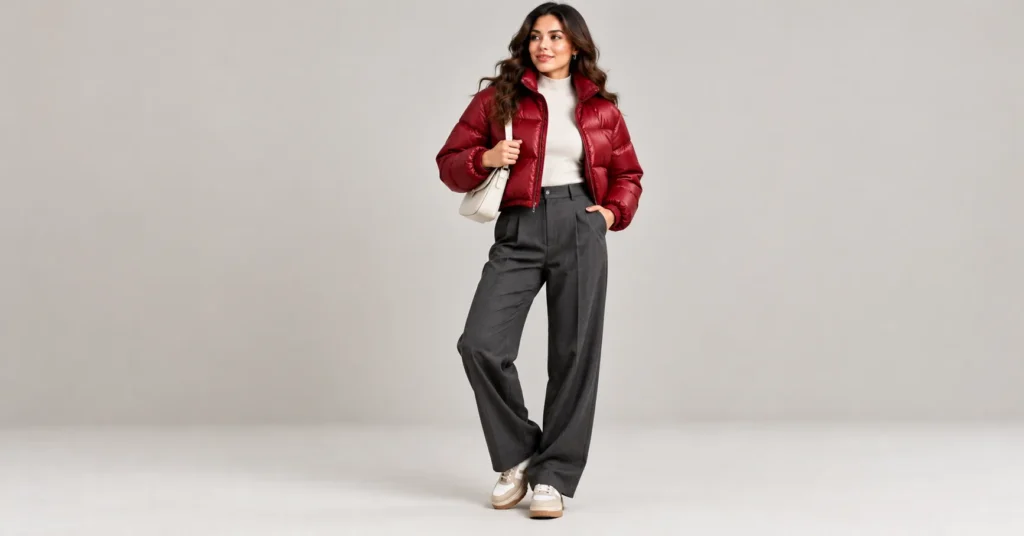
A cropped puffer jacket ends at or above the waist. It shows off high waisted bottoms and creates a balanced silhouette. Women winter wear jackets in a cropped cut look modern and suit shorter frames.
How to style it:
- Choose a cropped puffer in a bold color like cobalt, cherry red, or forest green
- Pair with high waisted wide leg trousers or jeans
- Wear chunky sneakers or platform boots
Best for: Casual city days, shopping trips, and campus wear.
Cropped styles leave your lower back exposed when you bend or reach. Tuck a long thermal base layer into your waistband for extra coverage.
8. Quilted Jacket with a Cable Knit and Corduroy Pants
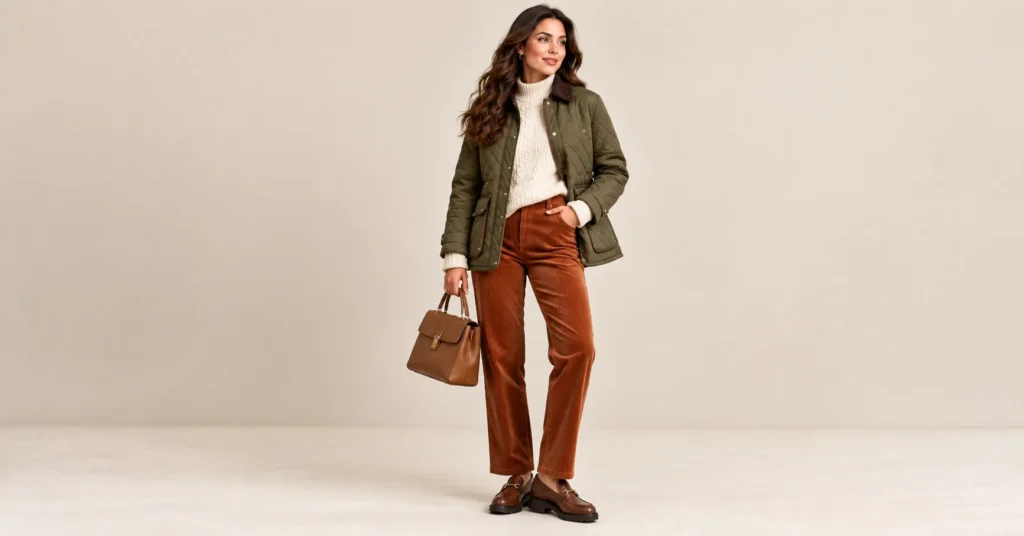
A quilted jacket delivers a classic, countryside-inspired look. It is light enough to layer and polished enough for a farm-to-table lunch.
How to style it:
- Wear a navy or olive quilted jacket over a cable knit sweater
- Add corduroy pants in rust, tan, or chocolate
- Finish with leather loafers or Wellington style rain boots
Best for: Weekend trips, farmers markets, and mild winter outings.
In colder weather, wear the quilted jacket as a mid layer under a wool coat. This doubles your warmth without adding bulk.
9. Belted Wrap Coat over a Slip Dress for Holiday Events
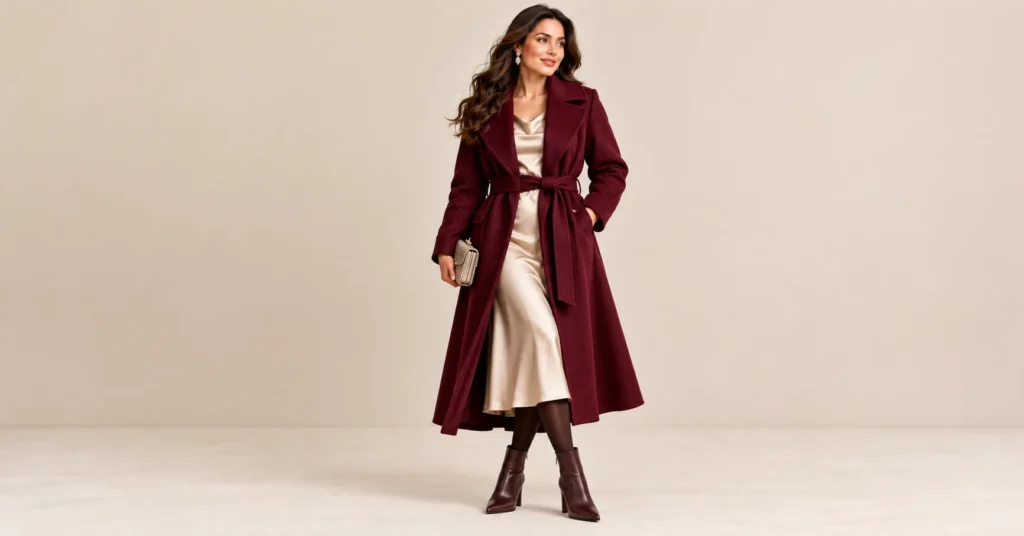
A belted wrap coat is the dressiest option among women winter wear jackets. It has no buttons, just a tie belt that cinches the waist. This creates an elegant shape over formal outfits.
How to style it:
- Choose a long wrap coat in black, ivory, burgundy, or emerald
- Wear it over a satin slip dress with sheer black tights
- Add heeled ankle boots, a small clutch, and statement earrings
Best for: Holiday parties, winter weddings as a guest, New Year’s Eve dinners, and the theater.
Choose a coat that falls at least two inches below your dress hem. A dress peeking out below the coat breaks the clean line.
10. Leather Moto Jacket Layered over a Hoodie
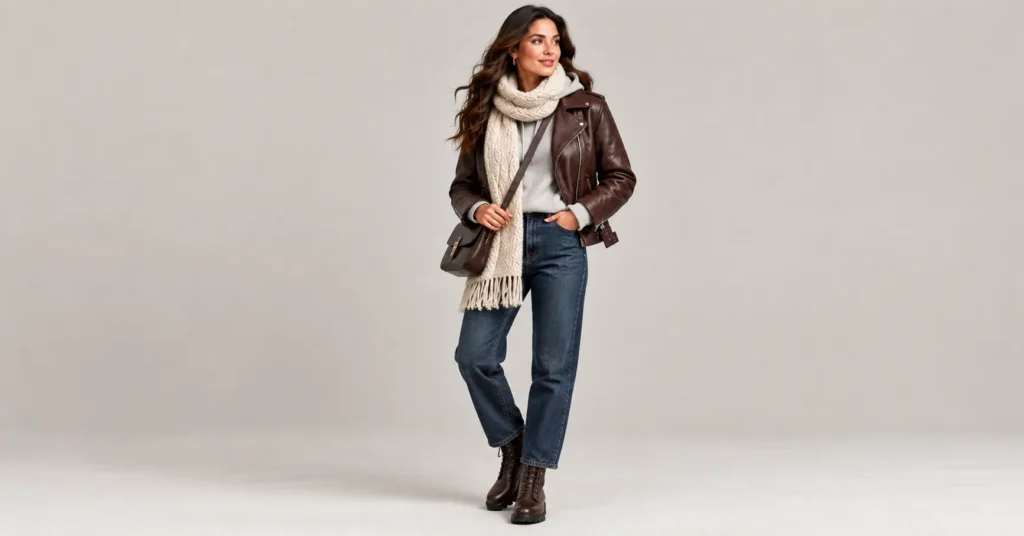
A leather moto jacket layered over a hoodie creates an edgy, street style look. The hoodie adds warmth and a casual edge to the structured leather.
How to style it:
- Wear a black leather moto jacket over a gray or cream hoodie
- Add black jeans and combat boots
- Wrap a chunky knit scarf around your neck for extra warmth
Best for: Mild winter days above 40°F, concerts, and casual nights out.
This outfit is not built for deep cold. Save it for milder days or pair it with a thermal base layer.
Women Winter Wear Jackets Outfit Comparison Table
This table lists all 10 outfits featuring women winter wear jackets side by side. Compare them by season, style, occasion, and temperature range.
| Outfit | Jacket Type | Season | Style | Occasion | Ideal Temperature |
| Long puffer + leggings | Puffer jacket | Deep winter | Sporty, practical | Commuting, errands | Below 25°F |
| Camel coat + trousers | Wool coat | Early to deep winter | Classic, tailored | Office, dinners | 25–45°F |
| Parka + chunky knit | Parka | Deep winter | Rugged, functional | Snow days, outdoors | Below 15°F |
| Lined trench + midi dress | Trench coat | Late fall, early spring | Polished, feminine | Date nights, office | 40–55°F |
| Teddy coat + knit set | Teddy coat | Early to deep winter | Cozy, tonal | Brunch, weekends | 25–40°F |
| Shearling aviator + jeans | Shearling jacket | Mid-winter | Rugged, casual | Weekends, road trips | 20–40°F |
| Cropped puffer + wide-leg pants | Puffer jacket | Early winter | Modern, casual | City days, campus | 30–45°F |
| Quilted jacket + corduroy | Quilted jacket | Late fall, mild winter | Preppy, country | Weekend trips | 40–55°F |
| Wrap coat + slip dress | Wool coat | Holiday season | Elegant, dressy | Parties, weddings | 30–45°F |
| Leather jacket + hoodie | Leather jacket | Mild winter | Edgy, street style | Concerts, nights out | Above 40°F |
Shortlist two outfits from this table that match your weekly routine, then plan your next purchase around the missing piece.
How to Layer Under Winter Jackets
Layering keeps you warm without bulk. The three-layer system, used by outdoor brands like Patagonia and REI, works just as well for city dressing.
- Start with a base layer. Wear a thin, moisture-wicking top made of merino wool or a synthetic blend. Uniqlo HEATTECH and Smartwool base layers are popular options.
- Add a mid-layer. Choose a sweater, fleece, or thin quilted vest. This layer traps body heat.
- Finish with an outer layer. Your jacket blocks wind and moisture and holds the warmth in.
- Cover your extremities. Add a hat, scarf, and gloves. Your head, neck, and hands lose heat quickly when exposed.
Avoid cotton as a base layer. Cotton absorbs sweat and stays damp, which pulls heat away from your skin.
Layering also lets you adapt indoors. You can remove your coat and still look put-together in a sweater. Lay out your three layers the night before a cold day so you can dress fast in the morning.
Choosing Women Winter Wear Jackets by Climate
Climate decides which women winter wear jackets you need. A coat that works in Seattle will leave you shivering in Minneapolis.
| Climate Type | Average Winter Low | Example Cities | Best Jacket Types | Key Features |
| Mild | Above 40°F | Los Angeles, Austin, London | Lined trench, quilted jacket, leather jacket | Light insulation, wind resistance |
| Cool and damp | 30–40°F | Seattle, Portland, Dublin | Synthetic puffer, waterproof parka, wool coat | Waterproof shell, synthetic fill |
| Cold | 15–30°F | New York, Boston, Toronto | Wool coat, mid-length puffer, shearling | Down fill, longer length |
| Extreme cold | Below 15°F | Chicago, Minneapolis, Montreal | Expedition parka, long down coat | 700+ fill power, hood, knee length |
Many people need two jackets: one for the coldest weeks and one for milder days. A wool coat paired with a long puffer covers most northern climates. Check your local forecast for the coming month to see which range you fall into most often.
Women Winter Wear Jackets for Every Body Type
Fit matters more than trends. Well-fitting women winter wear jackets keep heat in and look polished on any frame.
Petite Frames
Choose cropped or hip-length styles that don’t overwhelm your height. A defined waist, such as a belted coat or cinched puffer, creates proportion. Brands like J.Crew and Banana Republic offer petite specific outerwear with shorter sleeves and hemlines.
Tall Frames
Look for long-sleeve and tall sizing so cuffs reach your wrists. Maxi-length coats and long parkas suit taller figures well. Gap and Everlane carry tall-length options.
Curvy and Plus-Size Frames
Wrap coats, belted styles, and A-line cuts flatter curves and allow movement. Choose a coat with a slight stretch or a gusseted back for easier arm mobility. Torrid, Eloquii, and Lands’ End offer extended sizing in warm jackets for women.
Always size for your thickest layer, not a T-shirt. Try on any coat over a chunky sweater before you buy.
Colors and Patterns for Winter Outerwear
Neutral colors give you the most outfits per jacket. Camel, black, charcoal, navy, and olive match nearly every item in a typical wardrobe.
Bold colors make a statement and stand out against gray winter skies. Cobalt blue, cherry red, emerald, and mustard work well for a second jacket once you own a neutral one.
| Color Group | Examples | Best For | Pairs Well With |
| Classic neutrals | Camel, black, charcoal, navy | Everyday wear, office | Everything |
| Soft neutrals | Cream, oatmeal, ivory | Teddy coats, tonal outfits | Light denim, beige, white |
| Earth tones | Olive, chocolate, rust | Parkas, quilted jackets | Denim, cream, tan |
| Bold colors | Red, cobalt, emerald, mustard | Statement puffers, wrap coats | Black, gray, denim |
Patterns like houndstooth, plaid, and herringbone suit wool coats. Keep the rest of your outfit simple when your coat carries a pattern. Open your closet and count your most-worn colors before choosing your next coat shade.
How to Care for Your Winter Jacket
Proper care doubles the life of women winter wear jackets. Most damage comes from over-washing, poor storage, or ignoring the care label.
- Read the care label first. Follow the manufacturer’s washing and drying instructions exactly.
- Spot clean between washes. Use a damp cloth and mild soap on small stains.
- Wash down jackets with down-specific soap. Products like Nikwax Down Wash protect the natural oils in the feathers.
- Dry down with tennis or dryer balls. Tumble dry on low heat to break up clumps and restore loft.
- Dry-clean wool coats once a season. Brush wool coats weekly with a clothes brush to remove lint.
- Store jackets uncompressed. Hang wool coats on wide wooden hangers and keep puffers loose, never in vacuum bags.
- Reapply water repellent. Refresh the DWR coating every one to two seasons with a spray like Nikwax TX.Direct.
Set a calendar reminder for early spring to clean and store your jackets before warm weather arrives.
Common Mistakes When Buying Women Winter Wear Jackets
Most jacket mistakes come from shopping for looks alone. Avoid these when choosing women winter wear jackets:
- Buying for style over climate. A stylish trench won’t keep you warm in a Boston January.
- Sizing without layers. A coat that fits over a T-shirt will feel tight over a sweater.
- Ignoring the shell fabric. A warm down jacket without a water resistant shell soaks through in wet snow.
- Skipping the hood. In windy or snowy climates, a hood replaces a hat and protects your neck.
- Choosing the wrong length. Hip length jackets leave your legs exposed during long walks.
- Overlooking care requirements. Some wool blends and faux fur trims require professional cleaning.
Review this list before checkout, especially for online orders. Check the return policy too, since outerwear fit varies widely by brand.
Women Winter Wear Jackets on Every Budget
Great women winter wear jackets exist at every price point. The trick is knowing where to spend and where to save.
| Budget Tier | Price Range | Example Brands | What You Get |
| Budget | Under $100 | Uniqlo, Old Navy, H&M | Lightweight puffers, basic wool blends |
| Mid-range | $100–$400 | Patagonia, Columbia, J.Crew, Lands’ End | Quality insulation, durable shells, better fit |
| Premium | $400–$1,500+ | Canada Goose, Max Mara, Moncler | Expedition warmth, luxury wool, long lifespan |
Spend more on the jacket you’ll wear most often. If you commute daily in freezing weather, a mid range or premium puffer pays for itself. Save on trend driven pieces, such as a bold color cropped puffer, that you may wear for only a season or two.
Shop end-of-season sales in late February and March, when many retailers cut outerwear prices by 30% to 50%. Secondhand sites like ThredUp and The RealReal also carry premium coats at lower prices.
Conclusion
Choosing women winter wear jackets starts with three facts: your climate, your daily routine, and your layering needs. Once you know those, the right style follows a clear path. Puffers and parkas handle deep cold. Wool coats deliver polish. Trench coats and quilted jackets cover milder days.
The 10 outfits above show how women winter wear jackets can work for commutes, office days, weekends, and holiday parties. Use the comparison tables to match each style to your season and occasion. Then apply the six-step framework to buy with confidence.
Look up your city’s average January low today, and choose your first jacket from the climate table above.
Frequently Asked Questions about Women Winter Wear Jackets
What is the warmest type of winter jacket for women?
A down filled expedition parka is the warmest option. Look for 700+ fill power, a knee length cut, an insulated hood, and a windproof shell. Canada Goose and The North Face make parkas rated for temperatures well below 0°F.
How should women winter wear jackets fit?
Women winter wear jackets should fit comfortably over your thickest sweater. You should be able to cross your arms and raise them overhead without the sleeves or hem pulling. Shoulders should sit at your natural shoulder line, not past it.
Is a wool coat or a puffer jacket warmer?
A puffer jacket is warmer than most wool coats. Down traps more heat per ounce than wool fibers. Wool coats look more polished and work better for office and formal settings.
What jacket length is best for winter?
Knee-length or longer coats keep you warmest because they cover your thighs and block wind. Hip-length jackets suit driving and active days. Choose a length based on how much time you spend walking outdoors.
Can I wear a trench coat in winter?
You can wear a trench coat in mild winters above 40°F. Choose a model with a zip-out wool or quilted liner for extra warmth. Layer a sweater underneath on colder days.
What is fill power in a down jacket?
Fill power measures how many cubic inches one ounce of down fills. Higher numbers mean better insulation with less weight. Most quality winter jackets use 600 to 800 fill power down.
What color winter coat is most versatile?
Camel, black, navy, and charcoal are the most versatile winter coat colors. They pair with nearly every outfit and suit both casual and formal settings. Camel hides lint and dust better than black.
How many winter jackets does a woman need?
Most women need two winter jackets. One should handle the coldest weeks, such as a long puffer or parka. The second should cover milder or dressier days, such as a wool coat or lined trench.
How do I keep my winter jacket looking new?
Brush wool coats weekly, spot clean stains quickly, and wash down jackets with down specific soap. Store coats on wide hangers in a breathable space. Reapply water repellent every one to two seasons.