Funeral Outfit for Women: A Complete Etiquette & Style Guide
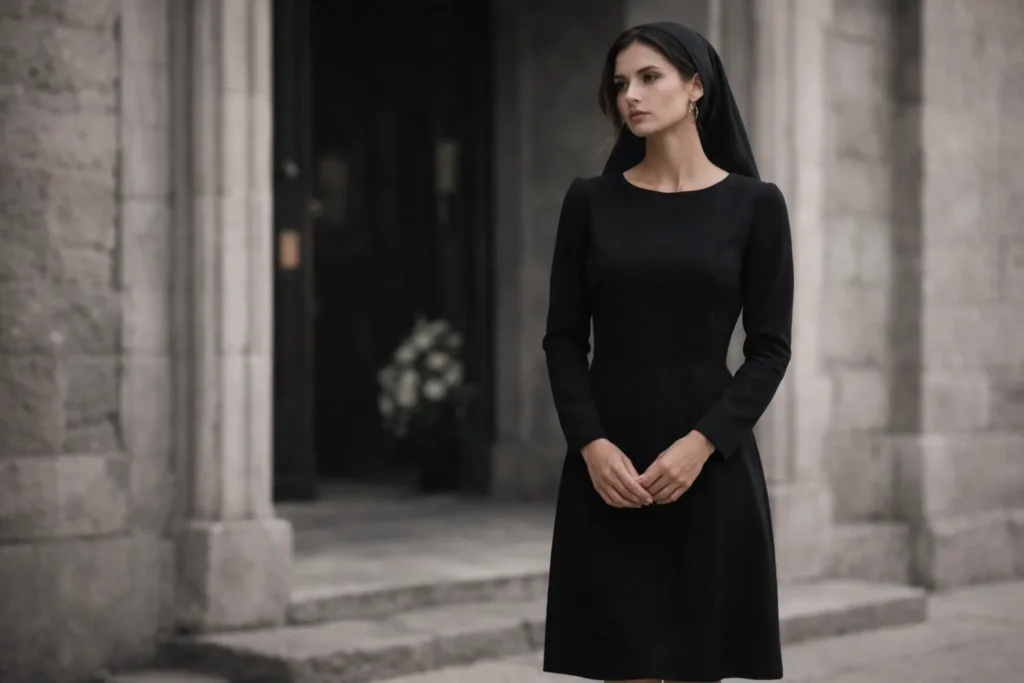
Navigating the emotional landscape of loss is difficult enough without the added stress of worrying about your wardrobe. However, choosing the appropriate funeral outfit for women is an important sign of respect for the deceased and their grieving family. It is a visual way to convey sympathy, dignity, and solemnity. While traditions have evolved and modern funerals can range from somber religious services to casual celebrations of life, the core principle remains the same: your attire should blend in, not stand out.
This comprehensive guide is designed to remove the guesswork from dressing for a funeral. Whether you are attending a traditional burial, a cremation service, or a “celebration of life,” we will walk you through the nuances of funeral etiquette. From navigating seasonal challenges to understanding modern color palettes, this article will ensure you feel comfortable and respectful in your clothing choices, allowing you to focus on what truly matters: paying your respects.
Understanding Funeral Etiquette: The Golden Rules
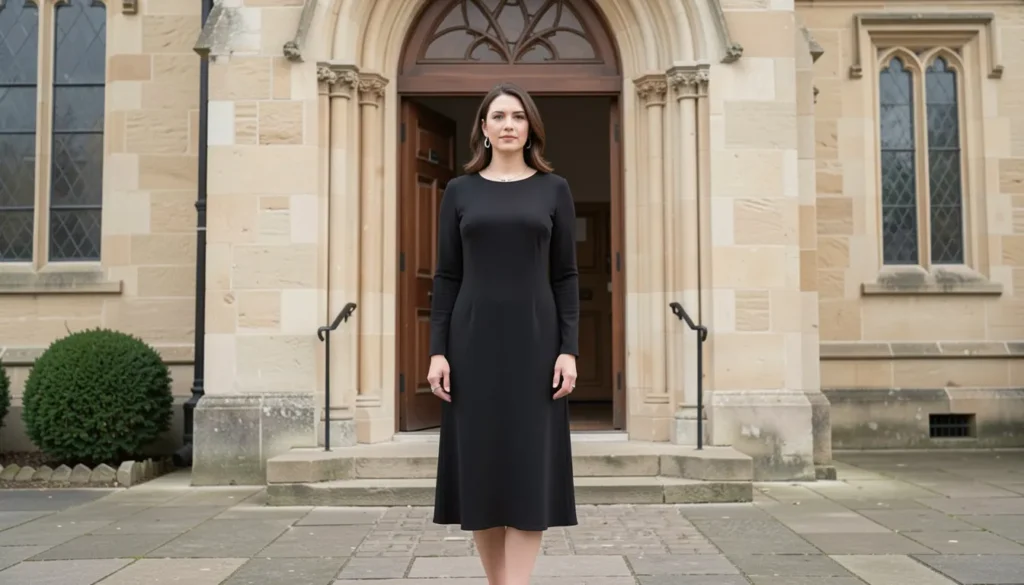
Before diving into specific clothing items, it is crucial to understand the unspoken rules that govern funeral attire. While these rules have relaxed over the decades, there is still a baseline of decorum expected.
Respect is Paramount
The primary purpose of your outfit is to show respect. This is not the time to make a fashion statement or showcase a trendy new look. The focus should be entirely on the deceased and the family. If an outfit draws attention to you—whether because it is too flashy, too revealing, or too casual—it is likely inappropriate for the occasion.
Modesty Matters
Funerals are conservative events by nature. Regardless of your personal style, it is best to err on the side of modesty.
- Hemlines: Skirts and dresses should generally fall at or below the knee. Mini skirts are typically frowned upon.
- Necklines: Avoid plunging necklines or strapless tops. If you have a sleeveless dress, consider bringing a cardigan or blazer to cover your shoulders, especially if the service is in a place of worship.
- Fit: Clothes should be tailored but not overly tight. You want to be comfortable sitting, standing, and potentially kneeling.
Follow the Family’s Wishes
The most important rule overrides all others: if the family has requested a specific dress code, follow it. In recent years, it has become common for families to request “bright colors” to celebrate a vibrant life or to ask guests to wear a specific color that the deceased loved. In these instances, ignoring the request to wear traditional black would actually be disrespectful.
The Question of Color: Is Black Still Mandatory?
For centuries, black has been the color of mourning in the West. But is it still the only option for a respectful funeral outfit for women?
The Traditional Stance
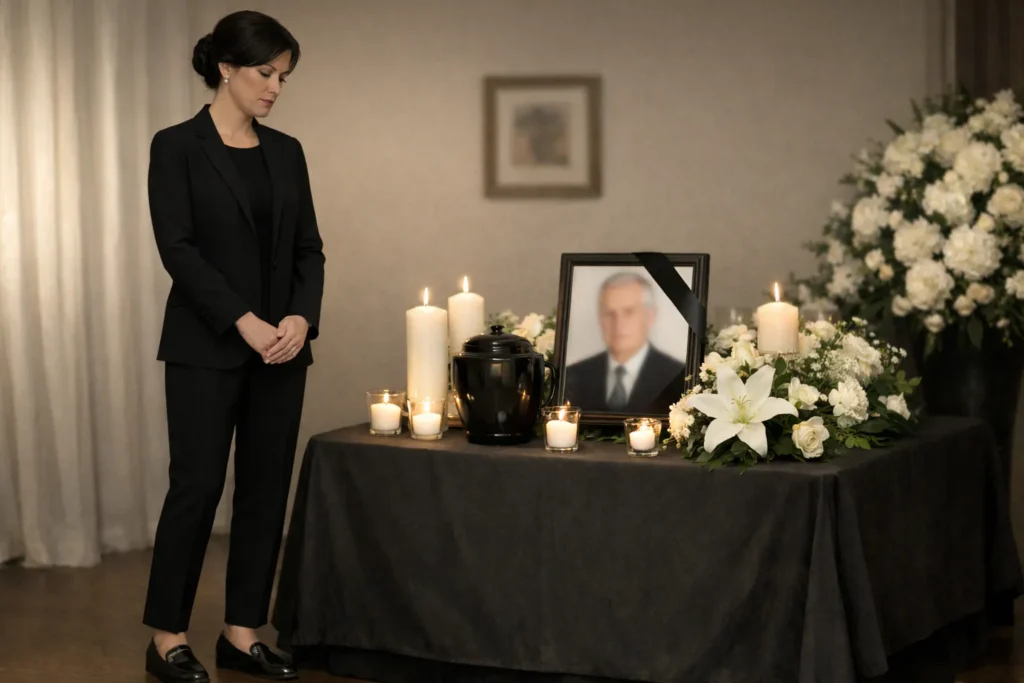
Black remains the safest and most common choice. It is universally understood as a symbol of grief and formality. If you are attending a funeral where you do not know the family well or are unsure of the tone, wearing black is never the wrong decision.
Acceptable Alternatives
In modern times, deep neutrals are perfectly acceptable and often indistinguishable from black in a crowd.
- Navy Blue: A dark navy conveys authority, respect, and solemnity.
- Charcoal Grey: A sombre alternative to black that is equally formal.
- Dark Plum or Burgundy: Deep, muted jewel tones can be appropriate, particularly in autumn or winter.
- Forest Green: Another dark neutral that works well.
Colors to Avoid
Unless specifically requested, avoid bright, cheerful colors.
- Neon: Yellows, hot pinks, and lime greens are distracting.
- Red: In some cultures, red is festive; in others, it is offensive at a funeral. It is generally best to avoid it.
- White: While white is the color of mourning in some Eastern cultures, in Western traditions, head-to-toe white can look too bridal or summery. However, a white blouse under a black suit is perfectly fine.
Seasonal Considerations for Funeral Attire
Comfort is important, especially if the service involves a graveside component where you will be exposed to the elements. Here is how to adapt your funeral outfit for women for the weather.
Summer Funerals
Heat and humidity can make dressing for a funeral challenging. You want to stay cool without looking like you are going to a garden party.
- Fabrics: Stick to breathable natural fibers like cotton, linen blends (be careful of wrinkles), or rayon.
- Sleeves: Short sleeves are acceptable. If you wear sleeveless, bring a lightweight shawl for the indoor service.
- Footwear: Avoid flip-flops or overly casual sandals. Open-toed shoes are acceptable if they are dressy, but closed-toe flats or pumps are always safer.
- Sunglasses: It is acceptable to wear sunglasses outdoors, but remove them immediately upon entering the building or speaking to the family.
Winter Funerals
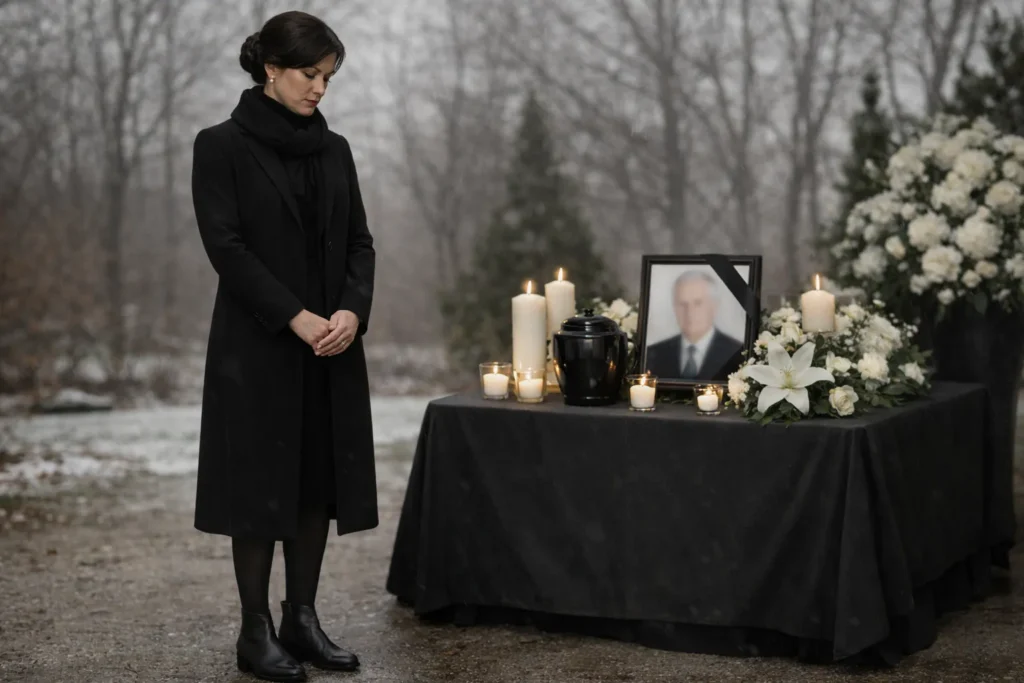
Cold weather and potential snow require practical choices.
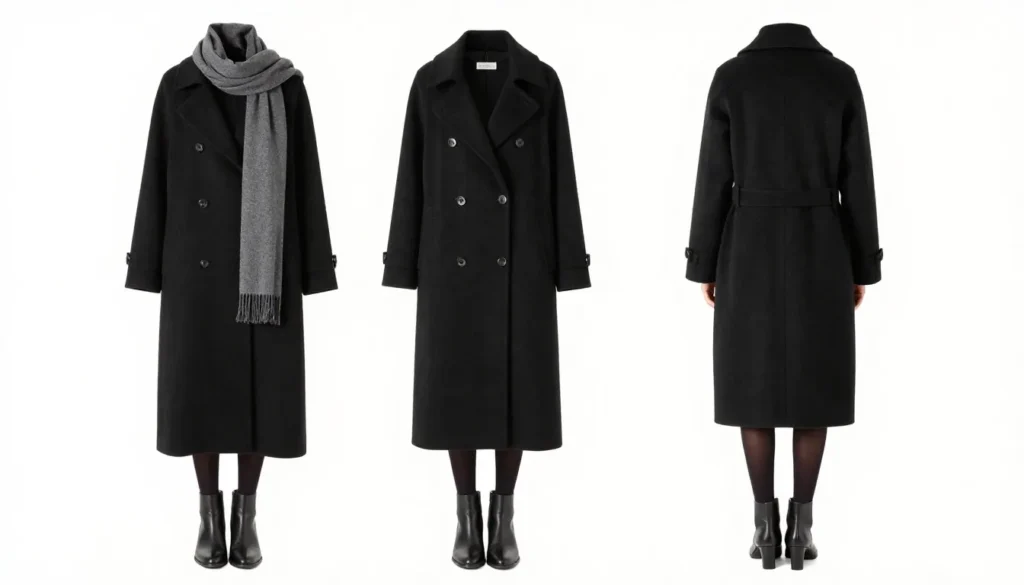
- Outerwear: Your coat will likely be worn for the duration of the graveside service. A classic wool coat in black, grey, or camel is ideal. Avoid colorful ski jackets if possible.
- Footwear: Safety comes first. If there is ice or snow, wear sleek, clean boots. You can change into dress shoes once inside if you wish, but smart leather boots are generally acceptable.
- Accessories: Leather gloves and a simple scarf add warmth and polish.
Appropriate Outfit Combinations
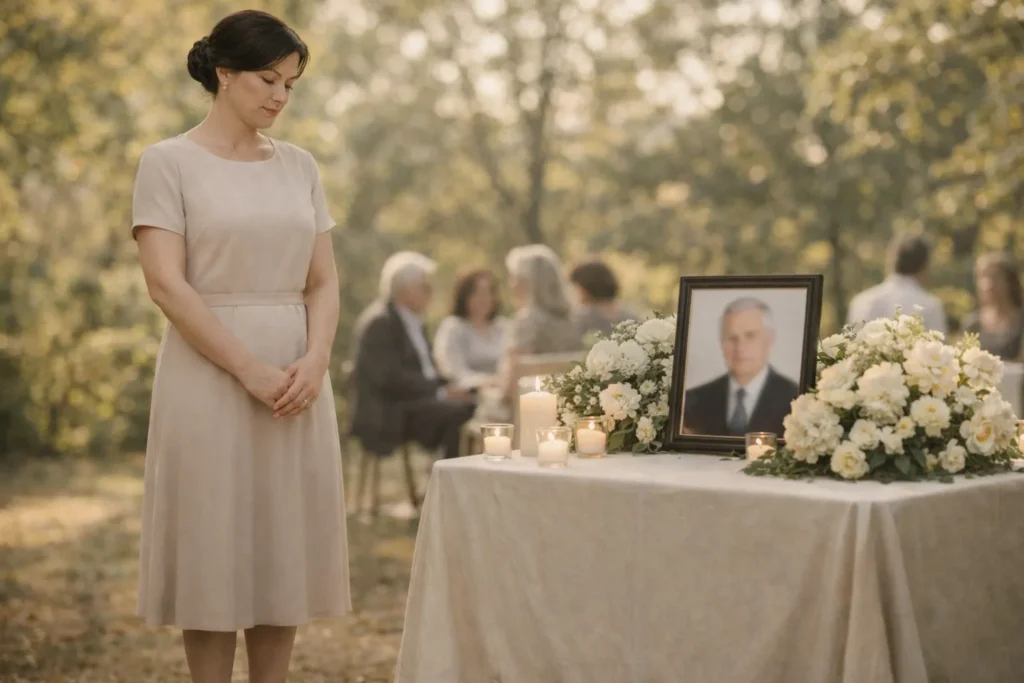
Staring at your closet and feeling stuck? Here are several “go-to” combinations that always work.
The Black Dress
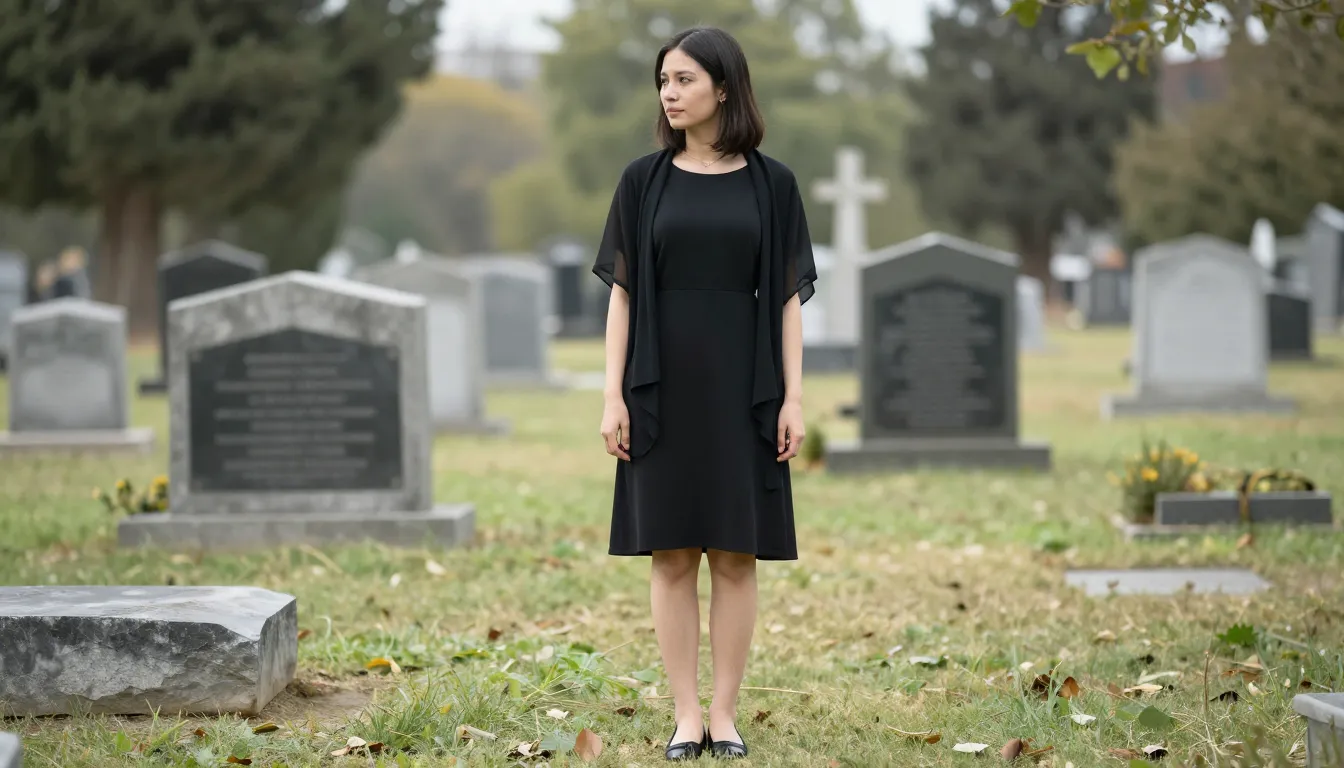
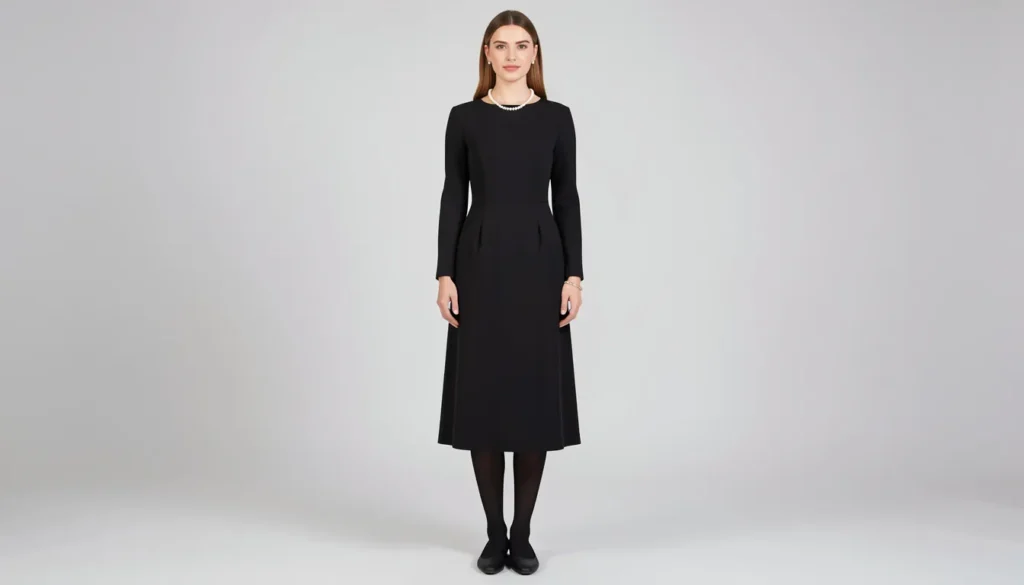
A simple black sheath or A-line dress is the gold standard.
- Why it works: It is one piece, requires minimal styling, and is universally appropriate.
- Styling: Pair with black tights and flats or low heels. Add a simple necklace (like pearls) for a touch of elegance.
The Skirt and Blouse
Separates offer flexibility.
- The Skirt: A pencil skirt or midi skirt in a dark neutral.
- The Blouse: A silk or high-quality cotton blouse. A modest print (like a small polka dot or subtle floral) is acceptable if the base color is dark.
- The Cardigan: Layer a cardigan over the top to tie the look together.
The Trouser Suit
Pants are perfectly acceptable for women at funerals today.
- The Suit: A tailored black or navy pant suit is respectful and professional.
- The Top: Wear a crisp button-down or a nice shell top underneath.
- Footwear: Loafers or block heels work well with trousers.
The Jumpsuit
A tasteful jumpsuit can be a modern alternative to a dress.
- The Cut: Ensure it is not too tight and has a modest neckline. Wide-leg jumpsuits often mimic the look of a maxi dress.
- The Color: Stick to solid black or navy.
What Not to Wear: Common Mistakes
Even with good intentions, it is easy to make a faux pas. Here is a checklist of items to leave in your closet.
- Athleisure: Leggings, yoga pants, and hoodies are too casual, even for a relaxed service.
- Graphic Tees: Anything with slogans, logos, or cartoon characters is inappropriate.
- Distressed Denim: If you must wear jeans (only for very casual/rural services), they should be dark wash, clean, and hole-free. Generally, avoid denim altogether.
- Clubwear: Anything with sequins, excessive glitter, sheer panels, or cut-outs belongs at a party, not a funeral.
- Noisy Jewelry: Avoid stacks of bangles that clink together. Silence is crucial during the service.
Footwear, Accessories, and Grooming
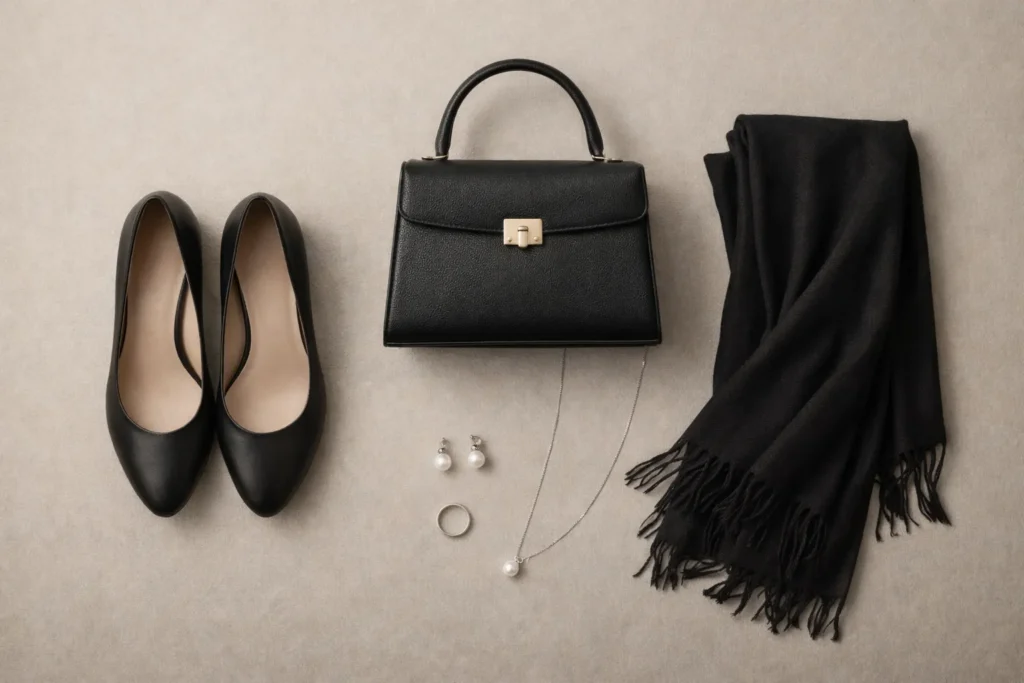
The details complete the look.
Shoes
You may be standing for long periods or walking across grass at a cemetery.
- Heels: If you choose heels, keep them low (under 3 inches) and sturdy. Stilettos sink into grass and can be dangerous on uneven ground.
- Flats: Ballet flats, loafers, and Mary Janes are excellent choices.
- Sandals: In summer, dressy sandals are okay, but avoid rubber flip-flops or Birkenstocks.
Bags
- Size: A small to medium-sized handbag is best. You just need tissues, keys, and a phone (on silent).
- Style: A structured tote or a simple clutch works well.
Makeup and Hair
- Makeup: Keep it natural and minimal. Waterproof mascara is a wise choice given the emotional nature of the event.
- Hair: Clean and neat. If you have long hair, a low bun or ponytail keeps it out of your face and looks polished.
Specific Scenarios: Religious and Cultural Nuances
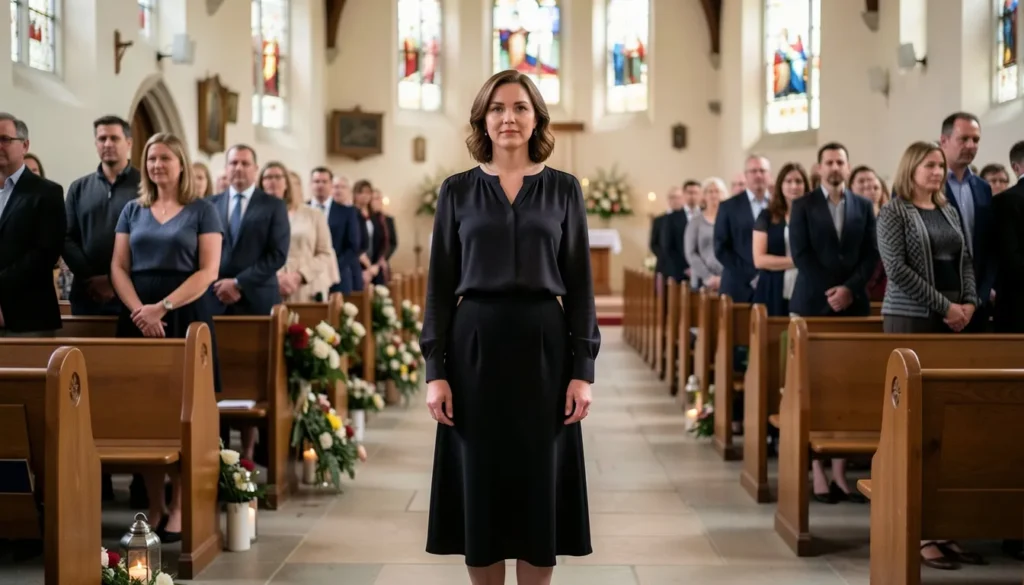
Funeral traditions vary significantly across cultures and religions. If you are attending a service for a faith different from your own, it is respectful to research specific dress codes.
Catholic / Christian Services
Standard funeral attire (black/dark conservative clothing) is expected. Shoulders should be covered in the church.
Jewish Funerals
Modesty is very important. Women should wear skirts that cover the knees and blouses that cover the collarbone and elbows. While black is common, it is not strictly mandatory; conservative dark clothing is the key.
Buddhist Funerals
White is often the traditional color of mourning in many Asian cultures, though black is increasingly accepted. Avoid wearing red at all costs, as it symbolizes happiness and good fortune.
Muslim Funerals
Modesty is paramount. Women should wear loose-fitting clothing that covers the arms and legs. A headscarf may be required for entering the mosque, so it is respectful to carry one with you just in case.
Celebration of Life Services
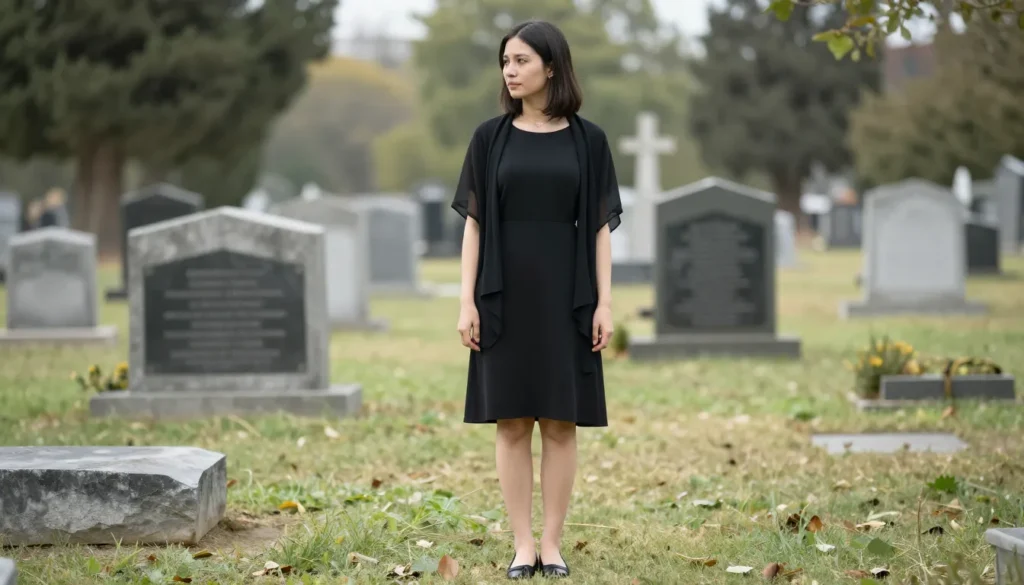
A “Celebration of Life” is often less formal than a traditional funeral. The family might want the event to feel uplifting rather than somber.
- The Vibe: Think “smart casual” or “Sunday best.”
- Colors: You have more freedom here. Lighter colors, florals, and softer neutrals like beige or lilac are often welcomed.
- The Rule: Still aim for respectful and neat. While it is a celebration, it is still a memorial event.
Conclusion:
Choosing the right funeral outfit for women is ultimately an act of empathy. It is about blending into the community of mourners and showing the family that you care enough to present yourself respectfully. By adhering to the principles of modesty, opting for neutral or dark colors, and considering the specific requests of the family, you can navigate this difficult day with grace.
Remember, the most important thing you bring to a funeral is your presence and your support. Your outfit is simply the vessel that allows you to show up with dignity. When in doubt, choose the simpler, more conservative option—you will never regret dressing respectfully.
Frequently Asked Questions (FAQs)
Q1: Can I wear patterns to a funeral?
Yes, but keep them subtle. A small polka dot, a dark plaid, or a muted floral print is acceptable. Avoid loud, large-scale prints (like bright tropical flowers) or animal prints, which can draw too much attention.
Q2: Do I have to wear stockings/pantyhose?
In the past, stockings were mandatory. Today, bare legs are generally acceptable, provided your skirt length is appropriate (knee-length or longer). However, for very formal or traditional religious services, or in colder weather, black or nude tights add a polished touch.
Q3: Can I wear jeans to a funeral?
Generally, no. Jeans are considered too casual for most funerals. However, there are exceptions. In some rural communities or if the family explicitly requests a “casual attire” or “come as you are” dress code, dark, clean jeans might be acceptable. If you are unsure, opt for trousers instead.
Q4: Is it okay to wear a sleeveless dress?
It depends on the venue. For a graveside service in summer, it might be fine. However, for a church service, it is respectful to cover your shoulders. Bring a blazer, cardigan, or wrap that you can put on during the indoor portion of the ceremony.
Q5: What if I don’t own black clothes?
You do not need to go out and buy a new outfit. Look for the darkest clothes you own. Navy blue, charcoal grey, dark brown, or forest green are all perfectly respectful alternatives. The goal is to look somber and respectful, not necessarily to match a specific color code perfectly.