Elopement Dress Ideas: How to Find the Perfect Look for Your Intimate Wedding
Choosing an elopement dress feels different from shopping for a traditional gown. You’re not dressing for a ballroom full of guests or a formal reception that runs late into the night. You’re dressing for a mountaintop, a courthouse, a quiet beach at sunrise, or a city hall ceremony with two witnesses. That shift changes everything, from the fabric you pick to the length, the silhouette, and how easily you can move in it.
This guide walks you through everything you need to know to find a dress that fits your day. You’ll learn how to match your dress to your venue and season, which fabrics work best in different climates, and where to shop on any budget. We’ll cover popular styles, real styling tips, and a full FAQ section to answer the questions that come up most. By the end, you’ll know exactly what to look for and feel confident picking a look that’s truly yours.
What Makes an Elopement Dress Different
A wedding gown built for a 200-guest event and a dress built for an intimate ceremony serve two different purposes. The first prioritizes formality and tradition. The second prioritizes you, your comfort, and the setting you chose.
Here’s what sets an elopement dress apart:
- Comfort and movement: You may hike, climb stairs, or walk on sand, so the dress needs to move with you.
- Practical length: Floor-sweeping trains struggle on trails and shorelines. Shorter or lighter hems travel better.
- Versatility: Many brides rewear an elopement dress later, so a piece that works beyond the ceremony adds value.
- Personality over convention: Without a large audience to impress, you have freedom to choose color, style, and detail that feel personal.
- Easier travel: Destination ceremonies mean your dress often rides in a suitcase, so packable fabrics matter.
The result is a dress that supports your day instead of complicating it. That freedom is one of the best parts of eloping.
Summary: An elopement dress trades formality for comfort, versatility, and personality, making it easier to wear, travel with, and rewear.
How to Choose the Right Elopement Dress
The best elopement wedding dress fits your venue, your body, and the way you want to feel. Use these factors to narrow your options before you start shopping.
Start With Your Venue
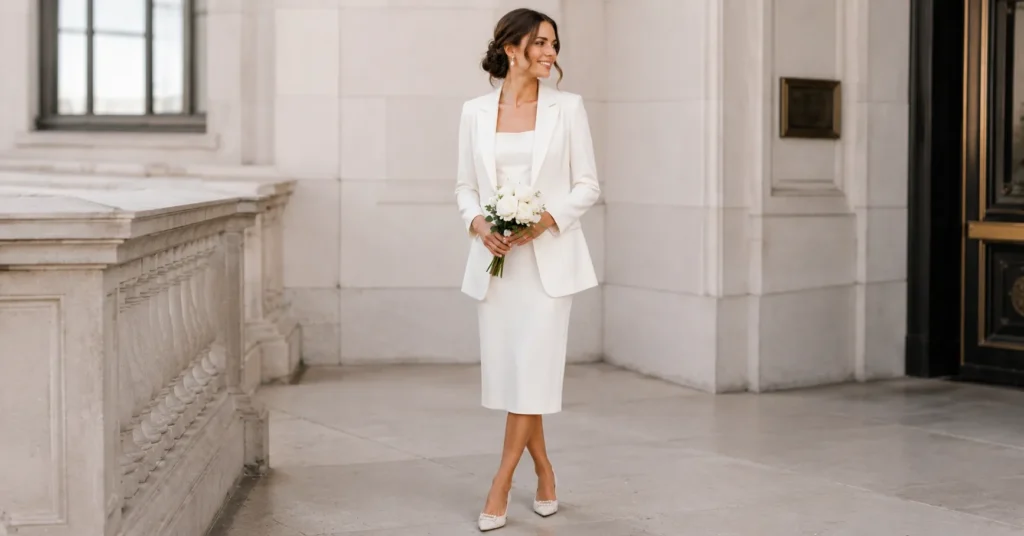
Your location shapes nearly every dress decision. A flowy chiffon gown that floats on a beach can drag and snag on a forest trail.
- Beach or coast: Light, breathable fabrics and shorter or relaxed hems.
- Mountain or forest: Durable materials, manageable length, and room to move.
- City hall or courthouse: Tailored, polished, and often shorter for a civil ceremony dress feel.
- Garden or vineyard: Soft, romantic styles that photograph well in natural light.
Factor in the Season
Weather affects both comfort and how your dress photographs. A heavy satin gown in July heat will work against you.
- Spring and summer: Lightweight cotton, chiffon, and linen.
- Fall and winter: Heavier crepe, satin, or added layers like a wrap or jacket.
Match the Dress to Your Body
Comfort and confidence go hand in hand. Choose a silhouette that flatters your shape and lets you breathe, sit, and move freely all day.
- A-line: Flatters most body types and allows easy movement.
- Slip or column: Sleek and minimalist, great for tall or lean frames.
- Tea length: Balances elegance with practicality and shows off shoes.
- Wrap or fit-and-flare: Defines the waist and suits curvier figures.
Summary: Choose your dress around your venue, season, and body so it feels comfortable and looks intentional, not borrowed from a traditional wedding.
Popular Elopement Dress Styles
A blank search bar stalls anyone. These styles give you a starting point, and each one works for a different vibe and setting.
Simple and Minimalist Dresses
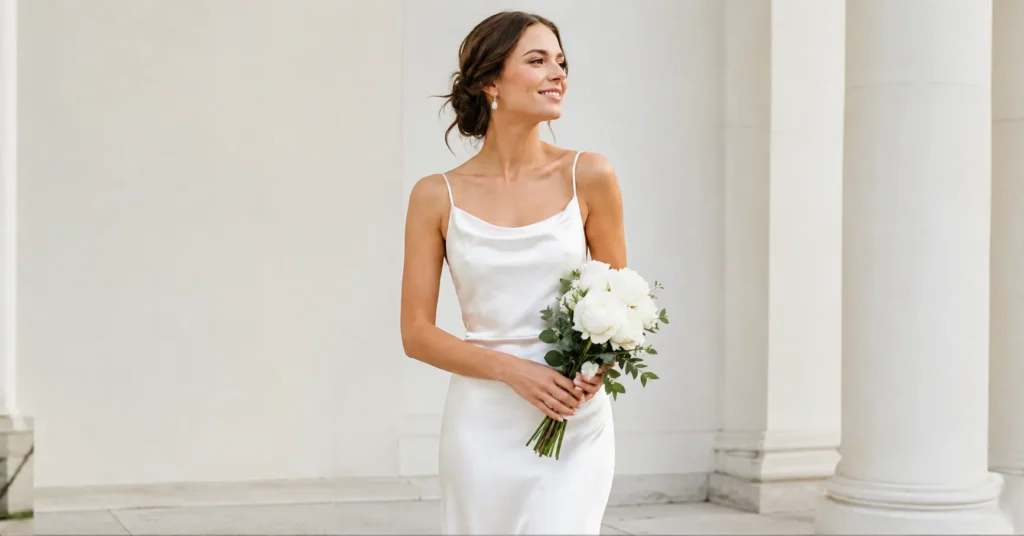
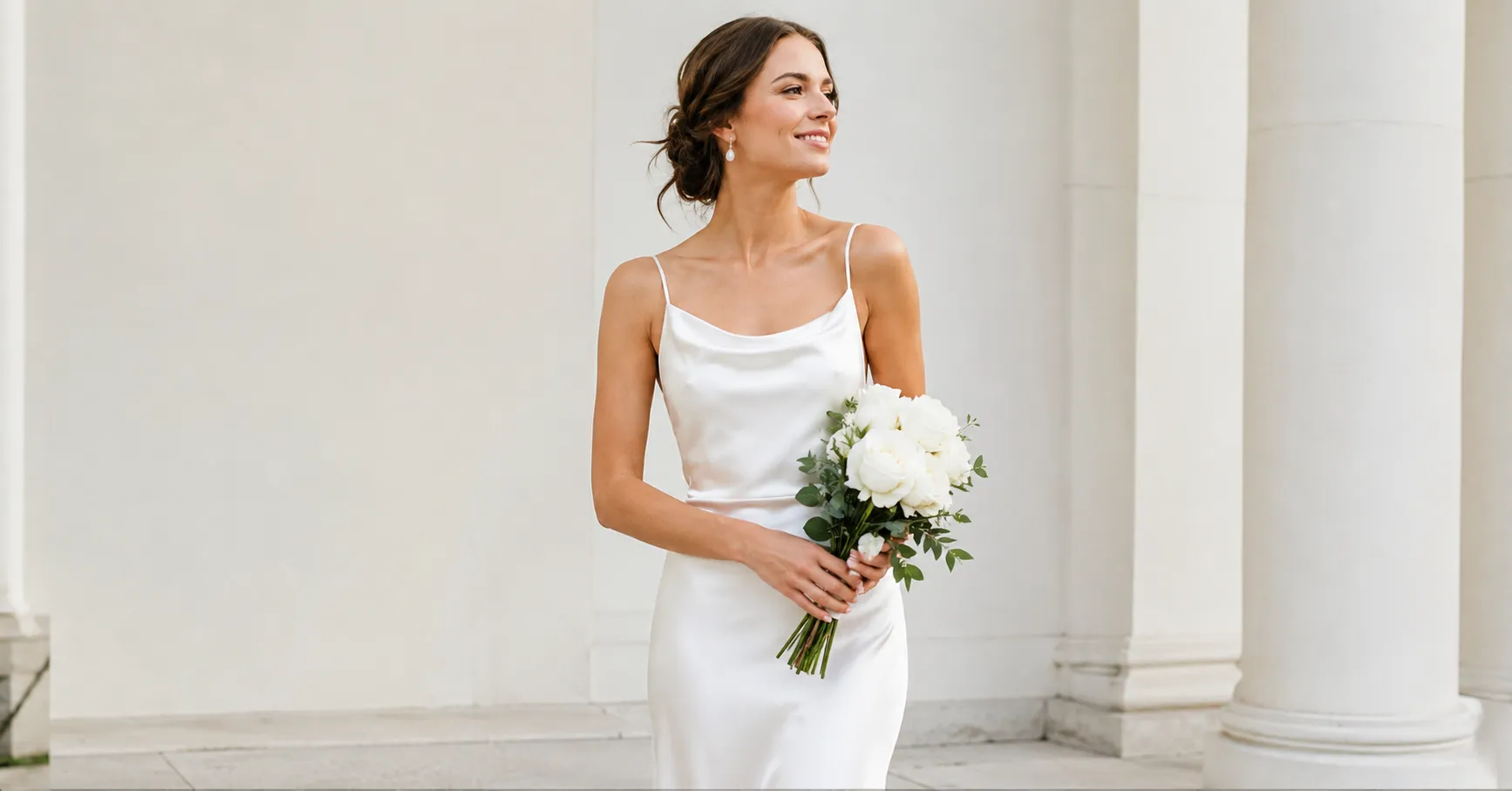
A simple elopement dress strips away heavy beading and long trains in favor of clean lines and quality fabric. Think slip dresses, sleek column gowns, and unadorned satin. This minimalist wedding look photographs beautifully and rarely dates.
Bohemian Styles
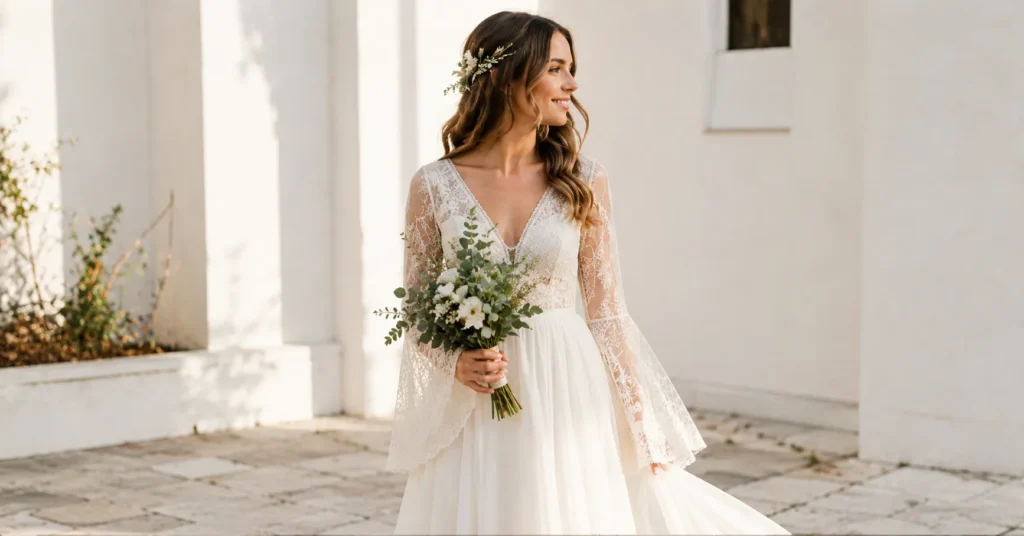
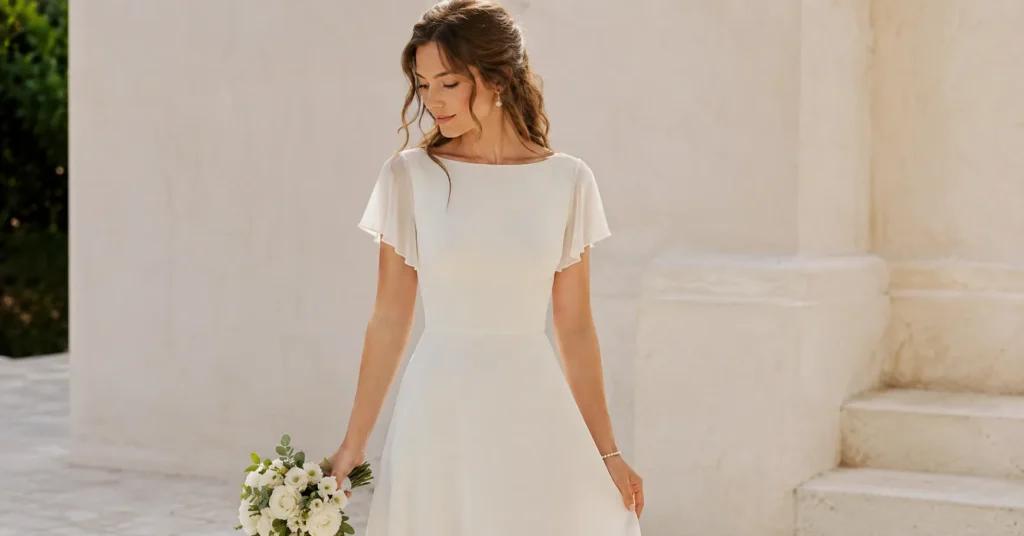
Bohemian bridal dresses lean into soft fabrics, lace detailing, flowing sleeves, and relaxed silhouettes. They suit outdoor settings like meadows, deserts, and beaches. Crochet, lace panels, and open backs are common features.
Lace Wedding Dresses
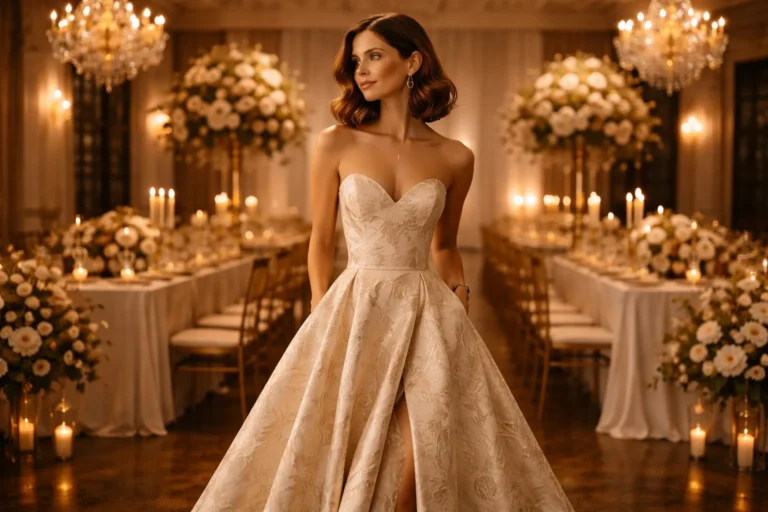
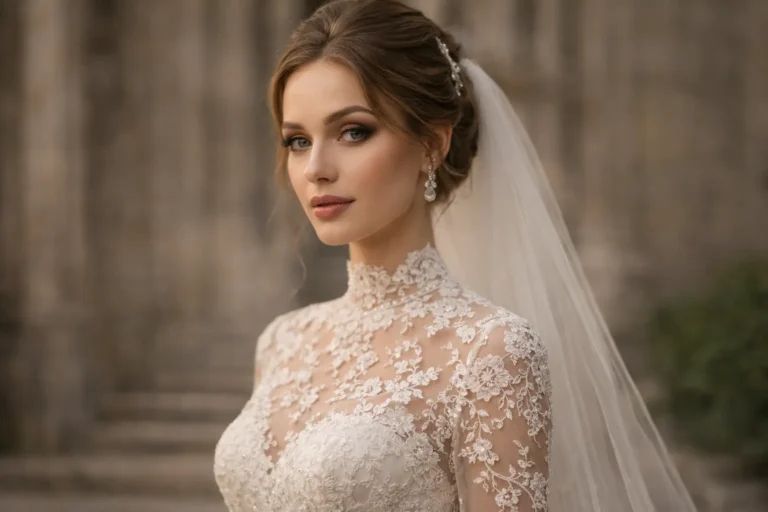
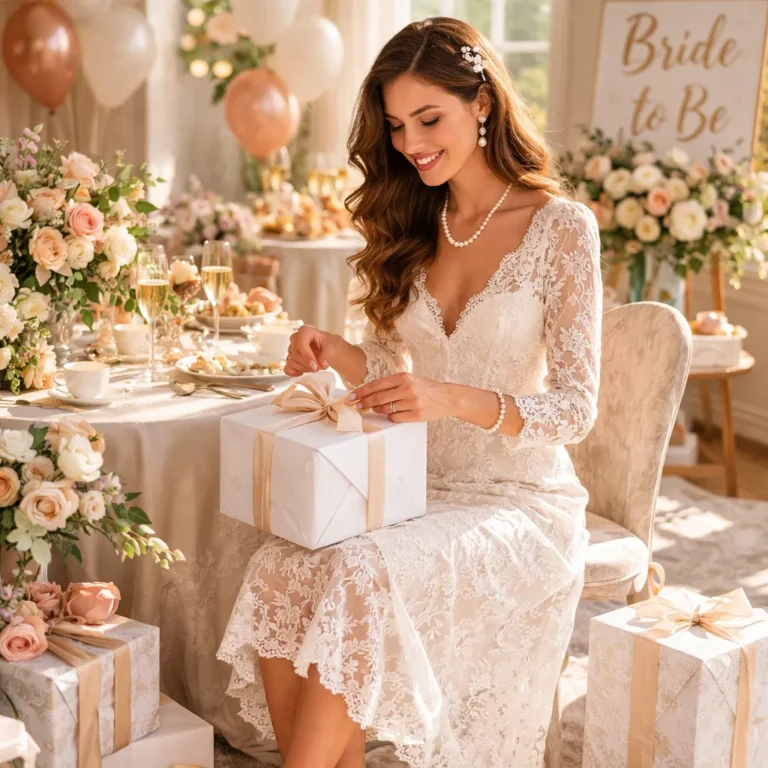
A lace wedding dress adds romance and texture without the weight of a full ballgown. Lace works across nearly every venue, from a courthouse to a clifftop, and ranges from delicate floral patterns to bold geometric designs.
Short and Tea-Length Dresses
A tea length dress hits between the knee and ankle, offering elegance with real practicality. Short dresses and midi lengths show off your shoes, move easily, and travel well. They’re ideal for civil ceremonies and city elopements.
Two-Piece and Separates
Separates let you mix a top and skirt for a custom look. You can rewear each piece later, which makes them a smart, budget-friendly choice.
Colored and Non-Traditional Dresses
Eloping frees you from convention. Blush, champagne, sage, and even bold colors all work when you’re not bound by tradition. A colored dress can feel more “you” and more wearable afterward.
Summary: From minimalist slips to bohemian lace and tea-length midis, elopement styles span every setting and personality.
Elopement Dress Styles by Venue
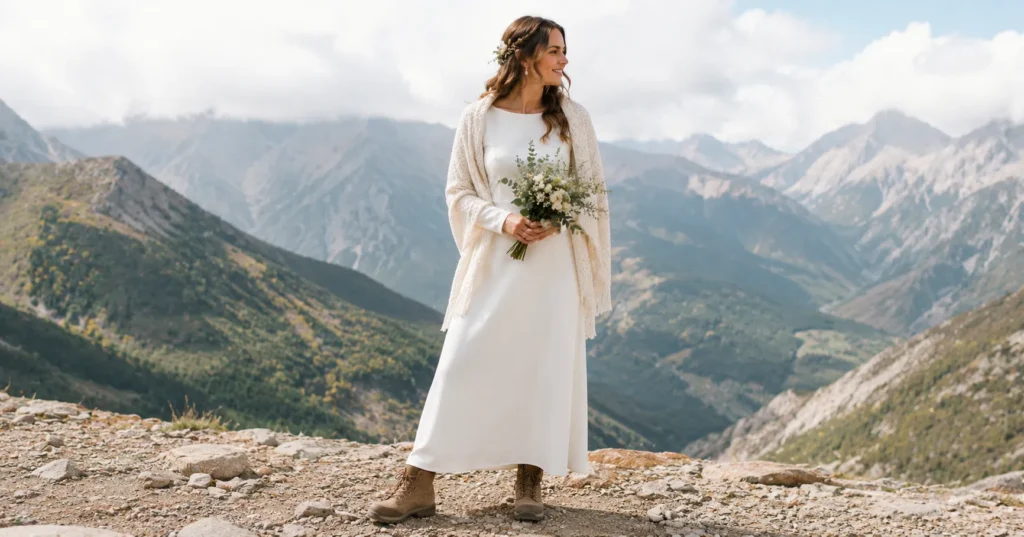
Matching your dress to your location keeps you comfortable and helps your photos look cohesive. Use this quick reference to align style with setting.
| Venue | Recommended Style | Ideal Length | Why It Works |
| Beach | Slip or bohemian | Short to midi | Light fabric handles wind and sand |
| Mountain | A-line or flowy | Midi to full, manageable | Movement-friendly for hikes |
| Forest | Bohemian or lace | Midi to full | Romantic, blends with natural setting |
| City hall | Tailored or tea length | Short to tea | Polished and practical for a civil ceremony dress |
| Garden | Lace or A-line | Tea to full | Soft and photogenic in natural light |
| Desert | Flowy or slip | Midi to full | Breathable for heat, dramatic in open space |
Use this as a starting point, then adjust for your personal taste and the weather on your date.
Summary: A venue matched dress keeps you comfortable and makes your photos feel intentional and cohesive.
Best Fabrics for Every Climate
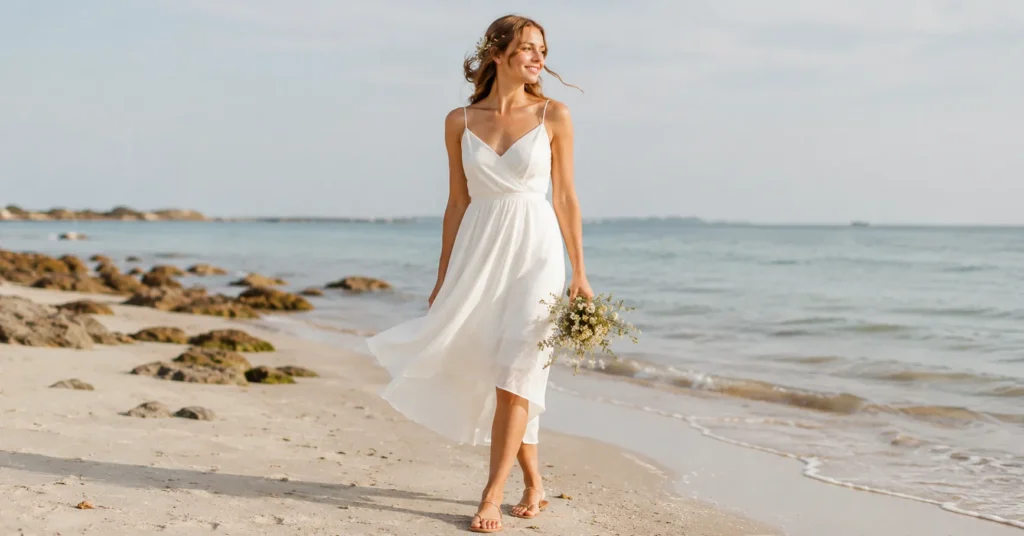
Fabric choice affects comfort more than almost any other detail. The wrong material can leave you overheated on a summer beach or shivering on a fall mountain. Match the fabric to your climate first, then refine the look.
| Fabric | Best Climate | Feel and Look | Notes |
| Chiffon | Warm, breezy | Light, flowing | Moves beautifully in wind |
| Linen | Hot, dry | Crisp, relaxed | Breathable but wrinkles easily |
| Cotton | Warm | Soft, casual | Great for a casual elopement dress |
| Crepe | Mild to cool | Smooth, structured | Travels well, resists wrinkles |
| Satin | Cool | Sleek, formal | Heavier and warmer to wear |
| Lace | All, with lining | Textured, romantic | Lining affects warmth |
| Tulle | Mild | Airy, voluminous | Adds drama without weight |
A few extra fabric tips worth remembering:
- For travel, choose crepe or jersey, which resist creasing in a suitcase.
- For heat, prioritize breathable cotton, linen, or chiffon.
- For cold, layer with a wrap, jacket, or long sleeves rather than choosing heavy fabric alone.
Summary: Pick fabric for your climate first, since the right material keeps you comfortable and the wrong one ruins the day.
Elopement Dress Ideas by Theme
Sometimes the easiest way to decide is to start with a feeling. These elopement dress ideas pair a mood with a look you can build on.
Romantic and Soft
- Flowing chiffon with delicate lace sleeves.
- Soft blush or ivory tones.
- Loose, natural hair and minimal jewelry.
Modern and Minimalist
- A sleek satin slip with clean lines.
- A structured crepe column gown.
- Simple accessories and a bold lip.
Boho and Free-Spirited
- An open-back lace dress with bell sleeves.
- A flowy dress in cream or warm ivory.
- Layered necklaces and loose waves.
Vintage-Inspired
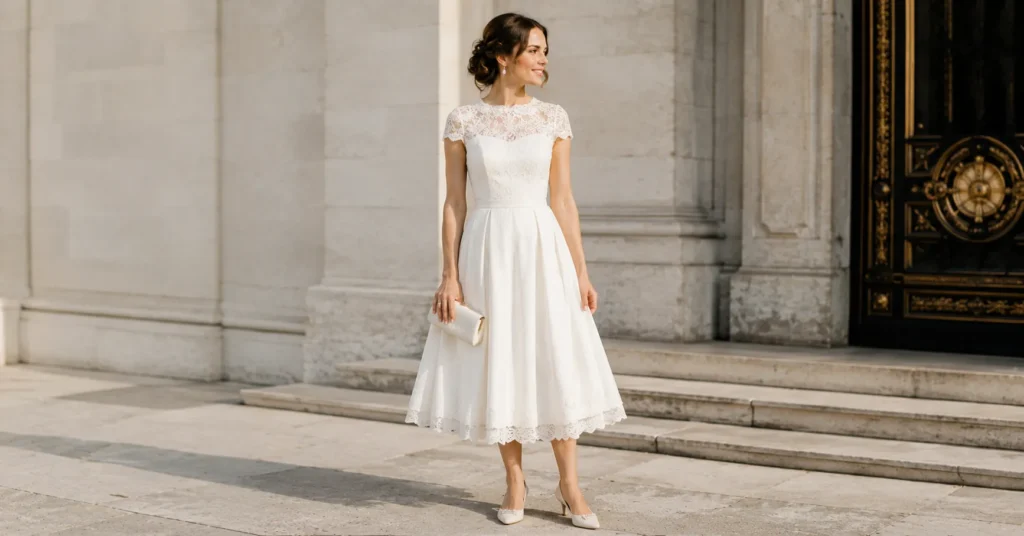
- A tea length dress with a fitted bodice.
- Polka dots, scalloped lace, or a classic A-line.
- Retro shoes and a structured clutch.
Destination and Travel-Ready
- A packable crepe or jersey dress.
- Lightweight layers for changing weather.
- Comfortable shoes you can walk in.
Summary: Starting from a mood, whether romantic, modern, boho, vintage, or travel-ready, makes choosing a dress feel intuitive instead of overwhelming.
Where to Shop for an Elopement Dress
You don’t need a six-month custom order to find the right dress. Options exist at every price point and timeline, which matters when eloping often means a shorter planning window.
Bridal Boutiques
- Offer expert fittings and a curated selection.
- Best for brides who want guidance and a try-on experience.
- Usually the higher end of the budget.
Online Retailers
- Provide huge variety and easy price comparison.
- Order early to allow time for shipping and alterations.
- Read reviews and check size charts carefully.
Department and High-Street Stores
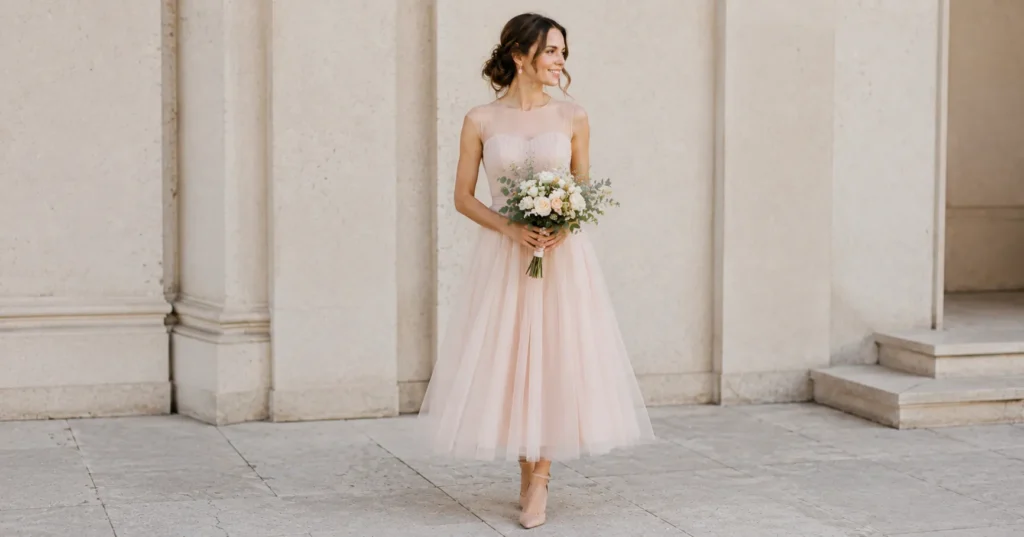
- Carry affordable white, ivory, and colored dresses.
- Ideal for a casual elopement dress or a simple courthouse look.
- Available quickly, often off the rack.
Secondhand and Vintage
- Offer unique pieces at lower prices.
- A sustainable choice that reduces waste.
- Check measurements and condition before buying.
Made-to-Order and Custom
- Tailored exactly to your body and vision.
- Requires more lead time, often two to four months.
- Best when you have a clear idea and a flexible timeline.
Summary: From boutiques to secondhand racks, options exist for every budget and timeline, so you can match where you shop to how much time you have.
Budgeting for Your Elopement Dress
One of the biggest perks of eloping is the freedom to spend on what matters to you. A dress can cost a few hundred dollars or several thousand, and both can look stunning.
Consider these budget tips:
- Set your number first, then shop within it to avoid falling for something out of range.
- Factor in alterations, which can add 50 to 300 dollars or more.
- Skip the train and beading to lower cost without sacrificing style.
- Consider rewear value, since a versatile dress earns its price over time.
- Look off-season, as many retailers discount bridal styles after peak wedding months.
A smaller guest list often means a smaller overall budget, which can free up room for a dress you love or savings for the honeymoon.
Summary: Set a budget early, account for alterations, and weigh rewear value so your spending matches your priorities.
Styling Your Elopement Dress
The dress sets the foundation, but accessories and styling complete the look. Keep your setting in mind so every piece works together.
Shoes
- Beach: Barefoot, sandals, or flats that handle sand.
- Mountain or forest: Sturdy boots or supportive flats.
- City hall: Heels, loafers, or polished flats.
Accessories
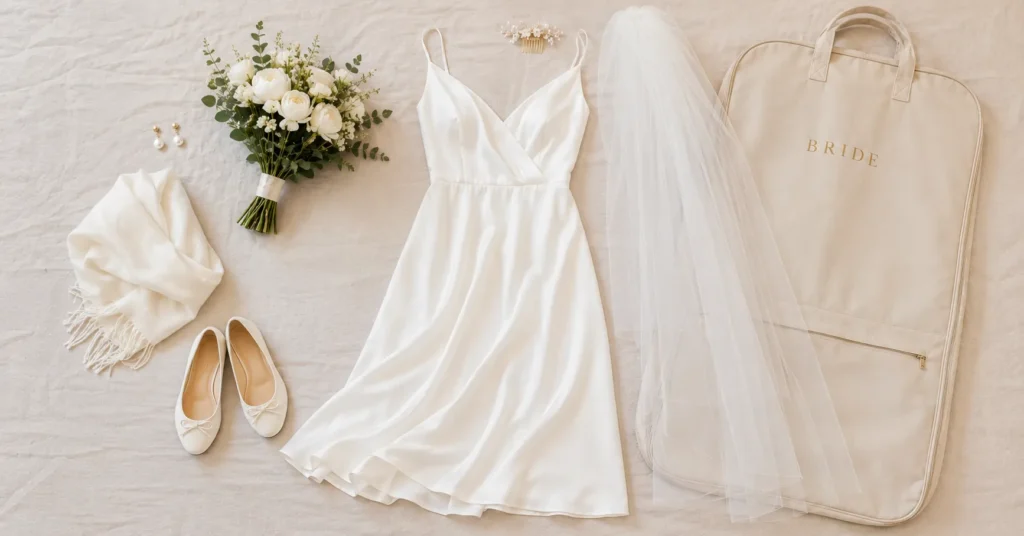
- A veil adds tradition, but a hairpiece, hat, or flowers feel more relaxed.
- Keep jewelry minimal with a simple dress, or go bolder to dress up a plain slip.
- A wrap, jacket, or shawl adds warmth and a style layer for cool venues.
Hair and Makeup
- Match the formality of your dress and setting.
- Natural, soft looks suit bohemian and outdoor ceremonies.
- Defined, polished looks complement minimalist and city styles.
Bouquet
- Keep it small and in proportion to a simpler dress.
- Wildflowers suit boho and outdoor looks.
- Structured arrangements pair well with formal silhouettes.
Summary: Style your dress to match your venue, keeping shoes, accessories, and hair in proportion to the look and setting.
Common Elopement Dress Mistakes to Avoid
Even a beautiful dress can let you down with the wrong planning. These missteps come up often, and each is easy to avoid.
- Ignoring the venue: A long train on a sandy beach or rocky trail becomes a constant struggle.
- Forgetting the weather: Heavy fabric in summer heat or thin chiffon in winter cold ruins comfort.
- Skipping a trial walk: Always move, sit, and walk in the dress before the day.
- Leaving no time for alterations: Off-the-rack rarely fits perfectly, so build in a buffer.
- Overlooking travel needs: A delicate gown that creases badly suffers in a suitcase.
- Prioritizing trends over comfort: You’ll wear this all day, so comfort wins.
Avoid these and your dress supports your day instead of fighting it.
Summary: Most dress regrets trace back to ignoring venue, weather, fit, or travel, all of which you can plan around.
Can You Rewear an Elopement Dress?
A traditional gown often sits in storage after one day. An elopement dress doesn’t have to. Because many styles lean simpler and shorter, they adapt well to life after the ceremony.
Ways to give your dress a second life:
- Wear a short or tea-length dress to parties, anniversaries, or events.
- Dye a white dress a new color for everyday wear.
- Style separates individually with the rest of your wardrobe.
- Save it for a vow renewal or a later reception celebration.
Choosing a versatile dress upfront means you get more value from a piece you already love.
Summary: Simpler elopement styles rewear easily, so the right choice keeps giving long after the ceremony ends.
Conclusion
An elopement dress should reflect your day, your setting, and your personality rather than tradition alone. When you start with your venue, choose fabric for your climate, and pick a silhouette that lets you move and feel like yourself, getting dressed becomes the joyful part of the process. Whether you lean minimalist, bohemian, vintage, or somewhere in between, there’s a dress that fits your ceremony and your budget.
Start by pinning down your location and season, then narrow your styles using the venue and fabric guides above. Set a budget, leave time for alterations, and do a trial walk before the day. Most importantly, choose a dress you’ll feel comfortable and confident in from the first photo to the last. Your perfect elopement look is well within reach.
Frequently Asked Questions
1. What is an elopement dress?
An elopement dress is a wedding outfit chosen for a small, intimate ceremony rather than a large traditional wedding. It usually prioritizes comfort, movement, and versatility, often in a simpler or shorter style.
2. Does an elopement dress have to be white?
No. Eloping frees you from tradition, so blush, champagne, sage, and even bold colors all work. Many brides choose a color they can rewear after the ceremony.
3. How long before my elopement should I buy my dress?
For off-the-rack or online dresses, allow at least four to six weeks for shipping and alterations. Made-to-order or custom dresses often need two to four months.
4. What’s the best elopement dress for a beach ceremony?
Light, breathable fabrics like chiffon, cotton, or linen in a slip or bohemian style work best. Choose a shorter or relaxed hem that handles wind and sand easily.
5. Can I wear a short dress to elope?
Absolutely. A tea length or short dress is elegant and practical, especially for city hall and civil ceremonies. It also shows off your shoes and travels well.
6. How much should I spend on an elopement dress?
There’s no fixed amount. Dresses range from a few hundred to several thousand dollars. Set your budget first, factor in alterations, and weigh rewear value.
7. What fabric is best for a destination elopement?
Crepe and jersey resist wrinkles in a suitcase, making them ideal for travel. For hot climates, choose breathable cotton, linen, or chiffon.
8. Can I rewear my elopement dress?
Yes. Simpler and shorter styles adapt well to parties, anniversaries, and events. You can also dye a white dress, style separates individually, or save it for a vow renewal.
9. What should I wear for a courthouse elopement?
A tailored, polished look works well. A tea-length dress, a sleek slip, or a chic suit all suit a civil ceremony dress setting, especially in a shorter, practical length.
10. How do I choose a dress for a mountain elopement?
Pick durable fabric, a manageable length, and a silhouette like an A-line that allows movement. Pair it with sturdy boots or supportive flats for hiking.