The Evolution and Impact of Canadian Olympic Outfits
When the world gathers to celebrate athletic excellence every two years, the spectacle extends far beyond the stadiums and arenas. The opening ceremony serves as a global fashion runway, and Canadian Olympic outfits consistently capture international attention. From iconic red mittens to high-tech athleisure, Team Canada’s wardrobe is a masterclass in blending national identity, athletic performance, and cutting-edge style.
For athletes, these garments represent years of dedication and sacrifice. For fans, they offer a tangible connection to the games and a profound sense of national pride. Over the decades, the design philosophy behind Team Canada’s apparel has shifted dramatically. What began as simple, functional sportswear has evolved into a showcase of textile innovation, inclusive design, and modern streetwear trends.
This comprehensive guide explores the rich history of Canadian Olympic outfits fashion. We will examine the iconic brands that have outfitted the nation, the advanced technology woven into modern garments, and how these outfits perfectly capture the spirit of the True North.
A History of Canadian Olympic Outfits
To appreciate the modern gear worn by Team Canada, we must look back at how their wardrobe has transformed over the last century. The story of Canadian Olympic outfits reflects broader shifts in both the sportswear industry and national self-expression.
The Early Days: Function Over Fashion
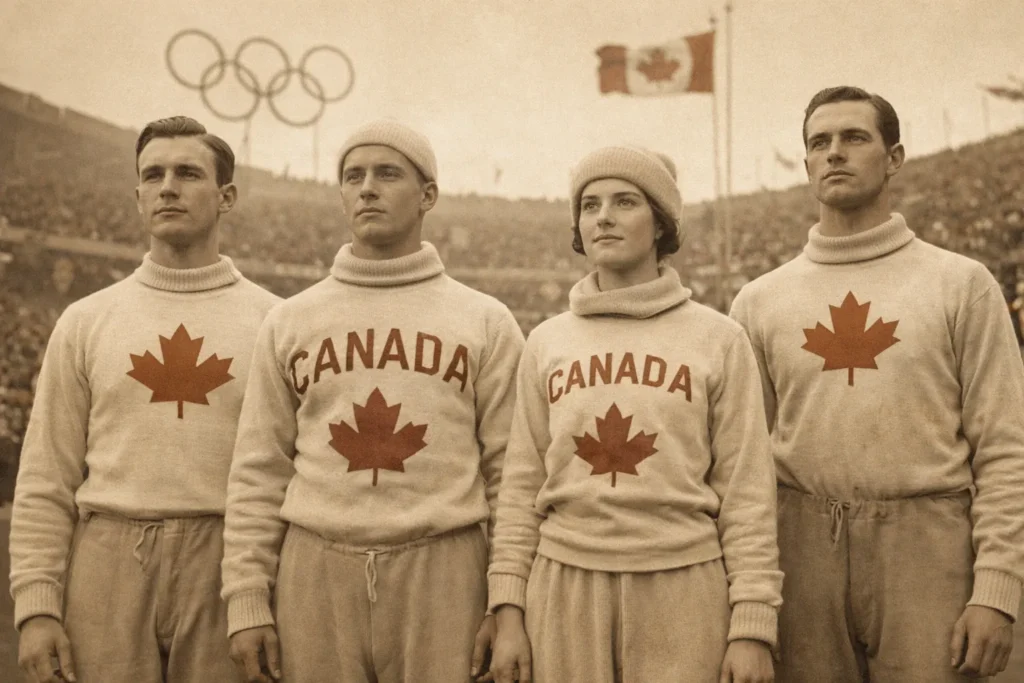
In the early to mid-20th century, Olympic apparel strictly prioritized basic functionality. Athletes wore simple wool sweaters, heavy tracksuits, and plain cotton t-shirts.
- Minimalist Branding: The clothing usually featured a simple, understated maple leaf or the word “CANADA” stitched across the chest.
- Standardized Fits: Designers did not tailor the clothing for specific sports. A speed skater and a bobsledder often received the exact same heavy wool outerwear.
- Color Palettes: While red and white were present, early teams also incorporated significant amounts of navy blue and grey into their uniforms.
The Turning Point: The 1970s and 1980s
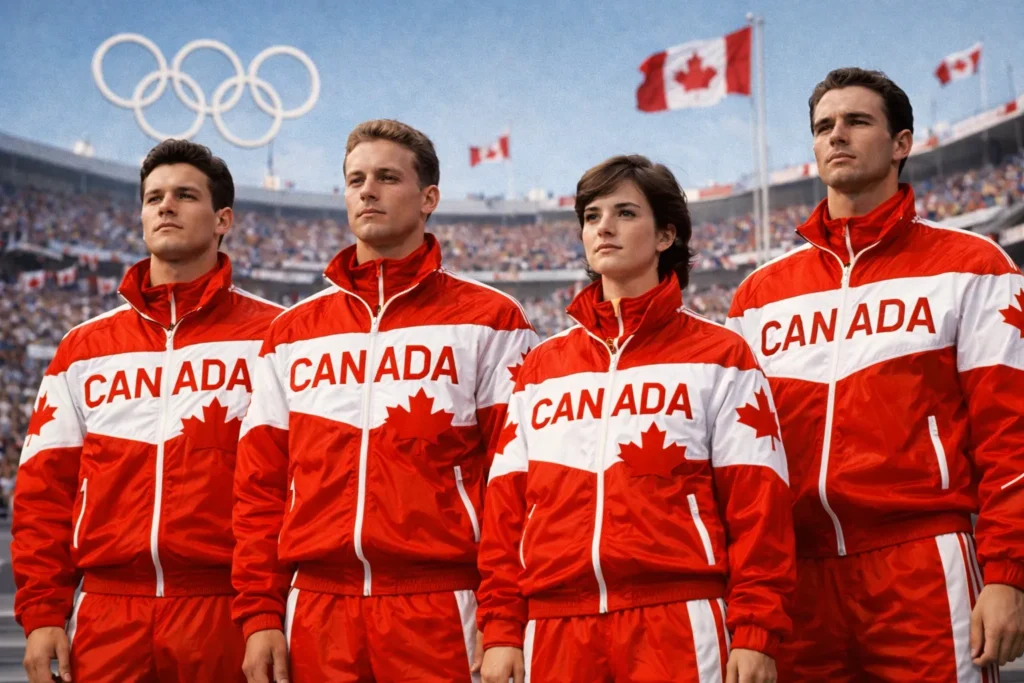
As television broadcasting brought the Olympics into living rooms worldwide, the visual impact of uniforms became crucial. The 1970s and 1980s saw the introduction of synthetic fabrics like nylon and polyester, allowing for brighter colors and better weather resistance. During the 1988 Winter Games in Calgary, the host nation stepped out in striking red coats adorned with white fringe, marking a clear shift toward bold, memorable fashion statements.
The Hudson’s Bay Era (2000s-2010s)
For over a decade, the Hudson’s Bay Company (HBC) served as the official outfitter for Team Canada. This era produced some of the most recognizable pieces in Canadian Olympic history.
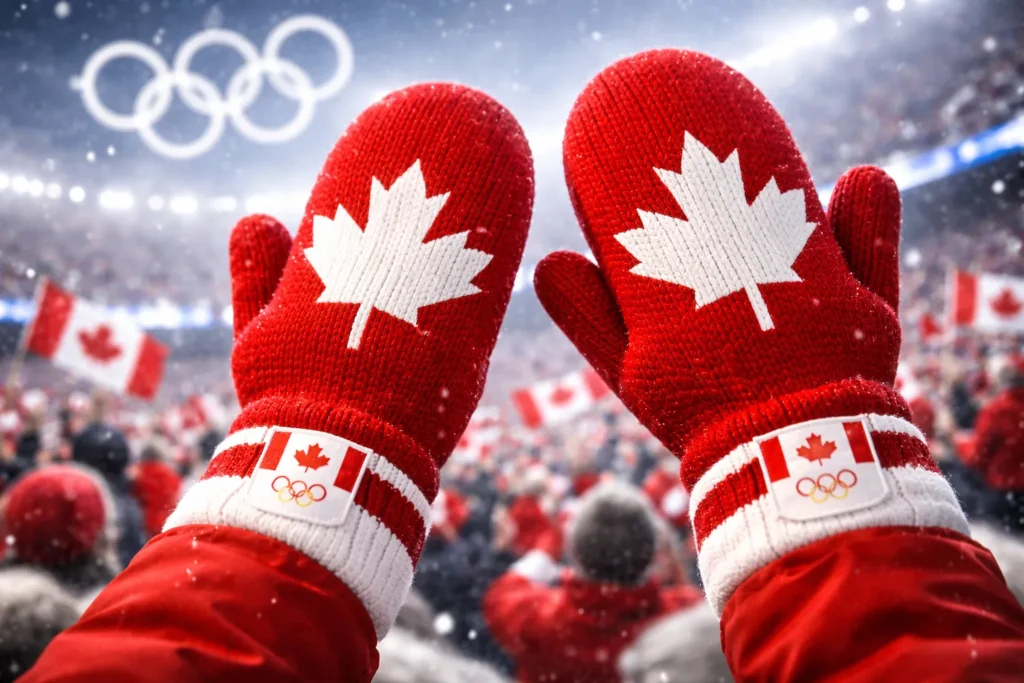
- The 2010 Vancouver Red Mittens: Perhaps the most famous Olympic accessory ever created. Millions of Canadians purchased these white-maple-leaf-adorned red mittens, turning them into a symbol of unity during the home games.
- Classic Heritage Styling: HBC leaned heavily into classic Canadian tropes, using chunky cable knits, plaid flannel patterns, and bold color-blocking.
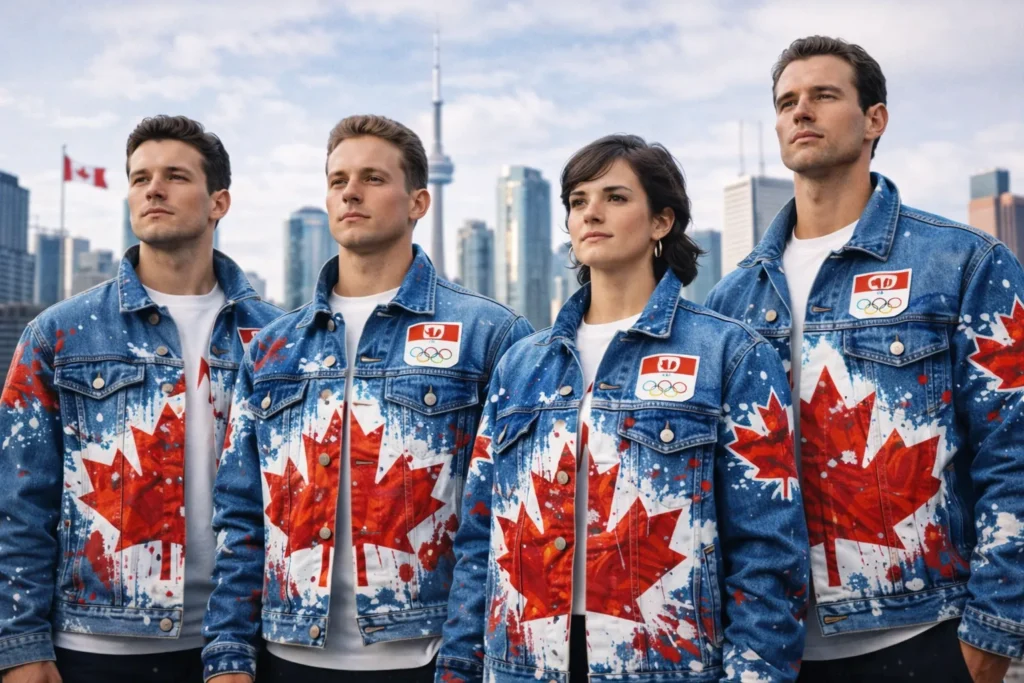
- The Denim Jacket Phenomenon: For the delayed 2020 Tokyo Games, HBC designed a controversial but highly viral closing ceremony outfit featuring graffiti-style, customized denim jackets. It sparked global conversations and showcased a rebellious, streetwear-inspired aesthetic.
The Lululemon Era: Modernizing Team Canada
In late 2021, the Canadian Olympic Committee announced a groundbreaking new partnership. Vancouver-based athletic wear giant Lululemon took over as the official outfitter, beginning with the 2022 Beijing Winter Games and extending through the 2028 Los Angeles Summer Games. This partnership completely revolutionized Canadian Olympic outfits.
The Transition to Premium Athleisure
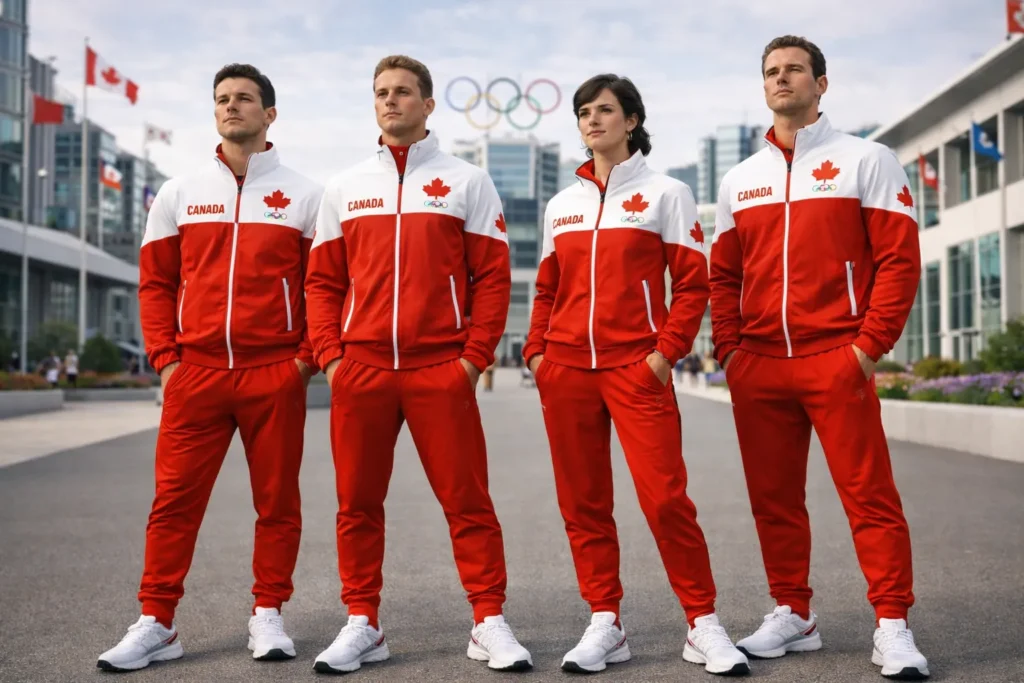
Lululemon brought its signature sleek, modern aesthetic to the Olympic stage. They moved away from heavy traditional knits and focused entirely on premium, functional athleisure. The new designs blurred the line between high-performance athletic gear and stylish everyday streetwear. Athletes could seamlessly transition from warming up in the village to giving a press conference while looking effortlessly put-together.
Designing for Inclusivity and Accessibility
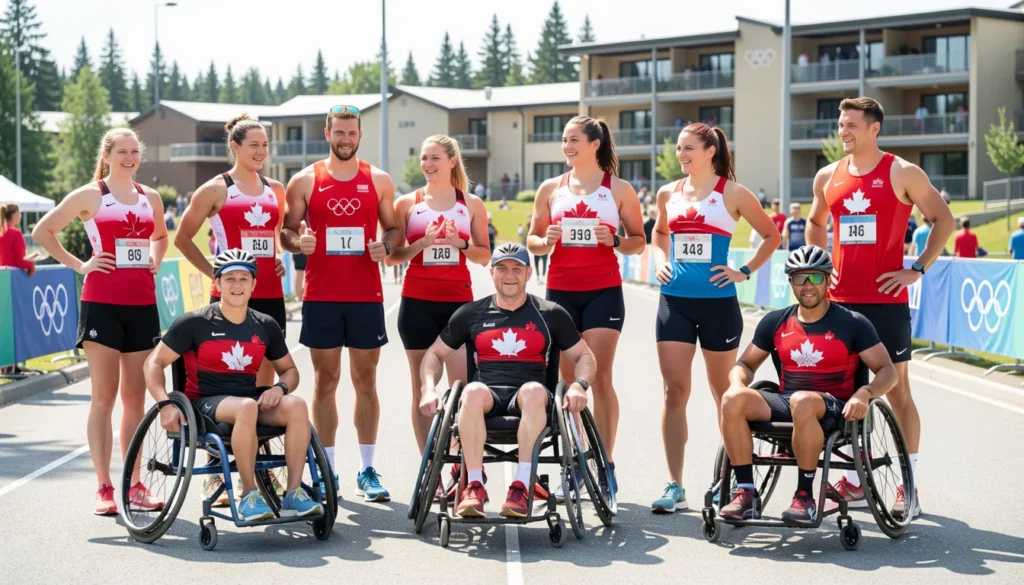
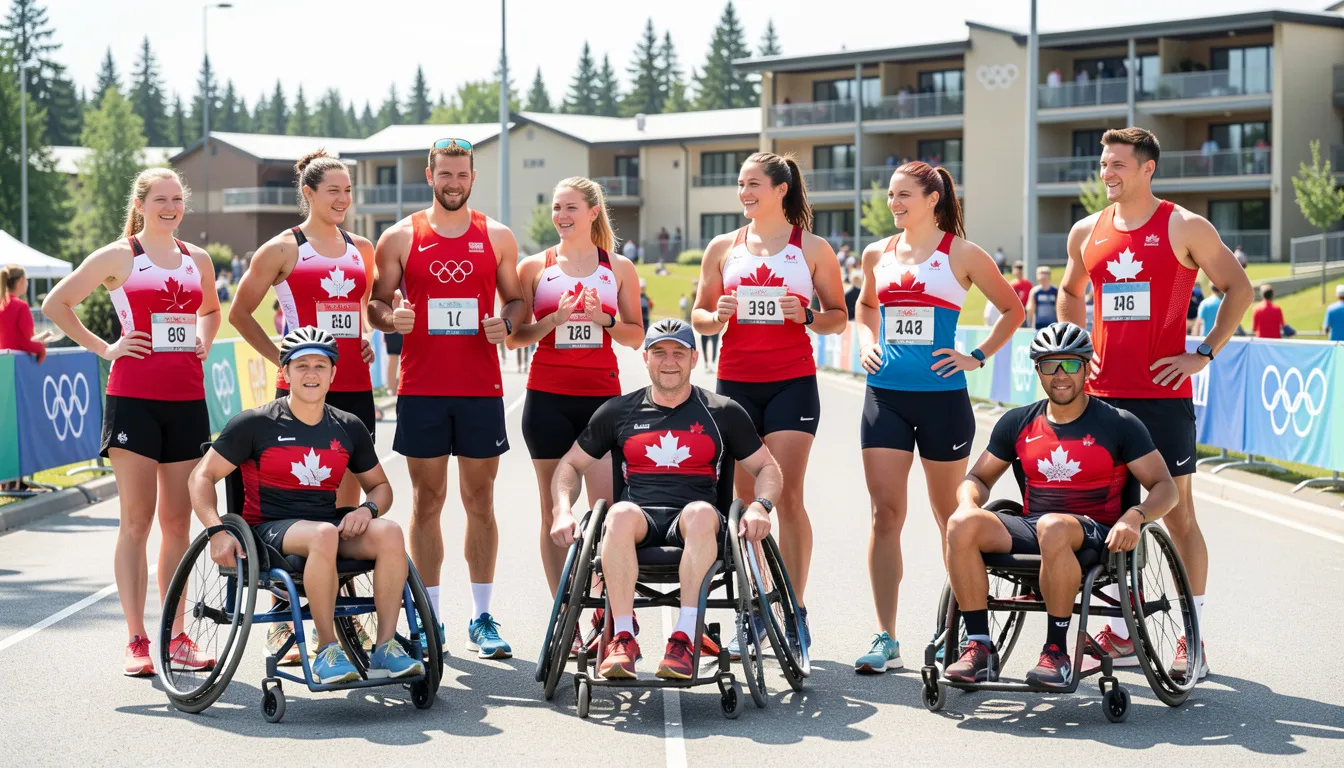
One of the most significant advancements of the Lululemon era is the deep commitment to inclusive design. The design team works closely with both Olympic and Paralympic athletes to ensure the garments function perfectly for all body types and abilities.
- Adaptive Features: Jackets feature magnetic closures and oversized zipper pulls for athletes with limited dexterity.
- Seated Fits: Pants and tops are specifically tailored for wheelchair users, preventing fabric from bunching up uncomfortably in the front or riding down in the back.
- Sensory Considerations: Designers utilize flat seams and ultra-soft interior fabrics to accommodate athletes with sensory processing sensitivities.
Sustainable Materials and Future-Forward Tech
Modern athletes demand gear that aligns with their environmental values. Lululemon has integrated extensive sustainable practices into the Canadian Olympic outfits.
- Recycled Fibers: Many of the synthetic materials used in the outerwear and base layers originate from recycled ocean plastics and repurposed nylon.
- Plant-Based Alternatives: The designers utilize plant-based nylons and sustainable cotton alternatives to reduce the carbon footprint of the manufacturing process.
- Thermal Mapping Technology: For winter gear, engineers map the human body to identify where athletes generate the most heat. They place breathable mesh in high-heat zones and concentrated insulation in areas that get cold quickly.
Key Elements of Team Canada’s Wardrobe
An athlete does not simply receive a single tracksuit. They are issued an extensive, modular wardrobe designed to cover every possible scenario during their time at the games.
The Opening Ceremony Look
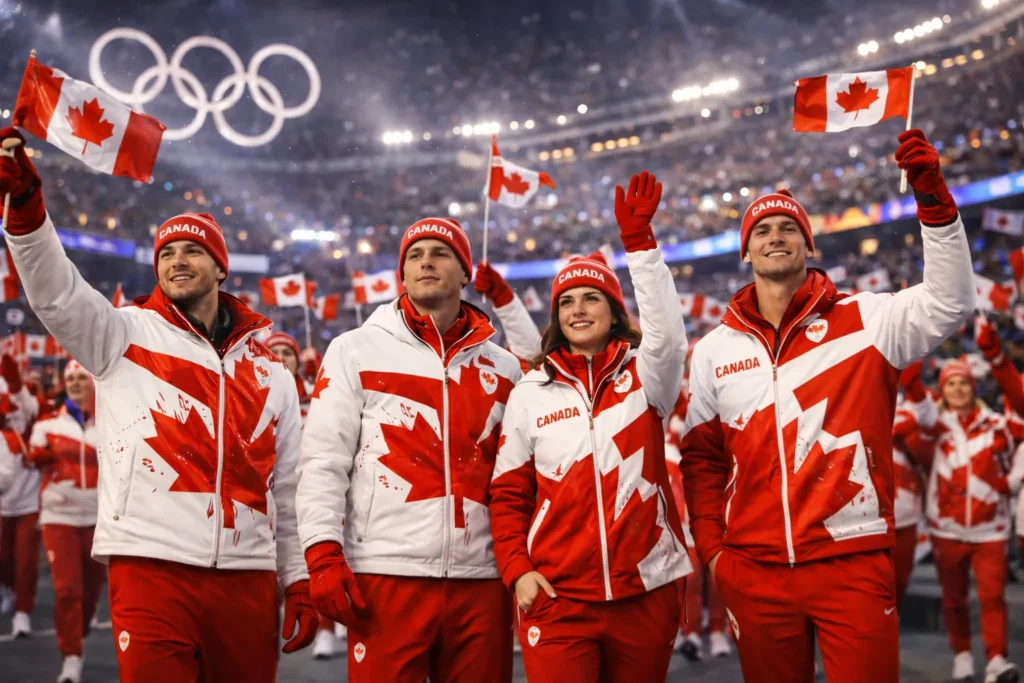
This is the most photographed outfit of the entire event. It sets the tone for the nation’s aesthetic.
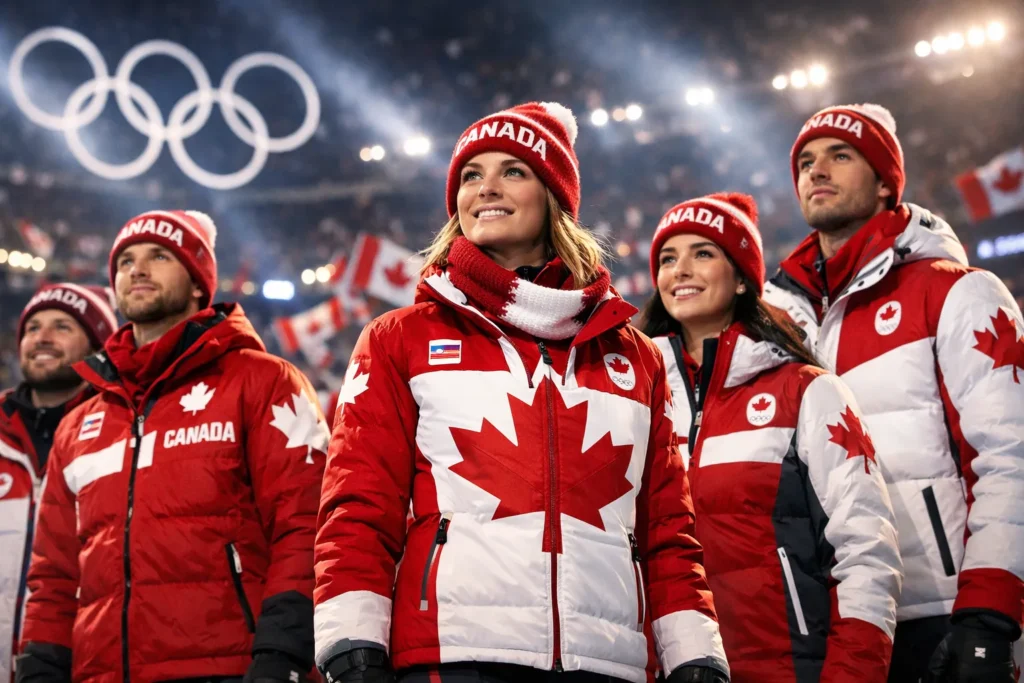
- Visual Impact: The opening ceremony outfit is usually the most elaborate piece in the collection. It often features bold, all-over prints or striking monochromatic layering.
- Weather Adaptability: Because opening ceremonies can involve hours of standing outdoors, the outfits often feature modular components. Athletes can zip off sleeves or remove layers depending on the local climate.
Podium Wear: Celebrating Success

When a Canadian athlete wins a medal, they must wear specific attire to the podium.
- Clean and Streamlined: Podium wear is generally sleeker and more subdued than the opening ceremony gear. The focus is entirely on the athlete, the medal, and the Canadian flag.
- Photogenic Materials: Designers use matte fabrics that look exceptional under stadium lights and high-definition camera flashes.
The Closing Ceremony Ensemble
The closing ceremony is a massive celebration marking the end of the games. The attire here is traditionally much more relaxed.
- Party Atmosphere: The clothing reflects a party-like vibe. Think lightweight bomber jackets, comfortable joggers, and stylish accessories.
- Commemorative Details: Closing ceremony outfits often feature hidden details, like the host city’s coordinates or a graphic celebrating the specific year of the games.
Athlete Village Casuals
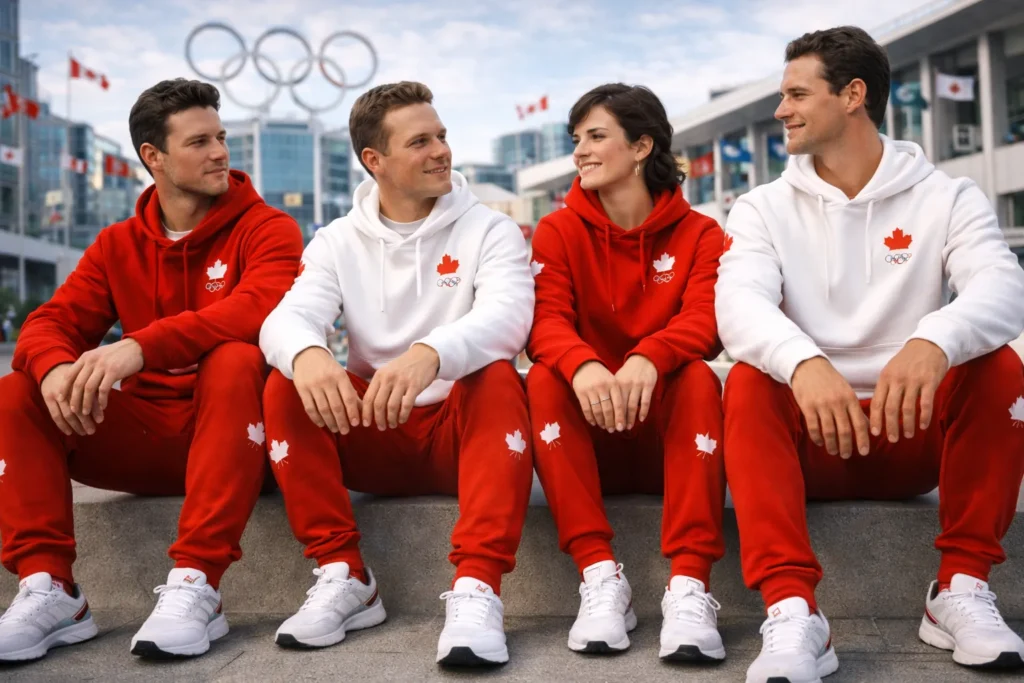
Athletes spend the vast majority of their time in the Olympic Village, recovering, eating, and socializing.
- Pure Comfort: The village wardrobe consists of ultra-soft hoodies, sweatpants, slides, and breathable t-shirts.
- Subtle Branding: These pieces feature smaller, more understated logos, allowing athletes to relax without feeling like walking billboards.
How Canadian Olympic Outfits Reflect National Identity
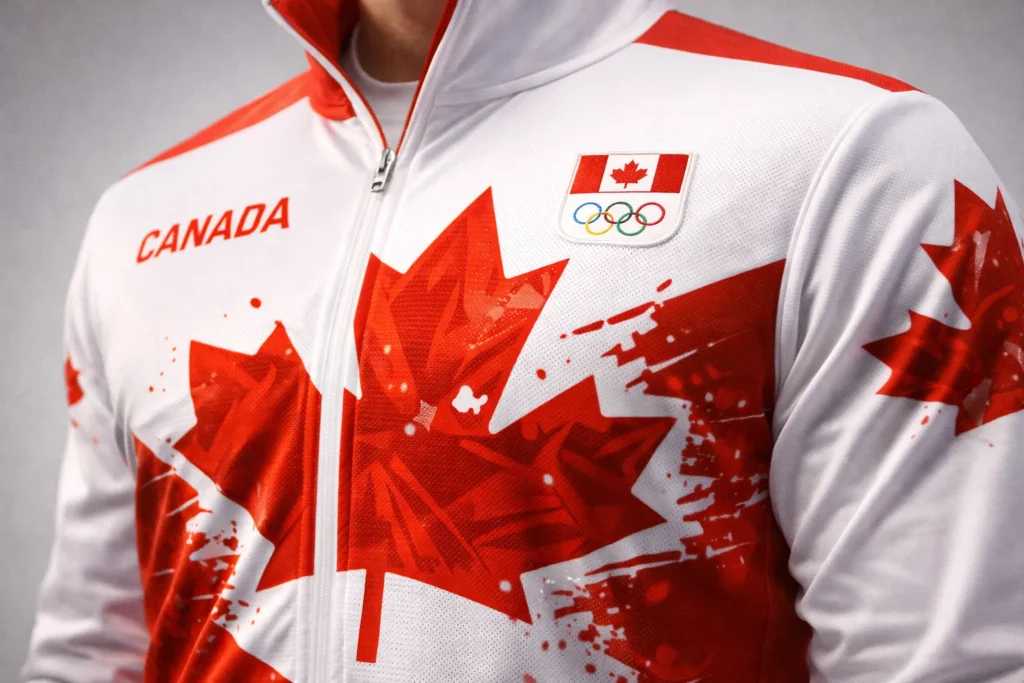
Designing a national uniform requires distilling the essence of a massive, diverse country into a cohesive fashion collection. Canadian designers achieve this through clever use of color, symbolism, and cultural collaboration.
Beyond the Maple Leaf and Red and White
While red and white are non-negotiable, modern designers use these colors in sophisticated ways.
- Dynamic Shades: Instead of a flat, standard red, modern outfits incorporate deep burgundies, bright crimson, and fiery scarlet tones.
- Evolving the Leaf: The traditional 11-point maple leaf remains front and center, but designers often reimagine it. Recent collections have featured magnified, abstract crops of the leaf or highly stylized, geometric interpretations.
- Nature-Inspired Prints: For the 2024 Paris Games, the outfits featured beautiful, complex prints celebrating Canada’s diverse flora, weaving together provincial and territorial flowers into a cohesive, artistic pattern.
Indigenous Influences and Collaborations
In recent years, there has been a vital, growing movement to incorporate Indigenous art and perspectives into the national wardrobe.
- Authentic Partnerships: Rather than appropriating designs, outfitters now collaborate directly with First Nations, Inuit, and Métis artists to create specific pieces or prints for the collection.
- Cultural Storytelling: These collaborations ensure that the Olympic wardrobe reflects the true, deep history of the land, sharing Indigenous storytelling and artistry with a global audience.
The Cultural and Economic Impact
The unveiling of the Canadian Olympic outfits is a highly anticipated media event that generates massive cultural and economic ripples.
Boosting National Pride
Clothing has a unique ability to unite people. When millions of Canadians see their athletes marching into the stadium looking sharp, confident, and distinctly Canadian, it creates a powerful sense of shared identity. Wearing replica gear allows fans at home to feel like they are part of the team, fostering community spirit during the games.
Retail Success and Fan Replicas
The economic impact of Olympic fashion is staggering. The official outfitter always releases a commercial line of replica gear for the general public.
- Selling Out Quickly: Popular items, like specific beanies, belt bags, or opening ceremony jackets, often sell out within hours of the public launch.
- Funding the Athletes: A portion of the proceeds from these retail sales goes directly back to the Canadian Olympic Foundation, helping to fund training, coaching, and resources for the next generation of athletes.
Summer vs. Winter Games: Adapting to the Elements
Canada is famous for its harsh winters, but its athletes excel in the summer heat just as effectively. Designing for these two vastly different climates requires entirely different approaches to textiles and layering.
Dressing for the Summer Heat
For Summer Games in locations like Tokyo or Paris, the primary enemy is heat and humidity.
- Advanced Sweat-Wicking: Garments use ultra-lightweight, highly breathable fabrics that actively pull sweat away from the skin and dry in minutes.
- UV Protection: Outdoor athletes receive apparel treated with UPF (Ultraviolet Protection Factor) technology to shield their skin from harsh sun exposure.
- Antimicrobial Treatments: To keep athletes feeling fresh in humid environments, the fabrics often feature natural or synthetic antimicrobial treatments that prevent odor-causing bacteria from multiplying.
Conquering the Winter Chill
Winter Games demand gear that provides extreme warmth without adding bulky weight that might restrict an athlete’s movement.
- The Power of Layering: The winter wardrobe is built around a dynamic layering system. Athletes receive moisture-wicking base layers, insulating mid-layers (often featuring high-tech synthetic down), and windproof, waterproof outer shells.
- Seamless Construction: To prevent cold air from seeping in, winter jackets utilize seamless, welded construction rather than traditional stitching.
- Targeted Insulation: Designers use varying thicknesses of insulation within a single jacket. The chest and vital organs receive heavy insulation, while the underarms and side panels use lighter materials to allow for better mobility and ventilation.
What to Expect for Future Games (2026 and Beyond)
As we look toward the Winter Games in Milano Cortina in 2026 and the Summer Games in Los Angeles in 2028, the evolution of Canadian Olympic outfits shows no signs of slowing down.
Anticipated Innovations
The intersection of technology and fashion will continue to drive future designs.
- Smart Fabrics: We can expect to see fabrics that actively respond to an athlete’s body temperature, loosening their weave to release heat or tightening to trap it.
- Customized 3D Knitting: Advanced 3D knitting technology will allow for garments uniquely contoured to an individual athlete’s precise body measurements, eliminating waste and providing a flawless fit.
- Hyper-Sustainability: Future collections will likely push toward complete circularity, using entirely biodegradable or fully recyclable materials to ensure the Olympic wardrobe leaves a minimal environmental footprint.
The Continuing Role of Lululemon
As Lululemon continues its tenure as the official outfitter, fans can expect the brand to push the boundaries of athletic fashion further. Their focus on the mind-body connection—ensuring athletes feel mentally comfortable and confident in their gear—will remain a core design pillar. By blending high fashion, supreme functionality, and deep Canadian pride, the upcoming collections will undoubtedly keep Team Canada at the top of the best-dressed lists worldwide.
Conclusion
The story of Canadian Olympic outfits is a fascinating journey of innovation, national pride, and fashion evolution. From the heavy wool sweaters of the early 20th century to the viral denim jackets of 2020 and the highly engineered, inclusive athleisure of today, these garments do much more than clothe athletes. They tell the story of a diverse, modern, and fiercely proud nation. As designers continue to push the limits of textile technology and sustainable manufacturing, Team Canada’s wardrobe will continue to inspire athletes to achieve their personal bests while uniting millions of fans back home. Whether navigating the snowy peaks of a Winter Games or the sweltering heat of a Summer Games, Canadian athletes will always step onto the global stage looking undeniably stylish and unequivocally Canadian.
Frequently Asked Questions (FAQs) about Canadian Olympic Outfits
Who designs the Canadian Olympic outfits?
Currently, the Vancouver-based athletic apparel company Lululemon designs and manufactures the official Canadian Olympic and Paralympic outfits. They took over as the official outfitter starting with the 2022 Beijing Winter Games and hold the contract through the 2028 Los Angeles Games.
Where can I buy Team Canada Olympic apparel?
During the Olympic cycles, you can purchase official replica gear directly from the official outfitter’s stores (currently Lululemon) and their website. Certain items are also available through the official Canadian Olympic Team online store.
Do athletes get to keep their Olympic uniforms?
Yes! Athletes are given an extensive wardrobe pack containing all their opening ceremony, closing ceremony, podium, and village wear. They keep all of this apparel as a memento of their Olympic experience.
Why do Paralympic and Olympic athletes wear the same outfits?
Team Canada firmly believes in equality across all levels of competition. Providing the exact same wardrobe to both Olympic and Paralympic athletes promotes a unified “One Team” philosophy. However, the outfitter customizes the functional fit of the garments (such as adding magnetic zippers or seated tailoring) to meet the specific physical needs of Paralympic athletes.