Moody Wedding Aesthetic: How to Create a Dark, Romantic Celebration
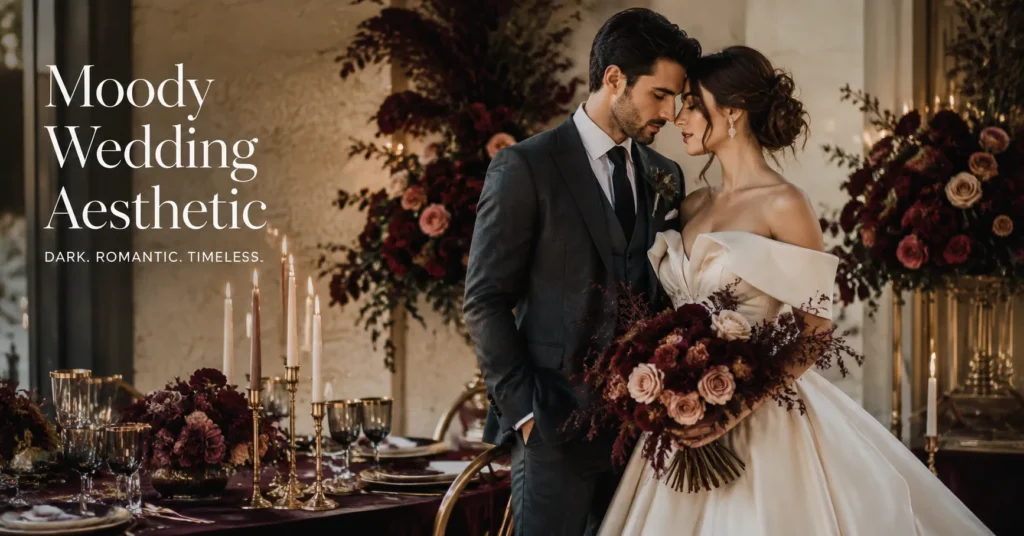
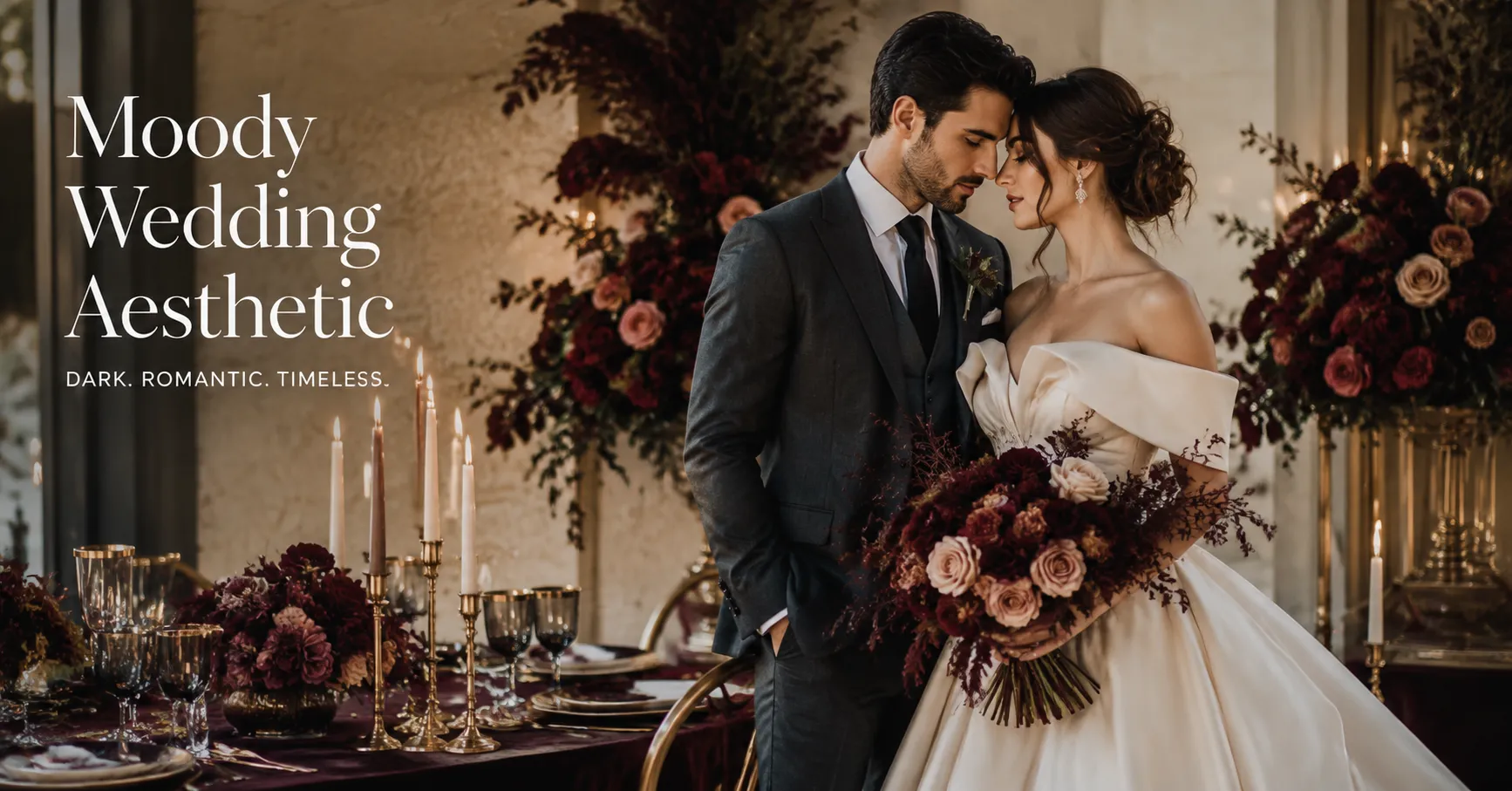
A moody wedding aesthetic trades bright whites and pastels for deep, saturated tones like burgundy, black, forest green, and dusty mauve. It leans on candlelight, dark florals, dramatic textures, and atmospheric venues to create a sense of brooding romance. The look works beautifully for autumn and winter weddings, gothic churches, candlelit cellars, and forest ceremonies, and it photographs with rich contrast and depth.
Most couples picture a wedding as something light and airy. Then they see a candlelit table draped in oxblood velvet, surrounded by dark roses and flickering tapers, and everything shifts. That reaction is exactly why the moody wedding aesthetic has grown from a niche choice into one of the most requested styles of the year.
Here is the problem, though. A dark wedding theme looks stunning in a single photo but falls apart without careful planning. Get the lighting wrong and it reads gloomy. Overload the decor and it feels like a costume set. The difference between atmospheric and awkward comes down to intention.
This guide gives you that intention. You will learn what a moody wedding aesthetic actually means, which color palettes carry the right mood, how to choose venues that already feel dramatic, and how to style florals, lighting, attire, and stationery. We will also cover moody wedding photography and honest planning advice. By the end, you will know how to build a cohesive, brooding, romantic celebration that feels like you.
What Does a Moody Wedding Aesthetic Actually Mean?
A moody wedding aesthetic is a design direction built around depth, drama, and rich contrast. Rather than chasing light and brightness, it embraces shadow, texture, and saturated color to create emotional atmosphere.
Think of it as the difference between a sunlit garden and a candlelit library. Both are beautiful. One feels open and cheerful; the other feels intimate and cinematic. The moody direction chooses the second.
This style is often confused with a strictly gothic wedding. They overlap, but they are not identical. Gothic wedding ideas lean heavily into black, iron, and dramatic architecture. A moody aesthetic is broader. It can feel romantic, earthy, or ethereal while still using a dark color palette.
The core traits stay consistent across every version:
- Saturated, low-key color rather than pastels or bright white.
- Layered lighting that relies on candles and warm glows.
- Rich textures like velvet, dried botanicals, and aged wood.
- Atmospheric settings that already carry a sense of history or mystery.
That combination creates the brooding romance couples are actually after.
Moody Wedding Color Palettes That Set the Tone
Color does most of the heavy lifting in a moody wedding aesthetic. The right palette signals the mood before a single candle is lit. The wrong one turns “dramatic” into “dreary.”
Start by choosing a dominant tone, then layer two or three supporting shades around it. A dark color palette wedding works best when there is contrast, so pair your deepest color with a softer or metallic accent.
Deep burgundy and oxblood
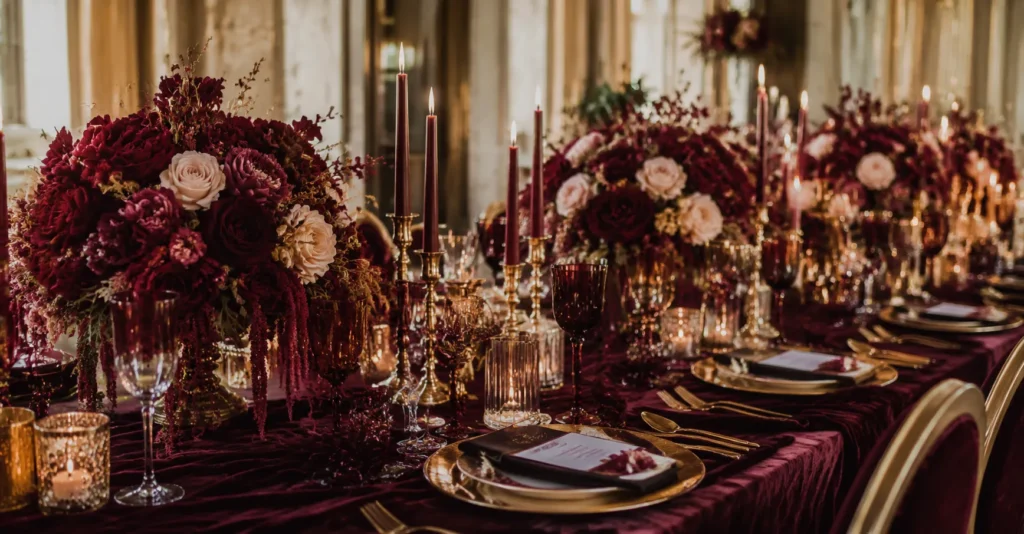
Burgundy is the anchor color of moody weddings. Warm, rich, and undeniably romantic, it reads as luxurious rather than severe. Oxblood pushes it darker for a more dramatic edge.
Best paired with: Blush, gold, dusty rose, and cream for balance.
Black and charcoal
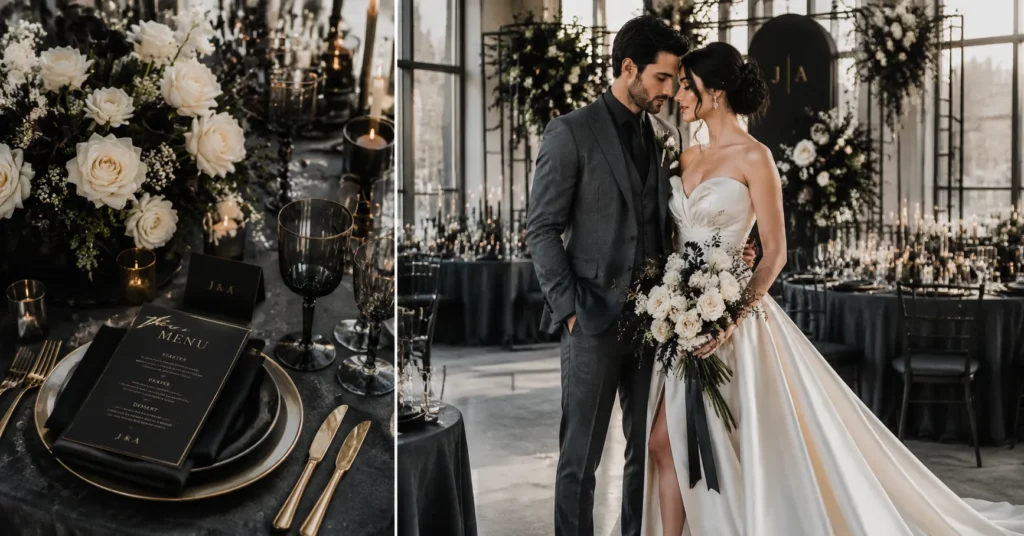
Black is bold and modern. Used as an accent, through linens, candles, or stationery, it sharpens the whole look. Used everywhere at once, it can feel cold, so soften it with warm metallics or greenery.
Best paired with: Ivory, gold, deep green, and warm wood tones.
Forest and emerald green
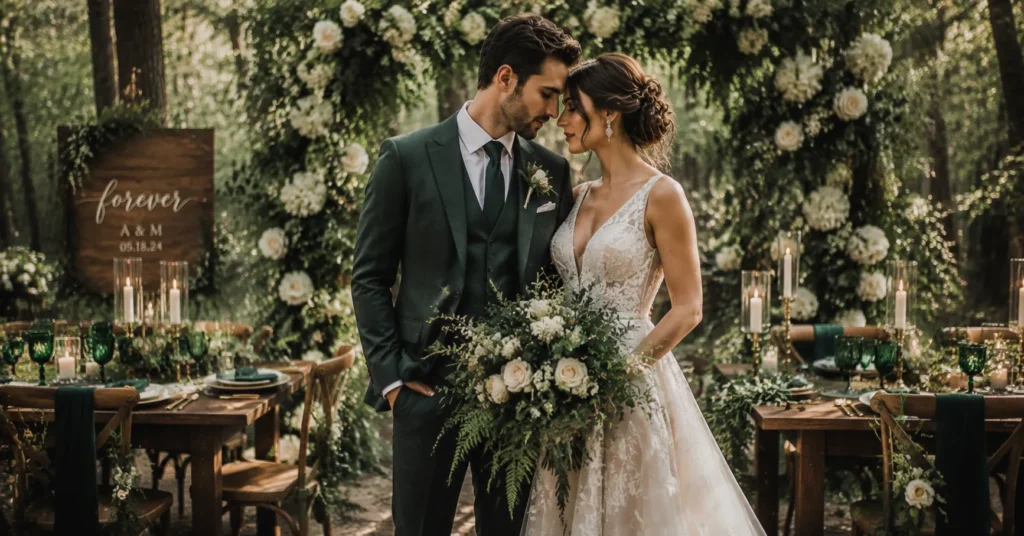
Green grounds a moody palette in nature. Forest green feels earthy and calming, which makes it ideal for woodland ceremonies and dried botanical decor.
Best paired with: Rust, burgundy, gold, and cream.
Dusty mauve and plum
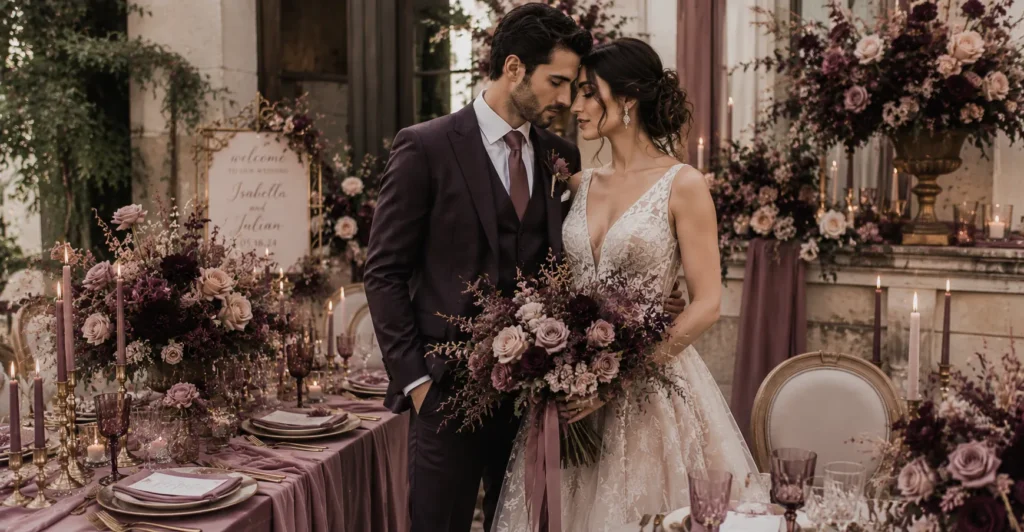
Mauve softens the darkness. It brings brooding romance without heaviness, which is why it works so well for couples who want moody without going fully gothic.
Best paired with: Charcoal, sage, dusty blue, and muted gold.
The table below matches each palette to the mood it creates.
| Color Palette | Mood It Creates | Best Season | Ideal Setting |
| Burgundy + gold + blush | Warm, romantic, luxurious | Autumn | Ballroom, barn, cellar |
| Black + ivory + greenery | Modern, dramatic, sharp | Winter | Gothic church, city venue |
| Forest green + rust + cream | Earthy, natural, grounded | Autumn / spring | Forest, garden, greenhouse |
| Dusty mauve + charcoal + sage | Soft, ethereal, brooding | Any season | Estate, chapel, vineyard |
Notice the pattern. Every palette pairs a dark base with a lighter or warmer accent. That contrast is what keeps a dark wedding theme from tipping into gloom.
Best Venues for a Moody Wedding Aesthetic
The right venue does half the work. When the space already carries atmosphere, you spend less on decor and gain more drama for free. The wrong venue, a bright modern hall with flat overhead lighting, fights the mood at every turn.
Look for spaces with texture, history, or natural shadow. Stone walls, exposed beams, dark wood, and low ceilings all support the aesthetic instantly.
Gothic churches and historic chapels
Vaulted ceilings, stained glass, and aged stone deliver instant grandeur. A candlelit ceremony inside a gothic church feels cinematic with almost no added decor.
Forests and woodland clearings
Tall trees, filtered light, and natural shadow create an ethereal wedding backdrop. Woodland settings pair perfectly with green palettes and dried botanicals.
Candlelit cellars and wine caves
Underground stone cellars are made for moody celebrations. Low ceilings, warm light, and aged textures create an intimate, brooding romance that few venues can match.
Manor houses and historic estates
Grand rooms with dark paneling, antique furniture, and dramatic staircases give you a ready-made moody backdrop with a sense of old-world luxury.
Industrial and warehouse spaces
Raw brick, steel, and concrete offer a modern take on dramatic wedding decor. These blank canvases let you build the mood entirely through lighting and styling.
The table below compares venue types to the vibe they produce.
| Venue Type | Vibe It Creates | Decor Effort Needed | Best Palette Match |
| Gothic church / chapel | Cinematic, grand, timeless | Low | Black + ivory, burgundy |
| Forest / woodland | Ethereal, earthy, natural | Medium | Forest green + rust |
| Candlelit cellar | Intimate, brooding, warm | Low | Burgundy + gold |
| Manor house / estate | Luxurious, historic, refined | Low to medium | Mauve + charcoal |
| Industrial warehouse | Modern, edgy, dramatic | High | Black + greenery |
If you fall for a bright, blank venue, do not panic. You can still create the look, but budget more for lighting and drapery to build the atmosphere the space lacks.
Florals and Decor: Building Dramatic Atmosphere
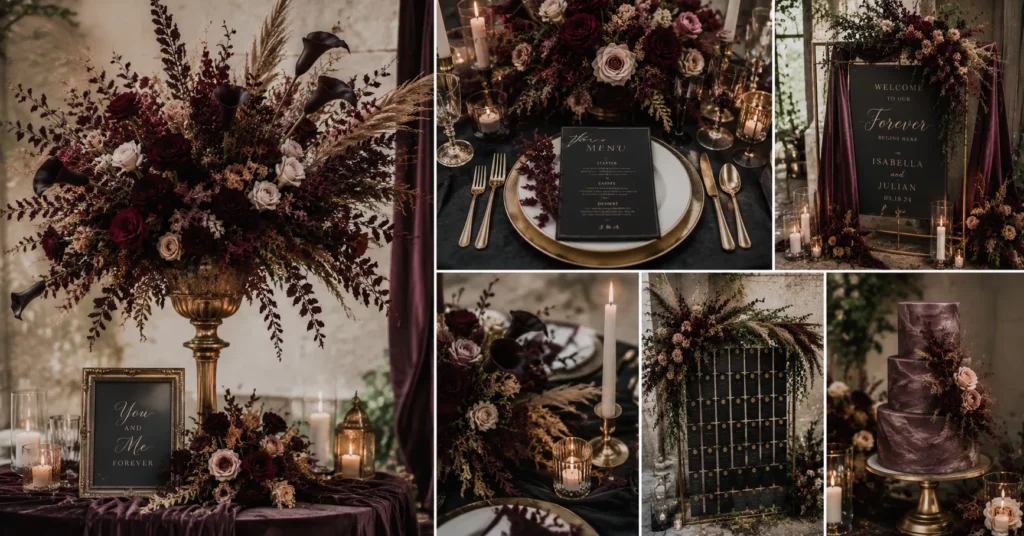
Decor is where a moody wedding aesthetic becomes tangible. This is the layer that turns a color palette into a feeling. The goal is richness and texture, not clutter.
Dark floral wedding arrangements sit at the heart of the look. Deep, saturated blooms replace the usual pastels, and dried elements add contrast and movement.
Choosing dark florals
Dark florals give the aesthetic its signature drama. Look for blooms in deep, moody tones rather than bright colors.
- Burgundy dahlias and ranunculus for lush, romantic volume.
- Black-toned calla lilies and “Black Baccara” roses for sharp drama.
- Deep plum anemones with dark centers for contrast.
- Trailing amaranthus and dark hellebores for movement.
Balance these deep tones with a few lighter blooms, blush garden roses or cream astilbe, so the arrangements read layered rather than flat.
Dried botanicals and texture
Dried elements add earthiness and stretch your florals further. Pampas grass, preserved eucalyptus, dried ferns, and seed pods bring texture that fresh flowers cannot. They also travel well and hold up all day.
Dramatic candles everywhere
Candles are non-negotiable for this style. Cluster tapers in varying heights, add pillar candles in hurricane vases, and line aisles with flickering light. The glow softens faces and deepens shadow in the best way.
Tablescapes with depth
Layer dark linens, textured runners, aged brass or black flatware, and colored glassware. Small details, wax-sealed place cards, antique candelabras, build the immersive world that defines dramatic wedding decor.
Lighting: The Most Important Element
Lighting makes or breaks a moody wedding aesthetic. Get it right and the room feels cinematic. Get it wrong and a beautifully styled space looks dim or, worse, harshly lit.
The rule is simple. Avoid bright overhead lighting entirely. Warm, low, layered light is what creates atmosphere.
Build your lighting in layers:
- Candlelight as the primary source for warmth and movement.
- Warm string lights or Edison bulbs for a gentle ambient glow.
- Uplighting in deep tones to wash walls with color and depth.
- A few focused spots on the cake, head table, or florals for contrast.
Warm color temperature matters more than most couples realize. Choose bulbs around 2700K or lower. Cool, blue-white light instantly flattens the mood and makes rich colors look dull.
Moody Bridal Style and Attire
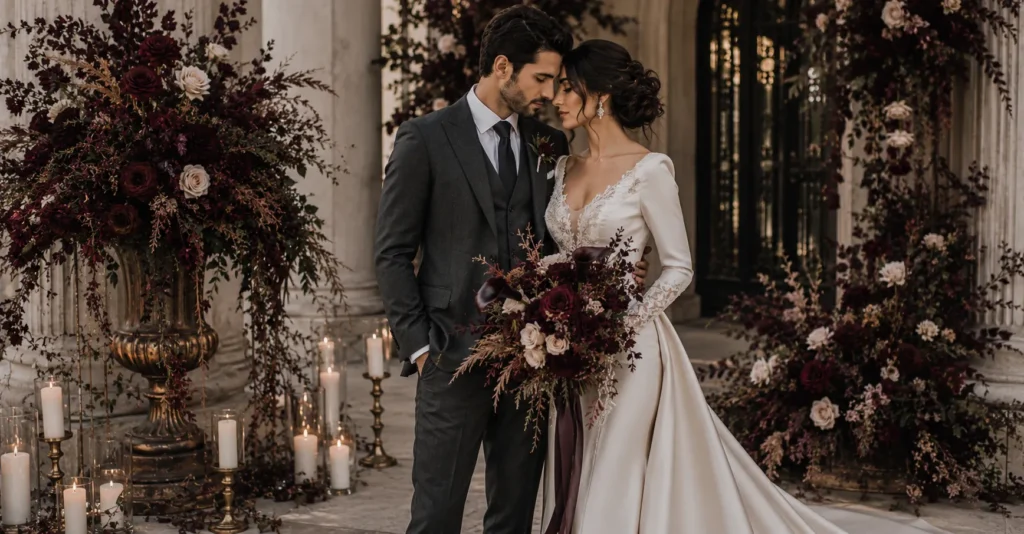
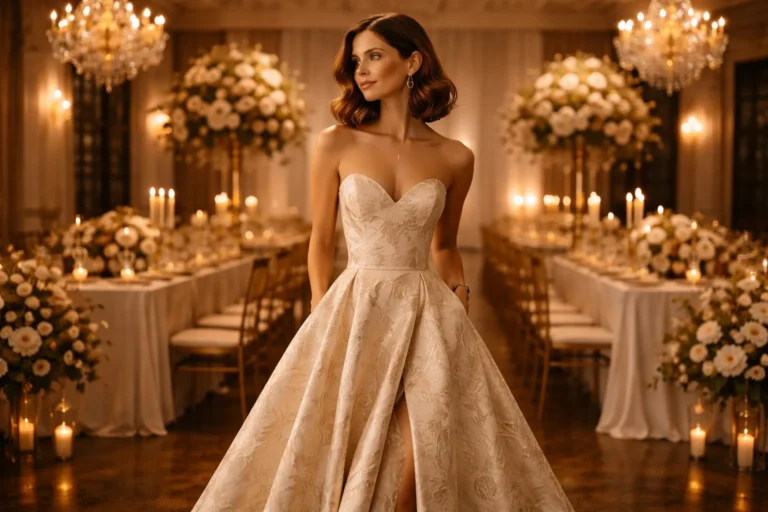
Your attire should echo the aesthetic, not clash with it. Moody bridal style has expanded far beyond the traditional white gown, and that freedom is part of the appeal.
You do not have to wear black to fit the theme. Many brides keep an ivory gown and let texture, silhouette, and styling carry the mood.
Consider these directions:
- Rich fabrics like velvet, satin, and heavy lace for depth.
- Dramatic silhouettes such as long sleeves, capes, or sweeping trains.
- Colored gowns in deep burgundy, charcoal, or midnight blue.
- Dark accessories like moody bouquets, black veils, or statement jewelry.
For partners and wedding parties, deep-toned suits, oxblood, forest green, charcoal, tie the whole look together. Bridesmaids in mismatched dark tones within one palette reinforce the aesthetic without feeling uniform.
Invitation and Stationery Design
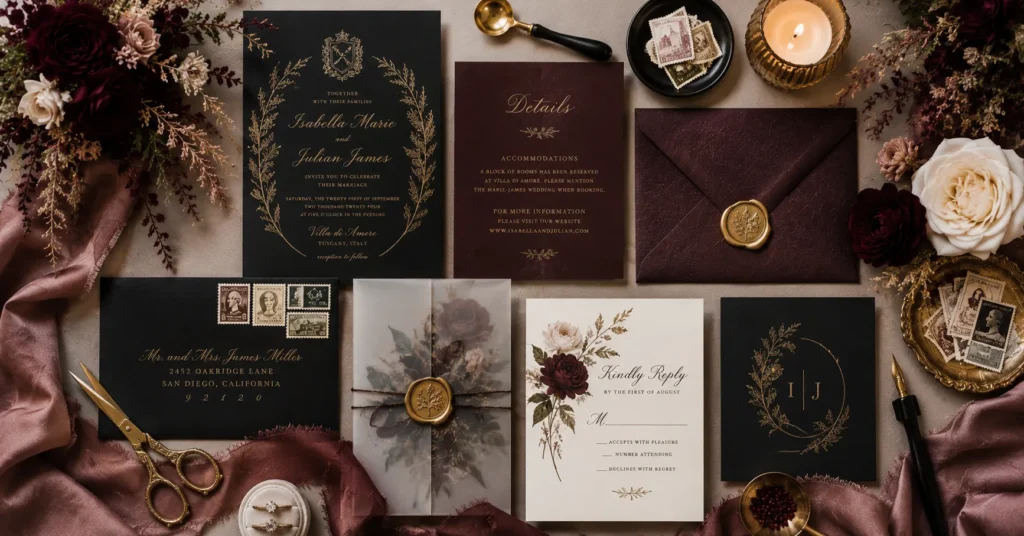
Your stationery sets expectations before guests arrive. A moody invitation suite signals the aesthetic the moment it lands in a mailbox.
Lean into dark backgrounds, metallic ink, and rich textures. Black or deep-toned card stock with gold or copper foil reads luxurious and dramatic. Wax seals, vellum overlays, and moody botanical illustrations reinforce the theme.
Keep typography elegant. Fine serif fonts or flowing calligraphy suit the brooding romance far better than bold, modern sans-serifs. The same palette should carry through to menus, place cards, and signage for a cohesive world.
Moody Wedding Photography Tips
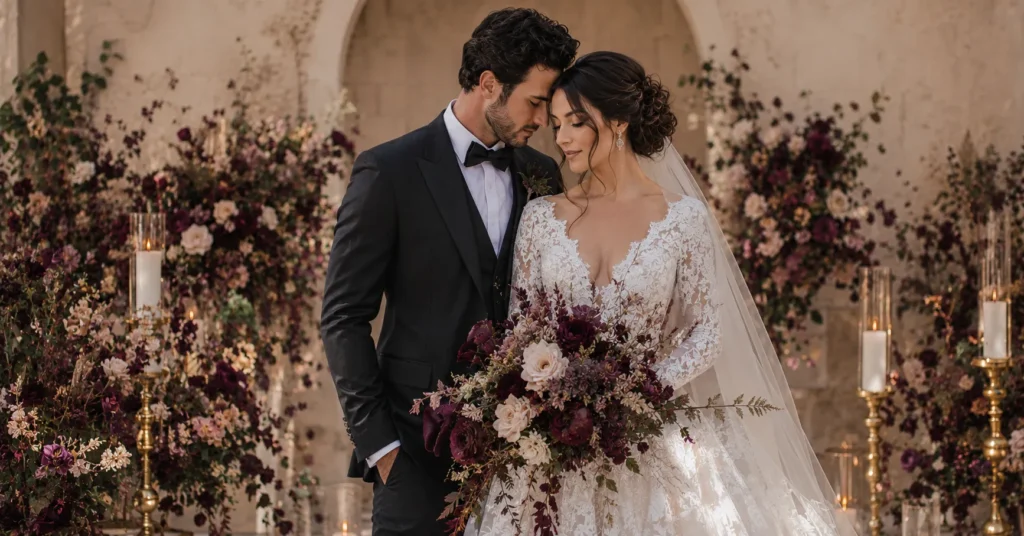
Great styling deserves great photos. Moody wedding photography is a distinct craft, and hiring the right photographer matters as much as any decor decision.
Not every photographer shoots dark, atmospheric images well. Many are trained for bright, airy work, and forcing a moody edit onto that style rarely looks natural. Review portfolios specifically for dark, contrast-rich galleries before booking.
Practical tips for stunning moody images:
- Book a photographer who shoots dark and moody as their signature style.
- Plan key moments around low light, like golden hour or candlelit receptions.
- Embrace shadow rather than flooding scenes with flash.
- Use candlelight as a light source for intimate, glowing portraits.
- Choose textured backdrops, stone, foliage, dark walls, for depth.
The “so what” here is simple. Your aesthetic only lives on in photographs, so the photographer is not the place to cut costs.
Real Planning Advice for a Moody Wedding
The aesthetic looks effortless in inspiration photos. In practice, it takes deliberate choices to keep it from feeling heavy or one-note. Here is honest advice from a planning perspective.
Balance dark with light. A fully black room with no contrast feels flat and can even feel somber. Always introduce a warmer or lighter accent to keep the mood romantic rather than gloomy.
Prioritize your budget on atmosphere. Lighting, candles, and florals deliver the biggest visual payoff. Spend there first, then scale back on details guests will barely notice.
Confirm venue candle policies early. Many spaces restrict open flames. Ask before you commit, and have LED alternatives ready as a backup.
Consider guest comfort. Very low light is beautiful but can make menus, signage, and pathways hard to read. Add subtle functional lighting where people need to move or read.
Keep it cohesive. Choose one clear direction, romantic, gothic, earthy, and apply it consistently. A mix of too many moods dilutes the drama you are working to create.
Conclusion:
A moody wedding aesthetic rewards intention over intensity. The most memorable celebrations in this style are not the darkest, they are the most cohesive. They pair a deep color palette with warm candlelight, layer rich textures, and let one clear mood guide every choice.
Start with your palette and venue, since those decisions shape everything else. Build atmosphere through layered lighting and dark florals rather than sheer volume of decor. Choose attire and stationery that echo the theme, and invest in a photographer who shoots dark and moody by default.
Above all, balance the darkness with warmth so the day feels romantic rather than somber. Do that, and you will create a celebration that feels cinematic, intimate, and unmistakably yours. Your next step is simple: pick your dominant color, save five images that capture your ideal mood, and use them to brief every vendor you hire.
Frequently Asked Questions (FAQs) about Moody Wedding Aesthetic
What is a moody wedding aesthetic?
A moody wedding aesthetic is a design style built around deep, saturated colors, dramatic lighting, and rich textures instead of bright whites and pastels. It uses candlelight, dark florals, and atmospheric venues to create a sense of brooding romance. The look feels cinematic, intimate, and emotionally rich, and it suits autumn and winter celebrations especially well.
What colors work best for a moody wedding?
The strongest moody wedding colors are deep burgundy, black, forest green, and dusty mauve. Each works best when paired with a lighter or metallic accent such as gold, blush, or cream. That contrast keeps a dark color palette wedding from looking flat or gloomy while preserving the dramatic, romantic mood.
Do I have to wear a black wedding dress for a moody wedding?
No. Moody bridal style is flexible. Many brides keep an ivory gown and create the mood through rich fabrics like velvet, dramatic silhouettes, and dark accessories such as moody bouquets or a black veil. Colored gowns in burgundy, charcoal, or midnight blue are also popular, but they are an option, not a requirement.
What venues suit a dark wedding theme best?
Venues with existing atmosphere work best, including gothic churches, forests, candlelit cellars, historic manor houses, and industrial warehouses. Spaces with stone, dark wood, low ceilings, or natural shadow support the aesthetic with minimal decor. Bright, blank halls can still work but require more investment in lighting and drapery.
How do I keep a moody wedding from feeling gloomy?
Balance is the key. Always pair your darkest colors with a warmer or lighter accent, and rely on warm candlelight rather than cool overhead light. Introduce texture, metallics, and a few softer blooms to add depth. The goal is romantic and cinematic, not somber, so contrast and warmth do the heavy lifting.
What flowers are used in a dark floral wedding?
Dark floral wedding arrangements feature deep, saturated blooms like burgundy dahlias, “Black Baccara” roses, plum anemones, and dark calla lilies. Trailing amaranthus, dried pampas grass, and preserved eucalyptus add texture and movement. Mixing a few lighter blooms, such as blush garden roses, keeps the arrangements layered rather than heavy.
How important is lighting for a moody wedding aesthetic?
Lighting is the single most important element. Warm, low, layered light creates the atmosphere the entire style depends on. Use candlelight as your primary source, add warm string lights and deep-toned uplighting, and avoid bright overhead fixtures. Choose warm bulbs around 2700K, since cool light dulls rich colors instantly.
What should I look for in a moody wedding photographer?
Look for a photographer whose signature style is dark and moody, not one who edits bright, airy images to look dark afterward. Review portfolios for full galleries with rich contrast, shadow, and candlelit moments. Since your aesthetic lives on through photographs, this is not a vendor to choose on price alone.
Is a moody wedding aesthetic only for autumn and winter?
No, though it shines in those seasons. Cooler months naturally offer earlier sunsets, richer tones, and cozy indoor settings. That said, you can create a moody, ethereal wedding in spring or summer by choosing shaded venues, planning around golden hour, and building atmosphere with candlelight and a deep color palette indoors.
How do I plan a moody wedding on a budget?
Focus your budget on the elements that create the most impact: lighting, candles, and florals. Choose a venue that already has atmosphere so you spend less on transforming the space. Use dried botanicals to stretch floral budgets, and prioritize a strong photographer over decorative details guests will barely notice.