The Complete Guide to Finding Dream Wedding Dresses and Attire
Planning a wedding involves countless decisions, but few hold as much emotional weight as choosing what you will wear when you walk down the aisle. Finding your dream wedding dresses and attire sets the tone for your entire celebration. Your outfit reflects your personality, flatters your figure, and makes you feel absolutely radiant on one of the most important days of your life.
Navigating the world of bridal fashion can feel overwhelming. With endless silhouettes, delicate fabrics, and complex dress codes, knowing where to start is half the battle. This comprehensive guide will walk you through every step of the process. You will learn how to identify the right silhouette for your body type, select the perfect fabrics, coordinate with your wedding party, and budget effectively so you can confidently say “yes” to the perfect look.
Decoding the Bridal Vocabulary: Popular Silhouettes
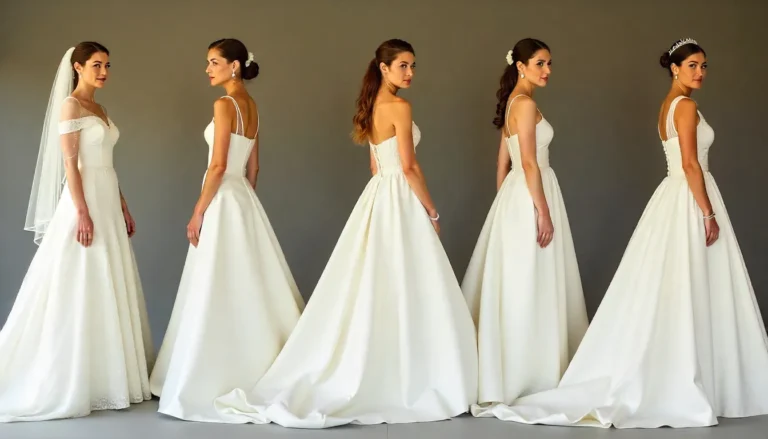
Before you step foot in a bridal boutique, you need to understand the basic shapes of wedding gowns. The silhouette dictates how the dress sits on your body and completely changes the vibe of your look.
The Classic Ball Gown
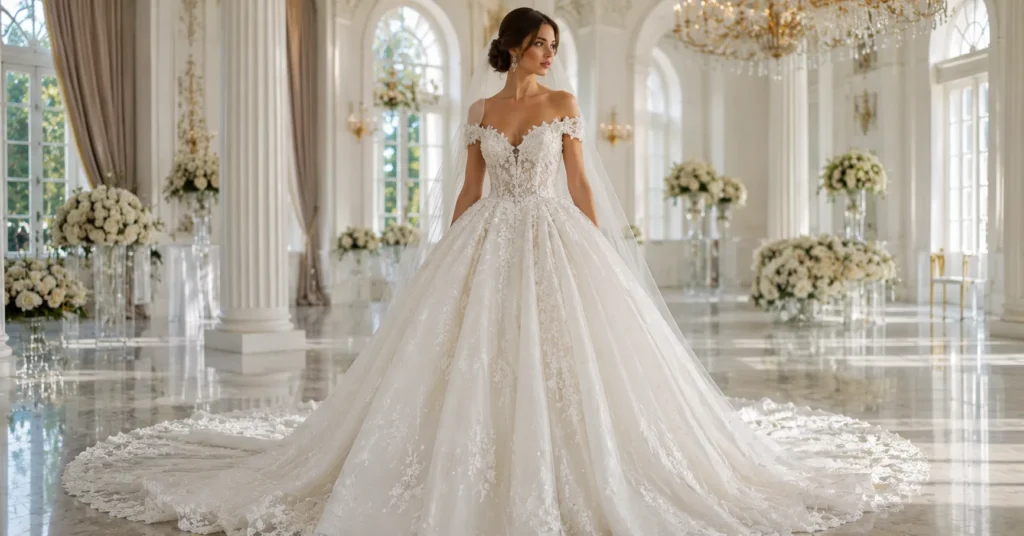
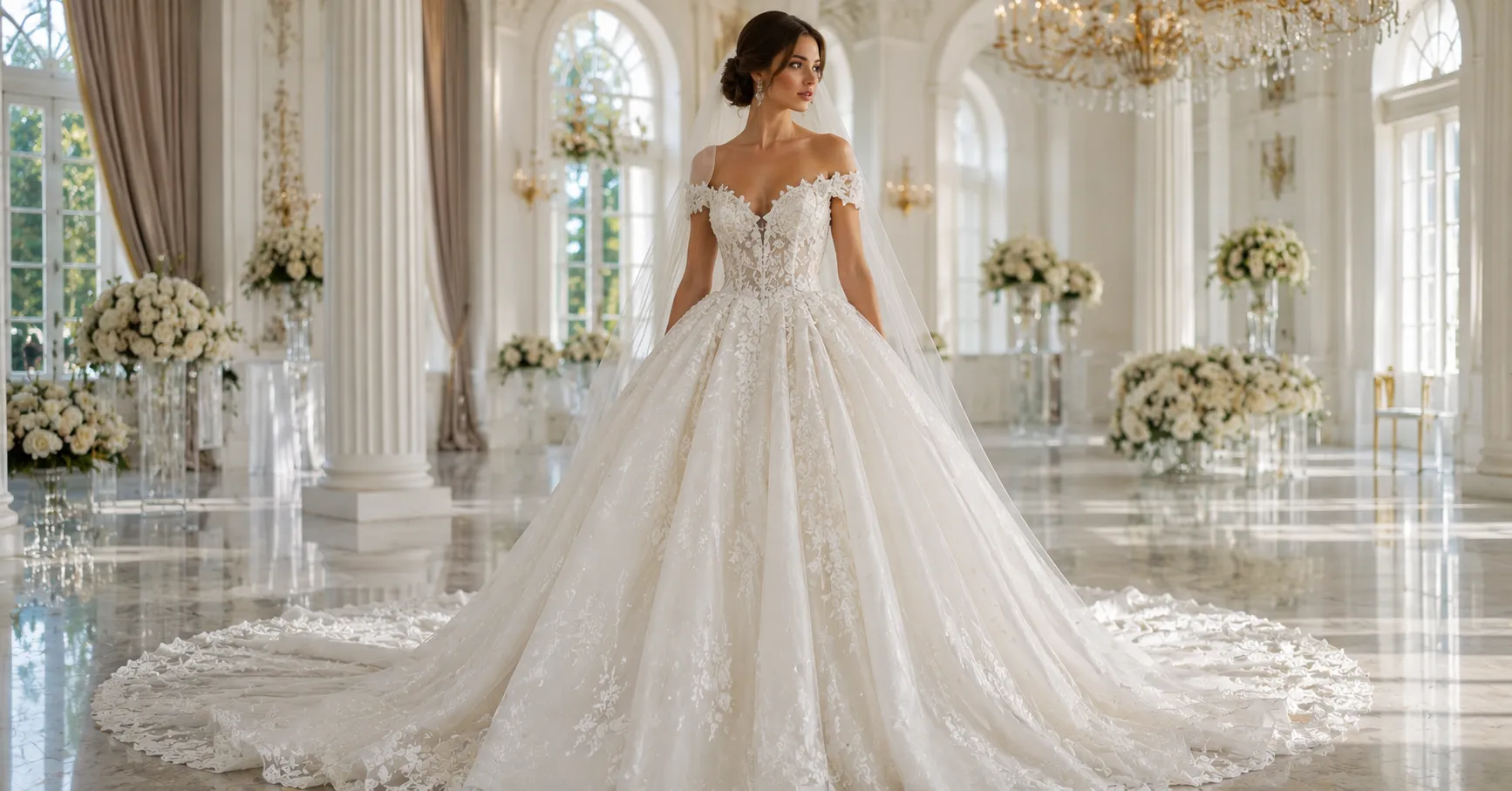
If you envision a fairy-tale entrance, the ball gown is your go-to silhouette. This style features a fitted bodice that flares out at the waist into a voluminous, full skirt. It offers high drama and traditional elegance.
- Best for: Pear-shaped or athletic figures looking to create the illusion of curves.
- Things to consider: The heavy layers of tulle or satin can make moving around difficult. Ensure your venue has wide aisles.
The Elegant A-Line
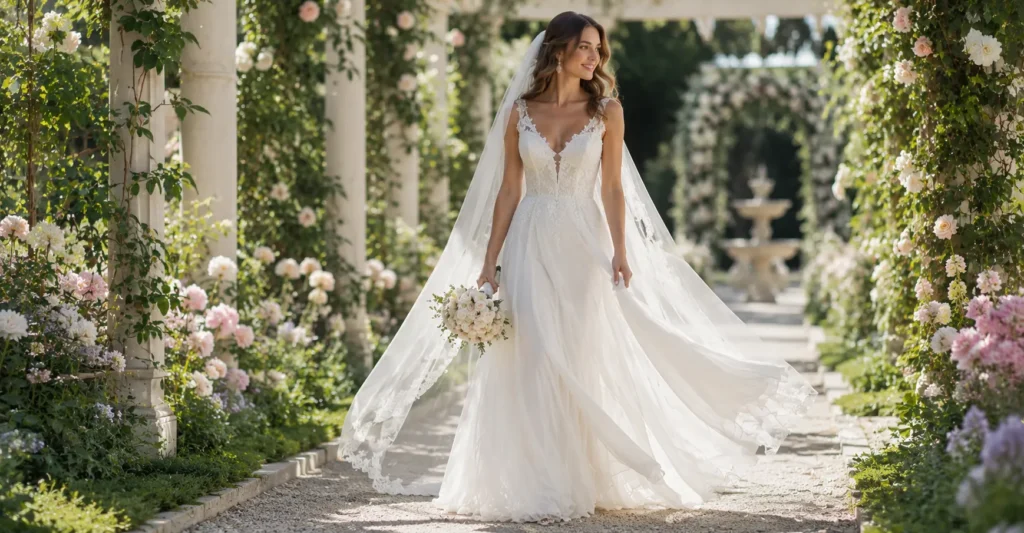
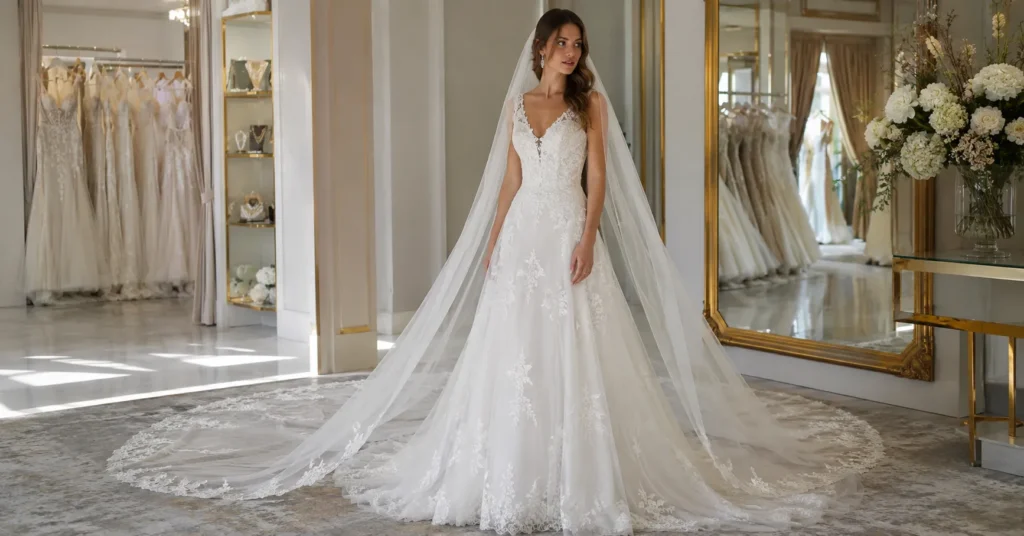
The A-line dress gets its name from its shape. It fits closely at the bodice and flows out gently to the ground, mimicking the outline of an uppercase “A.” This style is universally flattering and highly versatile.
- Best for: All body types. It naturally cinches the waist and hides the lower body.
- Things to consider: It transitions beautifully from formal church ceremonies to relaxed outdoor receptions.
The Glamorous Mermaid and Trumpet
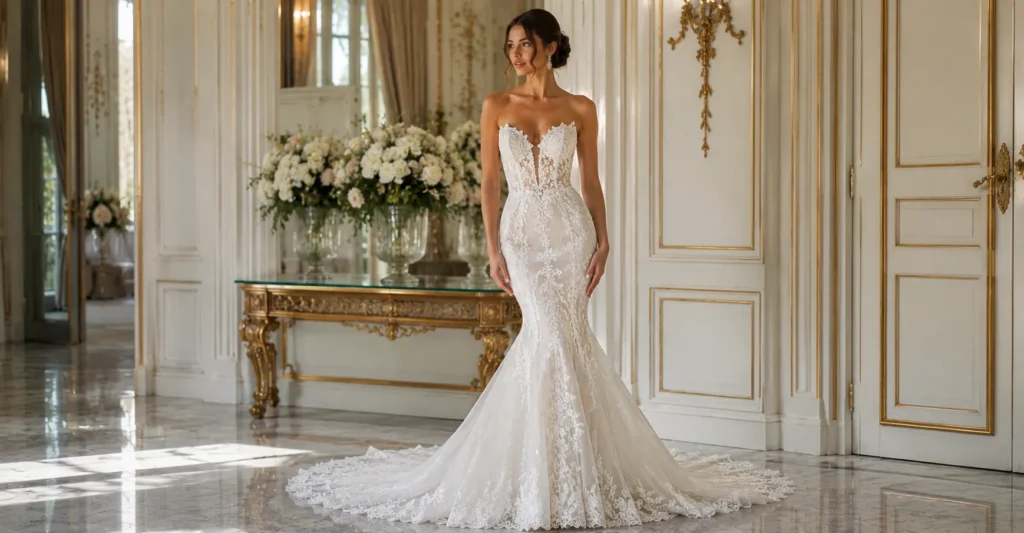
Mermaid and trumpet gowns hug the chest, waist, and hips. The mermaid flares out dramatically at or below the knee, while the trumpet begins its flare a bit higher, mid-thigh.
- Best for: Hourglass figures who want to highlight their natural curves.
- Things to consider: These styles restrict leg movement. Practice walking and sitting during your fittings to ensure comfort.
The Sleek Sheath
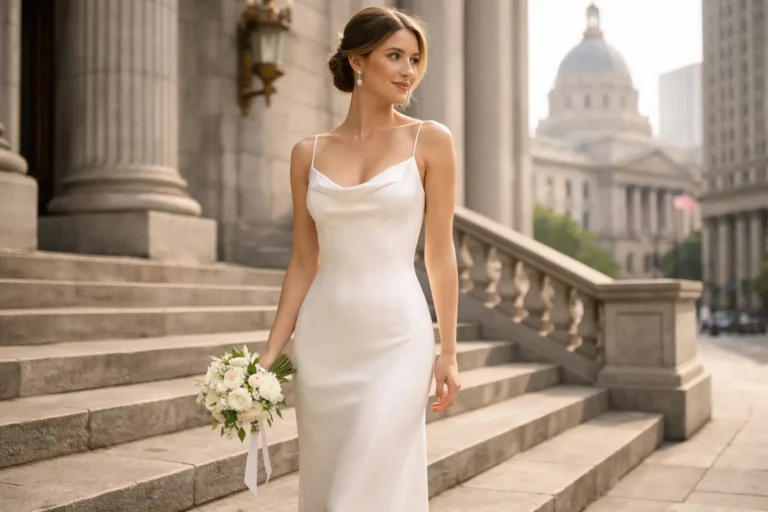
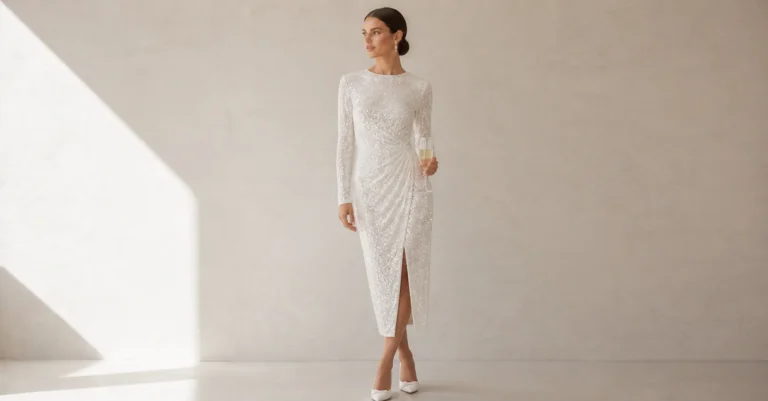
A sheath dress falls straight down from the neckline to the hem without flaring out. It often features lightweight fabrics like crepe or silk, giving it an effortless, minimalist appeal.
- Best for: Petite frames and athletic builds. It creates a sleek, elongated look.
- Things to consider: Sheath dresses offer zero hiding spots. They require seamless undergarments and expert tailoring.
Top Fabrics for Bridal Wear
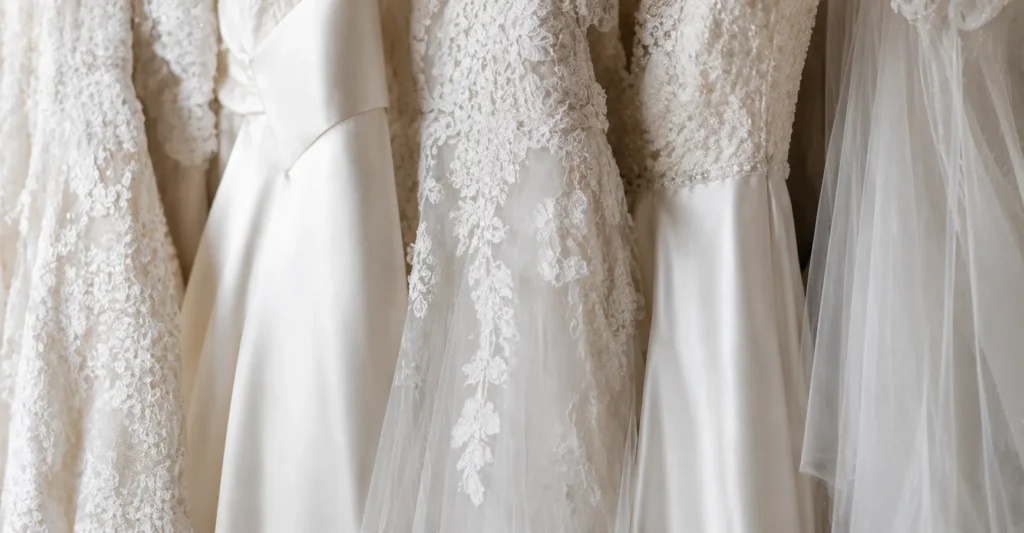
The fabric you choose influences how your dress breathes, moves, and photographs. A heavy satin ball gown feels completely different from a lightweight chiffon A-line dress. Here is a breakdown of the most common bridal fabrics:
| Fabric Type | Characteristics | Best Suited For |
| Silk Satin | Smooth, heavy, and highly reflective. Holds its shape well. | Formal evening weddings, black-tie events, and structured gowns. |
| Chiffon | Incredibly sheer, lightweight, and floaty. Often used in layers. | Beach weddings, summer ceremonies, and relaxed, boho styles. |
| Tulle | A stiff, open weave netting that creates volume. | Ball gowns, dramatic veils, and illusion necklines. |
| Lace | Woven with intricate patterns (floral, geometric). Comes in many varieties like Chantilly or Guipure. | Vintage-inspired dresses, romantic themes, and overlay details. |
| Crepe | A matte, slightly textured fabric that drapes beautifully over the body. | Modern, minimalist designs and sleek sheath silhouettes. |
Choosing Attire for the Groom and Wedding Party
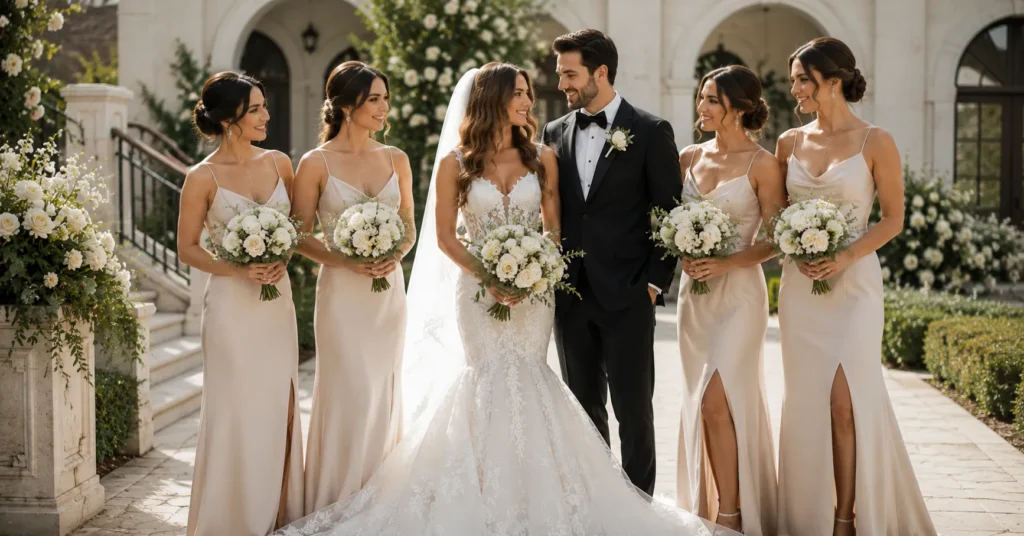
Dream wedding dresses and attire extend beyond the bride. A cohesive bridal party elevates the aesthetic of your entire wedding. The groom, groomsmen, and bridesmaids must complement the bridal look.
The Groom’s Tuxedos and Suits
The groom’s attire should match the formality of the bride’s dress.
- Black-Tie: If the bride wears a grand ball gown, the groom should opt for a classic black tuxedo with a bow tie.
- Semi-Formal: A sharp navy, charcoal, or grey suit pairs perfectly with an A-line or sheath dress.
- Casual or Destination: Tan or light grey suits, or even a tailored linen shirt and dress pants, work wonderfully for beach or garden weddings.
Selecting Bridesmaid Dresses
Gone are the days when every bridesmaid had to wear the exact same dress. Modern weddings embrace the mismatched trend, allowing each attendant to choose a style that flatters her body.
- Color Palettes: Choose a specific color (e.g., dusty rose) and let your bridesmaids pick their preferred silhouette.
- Fabric Consistency: To keep the group looking cohesive, require all dresses to be made of the same fabric, like all chiffon or all velvet.
- Length: Keep the dress lengths consistent. Mixing floor-length gowns with knee-length dresses often looks disjointed in photographs.
How to Match Your Attire to the Venue
Your wedding location heavily influences what you should wear. A dress that looks stunning in a grand cathedral might look completely out of place on a sandy beach.
Traditional Religious Venues
Churches, temples, and traditional venues often require a certain level of modesty. Look for dresses with long sleeves, high necklines, or removable capes and boleros. Grand venues also demand grand dresses; a long train and a dramatic veil balance out massive architectural spaces.
Outdoor and Garden Weddings
Nature-inspired venues call for soft, romantic attire. Opt for lightweight fabrics like chiffon, organza, or soft tulle. Floral lace appliqués and pastel undertones (like blush or champagne) blend beautifully with a garden setting. Avoid long, heavy trains that will drag through dirt and grass.
Beach and Destination Weddings
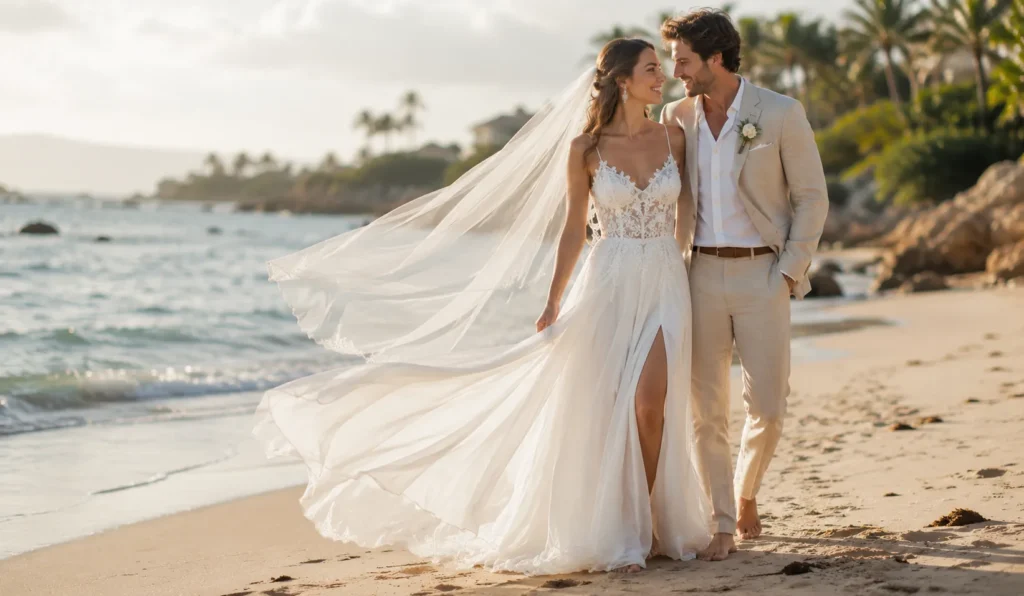
Heat and humidity are your primary concerns for a beach wedding. Choose breathable, light fabrics. A sheath or slip dress works perfectly. Ditch the heavy veil and consider a floral crown or delicate hair pins. Grooms should wear lighter colors and breathable fabrics like linen or cotton blends.
Modern Lofts and City Halls
Urban settings lend themselves to chic, modern fashion. Think clean lines, minimalist crepe fabrics, tailored jumpsuits, or chic midi dresses.
The Importance of Expert Tailoring
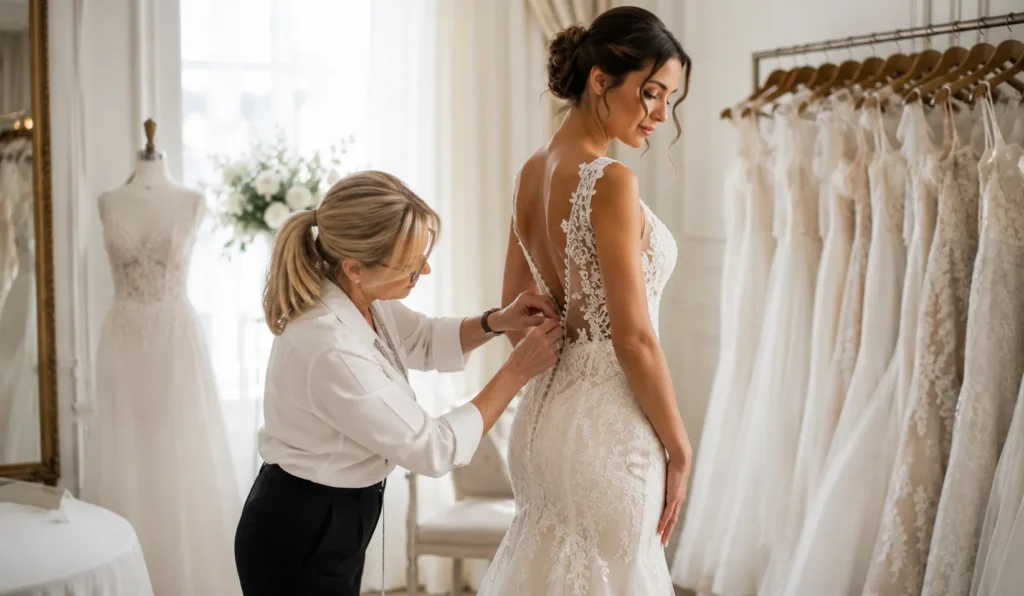
Even a ten-thousand-dollar gown will look terrible if it does not fit properly. Bridal sizing runs much smaller than standard street sizing, so do not panic if you need to order a size or two up.
Plan for at least three alterations appointments. The first appointment addresses the major structural changes, like taking in the bust and waist. The second focuses on the hemline and the bustle (the system of hooks and buttons used to lift your train for the reception). The final fitting ensures everything sits flawlessly. Always bring the exact shoes and undergarments you plan to wear on the wedding day to every fitting.
Conclusion
Finding your dream wedding dresses and attire is an exciting milestone in your wedding planning journey. By understanding different silhouettes, choosing venue-appropriate fabrics, and coordinating with your bridal party, you ensure a cohesive and stunning aesthetic for your big day. Remember to trust your instincts. The perfect dress is the one that makes you feel confident, beautiful, and ready to celebrate your love story. Give yourself plenty of time to shop, budget for professional alterations, and enjoy every moment of the process.
Frequently Asked Questions (FAQs)
How far in advance should I buy my wedding dress?
Most bridal experts recommend shopping for your wedding dress 8 to 12 months before your wedding date. This gives enough time for ordering, shipping, and multiple alteration appointments.
Which wedding dress silhouette is the most flattering?
The A-line silhouette is considered the most universally flattering because it highlights the waist while gently flowing over the hips and legs.
What is the best fabric for a summer wedding dress?
Lightweight fabrics like chiffon, organza, and soft tulle work best for summer weddings because they are breathable and comfortable in warm weather.
How much should I budget for wedding attire?
Your wedding attire budget depends on your priorities, but many couples allocate around 5% to 10% of their total wedding budget for bridal and groom fashion, including alterations and accessories.
Can bridesmaids wear different dress styles?
Yes, Modern weddings often feature mismatched bridesmaid dresses in the same color palette or fabric to create a cohesive yet personalized look.
Are long trains practical for outdoor weddings?
Long trains can be difficult to manage outdoors because they may drag through grass, sand, or dirt. Shorter trains or bustle options are often better for outdoor venues.
What are the most popular wedding dress styles right now?
Minimalist crepe gowns, romantic lace A-line dresses, modern square necklines, detachable sleeves, and sleek sheath silhouettes are among the most popular bridal trends today.