Eid Outfits Idea: Traditional & Modern Looks for the Perfect Celebration
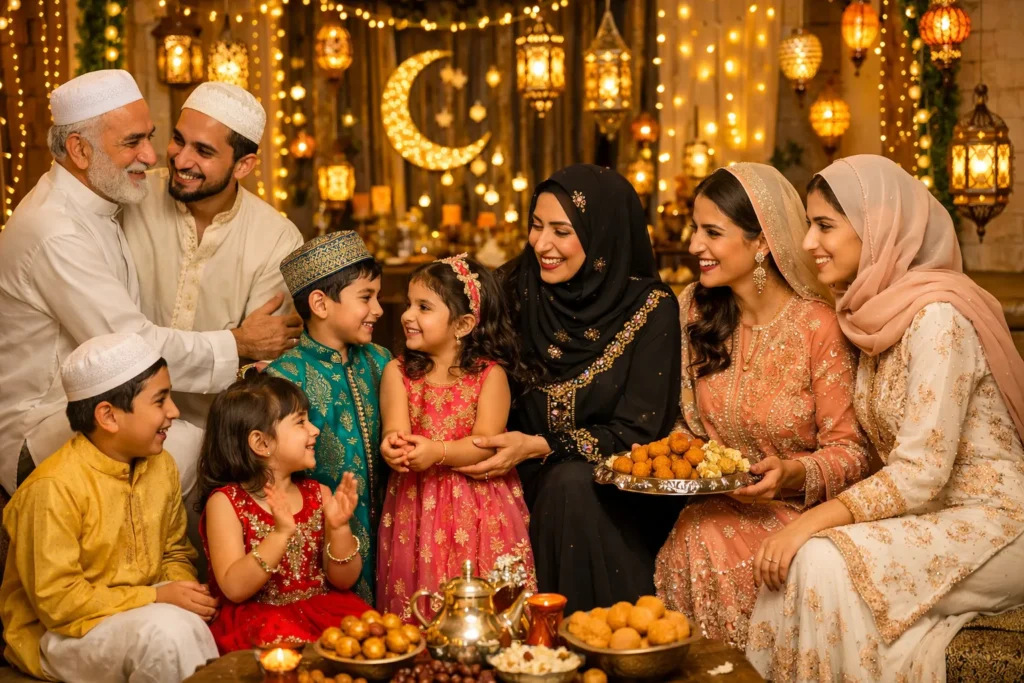
After a month of reflection and fasting during Ramadan, the arrival of Eid al-Fitr brings immense joy, community connection, and celebration. A cherished tradition that marks this festive occasion is the practice of wearing new clothes. Choosing your Eid outfits is a special part of the preparation, a way to honor the day while showcasing your personal style. It is a time to dress in your finest attire, feeling confident and beautiful as you gather with family and friends.
Finding the perfect ensemble involves more than just picking a pretty garment. It is about embracing cultural heritage, exploring modern fashion trends, and selecting fabrics and silhouettes that make you feel exceptional. From traditional South Asian shalwar kameez to elegant Middle Eastern abayas and modern fusion wear, the options are as diverse as the global Muslim community itself.
This comprehensive guide will walk you through everything you need to know about selecting the perfect Eid wardrobe for 2026. We will explore stunning outfit ideas for women, men, and children, discuss popular fabrics and embellishments, and provide styling tips to help you create a look that is both memorable and meaningful.
The Significance of Dressing Up for Eid
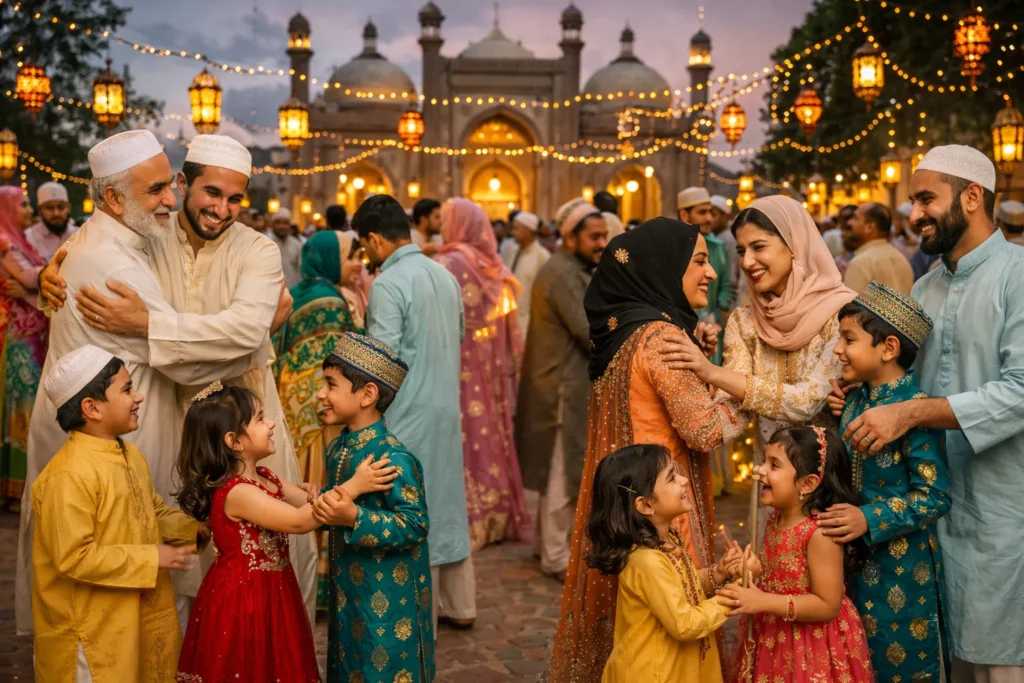
The tradition of wearing new clothes for Eid is deeply rooted in Islamic practice and cultural history. It symbolizes a fresh start, spiritual renewal, and gratitude for the blessings received during Ramadan. Prophet Muhammad (PBUH) is known to have worn his best garments on Eid day, establishing a beautiful precedent for Muslims to follow.
Beyond its religious importance, dressing up for Eid is a joyful expression of cultural identity. It is a day when families coordinate their outfits, vibrant colors fill the mosques and homes, and everyone puts their best foot forward. This sartorial celebration creates a festive atmosphere, making the day feel distinct and special from all others.
Elegant Eid Outfits for Women
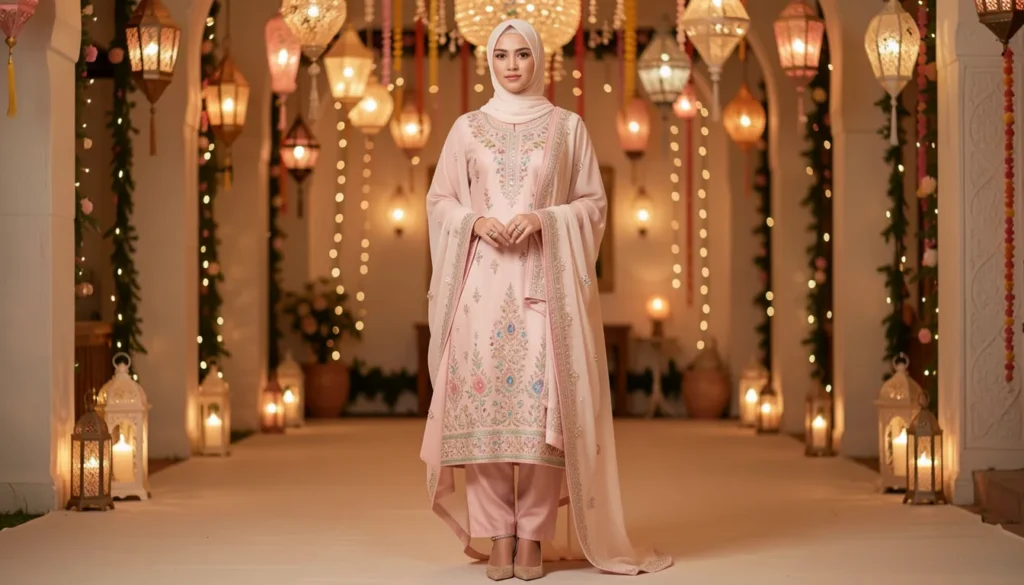
For women, Eid is a fantastic opportunity to embrace high fashion, intricate details, and luxurious fabrics. Whether your style is traditional and modest or modern and chic, there is an endless array of options to explore.
The Timeless Shalwar Kameez and Anarkali
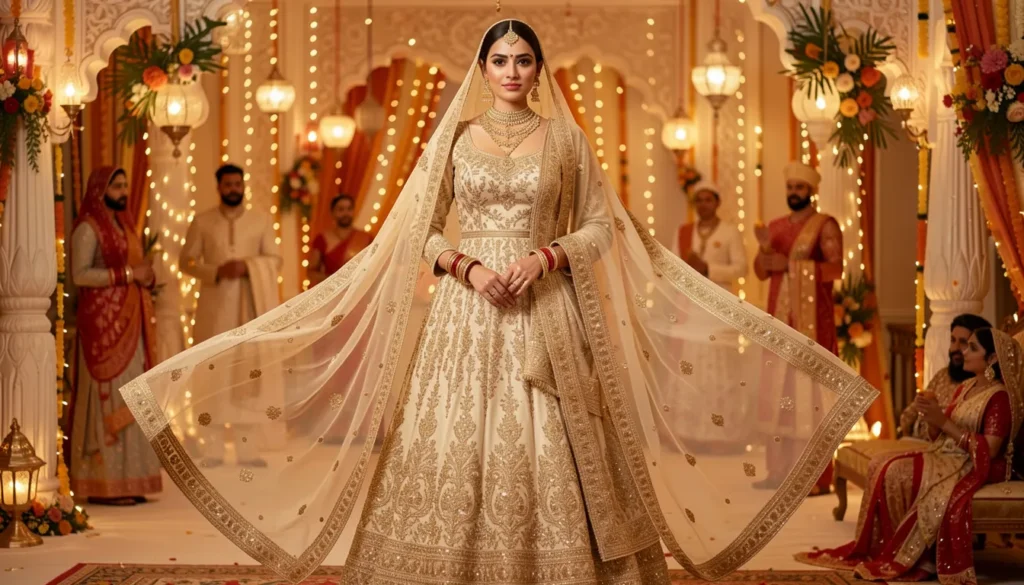
A staple in South Asian fashion, the shalwar kameez remains one of the most popular choices for Eid.
- Classic Shalwar Kameez: This three-piece suit, consisting of a tunic (kameez), loose trousers (shalwar), and a scarf (dupatta), offers comfort and elegance. For Eid, look for designs made from silk, chiffon, or jacquard, featuring delicate embroidery or beadwork.
- The Anarkali Suit: This regal silhouette features a long, frock-style top that is fitted at the bust and flares out dramatically. Anarkalis create a beautiful, flowing look that is perfect for a festive occasion. They are often heavily embellished around the neckline and hem.
- Sharara and Gharara Suits: These styles feature wide-legged, flared pants that add a touch of drama and vintage glamour. A short kameez paired with a voluminous sharara is a trendy and eye-catching choice.
The Graceful Kaftan and Abaya
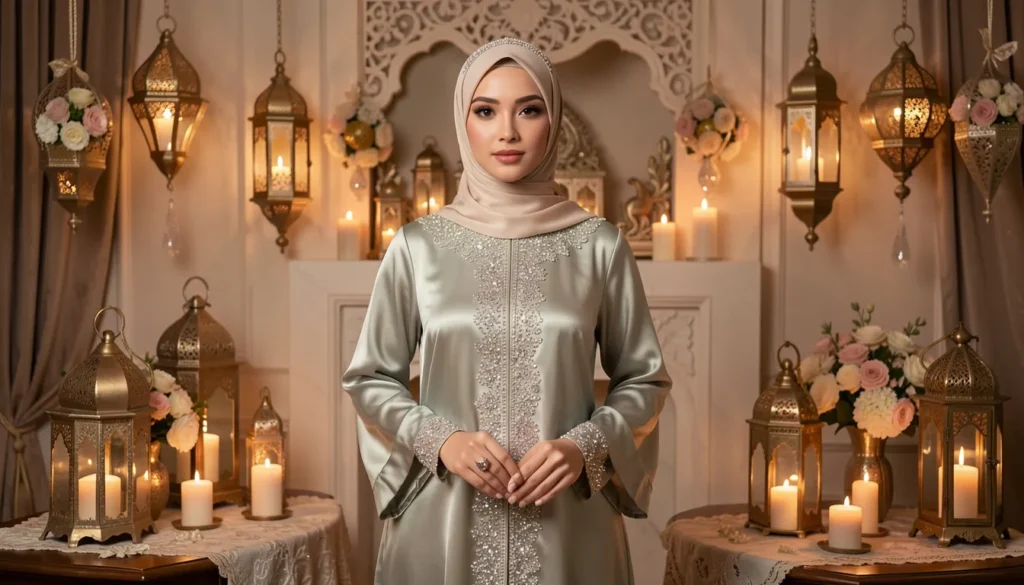
Rooted in Middle Eastern and North African culture, kaftans and abayas offer a blend of modesty and high fashion.
- The Embellished Kaftan: Modern kaftans are far from simple garments. For Eid, choose a flowing kaftan made from luxurious crepe or satin, adorned with intricate embroidery, crystal embellishments along the neckline, or a statement jeweled belt.
- The Open Abaya: An open abaya, worn over a simple slip dress or a tailored top and trousers, acts as a sophisticated outer layer. Look for abayas with contrasting lapels, delicate lace trim on the sleeves, or subtle metallic threading.
The Modern Fusion Wear
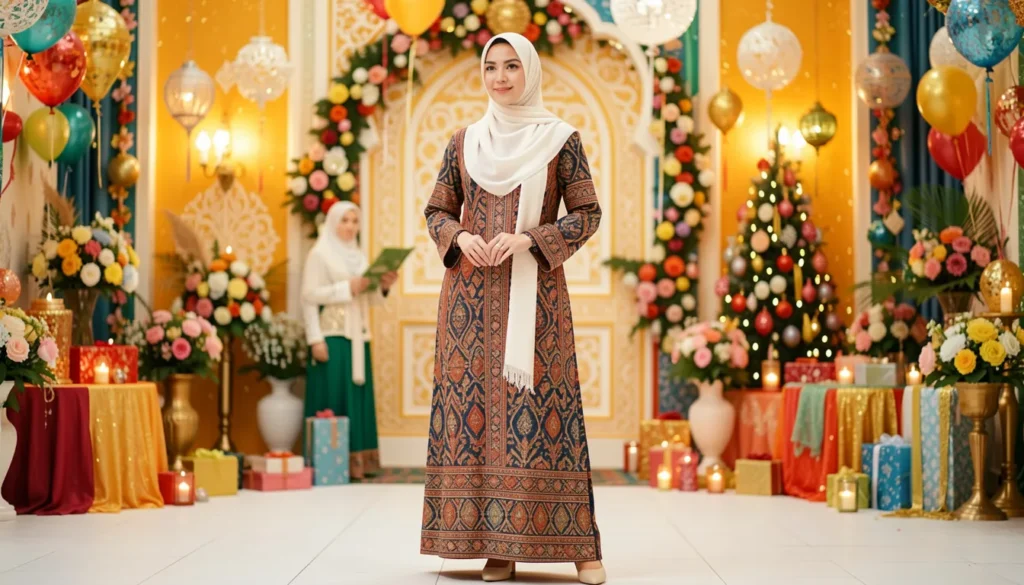
Many women are now blending traditional elements with contemporary Western silhouettes to create unique Eid outfits.
- Maxi Dresses with an Ethnic Twist: A floor-length maxi dress featuring traditional prints like paisley or ikat, or one with Chikankari embroidery, is a comfortable yet stylish option.
- Palazzo Pants with Cropped Tops: Pair wide-leg palazzo pants with a chic, embellished cropped top. You can add a longline jacket or a sheer cape to this ensemble for an extra layer of elegance and modesty.
- Saree Gowns: For those who love the elegance of a saree but want the ease of a gown, the pre-draped saree gown is a perfect choice. It offers the beautiful drape of a saree without the complicated pleating process.
Dapper Eid Outfits for Men
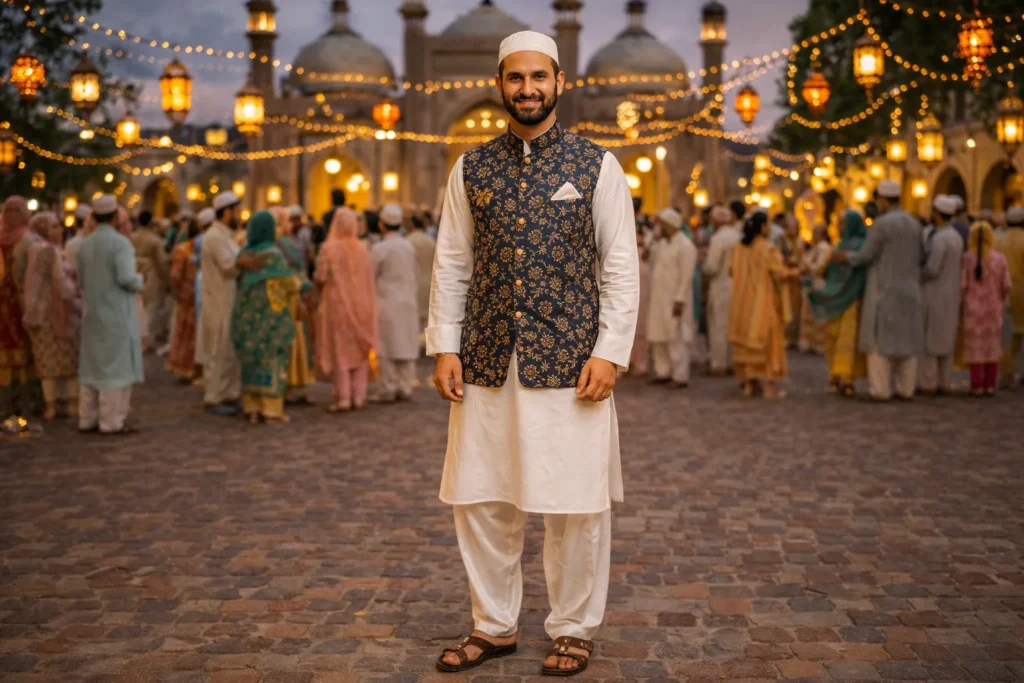
Men’s Eid fashion focuses on clean lines, high-quality fabrics, and a look that is both respectable for prayers and stylish for family gatherings.
The Traditional Thobe and Kandura
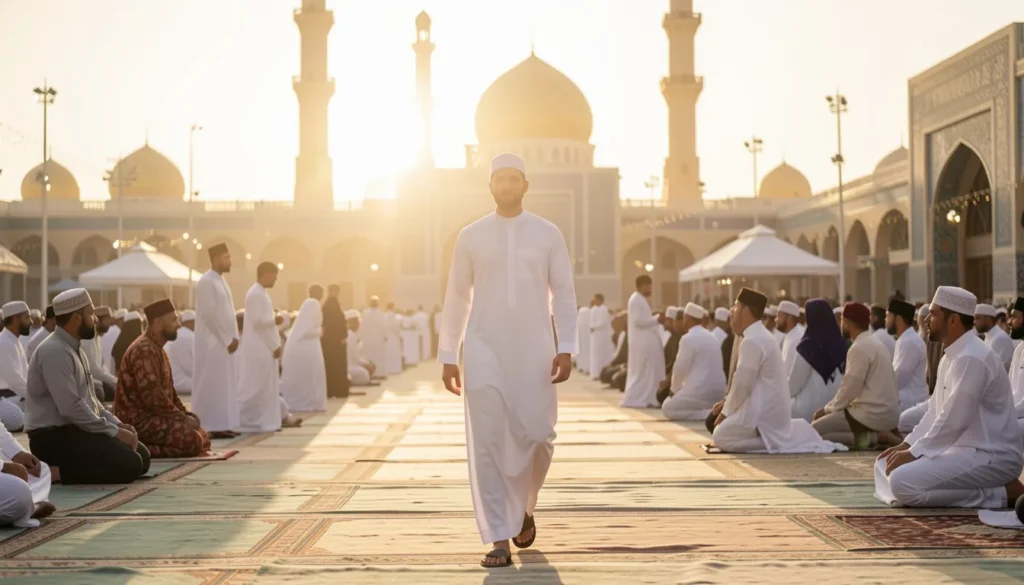
The thobe (or kandura in the UAE) is a long, ankle-length robe that is a symbol of piety and elegance in many parts of the Muslim world.
- Classic White: A crisp, immaculately white thobe is the most traditional and popular choice for Eid prayers. It symbolizes purity and simplicity.
- Modern Colors and Fabrics: Many men now opt for thobes in other sophisticated colors like navy blue, olive green, or charcoal grey. High-end versions often feature subtle embroidery on the collar and cuffs.
The Versatile Kurta Pajama
A staple in South Asian menswear, the kurta pajama is a comfortable and stylish two-piece outfit.
- The Kurta: This is a long, loose-fitting tunic that can range from hip-length to knee-length. For Eid, choose a kurta made from cotton silk, jacquard, or linen.
- The Pajama: This refers to the trousers, which can be straight-cut (pajama) or loose and tapered (salwar).
- Adding a Waistcoat: To elevate a simple kurta pajama, add a contrasting waistcoat (Nehru jacket). A raw silk or brocade waistcoat instantly makes the outfit more formal and festive.
The Sherwani for a Regal Look
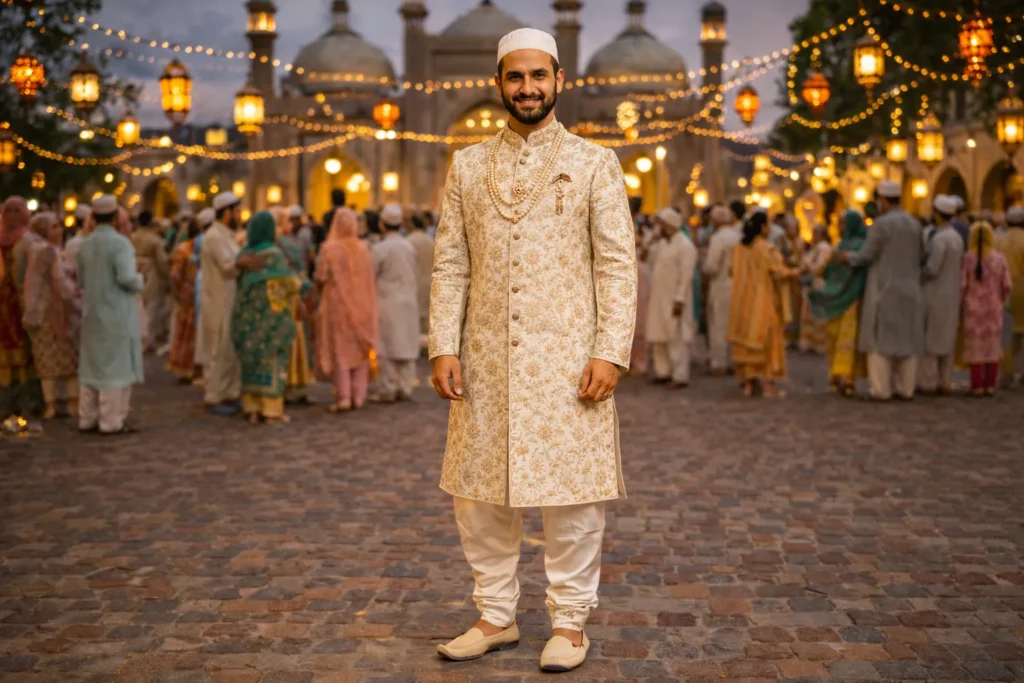
While more commonly associated with weddings, a lightweight sherwani is a powerful statement for Eid, especially for family patriarchs or those hosting large gatherings. A sherwani is a long, coat-like garment, worn over a kurta and churidar pants. For Eid, opt for a simpler design in a rich fabric without the heavy bridal embroidery.
Adorable Eid Outfits for Children
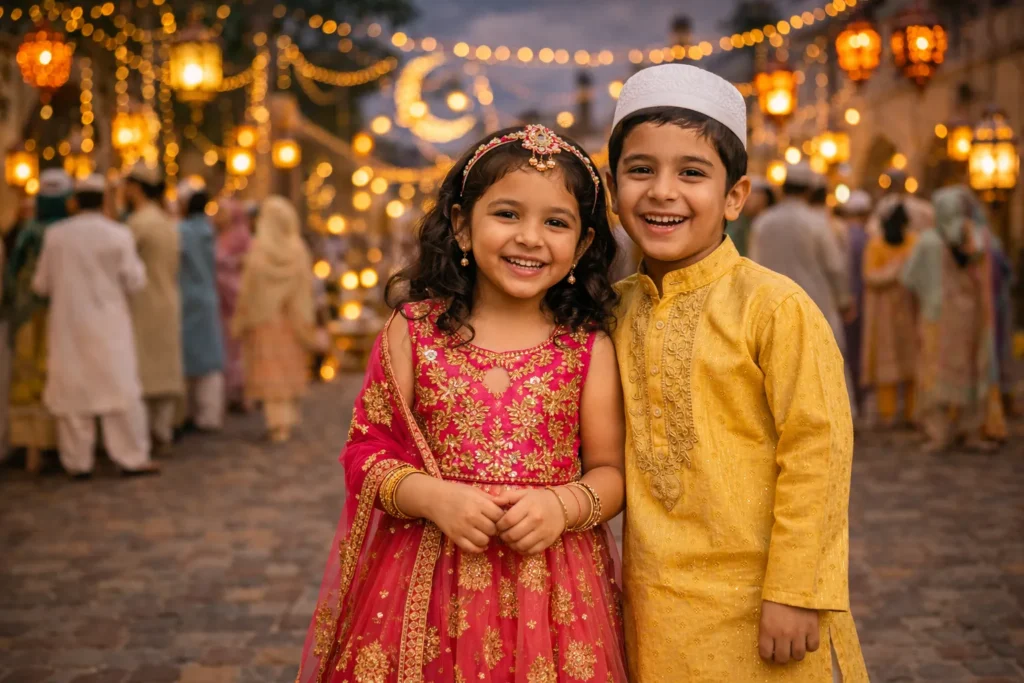
Dressing children for Eid is one of the most joyful parts of the celebration. It is a chance to create “mommy and me” or “daddy and me” coordinated looks and capture beautiful family photos.
For Girls: Miniature Traditional Wear
- Lehenga Choli: A small, brightly colored lehenga (skirt) and choli (blouse) will make any little girl feel like a princess. Choose lightweight fabrics to ensure she stays comfortable.
- Frock-Style Shalwar Kameez: A short, frilly frock paired with a simple salwar is an adorable and practical option that allows for easy movement.
- Matching Outfits: Many brands now offer matching or coordinated outfits for mothers and daughters, which is a very popular trend for Eid.
For Boys: Smart and Comfortable Choices
- Mini Kurta Pajamas: A simple cotton kurta in a bright color is a comfortable choice for boys of all ages.
- Waistcoat Sets: For a more dressed-up look, a small kurta pajama set with a matching or contrasting waistcoat is perfect.
- Matching with Dad: Coordinated kurta sets for fathers and sons are widely available and make for incredibly heartwarming family pictures.
Trending Fabrics, Colors, and Embellishments for 2026
Fashion is always evolving, and Eid fashion is no exception. Here are the top trends to look for when choosing your outfit for the upcoming celebration.
Luxurious Fabrics
- Organza: This sheer, crisp fabric is incredibly popular for dupattas, sleeves, and overlays. It adds volume and a delicate, ethereal quality to any outfit.
- Raw Silk: Known for its rich texture and subtle sheen, raw silk is a perfect choice for men’s waistcoats and women’s trouser suits.
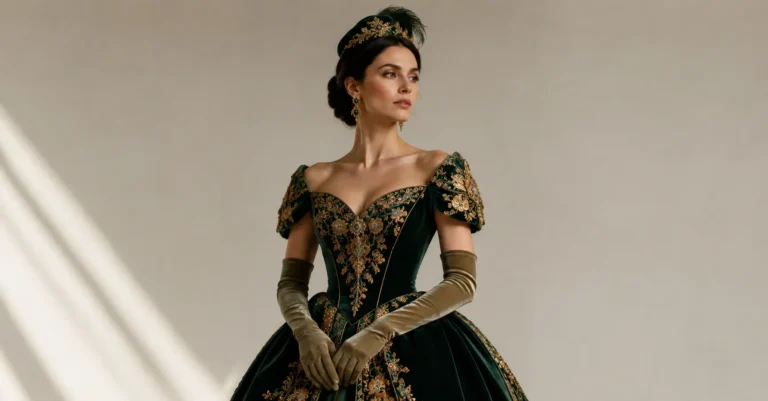
- Velvet: While traditionally a winter fabric, lightweight velvet in deep jewel tones like emerald green or sapphire blue is making a comeback for formal evening Eid dinners.
Popular Color Palettes
- Pastel Power: Soft, elegant pastels like lavender, mint green, powder blue, and dusty rose are a huge trend. They are sophisticated, modern, and perfect for daytime celebrations.
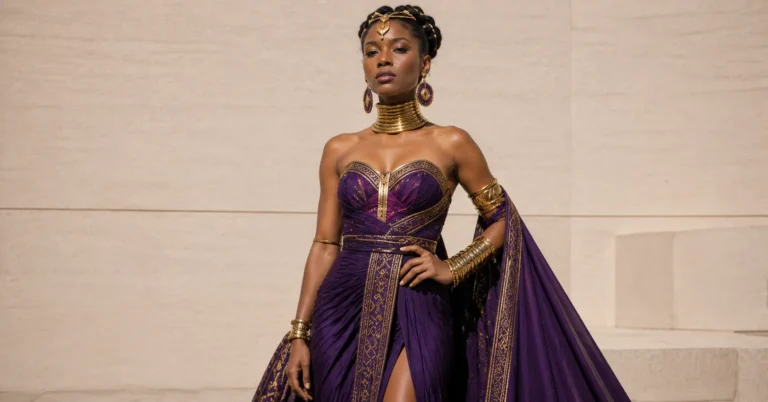
- Jewel Tones: For those who prefer a bolder look, rich jewel tones like ruby red, deep purple, and royal blue are always in style for Eid.
- Monochromatic Elegance: An all-white or all-ivory outfit, elevated with intricate self-colored embroidery (like Chikankari) or pearl details, is a timeless and incredibly chic choice.
Stunning Embellishments
- Pearl Work: Delicate pearl embellishments are a major trend, adding a touch of classic elegance to necklines, sleeves, and dupattas.
- 3D Floral Appliques: Three-dimensional fabric flowers sewn onto organza or tulle create a romantic, high-fashion look.
- Mirror Work: A traditional craft from the subcontinent, mirror work (shisha embroidery) adds a festive sparkle to any outfit and is particularly popular for sharara suits and kurtas.
How to Style and Accessorize Your Eid Outfit
The right accessories can elevate your Eid look from beautiful to unforgettable.
For Women
- Jewelry: If your outfit is heavily embellished, opt for simple, elegant jewelry like stud earrings and a delicate bracelet. If your outfit is simple, you can make a statement with a bold necklace or a pair of chandelier earrings (jhumkas).
- Handbags: A small, embellished clutch or a traditional potli bag is the perfect accessory to carry your essentials. Choose one in a metallic shade or a color that complements your outfit.
- Footwear: Khussa shoes (traditional embroidered flats) are a comfortable and stylish choice for pairing with shalwar kameez. For a more formal look, a pair of embellished block heels or elegant kitten heels will complete your ensemble.
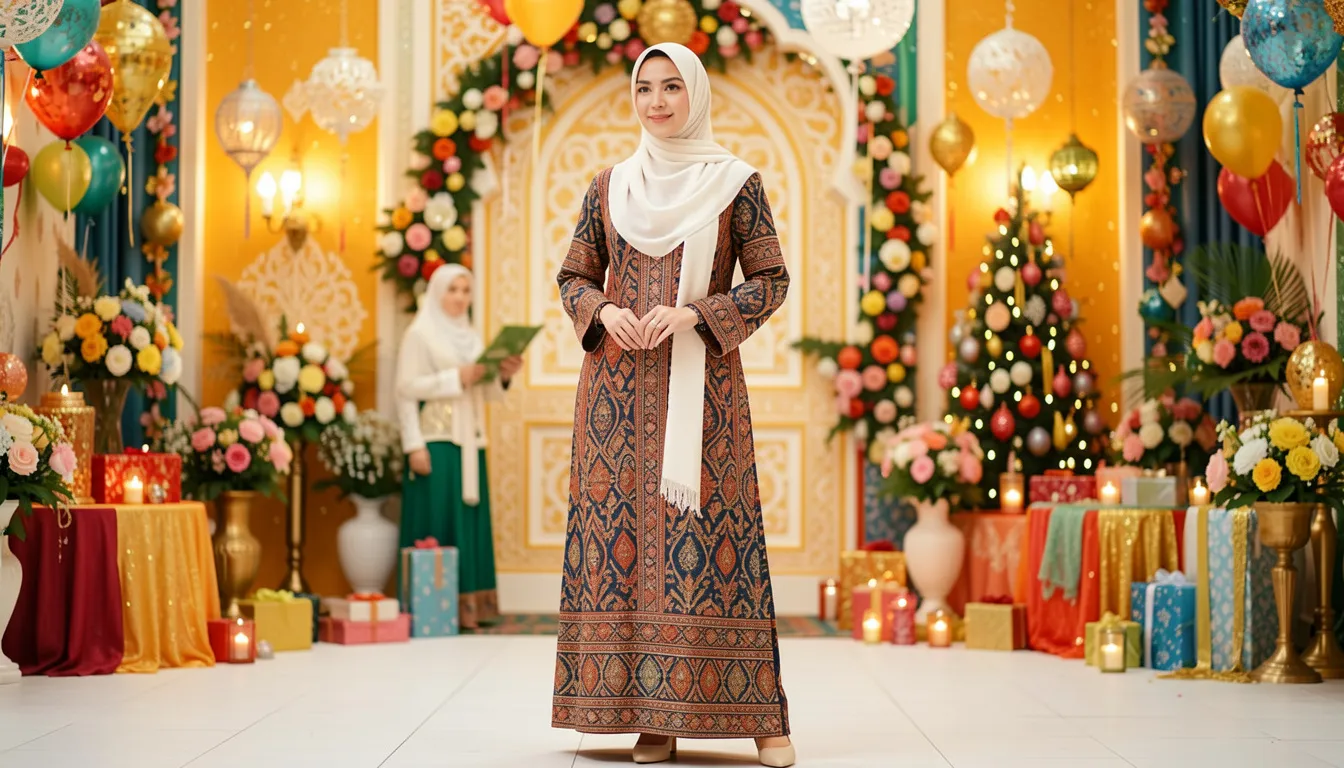
- Hijab Styling: Coordinate the color and fabric of your hijab with your outfit. A silk or chiffon hijab will drape beautifully. For a touch of glamour, choose a hijab with a subtle sparkle or a delicate lace trim.
For Men
- Footwear: A traditional kurta pajama pairs perfectly with leather sandals or classic Peshawari chappals. For a sherwani or a more formal suit, opt for polished dress shoes or embroidered loafers (khussas).
- Grooming: A fresh haircut and a neatly trimmed beard are essential parts of the Eid preparation.
- Fragrance: Wearing a pleasant fragrance (attar or cologne) is a traditional practice for Eid prayers.
Conclusion
Choosing your Eid outfits is a wonderful tradition that adds to the joy and anticipation of the celebration. It is an opportunity to connect with your cultural heritage, express your personal style, and feel your absolute best as you create lasting memories with your loved ones. Whether you opt for a timeless traditional garment like a shalwar kameez or a modern fusion piece, the most important thing is to choose an outfit that makes you feel confident, comfortable, and ready to celebrate. Eid Mubarak!
Frequently Asked Questions (FAQs)
What should I wear for Eid?
For Eid, people traditionally wear new or special clothes. Popular choices include shalwar kameez, abayas, kaftans, kurtas, thobes, and sherwanis, often made with elegant fabrics and festive embellishments.
What colors are best for Eid outfits?
Popular Eid colors include pastels like mint, lavender, and blush pink, as well as rich jewel tones like emerald, ruby, and royal blue.
Can I wear modern outfits for Eid?
Yes. Many people now choose fusion outfits that mix traditional designs with modern fashion, such as ethnic maxi dresses, palazzo sets, or saree gowns.
What accessories go well with Eid outfits?
Women often wear jhumka earrings, bangles, clutches, and embellished heels, while men complement outfits with traditional sandals, waistcoats, and fragrances.
Do people buy new clothes for Eid?
Yes. Wearing new clothes on Eid is a long-standing tradition symbolizing renewal, gratitude, and celebration after Ramadan.
Do I have to buy a new outfit for Eid?
While it is a popular tradition to wear something new, it is not a strict religious requirement. The core principle is to wear your best, cleanest, and most presentable clothing to honor the day. Many people choose to re-wear a formal outfit that they love and feel great in.
Where can I buy Eid outfits?
You can find Eid collections at local South Asian or Middle Eastern clothing boutiques. Many designers also launch their Eid collections online several months in advance. Additionally, there are numerous multi-brand websites that specialize in ethnic wear and ship worldwide.
How do I coordinate outfits for the whole family?
A popular way to coordinate is to choose a specific color palette (e.g., shades of blue and white) and have each family member wear an outfit within that palette. Alternatively, you can have matching elements, such as the father and son wearing kurtas from the same fabric, while the mother and daughter’s outfits feature that fabric in their dupattas.