Wedding Officiant Outfit Female: The complete Style Guide
Being asked to officiate a wedding stands as one of the greatest honors a friend or family member can receive. While you spend weeks perfecting your script and practicing your delivery, another critical question inevitably arises: what should you wear? Finding the perfect wedding officiant outfit female style requires balancing professionalism, comfort, and deep respect for the couple’s vision.
You play a highly visible role in the ceremony. You will stand at the altar, guide the couple through their vows, and appear in the background of their most cherished photographs. Your outfit needs to look polished and appropriate without ever stealing the spotlight.
This comprehensive guide covers everything you need to know to dress for this crucial role. We will explore the golden rules of officiant fashion, break down the most flattering silhouettes, offer seasonal outfit formulas, and share expert tips on footwear and accessories. Let us dive into the details so you can step up to the altar looking and feeling your absolute best.
The Role of Your Outfit at the Altar
Before selecting a garment, you must understand the visual role you play during the ceremony. The officiant acts as the visual anchor of the wedding altar.
Framing the Couple
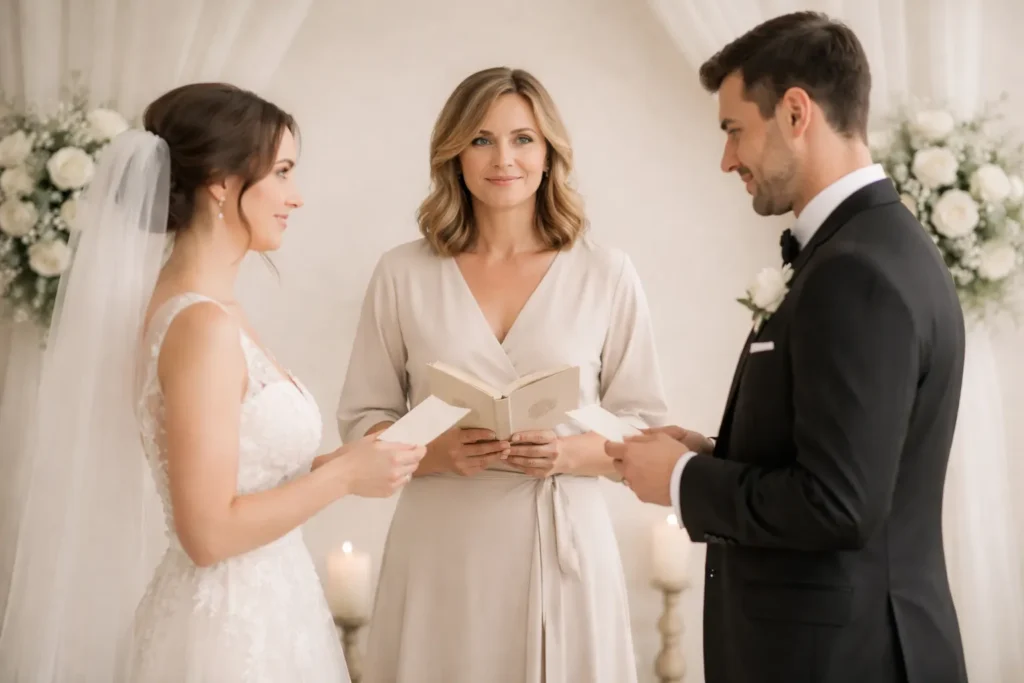
During the ceremony, the guests and the photographer focus entirely on the couple. As the officiant, you stand directly between them. Your clothing serves as the backdrop for their first kiss, their ring exchange, and their vows. If you wear a highly distracting pattern or a bright neon color, the eye naturally drifts away from the couple and toward you. A great officiant outfit blends seamlessly into the overall aesthetic of the wedding.
Projecting Authority and Warmth
The person marrying the couple holds legal and emotional authority over the ceremony. Your clothing should reflect that gravity. However, you also want to project warmth, love, and approachability. The perfect outfit strikes a delicate balance between a professional uniform and a celebratory wedding guest ensemble.
The Golden Rules for Choosing an Officiant Outfit
When you begin shopping your closet or browsing online, keep these foundational styling rules in mind. They ensure you make a choice that honors the couple.
Always Consult the Couple First
Never assume you know what the couple wants you to wear. As soon as they ask you to officiate, ask them about their visual preferences.
- Ask about the bridesmaid and groomsmen color palettes so you can avoid matching them exactly (unless requested).
- Inquire about the specific dress code (e.g., black-tie, semi-formal, casual beach).
- Find out if they prefer you in a dress, a suit, or if they have no preference at all.
Prioritize Absolute Comfort
You will likely stand in one spot for twenty to forty minutes. You might stand under a hot summer sun or face a brisk autumn wind.
- Choose fabrics that move easily and do not trap heat.
- Ensure the neckline and hemline stay perfectly in place when you move your arms to gesture or hand over the rings.
- Avoid tight waistbands that make taking deep breaths difficult while you project your voice.
Mind the Microphone
Most modern weddings use microphones to ensure the guests can hear the vows.
- If you must wear a lapel mic, your outfit needs a sturdy neckline or lapel to clip the microphone onto.
- You also need a pocket or a sturdy waistband to hold the microphone’s battery pack. Soft, unlined silk dresses often struggle to support the weight of a battery pack, causing the fabric to drag.
Outfit Styles and Silhouettes That Always Work
Female officiants have an incredible variety of clothing options. Depending on the venue and the couple’s vibe, you can choose from several classic silhouettes that deliver elegance and authority.
The Classic Tailored Suit
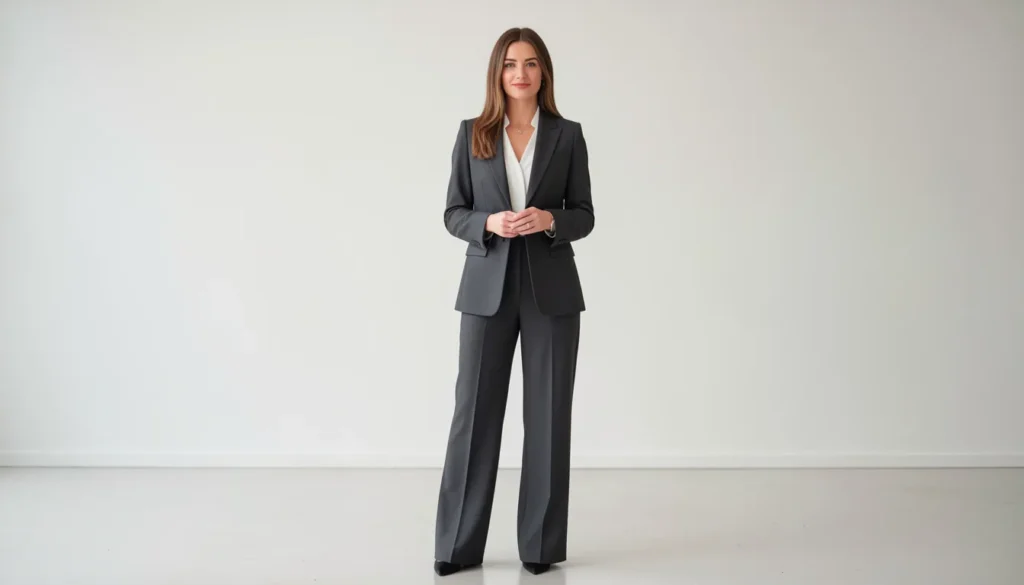
A tailored pantsuit offers an incredibly sharp, modern, and authoritative look.
- The Fit: Ensure the blazer shoulders sit perfectly and the trousers feature a clean hem. A slightly oversized, slouchy suit works well for trendy, modern weddings, while a fitted cut suits traditional venues.
- The Base Layer: Wear a high-quality silk camisole, a crisp button-down blouse, or a fine-knit turtleneck underneath the blazer. Keep the neckline modest.
- The Advantage: Suits provide structure for clipping on a microphone, and trousers offer functional pockets for tissues or vow cards.
The Elegant Midi Dress
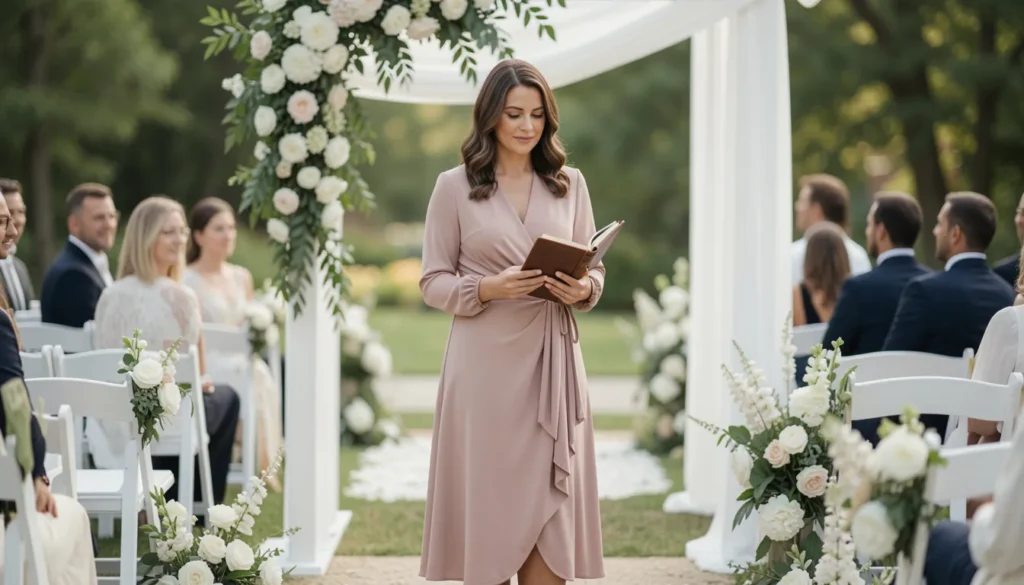
The midi dress remains the most popular choice for a female officiant.
- The Length: A hemline that hits below the knee and above the ankle looks universally sophisticated. It prevents the dress from blowing up in the wind and looks highly professional.
- The Cut: Wrap dresses, A-line silhouettes, and sheath dresses work beautifully. They define the waist without restricting your lower body.
- Sleeve Options: Choose three-quarter sleeves, long sleeves, or short sleeves depending on the season. If you wear a sleeveless dress, consider bringing a tailored blazer or an elegant pashmina wrap for the ceremony.
The Sophisticated Jumpsuit
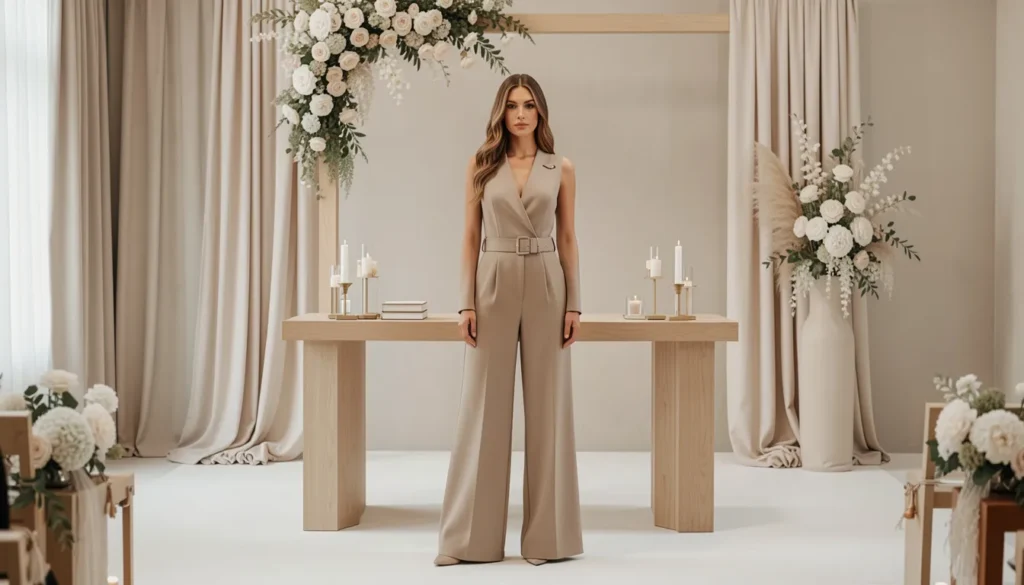
Jumpsuits bridge the gap between the formality of a suit and the femininity of a dress.
- The Style: Look for a wide-leg jumpsuit featuring a modest V-neck or a high boat neck.
- The Waist: A jumpsuit with a defined, belted waist creates a highly flattering shape and prevents the garment from looking like casual loungewear.
- The Fabric: Choose structured fabrics like heavy crepe or wool blends that drape elegantly down the leg.
Colors and Patterns: What to Wear and What to Avoid
Color selection represents the most critical part of your outfit choice. The wrong color can ruin the aesthetic of the ceremony photos.
The Best Colors for an Officiant

Neutral, muted, and deep tones work best. They look elegant but recede into the background.
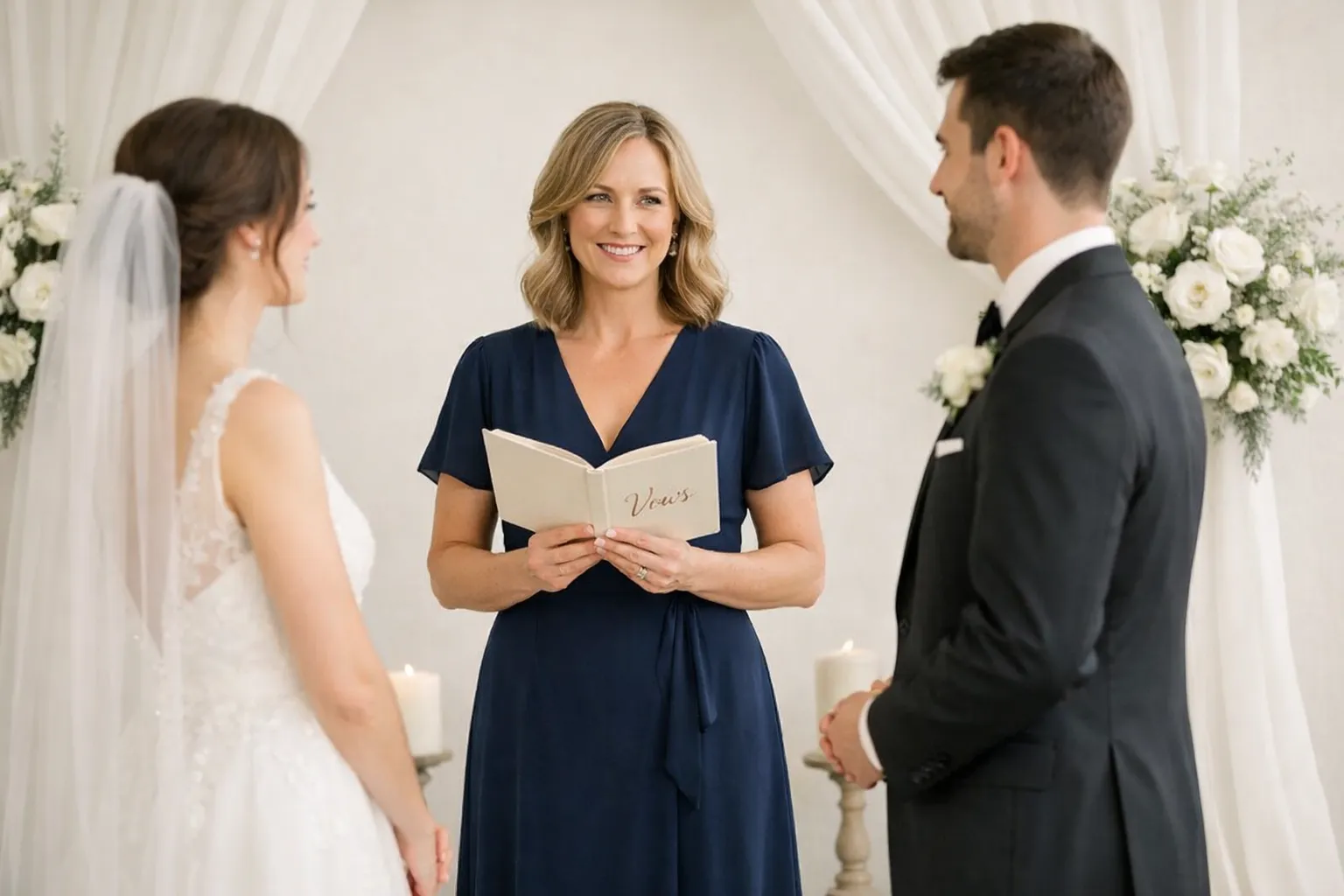
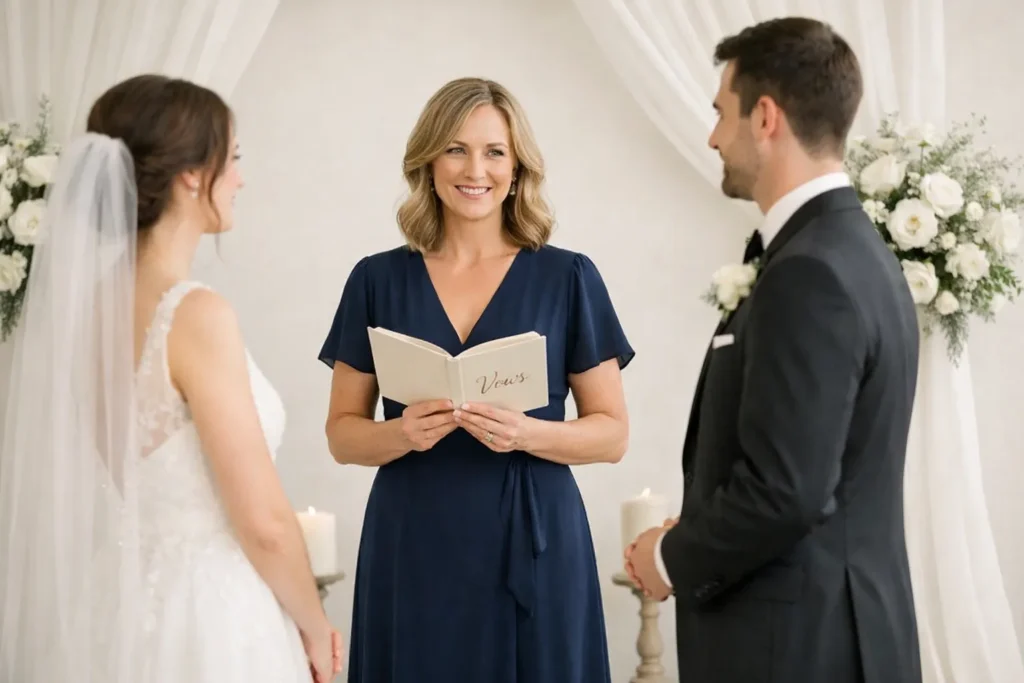
- Navy Blue: A universally flattering color that looks sharp and formal without the severity of pure black.
- Charcoal Grey: An excellent, soft alternative to black, especially for daytime or outdoor weddings.
- Taupe and Mushroom: Warm, earthy neutrals that look beautiful in natural settings like gardens or vineyards.
- Deep Jewel Tones: Emerald green, plum, and burgundy work exceptionally well for fall and winter weddings, provided they do not clash with the bridal party.
Colors You Should Generally Avoid
Unless the couple explicitly gives you permission, leave these colors in your closet.
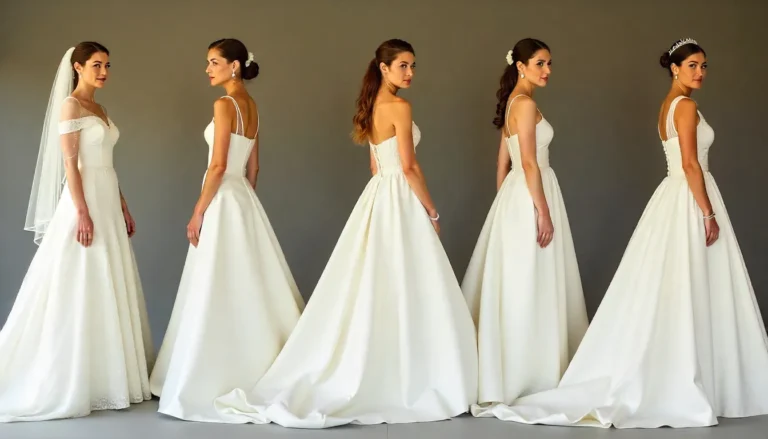
- White, Ivory, and Champagne: Never wear the bride’s color. Even if the bride wears an alternative color, white draws the eye too aggressively in photos.
- Bright Red: Red symbolizes passion and draws the human eye faster than any other color. It will pull focus away from the couple.
- Neon Hues: Hot pink, electric blue, and highlighter yellow look far too casual and distracting for a solemn ceremony.
- The Bridesmaid Colors: Try to choose a shade that complements the bridal party without matching them exactly, so you do not look like a misplaced bridesmaid.
Navigating Patterns
Solid colors generally perform better on camera than patterns. Busy floral prints or harsh geometric stripes can cause visual distortion in digital photographs. If you prefer patterns, choose a very subtle, tonal print (like a dark navy jacquard or a faint pinstripe) that reads as a solid color from a distance.
Seasonal Style Guide for Female Officiants
The weather heavily dictates your comfort at the altar. Choosing the right fabric and layering strategy ensures you stay focused on your script rather than shivering or sweating.
Spring Ceremonies
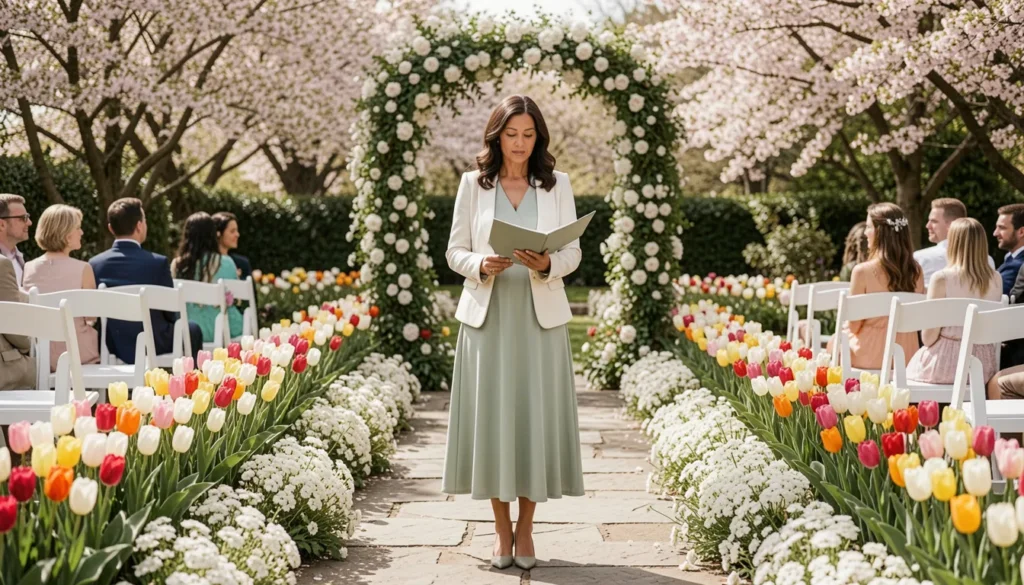
Spring weather acts unpredictably. A warm morning can quickly turn into a chilly afternoon.
- The Vibe: Embrace lighter neutrals like dove grey, soft sage, or dusty blue.
- The Fabrics: Chiffon, light crepe, and silk blends work beautifully.
- Layering: Always bring a tailored blazer or a structured cardigan. You can easily remove it after the ceremony if the reception gets warm.
Summer Weddings
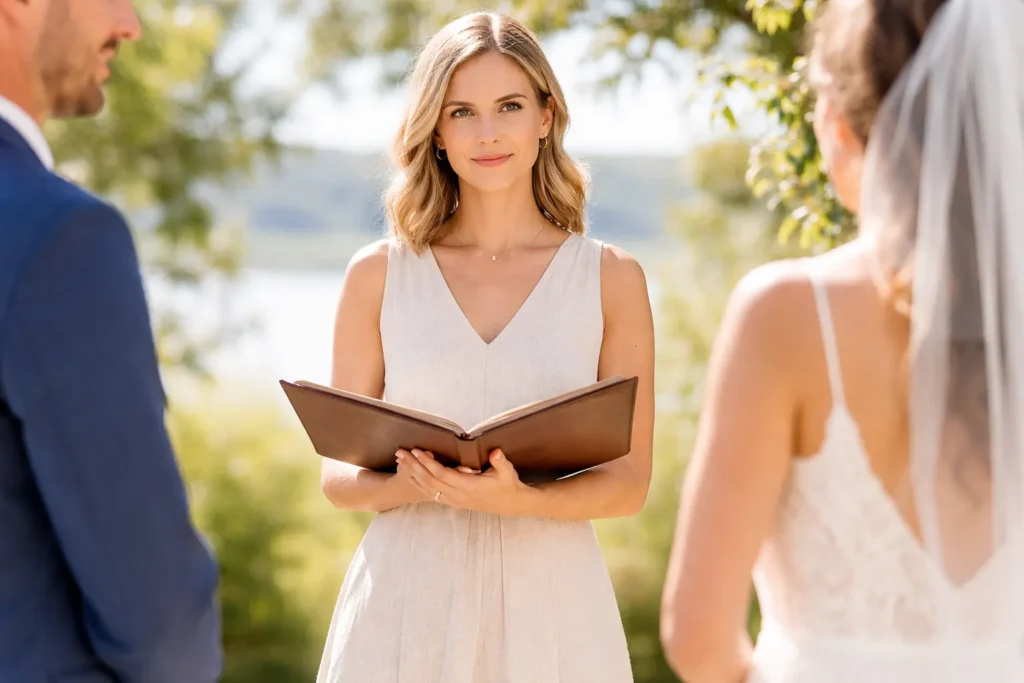
Summer weddings, especially outdoor ones, present a massive challenge regarding heat.
- The Vibe: Keep the silhouette loose and breathable. A flowing midi dress or a wide-leg linen blend jumpsuit works best.
- The Fabrics: Prioritize natural fibers. Cotton, high-quality linen, and breathable viscose prevent sweat from showing. Avoid heavy polyester, which traps body heat.
- Sun Protection: If the ceremony takes place in direct sunlight, wear a dress with cap sleeves to protect your shoulders from burning while you stand at the altar.
Fall Nuptials
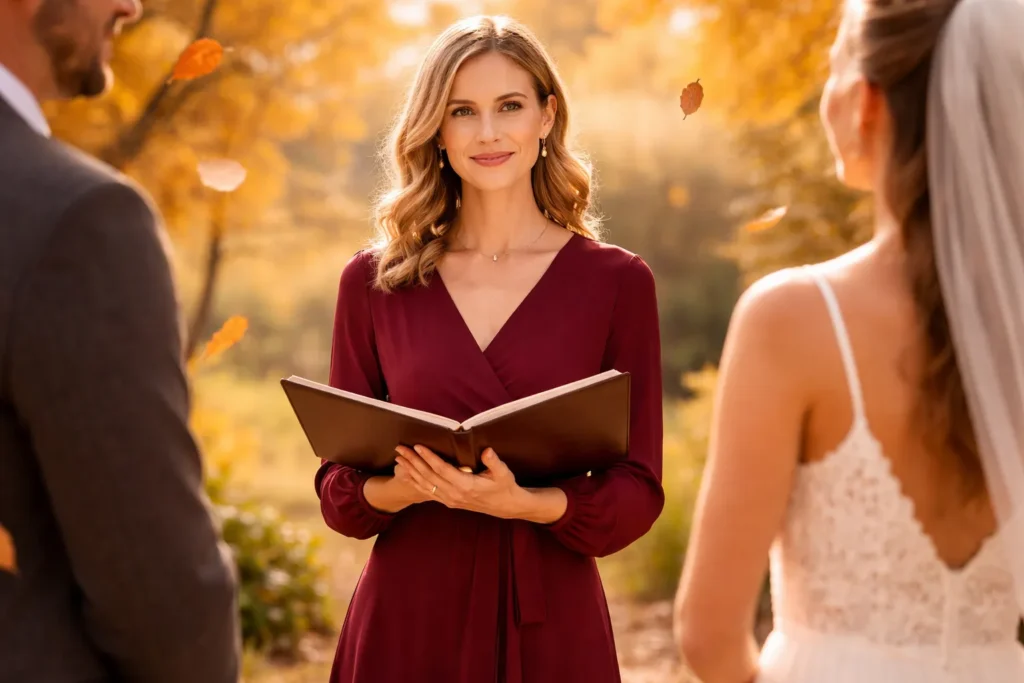
Autumn offers the perfect backdrop for rich textures and deep colors.
- The Vibe: Transition into rich jewel tones like forest green, navy, and deep eggplant.
- The Fabrics: Mid-weight crepe, wool blends, and matte satin look stunning against autumn foliage.
- Footwear: Swap open-toed sandals for elegant closed-toe pumps or sleek ankle boots.
Winter Celebrations
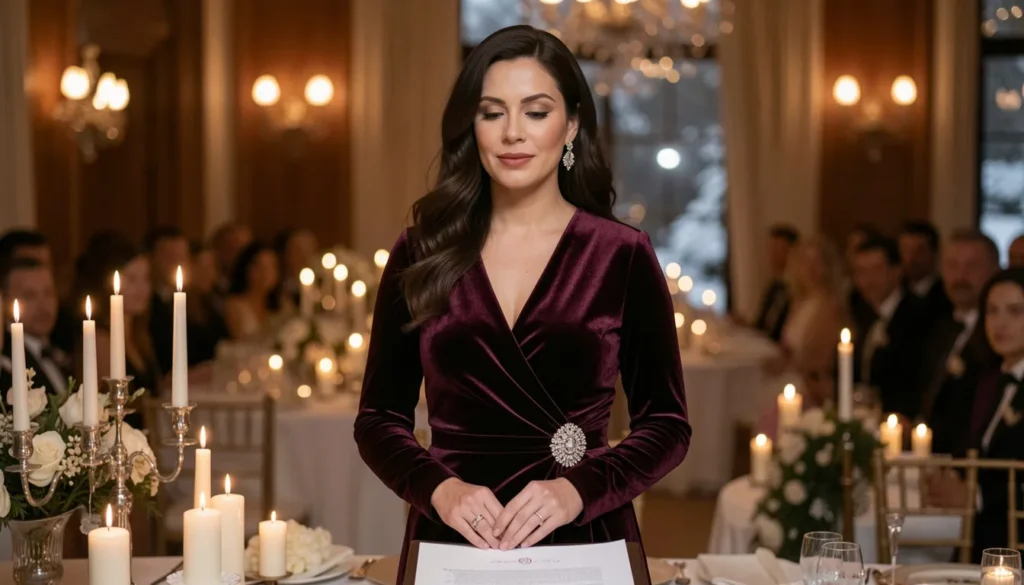
Winter weddings usually take place indoors, but you still need to project a cozy, formal aesthetic.
- The Vibe: Lean into formal, structured garments. A velvet wrap dress or a heavy wool pantsuit looks incredibly chic.
- The Fabrics: Velvet, heavy wool, and thick satin keep you warm and drape beautifully.
- Outerwear: If part of the ceremony happens outside, invest in a beautiful, tailored wool trench coat. Your coat effectively becomes your ceremony outfit, so ensure it looks just as formal as the dress beneath it.
Footwear and Accessories for the Female Officiant
Your outfit extends beyond the main garment. Your shoes and accessories play a massive role in your overall comfort and presentation.
Functional Yet Stylish Shoes
You will stand completely still for a long period, often on uneven terrain.
- The Venue Matters: If the ceremony takes place on grass, sand, or cobblestones, absolutely do not wear stiletto heels. Your heels will sink into the dirt, causing you to lose your balance.
- Best Shoe Styles: Opt for elegant block heels, supportive wedges, or pointed-toe flats. These provide maximum stability and arch support.
- Break Them In: Never wear brand-new shoes to officiate. Break them in for at least a week prior to avoid painful blisters at the altar.
Minimalist Jewelry
Jewelry should add a touch of polish without causing distractions.
- Keep it Quiet: Avoid wearing stacks of metal bangles or long, dangling earrings. When you move your hands or head, noisy jewelry can hit the microphone and create loud feedback over the speakers.
- Elegant Choices: Stick to simple pearl studs, a delicate gold pendant necklace, or a classic watch.
The Ultimate Accessory: The Vow Book or Binder
The item you hold in your hands becomes part of your outfit. Do not read the ceremony script off a glowing smartphone screen or a crumpled piece of printer paper.
- Purchase a beautiful leather portfolio, a customized vow book, or a sleek velvet binder to hold your notes.
- Choose a binder color that matches your outfit or fits the wedding’s color palette. This small detail elevates your professional appearance immensely.
Functional Additions (Pockets)
If possible, buy an outfit with pockets. Pockets provide a discreet place to hide a tissue (weddings get emotional) or a few breath mints. If your dress lacks pockets, ask the wedding planner or a front-row guest to hold a small emergency kit for you.
What to Do When the Dress Code is Unconventional
Not every couple wants a traditional, formal wedding. If the couple chooses an unconventional theme, your outfit needs to adapt while maintaining your authority as the officiant.
Black-Tie and Highly Formal Weddings
For a black-tie wedding, elevate your look significantly.
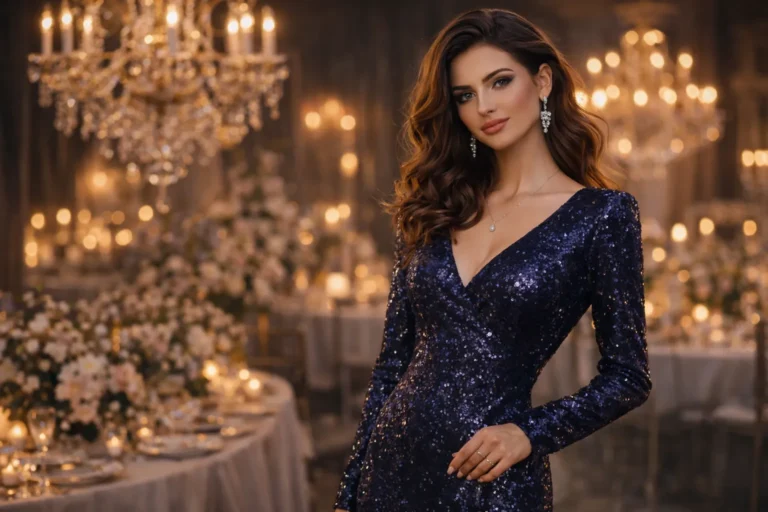
- Wear a floor-length evening gown in a dark, solid color like navy or black.
- Alternatively, wear a female tuxedo. A sharply tailored black tuxedo with satin lapels looks incredibly sophisticated and perfectly matches a black-tie aesthetic.
Ultra-Casual or Backyard Ceremonies
If the couple hosts a casual backyard barbecue wedding, wearing a formal suit looks out of place.
- Opt for a high-quality, modest sundress or a linen jumpsuit.
- Pair the outfit with clean, stylish leather sandals or comfortable wedges.
- Maintain a sense of polish by ensuring the clothing remains wrinkle-free and beautifully tailored, even if the fabric is casual.
Themed Weddings
If the couple hosts a specific theme (e.g., a 1920s vintage wedding, a Halloween gothic wedding, or a rustic country wedding), ask them how much you should participate.
- Usually, subtle nods to the theme work best. For a rustic wedding, you might wear a lace midi dress and suede boots.
- Avoid wearing a full costume unless the couple explicitly demands it. You still need to maintain the solemnity of the marriage contract.
Conclusion
Choosing the ideal wedding officiant outfit female style does not need to cause stress or anxiety. By prioritizing the couple’s visual preferences, selecting comfortable and breathable fabrics, and leaning into classic, tailored silhouettes, you can curate a look that feels authoritative yet deeply celebratory. Remember that your goal involves framing the couple beautifully while blending into the background of their most cherished photographs. Opt for muted, elegant colors, invest in sturdy block heels, and hold a professional vow book to complete your presentation. When you step up to the altar feeling physically comfortable and appropriately dressed, you can focus all your energy on delivering a beautiful, heartfelt ceremony that the couple will remember forever.
Frequently Asked Questions (FAQs)
Can a female wedding officiant wear black?
Yes, absolutely, Black is a highly popular, slimming, and appropriate color for a female officiant. It projects authority and easily blends into the background of photographs. If the wedding takes place during a summer afternoon, you might want to choose a softer dark neutral like navy or charcoal grey to avoid looking too severe, but black remains a safe and elegant staple.
Should the officiant match the bridesmaids?
Generally, no. You want to complement the bridal party without looking like you belong in it. If the bridesmaids wear sage green, you might wear a deep forest green or a neutral taupe. Always ask the couple for their color palette so you can intentionally choose a shade that coordinates beautifully with the wedding aesthetic without matching the bridal party exactly.
Is it appropriate for a female officiant to wear a pantsuit?
A tailored pantsuit is one of the most appropriate and stylish choices for a female officiant. It looks highly professional, allows for easy movement, and provides a sturdy lapel and waistband for attaching a microphone and battery pack. Choose a modern, tailored cut in a solid, muted color to ensure it looks celebratory rather than corporate.
Can I wear a floral dress to officiate a wedding?
While solid colors photograph best, you can wear a floral dress if the pattern is subtle and the wedding leans more casual or takes place outdoors in the spring or summer. Avoid loud, high-contrast, or overly busy patterns that might distract the eye. Always send a photo of the patterned dress to the couple beforehand to ensure it fits their vision.