Upcycle Shirt Projects: The Complete Guide to Refashioning Old Shirts Into Something New
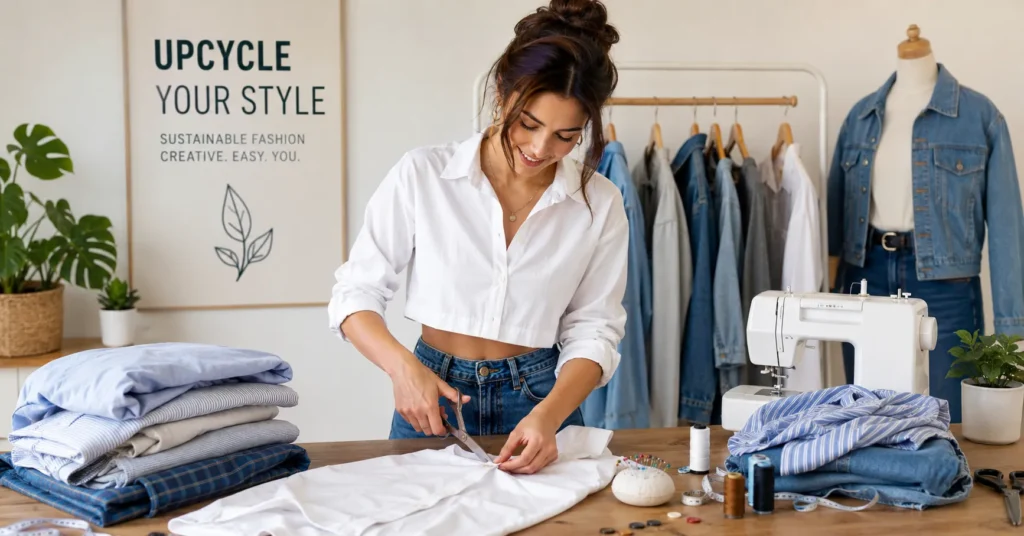
To upcycle a shirt means giving a tired, forgotten, or stained piece a whole new life instead of tossing it in the trash. With a little creativity and a few basic tools, you can turn a boring tee into a cropped tank, transform an oversized button-up into a breezy dress, or refashion a plain shirt into a custom piece no one else owns. It’s affordable, satisfying, and surprisingly good for the planet. Best of all, you don’t need expert sewing skills to start.
In this guide, you’ll learn dozens of shirt upcycling ideas, from quick no-sew projects to creative DIY shirt makeovers that look store-bought. We’ll cover the tools you need, step-by-step techniques, design inspiration for every skill level, and the care tips that keep your creations looking fresh. By the end, you’ll be ready to dig through your closet and start refashioning.
Here’s what’s ahead:
- Why upcycling shirts is worth your time
- The tools and materials that make projects easier
- No-sew and beginner-friendly techniques
- Creative refashion and thrift flip ideas
- Common mistakes to avoid and care tips
Why You Should Upcycle a Shirt
Reworking an old shirt costs almost nothing, yet the rewards feel huge. You end up with a one-of-a-kind piece that fits your style perfectly, and you keep textiles out of the landfill. That blend of creativity and purpose is hard to beat.
Shirt upcycling also taps into a bigger shift. More people want to buy less and reuse more, and sustainable fashion has moved from niche to mainstream. Turning old clothes into something fresh is one of the simplest ways to take part.
The main benefits at a glance
- Saves money: Refresh your wardrobe using shirts you already own.
- Reduces waste: Give stained or dated shirts a second purpose.
- Fully customizable: Control the fit, length, and design exactly.
- Beginner-friendly: Many projects need nothing more than scissors.
- Endlessly creative: A single shirt offers dozens of possibilities.
Who this is for
You don’t need a sewing machine or years of practice to begin. If you can hold a pair of scissors and follow simple steps, you can upcycle a shirt. Beginners can master no-sew crops in minutes, while more confident crafters can tackle full refashion projects that completely transform a garment.
Tools and Materials You’ll Need
Good results start with the right setup. You don’t need much, but a few quality tools make every project cleaner and more enjoyable.
Essential tools
- Sharp fabric scissors: Dull blades snag and fray fabric unevenly.
- A seam ripper: Removes stitches cleanly when taking pieces apart.
- Fabric chalk or a washable marker: Marks your lines before cutting.
- A ruler or measuring tape: Keeps cuts and seams even.
- Pins or clips: Hold fabric in place while you work.
Helpful extras
- A sewing machine for faster, sturdier seams (optional)
- A needle and thread for hand-sewing small details
- Fabric glue for no-sew finishes
- An iron to press seams and hems crisp
- Embellishments like buttons, patches, or fabric paint
Choosing the right shirt
The fabric and condition of your shirt shape what projects work best. Here’s a quick guide to common materials.
| Fabric | Behavior When Cut | Best Projects | Difficulty |
| Cotton jersey (t-shirt) | Rolls, minimal fray | Crops, tanks, no-sew tote | Easy |
| Cotton blend | Slight fray | Refashions, dresses | Easy |
| Woven cotton (button-up) | Frays heavily | Dresses, tops, patchwork | Medium |
| Flannel | Frays, holds shape | Shackets, bags, skirts | Medium |
| Linen | Frays, wrinkles | Tops, totes, accessories | Medium |
Cotton t-shirts are the most forgiving for first-timers. The edges resist fraying, so you can experiment with confidence.
No-Sew Shirt Projects for Beginners
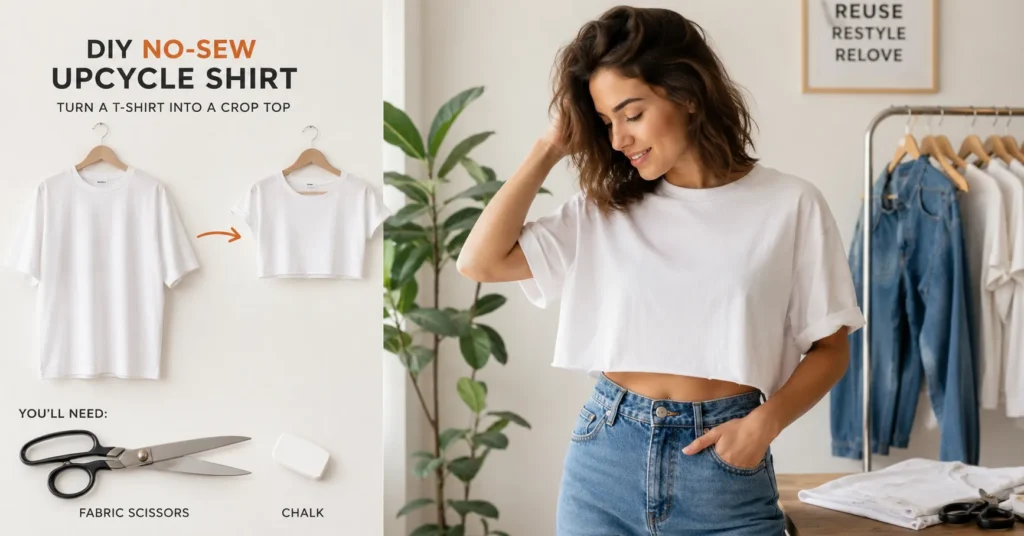
If the idea of threading a needle makes you nervous, start here. No-sew shirt projects rely on the fabric’s natural behavior and a few clever tricks, so you can create something new in minutes.
Why no-sew works
Cotton jersey doesn’t fray like woven fabric. When you cut it, the edge rolls slightly and stays put. That means raw edges look intentional rather than messy, which is perfect for relaxed, casual styles.
Quick no-sew ideas
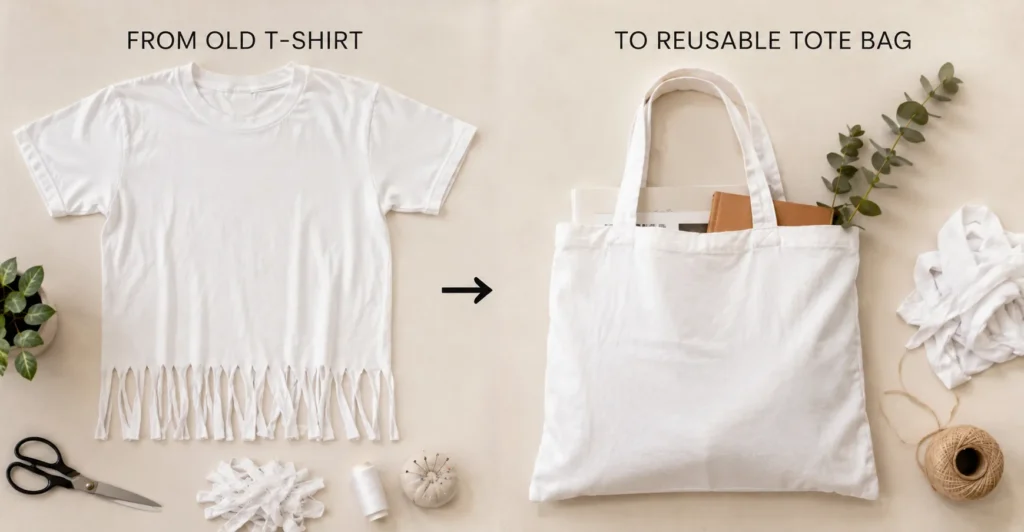
- Raw-edge crop top: Mark your length, add an inch for rolling, then cut straight across.
- Knotted side tee: Gather fabric at the hem and tie it into a flattering knot.
- Racerback tank: Cut off the sleeves and reshape the back into a racerback.
- Fringe hem: Cut vertical strips along the bottom and stretch each one to curl.
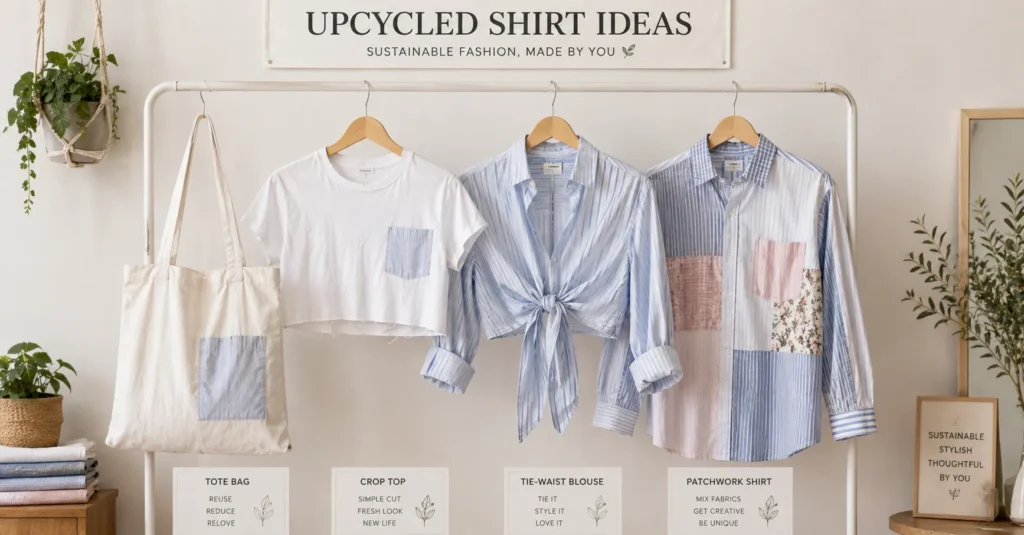
- No-sew tote bag: Cut off the sleeves and neckline, then tie the bottom hem shut.
No-sew finishing tricks
- Stretch the edge: Pull a raw hem to make it curl naturally.
- Twist and tie: Knot fringe or straps instead of stitching them.
- Use fabric glue: Secure folded hems without a single stitch.
- Braid the strips: Weave cut strips into decorative back details.
A quick no-sew comparison
| Project | Skill Level | Time Needed | Best Shirt Type |
| Raw-edge crop | Beginner | 5 minutes | Cotton t-shirt |
| Knotted side tee | Beginner | 5 minutes | Cotton t-shirt |
| Fringe hem | Beginner | 15 minutes | Cotton t-shirt |
| No-sew tote bag | Beginner | 10 minutes | Cotton t-shirt |
| Braided back | Intermediate | 25 minutes | Cotton t-shirt |
Simple Cutting Techniques to Refresh a Shirt
Cutting shirts is the foundation of most upcycling projects. A few basic techniques unlock dozens of looks, and they all start with the same simple rules.
Prep before you cut
- Wash and dry the shirt so it won’t shrink later.
- Lay it flat on a hard surface with no wrinkles.
- Mark your lines with chalk before cutting anything.
- Measure both sides so your cuts stay even.
- Test the fit with safety pins before committing.
Golden rules for clean cuts
- Always cut less than you think. You can trim more, but you can’t add fabric back.
- Use long, smooth strokes for cleaner edges.
- Cut one layer at a time when you want different front and back designs.
- Insert cardboard inside the shirt to avoid cutting through both sides.
Popular cut-based makeovers
- Cropping instantly modernizes an oversized or plain shirt.
- Reshaping the neckline into a scoop or V freshens up the look.
- Off-shoulder cuts turn a slightly baggy tee into a breezy top.
- Side slits add movement and a relaxed, elevated feel.
Creative DIY Shirt Makeover Ideas
Once you’re comfortable with the basics, you can take your DIY shirt makeover further. These projects transform a shirt into something genuinely new and exciting.
Turn a t-shirt into new pieces
- T-shirt dress: Add length with fabric from a second shirt, or cinch the waist with a belt.
- Halter top: Reshape the neckline and back for a summery silhouette.
- Tie-front blouse: Cut the front center and add ties for a flirty finish.
- Off-shoulder top: Widen the neckline and add elastic for structure.
Refashion a button-up shirt
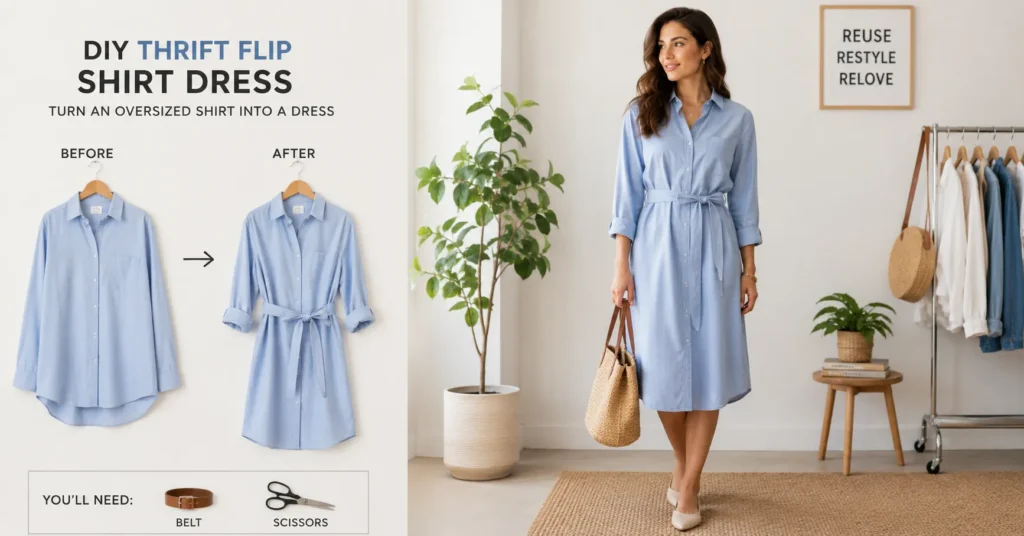
An oversized button-up is a goldmine for shirt refashion projects:
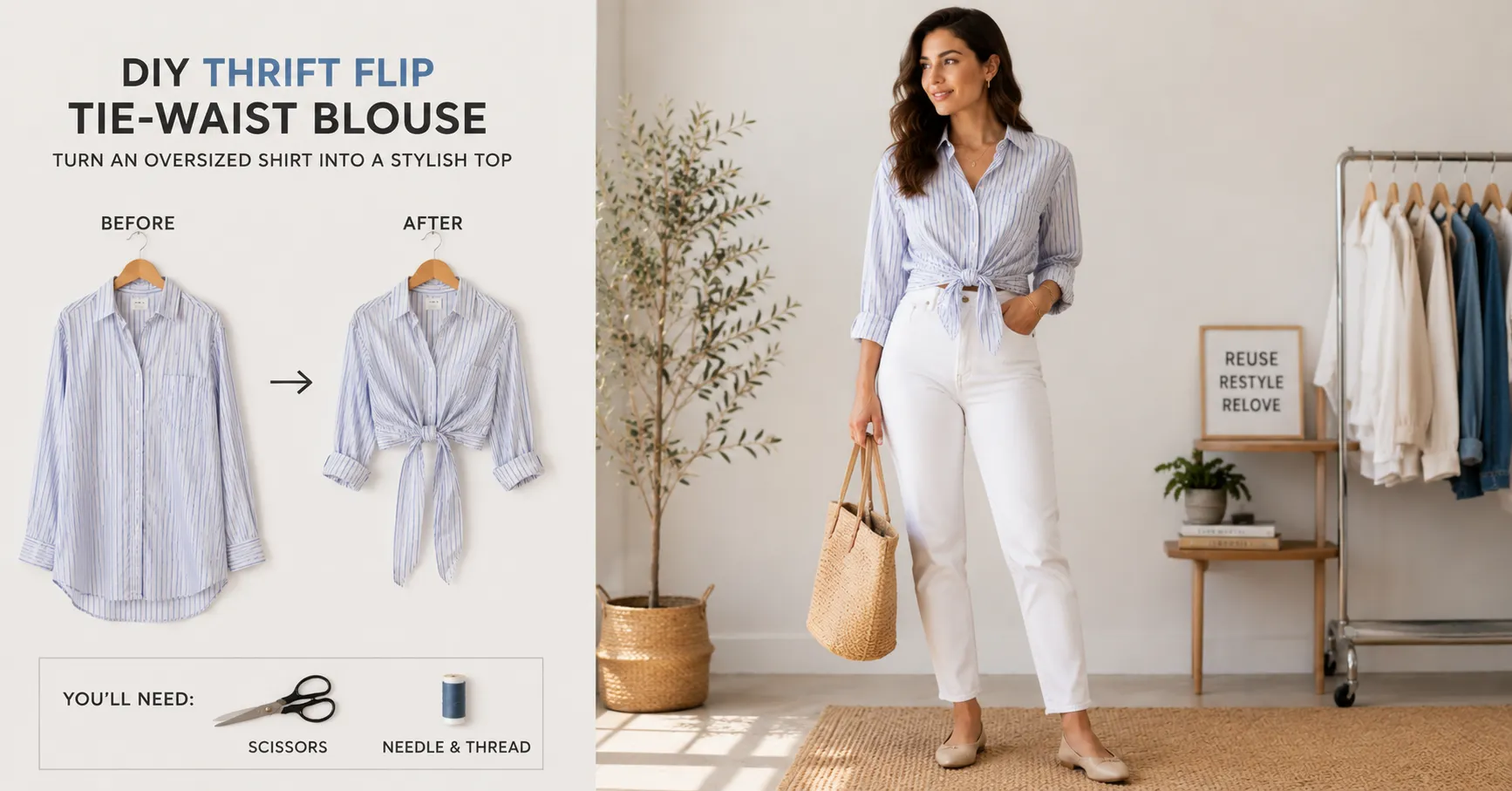
- Tie-waist top: Crop the hem and add a knot for shape.
- Off-shoulder shirt: Slide the collar down and secure with elastic.
- Shirt dress: Take in the sides for a fitted, tailored look.
- Apron or smock: Repurpose the fabric entirely for a kitchen project.
Add custom design details
Custom shirt design is where personality shines. Try these embellishments:
- Fabric paint or stencils for original graphics
- Embroidery to add texture and color
- Patches and appliqués to cover stains or add flair
- Tie-dye or bleach designs for a fresh pattern
- Added buttons or trim for a boutique-style finish
Thrift Flip Shirt Projects
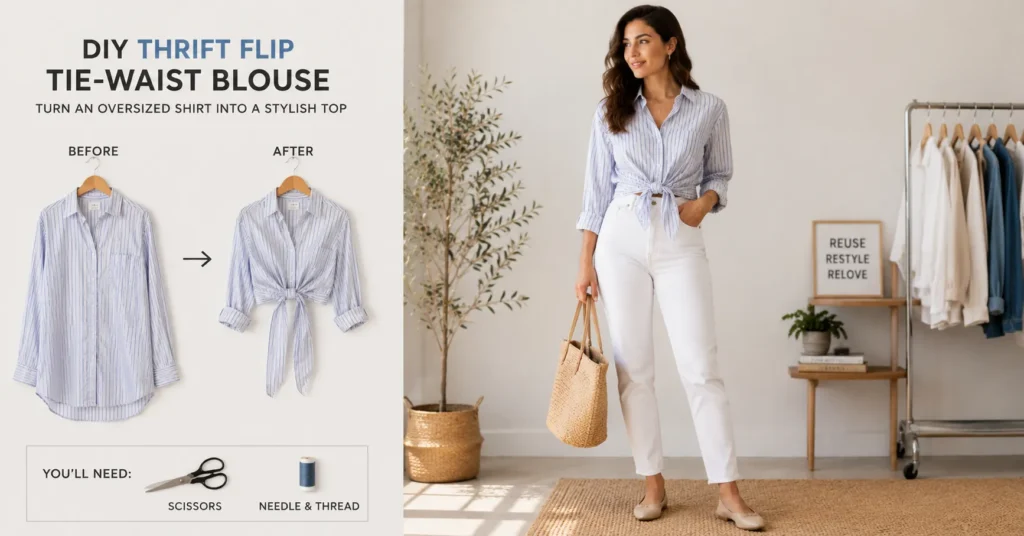
A thrift flip shirt takes a secondhand find and turns it into something you’d actually pay full price for. Thrift stores are full of inexpensive shirts just waiting for a makeover.
Why thrift flipping works
Thrift shops offer quality fabrics, interesting patterns, and roomy sizes at low prices. An oversized men’s button-up might cost a couple of dollars, yet it holds enough fabric for a dress, a cropped top, or even a tote bag.
Smart thrift shopping tips
- Check the fabric first. Natural fibers like cotton and linen flip beautifully.
- Look for size up. More fabric means more design freedom.
- Ignore stains and small flaws. You can cut around or cover them.
- Inspect seams and buttons. Sturdy construction makes refashioning easier.
- Keep an open mind. Picture the potential, not the current style.
Easy thrift flip ideas
- Turn an oversized flannel into a cropped shacket.
- Transform a graphic tee into a fitted, knotted top.
- Reshape a baggy button-up into a tailored shirt dress.
- Cut a large tee into a trendy two-piece set.
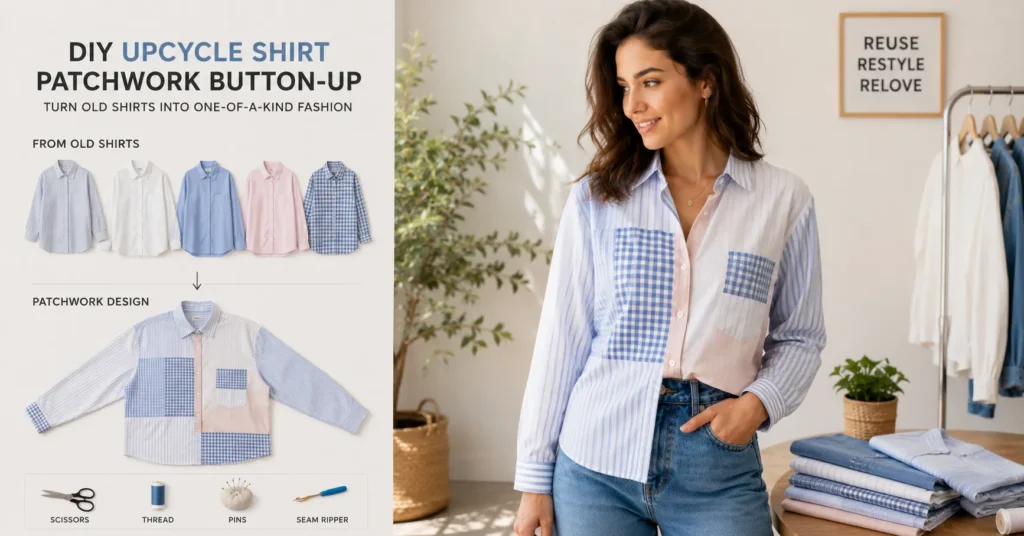
- Combine two thrifted shirts into a patchwork piece.
Upcycling Shirts for Different Goals
The beauty of easy clothing upcycles is their range. The same shirt can become countless things depending on what you need.
For everyday casual wear
Keep it simple with a raw-edge crop or a knotted tee. Pair with jeans or shorts for an easy, put-together outfit that took minutes to make.
For home and accessories
Old shirt ideas go far beyond clothing:
- Reusable shopping bags from sturdy tees
- Cleaning rags from worn, stained shirts
- Pillow covers from soft cotton fabric
- Hair scrunchies from leftover strips
- Quilts or memory blankets from sentimental shirts
For gifts and special pieces
A thoughtfully upcycled shirt makes a meaningful, personal gift. Turn a loved one’s old band tee into a pillow, or stitch a child’s outgrown clothes into a keepsake. These pieces carry memories that store-bought items can’t match.
Sustainable Fashion: Why Upcycling Matters
The clothing industry produces enormous waste, and millions of tons of textiles end up in landfills each year. Every shirt you upcycle is one less item discarded and one less new garment you need to buy.
The environmental impact
- Less landfill waste: Reusing fabric keeps it in circulation longer.
- Lower demand for new production: Fewer purchases mean fewer resources used.
- Reduced water and energy use: Making new clothes consumes both heavily.
- Smaller carbon footprint: Upcycling avoids the emissions tied to manufacturing.
Building sustainable habits
Upcycling fits naturally into a more mindful approach to your wardrobe:
- Repair before replacing when something tears.
- Repurpose items you no longer wear.
- Shop secondhand before buying new.
- Choose quality fabrics that last and flip well.
- Pass on or donate pieces you can’t use.
A rewarding mindset shift
Beyond the practical benefits, upcycling changes how you see your clothes. You start spotting potential everywhere, and getting dressed becomes more creative. It’s a small habit with a big impact, both for your closet and the planet.
Common Upcycling Mistakes to Avoid
Even simple projects can go sideways. Watch out for these frequent slip-ups that derail a good shirt.
- Cutting too much, too soon. Start conservative and trim gradually.
- Skipping the measuring step. Uneven cuts come from guessing.
- Using dull scissors. They snag, fray, and leave jagged edges.
- Forgetting to prewash. A shirt that shrinks after the fact ruins the fit.
- Ignoring fabric type. Woven fabrics fray and need finished edges.
- Rushing the design. Plan your project before you start cutting or sewing.
Avoiding these errors keeps your projects looking intentional rather than accidental.
Caring for Your Upcycled Shirts
A little care keeps your creations looking great wash after wash.
- Wash inside out to protect raw edges and any prints.
- Use a gentle cycle to reduce stress on cut or sewn areas.
- Skip the dryer when possible, since heat curls and frays edges.
- Reinforce stress points with a few stitches if a seam starts to give.
- Store properly, folding knits and hanging woven pieces.
Raw-edge cotton pieces often look better with a little wear, so don’t stress over perfect edges. They settle into a relaxed, lived-in look over time.
Building Your Upcycling Skills Over Time
The more you practice, the more confident and creative you’ll become. Here’s a simple path from beginner to pro.
Start with no-sew
Begin with quick wins like crops, knots, and tote bags. These build your confidence and deliver instant results without any stitching.
Move into basic sewing
Once you’re comfortable cutting, learn a few hand stitches or try a sewing machine. Hemming, taking in seams, and adding details open up far more possibilities.
Layer your techniques
The most impressive pieces often combine methods. Picture a cropped tee with an embroidered detail and a knotted hem, or a thrifted button-up reshaped into a dress with added trim. Mixing techniques takes practice, but the results look genuinely custom.
Find inspiration everywhere
- Save ideas from social media and tutorials.
- Study store pieces and recreate the details.
- Keep a folder of designs you want to try.
- Experiment freely; mistakes teach you the most.
Conclusion
Learning to upcycle a shirt is a simple, rewarding way to refresh your wardrobe, express your creativity, and shrink your environmental footprint all at once. With nothing more than scissors and a little imagination, you can turn forgotten shirts into crops, dresses, tote bags, and custom pieces you’ll genuinely love. The techniques are beginner-friendly, the materials are things you already own, and the possibilities are nearly endless.
Start small. Grab a shirt you no longer wear, pick one easy project from this guide, and give it a try. Measure twice, cut less than you think, and don’t be afraid to experiment. Once you see how quickly a plain shirt becomes something new, you’ll be reaching for your scissors and digging through your closet again and again.
Frequently Asked Questions
How do I upcycle a shirt without sewing?
Many shirt projects need no sewing at all. Cotton t-shirts roll naturally at raw edges, so you can crop, knot, twist, or braid them into new looks. Fabric glue secures folded hems, and tying the bottom of a tee turns it into a tote bag in minutes.
What kind of shirts work best for upcycling?
Cotton t-shirts and cotton blends are the most beginner-friendly because they barely fray. Oversized button-ups offer lots of fabric for dresses and refashions. Woven and linen shirts fray more, so they suit projects with finished or hemmed edges.
What tools do I need to start upcycling shirts?
At minimum, you need sharp fabric scissors and fabric chalk for marking. A seam ripper, ruler, and pins make projects easier. For sewn projects, add a needle and thread or a sewing machine, plus an iron for crisp hems and seams.
Can I upcycle a stained or damaged shirt?
Absolutely. Stains and small holes are easy to work around. Cut away the damaged section, cover it with a patch, embroidery, or fabric paint, or repurpose the good fabric into accessories like tote bags, scrunchies, or cleaning rags.
What is a thrift flip shirt?
A thrift flip shirt is a secondhand piece transformed into something stylish and new. Thrift stores offer inexpensive, roomy shirts in quality fabrics. With a few cuts and stitches, you can turn an oversized find into a dress, a cropped top, or a tailored shirt.
How does upcycling help the environment?
Upcycling keeps textiles out of landfills and reduces demand for new clothing production, which uses large amounts of water, energy, and resources. Each shirt you rework lowers waste and shrinks your carbon footprint while giving you unique pieces.
Will my upcycled shirt fall apart in the wash?
Not if you care for it properly. Wash it inside out on a gentle cycle and skip the dryer when possible. Reinforce any high-stress cut or sewn areas with a few stitches, and your upcycled piece will hold up well for a long time.
How do I turn an old t-shirt into something new for beginners?
Start with a no-sew project like a raw-edge crop or a knotted side tee. Lay the shirt flat, mark your cutting line with chalk, add an inch for rolling, then cut in one smooth motion. It takes just minutes and needs no sewing skills.