Shirt Dresses for Women: The Complete Style Guide
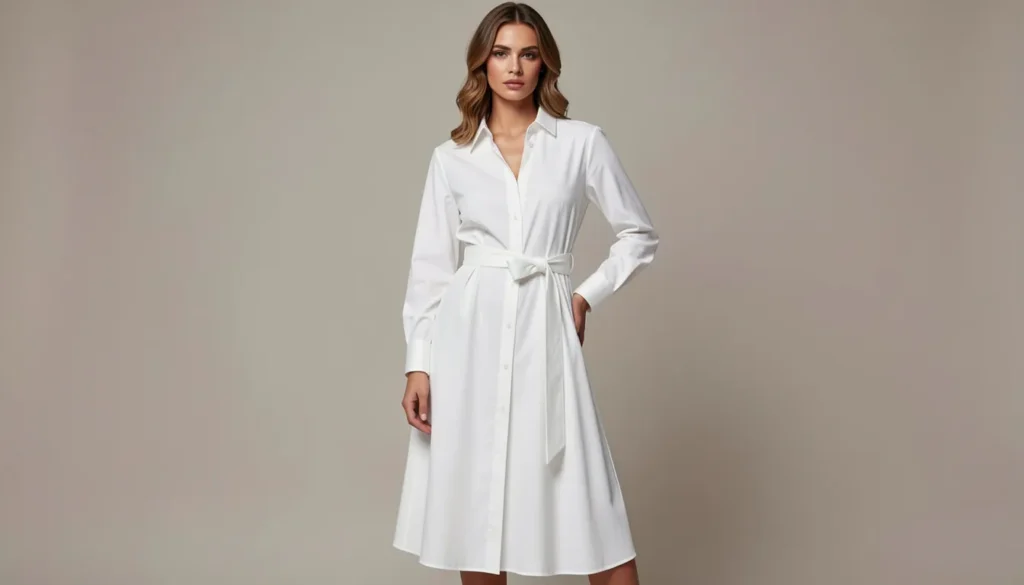
Shirt dresses for women are one of the most consistently useful pieces in a modern wardrobe. They combine the structure of a button-down shirt with the ease of a dress which means you get a polished silhouette without the effort of putting together separate pieces. The result is an outfit that works across a wide range of occasions with very little styling required.
This guide covers everything you need to wear this style well. You’ll learn which shirt dress styles suit different body types and occasions, how to style them across seasons, what footwear and accessories work best, and which common mistakes to avoid. By the end, you’ll have a clear idea of which version belongs in your wardrobe and exactly how to wear it.
Why Shirt Dresses Belong in Every Woman’s Wardrobe
Before the styling advice, it helps to understand why this silhouette has remained a wardrobe staple across decades and trend cycles.
The Functionality Factor
A shirt dress solves a real problem: looking put-together without spending time on outfit coordination. One piece covers the entire look. Add shoes and you’re dressed. That simplicity is the foundation of its appeal and it’s why the shirt dress shows up in minimalist capsule wardrobes and well-edited fashion collections alike.
Versatility Across Occasions
Few single-piece garments transition as smoothly from casual to smart casual to work-appropriate as a shirt dress. The collar and button detail give it an inherent formality that elevates even the most relaxed silhouette. A cotton shirt dress that reads as casual on a Saturday looks completely different belted and worn with loafers on a Monday.
A Silhouette That Adapts to Body Type
The shirt dress is one of the most inclusive silhouettes in women’s fashion. Its adjustable nature belt it, leave it open, tie the hem means you can customize the fit and shape to suit your body. High-waisted versions define the waist. Oversized styles skim the body without clinging. Long shirt dresses offer coverage while remaining light and airy.
The Main Shirt Dress Styles Worth Knowing
Not all shirt dresses are built the same. Understanding the main style variations helps you identify which one suits your wardrobe needs and personal aesthetic.
The Classic Belted Shirt Dress
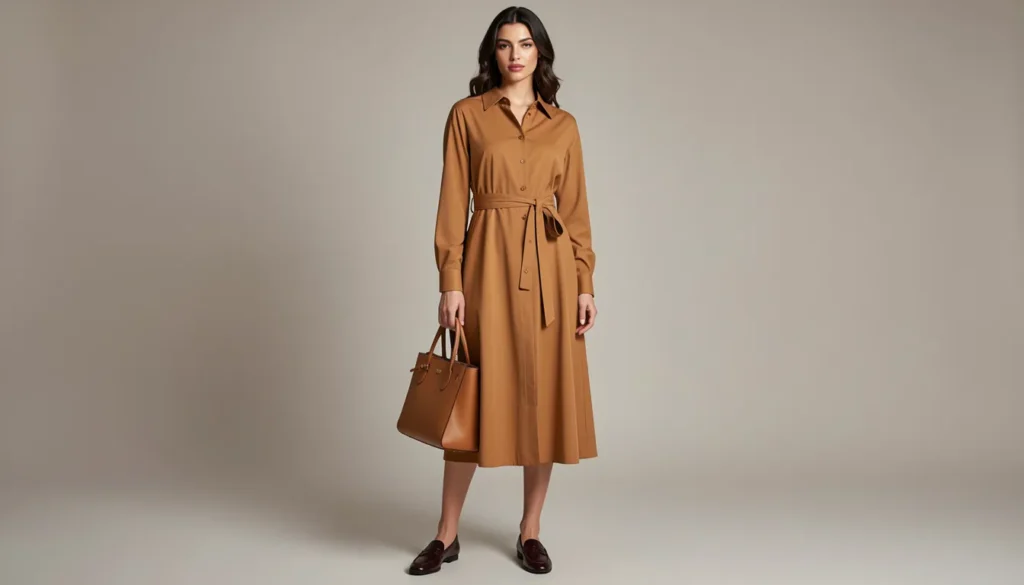
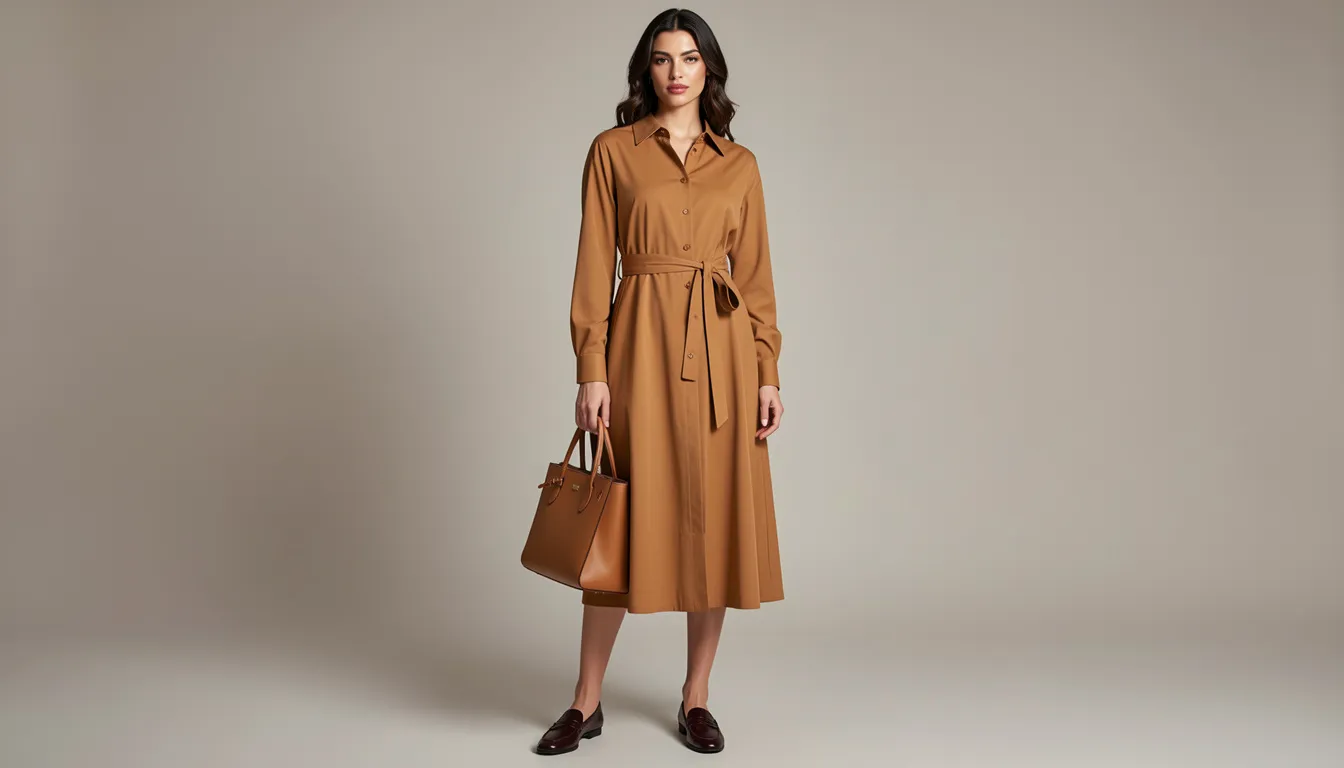
The belted shirt dress is the most recognizable version. It features a self-tie or detachable belt that cinches at the waist, creating a defined hourglass silhouette. This style is the most universally flattering because the belt does the structural work you can position it at the natural waist or high waist depending on what suits your proportions.
Best for: Office environments, smart casual occasions, date nights, and any setting where a polished look is needed.
The Oversized Shirt Dress
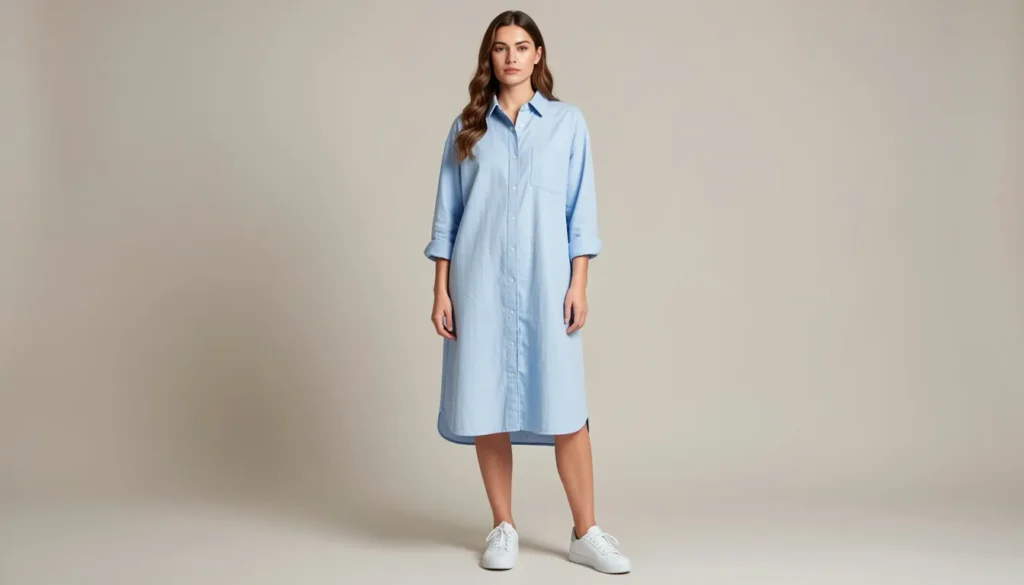
The oversized shirt dress skips the belt and lets the fabric fall loosely from the shoulders. It’s relaxed, comfortable, and has a very contemporary feel. This is the most casual of the shirt dress styles and leans toward streetwear and weekend dressing.
The key to wearing an oversized shirt dress well is proportion management. Because the dress adds volume, keep footwear and accessories minimal and well-fitted.
Best for: Casual daywear, weekend errands, relaxed outings, warm-weather casual looks.
The Long Shirt Dress
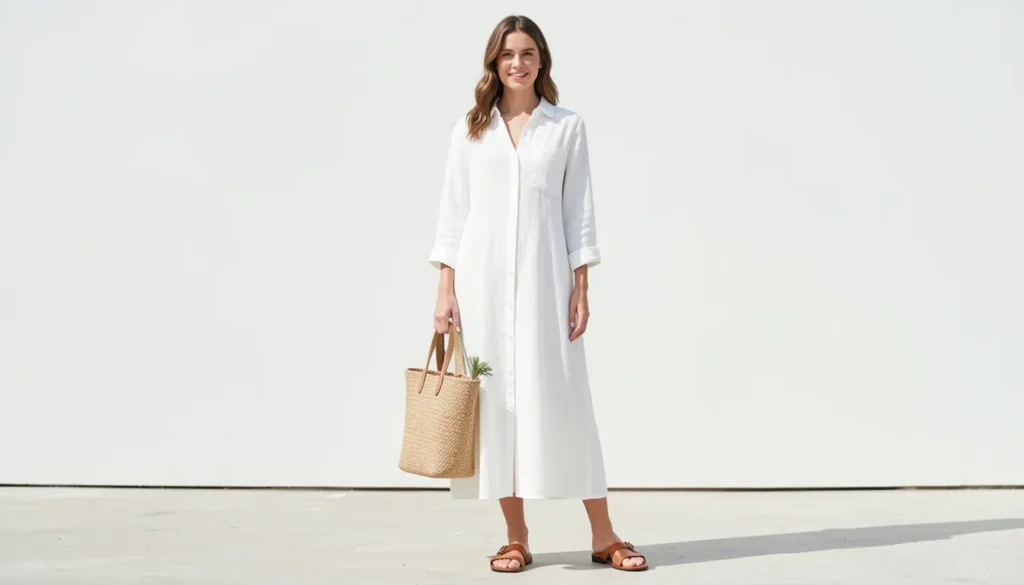
A long shirt dress typically hitting at midi or maxi length adds elegance and coverage. It works well for more formal occasions when constructed in quality fabric, and functions as a relaxed staple in lighter cotton or linen versions.
Long shirt dress outfit ideas are particularly strong for summer, where the length provides a breezy, effortless look that doesn’t require careful leg coverage.
Best for: Summer dressing, smart casual evening events, beach and vacation styling, taller frames.
The Cotton Shirt Dress
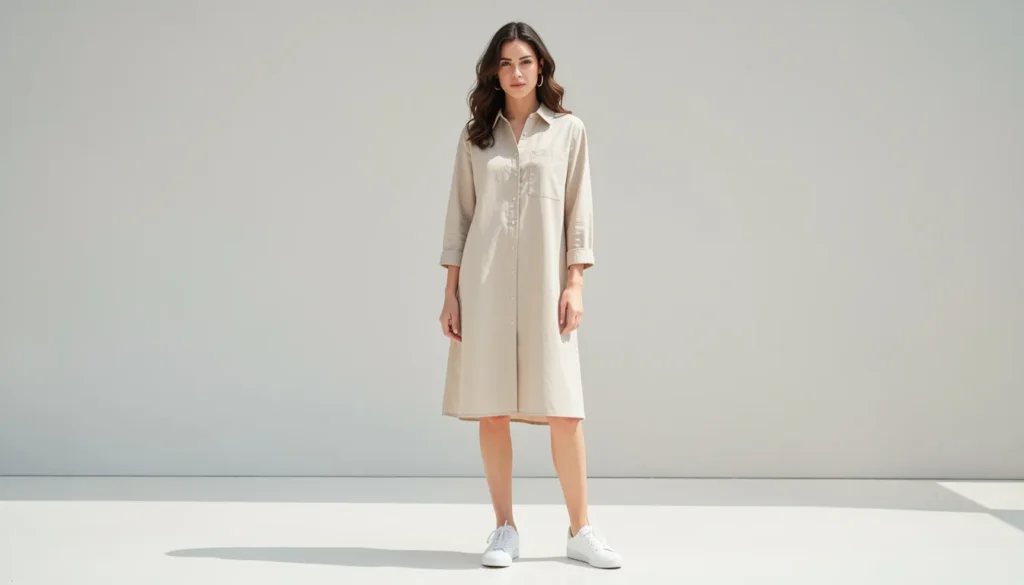
The cotton shirt dress is defined by its fabric rather than its silhouette. It’s the most breathable and practical option for warm weather, and it ages well through regular washing. Cotton versions tend to sit in the casual to smart casual range depending on the weave and construction quality.
A fine cotton poplin shirt dress reads far more polished than a standard jersey cotton. Understanding the fabric’s weight and weave helps you gauge where in your wardrobe rotation it belongs.
Best for: Spring and summer wear, everyday casual, warm climates, travel.
The Mini Shirt Dress
The mini shirt dress hits at or above the knee and reads as more playful and casual than longer versions. It pairs easily with sneakers and trainers for a relaxed look, or with ankle boots and loafers for a smarter register.
Best for: Casual outings, younger aesthetics, warm-weather events, layering over tights in cooler months.
The Denim Shirt Dress
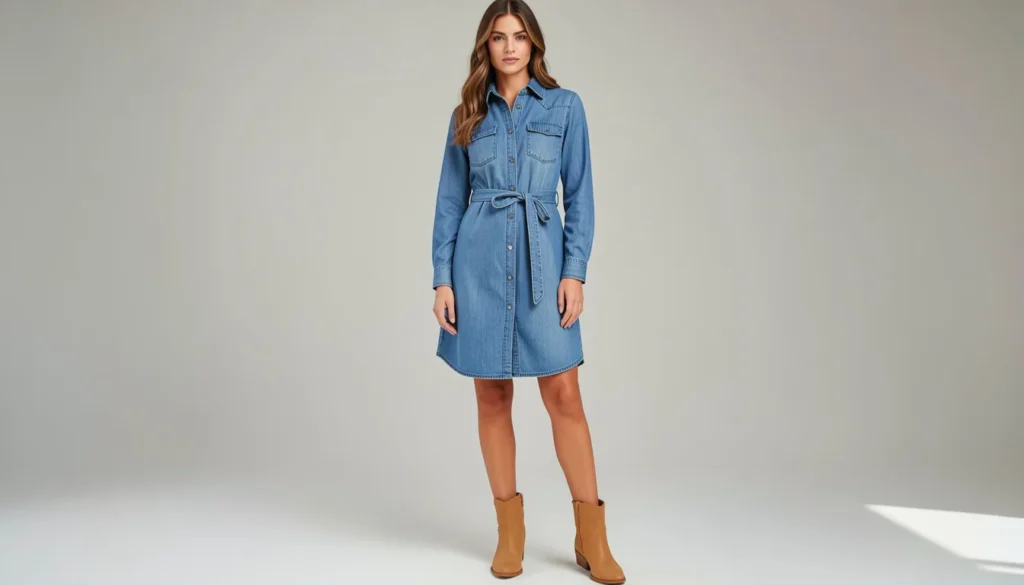
Denim adds texture and a laid-back edge to the shirt dress silhouette. It’s one of the most casual interpretations but also one of the most versatile denim shirt dresses work as outerwear layers over fitted basics, as standalone casual pieces, or belted for a more structured look.
Best for: Transitional weather, casual styling, layering as a jacket alternative.
Shirt Dress Style Comparison at a Glance
| Style | Length | Fit | Best Season | Occasion Range |
| Belted shirt dress | Knee to midi | Defined waist | All year | Casual to smart casual |
| Oversized shirt dress | Mini to midi | Relaxed, boxy | Spring/summer | Casual |
| Long shirt dress | Midi to maxi | Varies | Summer | Casual to smart casual |
| Cotton shirt dress | Varies | Varies | Spring/summer | Casual to work |
| Mini shirt dress | Above knee | Fitted or relaxed | Spring/summer | Casual to smart casual |
| Denim shirt dress | Varies | Varies | Autumn/spring | Casual |
How to Style Shirt Dresses for Women: Outfit Formulas That Work
The shirt dress’s adaptability is one of its strongest qualities but it also means the styling decisions matter more than with more structured pieces. Here are the most reliable configurations.
The Classic Smart Casual Look
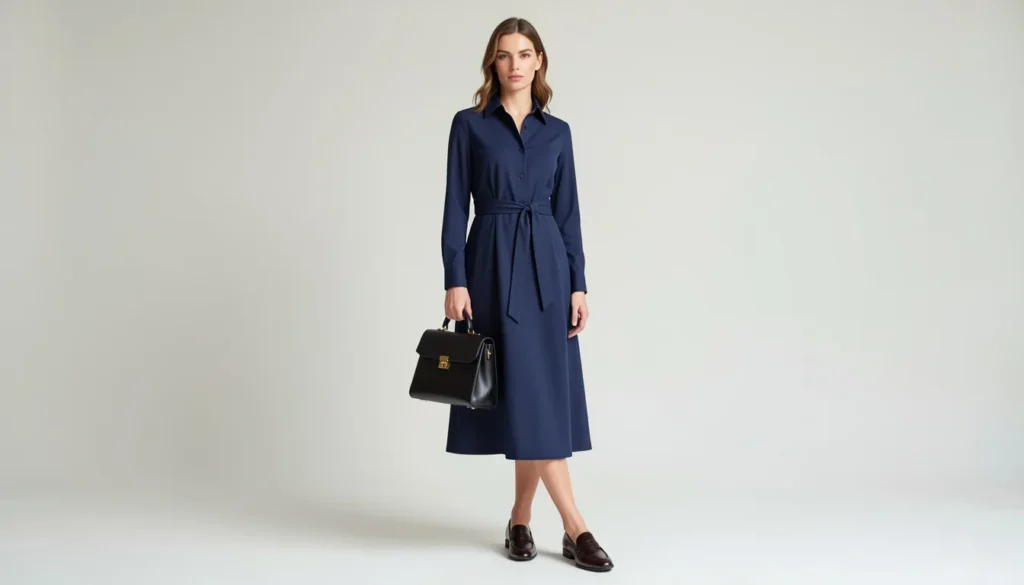
This is the most versatile shirt dress outfit direction. It works for work, lunches, casual client meetings, and any occasion that sits between fully casual and formal.
- Belted midi shirt dress in a solid neutral (camel, navy, or white) + leather loafers + a structured tote
- Belt cinched at the natural waist, top two buttons open, clean leather shoes
Keep accessories minimal here. A simple watch, small earrings, and one clean bag is all it needs. The dress and the belt do the visual work.
The Elevated Weekend Look
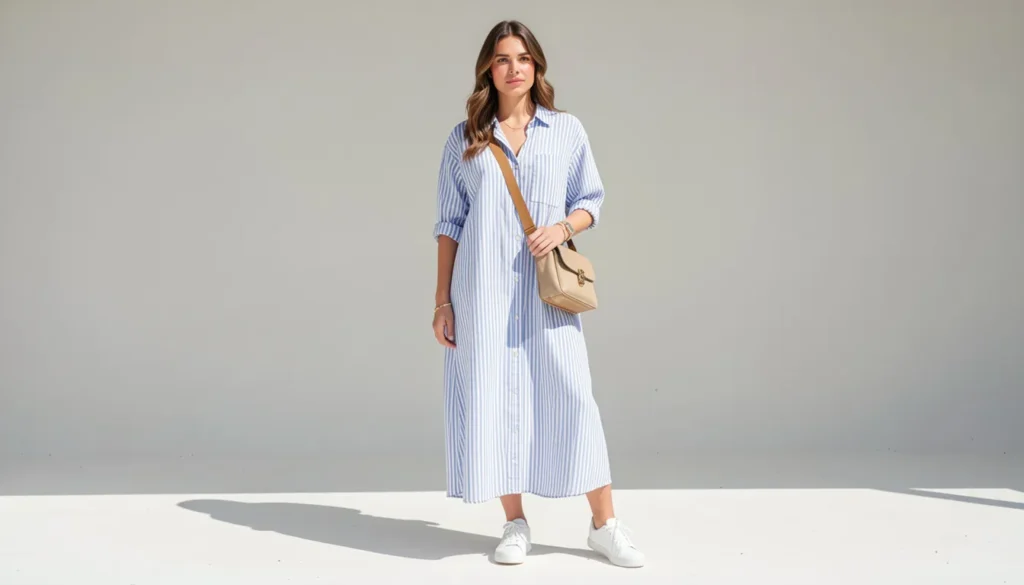
Shirt dresses work brilliantly for weekends when you want to look considered without overthinking it.
- Cotton shirt dress (belted or loose) + clean white sneakers + a small crossbody bag
- Long shirt dress in a soft print + flat leather sandals + minimal jewelry
The key for weekend styling is relaxed footwear. White sneakers or leather sandals instantly soften the shirt dress’s formality into something casual and effortless.
The Summer Vacation Configuration
Summer shirt dresses particularly in linen, cotton, or rayon are among the most practical vacation pieces you can pack. They’re lightweight, wrinkle-forgiving in natural fabrics, and work from sightseeing to casual dinners.
- Long linen shirt dress in white or a muted print + flat leather sandals + a woven tote and sunglasses
- Oversized cotton shirt dress worn open over a bikini top at the beach, then belted for lunch
One dress. Two configurations. That’s vacation dressing done efficiently.
The Layered Autumn Look
As temperatures drop, the shirt dress transitions rather than disappears. Layer it over or under other pieces to extend its seasonal range.
- Midi shirt dress + opaque tights + ankle boots + a belted wool coat over the top
- Shirt dress worn open as a duster jacket over fitted straight-leg jeans and a plain tee
The second option treating the shirt dress as a layer rather than a standalone dress is one of the most underused styling tricks. An oversized or long shirt dress works particularly well in this configuration.
The Evening Ready Look
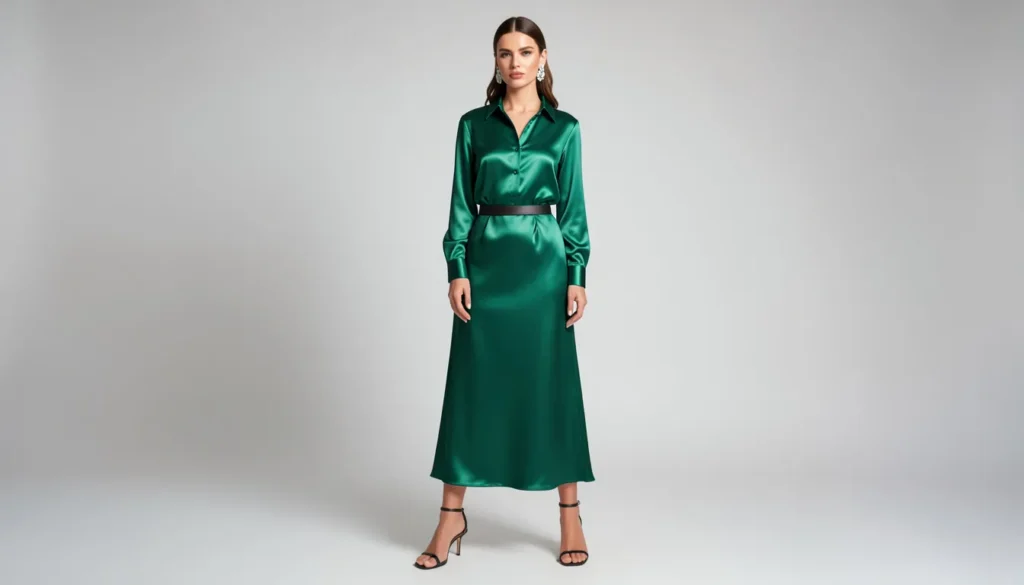
With the right fabric and accessories, a shirt dress shifts into evening territory.
- Silk or satin shirt dress in a deep jewel tone (midnight blue, forest green, burgundy) + heeled mules or strappy sandals + statement earrings
- Belted shirt dress in a rich fabric + a small clutch + simple but deliberate jewelry
The fabric elevates the silhouette into evening wear without requiring a different dress entirely. Stick to silk, satin, or high-quality crepe for this configuration, and swap out the daytime accessories for evening-weight pieces.
Season-by-Season Styling Guide
| Season | Best Shirt Dress Type | Styling Approach | Footwear |
| Spring | Cotton or linen, light colors | Light layers, open collar | Loafers, ballet flats, clean sneakers |
| Summer | Cotton, linen, rayon relaxed fit | Minimal layering, breathable fabrics | Flat sandals, mules, espadrilles |
| Autumn | Denim, chambray, heavier cotton | Layer with tights, coats, knitwear | Ankle boots, Chelsea boots, loafers |
| Winter | Heavier cotton, silk smart styles | Over tights, under coats | Heeled boots, leather ankle boots |
Spring and summer are where shirt dresses look most natural. But with the right layering approach, a good shirt dress works in three out of four seasons without feeling forced.
Shirt Dresses for Different Body Types
One of the shirt dress’s genuine strengths is its adaptability. A few adjustments make it work well across different body proportions.
For Petite Frames
- Choose a mini or knee-length style to avoid being overwhelmed by fabric
- Belt at the natural waist to create a clear vertical proportion
- Avoid very oversized styles they can swamp a smaller frame
- Monochromatic color (dress, tights, and boots in the same tone) elongates the silhouette
For Curvier Figures
- A belted style with a structured waist is the most flattering option
- Choose a fabric with some weight it drapes better and holds shape
- Avoid very stiff or boxy fabrics that don’t move with the body
- A wrap-style shirt dress (partially open at the front, tied at the side) creates excellent proportion
For Taller Frames
- Longer midi and maxi lengths look proportional and elegant on taller figures
- Oversized styles that overwhelm petite frames work naturally on taller builds
- Bold prints and patterns carry well across more height
For Athletic or Straight Figures
- A belted shirt dress creates the waist definition that a straighter frame naturally lacks
- Ruffled or tiered versions add visual femininity to a more angular silhouette
- Side-tie options allow you to control exactly where the dress nips in
Footwear Guide for Shirt Dresses
Footwear changes the entire register of a shirt dress outfit. Here’s how each type shifts the look.
- Loafers: Smart casual and work-appropriate. One of the cleanest pairings for a midi shirt dress.
- White sneakers: Casual and contemporary. Works with most shirt dress styles for weekend wear.
- Ankle boots: Versatile transition footwear. Works across casual and smart casual depending on the boot’s construction.
- Flat leather sandals: Summer and vacation casual. Adds a relaxed, warm-weather ease.
- Heeled mules or sandals: Elevates the shirt dress into evening territory.
- Ballet flats: Light and spring-appropriate. Suits both mini and midi lengths.
- Chunky trainers: Streetwear-adjacent and casual. Works with oversized shirt dresses for a contemporary look.
What to Wear With a Shirt Dress: Accessories
Accessories should support the dress without competing with it. The shirt dress’s button-front detail and collar create enough visual interest keep accessories selective.
For Casual Looks
- A simple crossbody bag or tote
- Small hoop earrings or studs
- A single ring or bracelet
For Smart Casual and Work
- A structured leather tote or mini bag
- A watch
- Small stud or drop earrings
For Evening
- A small clutch or evening bag
- Statement earrings (the dress’s collar makes room for longer drop styles)
- A delicate necklace if the top buttons are open
The collar area of a shirt dress creates a natural frame for necklaces and earrings. Use that frame deliberately one strong jewelry choice in that area is more effective than several competing pieces.
Common Styling Mistakes to Avoid
Even a well-chosen shirt dress can look off if the styling doesn’t support it. These are the most frequent mistakes.
Skipping the belt. Many women buy a belted shirt dress and then wear it without the belt “for comfort.” This almost always makes the dress look shapeless. If a belted silhouette doesn’t appeal, choose an intentionally oversized or A-line style from the start.
Wrong proportions with footwear. A very long shirt dress with flat sandals and no other vertical element can appear to shorten the wearer. Add a belt at the waist and choose a footwear tone that continues the leg line.
Too many layers. Shirt dresses are already a complete look. Adding a cardigan, a scarf, and a bag with strong visual weight creates clutter. Pick one layer and make it count.
Ignoring fabric for the season. A thick cotton shirt dress in July looks heavy. A thin linen shirt dress in October looks underdressed. Match fabric weight to the temperature and setting.
Leaving the collar unfinished. The collar is a design feature. Whether worn buttoned to the top, open two buttons, or styled with a lightweight scarf, it should look intentional. A collar that’s half-buttoned and uneven makes the whole outfit look unresolved.
Building a Shirt Dress Capsule: Where to Start
If you’re adding shirt dresses to your wardrobe intentionally, a small capsule approach makes the most sense.
Start with one neutral, belted midi style. A belted shirt dress in camel, white, or navy in a quality cotton or cotton-blend fabric covers the most occasions. This is your workhorse piece.
Add a casual version second. An oversized cotton or linen shirt dress in a relaxed cut for weekends, vacations, and low-effort days gives you a clear second direction without overlapping.
Consider fabric before color. The fabric determines the occasion more than the color does. A silk shirt dress in white is an evening piece. A cotton shirt dress in deep navy is a casual piece. Fabric first, color second.
Prioritize fit at the shoulders. Like any shirt-based garment, the shoulder seam placement is the most important fit consideration. Everything else the waist, the hem, the buttons can be adjusted or styled around. A poor shoulder fit cannot.
Conclusion
Shirt dresses for women earn their place as a genuine wardrobe essential because they solve real daily problems: they look considered without requiring effort, they adapt to a wide range of occasions with simple styling adjustments, and they suit most body types with minor fit customization.
Start with a belted midi style in a neutral color and quality fabric. Wear it with loafers for work, sneakers for weekends, and heeled sandals for evenings. Belt it, leave it open, layer it, or style it over jeans one piece, multiple directions.
Once you’ve identified how you naturally reach for it, add a second style that fills a gap: a long shirt dress for summer, an oversized version for casual days, or a silk interpretation for evenings. The shirt dress rewards a considered approach and gives back significantly more than it costs in wardrobe flexibility.
Frequently Asked Questions
1. What is a shirt dress?
A shirt dress is a one-piece garment that combines the design elements of a button-down shirt including a collar, button-front placket, and often a breast pocket with the silhouette of a dress. It typically falls anywhere from above the knee to maxi length depending on the style.
2. Are shirt dresses suitable for work?
Yes. A belted midi shirt dress in a quality fabric cotton poplin, crepe, or a cotton-blend is one of the most appropriate casual-to-smart-casual work pieces available. Pair it with loafers or pointed-toe flats and a structured bag for a polished professional look. Avoid very oversized or casual cotton styles in formal office environments.
3. How do you style an oversized shirt dress?
Keep everything else in the outfit minimal and fitted. Clean sneakers or flat sandals, a small crossbody bag, and minimal jewelry work best. Avoid adding bulky layers that compete with the dress’s volume. You can also belt an oversized shirt dress loosely at the hip to create a more defined silhouette without losing the relaxed feel.
4. What shoes work best with a shirt dress?
The best footwear depends on the occasion. Loafers and pointed-toe flats work well for smart casual settings. White sneakers suit casual everyday wear. Ankle boots are versatile across autumn and mild winter looks. Flat sandals or mules work for summer and vacation styling. Heeled mules or strappy sandals elevate the shirt dress for evening outings.
5. Can you wear a shirt dress in winter?
Yes, with the right layering approach. Wear a midi or long shirt dress over opaque tights and ankle or knee-high boots. Layer a structured coat or belted wool coat on top. In milder winter conditions, a knit turtleneck under an open shirt dress also works well as a transitional look.
6. What’s the most flattering shirt dress for curvy figures?
A belted style with a structured waist is the most flattering option for curvier figures. Choose a fabric with enough weight to drape smoothly heavier cotton or crepe rather than thin jersey. Wrap-style shirt dresses, where the front ties at the side, are also particularly flattering because they allow you to customize where the dress cinches.
7. How do you make a shirt dress look more formal?
Choose a shirt dress in a dressier fabric silk, satin, or fine crepe. Belt it neatly at the natural waist. Pair with heeled footwear and deliberate accessories: drop earrings, a small structured clutch, and minimal but considered jewelry. Keep the color deep and rich (midnight blue, forest green, burgundy) rather than casual (denim or pale cotton).
8. What’s the difference between a shirt dress and a shirtwaist dress?
A shirtwaist dress specifically features a fitted bodice with a defined waist seam and a full skirt below closer to a 1950s silhouette. A shirt dress is a more contemporary term that refers broadly to any dress constructed with shirt-style details, including both fitted and relaxed silhouettes. The terms are sometimes used interchangeably in modern retail.
9. Are shirt dresses in style in this year?
Yes. Shirt dresses have remained a consistent presence in women’s fashion across multiple trend cycles, and in this year no different. Oversized and relaxed styles continue to perform well, while belted midi versions have remained relevant in smart casual and workwear contexts. Linen and cotton constructions are particularly strong for spring and summer.
10. Where can I find the best shirt dresses for women?
Mid-range retailers including Mango, & Other Stories, COS, and Arket offer strong shirt dress ranges with good construction and fabric quality. ASOS and Zara carry a wider variety at accessible price points. For investment pieces, Vince, Theory, and A.P.C. offer higher-quality options that last longer and hold their shape over time.