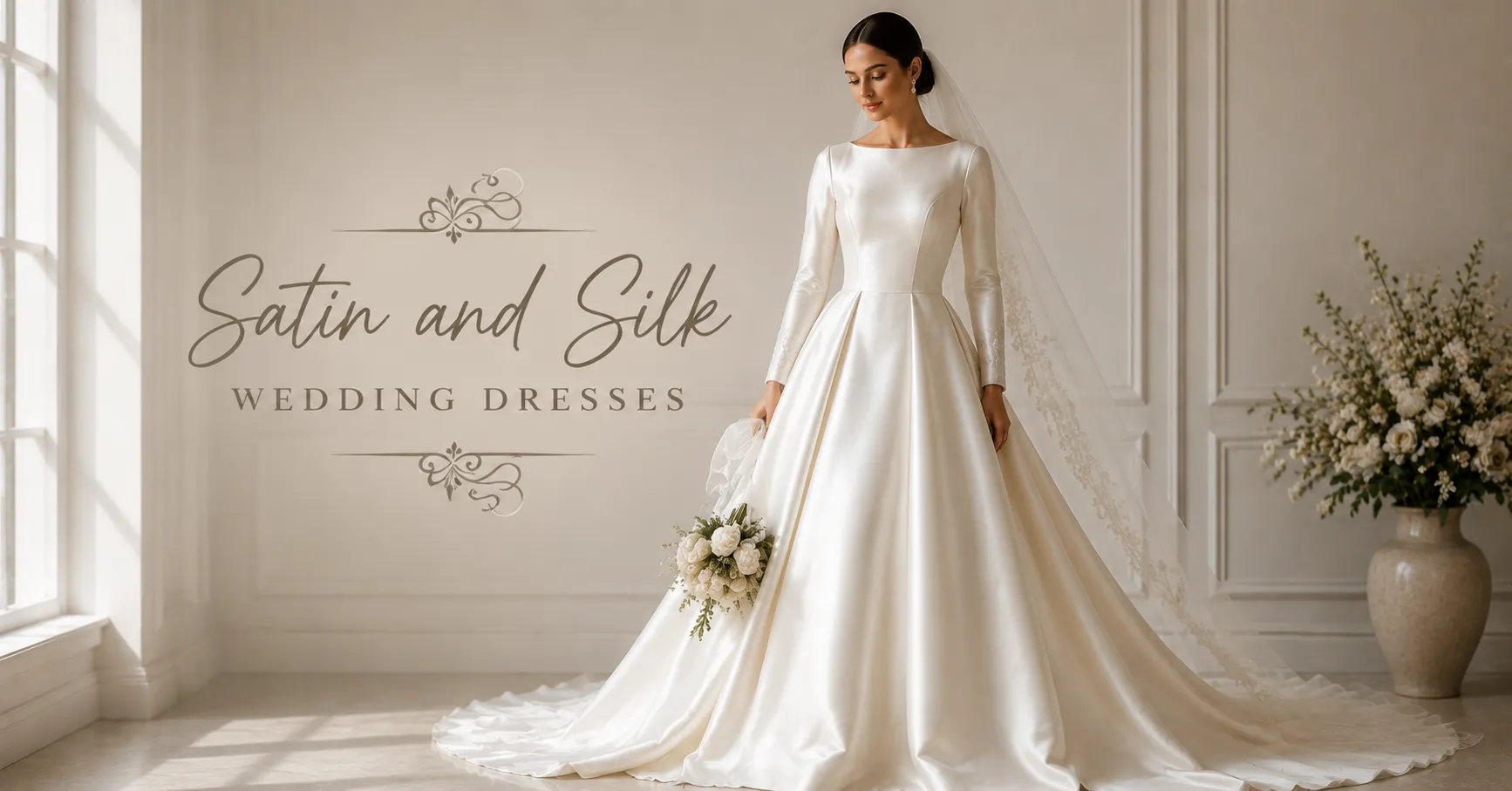
Satin and Silk Wedding Dresses: How to Choose the Right Fabric for Your Big Day
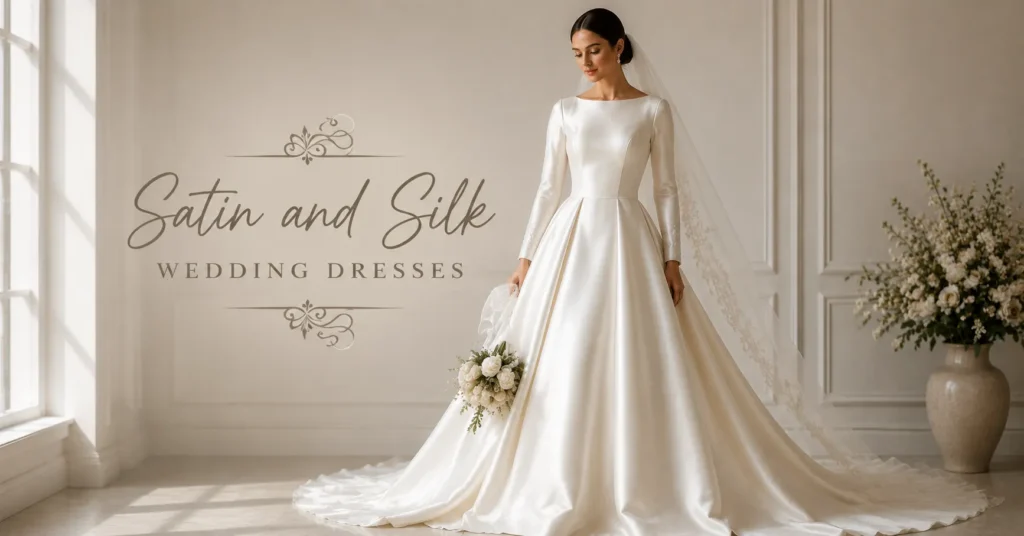
Satin and silk wedding dresses sit at the top of most brides’ wish lists, and for good reason. Both fabrics carry a natural luster, a beautiful drape, and a timeless quality that photographs well and feels special to wear. We put this guide together to clear up the confusion between the two, because most brides use the words interchangeably when they actually describe different things. By the end, you will know the difference between silk bridal gowns and satin wedding gowns, which silhouettes each fabric suits, and how to pick the option that matches your budget, body, and venue. We do not leave anything to chance.
Let’s start with the single point that trips up most brides.
Satin vs Silk: They Are Not the Same Thing
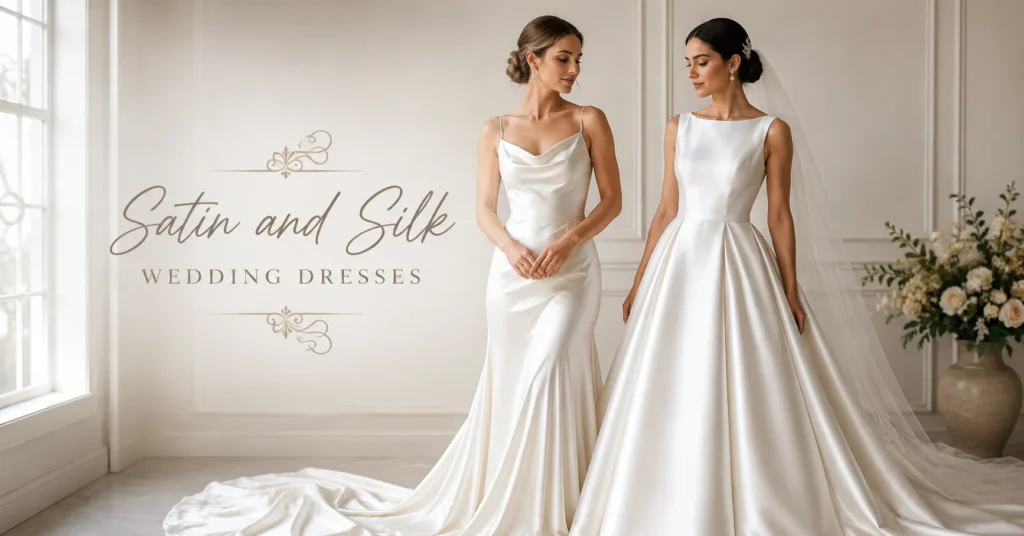
Understanding the terminology behind Satin and Silk Wedding Dresses makes it much easier to compare fabrics, prices, and finishes while shopping for a bridal gown. The first thing to understand is that satin and silk are not competing materials. One is a fiber, and the other is a weave. Getting this straight makes every other choice easier.
- Silk is a natural fiber spun by silkworms. It describes what the fabric is made from.
- Satin is a weave structure that produces a glossy front and a dull back. It describes how the fabric is made.
A gown can be silk, satin, or both. You can have silk satin, where silk fibers are woven in a satin pattern. You can also have polyester satin, where synthetic fibers use the same weave. That single distinction explains most of the price gap you will see while shopping.
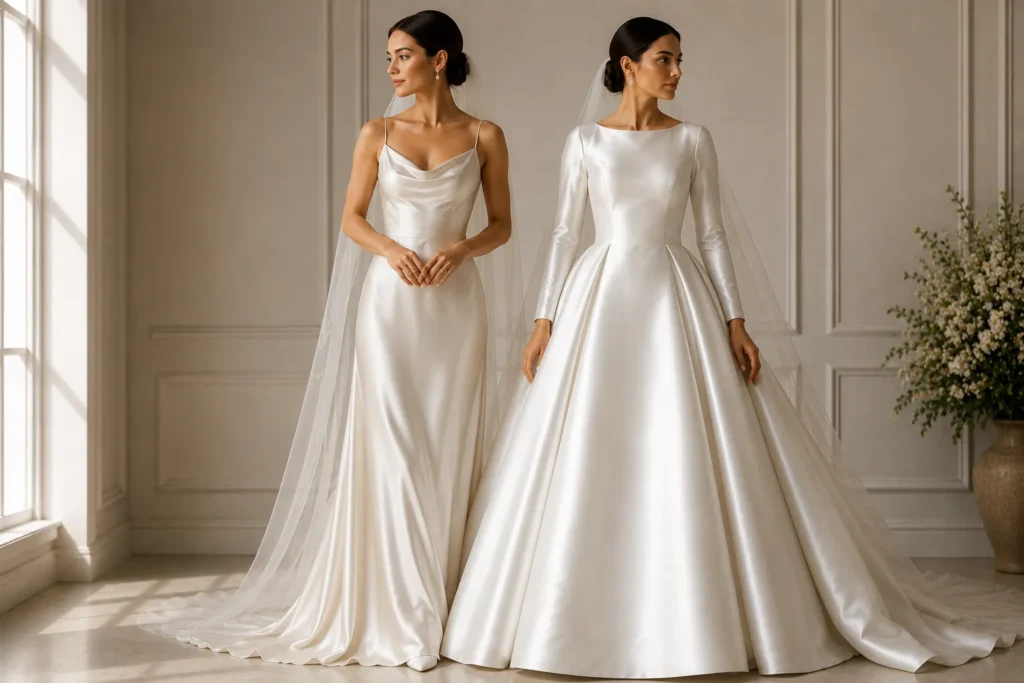
Here is a quick comparison to anchor the rest of this guide:
| Term | What It Describes | Typical Feel | Price Range |
| Silk | Natural fiber | Soft, breathable, matte-to-subtle sheen | Higher |
| Satin | Weave structure | Smooth front, high sheen | Varies by fiber |
| Silk satin | Silk fiber in satin weave | Luxurious, fluid, luminous | Highest |
| Polyester satin | Synthetic fiber in satin weave | Heavier, glossier, less breathable | Budget-friendly |
Why Brides Choose Silk
Silk earns its reputation through specific, measurable qualities rather than vague prestige. We recommend it to brides who want comfort and a refined finish over a high-shine look. Among Satin and Silk Wedding Dresses, silk options are especially appealing to brides who value breathability, softness, and a naturally elegant finish.
Silk offers these concrete benefits:
- Breathability. Natural silk regulates temperature, so you stay comfortable during long ceremonies and warm-weather weddings.
- Softness against the skin. The fiber feels smooth and light, which matters across a full day of wear.
- A subtle, natural sheen. Silk reflects light gently rather than sharply, giving photographs a soft glow.
Common Types of Silk Used in Bridal Gowns
Not all silk behaves the same way. The type you choose changes the weight, drape, and finish of the gown.
- Charmeuse. A lightweight silk with a glossy front and matte back. It drapes close to the body and suits slip dresses and bias-cut styles.
- Silk mikado. A heavier, structured silk blend that holds shape well. It works for structured gowns and clean, modern lines.
- Silk organza. A crisp, sheer silk used for overlays, sleeves, and volume in skirts.
- Silk crepe. A matte silk with a slight texture and excellent drape, favored for sleek, minimalist gowns.
Why Brides Choose Satin
Satin remains the most requested finish in bridal shops, and the reason is straightforward. The weave produces a smooth, reflective surface that reads as classic and formal. For brides comparing Satin and Silk Wedding Dresses, satin is often the preferred choice when structure, polished shine, and a traditional bridal appearance are priorities.
Satin delivers these benefits:
- A polished, high sheen. The satin weave reflects light strongly, which creates that recognizable bridal glow.
- Structure and weight. Satin holds a silhouette, so it supports fuller skirts and fitted bodices.
- Versatility across price points. Because satin is a weave, you can find it in silk, polyester, or blends to match nearly any budget.
Common Types of Satin Used in Bridal Gowns
Satin varies widely depending on fiber and weight. These are the types you will encounter most often.
- Duchess satin. A heavy, stiff satin with a matte-to-medium sheen. It holds structured shapes and works beautifully for ball gowns.
- Charmeuse satin. A lighter, fluid satin with a high shine that drapes close to the body.
- Crepe-back satin. Satin on one side and crepe on the other, giving you two finishes in one fabric.
- Stretch satin. Satin blended with elastane for a fitted look with movement.
Silk vs Satin Wedding Dress: A Side-by-Side Breakdown
Choosing between a silk vs satin wedding dress comes down to four practical factors: sheen, drape, fabric weight, and comfort. We compare them directly so you can weigh what matters most for your day. A direct comparison of Satin and Silk Wedding Dresses reveals important differences in sheen, drape, weight, comfort, seasonality, and price.
| Factor | Silk Gowns | Satin Gowns |
| Sheen | Soft, natural glow | Bright, reflective shine |
| Drape | Fluid, close to the body | Structured, holds shape |
| Fabric weight | Lighter, breathable | Heavier, more substantial |
| Comfort | Cool and soft all day | Warmer, more formal feel |
| Best season | Spring and summer | Autumn and winter |
| Price | Higher, natural fiber | Wide range by fiber |
The takeaway is simple. If you want comfort and a gentle finish, lean silk. If you want structure and a bold shine, lean satin. Many brides land on silk satin because it combines the comfort of the fiber with the glow of the weave.
Matching Fabric to Wedding Dress Silhouettes
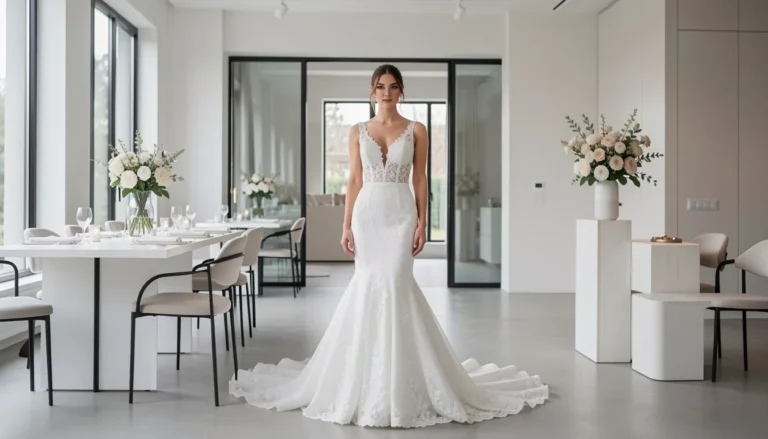
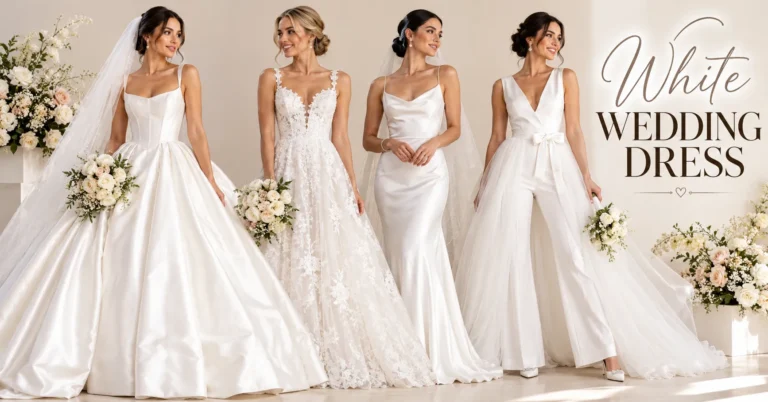
Fabric and silhouette work together, and picking one without the other leads to disappointment. We match each fabric to the wedding dress styles it supports best. The most flattering Satin and Silk Wedding Dresses pair the natural behavior of the fabric with a silhouette designed to complement its weight and movement.
Structured Silhouettes
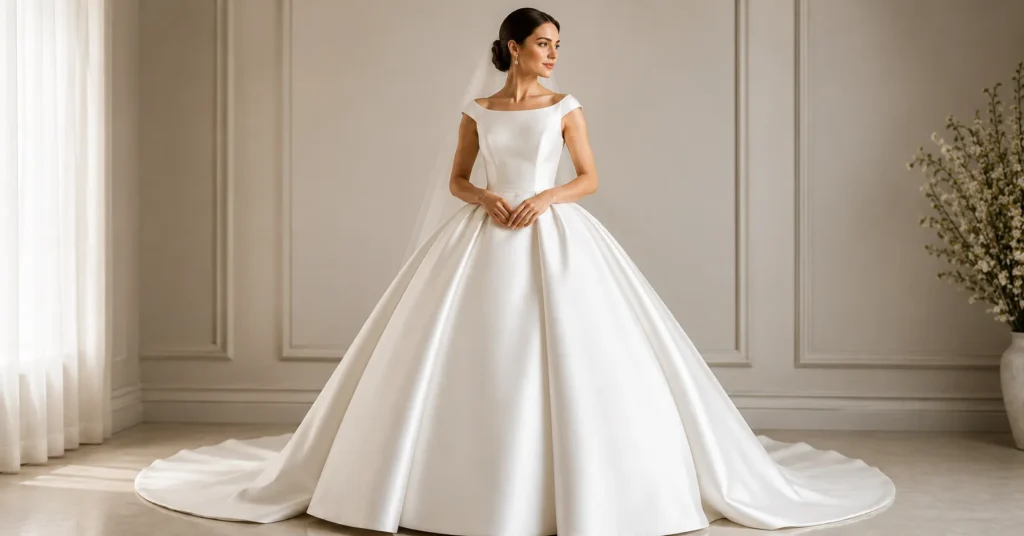
Structured gowns need fabric that holds its shape. These styles rely on weight and stiffness.
- Ball gown. Duchess satin gives the full skirt its volume and clean lines.
- A-line. Mikado silk or medium-weight satin holds a smooth, flared shape.
- Fit-and-flare. Stretch satin shapes the body while allowing movement.
Fluid Silhouettes
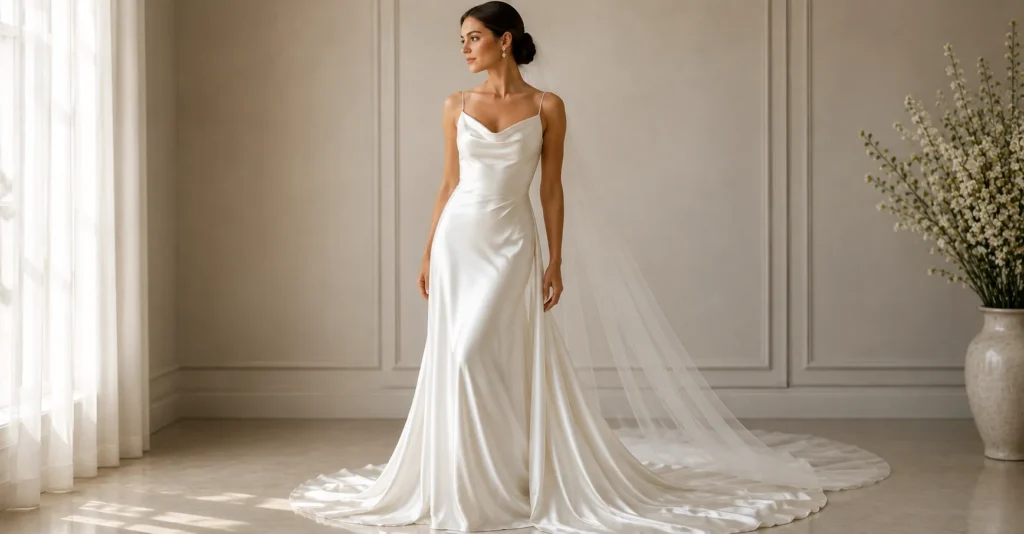
Soft, flowing silhouettes need fabric that drapes rather than stands. These styles depend on movement.
- Slip dress. Silk charmeuse falls close to the body with a liquid finish.
- Sheath. Silk crepe skims the frame for a sleek, minimalist look.
- Bias cut. A bias-cut gown, where fabric is cut diagonally against the grain, needs the fluidity of silk charmeuse to hang correctly and hug curves.
Here is how the pairings line up:
| Silhouette | Recommended Fabric | Effect |
| Ball gown | Duchess satin | Volume and structure |
| A-line | Mikado silk | Clean, flared shape |
| Slip dress | Silk charmeuse | Fluid, body-skimming |
| Sheath | Silk crepe | Sleek and minimal |
| Bias cut | Silk charmeuse | Curve-hugging drape |
| Fit-and-flare | Stretch satin | Shape with movement |
How Fabric Choice Changes With the Season
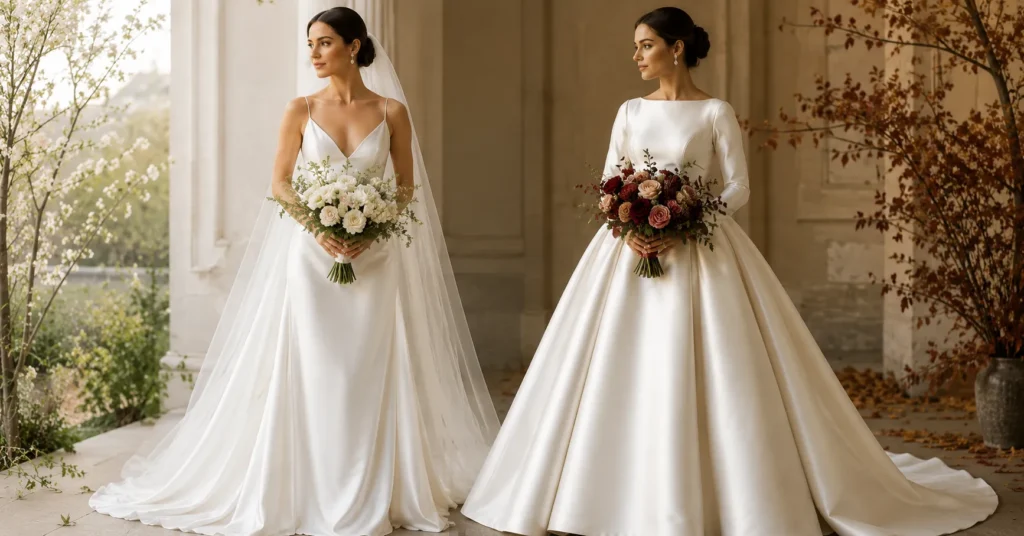
The season of your wedding should guide your fabric, because comfort affects how you carry yourself all day. We steer brides toward the fabric weight that fits the weather. Choosing Satin and Silk Wedding Dresses according to the season can improve comfort while helping the gown maintain its intended shape and appearance throughout the celebration.
- Spring and summer. Lightweight silk, charmeuse, and silk crepe keep you cool during warm outdoor ceremonies.
- Autumn and winter. Heavier duchess satin and mikado silk hold warmth and pair well with formal indoor venues.
A June garden wedding and a December ballroom reception call for different fabrics, even if the silhouette stays the same. We recommend matching fabric weight to venue temperature before you commit.
Understanding Bridal Elegance Through Fabric
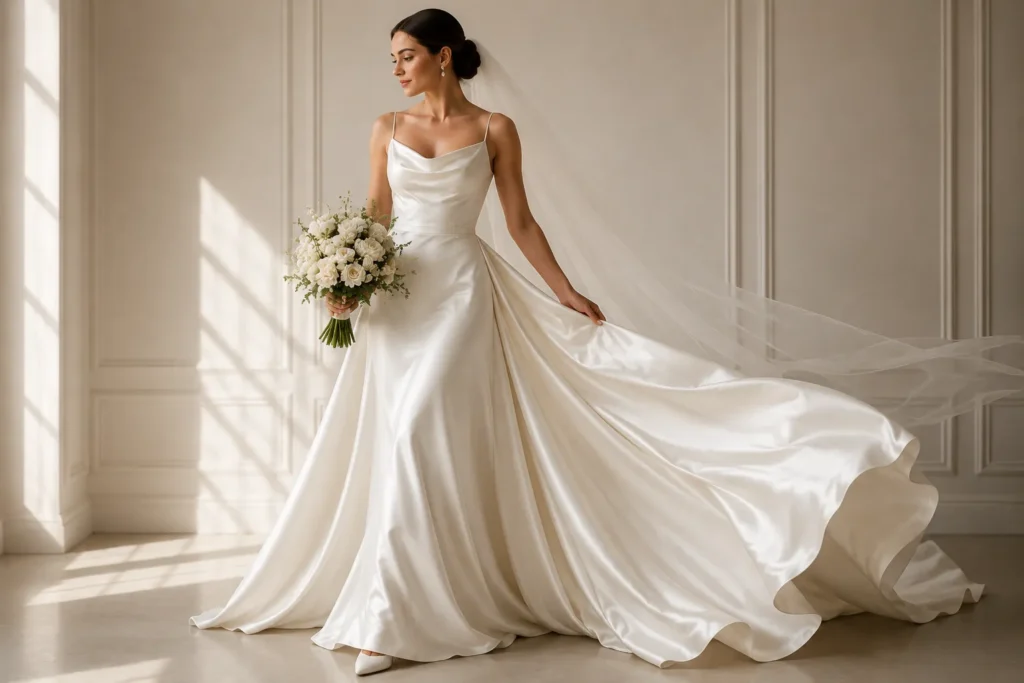
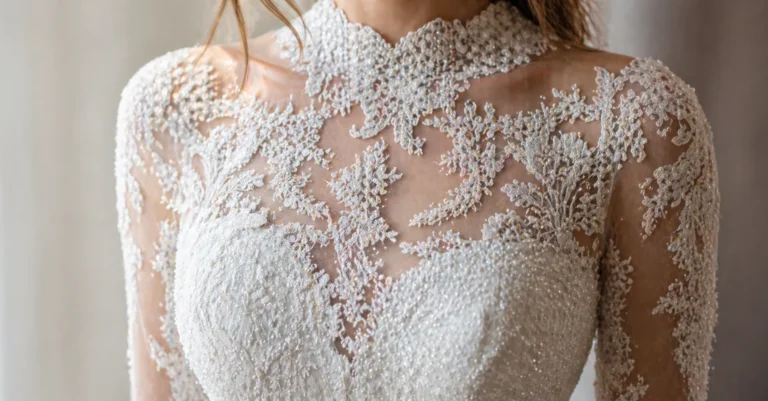
Bridal elegance comes down to how a fabric moves, reflects light, and sits on the body. These three qualities separate a gown that looks good on the hanger from one that looks stunning in person. The beauty of Satin and Silk Wedding Dresses becomes especially noticeable in the way each fabric catches light, moves with the body, and creates a distinct bridal silhouette.
- Drape. How the fabric falls and flows as you move. Silk drapes fluidly; heavy satin drapes with structure.
- Sheen. How the fabric reflects light. Satin shines brightly; silk glows softly.
- Fabric weight. How substantial the material feels. Lighter fabrics move freely; heavier ones hold shape.
We tell every bride the same thing. Order fabric swatches and test them in natural light and indoor light before deciding. Photos online rarely capture true sheen and drape.
What to Watch for When Shopping
Buying a wedding gown is a significant investment, and you likely have questions about quality. We break down exactly what to check so you know what you are paying for. When shopping for Satin and Silk Wedding Dresses, always check the fiber content, fabric weight, construction, lining, and overall finish rather than relying on the product name alone.
- Ask about the fiber, not just the finish. A dress labeled “satin” could be silk or polyester. The fiber determines comfort and price.
- Check the weight in person. Heavier duchess satin signals quality construction for structured gowns.
- Inspect the seams and lining. Quality silk and satin gowns use clean French seams and a proper lining.
- Request a swatch. Reputable designers provide fabric samples so you confirm sheen and drape before ordering.
We do not recommend buying a silk or satin gown sight unseen. The fabric is the whole point, so you deserve to feel it first.
Caring for Satin and Silk Wedding Dresses
Both fabrics reward careful handling, and neither responds well to shortcuts. We follow these steps to protect delicate bridal fabric before and after the wedding.
Before the wedding:
- Store the gown on a padded hanger inside a breathable garment bag.
- Keep it away from direct sunlight, which fades silk over time.
- Handle it with clean, dry hands to avoid oil stains.
After the wedding:
- Take the gown to a cleaner who specializes in silk and satin.
- Avoid standard dry cleaning, which can dull the sheen.
- Store it long-term in an acid-free preservation box.
Silk and satin both stain easily, so we recommend addressing any spill immediately with a professional rather than at-home treatments.
Budgeting for Silk and Satin Bridal Gowns
Price is often the deciding factor, and the fabric choice drives most of the cost. We lay out the ranges plainly so you can plan. The price of Satin and Silk Wedding Dresses can vary significantly depending on whether the gown uses pure silk, synthetic satin, or a carefully engineered blend.”
| Fabric Option | Typical Price Position | Best For |
| Pure silk satin | Highest | Brides prioritizing comfort and natural finish |
| Silk charmeuse | High | Fluid, bias-cut, and slip styles |
| Duchess satin (silk) | High | Structured ball gowns |
| Polyester satin | Budget-friendly | Brides balancing look and cost |
| Satin blends | Mid-range | A mix of shine and value |
A polyester satin gown gives you the classic bridal shine at a lower price, while pure silk satin costs more but breathes better and feels softer. Neither is wrong. The right choice depends on your priorities.
Conclusion
Satin and silk wedding dresses reward brides who understand the difference between the two. Silk is the fiber that gives you softness, breathability, and a natural glow. Satin is the weave that gives you shine, structure, and a classic bridal finish. Once you know that, everything else falls into place. Match a fluid silhouette to silk charmeuse, a structured ball gown to duchess satin, and your fabric weight to the season. Order swatches, test them in real light, and check the fiber rather than trusting the label alone. Do that, and you will choose a gown that feels as good as it looks, from the first fitting through every photograph. We stand behind that approach, because the fabric is the foundation of the entire dress.
Frequently Asked Questions (FAQs) about Satin and Silk Wedding Dresses
What is the difference between silk and satin wedding dresses?
Silk is a natural fiber, while satin is a weave structure. A dress can be made from silk woven in a satin pattern, from polyester satin, or from pure silk in another weave. The fiber affects comfort and price; the weave affects sheen and drape.
Is a silk or satin wedding dress better?
Neither is better in absolute terms. Silk breathes well and feels soft, which suits warm-weather weddings. Satin offers structure and a high sheen, which suits formal and cooler-season events. The right choice depends on your comfort, venue, and budget.
Which fabric is best for a summer wedding?
Lightweight silk, silk charmeuse, and silk crepe are best for summer. They breathe well and stay cool during warm outdoor ceremonies. Heavier duchess satin traps more heat and suits autumn and winter better.
What is duchess satin?
Duchess satin is a heavy, structured satin with a matte-to-medium sheen. It holds its shape well, which makes it a top choice for ball gowns and other structured wedding dress silhouettes.
What silhouette suits a bias cut best?
A bias cut, where fabric is cut diagonally against the grain, needs a fluid fabric like silk charmeuse. The diagonal cut allows the gown to hug the body and drape smoothly for a soft, curve-following shape.
Why are silk wedding dresses more expensive?
Silk is a natural fiber produced by silkworms, which makes it costlier to source than synthetic fibers. A pure silk satin gown combines that natural fiber with a luxurious weave, which places it at the top of the price range.
How do I care for a satin or silk wedding dress?
Store it on a padded hanger in a breathable bag away from sunlight before the wedding. After the day, use a cleaner who specializes in silk and satin, and preserve the gown in an acid-free box for long-term storage.
Can I tell silk from polyester satin by touch?
Often, yes. Silk feels lighter, softer, and warms to the skin quickly, while polyester satin feels heavier and cooler with a glossier surface. Requesting a swatch is the surest way to compare the two before you buy.