The Complete Guide to Choosing the Perfect Safari Outfit
Heading out on an African adventure is a thrilling experience, but knowing exactly what to pack can feel overwhelming. Your safari outfit plays a crucial role in how much you enjoy your trip. Whether you are tracking the Big Five in the Serengeti or watching sunsets in the Kruger National Park, what you wear directly impacts your comfort, safety, and ability to blend into the natural environment.
You do not need a wardrobe full of expensive, specialized gear. However, understanding the basic rules of outdoor clothing will help you make smart choices. This guide will walk you through exactly what to wear, how to layer, which colors work best, and what items to leave at home.
Why Your Safari Clothing Choices Matter
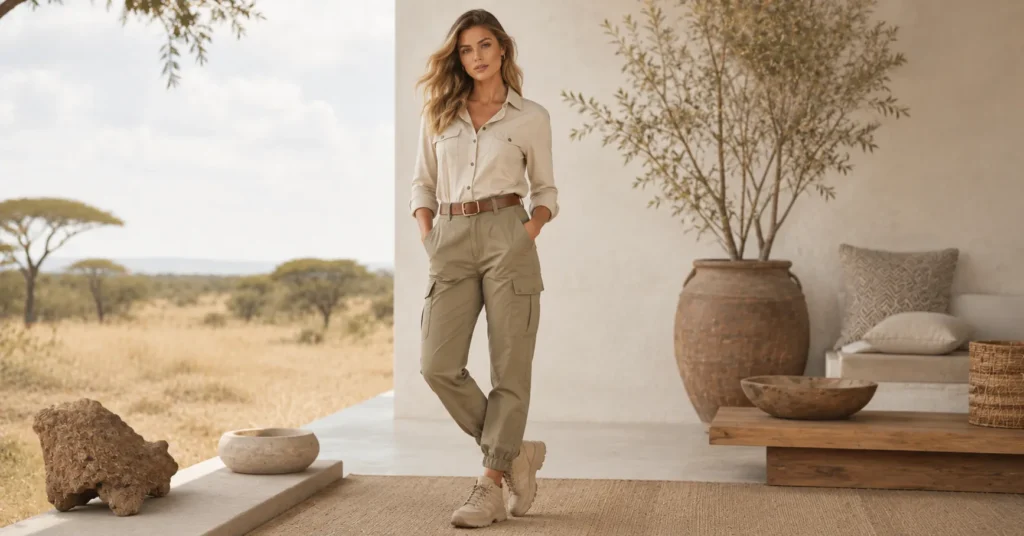
When packing for a regular vacation, style often takes priority. For the African bush, function must come first. The environment is dusty, the sun is fierce, and the temperature fluctuates wildly between dawn and dusk.
Comfort During Long Game Drives
You will spend hours sitting in an open 4×4 vehicle. Tight, restrictive clothing will quickly become uncomfortable. You need garments that allow for easy movement. Breathability is also vital. As the midday sun beats down, moisture-wicking fabrics help regulate your body temperature and prevent overheating.
Safety and Protection
The right clothes protect you from environmental elements. Long sleeves and trousers shield your skin from aggressive sun exposure, thorny bushes, and biting insects. Tsetse flies and mosquitoes are common in many reserves. Wearing the right gear is your first line of defense against bug bites and the diseases they can carry.
The Core Rules of Safari Fashion
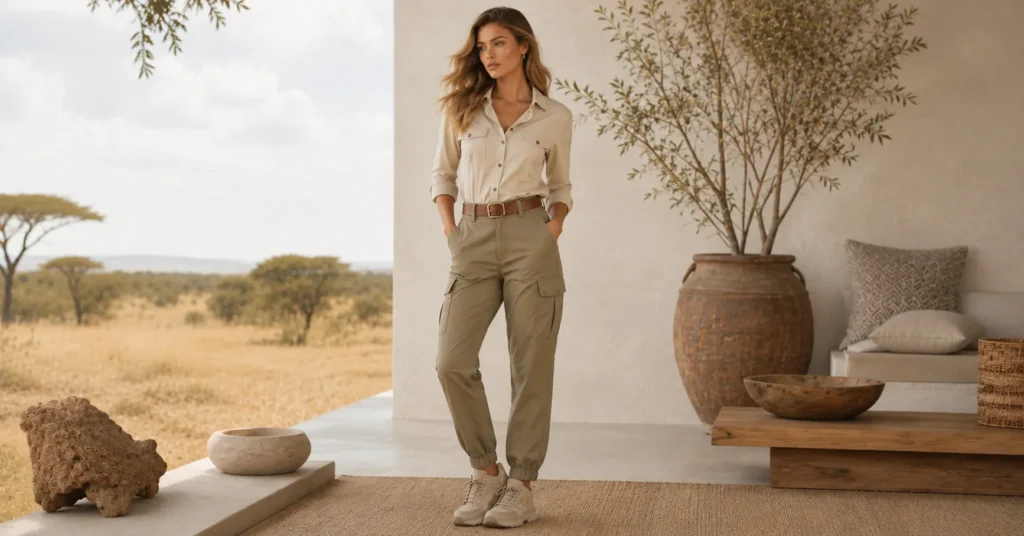
Before we break down specific garments, we must understand the fundamental rules of dressing for the bush. Keep these principles in mind when shopping for your trip.
Stick to Neutral Colors
Color is the most important factor when putting together a safari outfit. You want to blend into the background so you do not startle the wildlife.
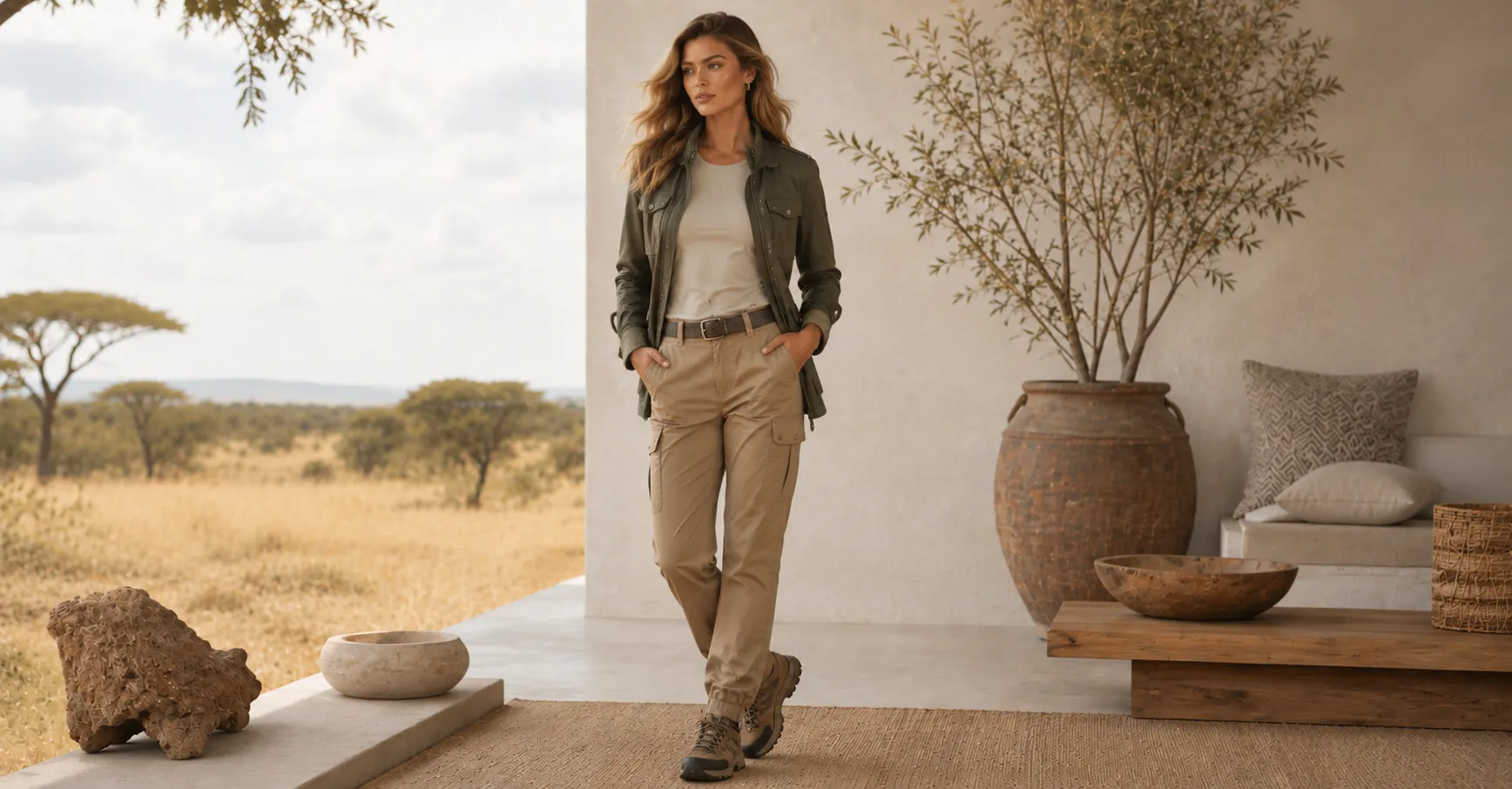
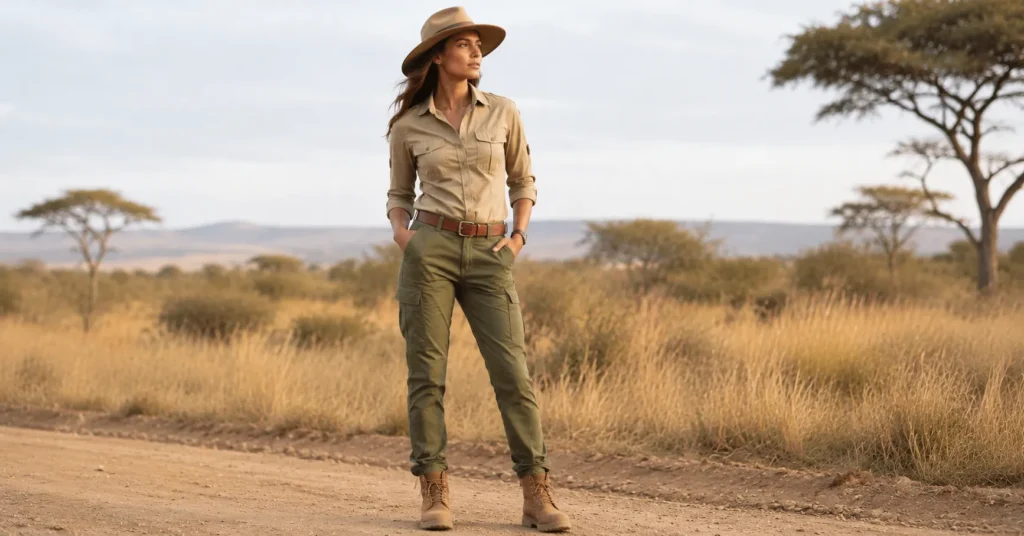
- Wear: Khaki, olive green, tan, light brown, and muted beige.
- Avoid: Bright colors like red, neon yellow, or bright pink. These colors stand out heavily against the natural landscape.
- Avoid: Dark blue and black. These specific colors attract tsetse flies, which have a painful bite.
- Avoid: Pure white. White gets dirty very quickly in the dusty African bush and stands out like a beacon to animals.
Dress in Layers
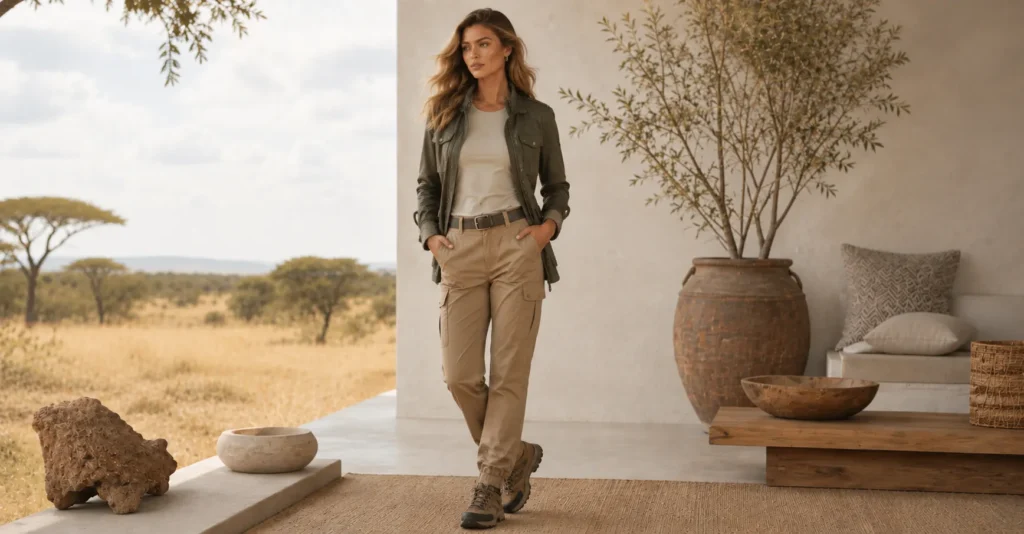
A typical day on safari starts before sunrise. Early mornings are surprisingly freezing, especially if you are driving in an open-sided vehicle. By midday, temperatures can soar to blistering heights. As the sun sets, the chill returns.
Layering allows you to adjust your body temperature throughout the day. You can peel off a fleece jacket and a long-sleeve shirt as the day warms up, leaving you in a comfortable, breathable t-shirt.
Choose the Right Fabrics
Leave your heavy denim jeans and polyester party tops at home. You need lightweight, durable, and breathable fabrics.
- Cotton: Comfortable and breathable, but it holds moisture.
- Linen: Great for keeping cool, but it wrinkles easily.
- Synthetic Blends: Nylon and polyester blends designed for outdoor wear are ideal. They dry quickly, wick away sweat, and often feature built-in UPF sun protection.
Building Your Look: Layer by Layer
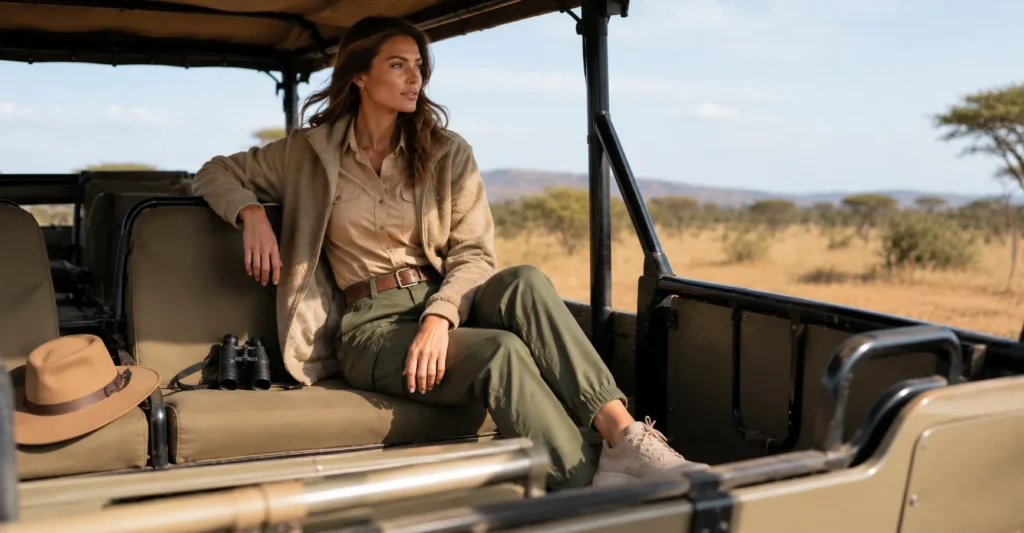
Now that we know the basic rules, let us build your perfect wardrobe from the base up.
Base Layers and Undergarments
Start with comfortable underwear made from moisture-wicking materials. Sports bras are highly recommended for women. Game drive vehicles travel over very bumpy, uneven terrain, and a good sports bra provides necessary support.
Shirts and Tops
Pack a mix of short-sleeve and long-sleeve shirts. A classic button-up safari shirt with roll-up sleeves offers excellent versatility. You can roll the sleeves down to protect your arms from the sun or bugs, and roll them up when you get hot. Look for shirts with vented mesh panels in the back to improve airflow.
Trousers and Shorts
Comfortable trousers are a must. Convertible pants—the ones that zip off at the knee to become shorts—are incredibly practical, even if they lack high-fashion appeal. If you prefer not to wear convertible pants, pack lightweight hiking trousers and a separate pair of comfortable shorts.
Cargo pants with extra pockets are useful for carrying lip balm, sunscreen, and extra camera batteries. Avoid yoga pants or leggings if you are doing walking safaris, as thorns can easily pierce thin materials.
Outerwear and Fleeces
Do not underestimate the cold morning air. You will need a warm layer.
- Fleece Jacket: A lightweight, warm fleece is the ultimate layering piece.
- Windbreaker: A thin windbreaker stops the biting wind while driving.
- Puffer Jacket: A packable down or synthetic puffer jacket provides excellent warmth without taking up much space in your luggage.
Essential Safari Accessories
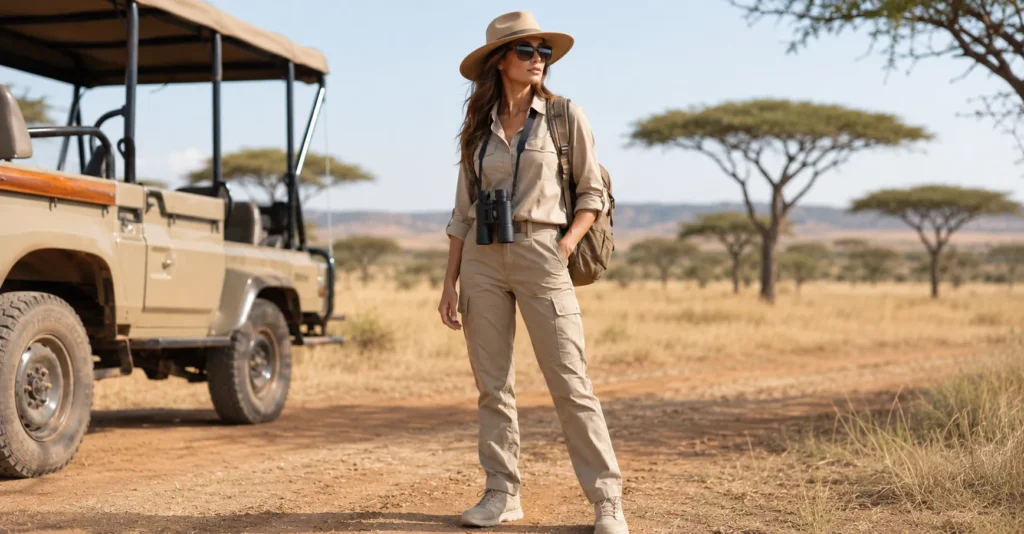
Your outfit is not complete without the right accessories to protect you from the elements.
Hats and Sun Protection
A wide-brimmed hat is non-negotiable. It protects your face, ears, and the back of your neck from the intense African sun. Make sure your hat has a chin strap so it does not blow away while driving in an open vehicle. Pair your hat with high-quality polarized sunglasses to cut through the glare and help you spot wildlife hiding in the shadows.
Footwear for the Bush
Unless you are doing specialized hiking safaris, you do not need heavy, stiff hiking boots. For standard game drives, comfortable walking shoes or lightweight trail runners work perfectly. You will spend most of your time in a vehicle, only stepping out for quick bathroom breaks or sundowner drinks. Pack a pair of comfortable sandals or flip-flops to wear around the lodge during your downtime.
Bags and Daypacks
Bring a small, soft-sided daypack to take on the vehicle. You will use this to store your discarded layers, sunscreen, binoculars, and camera equipment. Avoid hard-shell bags, as space in the vehicle is often limited.
The Ultimate Safari Packing List Summary
Use this table as a quick checklist when packing your bags.
| Item | Quantity | Purpose |
| Long-sleeve shirts | 2-3 | Sun and insect protection |
| Short-sleeve t-shirts | 3-4 | Midday comfort |
| Lightweight trousers | 2 | Evening wear and walking safaris |
| Comfortable shorts | 1-2 | Midday wear around the lodge |
| Warm fleece or sweater | 1 | Cold early mornings |
| Windbreaker or puffer | 1 | Wind protection on open vehicles |
| Wide-brimmed hat | 1 | Sun protection |
| Comfortable walking shoes | 1 pair | General wear |
| Sports bras | 2-3 | Support on bumpy roads |
Conclusion
Putting together the ideal safari outfit is all about balancing comfort, practicality, and environmental awareness. By choosing neutral colors, dressing in layers, and prioritizing breathable fabrics, you ensure that you stay focused on the incredible wildlife rather than adjusting uncomfortable clothes. Pack smart, keep it simple, and get ready for the adventure of a lifetime.
Frequently Asked Questions (FAQs)
Can I wear black on a safari?
You should avoid wearing black and dark blue. These colors attract tsetse flies, which have a very painful bite and can transmit sleeping sickness.
Do I need hiking boots for a game drive?
No, If you are doing standard vehicle game drives, lightweight walking shoes or sneakers are perfectly fine. Heavy hiking boots are only necessary if you book specialized multi-day walking safaris.
Is it safe to wear shorts?
Yes, shorts are great for the middle of the day when it gets hot. However, you should wear long trousers during early morning and evening drives to protect yourself from mosquito bites.
Can I wear camouflage clothing?
In many African countries, wearing camouflage clothing is strictly reserved for the military. It is illegal for civilians to wear camo in countries like Zimbabwe and Zambia. Stick to solid neutral colors instead.
What should I wear for dinner at the lodge?
Most lodges have a smart-casual dress code for dinner. You do not need formal wear. Clean trousers, a fresh shirt, and comfortable shoes are perfect for the evening.
Why do I need a sports bra?
The roads in national parks and reserves are unpaved and heavily rutted. The constant bumping in the 4×4 vehicle can be uncomfortable without adequate chest support.