Royal Outfits: A Comprehensive Guide to Timeless Elegance and Style
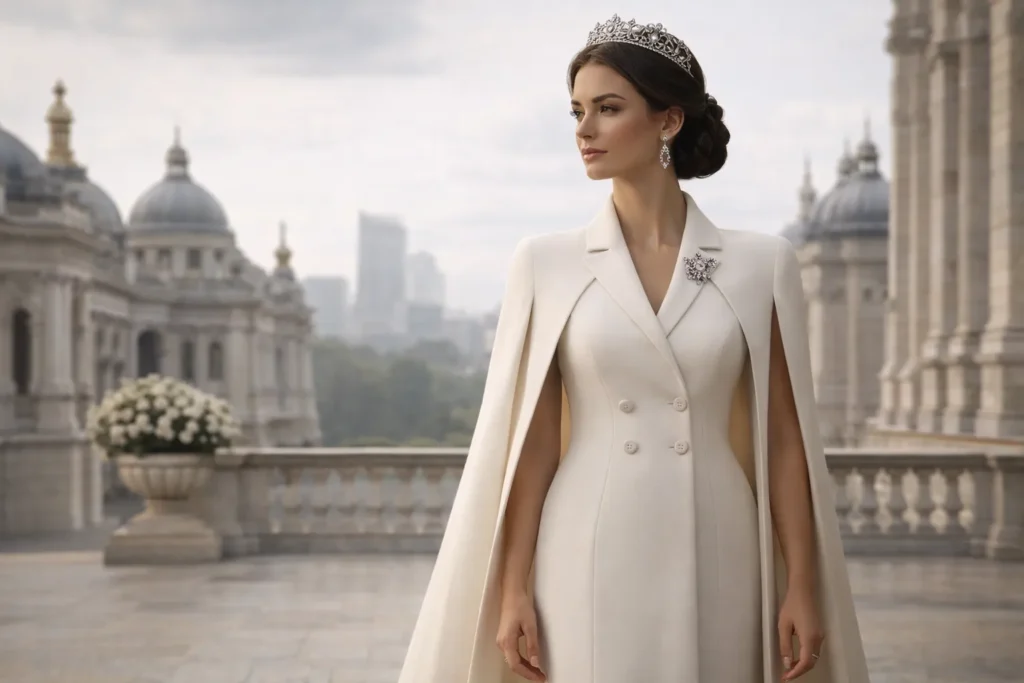
For decades, the world has been captivated by the sartorial choices of monarchy members across the globe. Royal outfits are more than just clothing; they are carefully curated statements of diplomacy, tradition, and personal branding. From the immaculate tailoring of the Princess of Wales to the modern minimalism of the Duchess of Sussex and the chic edge of Queen Letizia of Spain, royal fashion serves as a global benchmark for sophistication. Whether you are looking to elevate your work wardrobe or simply admire the grace of regal attire, understanding the principles behind these looks can help you cultivate a more refined personal style. This guide will explore the history, key elements, and practical ways to incorporate royal elegance into your everyday life.
The Evolution of Royal Style: From Stiff Tradition to Modern Relatability
To understand current trends in royal outfits, we must first look at how the aesthetic has evolved. Historically, royal dressing was strictly about opulence, separation, and rigid adherence to protocol. Heavy fabrics, restrictive corsets, and an abundance of jewels were used to signify status and power.
However, the late 20th century brought a seismic shift. Princess Diana revolutionized royal fashion, moving from the frilly, romantic styles of the early 80s to the sleek, power-dressing silhouettes of the 90s. She taught the world that a royal could be a fashion icon, using clothes to communicate empathy and accessibility.
Today, modern royals walk a fine line. They must respect centuries-old traditions while appearing approachable and modern. This balance has given rise to a specific “royal uniform” that is polished yet practical, often mixing high-end designer pieces with accessible high-street brands. This blend makes royal outfits more attainable for the average person than ever before.
The Pillars of a Royal Wardrobe

What exactly makes an outfit look “royal”? It isn’t just about the price tag. The regal aesthetic is built on specific principles of styling that anyone can adopt, regardless of budget.
1. Impeccable Tailoring
If there is one golden rule to dressing like a royal, it is this: fit is everything. You will rarely see a royal in ill-fitting clothing.
- The Fit: Clothes should skim the body without being tight. Shoulders on blazers must sit perfectly, and hemlines are meticulously measured.
- The Fix: Buying off-the-rack is fine, but investing in a tailor to adjust the waist, hem, or sleeves can make a $50 dress look like a $500 designer piece.
2. Modesty with Modernity
Royal protocols generally discourage short hemlines and plunging necklines, but this doesn’t equate to frumpiness.
- Hemlines: Skirts typically fall just above the knee, at the knee, or to the mid-calf (midi length). This length is elegant and practical for sitting and walking during engagements.
- Necklines: Crew necks, boat necks, and collars are staples. When lower necklines are worn, they are usually balanced by longer sleeves or fuller skirts to maintain a refined silhouette.
3. The Power of Monochrome
One of the most effective styling tricks used by Queen Elizabeth II, and adopted by younger royals, is tonal dressing.
- The Strategy: Wearing one color from head to toe creates a long, unbroken vertical line that is incredibly slimming and elongating.
- Application: Try pairing a camel sweater with a camel skirt and nude heels, or go bold with a full burgundy suit and matching blouse.
4. Attention to Fabric
Royals avoid fabrics that wrinkle easily, as they often spend hours traveling in cars or sitting at events.
- Materials: Heavy crepes, wool blends, tweed, and structured silks are favored over linen or thin synthetics. These fabrics hold their shape and photograph beautifully.
Iconic Staples of Modern Royal Outfits

Certain items have become synonymous with royal style. Building a wardrobe inspired by royal outfits means investing in these timeless staples.
The Coat Dress
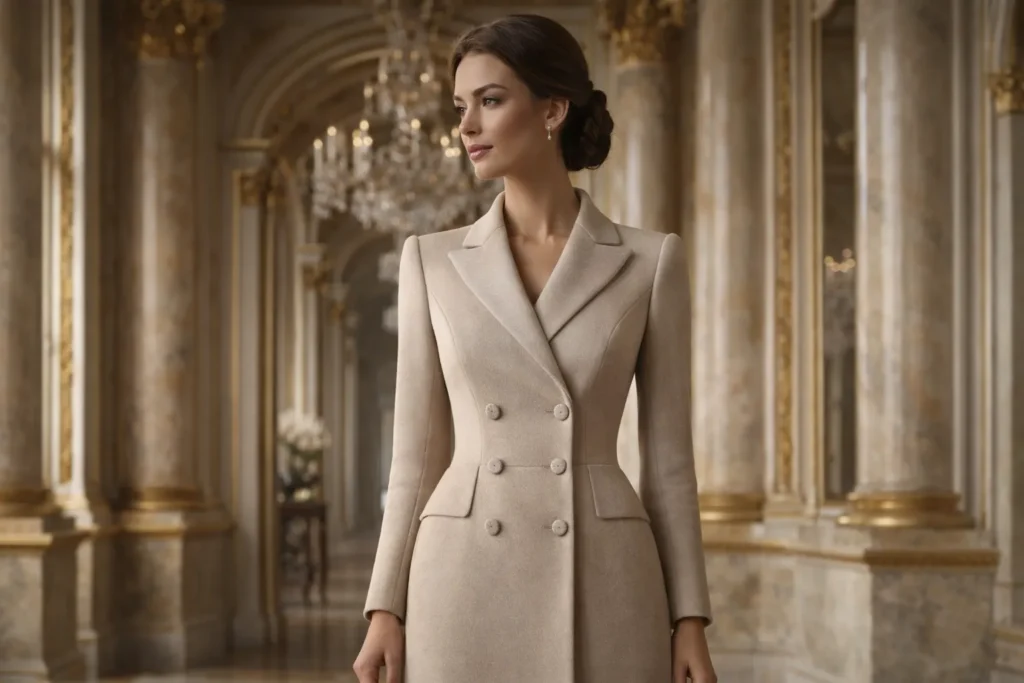
The coat dress is perhaps the most quintessentially royal garment. It solves the problem of needing to look chic outdoors while maintaining modesty. Often bespoke, these pieces function as a complete outfit.
- Why it works: It offers the sharp tailoring of a coat with the feminine silhouette of a dress. It is polished, weather-appropriate, and requires minimal styling.
- How to wear it: Look for structured coats with defined waists and interesting button details. Wear them buttoned up as a dress with opaque tights and pumps.
The Structured Blazer
From charity engagements to sporting events, the blazer is a workhorse in the royal wardrobe.
- Styles: Double-breasted styles with brass buttons (Smythe and Zara are favorites) or sleek, collarless tweed jackets.
- Pairing: Royals often pair blazers with skinny jeans and wedges for casual events or over a pleated skirt for a smarter look.
The Midi Skirt
The shift from knee-length to midi length has been a defining trend of the last decade.
- Pleated Skirts: A favorite for their movement and femininity.
- Pencil Skirts: A classic choice for business-focused engagements.
- Styling: Always pair a voluminous skirt with a fitted top to define the waist.
Nude Pumps
The leg-lengthening magic of the nude pump cannot be overstated.
- The Effect: By matching the shoe color to the skin tone, the leg line remains unbroken, making the wearer appear taller and leaner.
- Variations: While the classic patent leather pump is a staple, suede versions offer a softer texture suitable for daytime wear.
Decoding the Dress Codes: Day to Night
Royals attend a vast array of events, and their outfits must be appropriate for each specific occasion. Understanding these distinctions helps in adapting royal outfits for your own life.
The Casual Royal Look
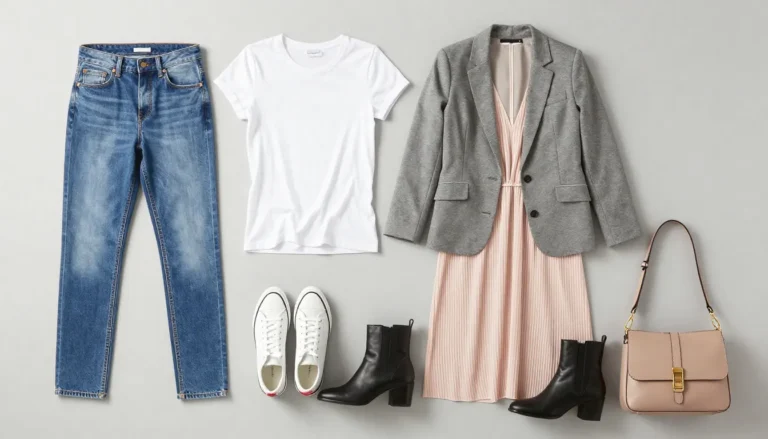
Even on their days off or at sporting events, royals maintain a level of polish. The “casual” royal uniform typically consists of:
- Breton Stripe Tops: A classic French staple favored by the Princess of Wales and the Duchess of Sussex.
- Dark Skinny Jeans: Usually in a dark indigo or black wash, without distressing or rips.
- White Sneakers: Clean, classic styles (like Superga or Veja) are acceptable for very casual outdoor events.
- Utility Jackets: Olive green Barbour jackets or parkas are essential for countryside chic.
The “Working Royal” Ensemble
This is the equivalent of business attire. Whether visiting a hospital or opening a museum, the goal is to look professional but approachable.
- The Trouser Suit: Power suits in bold colors like emerald green, royal blue, or powder pink have become increasingly popular. They project authority and modernity.
- The Sheath Dress: A fitted dress that hits the knee is a foolproof option. It is often layered under a matching coat or blazer.
Evening Glamour and Galas
This is where the fantasy element of royal outfits comes into play.
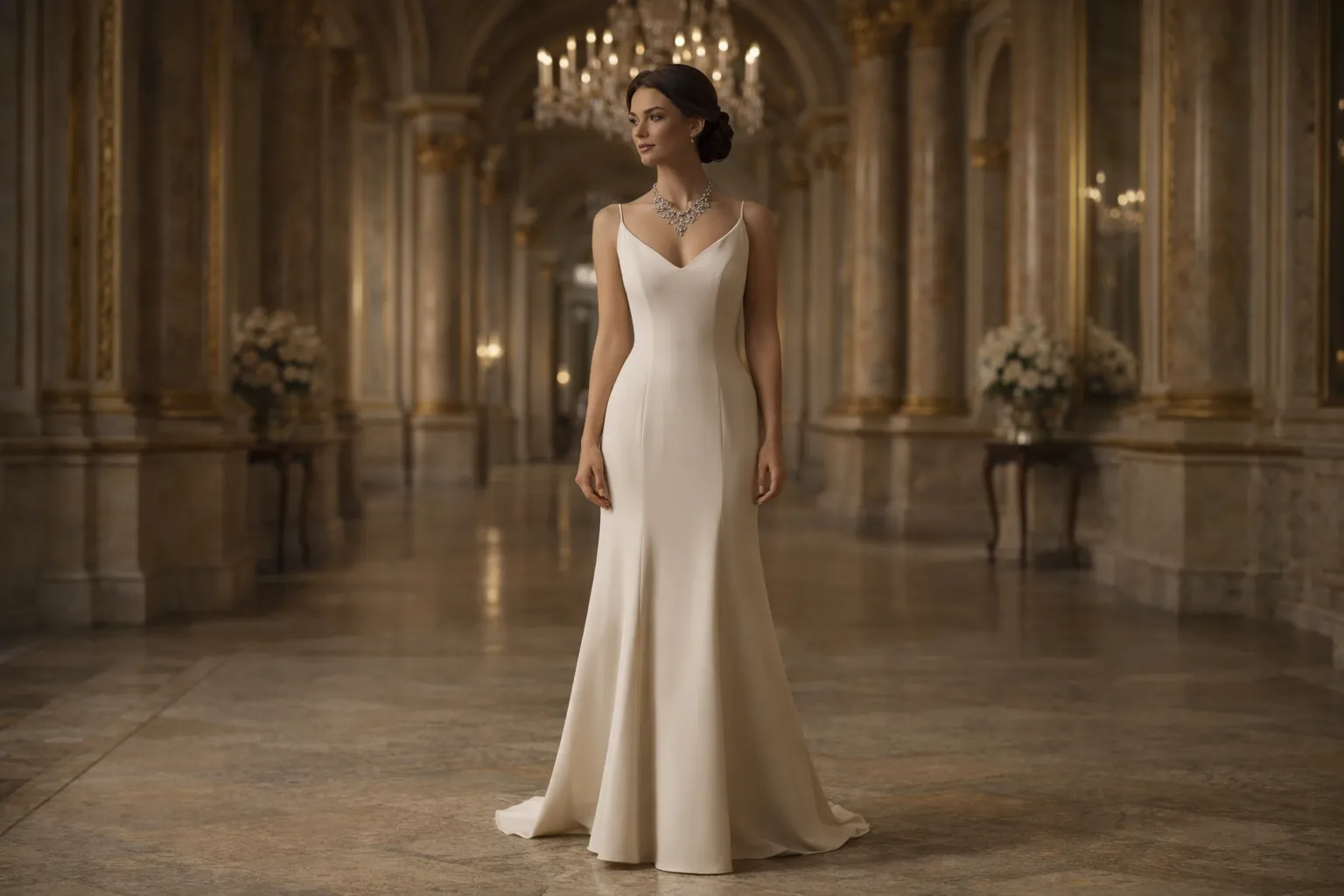
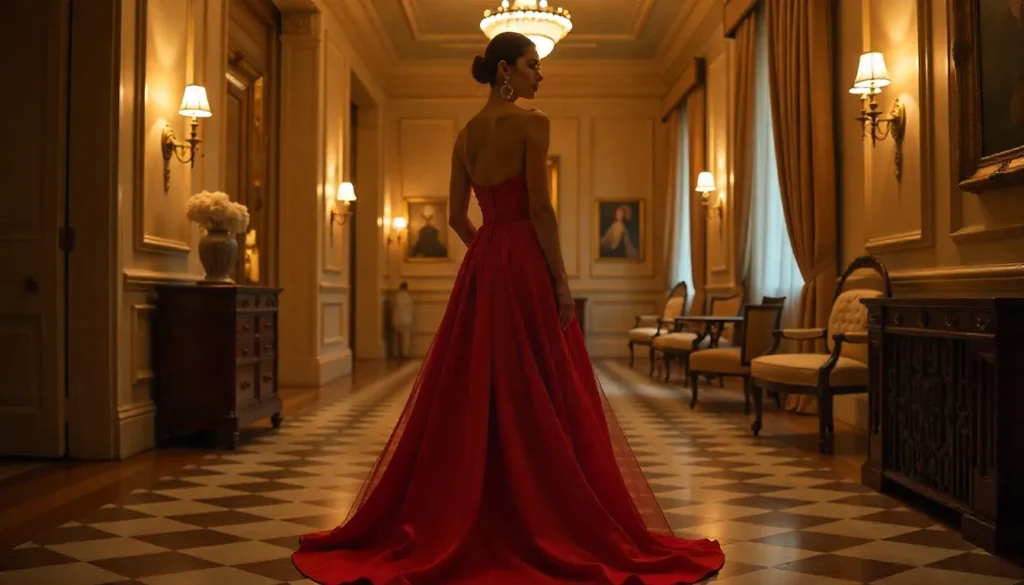
- Gowns: Floor-length gowns in velvet, silk, or chiffon. Shoulders are often covered, or if the dress is strapless, long gloves might be worn.
- Tiaras and Jewels: While everyday people can’t wear tiaras, the principle of using statement jewelry to elevate a simple gown is universally applicable. A pair of chandelier earrings can transform a look.
Accessories: The Finishing Touches
No royal outfit is complete without the right accessories. These small details tie the entire look together.
Hats and Fascinators
In British royal culture, hats are mandatory for formal day events.
- Fascinators: These are decorative headpieces attached to a band or clip. They are less cumbersome than full hats and allow the face to be seen.
- Headbands: A more modern trend, padded velvet or embellished headbands offer a regal touch without the formality of a hat. This is an easy trend to incorporate into wedding guest attire.
The Clutch Bag
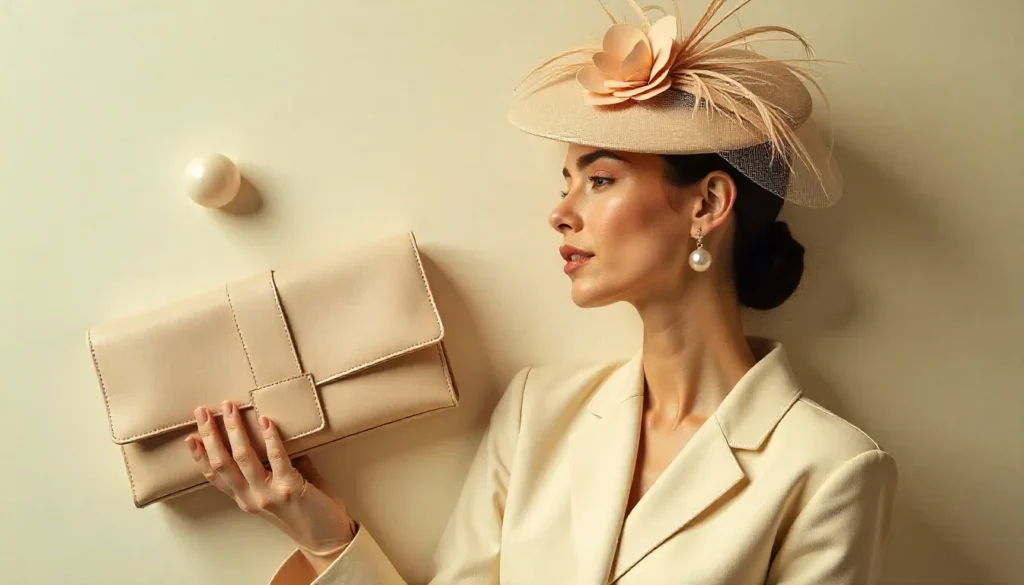
You will rarely see a royal with a large tote bag at an evening event.
- The Purpose: A clutch keeps the silhouette clean and also gives the hands something to do. It can also be used as a polite social tool to avoid handshakes when necessary (held with both hands).
- Coordination: The bag often matches the shoes perfectly, adhering to traditional style rules.
Hosiery (Pantyhose)
The debate over pantyhose is extensive. Traditionally, sheer nude tights are required for formal royal events.
- Modern Take: While younger royals sometimes skip them for casual events, sheer tights (often with a subtle shimmer or in a barely-there matte finish) create a flawless, airbrushed look for legs and prevent shoe friction.
International Royal Style Icons

While the British monarchy often dominates the headlines, royal style is a global phenomenon. Different figures bring unique flavors to the concept of royal outfits.
The Princess of Wales (Kate Middleton)
- Style Persona: Classic, Timeless, Diplomatic.
- Key Pieces: Coat dresses, floral midi dresses, Breton stripes, and nude pumps. She is the master of high-low dressing, mixing Alexander McQueen with Zara.
The Duchess of Sussex (Meghan Markle)
- Style Persona: Modern, Minimalist, Relaxed.
- Key Pieces: Trench dresses, oversized white shirts, wide-leg trousers, and boat-neck silhouettes. Her style leans heavily on neutral tones and sleek lines.
Queen Letizia of Spain
- Style Persona: Edgy, Sharp, Fashion-Forward.
- Key Pieces: Leather trousers, bold culottes, and structured capes. Queen Letizia often takes fashion risks that pay off, showing that royal style doesn’t have to be boring.
Queen Rania of Jordan
- Style Persona: Glamorous, Global, Chic.
- Key Pieces: intricate embroidery, high-fashion skirts, and statement belts. She flawlessly blends traditional Middle Eastern elements with Western couture.
Sustainable Royal Fashion: The “Rewear” Revolution
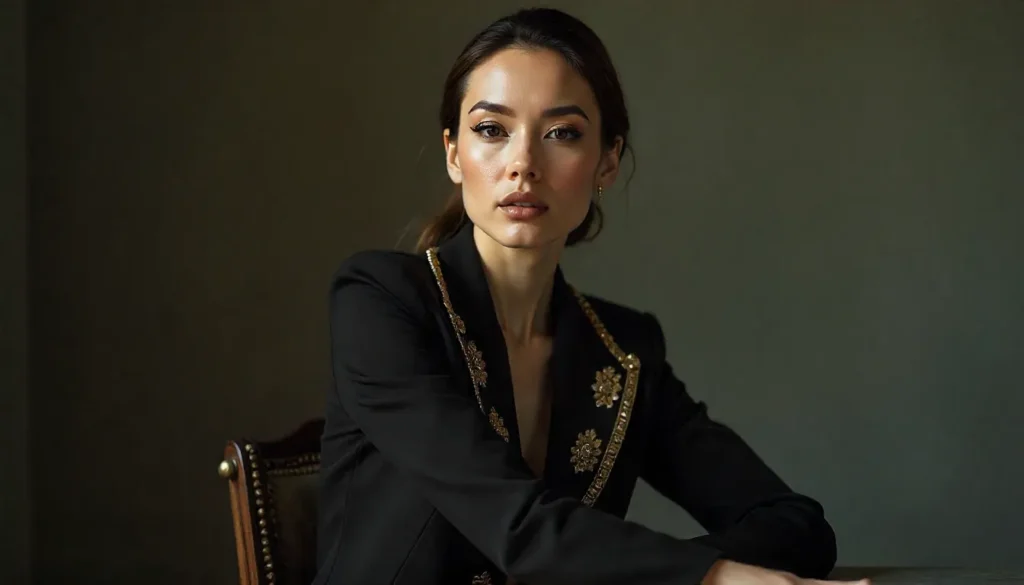
In recent years, a significant shift in royal outfits has been the focus on sustainability. It used to be taboo to be seen in the same dress twice, but now, “shopping your own closet” is celebrated.
- The Art of the Rewear: Royals like Princess Anne (who has worn the same pieces for 40 years) and the Princess of Wales frequently repeat outfits. To keep it fresh, they change the accessories, hairstyle, or modify the garment itself (e.g., changing the neckline or sleeves).
- Vintage and Rental: We are also seeing more vintage pieces being worn, including heirlooms passed down through generations. This promotes a message of longevity and quality over fast fashion.
How to Build a Royal-Inspired Capsule Wardrobe
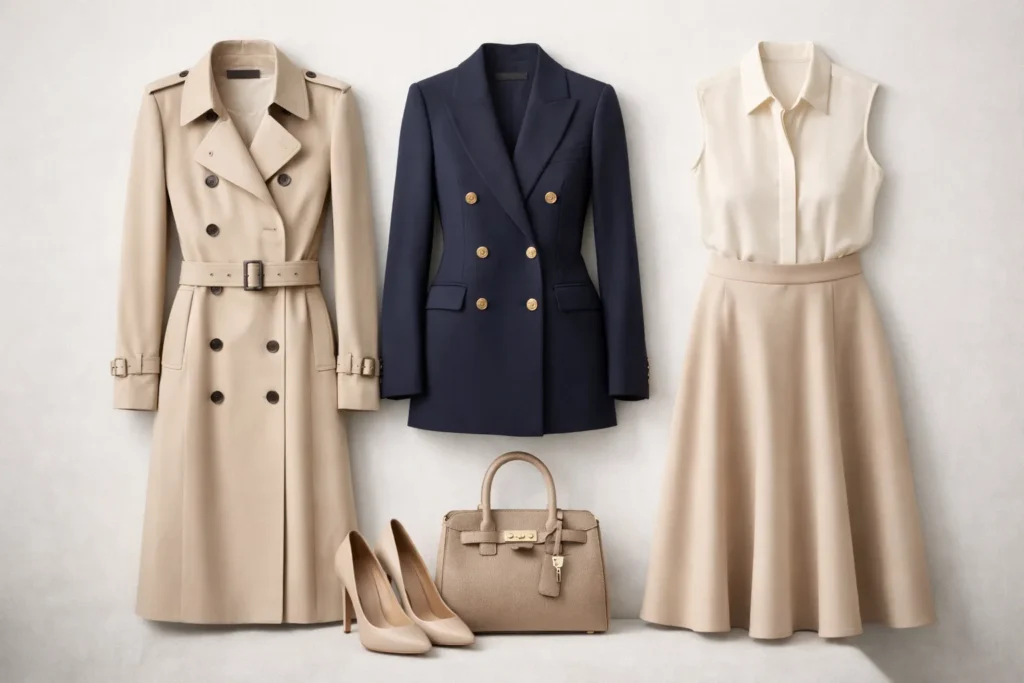
You don’t need a palace budget to dress like a queen. Here is a checklist for a royal-inspired capsule wardrobe:
- A Beige Trench Coat: The ultimate transitional outerwear piece.
- A Navy Blazer: Double-breasted with gold buttons.
- A Pair of Dark, Straight-Leg Jeans: No rips, perfect fit.
- A Midi Shirt Dress: In a solid color or subtle polka dot.
- Nude and Black Pumps: One pair of each, comfortable enough for standing.
- A Top-Handle Bag: Structured and small.
- A Silk Blouse: With a pussy-bow tie or simple collar.
- Wide-Leg Trousers: In a neutral shade like camel or black.
Etiquette Tips for Looking Regal
Wearing the clothes is only half the battle. Carrying off royal outfits requires a certain demeanor.
- Posture: Stand tall. Shoulders back, chin up. Clothes hang better on a confident frame.
- Grooming: Royal hair is famous for the “blow-dry.” Glossy, well-kept hair and neutral, manicured nails are essential. Makeup is usually natural, enhancing features rather than masking them.
- The “Duchess Slant”: When sitting in a skirt, keep knees and ankles together and slant legs to the side. This protects modesty and elongates the leg.
Conclusion:
The fascination with royal outfits endures because it represents an ideal of polish and grace that feels increasingly rare in a casual world. However, the true lesson from modern royals is that elegance is accessible. It is not about wearing a tiara to the grocery store; it is about choosing quality over quantity, prioritizing fit, and dressing with intention. By incorporating tailored blazers, modest silhouettes, and a cohesive color palette into your wardrobe, you can capture that regal essence. Remember, the most important accessory any royal wears is confidence. Whether you prefer the classicism of Kate or the modern edge of Letizia, let these style icons inspire you to elevate your everyday look.
Frequently Asked Questions (FAQs)
Q1: What are the strict rules for royal outfits?
A1: While many “rules” are actually just traditions, common protocols include: wearing hats to formal day events, avoiding bare legs (pantyhose are preferred), keeping hemlines modest (knee-length or longer), and avoiding political statements through clothing. Historically, royals also pack a black outfit when traveling in case of a sudden bereavement.
Q2: Can I dress like a royal on a budget?
A2: Absolutely. Many royals, particularly in Europe, frequently wear high-street brands like Zara, H&M, Mango, and ASOS. The key to making affordable items look expensive is tailoring. Spending a small amount to have a high-street blazer nipped in at the waist or sleeves shortened can make it look bespoke.
Q3: Why do royals often carry clutch bags?
A3: Clutch bags serve multiple purposes. Aesthetically, they don’t ruin the line of an outfit like a shoulder strap might. Practically, holding a clutch with both hands is a polite way to avoid unwanted handshakes while navigating large crowds.
Q4: What is the “Kate Effect” in royal fashion?
A4: The “Kate Effect” refers to the economic phenomenon where an item of clothing wears by the Princess of Wales sells out almost instantly. This demonstrates the immense influence royal outfits have on the global fashion industry and consumer trends.
Q5: Are royal dress codes changing?
A5: Yes, they are slowly modernizing. We see more trousers and suits on royal women for evening engagements, a relaxation of the pantyhose rule for casual events, and a move toward sustainable, repeated outfits rather than constant newness.