The Best Maternity Dress for Every Stage of Pregnancy
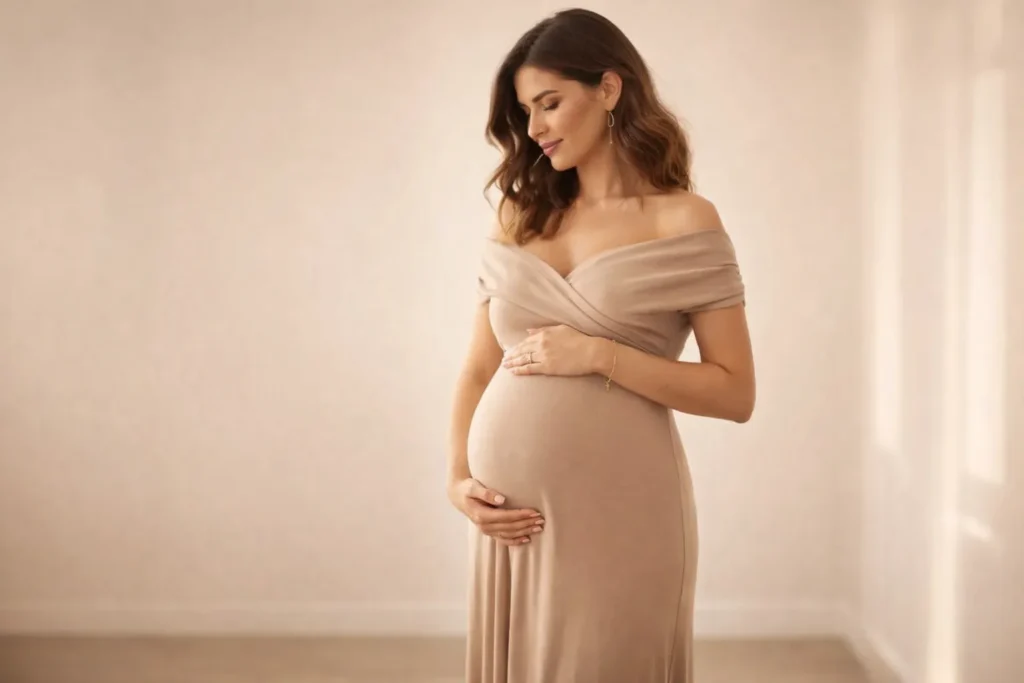
Navigating the incredible journey of pregnancy brings a multitude of changes, especially when it comes to your wardrobe. As your body transforms to accommodate new life, finding clothing that makes you feel both beautiful and physically supported becomes a top priority. A thoughtfully designed maternity dress is arguably the most essential garment you can own during these nine months. It offers unparalleled ease, celebrates your growing bump, and takes the stress out of daily dressing.
For many mothers-to-be, the shift from standard sizing to pregnancy clothes can feel overwhelming. You might wonder when to start shopping, what silhouettes will flatter your changing shape, and how to maintain your personal sense of fashion. This comprehensive guide will walk you through everything you need to know about maternity style, helping you build a wardrobe that prioritizes both comfort and confidence.
Why You Need a Dedicated Maternity Dress
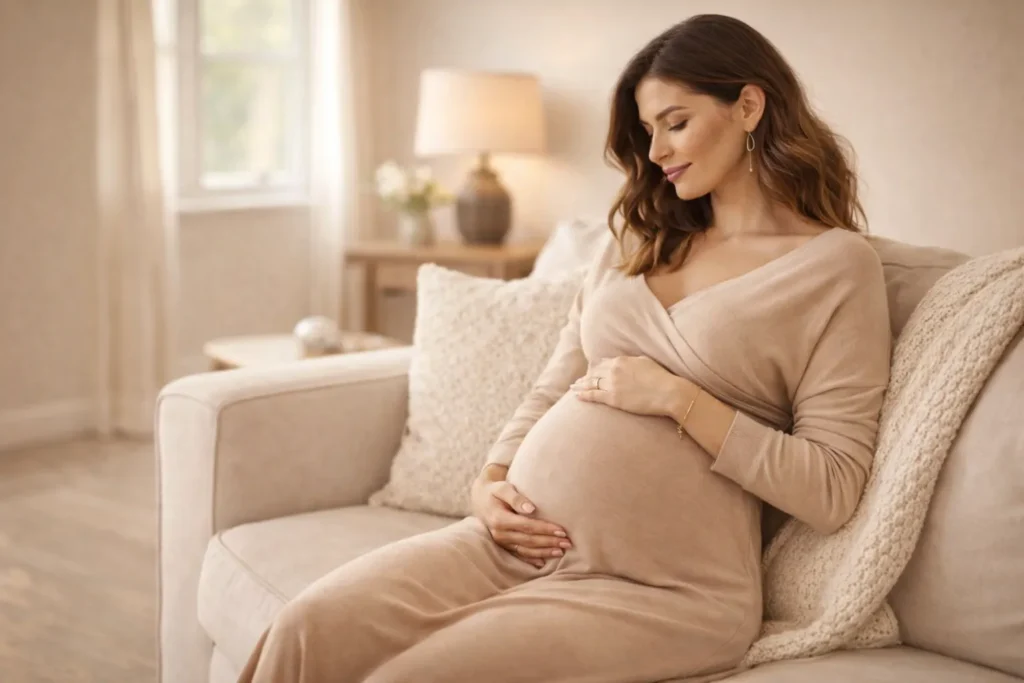
When your favorite jeans stop zipping and standard tops start riding up, the temptation is often to simply buy regular clothes in larger sizes. While sizing up works for a few weeks, it rarely provides a long-term solution.
The Flaws of Simply “Sizing Up”
Buying a standard dress in a larger size usually results in a poor fit. The shoulders droop, the armholes gape, and the hemline lifts awkwardly in the front as your bump pushes the fabric forward. Standard clothing is not tailored to accommodate the specific dimensions of a pregnant body.
The Magic of True Pregnancy Clothes
A dedicated maternity dress is engineered entirely differently. Designers create these garments with extra length in the front to ensure an even hemline. They incorporate strategic stretching mechanisms, such as side ruching or empire waists, to give your belly ample room to grow while keeping the shoulders, bust, and arms fitted to your true size. This tailored approach provides comfortable maternity wear that flatters your silhouette rather than hiding it under excess fabric.
When Should You Start Buying Maternity Clothes?
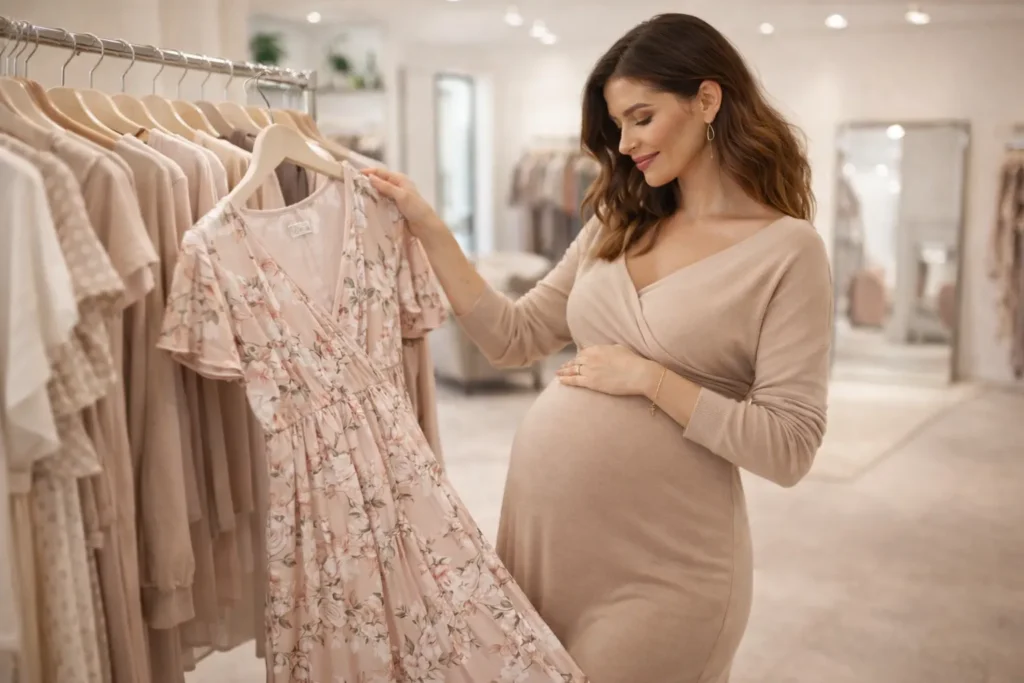
Every pregnancy is unique, and women begin showing at different times. However, certain milestones typically signal that it is time to invest in new clothing.
- The First Trimester (Weeks 1-12): During these early weeks, you might experience bloating rather than a distinct bump. While you may not need a full maternity wardrobe yet, a loose-fitting shift dress or a soft wrap dress can provide much-needed relief around your waistline.
- The Second Trimester (Weeks 13-26): This is the sweet spot for maternity shopping. Your bump will likely “pop” during this phase. Transitioning into clothes designed for your new shape will instantly make you feel more comfortable.
- The Third Trimester (Weeks 27-40): By this point, comfort is your absolute highest priority. The dresses you purchased in your second trimester should still fit if they feature high-quality stretch fabrics.
Key Features of Comfortable Maternity Wear
Not all dresses are created equal. When shopping for your pregnancy wardrobe, look for specific design elements that guarantee long-lasting comfort and wearability.
Breathable and Stretchy Fabrics
Your basal body temperature rises during pregnancy, making you more prone to overheating. Additionally, your skin can become more sensitive.
- Cotton and Bamboo: These natural fibers are incredibly soft, highly breathable, and gentle on sensitive skin.
- Jersey and Spandex Blends: A high-quality jersey knit blended with spandex or elastane offers superior four-way stretch. This allows the dress to expand with your bump and snap back into shape after you wear it.
- Modal: Modal is a bio-based fabric made from spinning beech tree cellulose. It is exceptionally soft, drapes beautifully, and resists pilling.
Strategic Ruching
Side ruching is a pregnant woman’s best friend. This gathering of fabric along the side seams creates gentle folds that expand outward as your belly grows. A ruched dress looks just as flattering at 14 weeks as it does at 40 weeks, making it a highly cost-effective investment.
Nursing-Friendly Designs
If you plan to breastfeed, consider buying dresses that double as nursing wear. Look for crossover V-necks, hidden zippers, or pull-down panels. Purchasing dresses that transition into your postpartum phase maximizes the value of your wardrobe.
Popular Maternity Dress Styles for Every Occasion
Maintaining your personal maternity style is entirely possible. You just need to know which silhouettes work best for your lifestyle and the events on your calendar.
The Casual Maxi Dress
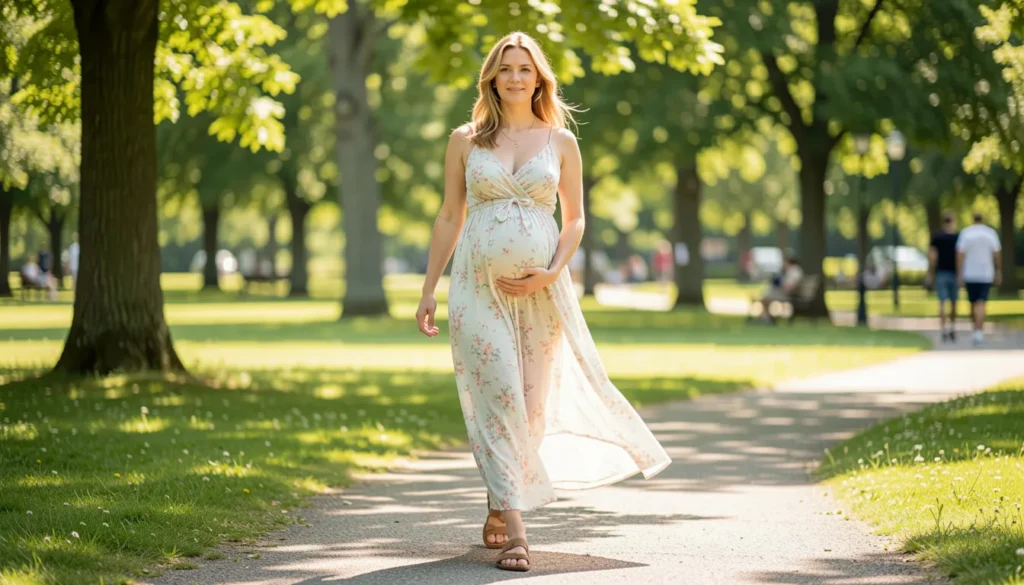
The maxi dress is a pregnancy staple for a reason. It sweeps to the floor, offering full coverage and a beautifully elongated silhouette.
- Best for: Running errands, weekend brunches, and relaxed summer days.
- Why we love it: It requires zero effort. You do not need to worry about shaving your legs or finding matching maternity leggings. Just slip it on, add comfortable sandals, and you are ready to go.
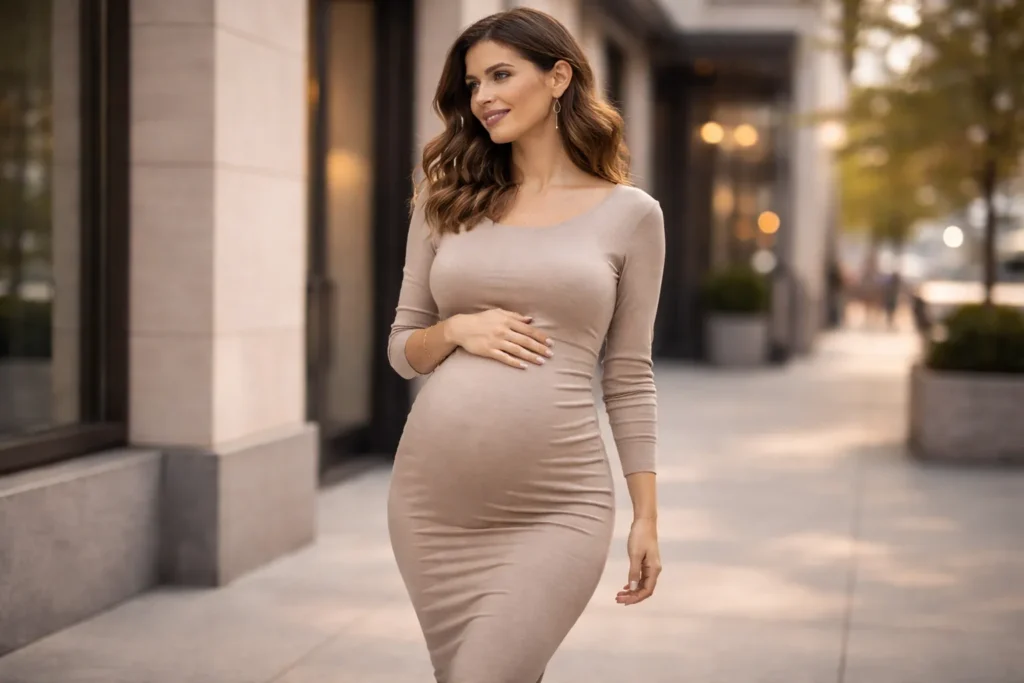
The Form-Fitting Bodycon
Years ago, the trend was to hide a pregnant belly under tent-like garments. Today, modern maternity fashion celebrates the bump. A form-fitting bodycon dress made from a thick, supportive knit highlights your new curves beautifully.
- Best for: Date nights, baby showers, and maternity photoshoots.
- Why we love it: It offers a surprisingly high level of support. A well-made bodycon gently hugs your belly and lower back, almost acting like a soft support band.
The Flowy Empire Waist
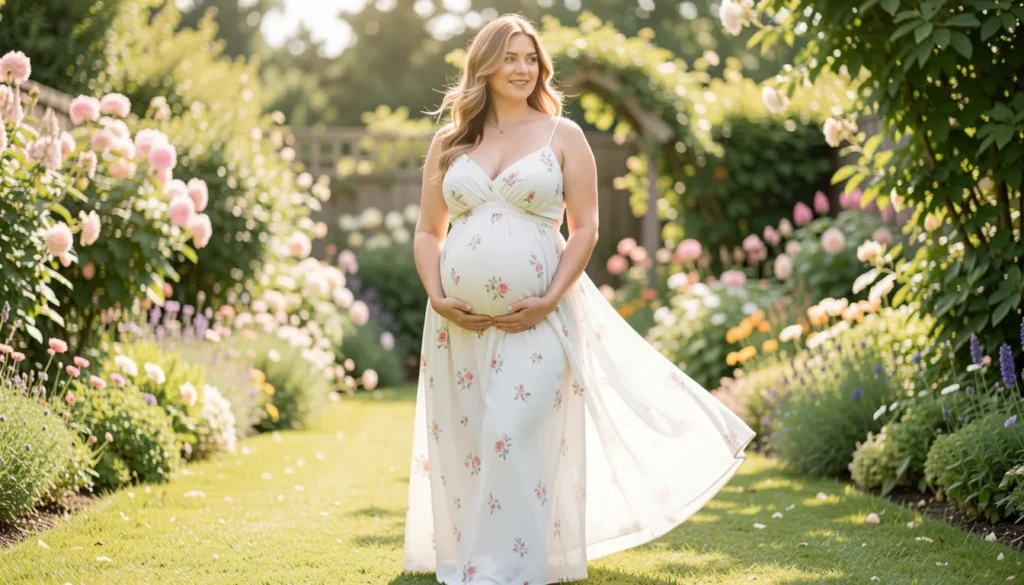
The empire waist silhouette features a fitted bodice that cuts off right under the bust, allowing the rest of the fabric to flow freely over the stomach.
- Best for: Work environments, attending weddings, or days when you want a looser fit.
- Why we love it: It is incredibly forgiving and places no pressure on your midsection. It also accommodates the rib cage expansion that often occurs during the later months of pregnancy.
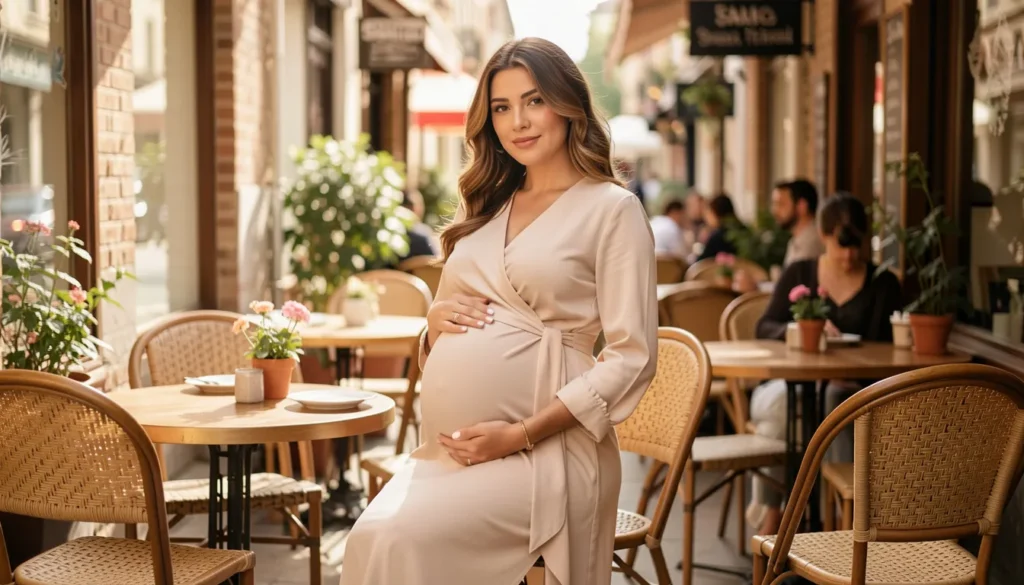
The Classic Wrap Dress
A true wrap dress, or a faux-wrap dress, features a V-neckline and a tie waist that sits above your bump.
- Best for: Office wear, luncheons, and postpartum days.
- Why we love it: The wrap design is infinitely adjustable. You can tie it as loosely or tightly as you need, making it a piece that truly grows with you from your first trimester through your fourth.
How to Style Your Maternity Dress Year-Round
You do not need an overflowing closet to look stylish during your pregnancy. A few great dresses can take you through multiple seasons with the right layering techniques.
Spring and Summer Maternity Style
Warm weather calls for effortless dressing.
- Footwear: Swelling feet are a common pregnancy symptom. Pair your summer dresses with supportive slide sandals or crisp white sneakers.
- Accessories: Add a wide-brimmed straw hat and oversized sunglasses. A lightweight, unbuttoned linen shirt worn over a fitted tank dress adds a chic, breezy layer of coverage.
Fall and Winter Layering
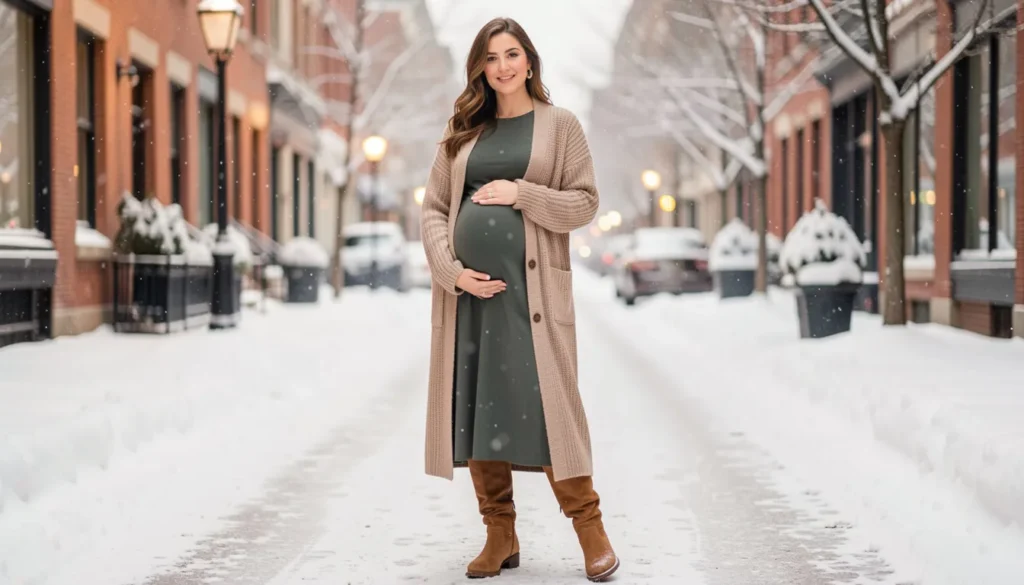
When the temperature drops, your dresses can still serve as the foundation of your wardrobe.
- The Sweater Trick: Layer a chunky knit cropped sweater over a midi or maxi dress. The hem of the cropped sweater will naturally sit right above your bump, creating a flattering proportion.
- Outerwear: A classic trench coat or a long cardigan left open frames your bump beautifully.
- Legwear: Invest in a pair of over-the-bump maternity tights. Wear them under your dresses with comfortable ankle boots or flat knee-high boots.
Finding the Right Fit: A Simple Sizing Guide
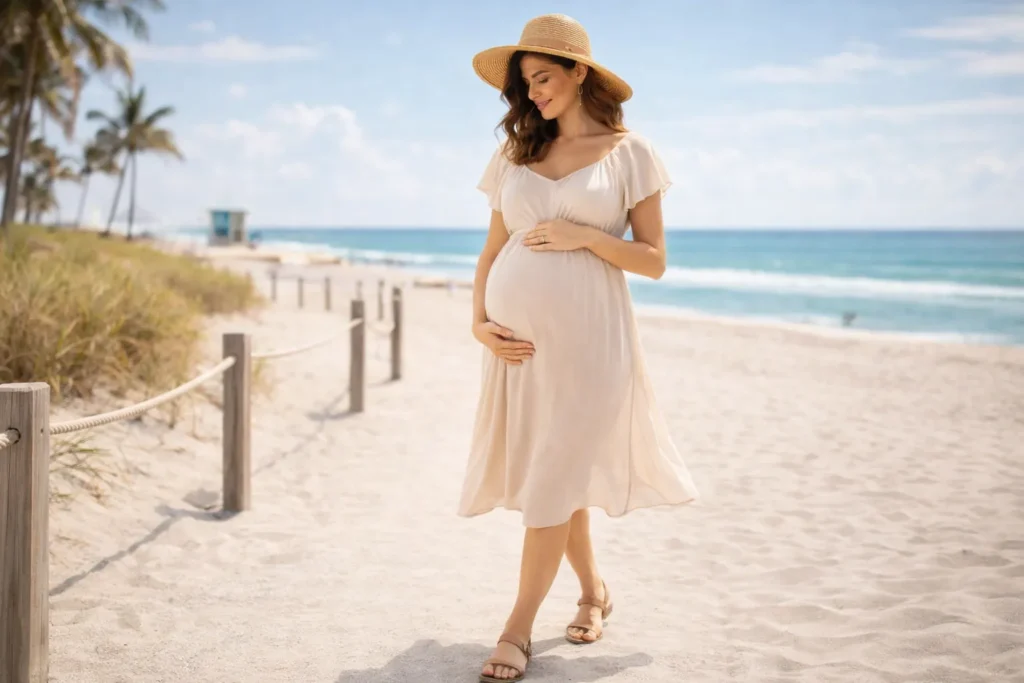
One of the biggest hurdles in maternity shopping is figuring out your size. Most maternity brands use a “pre-pregnancy sizing” model. This means if you were a medium before you got pregnant, you should order a maternity medium.
The designers have already factored in the extra weight you will gain in your belly and bust. However, if you are expecting twins, or if you feel you have gained more weight evenly across your body rather than just in the belly, you may feel more comfortable sizing up. Always check the brand’s specific size chart and read customer reviews regarding the stretchiness of the fabric.
Building a Minimalist Maternity Capsule Wardrobe
If you want to keep your pregnancy wardrobe streamlined and sustainable, consider building a capsule collection around a few versatile dresses.
- The Little Black Dress (LBD): Choose a black ruched bodycon or a black wrap dress. You can wear it to the office with a blazer or to a nice dinner with statement jewelry.
- The Casual Weekend Dress: A striped or solid-colored jersey maxi or t-shirt dress.
- The Special Occasion Dress: One elevated piece, perhaps in a floral print or a rich jewel tone, to wear to your baby shower or any weddings you might attend.
By focusing on these three core pieces, you ensure that you always have something appropriate and comfortable to wear without overspending on a temporary wardrobe.
Conclusion
Finding the perfect maternity dress is about honoring your changing body and treating yourself to the comfort you deserve. Whether you prefer the sleek look of a bodycon or the breezy feel of an empire waist maxi, the right dress will empower you to step out with confidence. Remember to prioritize breathable fabrics, look for strategic designs like side ruching, and choose pieces that align with your personal aesthetic. Embrace this special season of life, and enjoy the beautiful simplicity that a well-crafted dress brings to your daily routine.
Frequently Asked Questions (FAQs)
Q: Do I really need to buy maternity clothes, or can I just wear loose regular clothes?
A: While loose regular clothes work for the first trimester, they do not accommodate a growing bump well later on. Regular clothes will lift awkwardly in the front and fit poorly in the shoulders. Maternity clothing is specifically tailored to fit your pre-pregnancy frame while providing targeted room for your belly.
Q: How do I know what size maternity dress to buy?
A: Stick to your pre-pregnancy size. Maternity brands design their sizing scales based on your original measurements, automatically factoring in the standard growth of your belly and bust.
Q: Can I wear my maternity dresses after I give birth?
A: Absolutely. Your body takes time to recover, and you will likely still look a few months pregnant immediately after birth. The soft, stretchy fabrics of your maternity wear are perfect for the postpartum period. Dresses with wrap tops or button-down fronts are especially useful if you are nursing.
Q: What shoes look best with dresses when my feet are swollen?
A: Comfort is key. Crisp white sneakers look fantastic with casual bodycon and midi dresses. For dressier occasions, opt for low, supportive block heels, pointed-toe flats, or stylish slide sandals that do not constrict the top of your foot.
Q: How can I wear a dress in the winter without freezing?
A: Layering is your best strategy. Invest in thick, over-the-bump maternity tights or fleece-lined maternity leggings to wear underneath. Top your dress with a cozy cardigan, a long wool coat, and finish the look with flat or low-heeled boots.