
Business Casual Outfit: Mastering the Art of Modern Office Style

Of all the dress codes in the professional world, none is as pervasive or as confusing as the business casual outfit. It is a term that appears in employee handbooks, wedding invitations, and networking event descriptions, yet it often leaves people scratching their heads. Does it mean jeans are okay? Is a tie forbidden? Can I wear sneakers? The line between “business” and “casual” is frequently blurred, leading to morning wardrobe panic.
This comprehensive guide is here to demystify the dress code once and for all. Whether you are starting a new job, updating your work wardrobe, or just want to feel more confident in your daily attire, we will break down exactly what constitutes a business casual outfit for both men and women. From essential staples to seasonal adaptations, get ready to master the balance of professional polish and personal comfort.
Defining the Business Casual Outfit

The challenge with defining “business casual” is that it exists on a spectrum. On one end, you have “start-up casual,” which leans heavily into comfort. On the other end, you have “corporate casual,” which is essentially a suit minus the tie.
The Core Philosophy
At its heart, a business casual outfit is about projecting professionalism without the rigidity of formal business wear. It signifies that you take your job seriously but don’t need a three-piece suit to prove it. The goal is to look neat, groomed, and appropriate for a client meeting, even if you are just sitting at your desk.
Context is King
The definition shifts depending on your industry:
- Creative Fields (Marketing, Design): You have more leeway with colors, patterns, and trendier silhouettes. Dark jeans might be acceptable.
- Conservative Fields (Finance, Law): Stick to the dressier side. Trousers, blazers, and button-downs are standard. Jeans are likely a no-go.
- Tech/Startups: Often the most relaxed, but “business casual” here usually means “upgrade your hoodie to a nice sweater.”
Business Casual Essentials for Women
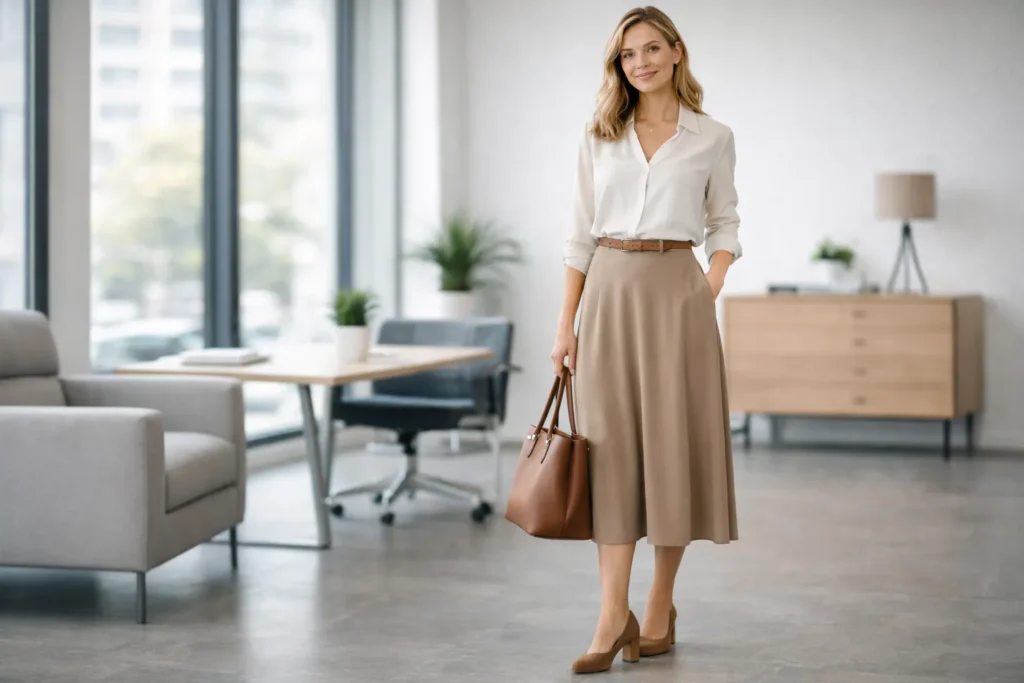
For women, the business casual spectrum is incredibly broad, offering freedom but also the potential for decision fatigue. Building a capsule wardrobe of reliable pieces makes getting dressed easier.
Tops: Blouses, Shirts, and Sweaters
Your top half is what people see most, especially in the era of video calls.
- Blouses: Look for silk, rayon, or soft cotton blends. Patterns like florals, stripes, or polka dots are great, provided they aren’t too loud. Avoid plunging necklines or spaghetti straps (unless layered).
- Button-Downs: A crisp white or light blue shirt is timeless. Unlike men’s shirts, women’s styles offer variety in collar shapes and sleeve lengths.
- Sweaters: Fine-gauge knits, cardigans, and turtlenecks are perfect for office air conditioning. Avoid chunky, oversized “weekend” knits that look sloppy.
- Shell Tops: Sleeveless shells are excellent layering pieces under blazers but should generally be covered if you are in a conservative office.
Bottoms: Trousers, Skirts, and Dresses
- Trousers: Tailored trousers are the cornerstone of a business casual outfit. Cigarette pants, wide-leg trousers, and paper-bag waist styles are all appropriate. Stick to neutrals (black, navy, camel, grey) for maximum versatility.
- Skirts: Pencil skirts, A-line skirts, and pleated midi skirts work well. The golden rule for length is usually no more than a few inches above the knee.
- Dresses: Sheath dresses, wrap dresses, and shirt dresses are “one-and-done” solutions. Ensure the fabric is structured enough that it doesn’t look like beachwear.
- The Jeans Debate: In many modern offices, dark-wash, hole-free denim is acceptable on Fridays or in relaxed environments. However, pair them with a blazer and heels to elevate the look.
The “Third Piece” Rule
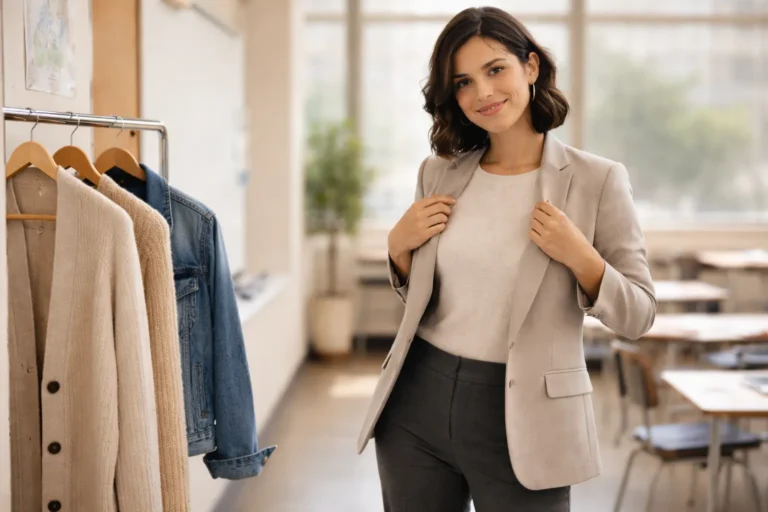
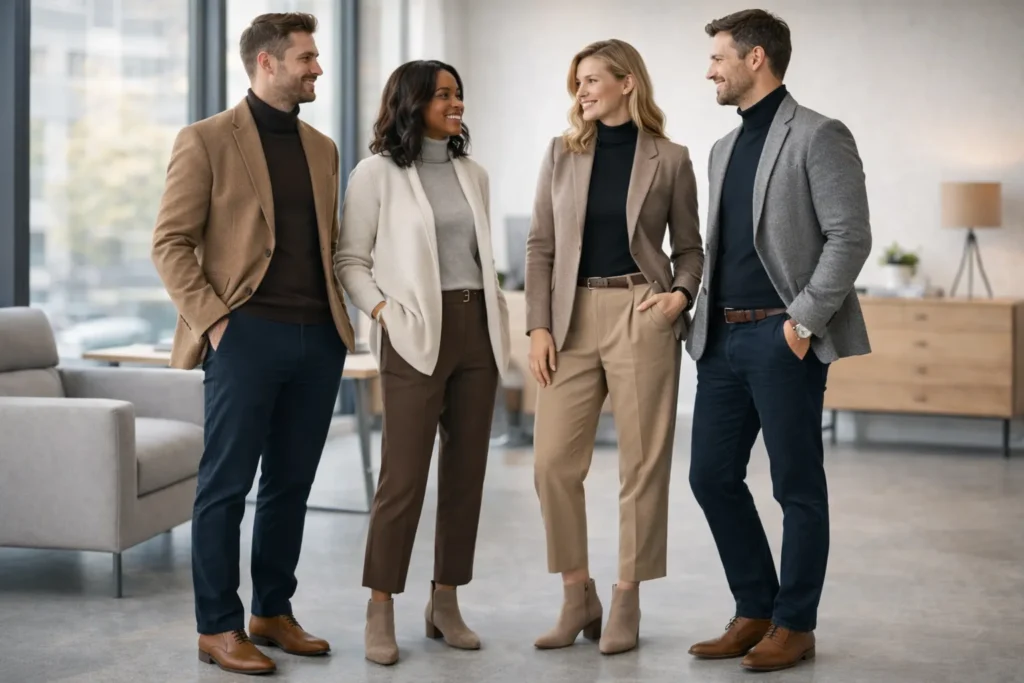
Fashion stylists often swear by the “third piece” rule. Your top is the first piece, your pants are the second. The third piece—a blazer, a structured cardigan, or a statement belt—pulls the look together. A well-fitted blazer can instantly transform a simple t-shirt and trousers into a powerful business casual outfit.
Business Casual Essentials for Men

For men, business casual is often about subtracting formality from a traditional suit while keeping the sharp silhouette.
Shirts: Collars are Key
The most defining feature of men’s business casual is the collar.
- Button-Downs: Oxford cloth button-downs (OCBDs) are the standard. They are durable, comfortable, and look great tucked in.
- Patterned Shirts: Ginghams, checks, and subtle stripes add personality.
- Polos: In warmer months, a high-quality polo shirt is acceptable. Ensure it fits well (not baggy) and is made of a premium fabric like pique cotton or merino wool.
- Sweaters: V-neck sweaters layered over a collared shirt are a classic business casual look. Crew necks and quarter-zip pullovers are also excellent options.
Trousers: Beyond the Suit Pant
You can leave the matching suit trousers at home.
- Chinos: The MVP of the male business casual wardrobe. Tan, navy, olive, and grey chinos are comfortable yet polished.
- Dress Trousers: Wool or cotton dress pants are a step up from chinos and perfect for important meetings.
- Jeans: Similar to women’s wear, dark, un-distressed denim is often acceptable but should be paired with a tucked-in shirt and a jacket to keep it professional.
Jackets: The Unstructured Blazer
You don’t need a stiff suit jacket, but a sport coat or blazer adds authority.
- Fabrics: Look for textured fabrics like tweed, herringbone, or linen (in summer). These differentiate the jacket from a formal suit jacket.
- The Navy Blazer: If you own only one jacket, make it a navy blazer. It goes with everything.
Footwear: Grounding the Look
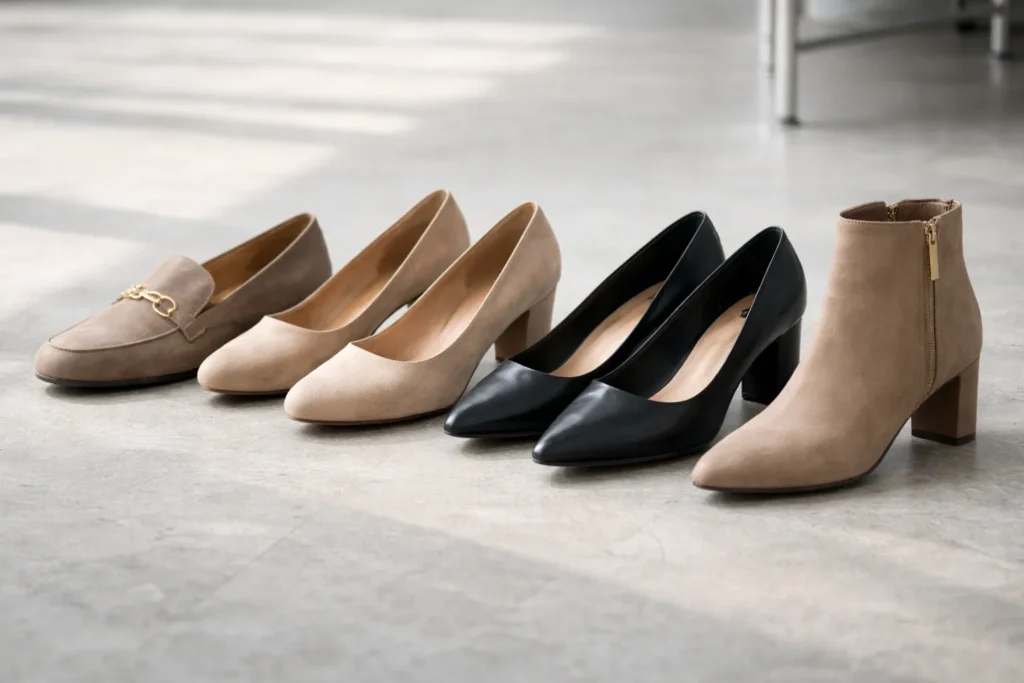
Shoes can make or break a business casual outfit. They are often the first thing people notice if they are inappropriate.
For Women
- Loafers and Mules: Flat shoes can be just as professional as heels. Pointed-toe loafers or sleek mules are comfortable and chic.
- Block Heels: If you prefer height, block heels are more comfortable for all-day wear than stilettos.
- Ankle Boots: In fall and winter, leather or suede ankle boots look great with cropped trousers or skirts.
- Sneakers: Clean, white leather sneakers are becoming accepted in creative or tech offices, but tread carefully in conservative fields.
For Men
- Oxfords and Derbies: Leather lace-ups are safe bets. Brogue detailing adds a nice casual touch.
- Loafers: Penny loafers or tassel loafers are quintessential business casual footwear.
- Chelsea Boots: Sleek leather boots work perfectly with chinos or jeans.
- Desert Boots: Suede chukka boots offer a relaxed but stylish vibe.
- Belt Rule: Generally, try to match the color of your belt to your shoes (brown with brown, black with black).
Accessorizing for the Office
Accessories allow you to express personality within the confines of the dress code.
- Bags: A structured tote, leather briefcase, or a smart laptop backpack is essential. Avoid gym bags or overly casual canvas sacks.
- Watches: A classic analog watch or a sleek smartwatch with a nice band (leather or metal link) adds a touch of sophistication.
- Jewelry: Keep it understated. Large statement pieces can be distracting. Simple studs, small hoops, and delicate necklaces work best.
- Ties: In a business casual outfit, ties are optional. If you wear one, opt for a knit tie or a fun pattern to distinguish it from formal corporate wear.
Seasonal Adaptations

Your strategy needs to shift with the weather to maintain comfort and professionalism.
Spring/Summer
- Fabrics: Switch to linen blends, cotton, and seersucker. These breathe better in the heat.
- Colors: Light greys, tans, pastels, and soft blues reflect the season.
- Modesty Check: Ensure summer dresses aren’t too short or sheer. If wearing sandals, ensure feet are well-groomed.
Fall/Winter
- Fabrics: Embrace wool, corduroy, tweed, and cashmere.
- Layering: This is the season for vests, cardigans, and scarves.
- Outerwear: Your coat is part of your first impression. A wool topcoat, trench coat, or clean pea coat looks much better over business attire than a sporty ski jacket.
What to Avoid: The “Business Casual” Don’ts
Knowing what not to wear is just as important as knowing what to wear. To keep your business casual outfit appropriate, steer clear of the following:
- Athleisure: No leggings, yoga pants, tracksuits, or hoodies.
- Beachwear: No flip-flops, shorts (unless specifically allowed in a very casual office), or tank tops.
- Distressed Clothing: Ripped jeans or frayed hems look sloppy.
- Excessive Branding: Avoid shirts with giant logos or slogans.
- Wrinkled Clothes: Even an expensive shirt looks bad if it’s wrinkled. Invest in an iron or steamer.
Navigating “Casual Fridays”
Many offices that are “business professional” Monday through Thursday switch to “business casual” on Fridays. However, some offices that are already business casual have an even more relaxed Friday policy.
- The Jeans Rule: Friday is usually the day for jeans. Ensure they are a dark wash and fit well.
- Polos and Tees: A high-quality t-shirt (solid color, good fabric) might be okay if layered under a blazer.
- The Trap: Do not treat casual Friday as “pajama day.” You still need to look like you are at work.
Conclusion:
Mastering the business casual outfit is about finding the sweet spot where you feel professional, comfortable, and authentic. It is a dress code that offers immense flexibility, allowing you to showcase your personal style while respecting the professional environment. By investing in versatile staples like chinos, blazers, and quality footwear, you can build a wardrobe that takes the stress out of getting dressed in the morning.
Remember, when in doubt, it is always better to be slightly overdressed than underdressed. A sharp outfit commands respect and can give you that extra boost of confidence needed to crush your presentation or nail that interview.
Frequently Asked Questions (FAQs)
Q1: Can I wear sneakers with a business casual outfit?
It depends heavily on your specific office culture. In creative, tech, or startup environments, clean, minimalist leather sneakers (usually white) are often acceptable. In traditional finance or law offices, sneakers are generally a “no,” even on Fridays. When in doubt, start with leather shoes and observe what your managers wear.
Q2: Are jeans considered business casual?
Technically, jeans fall under “smart casual,” but they have been widely adopted into modern business casual policies. The key is the condition of the denim. Dark wash, straight or slim-leg jeans with no holes or fading are typically acceptable. Light wash, baggy, or ripped jeans are not.
Q3: Do I have to tuck in my shirt?
For men, the answer is almost always yes. A tucked-in shirt looks significantly more polished. Un-tucked shirts can look sloppy unless they are specifically designed with a shorter, straight hem (like some polo shirts or casual button-downs), but even then, tucking is safer. For women, the “French tuck” (tucking just the front) is a stylish way to define the waist while keeping a relaxed vibe.
Q4: Is a polo shirt business casual?
Yes, for men, a polo shirt is a staple of the business casual wardrobe, particularly in warmer weather. Ensure it is made of good quality fabric (like pique cotton) and fits well. Avoid athletic, shiny polyester polos that look like gym wear.
Q5: Can I wear open-toed shoes?
For women, dressy sandals or peep-toe shoes are often acceptable in summer, provided they are not flip-flops or overly strappy beach sandals. A pedicure is a must if your toes are visible. For men, open-toed shoes are almost never acceptable in a business environment.