Sweat, Stretch, and Style: The Best Pilates Outfits for Every Session
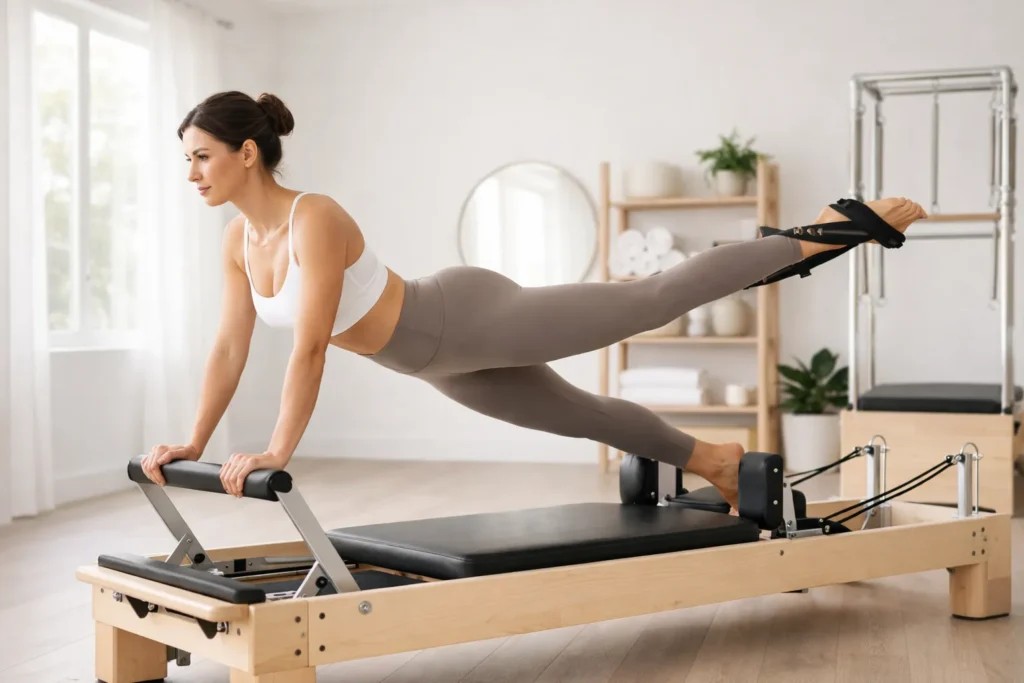
Stepping into a studio requires focus, breath control, and the right gear. Choosing the perfect Pilates outfits goes far beyond looking stylish; your clothing directly impacts your performance, safety, and comfort. Whether you are holding a difficult plank on the mat or gliding through a series of pikes on the reformer, you need activewear that moves seamlessly with your body.
Finding the right balance between functionality and fashion can feel overwhelming, especially with the booming athleisure market. Do you need grip socks? Can you wear your regular running shorts? What fabrics work best? This comprehensive guide will walk you through everything you need to know to build a functional, beautiful studio wardrobe. We will cover the essential pieces, the differences between mat and reformer requirements, fabric recommendations, and care tips to make your activewear last.
Why Your Choice of Activewear Matters for Pilates
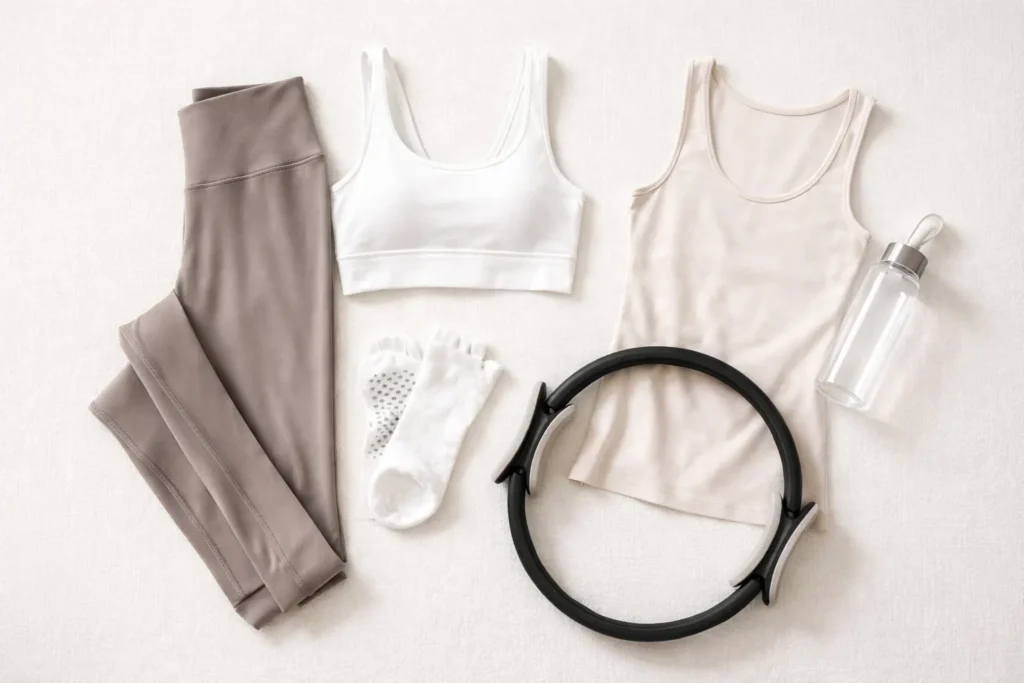
You might wonder if you can just throw on an old oversized t-shirt and sweatpants for your class. While comfort is key, wearing the wrong clothing can actually hinder your workout and distract you from your form.
Unrestricted Movement and Flexibility
Pilates focuses heavily on core strength, flexibility, and controlled movements. Your clothing must stretch in every direction without restriction. Rigid waistbands or stiff fabrics will prevent you from achieving a full range of motion. When your clothes stretch with you, you can focus entirely on your muscle engagement rather than adjusting your pants mid-stretch.
Breathability and Moisture Control
Even though it is a low-impact workout, you will build up a sweat. Classes often involve intense, sustained muscle contractions that generate significant body heat. Breathable, moisture-wicking fabrics pull sweat away from your skin, keeping you cool and comfortable from your warm-up to your final stretch.
The Importance of Form-Fitting Clothes
Instructors need to see your body’s alignment. If you wear baggy clothing, your instructor cannot tell if your spine is neutral, your ribs are flared, or your core is properly engaged. Form-fitting clothes act as a visual guide for both you and your teacher, ensuring you maintain proper posture and avoid injury.
Essential Components of Perfect Pilates Outfits
Building a solid studio wardrobe starts with a few foundational pieces. If you invest in high-quality basics, you can mix and match them for endless outfit combinations.
High-Waisted Leggings and Tights
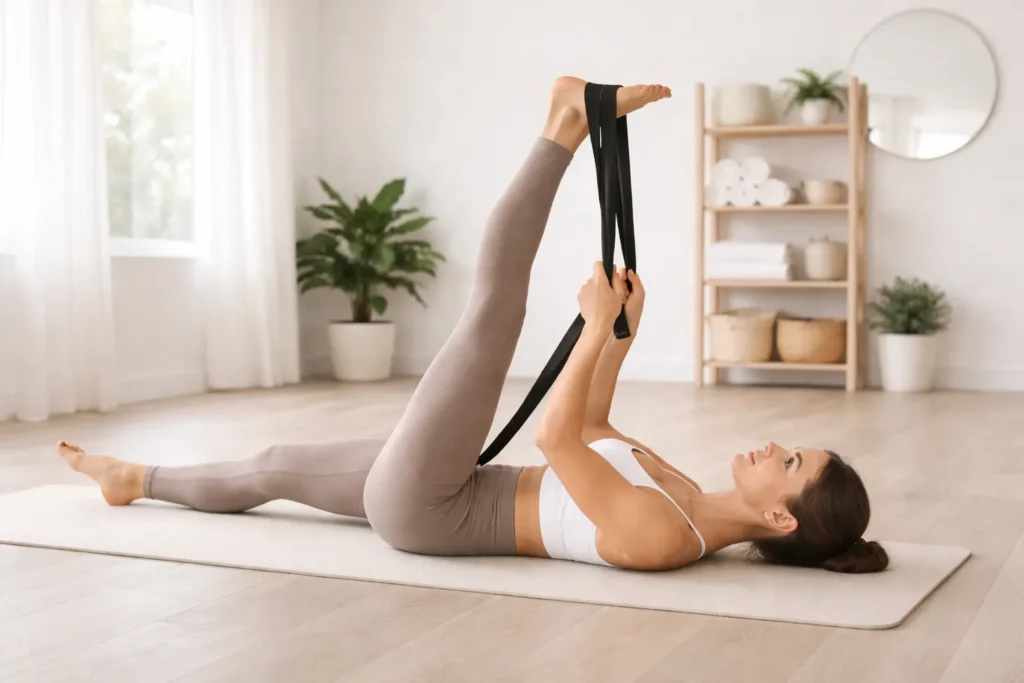
Leggings are the undisputed champion of studio apparel. When shopping for bottoms, prioritize these features:
- High-waisted fit: A high waistband provides gentle core support and ensures your pants stay up during deep bends and rolls.
- Four-way stretch: The fabric must stretch horizontally and vertically.
- Seamless designs: Seams can dig into your skin when you lie on your side or back. Opt for seamless or flat-seam construction.
- Zero hardware: Avoid leggings with zippers or hard buttons on the back. These will press painfully into your spine during mat work.
Supportive Yet Comfortable Sports Bras
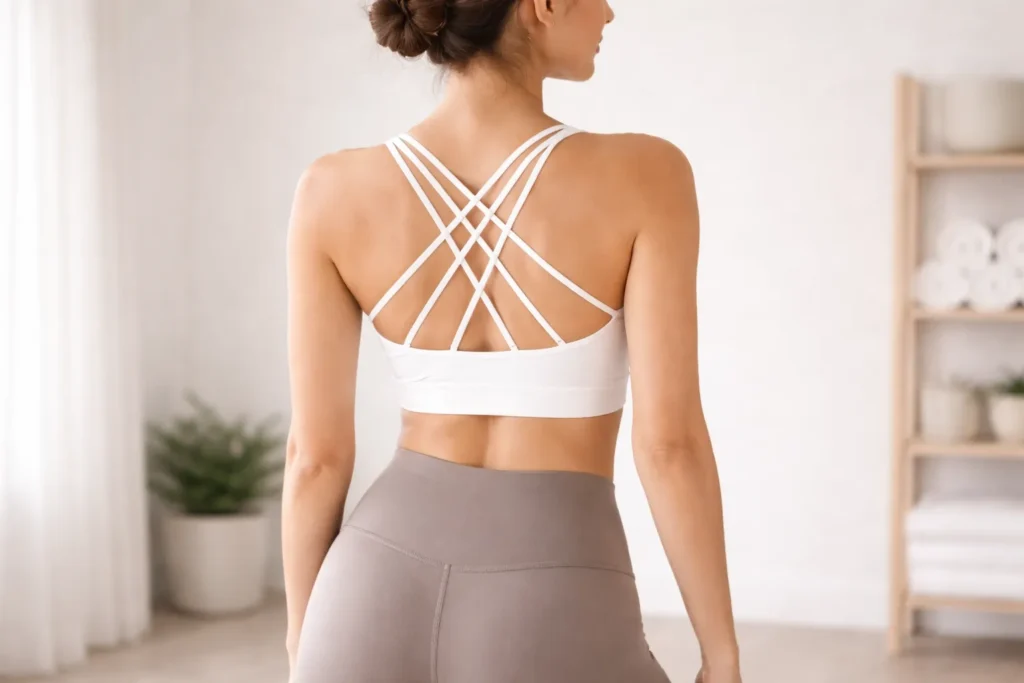
Because you are not jumping or running, you do not need a high-impact, heavily structured sports bra. Instead, look for low to medium-impact bras that prioritize comfort and flexibility.
- Strappy backs: These allow your shoulder blades to move freely without thick straps digging into your traps.
- Soft, stretchy bands: Ensure the band around your ribcage does not restrict your deep, diaphragmatic breathing.
- Longline styles: Many people love longline sports bras because they double as crop tops, pairing perfectly with high-waisted leggings.
Form-Fitting Tops and Tanks
If you prefer more coverage than a sports bra, choosing the right top is crucial.
- Fitted tanks: A snug tank top will stay in place when you perform exercises like the “roll over” or “down stretch.”
- Avoid loose necklines: Baggy shirts or deep cowls will fall into your face the moment you invert your body.
- Breathable long sleeves: For colder months, a lightweight, fitted long-sleeve top provides warmth without adding bulk.
Grip Socks: The Unsung Heroes
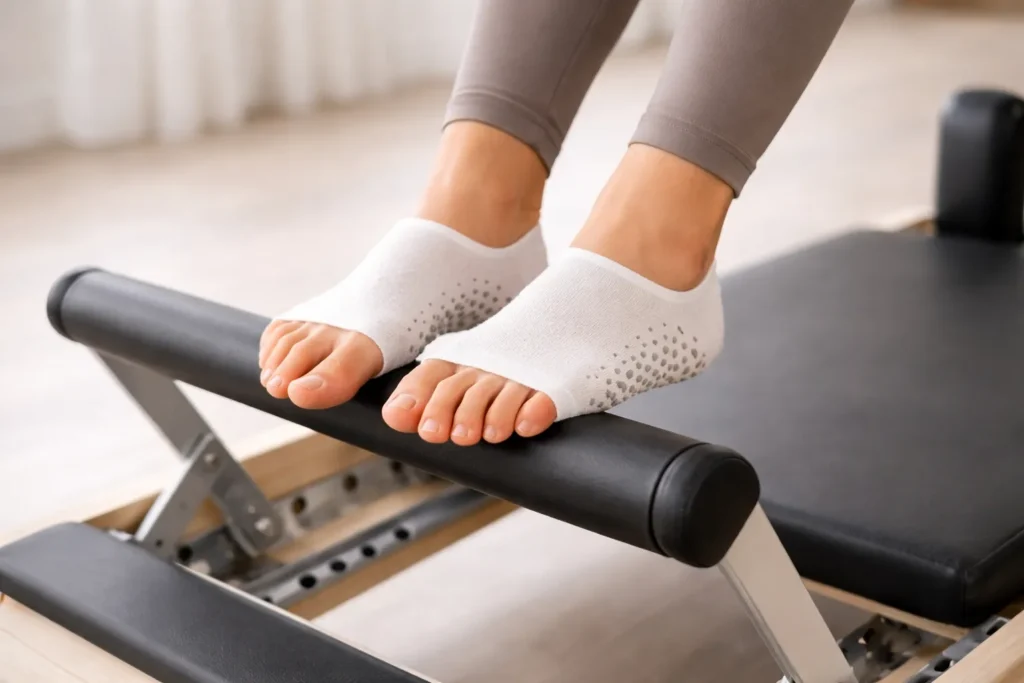
Most studios require grip socks for hygiene and safety. These socks feature rubberized grips on the soles.
- Prevent slipping: Grip socks anchor your feet to the mat or the footbar of the reformer.
- Improve balance: They help you engage the tiny muscles in your feet, improving your overall stability.
- Style options: You can find them in ankle styles, crew lengths, or even toeless varieties that let your toes spread naturally.
Mat Pilates vs. Reformer Pilates: What to Wear
While the foundational principles of the workouts are the same, the equipment you use dictates slight changes in your wardrobe choices.
Outfits for Mat Pilates
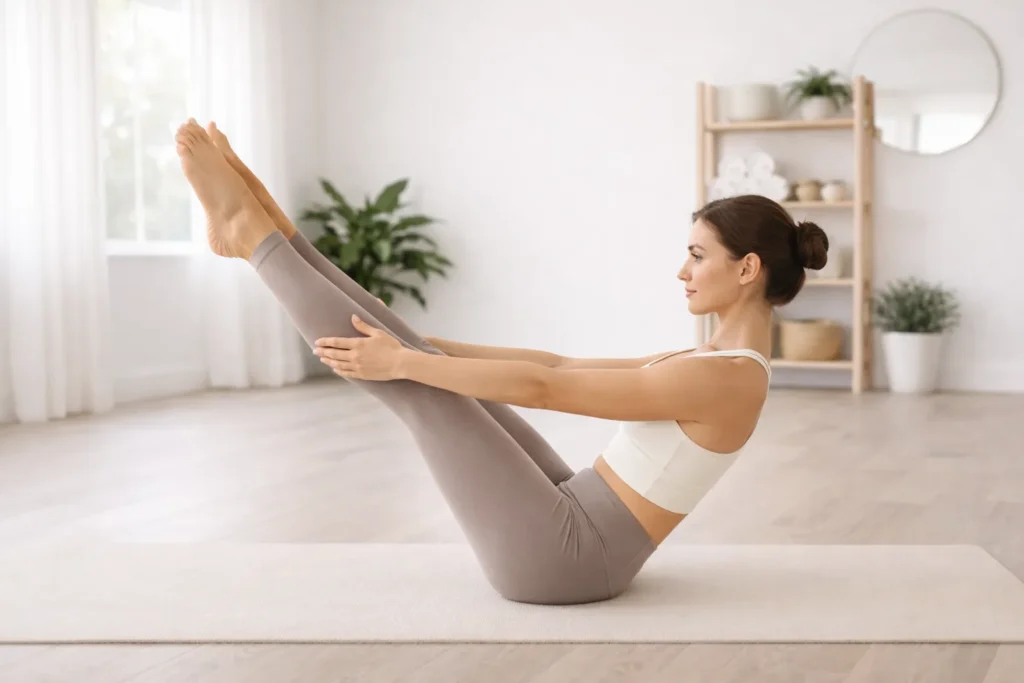
Mat classes are grounded, meaning you spend most of your time lying on your back, stomach, or sides.
- Focus on back comfort: Since your spine presses against the floor frequently, ensure your clothing has absolutely no hardware on the back. Thick knots from tie-back tops can also be uncomfortable.
- Temperature regulation: Floors can be cold. Layering a fitted wrap or light cardigan over your tank top allows you to stay warm during the initial breathing exercises and take it off as your body heats up.
Outfits for Reformer Pilates
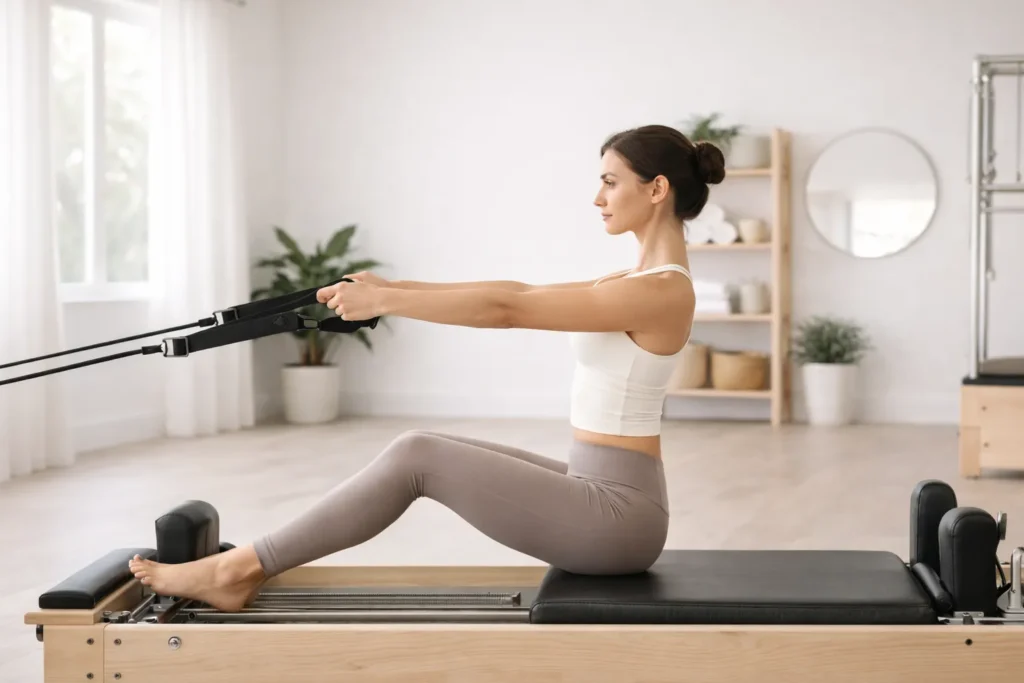
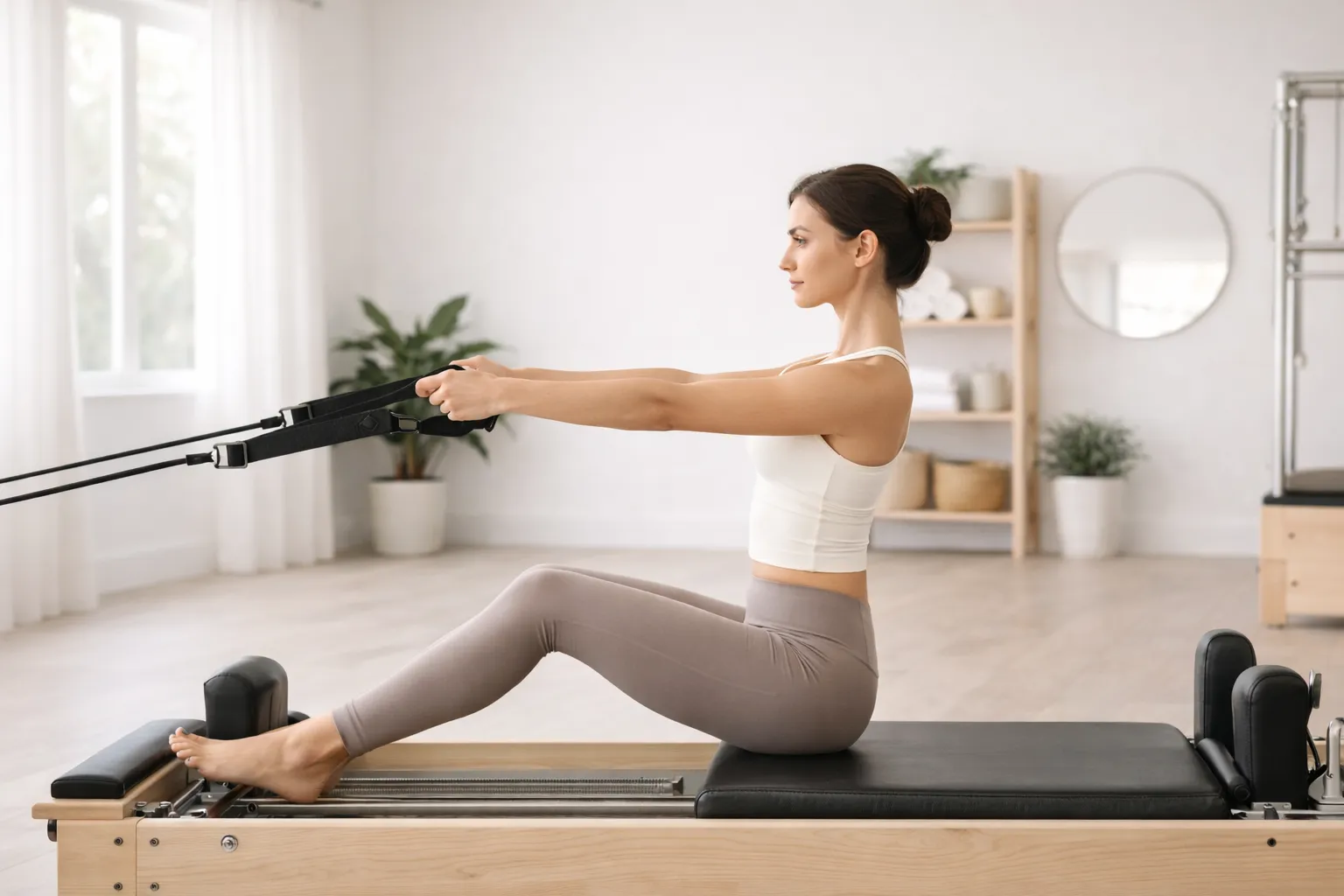
The reformer is a bed-like frame featuring a sliding carriage, ropes, pulleys, and springs. Your clothing needs to be highly functional to navigate this machinery safely.
- Strictly form-fitting: Loose shorts, wide-leg pants, or baggy shirts can easily get caught in the springs or wheels of the reformer. This is a significant safety hazard.
- Full leg coverage: Even if it is hot, leggings or capris are generally better than shorts. Your legs will rub against the straps and cables; bare skin can result in friction burns or chafing.
- Secure hair: While not technically clothing, always tie your hair back securely so it does not get tangled in the shoulder blocks or headrest.
Seasonal Pilates Wardrobe Guide
Your studio wardrobe should adapt to the changing seasons, ensuring you remain comfortable regardless of the weather outside.
Summer Studio Sessions
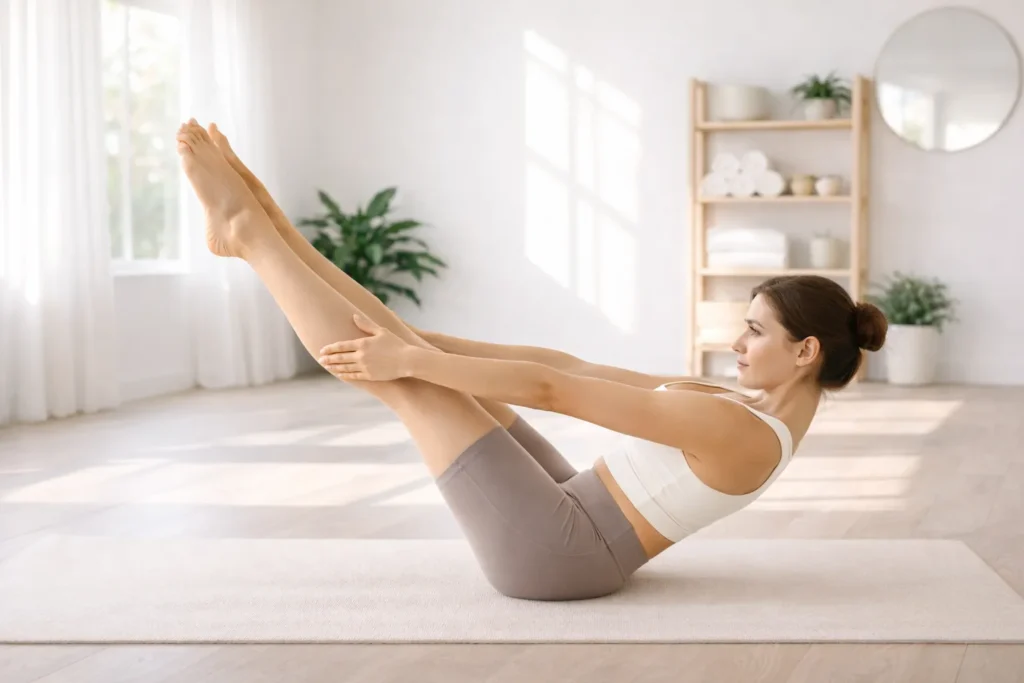
When the temperatures rise, you want lightweight, breathable gear.
- Bike shorts: Form-fitting bike shorts (like spandex cycling shorts) are an excellent alternative to leggings in the summer. They offer coverage without the added heat of full-length pants.
- Cropped tops: Embrace crop tops and longline bras to allow maximum airflow to your skin.
- Lighter colors: Pastel colors and whites tend to show sweat more easily than dark colors, but they feel visually lighter and more summery. Look for fabrics with sweat-masking technology.
Winter Layering Done Right
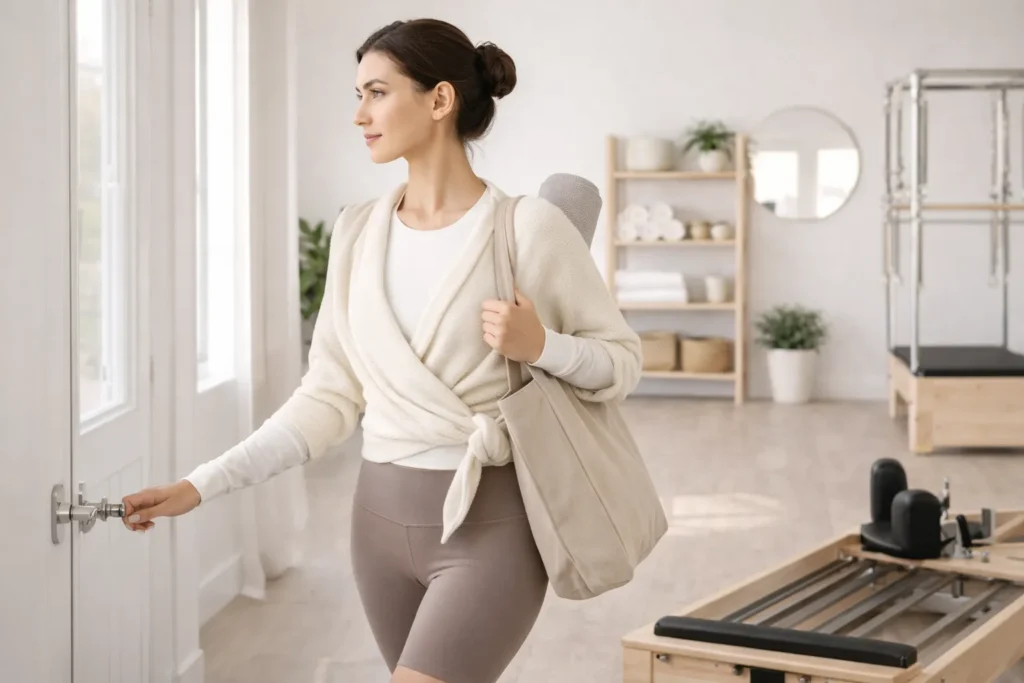
Cold weather requires a strategic approach to layering so you do not freeze on the way to the studio or overheat midway through the class.
- The base layer: Stick to your standard sweat-wicking leggings and fitted tank.
- The mid-layer: Add a fitted, long-sleeve athletic top featuring thumbholes to keep your hands warm.
- The outer layer: A cozy wrap sweater, a stylish bomber jacket, or a fleece-lined zip-up allows you to travel to and from the studio in comfort.
- Warm accessories: Swap your ankle grip socks for knee-high or over-the-knee grip socks. Leg warmers worn over your leggings are also a trendy, functional winter choice.
Fabrics to Look For (and Avoid)
The fabric of your activewear dictates how it performs under pressure. Reading the tag before you buy can save you from a very uncomfortable workout.
Best Fabrics for Pilates
Seek out materials designed specifically for movement and moisture management.
- Nylon and Spandex blends: This is the gold standard for leggings. Nylon is incredibly soft and durable, while spandex (or elastane) provides that essential four-way stretch.
- Bamboo: Bamboo-derived fabrics are naturally antimicrobial, highly breathable, and exceptionally soft against the skin.
- Polyester: High-quality polyester is lightweight, durable, and excellent at wicking away sweat.
Fabrics to Leave in the Closet
Some materials simply do not belong in a workout environment.
- 100% Cotton: While cotton is soft and natural, it absorbs moisture like a sponge and holds onto it. It will become heavy, damp, and lose its shape as you sweat.
- Heavy fleece: Fleece is great for lounging but will cause you to overheat rapidly during an active session.
- Non-stretch synthetics: Any fabric that lacks elastane or spandex will restrict your movement and potentially tear during deep stretches.
Styling Your Pilates Look Beyond the Studio
The “studio to street” aesthetic has revolutionized how we dress. You can easily transition your workout gear into a chic, everyday outfit for running errands or meeting friends for coffee after class.
The “Studio to Street” Aesthetic
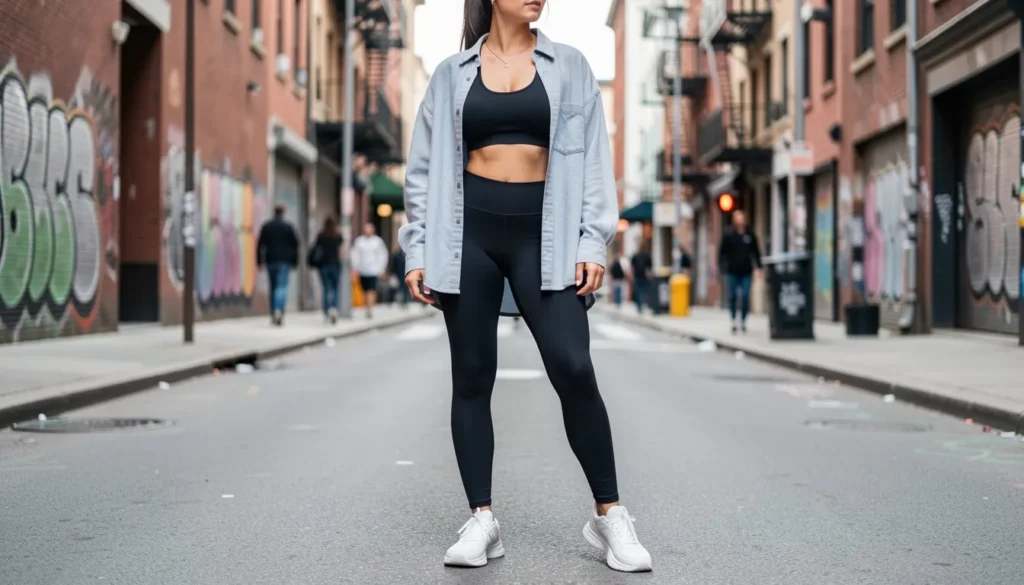
Creating a transitional look is all about how you accessorize your foundational activewear.
- Add an oversized layer: Throw an oversized, crisp button-down shirt or a chunky knit cardigan over your leggings and sports bra. This instantly softens the athletic look.
- Footwear shift: Swap your grip socks for a pair of sleek, clean white sneakers or trendy slip-on clogs.
- Accessorize: A stylish tote bag (to hold your water bottle and socks), a baseball cap, and a pair of chic sunglasses elevate the look from “just finished a workout” to “effortlessly put together.”
Color Coordination and Matching Sets
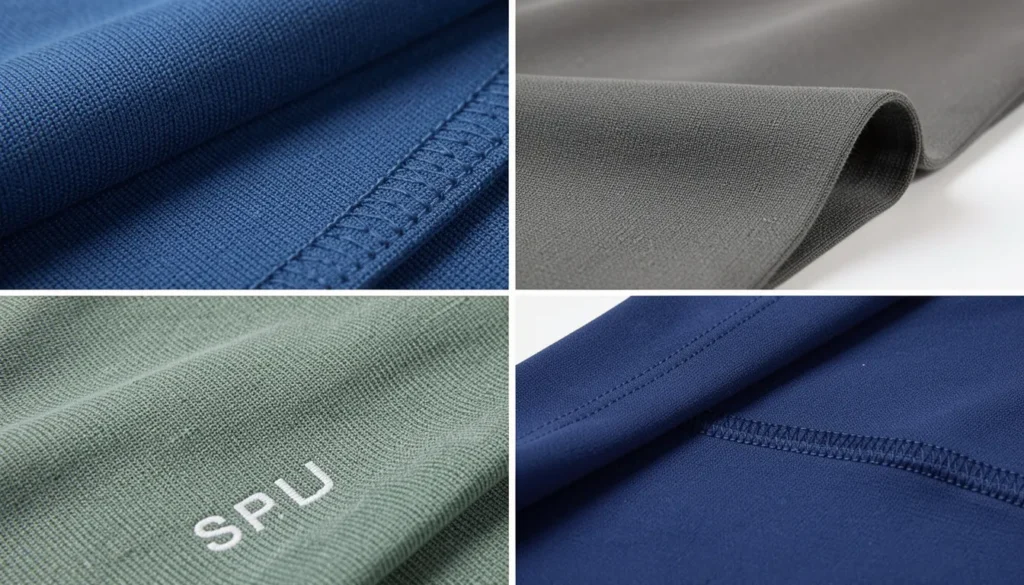
One of the easiest ways to look polished is by wearing a matching set.
- Monochromatic looks: Wearing the same color on your top and bottom creates a streamlined, elongating effect. Earth tones like sage green, terracotta, and slate grey are incredibly popular right now.
- Classic black: You can never go wrong with an all-black ensemble. It is flattering, hides sweat perfectly, and matches any jacket or shoe you pair with it.
- Texture mixing: If you wear a solid color, try mixing textures. Pair smooth, shiny leggings with a ribbed crop top for visual interest.
How to Care for Your Pilates Wardrobe
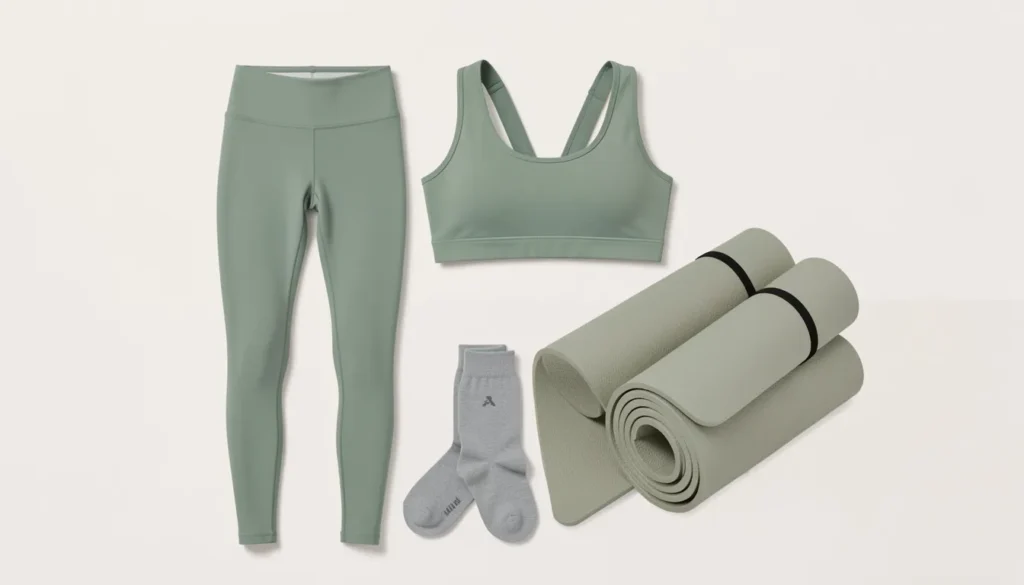
High-quality activewear is an investment. Proper care will extend the life of your garments, keeping them stretchy, vibrant, and odor-free.
- Wash in cold water: Hot water breaks down the elastic fibers in spandex, causing your leggings to sag and lose their compression over time.
- Skip the fabric softener: Fabric softeners leave a waxy coating on synthetic fabrics. This coating traps odors and destroys the fabric’s ability to wick sweat away from your body.
- Use a gentle detergent: Opt for mild detergents or specific sports washes formulated to remove sweat and bacteria without harsh chemicals.
- Air dry whenever possible: The intense heat of a dryer is the fastest way to destroy activewear. Lay your clothes flat to dry or hang them up. If you absolutely must use a dryer, choose the lowest heat or “air fluff” setting.
- Wash inside out: Turning your leggings and tops inside out protects the outer finish from pilling and friction against other garments in the wash.
Conclusion
Curating the right Pilates outfits empowers you to step onto the mat or reformer with total confidence. By prioritizing form-fitting silhouettes, breathable fabrics, and distraction-free designs, you set yourself up for a successful, focused workout. Remember to tailor your choices based on whether you are doing mat work or using machinery, and do not forget a high-quality pair of grip socks. When your clothing moves in perfect harmony with your body, you can focus entirely on your breath, your alignment, and finding your center.
Frequently Asked Questions (FAQs)
Do I need to wear shoes for Pilates?
No, you do not wear athletic shoes. You will either practice barefoot or wear specialized grip socks. Grip socks are highly recommended (and often required by studios) because they prevent slipping on the equipment and promote better hygiene.
Can I wear loose clothing to a Pilates class?
It is strongly advised to avoid loose clothing. Baggy shirts will fall into your face during inversions, and wide-leg pants can easily get caught in the springs and moving parts of a reformer machine. Form-fitting clothes also allow your instructor to check your alignment safely.
What is the difference between yoga and Pilates outfits?
They are very similar, and you can often wear the same outfit for both. However, yoga outfits sometimes feature looser elements (like harem pants or flowy tops for restorative classes). For Pilates, especially on a reformer, strict form-fitting clothing is necessary for safety around the equipment.
Are grip socks mandatory?
While it depends on the specific studio’s policy, the vast majority of reformer studios require grip socks for safety and sanitary reasons. Even if you practice at home on a mat, grip socks help you hold planks and standing poses much more securely.