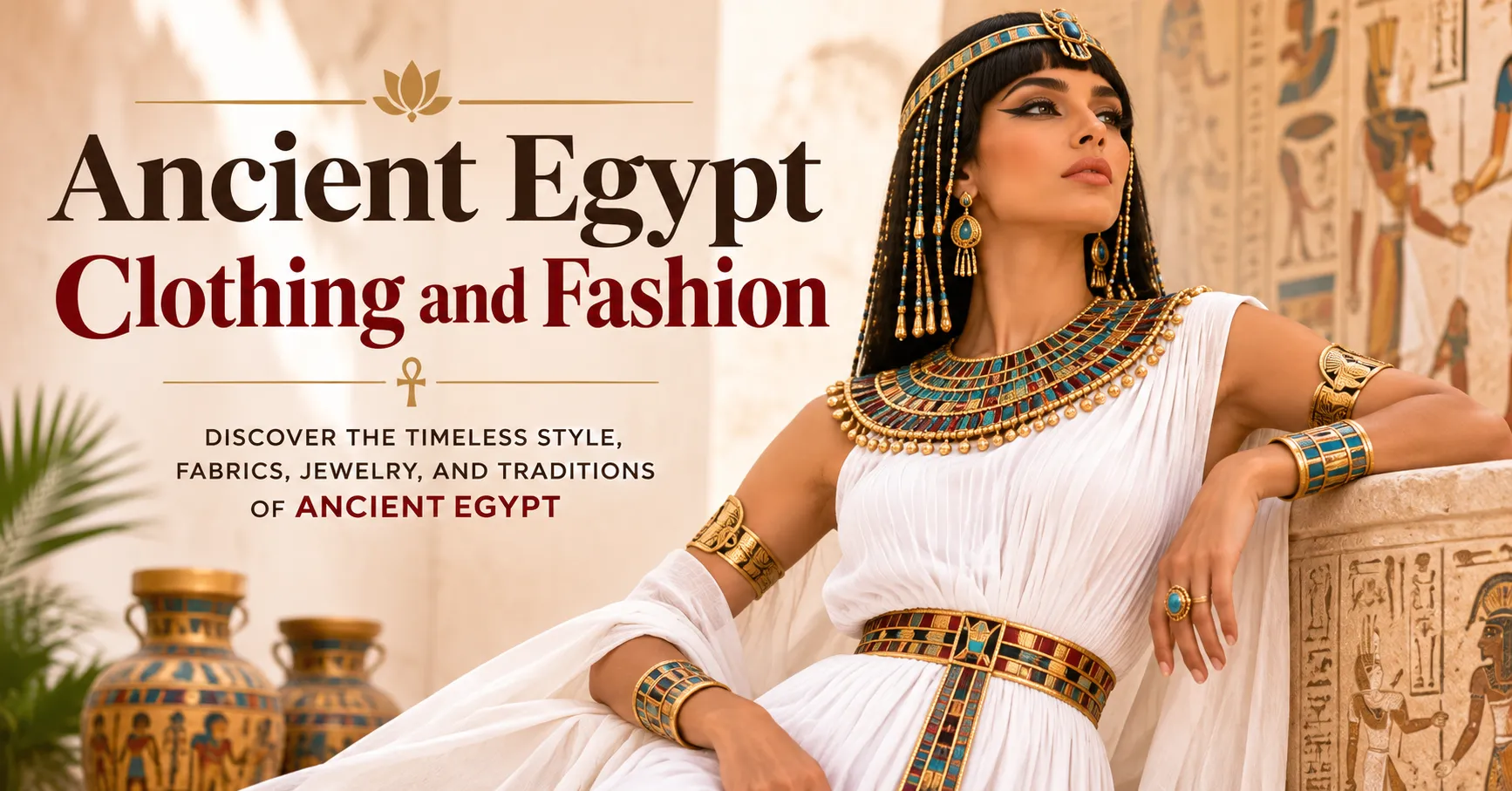
Ancient Egypt Clothing and Fashion: Garments, Status, and Style Along the Nile
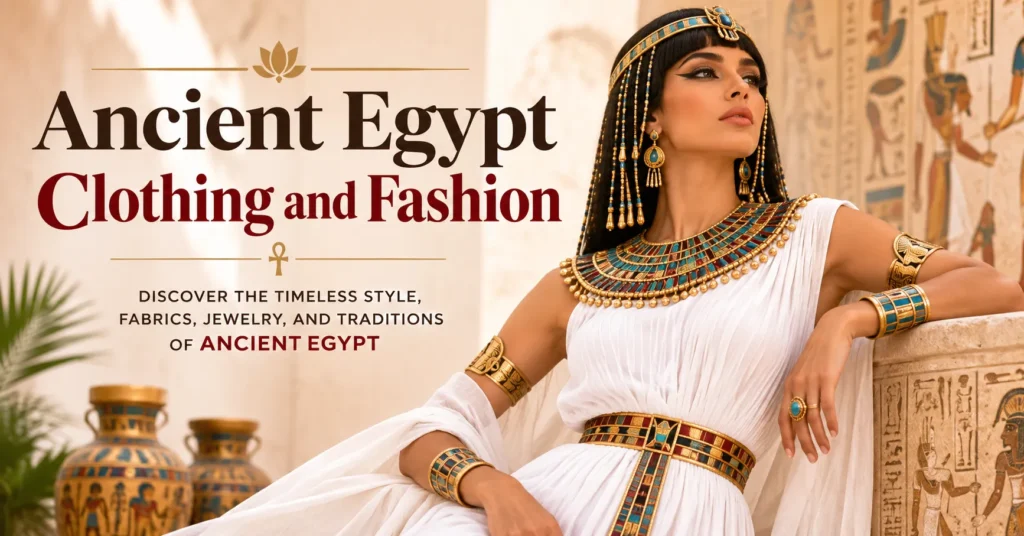
Ancient Egypt clothing and fashion tell us far more than what people wore. They reveal how society organized itself, how Egyptians managed a hot desert climate, and how they connected dress to religion and the afterlife. We put this guide together to walk you through the fabrics, the garments, the accessories, and the meaning behind each choice. By the end, you will understand the schenti and the kalasiris, why linen dominated for three thousand years, and how a person’s clothing marked their exact place in the social hierarchy. We do not leave the details to guesswork. Ancient Egypt Clothing and Fashion evolved over thousands of years, blending practicality, religious symbolism, and social identity into one of history’s most recognizable styles.
Why Linen Defined Egyptian Fashion History
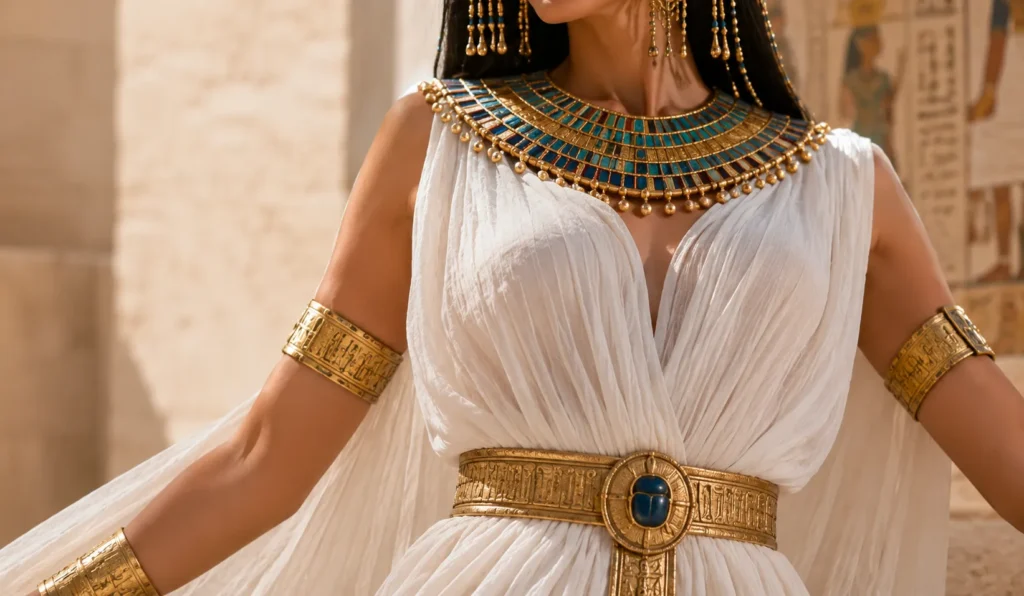
Linen was the foundation of Egyptian dress, and understanding it explains almost everything else. Egyptians made linen from the flax plant, which grew abundantly along the Nile floodplain. The material suited the climate, and it carried religious weight as well. Linen became the defining feature of Ancient Egypt Clothing and Fashion, shaping everything from everyday garments to ceremonial attire worn by royalty and priests.
We can point to three concrete reasons linen dominated Egyptian fashion history:
- Climate control. Linen breathes well and stays cool, which matters in a desert where daytime heat is punishing.
- Local supply. Flax grew easily in the fertile Nile silt, so the raw material was always at hand.
- Ritual purity. Priests wore only linen because the culture considered animal fibers like wool impure inside temples.
How Egyptians Made Linen
The process was labor-intensive, and each step affected the final quality. Egyptian linen ranged from coarse everyday cloth to a sheer, near-transparent weave reserved for royalty.
- Workers harvested flax, then soaked and beat the stalks to separate the fibers.
- Spinners twisted the fibers into thread, often by hand with a spindle.
- Weavers worked the thread on horizontal looms, and later vertical ones.
The finest linen, sometimes called “royal linen,” was so tightly woven that it appeared translucent. That quality of ancient textiles signaled wealth as clearly as any jewel.
The Color of Egyptian Cloth
Most Egyptian linen clothing stayed its natural off-white or ivory shade. Bleaching in the sun produced the pure white that Egyptians prized. Dyeing was less common because flax resists color, so bright fabric was rarer and more valuable.
The takeaway is simple. Linen was not just cloth. It was climate management, economy, and religion woven into a single material.
The Core Ancient Egyptian Garments
Egyptian dress stayed remarkably stable across thousands of years, though details shifted with time and status. We will break down the main garments so you can picture exactly what people wore.
The garments below formed the foundation of Ancient Egypt Clothing and Fashion, with their quality and construction reflecting both climate and social rank
The Schenti: The Men’s Kilt
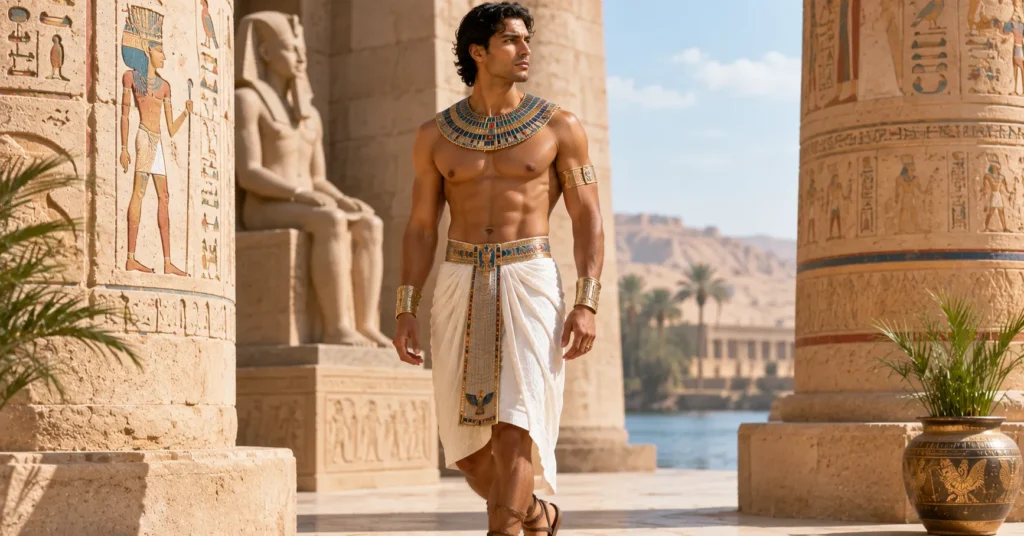
The schenti was the primary garment for men across most of Egyptian history. It was a wraparound kilt made from a rectangle of linen, folded and secured at the waist with a belt or tucked fold.
- Laborers wore short, simple schentis for ease of movement.
- Officials wore longer, pleated versions that signaled rank.
- Pharaohs wore finely pleated schentis, sometimes with a starched triangular front panel.
The garment stayed the same in concept while the fabric quality and pleating marked the wearer’s status. That pattern repeats throughout Egyptian dress.
The Kalasiris: The Women’s Dress
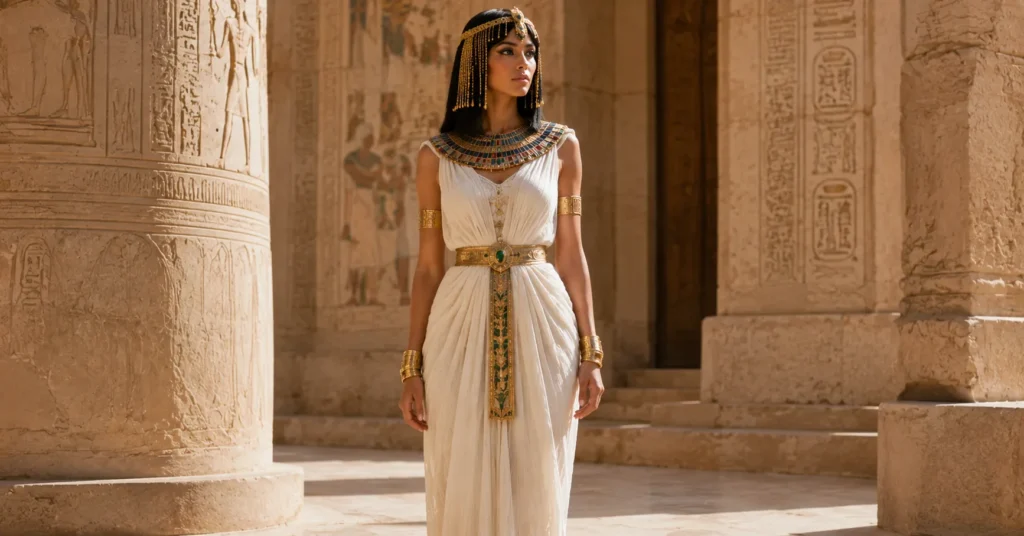
The kalasiris was the standard women’s garment, a long sheath dress that ran from below the chest to the ankles. Early depictions show a tight, tube-like fit held up by one or two shoulder straps.
- Everyday versions were plain and practical for household work.
- Elite versions used sheer, finely woven linen and elaborate pleating.
- Some styles left one or both shoulders bare, depending on the period.
Over time, the kalasiris grew looser and more draped, especially in the New Kingdom, when flowing, layered garments became fashionable among the wealthy.
Clothing for Children and Laborers
Children often wore little or no clothing in early years, which suited the climate and the household economy. Young boys sometimes wore a simple string or short kilt as they grew.
Laborers and enslaved workers wore minimal clothing as well, typically a short schenti or a simple loincloth. Function came first, and the reduced fabric matched both the heat and their limited means.
Here is a quick reference for the main garments:
| Garment | Worn By | Description | Status Marker |
| Schenti | Men | Wraparound linen kilt | Length, pleating, fabric quality |
| Kalasiris | Women | Long sheath or draped dress | Sheerness and pleating |
| Loincloth | Laborers | Short, simple wrap | Minimal fabric |
| Shawl/cloak | Elite, both sexes | Draped outer layer | Fine linen, added in later periods |
How Clothing Reflected Social Hierarchy
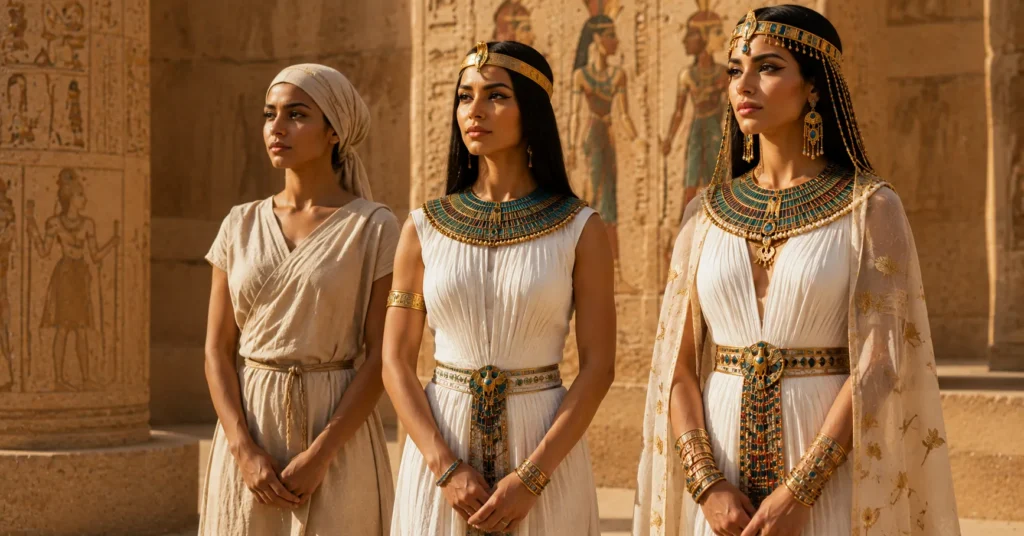
Clothing in Egypt worked as a clear signal of rank, and this is one of the most important points to grasp. The basic garments were similar across classes, but the details separated the powerful from the common. One of the most fascinating aspects of Ancient Egypt Clothing and Fashion is how clothing immediately communicated wealth, occupation, and religious importance.
We can name the specific markers that revealed status:
- Fabric fineness. Sheer, tightly woven linen belonged to the elite, while coarse cloth marked laborers.
- Amount of fabric. More cloth, longer hems, and layered garments signaled wealth.
- Pleating and decoration. Elaborate pleats required skilled labor, so they pointed to high status.
- Accessories. Jewelry, headdresses, and fine sandals amplified the message.
A vizier and a field worker might both wear a schenti, but no observer would confuse the two. The quality told the whole story at a glance.
Priests and Ritual Dress
Priests followed strict rules that set them apart. They wore only white linen and avoided wool and leather inside sacred spaces. Many shaved their heads and bodies for ritual purity, which made their clean linen even more distinct.
This connection between dress and religion runs through all of Egyptian fashion history. Clothing was rarely just practical. It carried meaning tied to purity, status, and belief.
Pharaoh Fashion and Royal Regalia
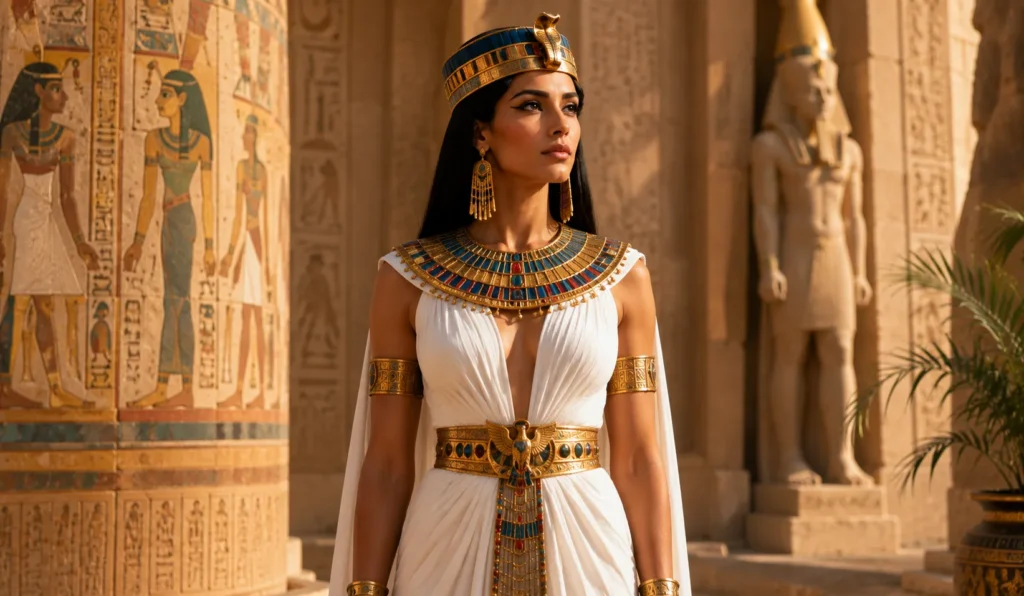
Royal garments represent the most luxurious expression of Ancient Egypt Clothing and Fashion, combining fine linen, precious metals, and powerful royal symbols. Royal dress took the standard garments and elevated them with symbols of divine authority. Pharaoh fashion was designed to communicate power to anyone who saw it, and every element carried meaning.
The Royal Headdresses
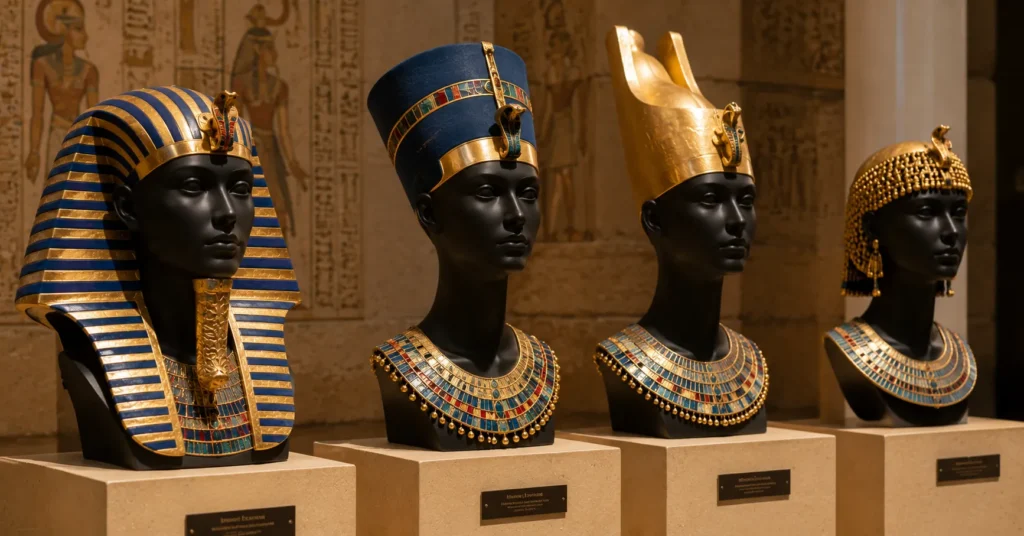
The headdress was the clearest marker of a pharaoh. Several distinct types appeared across Egyptian history, and each carried its own significance.
- The Nemes. The striped cloth headdress, famous from Tutankhamun’s mask, framed the face and fell to the shoulders.
- The Double Crown. The Pschent combined the White Crown of Upper Egypt and the Red Crown of Lower Egypt, symbolizing a unified kingdom.
- The Khat. A simpler bag-like headcloth worn in less formal settings.
Symbols of Divine Power
Pharaohs wore additional regalia that reinforced their status as living gods. Each item connected the ruler to protective deities and royal tradition.
- The uraeus, a rearing cobra on the brow, represented the goddess Wadjet and royal protection.
- The false beard, often braided, linked the pharaoh to the gods, who were shown with similar beards.
- The crook and flail, held across the chest, symbolized kingship and the ability to provide.
Royal dress was not fashion for its own sake. It was a visual argument for the ruler’s right to govern, made in cloth, gold, and symbol.
Egyptian Accessories and Jewelry
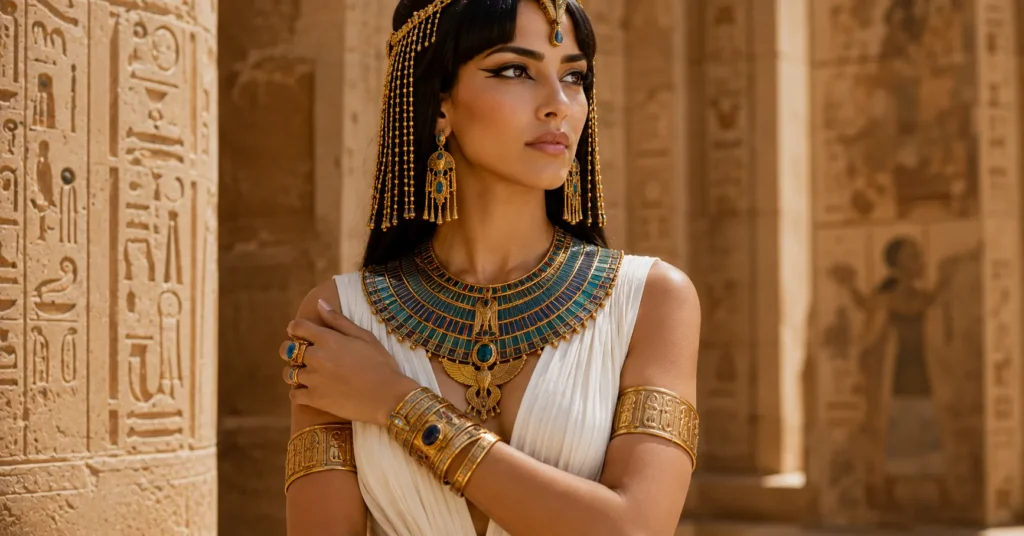
Accessories completed Ancient Egypt Clothing and Fashion, allowing both common people and royalty to express identity, protection, and prestige.
Accessories completed the Egyptian look, and they served practical, decorative, and protective purposes all at once. Both men and women wore jewelry across every class, though the materials varied sharply by wealth.
Jewelry and Amulets
Egyptians loved jewelry, and they wore it in life and buried it with the dead. Materials ranged from solid gold and precious stones for the elite to faience and copper for common people.
- The broad collar (wesekh) was a wide beaded necklace worn by both sexes.
- Amulets carried protective power, and shapes like the scarab, the ankh, and the Eye of Horus were common.
- Rings, bracelets, and armlets added color and signaled status.
Amulets deserve special mention because they blended fashion and faith. Egyptians believed these charms protected the wearer and aided the journey to the afterlife.
Sandals and Footwear
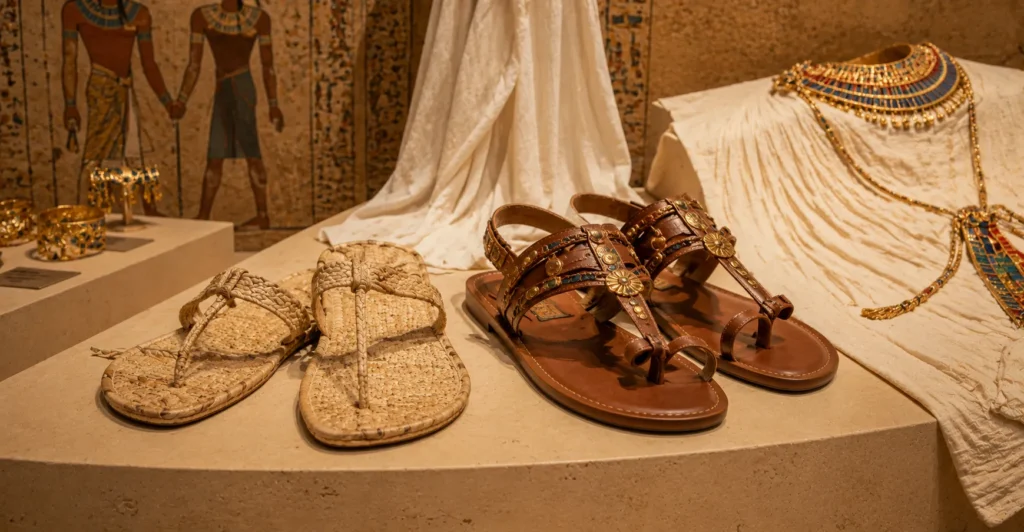
Most Egyptians went barefoot for daily life, which suited the climate and the terrain. Sandals appeared when needed, and they too marked status.
- Common sandals were woven from papyrus or palm fibers.
- Elite sandals used fine leather and sometimes decorative detail.
- Some royal sandals carried painted images of enemies on the soles, so the wearer symbolically trod on them.
Wigs and Headwear
Wigs were a major part of elite Egyptian style. Both men and women wore them, and they served both fashion and practical purposes.
- Wigs were made from human hair, sometimes supplemented with plant fibers.
- Elaborate braided and layered styles signaled wealth and occasion.
- Shaving the head under a wig helped manage heat and lice.
Here is how accessories tracked with social standing:
| Accessory | Elite Version | Common Version | Purpose |
| Jewelry | Gold, gemstones, faience | Copper, clay beads | Status, protection |
| Sandals | Fine leather, decorated | Papyrus, palm fiber | Function, rank |
| Wigs | Human hair, elaborate | Simple or none | Style, heat, hygiene |
| Amulets | Precious materials | Cheap faience | Religious protection |
Cosmetics and Grooming in Ancient Egypt
Cosmetics were central to Egyptian appearance, and they combined beauty, health, and religion. Men and women alike used them, and the practice cut across social classes. Beauty rituals were an essential part of Ancient Egypt Clothing and Fashion, with cosmetics considered both practical and spiritually meaningful.
Eye Makeup and Kohl
The famous Egyptian eye makeup was more than decoration. Egyptians lined their eyes with kohl, a paste made from ground minerals such as galena.
- Kohl created the bold, elongated eye shape seen in Egyptian art.
- The dark lines reduced sun glare, much like modern athletes’ eye black.
- Egyptians believed the makeup offered protection against eye disease and evil.
Skin, Scent, and Care
Egyptians took grooming seriously, and their routines reflect a culture focused on cleanliness and appearance. They used oils, perfumes, and cosmetics daily.
- Scented oils protected skin from the dry desert air.
- Perfume cones, shown in banquet scenes, may have released fragrance as they melted.
- Red ochre served as a form of rouge and lip color.
Cosmetics tied back to religion as well. Egyptians associated eye makeup with the protection of the gods Horus and Ra, so beauty and belief stayed linked.
How Egyptian Fashion Changed Over Time
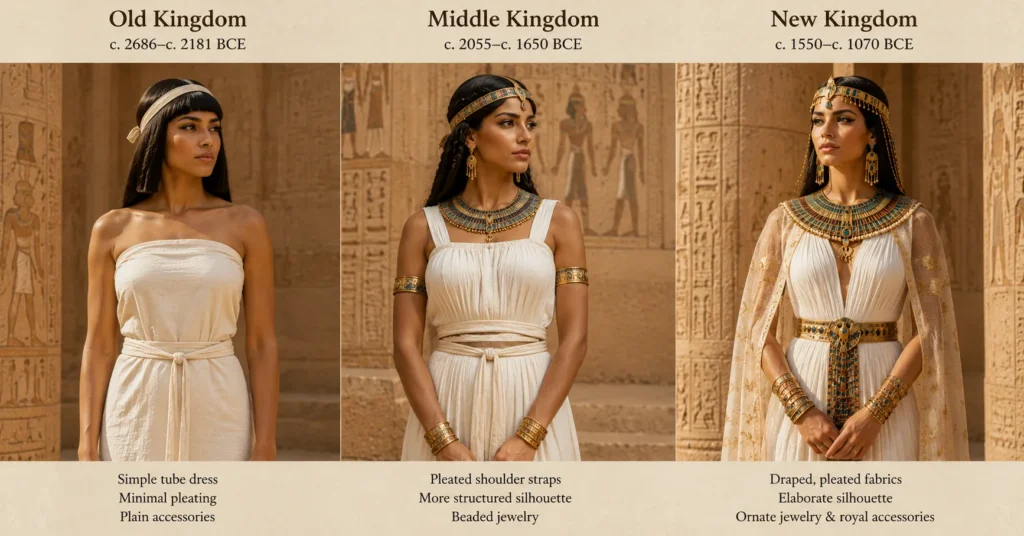
Egyptian dress was stable, but it was not frozen. Styles shifted across the three main periods of Egyptian history, especially among the wealthy. Although styles evolved across different kingdoms, the core principles of Ancient Egypt Clothing and Fashion remained remarkably consistent for nearly three millennia.
- Old Kingdom (c. 2686–2181 BCE). Simple, close-fitting garments dominated. The schenti and the tight sheath kalasiris were standard.
- Middle Kingdom (c. 2055–1650 BCE). Clothing grew slightly more elaborate, with more layering among the elite.
- New Kingdom (c. 1550–1069 BCE). Fashion reached its height of complexity, with sheer fabrics, elaborate pleating, and flowing, draped garments.
Foreign contact influenced later styles as well. Trade and conquest introduced new fabrics and decorative ideas, especially during and after the New Kingdom.
Here is a summary of the shifts:
| Period | Typical Style | Fabric Trend |
| Old Kingdom | Simple, close-fitting | Plain linen, minimal pleating |
| Middle Kingdom | Slightly layered | Finer weaves for elite |
| New Kingdom | Draped, pleated, sheer | Elaborate, near-transparent linen |
The pattern holds throughout. The basic vocabulary of Egyptian dress stayed constant, while refinement and complexity grew over the centuries.
What Egyptian Fashion Tells Us Today
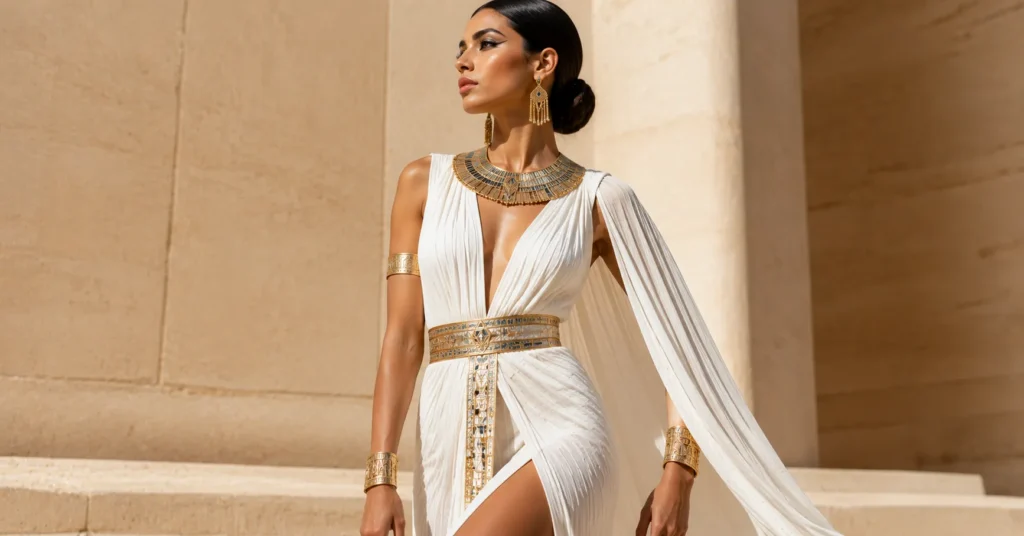
Egyptian clothing gives historians a direct window into daily life, belief, and social order. Tomb paintings, statues, and preserved textiles let us reconstruct how people dressed with unusual accuracy. Modern historians continue studying Ancient Egypt Clothing and Fashion because preserved textiles and artwork reveal extraordinary details about daily life and social organization.
- Surviving linen garments show the actual weave and construction techniques.
- Wall art records how clothing differed by class and occasion.
- Buried jewelry and amulets reveal the link between dress and the afterlife.
We find that Egyptian fashion was practical, symbolic, and enduring all at once. Few cultures kept a clothing tradition so consistent for so long, and that consistency is exactly what makes it so readable today.
Conclusion
Ancient Egypt Clothing and Fashion combined function, faith, and social order into a sophisticated system that endured for more than three thousand years, making it one of the world’s most influential historical fashion traditions. Linen shaped everything, from the everyday schenti to the sheer royal gowns of the New Kingdom. The kalasiris dressed women across the classes, while accessories, cosmetics, and headdresses signaled exactly where a person stood in the social hierarchy. To understand it, start with the fabric, then read the details: the fineness of the weave, the amount of cloth, and the jewelry and regalia layered on top. Do that, and Egyptian dress stops looking like simple costume and starts reading as a clear language of status, climate, and belief. That is what makes it worth studying, and it is why the record still speaks so clearly today.
Frequently Asked Questions (FAQs)
What did ancient Egyptians wear most often?
Most Egyptians wore linen garments suited to the hot climate. Men wore the schenti, a wraparound kilt, while women wore the kalasiris, a long sheath dress. Laborers wore short, simple versions of these garments.
Why did Egyptians wear linen instead of other fabrics?
Linen came from flax, which grew easily along the Nile. It breathed well in the desert heat, and priests considered it ritually pure. Wool and leather were often banned inside temples for that reason.
What is the difference between a schenti and a kalasiris?
The schenti was a men’s wraparound linen kilt. The kalasiris was a women’s long sheath or draped dress. Both stayed similar across classes, but finer fabric and pleating marked higher status.
How did clothing show social status in ancient Egypt?
Status showed through fabric fineness, the amount of cloth, and decoration. Sheer, tightly woven linen and elaborate pleating marked the elite, while coarse cloth and minimal fabric marked laborers.
What did pharaohs wear that set them apart?
Pharaohs wore royal regalia such as the Nemes headdress, the Double Crown, the uraeus cobra, a false beard, and the crook and flail. These symbols communicated divine authority and the right to rule.
Did ancient Egyptians wear jewelry and makeup?
Yes. Both men and women wore jewelry, from gold and gemstones for the elite to faience and copper for common people. They also lined their eyes with kohl, which served beauty, sun protection, and religious purposes.
What did ancient Egyptians wear on their feet?
Most Egyptians went barefoot in daily life. When they wore footwear, common people used sandals of papyrus or palm fiber, while the elite wore fine leather sandals, sometimes decorated.
Did Egyptian fashion change over time?
Yes. Old Kingdom dress was simple and close-fitting. Styles grew more layered in the Middle Kingdom, then reached full complexity in the New Kingdom, with sheer fabrics, elaborate pleating, and flowing draped garments.
Why did Egyptians wear wigs?
Elite Egyptians wore wigs of human hair for style and status. Shaving the head beneath them helped manage heat and lice, so wigs served both fashion and practical grooming needs.