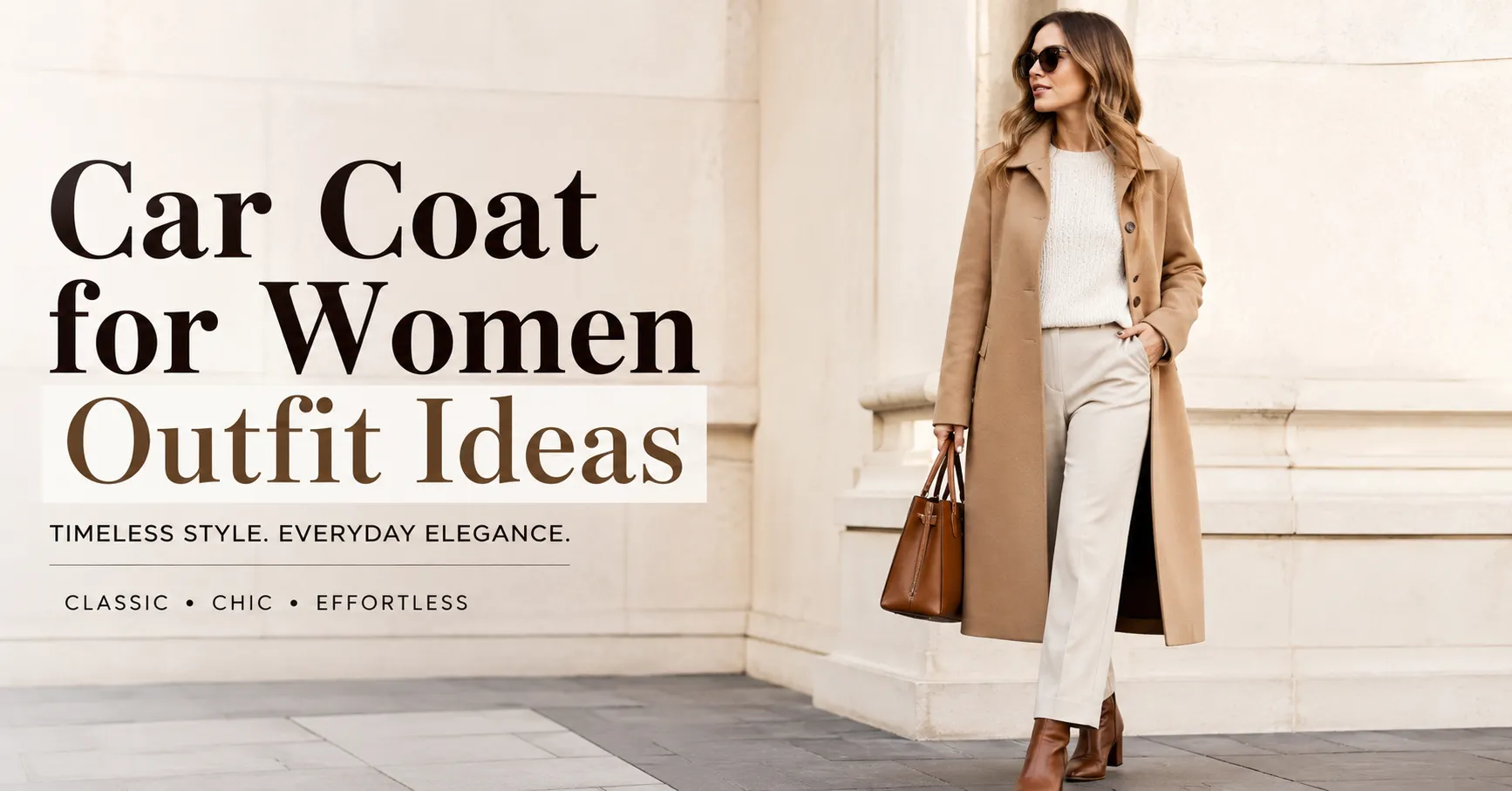
Car Coat for Women Outfit Ideas: Timeless Ways to Style This Classic Coat
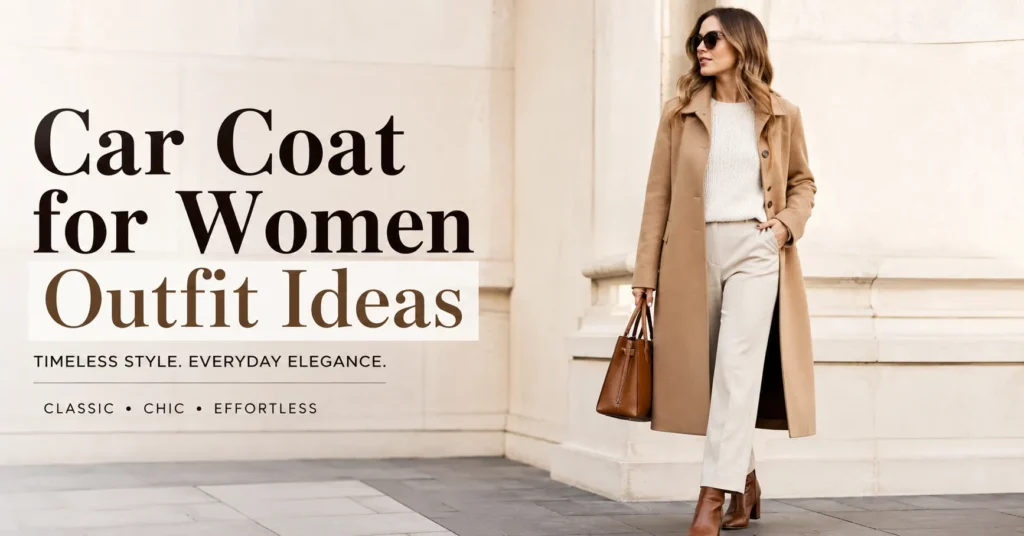
Car coat for women outfit ideas don’t get nearly the attention they deserve and that gap is worth closing. The car coat is one of the most versatile and underused pieces in classic outerwear for women. It sits between a blazer and a full-length coat in both length and formality, which makes it genuinely useful across a range of occasions that neither extreme covers as well.
If you’re not sure what a car coat is, how it differs from similar styles, or how to make it work with your existing wardrobe, this guide covers all of it. Here’s what you’ll walk away with:
- A clear understanding of the car coat’s silhouette and purpose
- Outfit formulas organized by occasion, season, and aesthetic
- Practical guidance on footwear, color, and layering
- Common mistakes to avoid and quality markers to look for
What Is a Car Coat and Why Does It Work So Well?
The car coat originated in the mid-20th century, designed specifically for women who drove cars. Unlike full-length coats that bunched uncomfortably in a car seat, the car coat was cut shorter typically hitting at or just below the hip to allow ease of movement while seated.
That practical origin translated into a genuinely elegant silhouette. The car coat is structured and tailored, usually featuring a clean button-front closure, notched lapels or a simple collar, and a straight or slightly A-line cut through the body.
The Length That Changes Everything
Most car coats hit between the hip and mid-thigh. That mid-range length is the key to its versatility. It’s long enough to provide real warmth and coverage, short enough to work with most bottom lengths without creating proportion issues.
A full-length coat dominates petite frames and can overwhelm shorter skirt hemlines. A cropped jacket leaves your legs exposed in cold weather. The car coat handles both problems naturally which is why it suits a wider range of body types and outfit configurations than most alternatives.
Structure Without Stiffness
The best car coats are structured enough to hold their shape clean lapels, defined shoulders, a smooth front without feeling rigid or formal. That balance is what makes them work in casual settings as easily as they work in professional ones.
Women’s Car Coat Outfits: The Core Style Variations
Not every car coat is built the same. Understanding the main construction variations helps you identify which version you own and how to style it accordingly. Among all Car Coat for Women Outfit Ideas, the classic single-breasted design remains the most timeless choice.
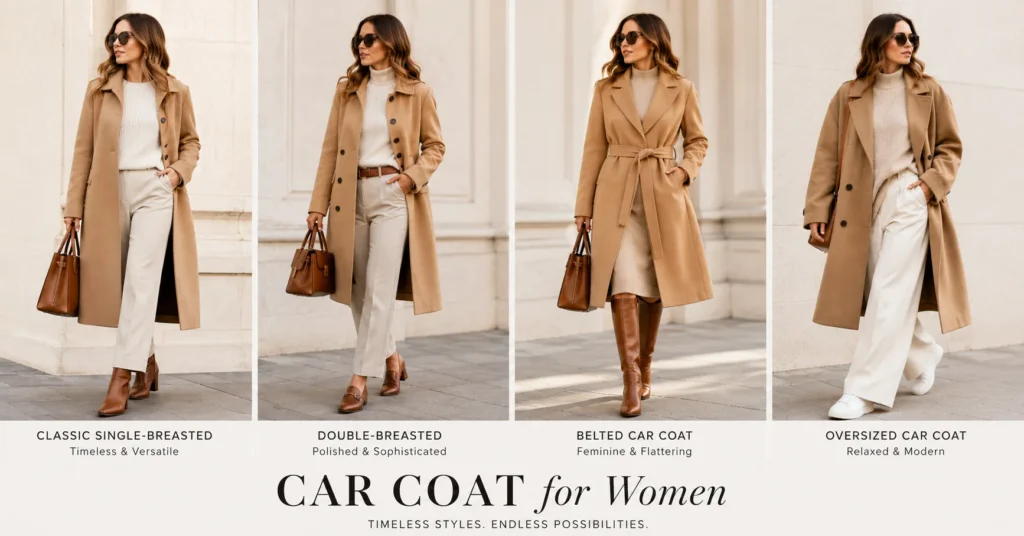
The Classic Single-Breasted Car Coat
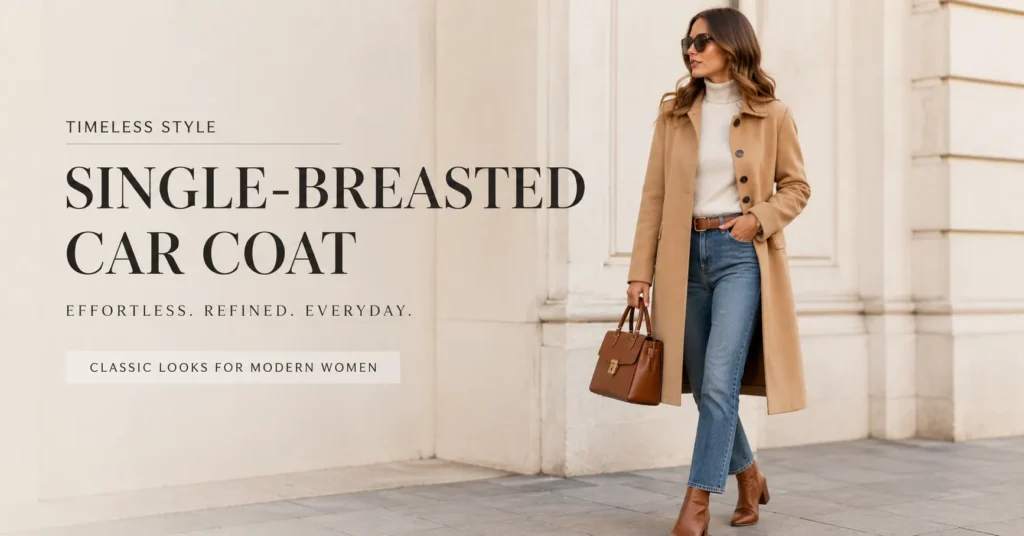
The most common version. It closes with a row of buttons down the center front and typically features notched lapels. This version is the most versatile and the easiest to transition across occasions. These Car Coat for Women Outfit Ideas prove that simple tailoring never goes out of style.
Best for: Everyday wear, work, smart casual settings, transitional weather.
The Double-Breasted Car Coat
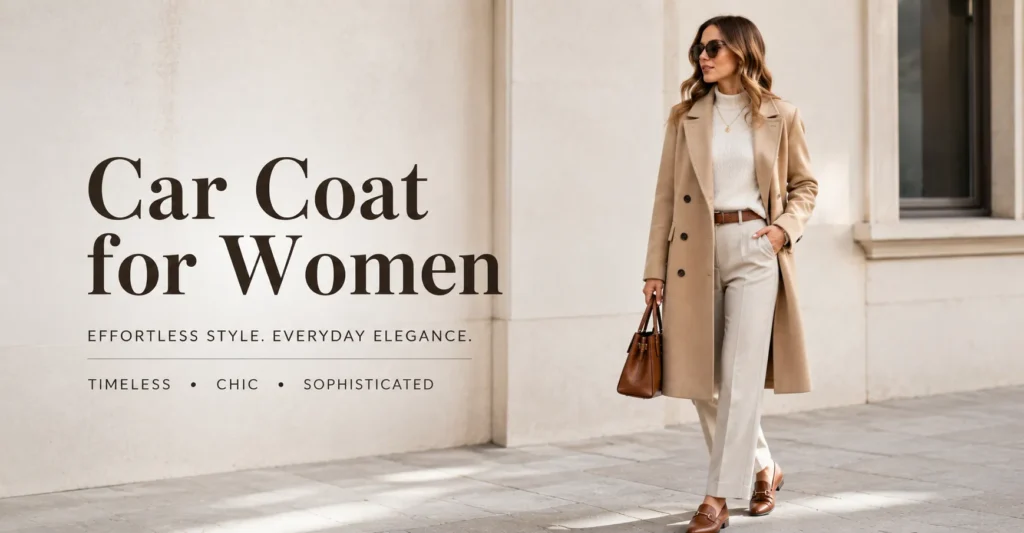
The double-breasted version has a wider, more formal visual presence. The overlapping button panel adds structure and makes a stronger visual statement. It’s slightly more editorial and suits people who want their outerwear to read as deliberate. Many fashion lovers choose these Car Coat for Women Outfit Ideas for elegant winter styling.
Best for: Smart casual to formal occasions, creative professional environments, statement coat looks.
The Belted Car Coat
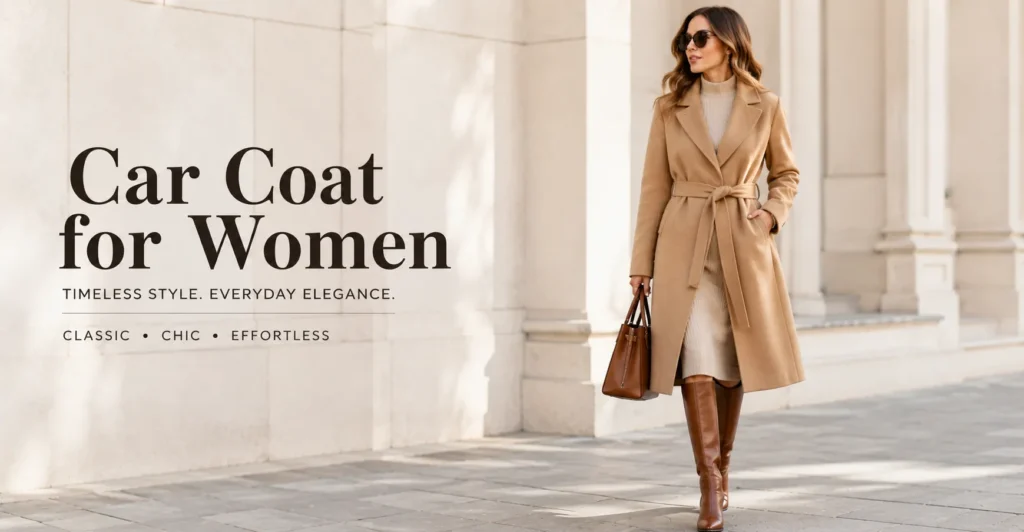
Some car coats include a self-tie or detachable belt at the waist. Worn belted, it creates a defined hourglass silhouette. Left open or loosely tied, it drapes with a more relaxed quality. The belt gives this version an extra dimension of styling flexibility.
Best for: Those who want waist definition, date nights, smarter casual outings.
The Oversized or Relaxed Car Coat
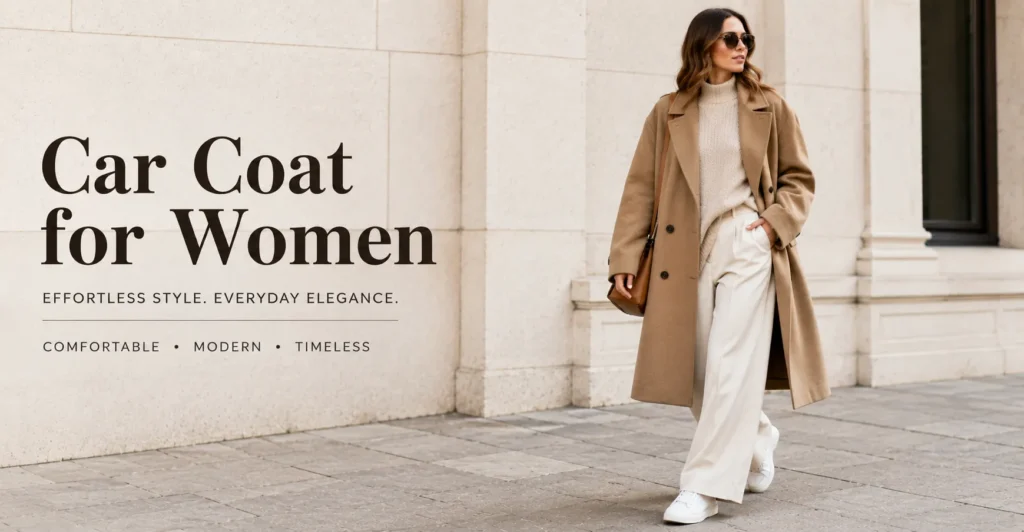
A more contemporary interpretation the relaxed car coat drops the fitted through the body and sits with more ease. It reads as modern and street-style-adjacent while retaining the coat’s characteristic length and clean collar. Relaxed silhouettes bring a modern touch to Car Coat for Women Outfit Ideas.
Best for: Fashion-forward looks, casual dressing, layering over chunky knits.
Car Coat Style Comparison at a Glance
| Style | Silhouette | Occasion Range | Best With | Season Range |
| Single-breasted | Tailored, clean | Casual to smart casual | Most outfit types | All year (fabric-dependent) |
| Double-breasted | Structured, formal | Smart casual to formal | Tailored trousers, skirts | Autumn/winter |
| Belted | Defined waist | Casual to evening | High-waisted bottoms, dresses | Autumn/winter/spring |
| Oversized/relaxed | Boxy, contemporary | Casual, street style | Fitted basics, wide-leg trousers | Autumn/winter |
Comparing different styles makes choosing the right Car Coat for Women Outfit Ideas much easier.
Car Coat for Women Outfit Ideas by Occasion
These outfit formulas give you a clear starting point for every situation where a car coat earns its place. Everyday Car Coat for Women Outfit Ideas focus on comfort without sacrificing style.
Everyday Casual Looks

A car coat worn casually doesn’t need to work hard. It simply needs to make a simple outfit look considered.
- Single-breasted car coat in camel + dark straight-leg jeans + fitted ribbed turtleneck + white sneakers. One of the most universally flattering combinations available. The camel coat contrasts cleanly with dark denim, and the turtleneck adds layered warmth without bulk.
- Relaxed car coat in grey or charcoal + a simple white tee tucked into high-waisted straight-leg jeans + leather sneakers or loafers. Easy, contemporary, and effortlessly put together.
- Short wool car coat in navy + dark chinos or slim trousers + a plain knit + ankle boots. This combination reads as casual but considered strong for daily errands, coffee runs, or low-key social outings.
In casual settings, the coat stays the focal point. Keep everything underneath clean, simple, and unfussy.
Smart Casual and Work Outfits
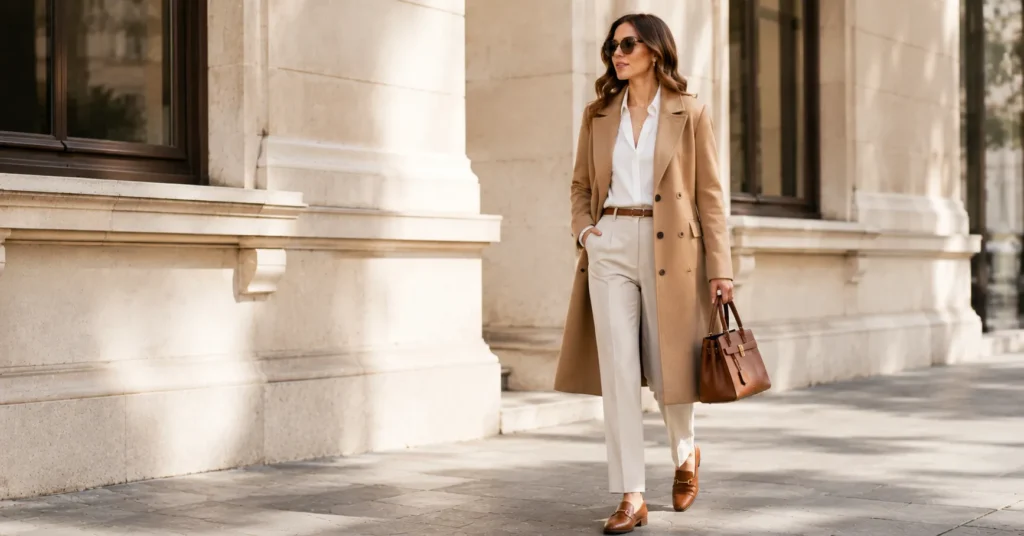
Professional Car Coat for Women Outfit Ideas create polished office-ready outfits. The car coat’s tailored construction makes it one of the most effective smart casual and work-appropriate outerwear choices. It adds professionalism without demanding a fully formal outfit beneath it.
- Classic single-breasted car coat in black or navy + tailored wide-leg trousers + a silk or fitted blouse + pointed-toe loafers. A complete smart casual workwear look that transitions from office to lunch to evening without adjustment.
- Belted car coat in camel or warm grey + a fitted pencil midi skirt + a simple knit top + block-heeled ankle boots. The belted silhouette creates clear, polished proportion. The midi skirt adds appropriate coverage and elegance.
- Double-breasted car coat in a deep neutral (charcoal, olive, or chocolate) + dark slim trousers + a structured top or blouse + leather bag. The double-breasted closure does the visual work here keep everything else simple and tailored.
For professional settings, prioritize quality fabric. A car coat in a quality wool or wool blend reads as genuinely elegant. A thin polyester version undermines the same silhouette entirely.
Minimalist Winter Outfits

Minimalist Car Coat for Women Outfit Ideas emphasize clean lines and neutral colors. The car coat is a natural anchor for minimalist winter dressing. Its clean lines and classic structure suit the minimalist aesthetic more naturally than almost any other outerwear style.
- Camel or cream car coat + matching or tonal trousers + a simple turtleneck in a complementary warm neutral + loafers. A monochrome or near-monochrome approach is one of the most powerful minimalist moves. The car coat’s length creates a clean unbroken vertical line when the palette is kept unified.
- Black car coat + all-black outfit underneath (fitted knit, slim trousers, black boots). Sharp, modern, and completely effortless. The coat’s lapel and button detail break the monochrome without disrupting it.
- Charcoal grey car coat + dove grey knit + dark straight-leg trousers + white sneakers. A tonal grey combination that reads as deliberately minimal and contemporary.
The minimalist approach works because the car coat has enough structural interest collar, lapels, buttons to be visually complete in a single color. You don’t need contrast to make it interesting.
Date Night and Evening Outfits
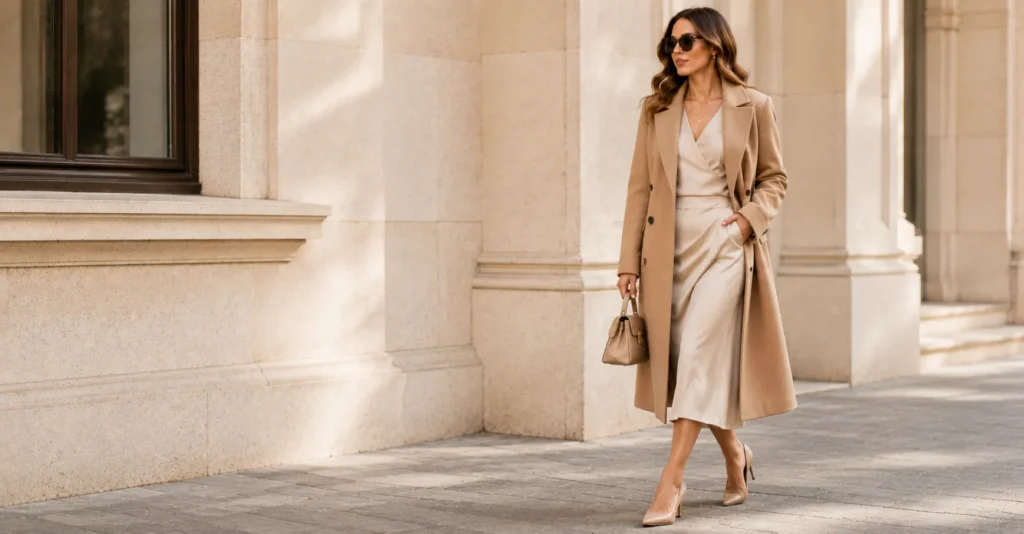
With the right supporting pieces, a car coat transitions easily into evening territory. Elegant Car Coat for Women Outfit Ideas are perfect for dinner dates and evening events.
- Belted car coat in a rich fabric (fine wool or cashmere blend) + a satin or silk midi dress or wide-leg trouser + heeled ankle boots. Open the coat slightly to reveal what’s underneath. The coat stays as the outer frame; the dress or trousers do the evening work.
- Double-breasted car coat in a deep jewel tone (forest green, burgundy) + tailored trousers + a fitted top + pointed-toe heels. The jewel tone moves the coat from everyday to deliberately evening-adjacent without changing the silhouette.
- Classic car coat + a simple midi dress + strappy heeled sandals. This is a strong transitional evening look the coat provides outdoor warmth and indoor visual interest.
For evenings, wear the coat as a layer rather than a closed outer shell. Let it drape open or loosely belted to reveal the outfit underneath. Comfortable Car Coat for Women Outfit Ideas work beautifully during changing seasons.
Weekend Outings and Transitional Weather
The car coat’s mid-length makes it particularly well-suited to the transitional seasons autumn and spring when a heavy overcoat is too much and a light jacket isn’t enough.
- Car coat in a light wool or cotton-blend + a simple midi dress + flat leather sandals or loafers. An easy spring look that extends the warmer-weather aesthetic into cooler mornings.
- Car coat + a long-sleeve knit + wide-leg linen or cotton trousers + ankle boots. Light enough for mild autumn days, structured enough to look intentional.
- Relaxed car coat worn open over a simple hoodie or sweatshirt + straight-leg jeans + chunky sneakers. The most casual end of the spectrum — the coat lifts a very basic casual outfit into something visually coherent.
Season-by-Season Car Coat Styling Guide
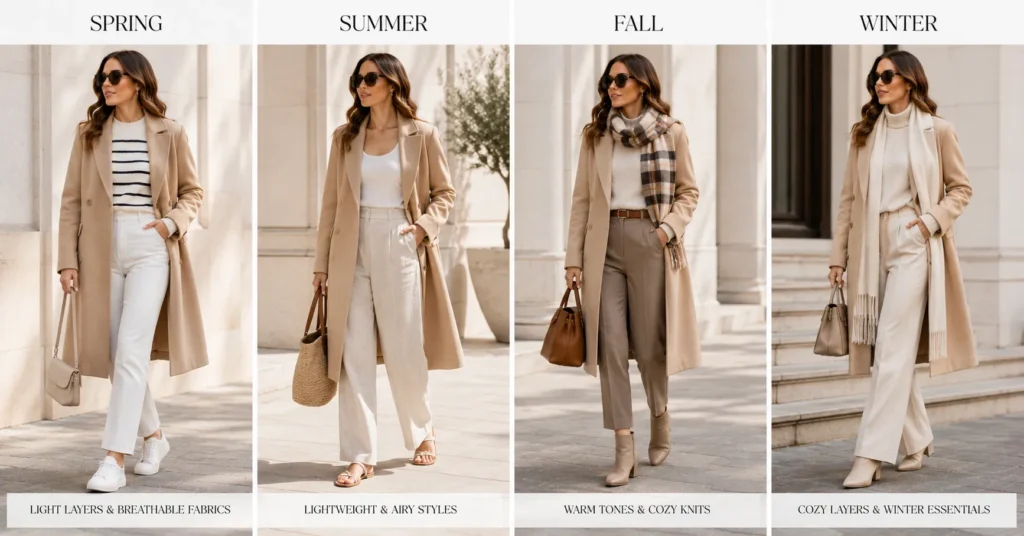
| Season | Best Fabric | Styling Approach | Key Pieces | Footwear |
| Spring | Light wool, cotton-blend | Wear as the primary layer, minimal underneath | Midi dress, linen trousers | Ballet flats, loafers, clean sneakers |
| Summer | Cotton, linen, lightweight blends | Evenings only, over light dresses | Silk dress, light trousers | Flat sandals, mules |
| Autumn | Wool, cotton twill | Layer over knits, structured mid-layers | Ribbed turtleneck, tailored trousers | Ankle boots, loafers |
| Winter | Heavy wool, cashmere blend | Over slim thermal layers, belted for warmth | Fine knit, fitted base layer | Chelsea boots, heeled ankle boots |
Seasonal Car Coat for Women Outfit Ideas help you maximize your wardrobe year-round.
How to Style a Car Coat: Core Principles
Beyond the specific outfit formulas, a few underlying principles make the car coat consistently work across every context.
Proportion The Central Decision
The car coat’s hip-to-mid-thigh length creates a specific visual line. Everything visible above and below that line should respond to it.
- High-waisted bottoms extend the leg line below the coat’s hem and create a clean, elongated silhouette.
- Fitted or straight-cut trousers balance the coat’s structure without adding competing volume.
- Midi skirts or dresses that fall below the coat’s hem create a layered, intentional effect particularly strong when the hemlines are clearly different lengths rather than similar.
Avoid very low-rise trousers or bottoms that sit far below the hips — they create a visual gap between the coat’s hem and the trouser waistband that tends to look unintentional.
Keep the Under-Layer Simple
The car coat has structural detail in its lapels, collar, and button closure. The outfit underneath should be clean and straightforward a fitted turtleneck, a simple blouse, a ribbed knit, or a plain tee. This allows the coat’s silhouette to read clearly rather than competing with a busy base layer.
The Belt Option
If your car coat includes a belt, use it deliberately rather than leaving it hanging. Tied neatly at the natural waist, it creates a defined, hourglass-adjacent silhouette. Tied loosely at the hip, it creates a more relaxed drape. Both work but an untied, trailing belt looks unfinished. Tuck it into the belt loops or remove it for a cleaner unbeltred look.
Footwear Shifts Everything
The single most effective variable in a car coat outfit is footwear. Here’s what each type delivers:
- Loafers: Polished and smart casual. Works with tailored trousers and midi skirts for everyday and work contexts.
- White sneakers or leather trainers: Contemporary and casual. Works for weekend outings and relaxed everyday looks.
- Ankle boots: Versatile across casual and smart casual. Sleek styles read polished; chunky styles read more relaxed.
- Chelsea boots: Clean and transitional. Works across autumn and winter with most outfit types.
- Pointed-toe heels or kitten heels: Elevates the coat into smart casual or evening territory.
- Ballet flats: Light and appropriate for spring and mild autumn. Works with midi and maxi hemlines.
Choosing the right shade enhances Car Coat for Women Outfit Ideas for every occasion.
Best Colors for a Car Coat
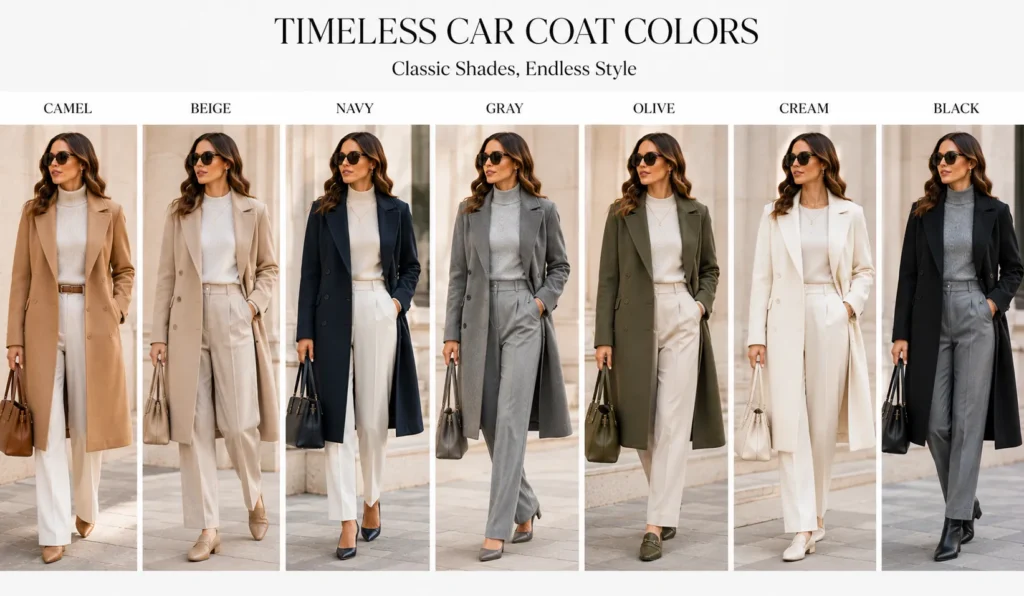
The car coat’s classic silhouette suits both neutral and richer tones effectively. Here’s a practical color guide.
| Color | Versatility | Best Paired With | Season Range |
| Camel / tan | Very high | Black, white, navy, rust, cream | All year |
| Black | Very high | Everything — no restrictions | All year |
| Cream / ivory | High | Camel, navy, black, soft neutrals | Spring/autumn/winter |
| Navy | High | White, camel, grey, burgundy, cream | All year |
| Charcoal / dark grey | High | White, black, navy, camel | All year |
| Olive / dark green | Moderate | Camel, cream, rust, black | Autumn/winter |
| Burgundy | Moderate | Camel, black, navy, cream | Autumn/winter |
Camel is the single most versatile starting color. If you own just one car coat, camel gives you the widest range of wardrobe compatibility across every season and occasion type.
Tailored Coat Styling: What Makes the Car Coat Different
It’s worth understanding how the car coat sits within the broader tailored coat category because that positioning affects how you style it relative to other options in your wardrobe. Understanding the differences improves your Car Coat for Women Outfit Ideas and shopping decisions.
Car Coat vs. Trench Coat
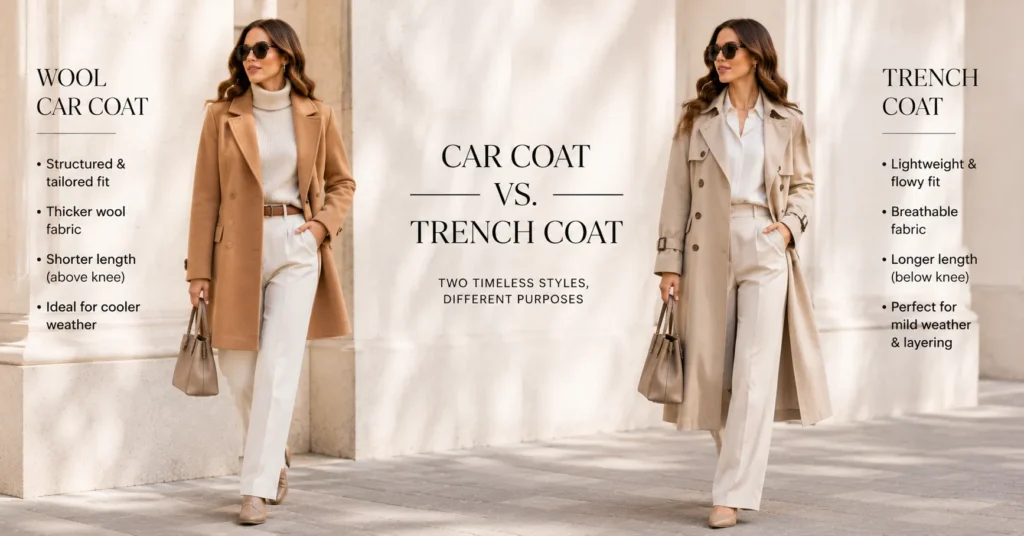
A trench coat is defined by its specific military heritage storm flap, belted waist, double-breasted button front, and a mid-thigh or knee-length cut. A car coat is shorter and simpler, without the trench’s historical reference points. The car coat reads as cleaner and more minimal; the trench reads as more iconic and heritage-inflected. Classic outerwear comparisons help refine Car Coat for Women Outfit Ideas for colder months.
Car Coat vs. Wool Overcoat
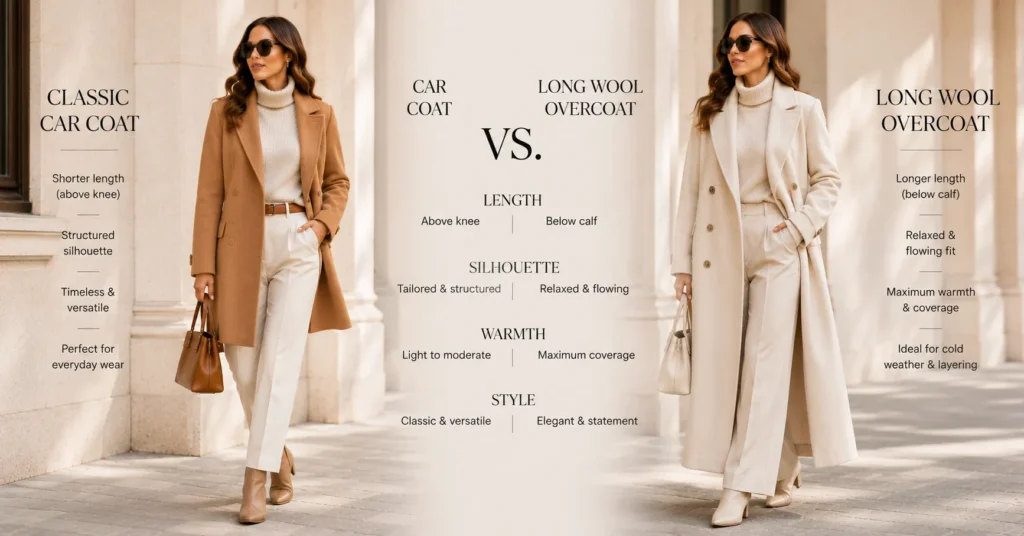
A wool overcoat typically hits at knee-length or below and has a more formal, heavyweight presence. It dominates shorter hemlines. The car coat’s hip-to-mid-thigh length is more versatile across different bottom lengths and reads as less formally demanding. Layering options make Car Coat for Women Outfit Ideas more versatile than ever.
Car Coat vs. Blazer
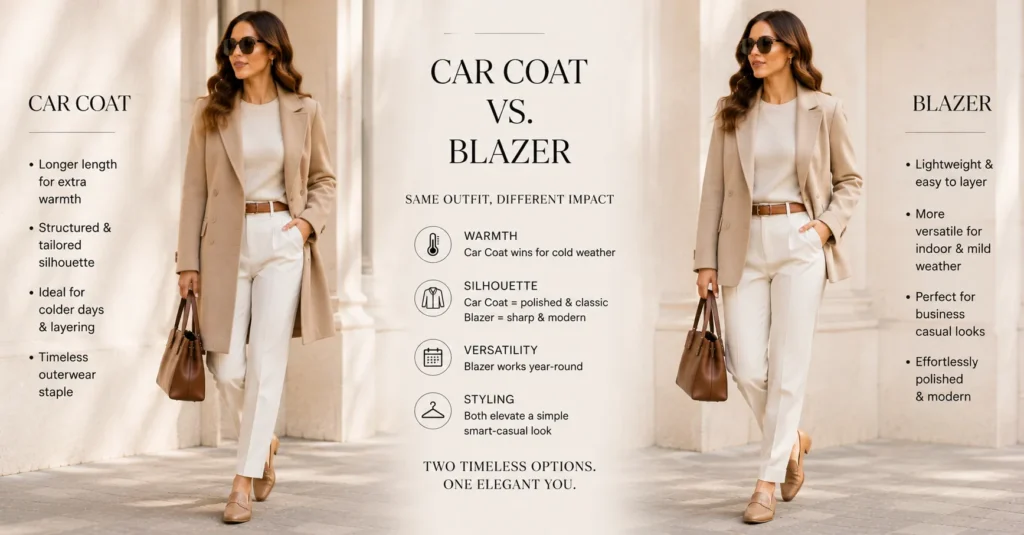
A blazer hits at the hip or above and is primarily an indoor layer. A car coat is designed for outerwear it’s longer, warmer, and more weather-resistant. The car coat fills the gap between a blazer and a full-length coat with practical precision.
Everyday Coat Outfit Ideas: Building a Versatile Car Coat Wardrobe
If you’re adding a car coat to your wardrobe intentionally, a few guidelines make the investment worthwhile.
Start with one neutral color. Camel, black, navy, or charcoal covers the most outfit combinations. This is your workhorse piece.
Prioritize shoulder fit above everything else. A car coat that pulls or gaps at the shoulder will never look right, regardless of how the rest fits. In a structured coat, shoulder seam placement is the foundational fit consideration.
Check the lapel quality. Press the lapel flat and let it go. Quality lapels hold their shape naturally; poorly constructed ones spring back immediately. The lapel is one of the most visible elements of the coat its quality signals the quality of everything else.
Consider the button weight. Buttons on a good car coat are substantial and well-attached. Lightweight plastic buttons on an otherwise well-constructed coat is a common cost-cutting shortcut worth noticing.
Price Points to Know
| Budget Range | Brands to Consider | What to Expect |
| Under $100 | ASOS, H&M, Zara | Trend-ready, lighter fabric weight, shorter lifespan |
| $100–$250 | Mango, & Other Stories, COS | Better construction, improved wool content, reliable fit |
| $250–$500 | Arket, Cos, Club Monaco | Quality wool blends, refined proportions, multi-season durability |
| $500+ | Max Mara, Theory, Harris Wharf London | Investment-grade fabric, exceptional construction, decade-long wear |
Common Styling Mistakes to Avoid
Even a quality car coat can look off if the surrounding decisions don’t support it.
Ignoring the belt. A belted car coat worn without its belt or with the belt trailing untied looks unfinished. Either use the belt deliberately or remove it completely for a cleaner unbeltred line.
Poor proportion in the bottom half. A car coat that hits at mid-thigh worn with very low-rise jeans that sit far below the hips creates an awkward visual gap. High-waisted or mid-rise bottoms sit much more naturally below a car coat’s hem.
Over-layering underneath. A thick chunky knit under a tailored car coat creates shoulder and collar bulk that prevents the coat from lying flat and draping correctly. Use fitted knits, fine-knit turtlenecks, or slim base layers underneath structured outerwear.
Choosing the wrong footwear register. A well-tailored car coat in quality wool with scruffy, unclean trainers creates a jarring tonal mismatch. The coat suggests care and intention your footwear should meet it at the same level of thoughtfulness, even if the shoes are casual.
Buying without checking shoulder fit first. Online purchases without trying the coat are risky specifically because shoulder fit is the most critical and least fixable aspect of tailored outerwear. If possible, try before buying, or choose retailers with generous return policies.
Conclusion
Car Coat for Women Outfit Ideas prove that timeless outerwear never goes out of fashion. The car coat is one of the most practically and aesthetically versatile pieces you can add to a women’s outerwear wardrobe. Its mid-length silhouette solves proportion problems that longer and shorter coats both create. Its tailored structure elevates casual outfits without demanding formal ones. And its season range particularly in quality wool stretches from early autumn through late spring.
Start with one neutral car coat in a quality fabric. Camel or black covers the most ground. Pair it with dark straight-leg jeans and a fitted turtleneck for everyday wear, with tailored trousers and loafers for work, and with a midi dress and ankle boots for evenings. Use these Car Coat for Women Outfit Ideas to create elegant outfits that you’ll enjoy wearing season after season.
Your next step: Assess whether your current outerwear has a gap in the hip-to-mid-thigh length range. If it does, a car coat is the most reliable way to fill it and once you wear it consistently, it tends to become the coat you reach for most.
Frequently Asked Questions
1. What are Car Coat for Women Outfit Ideas?
A car coat is a structured, tailored outerwear piece that typically hits at or just below the hip shorter than a traditional overcoat but longer than a cropped jacket. It originated in the mid-20th century for practical ease while driving and has since become a classic outerwear silhouette valued for its versatility and clean proportions.
2. How do you style a car coat for women?
The most reliable approach is pairing a car coat with high-waisted bottoms straight-leg jeans, tailored trousers, or a midi skirt a simple fitted top underneath, and clean footwear. Keep the supporting pieces straightforward and let the coat’s structure carry the visual weight. Loafers for smart casual, sneakers for weekend wear, ankle boots for transitional season dressing.
3. What’s the difference between a car coat and a trench coat?
A trench coat has a specific heritage silhouette double-breasted button front, storm flap, belted waist, and typically hits at mid-thigh or knee. A car coat is shorter (hip to mid-thigh), simpler in construction, and doesn’t carry the trench’s military references. The car coat reads as cleaner and more minimal; the trench reads as more iconic and structural.
4. Is a car coat appropriate for work?
Yes. A tailored car coat in a quality wool or wool-blend fabric is an excellent workwear outerwear choice. It creates a polished, professional exterior without requiring a formal outfit underneath. Pair with tailored trousers, a structured blouse, and loafers or pointed-toe flats for the most professional result.
5. What colors work best for a car coat?
Camel is the most versatile starting color it pairs with nearly every other wardrobe color and works across all seasons. Black is equally versatile and slightly more formal. Navy, charcoal, and cream are strong secondary options. Olive and burgundy suit autumn and winter and work well as a second coat once you have a neutral option.
6. Can you wear a car coat in winter?
Yes, in quality wool or cashmere-blend versions. For true cold-weather wear, layer a fine-knit turtleneck and a slim base layer underneath, and wear the coat belted tightly to maximize warmth. In very cold climates, a car coat works best as a mid-layer under a heavier puffer or overcoat, or reserved for the warmest part of the winter day.
7. What shoes go best with a car coat outfit?
Loafers and pointed-toe flats work best for smart casual and professional settings. Ankle boots and Chelsea boots are the most versatile choice for autumn and winter daily wear. Clean white sneakers or leather trainers suit casual weekend looks. Heeled ankle boots or kitten heels elevate the coat toward evening territory.
8. Is a car coat flattering for petite frames?
Yes more so than a full-length coat. The car coat’s hip-to-mid-thigh length avoids overwhelming a shorter frame and keeps proportions balanced. Pair with high-waisted bottoms to extend the leg line below the coat’s hem. A monochromatic palette matching coat, trousers, and boots in the same tone further elongates the silhouette.
9. What do you wear under a car coat?
Simple, fitted pieces work best a ribbed turtleneck, a fitted blouse, a plain knit, or a fine-knit crewneck. Avoid bulky or oversized mid-layers that add shoulder and collar volume, which prevents the coat from draping cleanly. The car coat’s structure does the visual work; the layer underneath simply provides warmth and a base.
10. Where can I find the best car coats for women?
COS, Arket, and & Other Stories offer well-constructed car coats at mid-range prices with reliable fabric quality. Mango and Zara carry accessible versions for trend-testing the silhouette. For investment-level quality, Max Mara, Harris Wharf London, and Theory produce car coats with exceptional fabric weight and construction that last for years across multiple seasons.