Perfect Interview Outfit for Women: Professional First Impressions
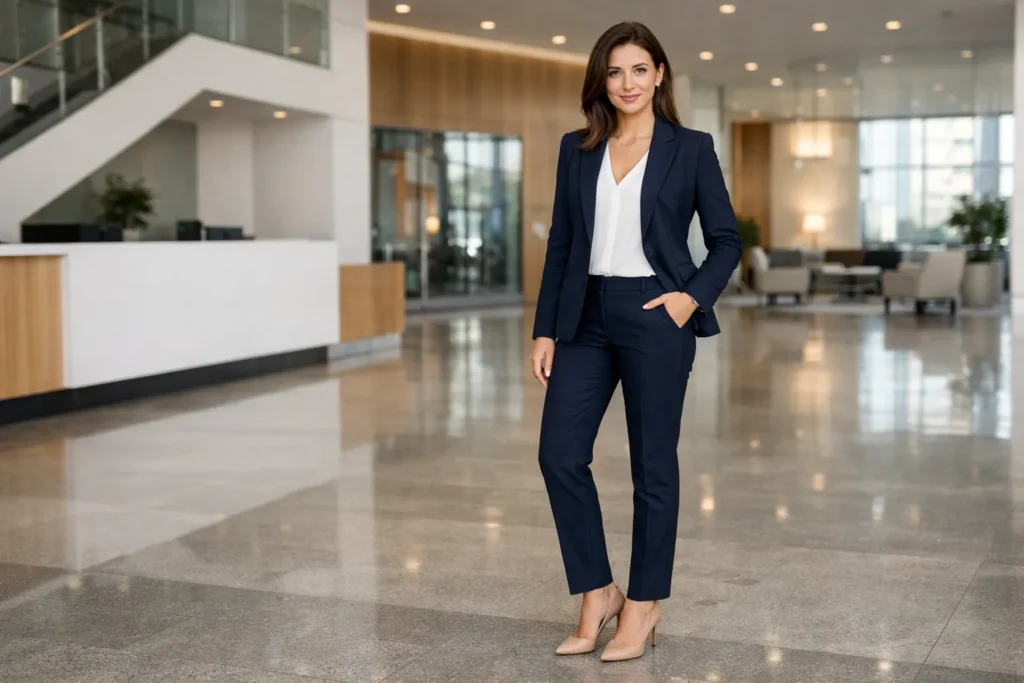
You have polished your resume, researched the company, and rehearsed your answers to tough questions. But as the big day approaches, one stressful question remains: What should you wear? Choosing the right interview outfit for women is a critical step in the hiring process. It is the very first thing an interviewer notices about you, often before you even shake hands or say hello. Your attire speaks volumes about your professionalism, your attention to detail, and your understanding of the company culture.
While your skills and experience are paramount, first impressions are formed in seconds. A well-chosen outfit can boost your confidence, allowing you to focus on selling your abilities rather than worrying about a wrinkled blouse or uncomfortable shoes. This comprehensive guide will walk you through everything you need to know to dress for success, whether you are interviewing at a conservative law firm, a trendy tech startup, or anything in between.
Why Your Interview Outfit Matters
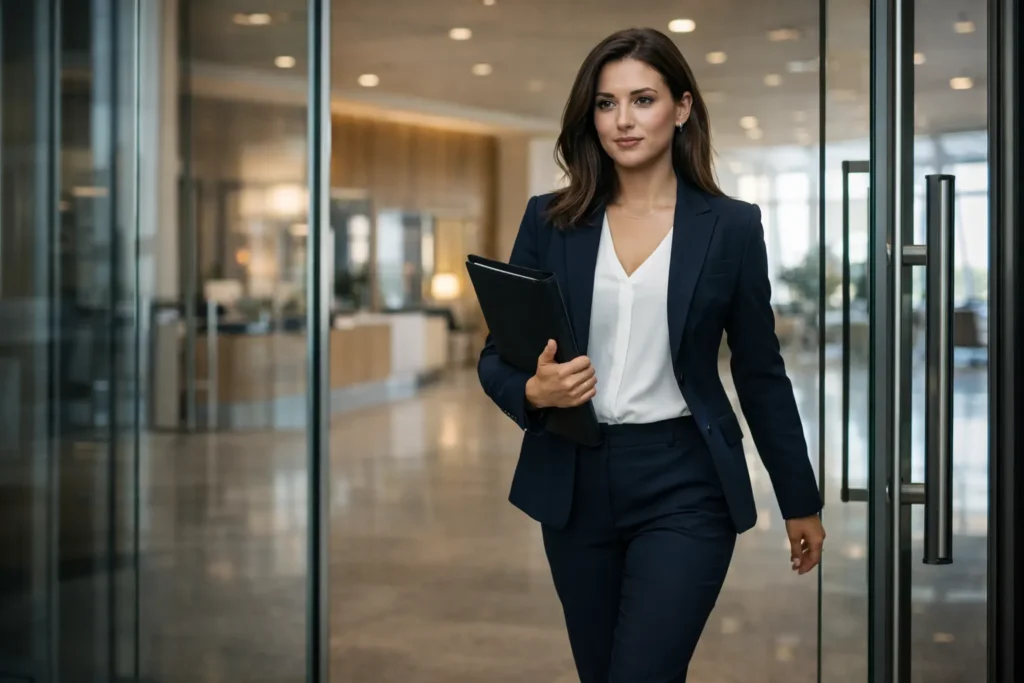
In an ideal world, we would be judged solely on our merits. However, in the reality of the job market, presentation counts. Your clothing is a form of non-verbal communication.
The Psychology of First Impressions
Studies show that people form opinions about others within the first seven seconds of meeting them. Your attire signals respect for the opportunity and the interviewer’s time. It shows that you have “done your homework” regarding the company’s environment. If you show up to a formal bank in jeans, it suggests a lack of awareness. Conversely, showing up to a casual startup in a stiff three-piece suit might make you seem like a poor cultural fit.
The Confidence Factor
There is a concept in psychology called “enclothed cognition,” which suggests that the clothes we wear influence our psychological processes. When you feel professional and put-together in a high-quality interview outfit for women, you actually perform better. You stand taller, speak more clearly, and project an air of competence that interviewers can sense.
decoding the Dress Code: Interview Outfit for Women
Before you even open your closet, you need to understand the dress code of the prospective employer. “Business attire” can mean very different things depending on the industry.
Business Professional (Corporate/Formal): Interview Outfit for Women
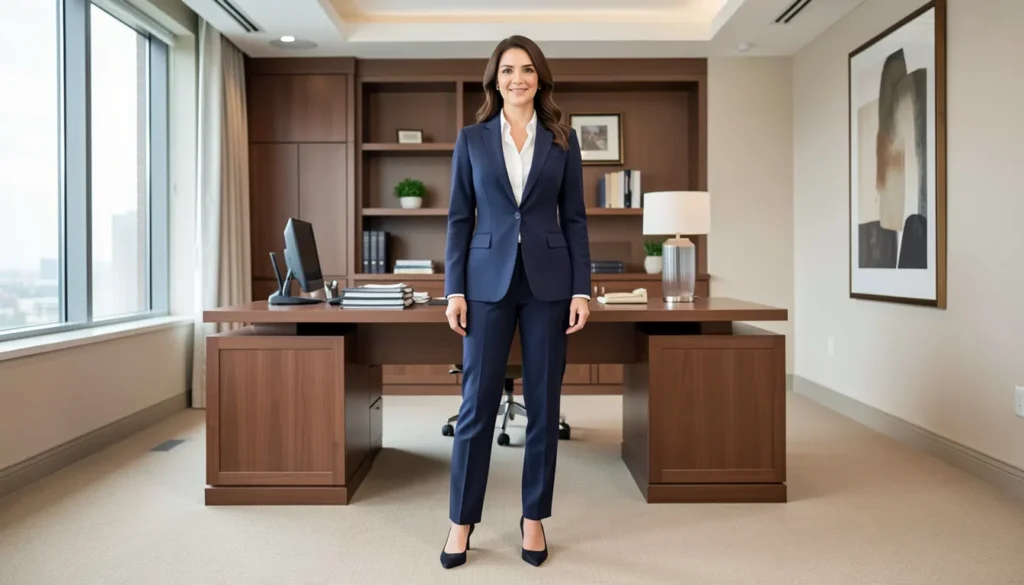
This is the most conservative dress code. It is standard for industries like finance, law, government, and executive-level corporate roles.
- The Vibe: Traditional, polished, and authoritative.
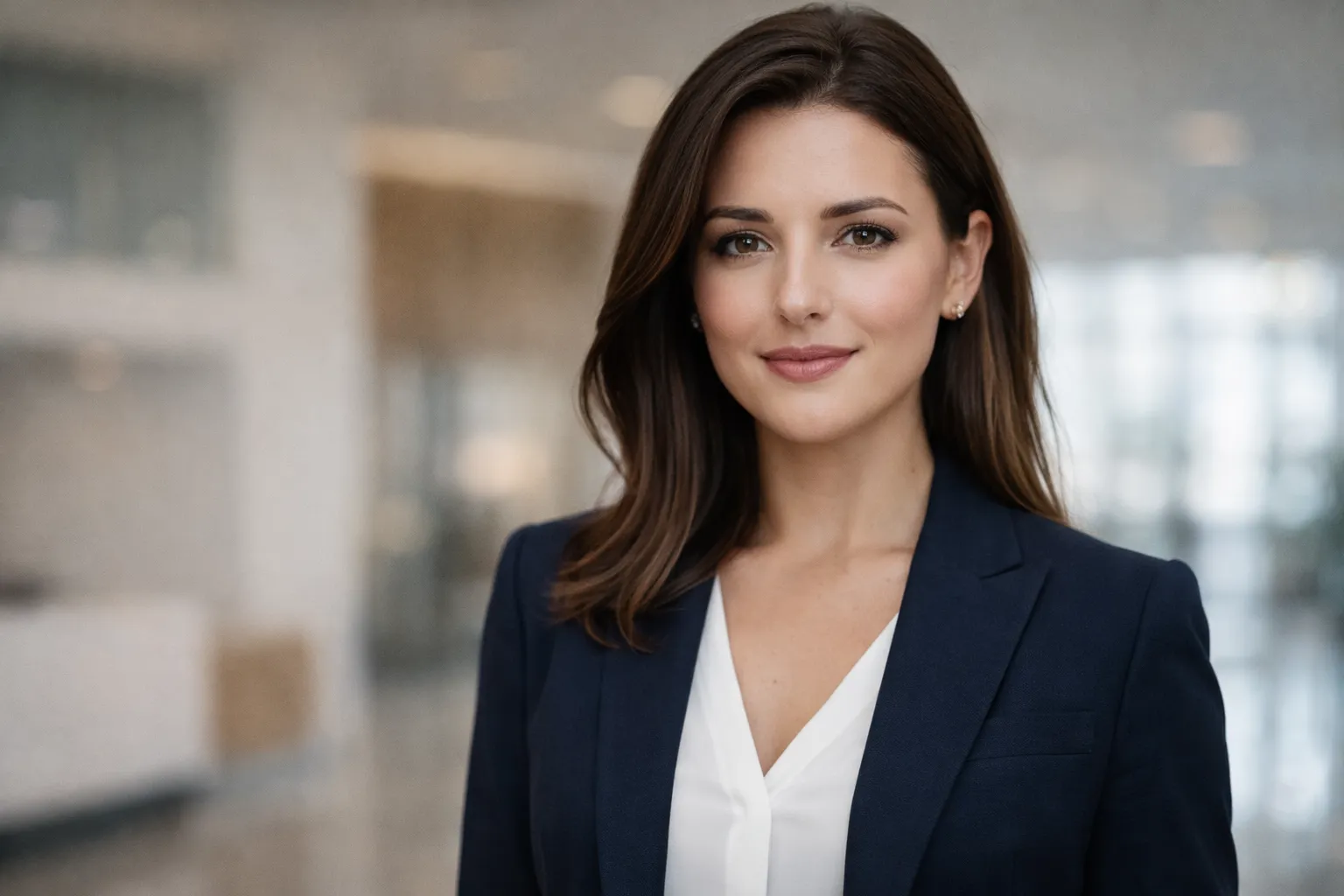
- Key Pieces: A matching suit (pants or skirt) in navy, black, or charcoal. A crisp button-down shirt or a conservative blouse. Closed-toe heels or quality loafers.
Business Casual (General Office) Interview Outfit for Women
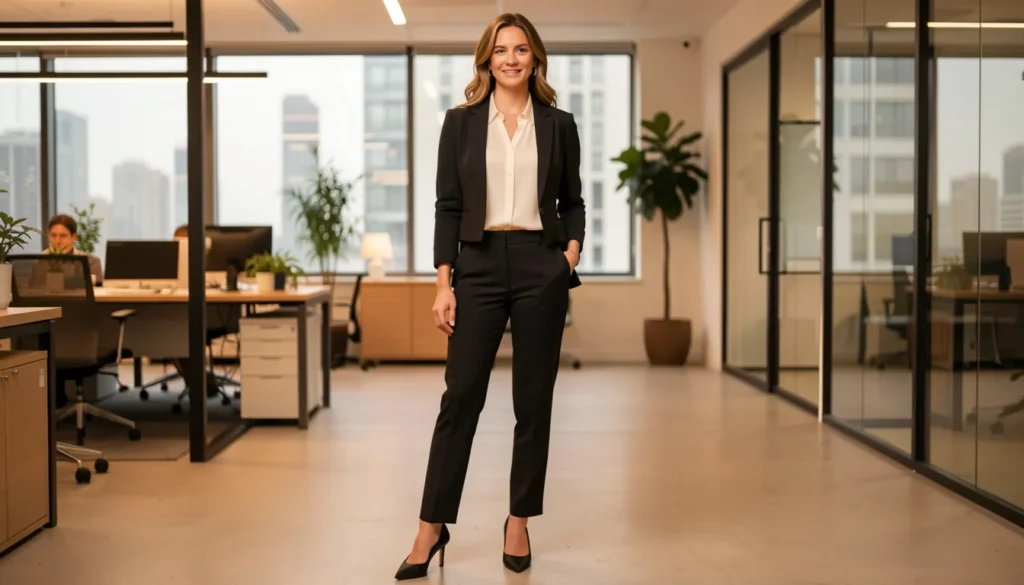
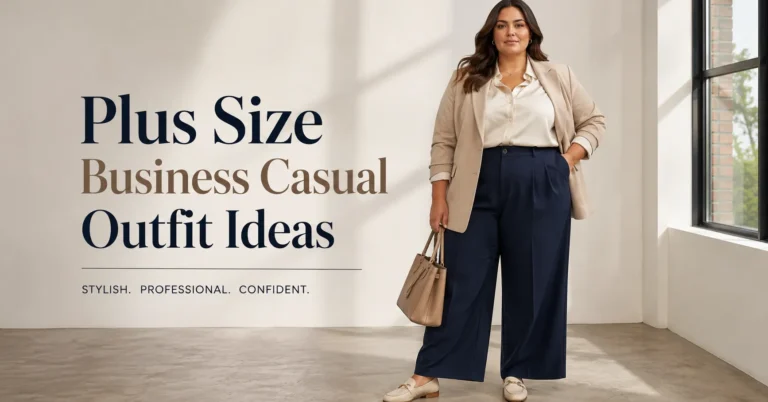
This is the most common dress code for modern offices, including marketing agencies, education, administration, and sales.
- The Vibe: Professional but approachable. Relaxed but neat.
- Key Pieces: Trousers or chinos (not jeans), knee-length skirts, blazers, cardigans, blouses, and dresses. You have more freedom with colors and patterns here.
Creative/Startup Casual

Tech companies, creative studios, and startups often have very relaxed codes. However, “casual” for an interview does not mean “loungewear.”
- The Vibe: Trendy, individualistic, and smart.
- Key Pieces: Dark denim (no holes), stylish jumpsuits, statement tops, casual blazers over t-shirts, and clean lifestyle sneakers or boots.
Essential Wardrobe Staples for Interviews
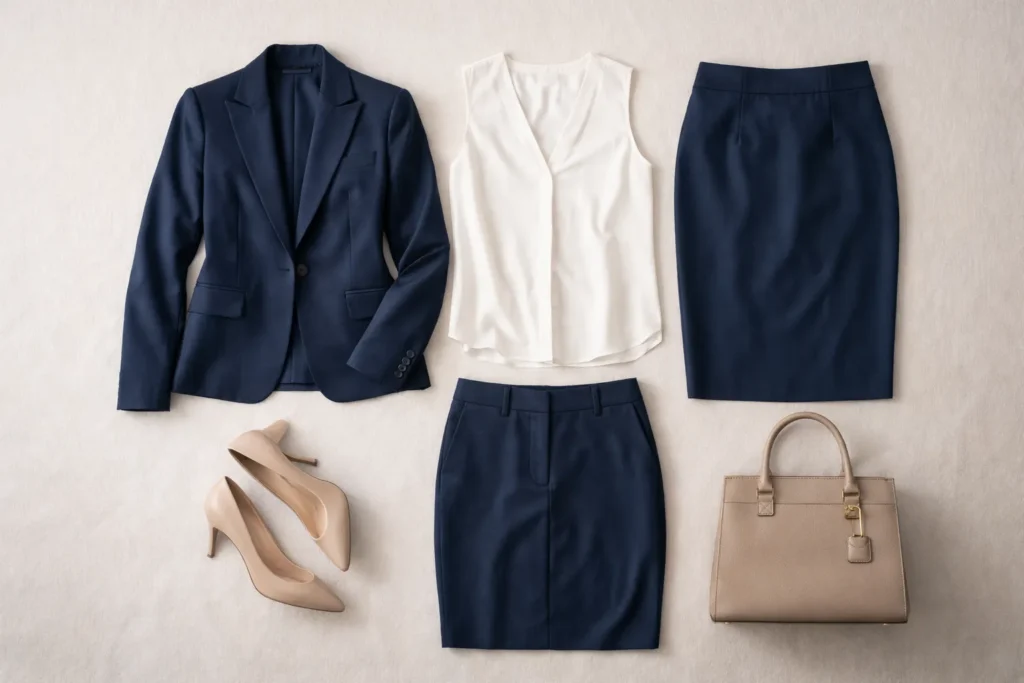
Building a reliable interview wardrobe doesn’t require a massive budget. Investing in a few high-quality staples allows you to mix and match for various opportunities.
The Power Suit
A well-tailored suit is an investment piece that will last for years. Even if you don’t wear the full suit often, you can wear the blazer and pants separately.
- Fit is Everything: The shoulders should sit perfectly, and the hem length should be tailored to your height. A cheap suit that fits well looks better than an expensive designer suit that is too big or too small.
- Colors: Navy is often cited as the best color for interviews—it conveys trust, confidence, and authority without being as harsh as black.
The Versatile Blazer
A blazer instantly elevates any outfit. You can throw it over a dress, pair it with a skirt, or wear it with trousers.
- Fabric: Look for seasonless wool blends or quality synthetics that resist wrinkling.
- Style: A classic single-breasted blazer is timeless. Avoid overly trendy oversized cuts unless you are interviewing in the fashion industry.
The Perfect Blouse
Your top should be modest and comfortable.
- Necklines: Avoid plunging necklines. A boat neck, crew neck, or collared shirt is safe.
- Materials: Silk, chiffon, or high-quality cotton blends drape well. Ensure the fabric isn’t sheer; if it is, wear a camisole underneath.
Trousers and Skirts
- Trousers: Straight-leg or slight bootcut styles are universally flattering and professional. Ankle-length cigarette pants are a modern, chic alternative.
- Skirts: The “pencil skirt” is a classic, but A-line skirts are also acceptable. The golden rule for length is no shorter than two inches above the knee while standing.
The Dress
A sheath dress or a wrap dress can be a fantastic “one-and-done” solution.
- Structure: Look for structured fabrics that hold their shape.
- Sleeves: If the dress is sleeveless, it is generally safer to wear a blazer or cardigan over it for the interview.
Choosing the Right Shoes and Accessories
Your accessories can make or break your look. They should complement your outfit, not distract from it.
Footwear Fundamentals
You do not need to wear sky-high heels to look professional. In fact, if you can’t walk comfortably in them, they will be a liability.
- Heels: A classic pump with a 2-3 inch heel is standard.
- Flats: Pointed-toe flats, loafers, or oxfords are stylish and comfortable alternatives.
- Condition: Ensure your shoes are clean, scuff-free, and polished.
Jewelry and Bags
- Jewelry: Less is more. Small stud earrings, a delicate necklace, or a simple watch are perfect. Avoid noisy bangle bracelets that clang against the desk while you talk.
- Bags: Carry a structured tote or a professional briefcase that is large enough to hold your resume, a notebook, and a pen without folding them. Avoid slouchy hobo bags or tiny evening clutches.
Grooming and Personal Care

Your interview outfit for women extends beyond just the clothes. Your overall presentation includes hygiene and grooming.
Hair and Makeup
- Hair: Your hair should be clean and neat. If you have a habit of playing with your hair when nervous, pull it back into a low bun or ponytail.
- Makeup: Aim for a “natural polish.” You want to look awake and fresh. Avoid heavy contouring, glitter, or overly dramatic false lashes.
Nails and Scent
- Nails: Chipped polish is a big no-no. Keep nails clean and trimmed. If you wear polish, stick to neutral shades or a classic red.
- Scent: Many people are sensitive to fragrances. It is best to skip perfume entirely or use a very light touch. You want to be remembered for your skills, not your cloud of cologne.
Seasonal Considerations

Weather can be a major adversary when planning an interview outfit. Here is how to handle the elements.
Summer Interviews
- Fabrics: Choose breathable natural fibers like cotton or lightweight wool blends. Avoid linen as it wrinkles too easily.
- Colors: Light greys, tans, or pastels are appropriate, but ensure they don’t show sweat marks.
- Layering: Even if it is hot outside, the office AC might be freezing. Always bring a blazer.
Winter Interviews
- Coats: Your outerwear matters. A classic trench coat or a wool pea coat looks professional. Avoid wearing a sporty puffer jacket over a suit if possible.
- Shoes: If it is snowing, wear winter boots for the commute and change into your interview shoes in the lobby or restroom before checking in.
Virtual Interview Outfits

In the age of Zoom and Teams, virtual interviews are increasingly common. Do the rules still apply? Yes, but with a twist.
Waist-Up Focus
Focus your energy on what is visible on camera. A solid-colored top in a jewel tone (blue, green, purple) usually looks best on video. Avoid busy patterns like stripes or houndstooth, which can create a dizzying “moiré effect” on screens.
The “Mullet” Outfit
While it is tempting to wear pajama pants on the bottom, it is risky. If you have to stand up to grab a document or adjust a window, you will be exposed. Wearing a full interview outfit also helps put you in the right professional mindset, even from your living room.
Lighting and Background
Your outfit should contrast with your background. If you have a white wall behind you, don’t wear a white shirt, or you will look like a floating head.
Common Mistakes to Avoid
To ensure you land the job, steer clear of these fashion faux pas.
- Too Revealing: Avoid short skirts, sheer fabrics, or low-cut tops.
- Too Casual: Unless explicitly told otherwise, avoid yoga pants, flip-flops, ripped jeans, or graphic t-shirts.
- Ill-Fitting Clothes: Clothes that are too tight or too baggy look unprofessional. A quick trip to a tailor can make an affordable outfit look expensive.
- Distractions: Avoid neon colors, crazy prints, or excessive accessories that compete for attention.
Conclusion:
Selecting the right interview outfit for women is about preparation and respect. It shows the interviewer that you are serious about the role and that you understand professional norms. By researching the company culture, investing in key staples, and paying attention to grooming details, you can curate a look that empowers you.
Remember, the goal of your outfit is to make you feel confident and comfortable so your personality and qualifications can shine. When you look good, you feel good—and when you feel good, you are ready to conquer the interview and land that dream job.
Frequently Asked Questions (FAQs)
Q1: Is it okay to wear a dress to an interview?
Absolutely, A structured sheath dress or a wrap dress is a perfectly acceptable and stylish alternative to a suit. Just ensure the neckline is modest and the hemline is appropriate (knee-length or midi). Pairing it with a blazer adds an extra layer of professionalism.
Q2: Can I wear jeans to an interview if the company is casual?
It depends. For most interviews, it is safer to dress one step above the daily dress code. If the employees wear jeans, you should wear chinos or trousers. However, if you are interviewing at a very relaxed tech startup or creative agency, dark wash denim (no holes) paired with a blazer and nice shoes might be acceptable. When in doubt, ask the recruiter about the dress code.
Q3: What colors are best for an interview outfit?
Neutrals are your best friends. Navy blue, black, charcoal grey, and camel are excellent base colors. White or light blue are classic choices for shirts. You can add a small pop of color in a scarf or shell top, but avoid head-to-toe bright colors like neon or hot pink.
Q4: Do I have to wear heels?
No. You do not have to wear heels. Professional flats, loafers, or brogues are completely acceptable. The most important thing is that your shoes are clean, in good condition, and professional in style (no sneakers or sandals, unless specifically appropriate for a casual environment).
Q5: What should I bring with me to the interview?
Carry a professional bag (tote or briefcase) containing several printed copies of your resume, a notepad and pen for taking notes, a list of references, and breath mints (consume before, not during). Leave your coffee cup and phone (or turn it completely off) in your bag.