The Ultimate Hiking Outfit Guide: What to Wear on the Trail
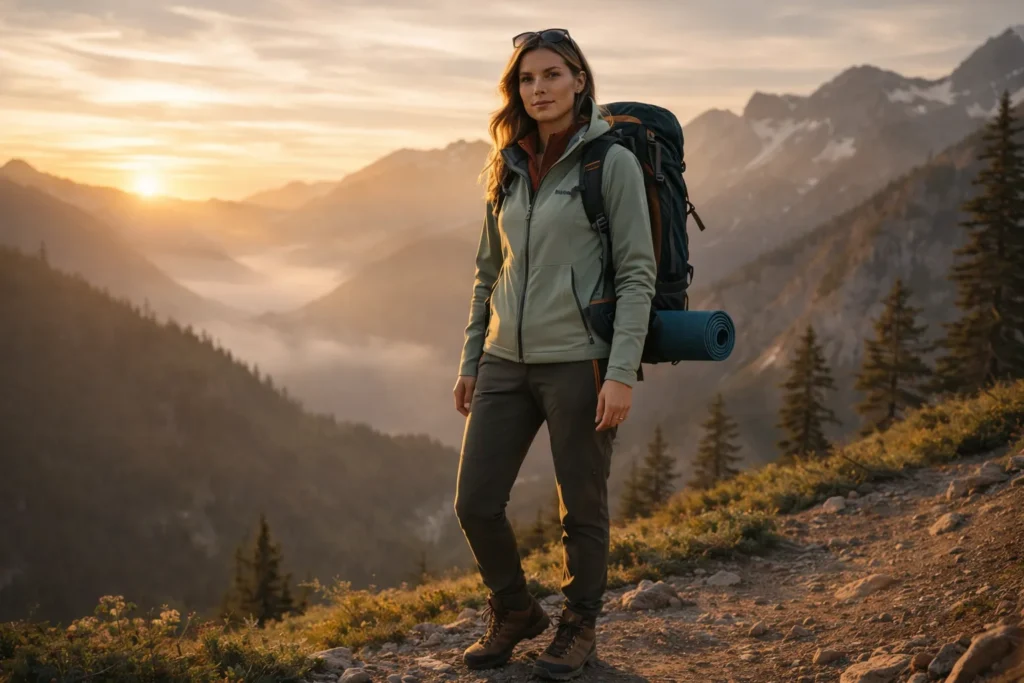
Preparing for a hike involves much more than just picking a scenic trail and packing a few snacks. Your hiking outfit is the most critical piece of gear you own. It is your first line of defense against the elements, regulating your body temperature, protecting you from insects and sun, and ensuring you stay comfortable mile after mile. Whether you are tackling a rugged mountain summit or enjoying a gentle forest walk, what you wear can make or break your experience.
This comprehensive guide will demystify the art of dressing for the outdoors. We will move beyond the basics of “sturdy shoes” and dive deep into technical fabrics, the essential layering system, and specific recommendations for every season. By the end of this article, you will know exactly how to curate a hiking wardrobe that keeps you safe, dry, and stylish on every adventure.
The Golden Rules of Hiking Apparel
Before we start shopping for specific items, we need to establish the fundamental principles of outdoor clothing. These rules apply whether you are a beginner day-hiker or an experienced backpacker.
Rule #1: Cotton Kills
You will hear this phrase often in the outdoor community. Cotton is hydrophilic, meaning it loves water. It absorbs moisture (sweat or rain) and holds it against your skin. Wet cotton loses all insulating properties and sucks heat away from your body 25 times faster than air. In cold weather, this is a recipe for hypothermia. In hot weather, it leads to painful chafing and blisters. Always choose synthetic materials or wool instead.
Rule #2: Function Over Fashion
While modern hiking gear can be stylish, aesthetic appeal should never trump functionality. A jacket might look great in a mirror, but if it restricts your arm movement or lacks breathable vents, it belongs in the city, not on the mountain. Your hiking outfit needs to facilitate movement, not hinder it.
Rule #3: The Layering System
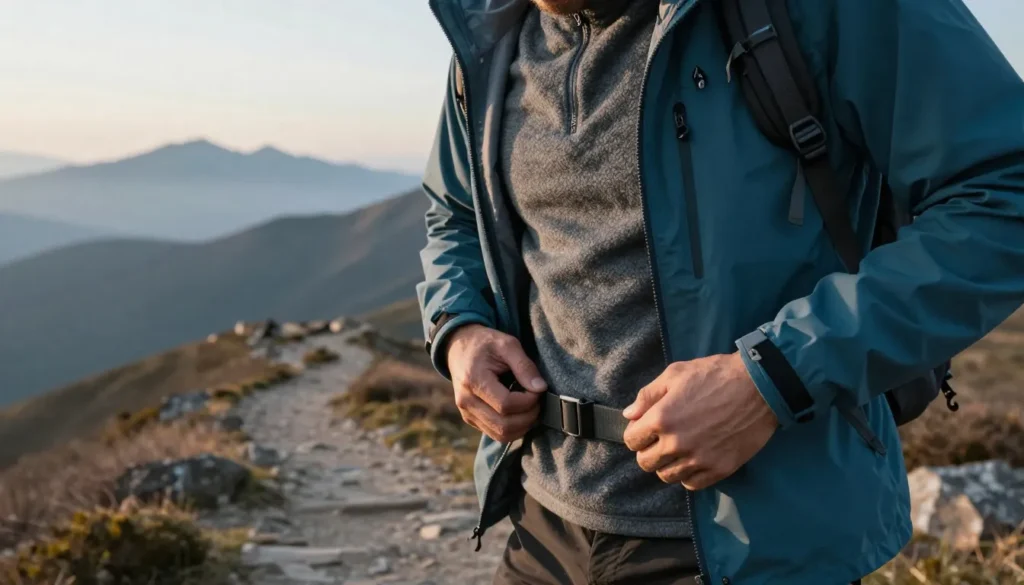
The most effective way to regulate your temperature is through layering. Instead of wearing one thick coat, you wear multiple lighter layers that you can add or remove as your exertion level and the weather change.
- Base Layer: Manages moisture (wicks sweat).
- Mid Layer: Provides insulation (retains heat).
- Outer Layer: Offers protection (shields from wind and rain).
Building Your Hiking Outfit Layer by Layer
Let’s break down each component of the layering system to help you build a versatile and functional wardrobe.
The Base Layer: Moisture Management
This is the layer that touches your skin. Its primary job is to keep you dry by pulling sweat away from your body to the fabric’s outer surface, where it can evaporate.
- Materials:
- Merino Wool: The gold standard for many hikers. It is naturally antimicrobial (resistant to odors), temperature-regulating, and soft. It keeps you warm even when wet.
- Synthetics (Polyester/Nylon): These are highly durable, dry incredibly fast, and are usually more affordable than wool. However, they tend to retain odors more than wool.
- Silk: Good for moderate weather but not as durable or moisture-wicking as wool or synthetics.
- Fit: Your base layer should be snug but not restrictive. It needs to be in contact with your skin to wick moisture effectively.
The Mid Layer: Insulation
The mid layer traps body heat to keep you warm. The thickness of this layer should depend on the temperature.
- Fleece Jackets: Classic, breathable, and insulating even when damp. They dry quickly and are durable. Available in lightweight (100-weight), midweight (200-weight), and heavyweight (300-weight).
- Down Jackets: Offer the best warmth-to-weight ratio. They are incredibly compressible and light. However, down loses its insulating ability if it gets wet.
- Synthetic Insulated Jackets: Mimic down but retain warmth when wet. They are heavier and less compressible than down but are a safer bet in wet climates.
The Outer Layer: Weather Protection
Also known as a “shell,” this layer protects you from wind, rain, and snow. Ideally, it should also allow perspiration to escape so you don’t get soaked from the inside out.
- Waterproof/Breathable Shells: These are your standard high-performance rain jackets (think Gore-Tex). They block rain while allowing some sweat vapor to escape.
- Water-Resistant/Breathable Shells: Good for light wind and light rain. They are more breathable than fully waterproof shells and are great for high-exertion activities.
- Soft Shells: Prioritize breathability and stretch over waterproofness. They are excellent for aerobic activities in cool, dry weather but won’t stand up to a heavy downpour.
Choosing the Right Bottoms
Your choice of pants or shorts depends heavily on the terrain and weather.
Hiking Pants vs. Leggings vs. Shorts
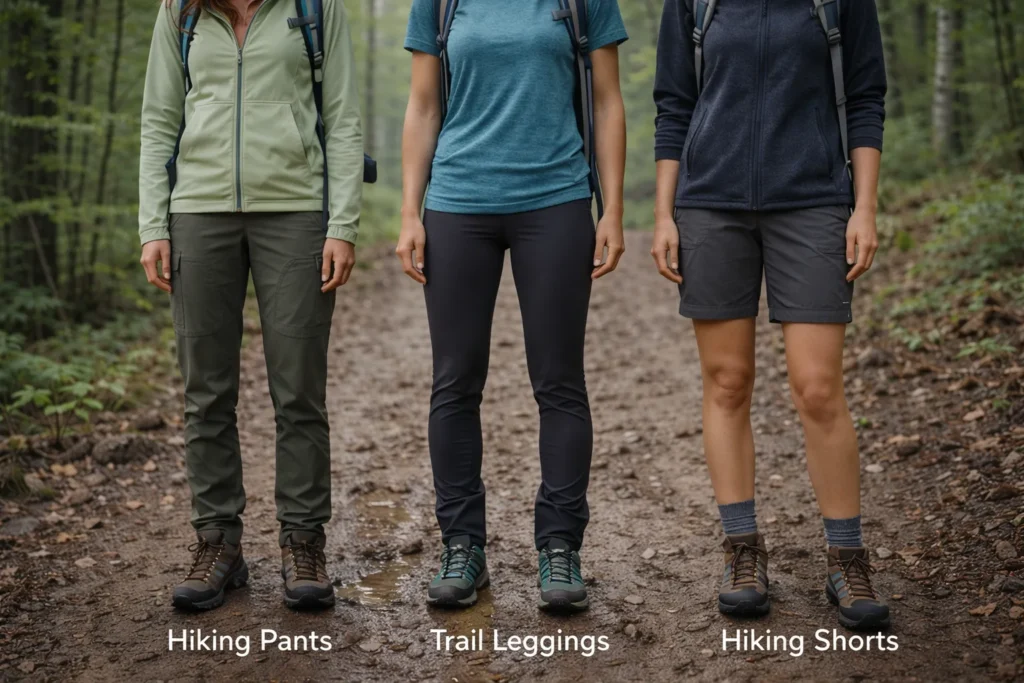
- Hiking Pants: These are typically made of durable nylon or polyester blends. Look for features like articulated knees (for better movement), gusseted crotches (for durability), and plenty of pockets. Convertible pants with zip-off legs offer versatility.
- Hiking Leggings: Increasingly popular, especially for women. Look for leggings specifically designed for hiking, which feature reinforced knees/seats and pockets. They offer great freedom of movement but less protection against thorns or bug bites than loose pants.
- Shorts: Perfect for hot, low-altitude hiking on well-maintained trails. They offer maximum ventilation but leave your legs exposed to sun, insects, and scratches.
Seasonal Hiking Outfit Guide
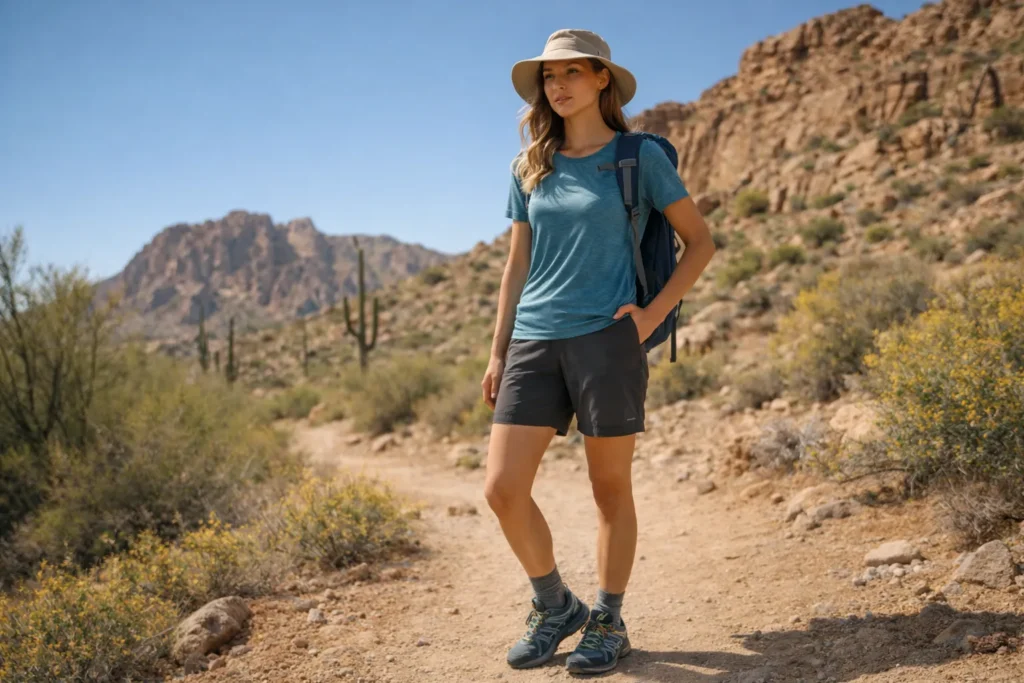
A summer hike in Arizona requires a vastly different kit than a winter trek in Vermont. Here is how to adapt your hiking outfit for the seasons.
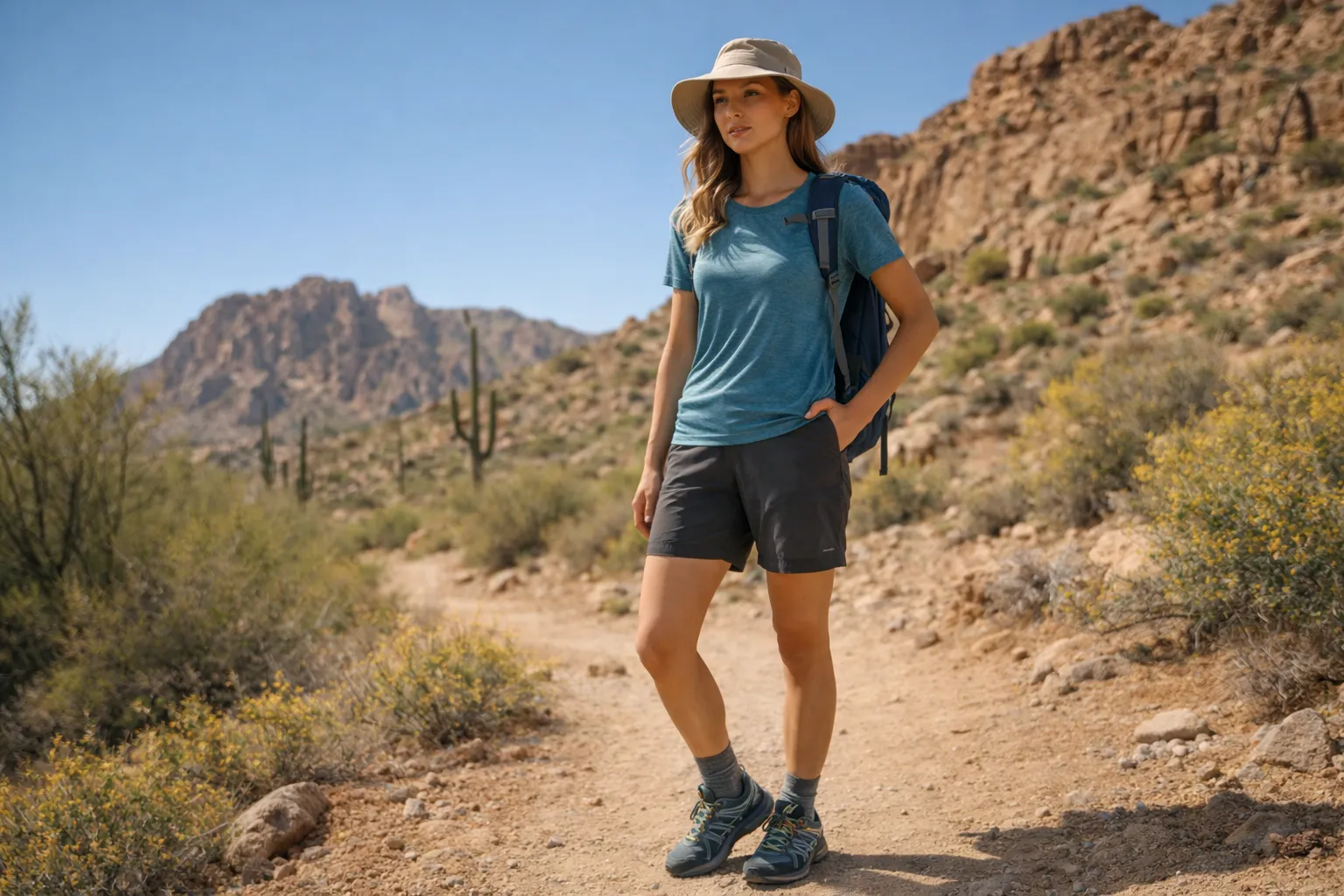
Summer Hiking Outfit
The goal is to stay cool and protected from the sun.
- Top: A lightweight, light-colored synthetic or merino t-shirt (or long-sleeve sun shirt).
- Bottom: Hiking shorts or lightweight, breathable pants.
- Accessories: A wide-brimmed sun hat, sunglasses, and lightweight wool socks (yes, wool is great in summer too!).
- Pro Tip: Look for clothing with a UPF (Ultraviolet Protection Factor) rating to protect your skin from UV rays.
Fall Hiking Outfit
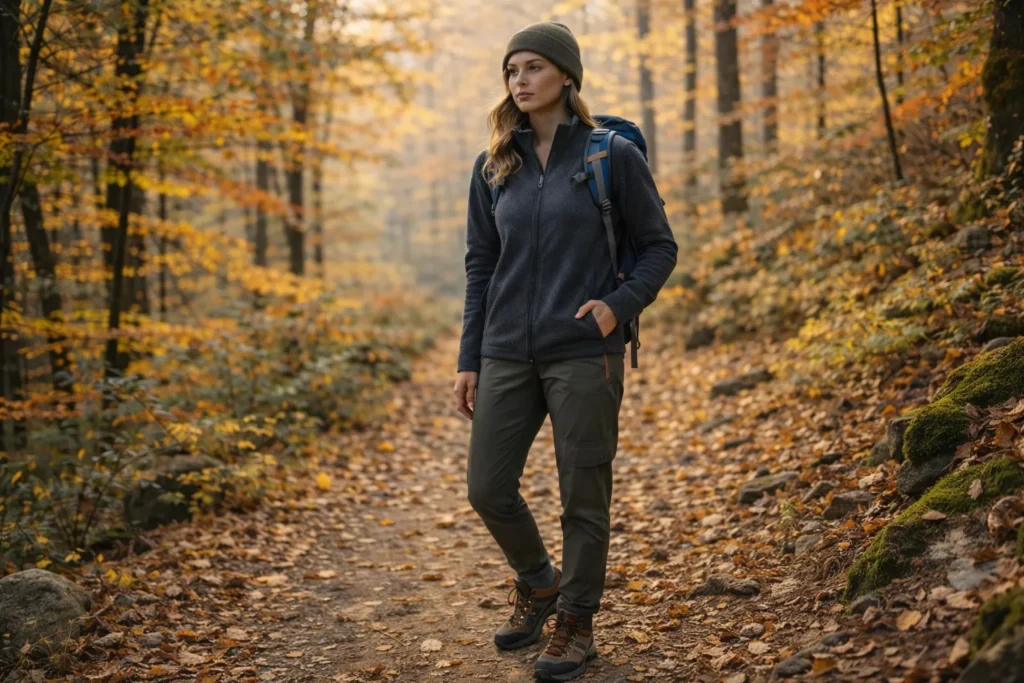
Fall weather is unpredictable. You might start in freezing temperatures and end in warm sunshine.
- Top: A midweight base layer paired with a fleece mid-layer. Carry a windbreaker or light rain shell in your pack.
- Bottom: Standard hiking pants are ideal.
- Accessories: Bring a lightweight beanie and gloves for chilly mornings.
- Pro Tip: Wear blaze orange if you are hiking during hunting season to ensure visibility.
Winter Hiking Outfit
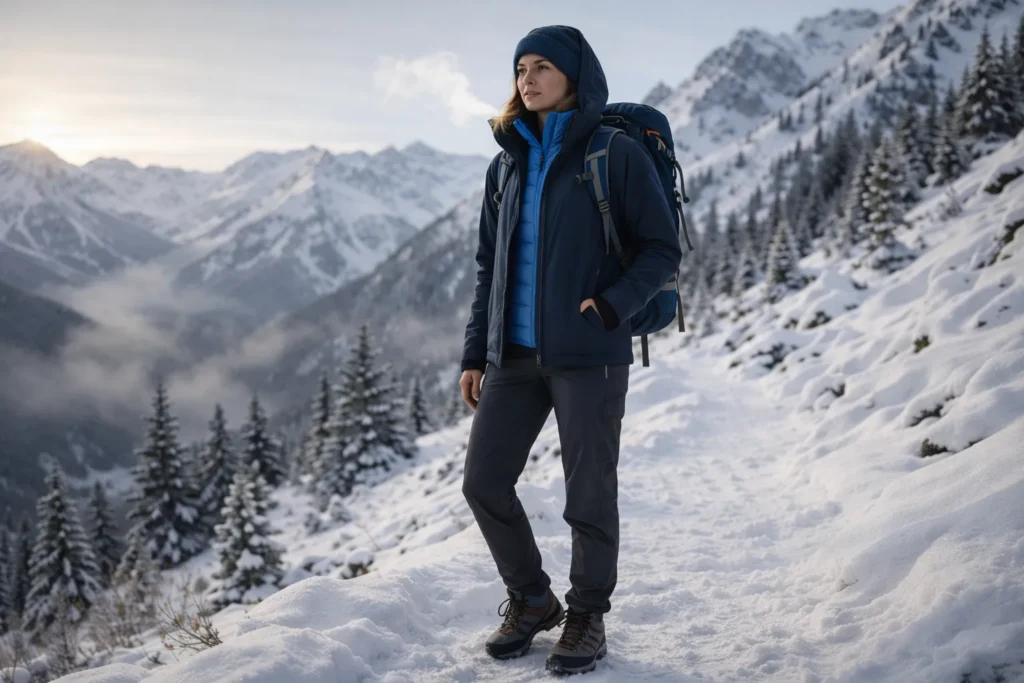
Safety is paramount. You need to prevent frostbite and hypothermia.
- Top: Heavyweight thermal base layer, a substantial fleece or wool sweater, and a waterproof/windproof outer shell. Bring a puffy down jacket for rest stops.
- Bottom: Thermal leggings underneath waterproof or soft-shell hiking pants.
- Accessories: Heavy wool socks, insulated waterproof boots, warm hat, neck gaiter, and insulated gloves/mittens.
- Pro Tip: Avoid “sweating out” your layers. If you start to sweat during a steep climb, remove a layer immediately to stay dry.
Spring Hiking Outfit
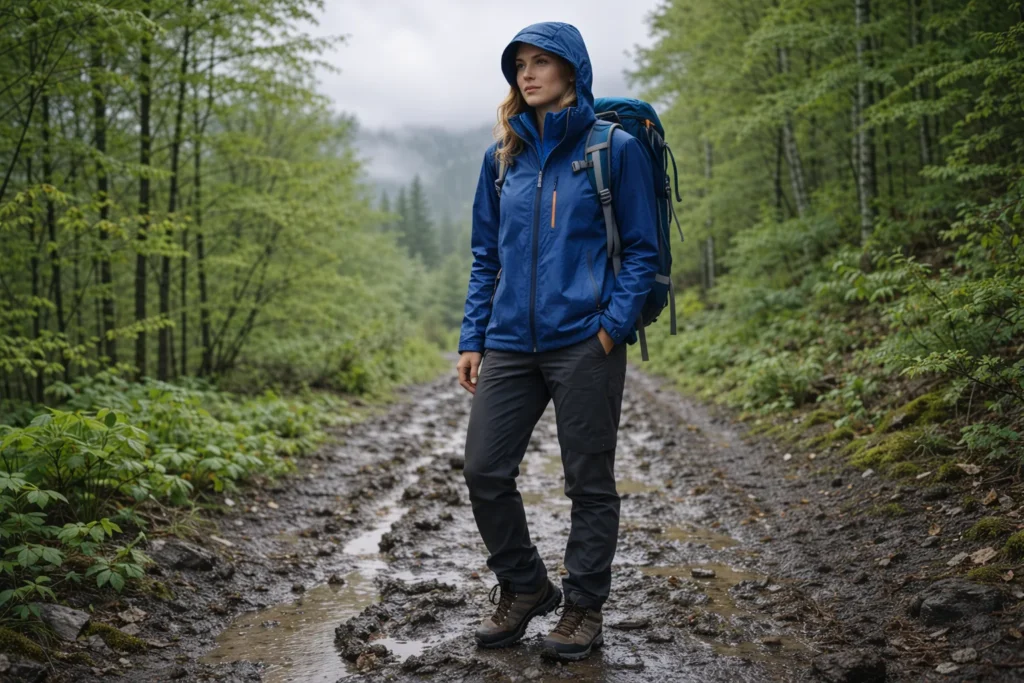
Prepare for mud and rain.
- Top: Similar to fall, but with a heavy emphasis on waterproof gear. A reliable rain jacket is non-negotiable.
- Bottom: Water-resistant pants or rain pants intended to be worn over layers.
- Accessories: Gaiters are essential in spring to keep mud and water out of your boots.
- Pro Tip: Pack extra socks. Wet feet are common in spring, and changing into dry socks at lunch can save your day.
Footwear: The Foundation of Your Hiking Outfit
You can have the best jacket in the world, but if your feet hurt, you will be miserable.
Hiking Boots vs. Hiking Shoes vs. Trail Runners
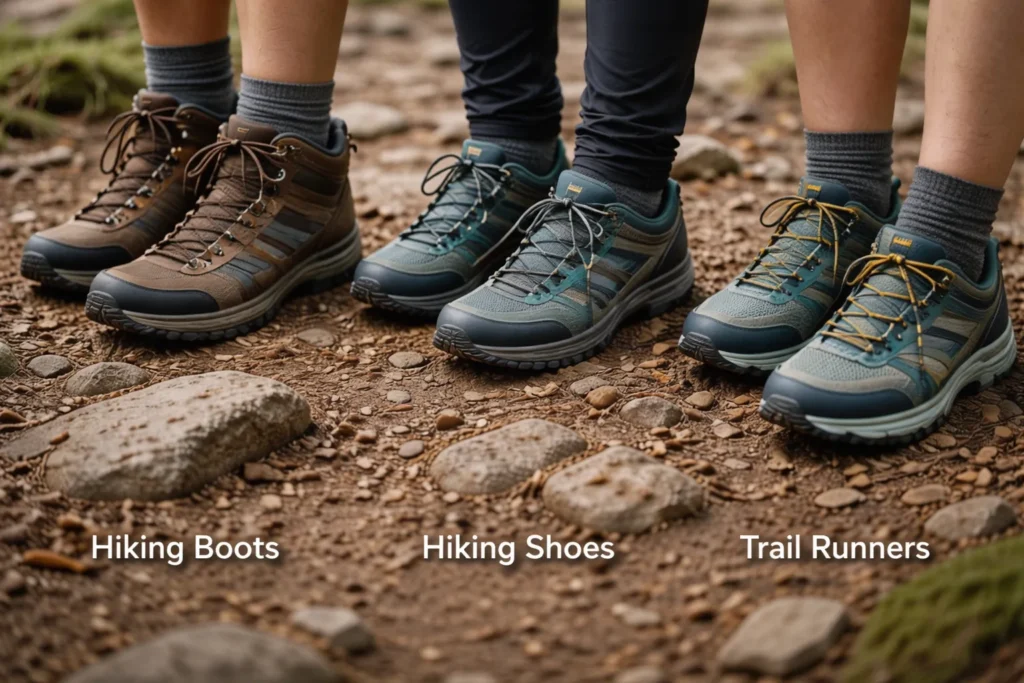
- Hiking Boots: High-cut boots offer ankle support and protection against rocks and debris. They are best for carrying heavy packs or navigating rough terrain.
- Hiking Shoes: Low-cut models with stiffer midsoles than sneakers. They offer durability and traction without the weight of a boot. Good for day hikes.
- Trail Runners: Lightweight, breathable, and flexible. They are popular with thru-hikers and ultralight backpackers who prioritize speed and comfort over durability and ankle support.
The Importance of Socks
Never underestimate the power of a good sock.
- Material: Merino wool or synthetic blends. Never cotton.
- Cushioning: Choose based on preference and volume inside your shoe. Heavy cushioning is great for long days; light cushioning is better for hot weather.
- Fit: Socks should fit snugly without bunching. Wrinkles cause blisters.
Essential Accessories to Complete Your Look
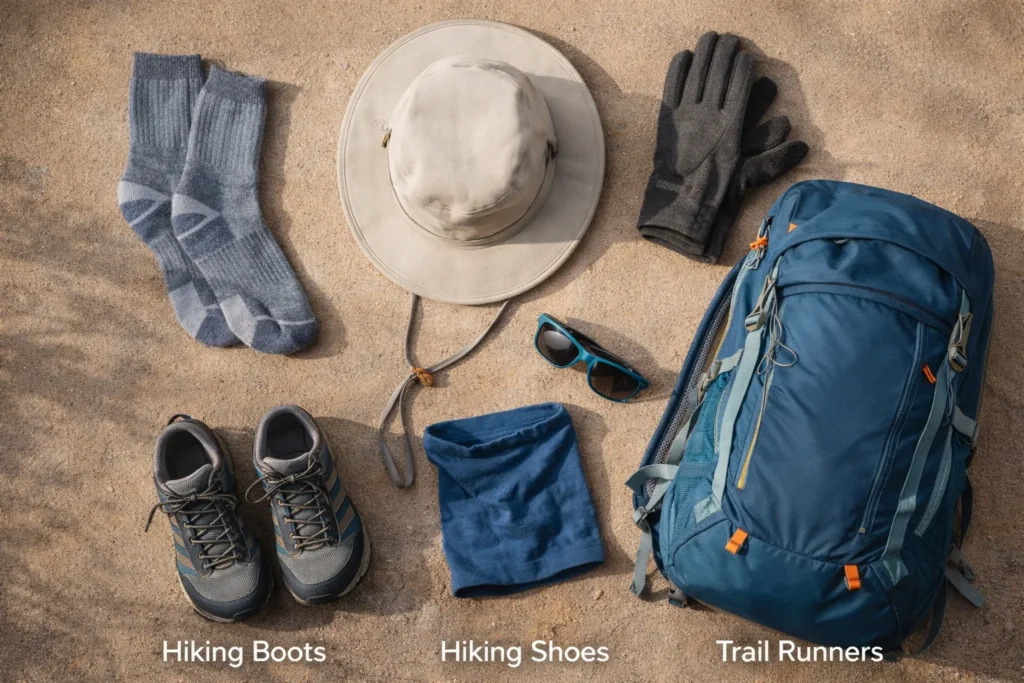
Your hiking outfit isn’t complete without the accessories that provide safety and comfort.
Headwear
- Sun Hats: A baseball cap works, but a full-brimmed hat offers better protection for your ears and neck.
- Beanies: Essential for retaining body heat in cool weather.
- Buffs/Neck Gaiters: Incredibly versatile. Use them as a scarf, headband, face mask, or balaclava.
Eyewear
- Sunglasses: Polarized lenses reduce glare from water, snow, and rocks. Ensure they have 100% UVA/UVB protection.
Gloves
- Liners: Thin gloves for dexterity and slight warmth.
- Shells/Mittens: Waterproof layers to wear over liners in harsh conditions.
Hiking Outfit Aesthetics: Gorpcore and Personal Style
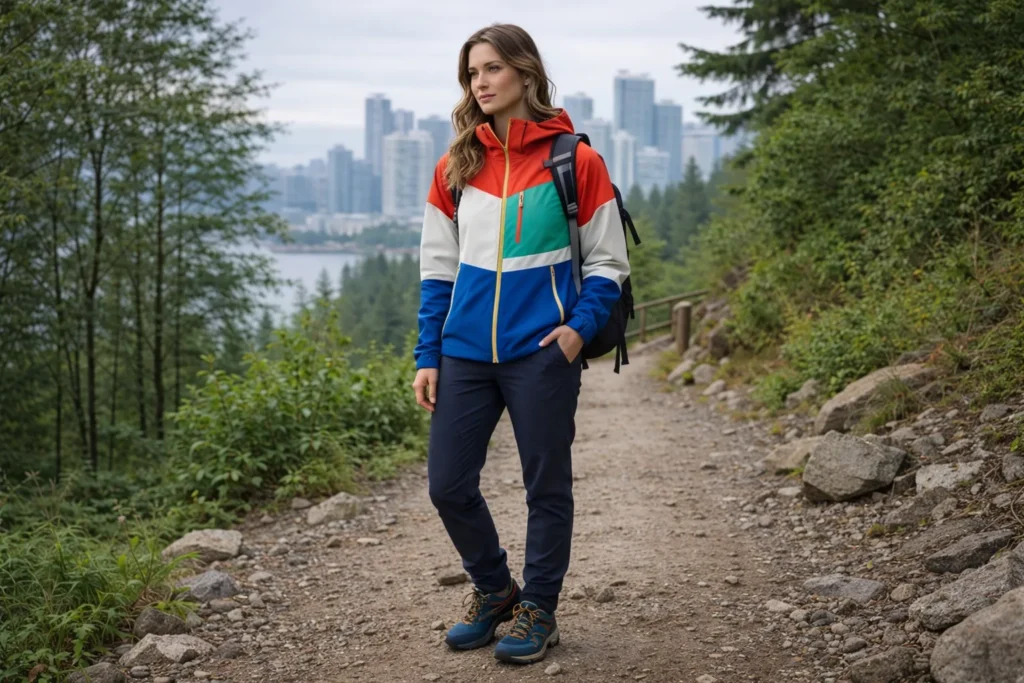
Hiking fashion has evolved. “Gorpcore” (a fashion trend named after “Good Ol’ Raisins and Peanuts,” i.e., trail mix) has brought functional outdoor gear into mainstream street style. This means you have more options than ever to express your personal style on the trail.
- Color Blocking: Many brands like Cotopaxi and Patagonia offer gear in vibrant, contrasting colors. This is fun and makes you highly visible for safety.
- Earth Tones: Brands like Fjällräven focus on natural colors—olive, rust, sand—that blend seamlessly with the environment.
- Fit and Silhouette: Hiking clothes are no longer just baggy sacks. You can find tailored cuts, athletic fits, and stylish silhouettes that look as good at a post-hike brewery as they do on the summit.
Budgeting for Your Hiking Gear
Outfitting yourself for the trail can be expensive, but you don’t need to buy everything at once.
Where to Splurge
- Boots: Spend the money to get properly fitted at an outdoor store. Your feet are your vehicle.
- Rain Shell: Cheap rain jackets act like plastic bags—trapping sweat inside. A quality breathable shell is worth the investment.
- Socks: Good socks prevent blisters, which are the number one hike-ender.
Where to Save
- Fleece: An expensive brand-name fleece performs similarly to a budget option. Fleece is a simple fabric.
- Base Layers: While merino is nice, affordable synthetic workout tops work perfectly well for most day hikers.
- Pants: You can often find durable synthetic pants at thrift stores or general athletic retailers.
Conclusion
Curating the perfect hiking outfit is a process of trial and error. What works for your friend might not work for you. Start with the basics—no cotton, sturdy footwear, and a simple layering system and adjust as you gain experience.
Remember, the goal of your gear is to make you forget you are wearing it. When you aren’t shivering, overheating, or nursing a blister, you are free to focus on what truly matters: the breathtaking views, the fresh air, and the rhythm of the trail. So layer up, lace up, and get out there. The mountains are calling.
Frequently Asked Questions (FAQs)
Q1: Can I wear jeans hiking?
No. Jeans are made of heavy cotton denim. If they get wet (from rain, sweat, or a stream crossing), they become incredibly heavy, take forever to dry, and will chafe your skin raw. They also restrict movement. Stick to synthetic hiking pants.
Q2: Do I really need hiking boots, or can I wear sneakers?
For short, flat, well-maintained trails, your gym sneakers might be fine. However, hiking boots or trail shoes provide better traction (preventing slips) and stiffer soles (protecting your feet from sharp rocks). If you plan on hiking regularly, specific footwear is a necessary investment.
Q3: How should I dress for a hiking date?
Aim for “cute but capable.” Wear fitted hiking leggings or clean hiking pants with a flattering athletic top. Layer a stylish fleece or vest over it. Ensure your shoes are clean. Most importantly, dress for the weather shivering is never a good look.
Q4: What is the best color to wear hiking?
Bright colors (orange, red, yellow) are safest because they make you visible to rescue teams and hunters. However, if you are birdwatching or wildlife photographing, neutral earth tones (green, brown, tan) will help you blend in and not startle animals.
Q5: How do I wash my technical hiking clothes?
Follow the care label instructions. generally, wash in cool water with a gentle detergent. Avoid fabric softeners, as they can clog the pores of moisture-wicking fabrics and ruin their performance. Hang dry when possible to extend the life of the garments.