10 Festive Christmas Activities and What to Wear to Each
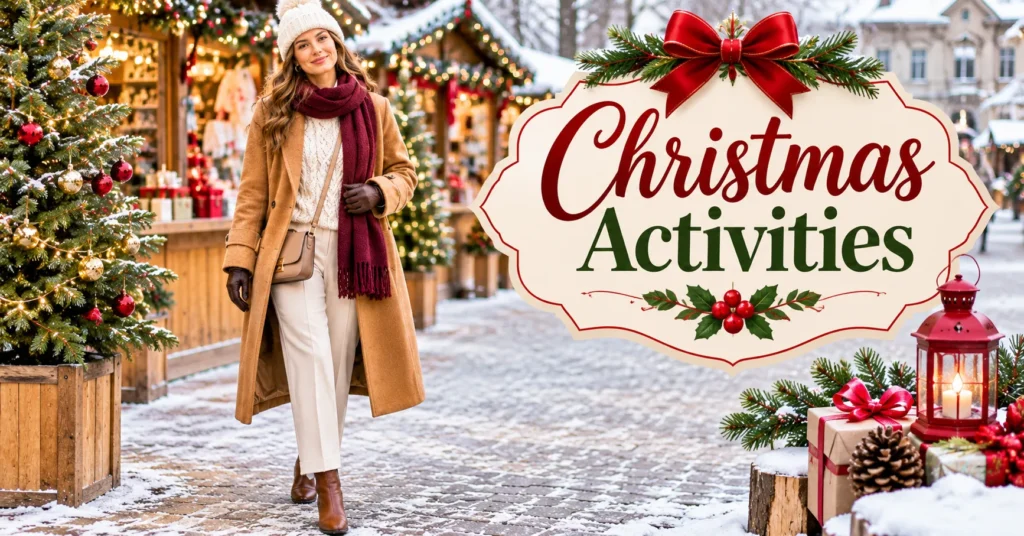
December fills up fast. A single weekend can hold a Christmas market, a tree farm trip, and a Nutcracker matinee, and each one asks something different from your closet. The best Christmas activities are easy to say yes to. Dressing for them is harder. A wool coat that works on a city sidewalk soaks through on a sledding hill. Snow boots built for a tree farm look clumsy in a theater lobby.
This guide pairs 10 popular Christmas activities with a complete outfit formula for each. Every entry lists the key pieces, the best occasions, and one styling tip. You will also find:
- A comparison table that rates each outfit for warmth, walking, and formality
- A color and fabric guide for winter outfits for women
- Accessory rules, a layering system, and the mistakes that ruin a cold day out
How to Dress for Christmas Activities
Dressing for Christmas activities starts with the activity, not the outfit. Three factors decide what you wear: the setting, the time you spend outside, and how much you move.
Indoor, Outdoor, or Both
Most holiday activities mix indoor and outdoor time. A Christmas market keeps you outside for two or three hours. A ballet keeps you in a heated theater. A shopping trip moves you between cold sidewalks and warm stores every 20 minutes.
Mixed settings call for removable layers. A coat and scarf handle the cold. A lighter knit underneath keeps you comfortable once you step inside.
Time Spent Outside
Exposure time (how long your body stays in cold air without a warm break) matters more than the temperature alone. Thirty minutes at 30°F feels very different from three hours at 30°F.
Wind makes it worse. The National Weather Service wind chill chart shows that 30°F with a 15 mph wind feels like 19°F on exposed skin. Wind-blocking outer layers matter as much as thick ones.
Movement Level
Active plans and still plans need different clothing. Ice skating and sledding raise your body temperature, then drop it quickly when you stop. Caroling and light tours keep you standing still for long stretches.
Match insulation to movement: breathable layers for active plans, heavy wind-blocking layers for still ones.
Use this filter before you pick an outfit:
- Check the forecast. Note the wind chill for the hours you will be outdoors.
- Estimate your outdoor time. Count it in minutes, not a rough guess.
- Rate your movement. Label the plan as active, moderate, or still.
- Match the answers to a formula. Use the outfit entries and comparison table below.
Open your weather app now and note the wind chill, not just the temperature, for your next outing.
10 Festive Christmas Activities and What to Wear to Each
Each of the 10 Christmas activities below comes with a complete outfit formula. Treat the formulas as templates: swap colors, brands, and budgets, but keep the structure.
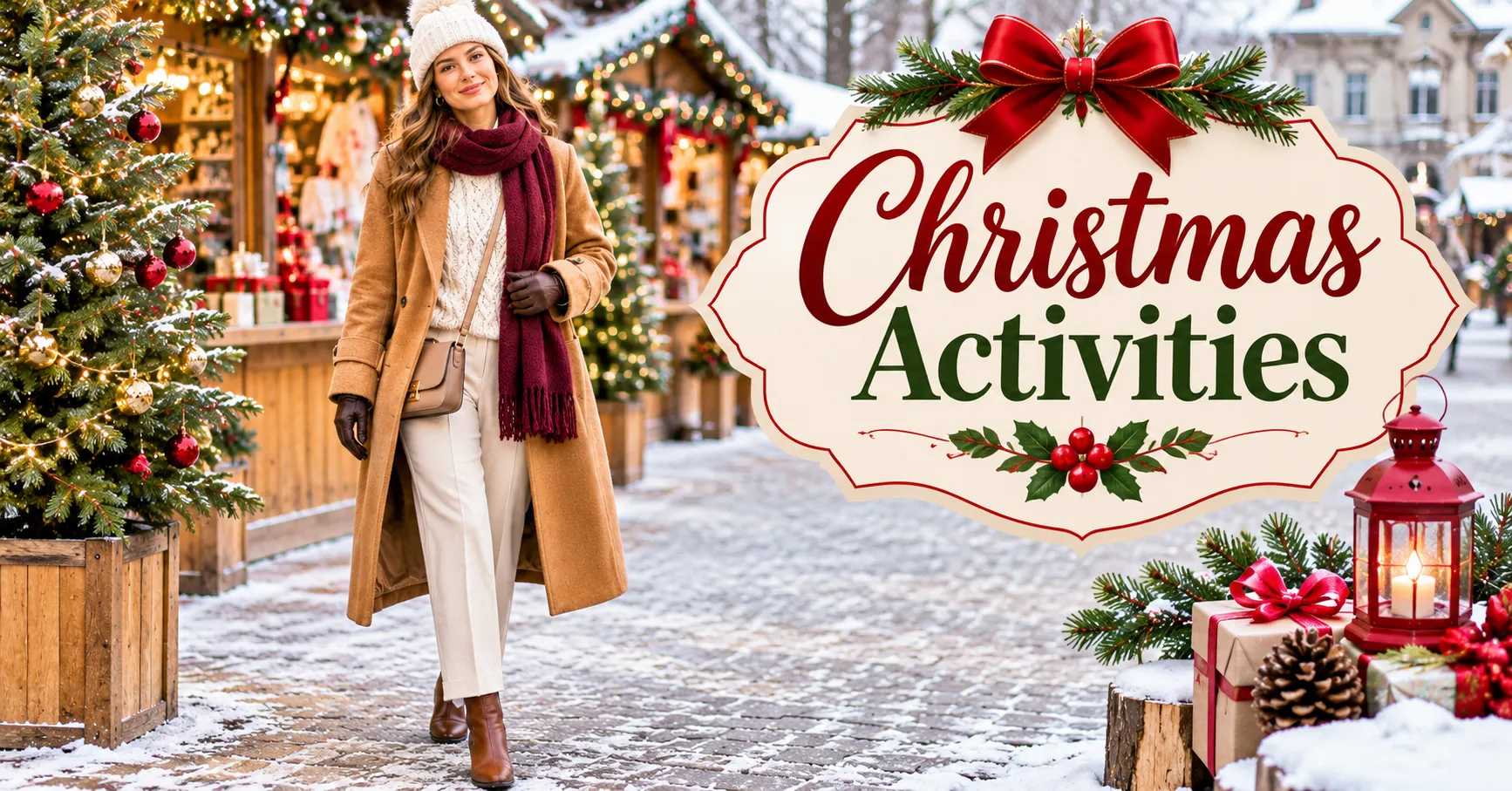
1. Strolling a Christmas Market
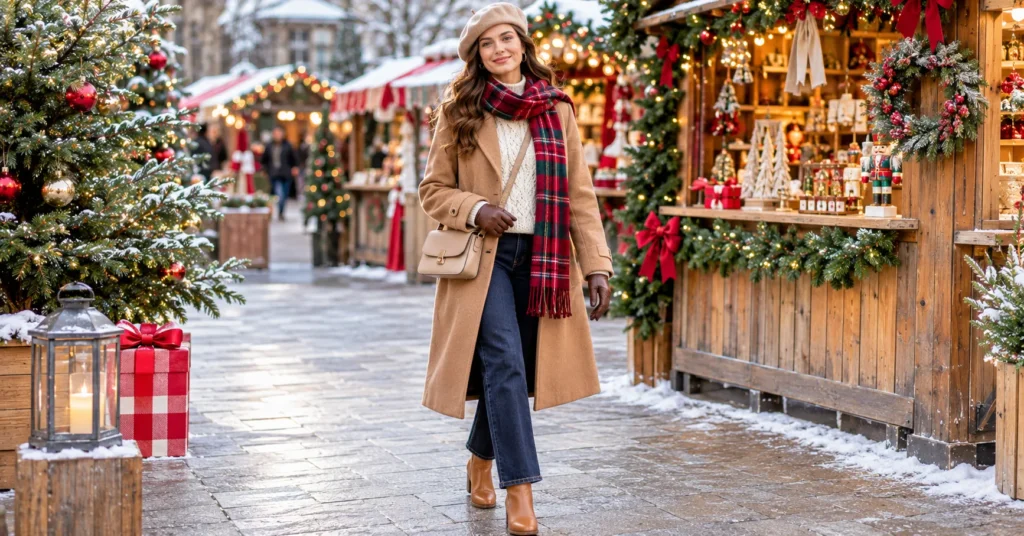
A Christmas market is an open air seasonal market that sells crafts, ornaments, warm food, and mulled drinks. The tradition comes from German speaking Europe. Dresden’s Striezelmarkt dates to 1434 and still runs every December. In the U.S., Chicago’s Christkindlmarket has operated since 1996, and New York’s Bryant Park Winter Village draws crowds every season.
Markets mean hours of slow walking on pavement or cobblestones, often with a hot drink in one hand. Your outfit needs warmth, grip, and free hands.
Key pieces: a knee length wool coat, a cable knit sweater, dark straight leg jeans or wool trousers, waterproof leather ankle boots with a low block heel, a plaid wool scarf, and a crossbody bag.
Best for: Christmas markets, holiday fairs, outdoor craft shows, small town tree lightings
Styling tip: Choose gloves with touchscreen fingertips. You will pay by phone, check maps, and take photos without exposing your hands to the cold.
2. Ice Skating
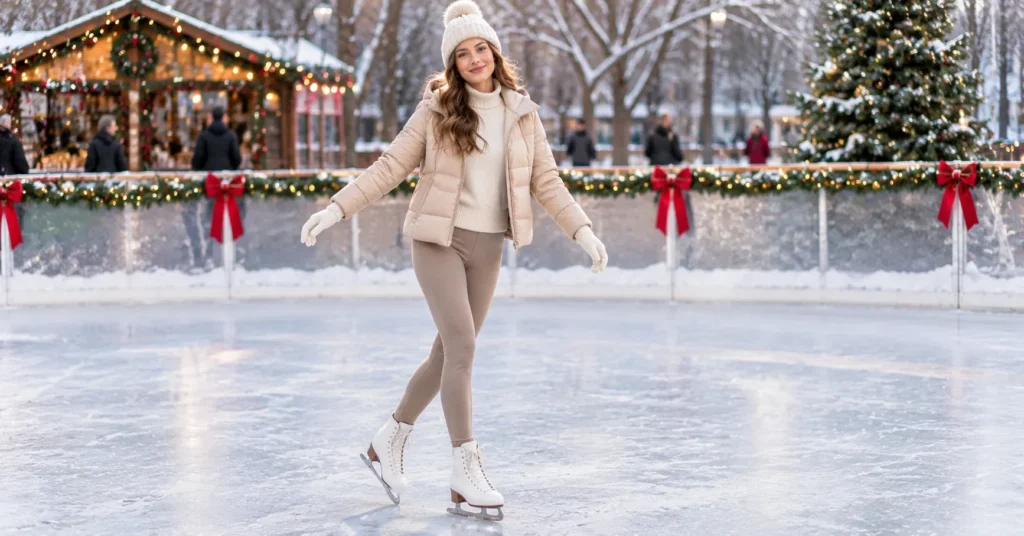
Ice skating is one of the most photographed Christmas activities, and it is also one of the most physical. The Rockefeller Center rink in New York opened on Christmas Day in 1936, and outdoor rinks now appear in city squares across the country each winter.
Skating needs flexibility and balance. Bulky coats limit your arm movement. Long scarves and loose hems can catch on skates or tangle during a fall.
Key pieces: a fitted turtleneck or thermal top, a short quilted puffer or vest, fleece-lined leggings or stretch jeans, a snug knit beanie, padded gloves, and thin wool socks.
Best for: outdoor rinks, indoor rinks, skating dates, frozen pond outings
Styling tip: Wear thin socks, not thick ones. Rental skates fit closer with thin socks, which gives you better ankle control and fewer blisters.
3. Cutting Your Own Tree at a Christmas Tree Farm
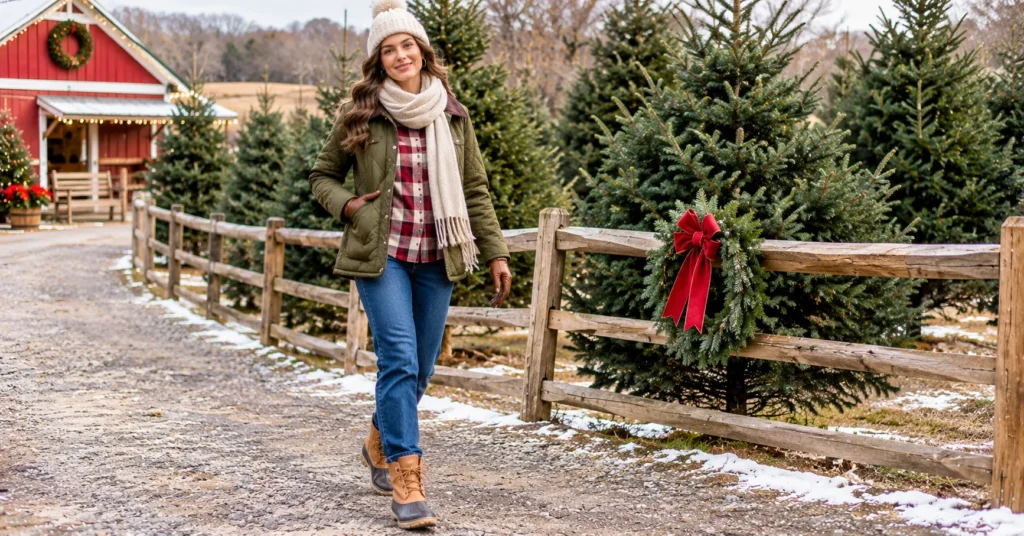
A cut your own tree farm lets you walk the rows, choose a tree, and saw it down yourself. According to the National Christmas Tree Association, Americans buy roughly 25 to 30 million real Christmas trees each year, and a typical tree takes about seven years to grow.
Tree farms mean mud, wet grass, sap, and sharp needles. This is a practical outfit first and a photogenic one second.
Key pieces: a buffalo check flannel shirt, a quilted barn jacket or waxed cotton coat, durable jeans or fleece lined leggings, waterproof duck boots, work gloves, and a knit beanie.
L.L.Bean introduced its rubber soled Maine Hunting Shoe, the original Bean Boot, in 1912. Duck boots like it pair a rubber lower with a leather upper, which keeps feet dry in mud and still looks neat in photos.
Best for: tree farms, pumpkin to pine farm visits, rural holiday outings, wreath making workshops
Styling tip: Wear leather or canvas work gloves to handle the trunk. Pine sap sticks to knit gloves and skin. Rubbing alcohol removes it if it lands on your hands.
4. Touring Holiday Light Displays
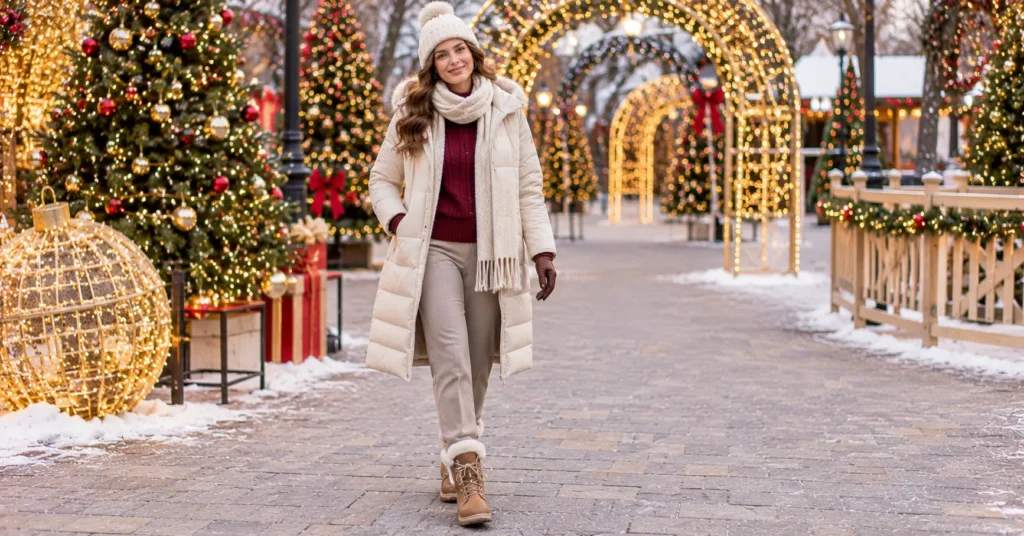
A holiday light tour is a walk or drive through neighborhoods, parks, or botanical gardens decorated with lights. Brooklyn’s Dyker Heights neighborhood is one of the best known examples, drawing visitors to its oversized home displays each December.
Light tours happen after dark, when temperatures drop sharply. Walking tours also keep you on your feet at a slow pace, so heat loss builds over time.
Key pieces: a knee length or longer puffer coat, a ribbed knit sweater, fleece lined leggings or wool trousers, insulated waterproof boots with good tread, a pom pom beanie, and a thick scarf.
Best for: neighborhood light tours, botanical garden light shows, zoo light events, drive through displays
Styling tip: Choose a cream, red, or camel coat. Light colors stand out against a dark sky in night photos, while black coats disappear into the background.
5. Watching The Nutcracker or a Holiday Show
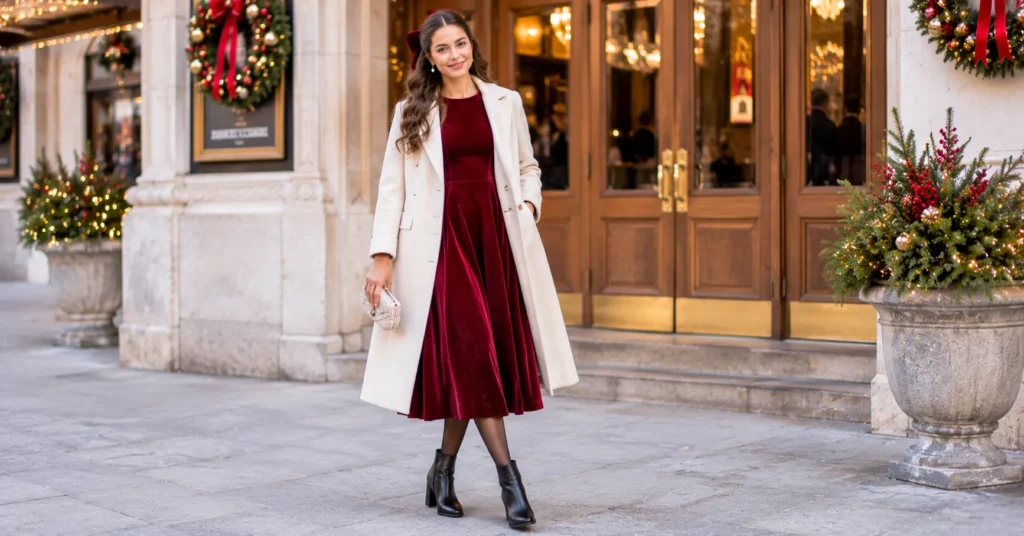
Holiday theater is one of the dressiest Christmas activities on this list. Tchaikovsky’s The Nutcracker premiered at the Mariinsky Theatre in St. Petersburg in 1892. George Balanchine’s version for New York City Ballet debuted in 1954 and helped make the ballet an American holiday tradition.
Theaters are warm inside, and you will sit for about two hours. The outfit should look polished, stay quiet in your seat, and handle a cold walk from the parking garage.
Key pieces: a velvet midi dress or a satin skirt with a fine-knit sweater, sheer black tights, block heel pumps or heeled ankle boots, a tailored wool coat, and a small clutch.
Best for: ballet, holiday concerts, A Christmas Carol productions, symphony performances
Styling tip: Skip tall hairstyles and hats once you are seated. They block the view of the person behind you. A low bun or velvet bow clip keeps the look festive without the height.
6. Baking Cookies at a Holiday Gathering
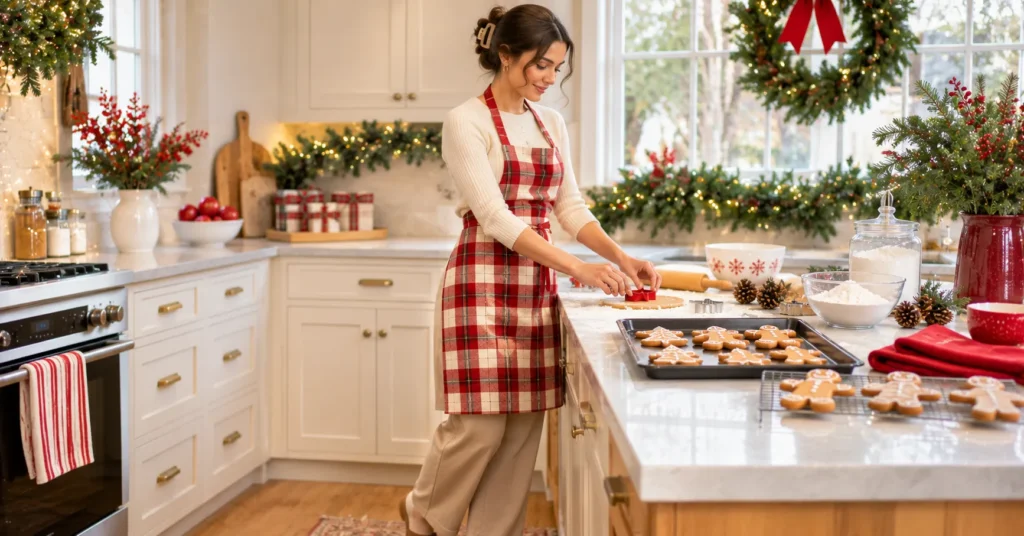
A cookie baking party is a casual gathering where friends or family bake and decorate holiday treats together. It is one of the warmest Christmas activities, literally. A kitchen with a running oven can climb several degrees above the rest of the house.
Heavy sweaters and long sleeves work against you here. Loose cuffs drag through frosting and can catch fire near a gas burner.
Key pieces: a fitted three quarter sleeve or short sleeve knit top, dark jeans or relaxed trousers, a festive apron, flat shoes or house slippers, and a claw clip to hold your hair back.
Best for: cookie swaps, gingerbread house decorating, holiday baking days, family cooking traditions
Styling tip: Let the apron carry the festive element. A plaid, red, or Christmas-print apron photographs well and keeps flour off your clothes, so the rest of the outfit can stay simple.
7. Holiday Afternoon Tea or Brunch
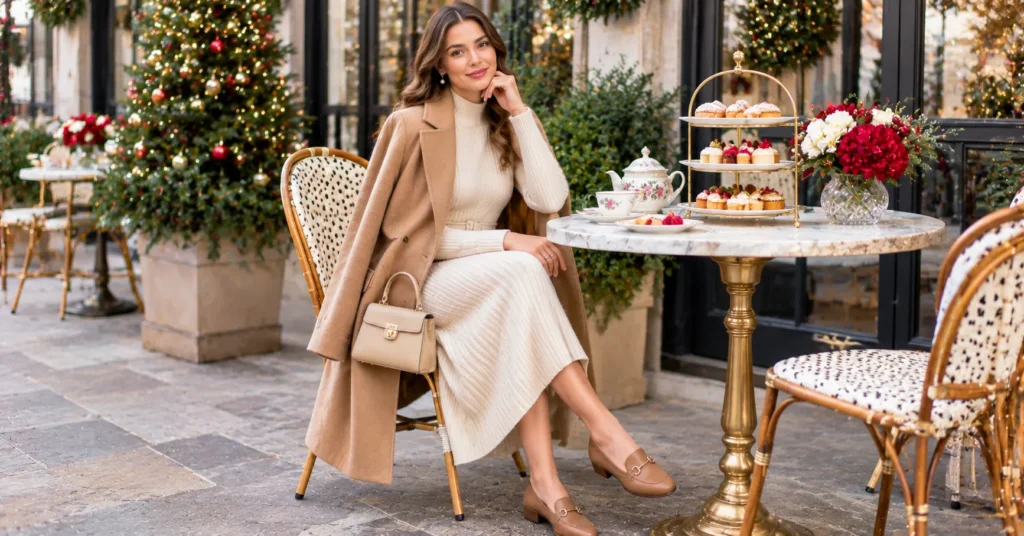
Afternoon tea is a light meal of tea, sandwiches, scones, and pastries served between lunch and dinner. Anna, the 7th Duchess of Bedford, is credited with popularizing it in England in the 1840s. Many hotels and tea rooms now offer special holiday tea menus in December.
Tea and brunch call for smart casual dressing (polished but not formal). You will sit for one to two hours, so comfort at the waist matters.
Key pieces: a knit midi dress or a silk blouse with a pleated midi skirt, loafers or kitten heels, pearl earrings, a structured handbag, and a camel or cream coat.
Best for: holiday afternoon tea, Christmas brunch, ladies’ lunches, mother-daughter outings
Styling tip: Choose a dress or skirt with a relaxed waist. Tiered tea stands and multi-course brunches make fitted waistbands uncomfortable by the second hour.
8. Sledding and Snow Play
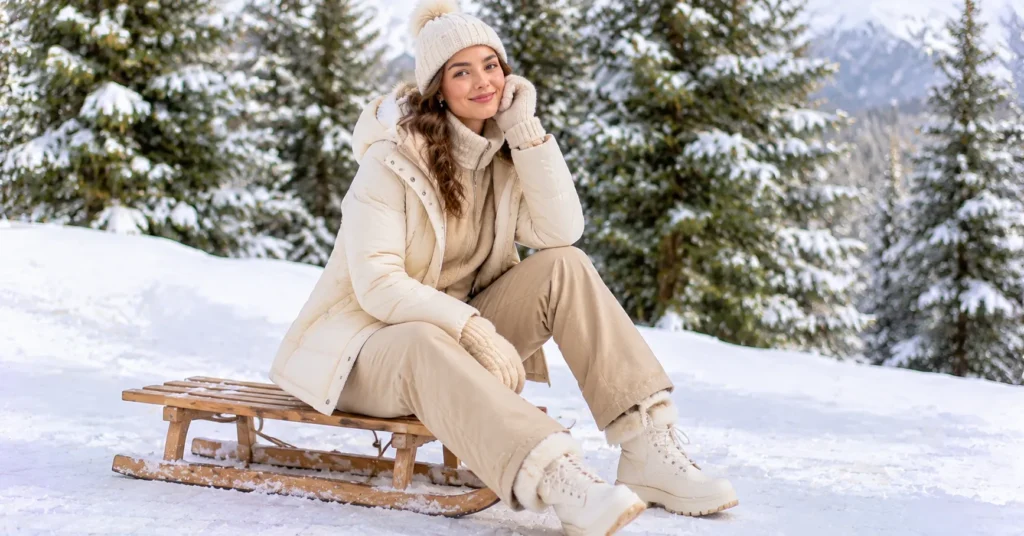
Sledding is the most demanding of all Christmas activities for clothing. You will get wet, cold, and sweaty in the same hour. That combination requires a technical layering system, not just a warm coat.
Cotton is the wrong choice here. Cotton absorbs water and loses most of its insulating value when wet. Merino wool and synthetic fabrics keep insulating even when damp.
Key pieces: a merino or synthetic base layer, a fleece mid layer, a waterproof insulated jacket, snow pants or bibs, waterproof snow boots, insulated mittens, and a warm hat.
Check the jacket’s waterproof rating, measured in millimeters. The rating shows how much water pressure the fabric resists before it leaks. A 10,000mm rating handles most snow days. Higher ratings suit heavy, wet snow.
Best for: sledding, snowball fights, building snowmen, cabin weekends
Styling tip: Choose mittens over gloves. Mittens keep your fingers together, so they share warmth and stay warmer than fingers separated in gloves.
9. Caroling or a Christmas Eve Candlelight Service
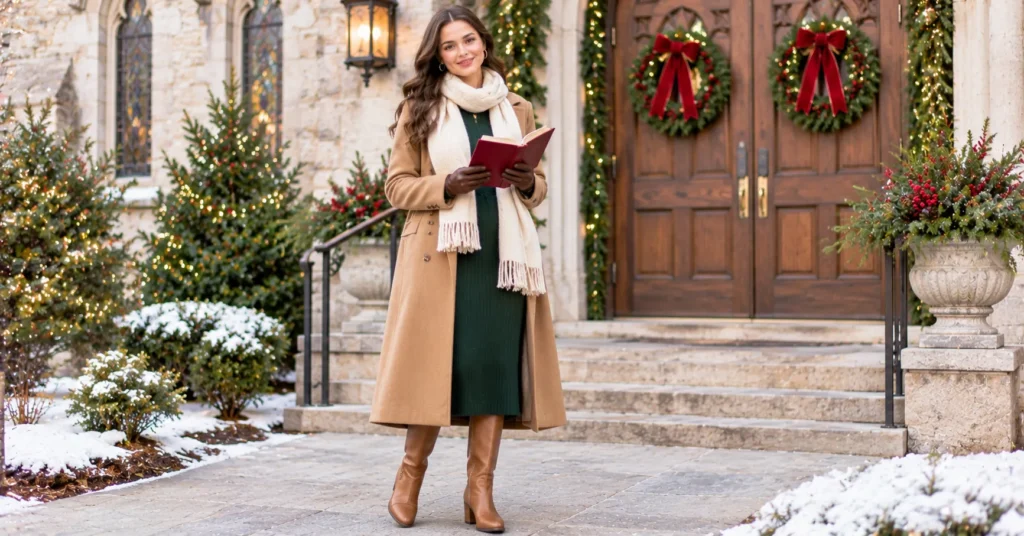
Caroling and candlelight services share one challenge: you stand or sit still for long stretches. “Silent Night,” one of the most-sung carols at these events, was first performed on Christmas Eve 1818 in Oberndorf, Austria.
Caroling keeps you outdoors at a slow pace. Candlelight services keep you indoors, often in a large room that stays cool. Both call for warm, modest, polished pieces.
Key pieces: a long wool coat, a sweater dress or a turtleneck with a midi skirt, fleece-lined tights, knee-high boots, a cashmere scarf, and leather gloves.
Best for: neighborhood caroling, Christmas Eve services, choir concerts, outdoor nativity events
Styling tip: Choose fitted cuffs during a candlelight service. Bell sleeves, fringe, and loose scarves can drift toward an open flame when you hold a candle.
10. Holiday Shopping and Window Displays
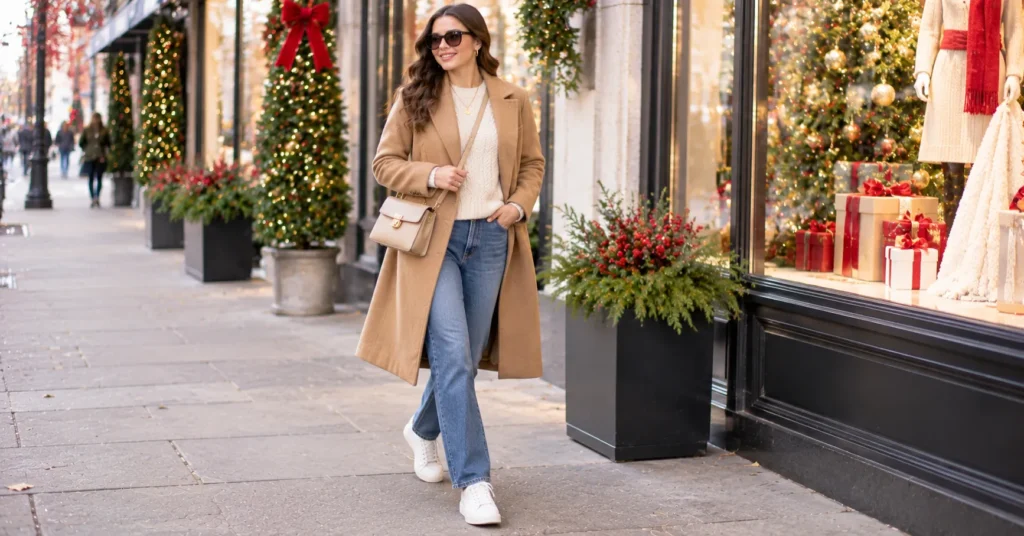
A downtown shopping day combines long walks, crowded stores, and constant temperature swings. Department store windows are part of the draw. Macy’s is credited with creating some of the first holiday window displays in the 1870s, and Saks Fifth Avenue’s windows still attract crowds on New York’s Fifth Avenue.
The main problem is heat. Stores run warm, and a heavy coat becomes something you carry for hours.
Key pieces: a packable down jacket or lightweight wool coat, a breathable knit sweater, straight-leg jeans or trousers, cushioned leather sneakers, and a roomy crossbody bag.
Best for: holiday shopping, window display walks, mall trips, city day trips
Styling tip: Choose a coat you can fold into its own pocket or stuff into a tote. A packable layer goes on and off between stores without filling your arms.
Pick the three Christmas activities already on your calendar and pull the key pieces for each from your closet tonight.
Compare Outfits for All 10 Christmas Activities
The comparison table puts every outfit side by side. Use it to plan a full December of holiday activities in a few minutes.
| # | Activity | Setting | Warmth Needed | Walking | Formality | Shoes |
| 1 | Christmas Market | Outdoor | High | High | Casual | Waterproof ankle boots |
| 2 | Ice Skating | Outdoor or indoor | Medium | Active | Casual | Rental skates, sneakers |
| 3 | Tree Farm | Outdoor | High | Moderate | Casual | Duck boots |
| 4 | Light Tour | Outdoor, night | Very high | Moderate | Casual | Insulated boots |
| 5 | Nutcracker / Theater | Indoor | Low | Low | Dressy | Block-heel pumps |
| 6 | Cookie Baking | Indoor | Low | Low | Casual | Flats, slippers |
| 7 | Afternoon Tea / Brunch | Indoor | Low | Low | Smart casual | Loafers, kitten heels |
| 8 | Sledding | Outdoor, wet | Very high | Active | Casual | Snow boots |
| 9 | Caroling / Candlelight Service | Both | High | Low | Smart casual | Knee-high boots |
| 10 | Holiday Shopping | Both | Medium | Very high | Casual | Cushioned sneakers |
Two patterns stand out. Outdoor plans with little movement, like light tours and caroling, need the most insulation. Indoor plans, like tea and theater, give you the most room for dresses, velvet, and heels.
Mark which rows on your calendar need very high warmth, and check that you own a coat long enough to cover your thighs.
Best Colors and Fabrics for Christmas Activities
Fabric choice decides comfort, and color decides how festive you look. Get the fabric right first, then use color to add the holiday mood.
Fabric Guide
Each fabric handles cold, moisture, and movement differently. The table below rates the most common winter fabrics.
| Fabric | Warmth | Performance When Wet | Best Christmas Activities |
| Merino wool | High | Stays warm | Sledding, skating, light tours |
| Cashmere | High | Loses warmth | Tea, theater, caroling |
| Fleece | High | Stays warm, dries fast | Sledding, tree farms |
| Down | Very high | Loses loft | Light tours, markets, shopping |
| Synthetic insulation | High | Stays warm | Sledding, snow play |
| Flannel | Medium | Loses warmth | Tree farms, baking |
| Velvet | Medium | Marks easily | Theater, Christmas Eve services |
| Cotton | Low | Loses warmth | Indoor baking only |
| Waterproof shell | Wind-blocking | Repels water | Sledding, snowy markets |
Down and synthetic insulation are not interchangeable. Down is lighter and warmer for its weight. Synthetic insulation keeps working when wet, which makes it the better choice for snow play.
Color Guide
Classic Christmas colors work best in moderation. One or two festive colors look intentional, while four look like a costume.
| Color | Mood | Best Paired With | Best For |
| Red | Bold, classic | Camel, cream, black | Markets, light tours, photos |
| Forest green | Rich, natural | Cream, tan, gold | Tree farms, caroling |
| Burgundy | Warm, refined | Gray, camel | Theater, tea |
| Winter white | Fresh, soft | Gold, camel | Brunch, photos |
| Camel | Polished, neutral | Red, green, plaid | Markets, shopping |
| Buffalo check | Rustic, playful | Denim, black | Tree farms, baking |
| Navy | Calm, versatile | Red, silver | Skating, caroling |
Winter white (a warm off-white such as cream, ivory, or oat) photographs beautifully against snow and tree lights. It also shows stains quickly, so save it for indoor or low-mess plans.
Pick one neutral coat color, either camel or black, and build every outfit for the season around it.
Accessories That Work Across Christmas Activities
Accessories carry both the warmth and the festive detail in most winter outfits for women. A neutral coat and jeans become a holiday look with the right hat, scarf, and gloves.
Hats
Your head is a major source of noticeable heat loss when the rest of your body is covered. A wool or cashmere beanie suits nearly every outdoor plan on this list. A pom-pom beanie adds playful charm for skating and sledding. A wool beret works for markets and shopping.
Scarves
A scarf seals the gap between your coat collar and neck, where cold air enters. Wool plaid scarves suit casual outings. Cashmere scarves suit theater and church services. Keep scarves short or tucked for skating and sledding.
Gloves and Mittens
Mittens are warmer. Gloves are more practical. Choose mittens for sledding and long light tours, and touchscreen gloves for markets and shopping.
Bags
A crossbody bag keeps your hands free for drinks, railings, and shopping bags. Save clutches for theater and dressy services.
Socks
Socks decide whether your feet stay warm for hours. Merino wool socks regulate temperature and resist odor. Cotton socks trap sweat and turn cold.
Buy two pairs of merino wool socks before your first outdoor plan this month.
Cold-Weather Layering for Outdoor Christmas Activities
Layering is the most reliable way to stay warm without looking bulky. A layering system uses three parts: a base layer that manages moisture, a mid layer that traps heat, and an outer layer that blocks wind and water.
Follow these steps to cold-proof any outdoor outfit:
- Start with a moisture-wicking base layer. Choose merino wool or a synthetic thermal, such as Uniqlo HEATTECH, against your skin.
- Add an insulating mid layer. Fleece, wool sweaters, and down vests trap warm air close to your body.
- Finish with a wind-blocking outer layer. A wool coat works for dry, still days. A waterproof shell works for snow and wind.
- Cover your extremities. Add a hat, scarf, and gloves before your hands and ears feel cold.
- Protect your feet. Pair waterproof boots with merino socks, and leave room in the boot for blood flow.
- Carry one spare layer. A packable vest or extra pair of gloves fixes a wet or underestimated day.
Layers also solve the indoor-outdoor problem. Remove the outer layer in a warm shop or café, and keep the mid layer on.
Lay your three layers on the bed before your next outing, and swap any cotton base layer for wool or a synthetic thermal.
Common Mistakes When Dressing for Christmas Activities
Most cold-weather outfit failures come from a few predictable errors. Each one has a simple fix.
- Wear cotton for snow. Cotton jeans and sweatshirts soak through and stay cold. Choose wool, fleece, or synthetic fabrics for wet plans.
- Choose fashion boots for icy ground. Smooth soles slip on packed snow. Check for deep rubber tread before tree farms, markets, and light tours.
- Overdress for indoor plans. Heavy sweaters overheat you in kitchens, theaters, and stores. Dress for the room, then add a coat for the walk.
- Ignore wind chill. A 30°F forecast with strong wind feels far colder. Plan for the wind chill number.
- Wear long, loose accessories during active plans. Long scarves and fringe catch on skates, sleds, and candles.
- Stack too many festive elements. A red coat, plaid scarf, reindeer sweater, and Santa hat compete for attention. Choose one or two holiday details.
Take a full-length photo in your outfit before you leave. Fit, color, and bulk problems show up instantly in a photo.
Conclusion
The best outfit for Christmas activities matches three things: the setting, the time you spend outside, and how much you move. A wool coat and ankle boots suit a Christmas market. A technical layering system suits sledding. A velvet dress and block heels suit The Nutcracker.
These 10 Christmas activities cover the most common plans of the season, from tree farms and light tours to holiday tea and Christmas Eve services. Use the comparison table to match warmth and formality. Use the fabric guide to choose materials that stay warm when wet. Then finish each look with accessories that carry the festive detail.
Planning ahead turns a packed December into an easy one. List the Christmas activities on your calendar this week, assign each one an outfit formula from this guide, and fill any gaps, such as merino socks or waterproof boots, before your first outing.
Frequently Asked Questions about Christmas Activities
What should I wear to outdoor Christmas activities?
Wear three layers: a moisture wicking base, an insulating mid layer, and a wind blocking outer layer. Add a hat, scarf, gloves, and waterproof boots. Choose wool or synthetic fabrics over cotton.
What do you wear to a Christmas market?
Wear a knee length wool coat, a warm sweater, dark jeans or trousers, and waterproof ankle boots with grip. Add a crossbody bag to keep your hands free. Touchscreen gloves help you pay and take photos.
What is the best outfit for ice skating?
Choose fitted, flexible layers like a turtleneck, a short puffer or vest, and fleece lined leggings. Wear thin socks for better skate fit. Skip long scarves and loose hems that can tangle.
What should I wear to see The Nutcracker?
A velvet midi dress or a satin skirt with a fine knit works well. Add sheer tights, block heel pumps, and a tailored coat. Keep hairstyles low so you do not block other guests’ views.
What should I wear to a Christmas tree farm?
Wear a flannel shirt, a quilted or waxed jacket, durable jeans, and waterproof duck boots. Bring leather or canvas work gloves to protect your hands from sap and needles.
How do I stay warm during evening Christmas activities?
Check the wind chill and dress for that number. Choose a coat that reaches your knees, insulated boots, and a warm hat. Add fleece lined tights or leggings under dresses and trousers.
Which fabrics are best for winter Christmas activities?
Merino wool, fleece, and synthetic insulation stay warm even when wet. Down is the warmest for dry, cold days. Cotton loses warmth when damp, so keep it for indoor plans.
How can I look festive without wearing a themed sweater?
Use color and accessories. A red coat, a plaid scarf, a velvet bow clip, or a forest green beanie signals the season. One or two festive details look polished.
What shoes work best for Christmas activities with lots of walking?
Cushioned leather sneakers suit shopping and dry city walks. Waterproof ankle boots with rubber tread suit markets and light tours. Break in any new pair before a long day out.