Goth Outfit Guide: Mastering Dark & Alternative Fashion
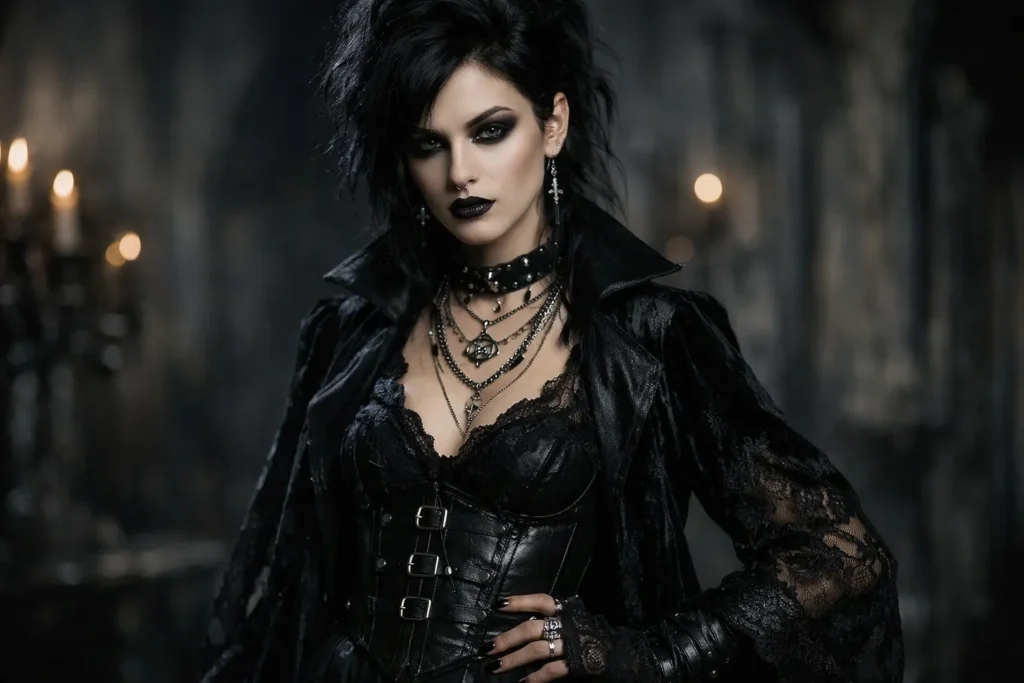
Finding your ideal goth outfit is a journey into a world of dark aesthetics, rich history, and profound self-expression. Far more than just wearing black, goth fashion is a diverse and intricate subculture with dozens of unique styles. Whether you are new to the scene or a seasoned veteran looking to refine your wardrobe, this guide will walk you through the essential elements, iconic styles, and creative tips needed to assemble an authentic goth look that is entirely your own. We will explore the key pieces of clothing, accessories, and makeup that define this enduring alternative style.
Goth fashion emerged in the late 1970s and early 1980s, evolving from the post-punk music scene. It embraces themes of romanticism, morbidity, and individualism, drawing inspiration from Victorian mourning wear, gothic literature, and horror films. An authentic goth look is a powerful form of personal expression, a way to connect with a community that values creativity and non-conformity.
What Defines Goth Fashion? The Core Elements
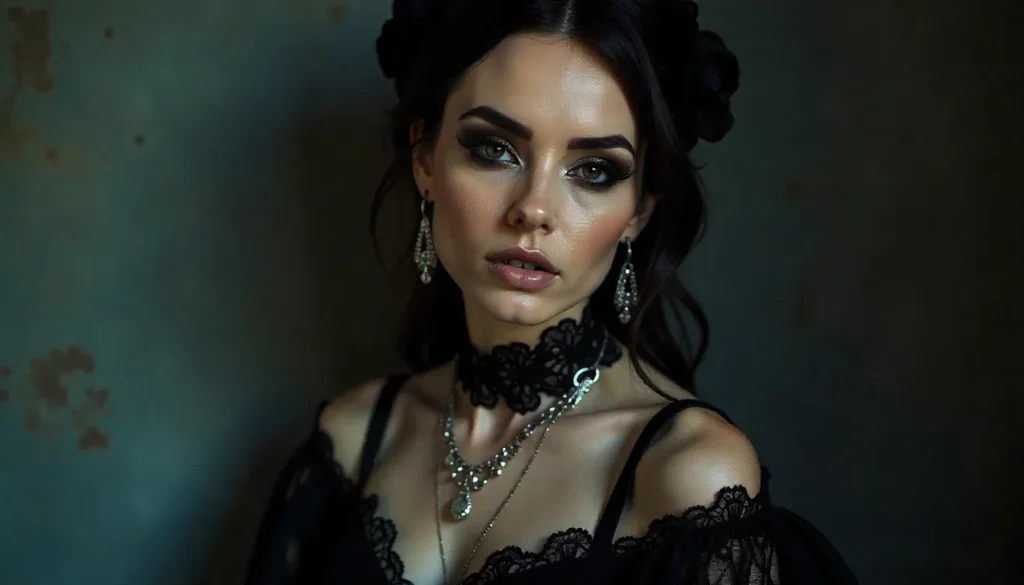
Before diving into specific subgenres, it’s crucial to understand the fundamental components that form the backbone of most goth outfits. While black is the dominant color, it’s the combination of textures, silhouettes, and accessories that truly creates a gothic aesthetic.
The Color Palette: Beyond Basic Black
Black is the undeniable cornerstone of gothic fashion, symbolizing mystery, elegance, and a rejection of mainstream palettes. However, a compelling goth outfit often incorporates other colors to add depth and personality.
- Deep Jewel Tones: Rich purples, emerald greens, sapphire blues, and blood reds are frequently used to complement black. These colors add a touch of romantic or royal elegance.
- White and Silver: Used for stark contrast, white can highlight specific details, often seen in romantic goth or cybergoth styles. Silver is the preferred metal for jewelry and hardware.
- Earthy Tones: In folk or pagan goth styles, you might find browns, dark greens, and grays that connect the look to nature and ancient traditions.
Key Fabrics and Textures
The tactile experience of a goth outfit is just as important as its visual appeal. Combining different materials creates a look that is rich, layered, and interesting.
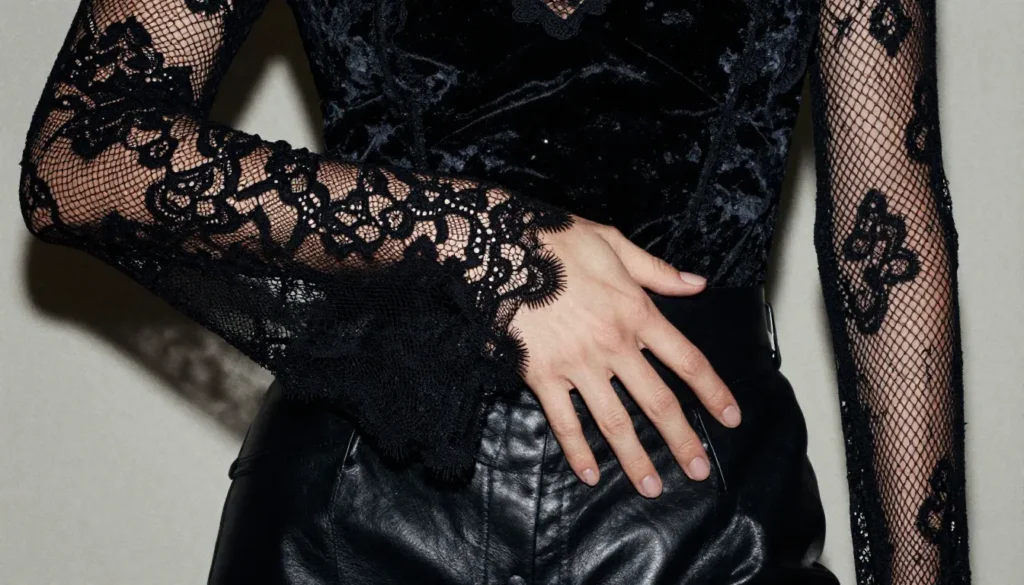
- Lace: A staple of romantic and Victorian goth, lace adds a delicate, intricate, and often antique feel. It can be used for overlays, sleeves, or entire garments.
- Velvet: This plush, soft fabric provides a sense of luxury and depth. It’s often used for dresses, coats, and trousers, especially in deep, dark colors.
- Leather and Faux Leather: A nod to goth’s punk and industrial roots, leather adds an edgy, tough element. It’s common for jackets, pants, skirts, and corsets.
- Fishnet and Mesh: These materials add a layer of punk-inspired texture and can be worn as tops, stockings, or gloves.
- Satin and Silk: For a more formal or romantic look, the sheen of satin or silk can create an elegant, flowing silhouette.
- Tulle and Chiffon: Lightweight and ethereal, these are perfect for creating dramatic, flowing skirts and layered dresses, common in fairy goth aesthetics.
Essential Goth Clothing Pieces
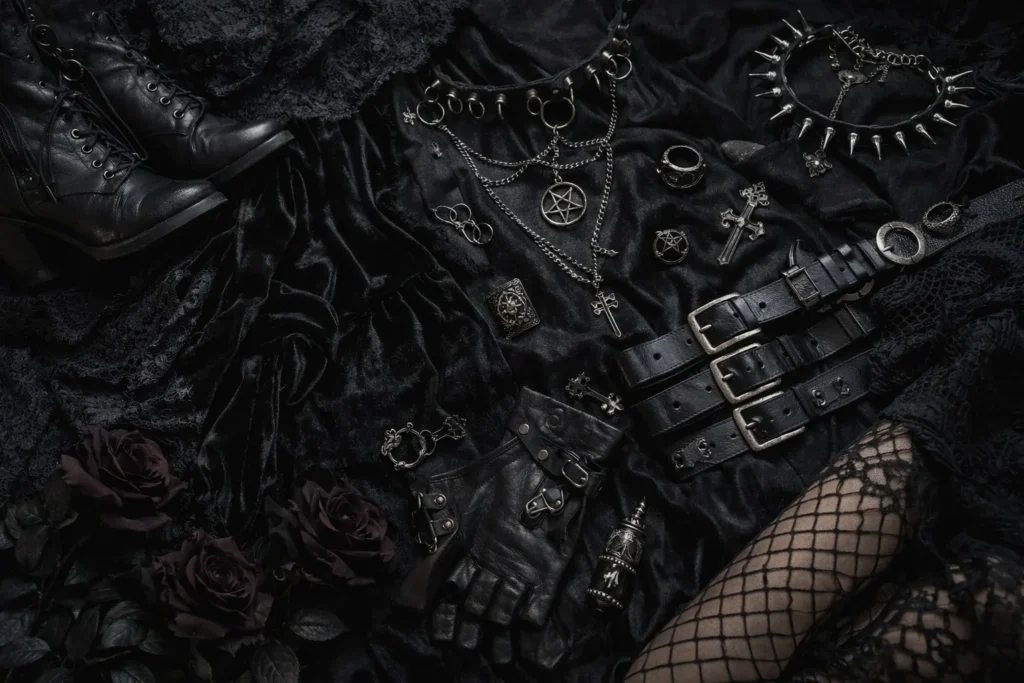
Building a versatile gothic wardrobe starts with a few key pieces that can be mixed, matched, and layered to create countless outfits.
For a Feminine-Leaning Style:
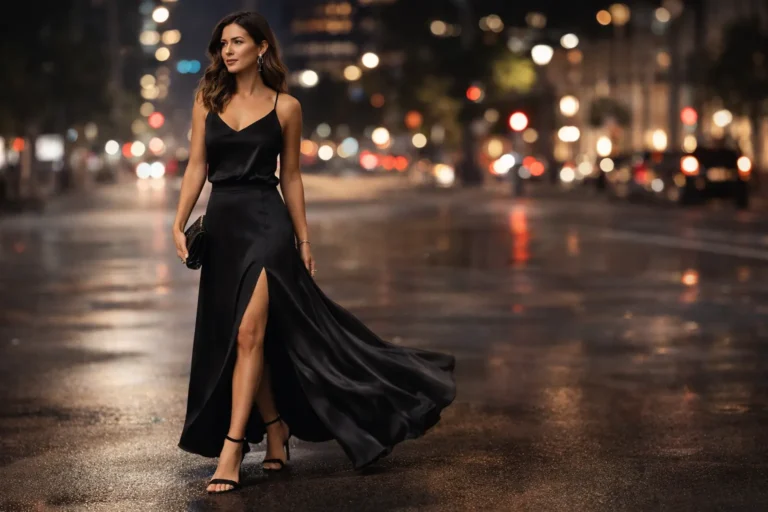
- The Black Dress: A long, flowing black dress is iconic. Styles range from simple velvet slips to elaborate Victorian-inspired gowns with lace and ruffles.
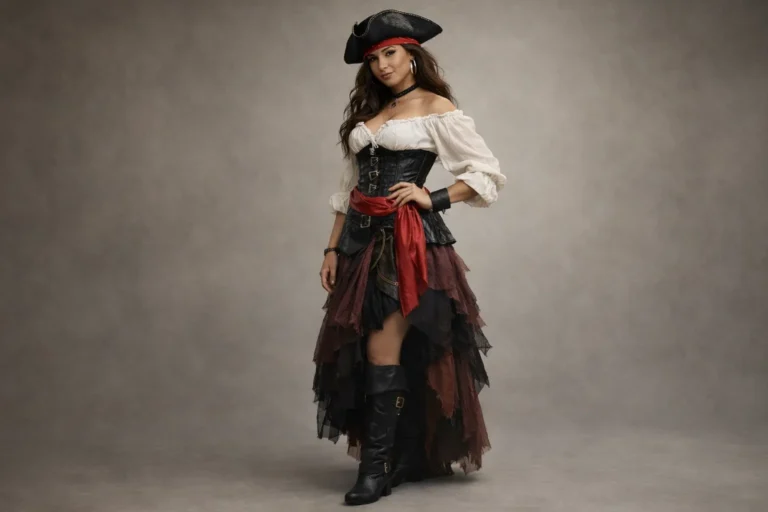
- Corsets and Bustiers: These garments create a dramatic, defined silhouette reminiscent of historical fashion. They can be worn over or under clothing.
- Skirts: Goth skirts come in all shapes and sizes. Popular styles include long, flowing maxi skirts, short pleated plaid skirts, or layered tulle ballet skirts.
- Blouses: Romantic, high-collared blouses with ruffles, lace, or puffy sleeves are a staple, often inspired by Victorian or Edwardian fashion.
For a Masculine-Leaning Style:
- Band T-Shirts: Shirts featuring classic goth rock bands like Bauhaus, The Cure, or Siouxsie and the Banshees are a must-have.
- Button-Up Shirts: Black or dark-colored button-ups, sometimes with ruffles or unique detailing, offer a more formal look.
- Trousers: Options range from tight-fitting leather or PVC pants to looser, “bondage” style trousers with straps and D-rings.
- Vests and Waistcoats: Often made of brocade, velvet, or pinstriped fabric, vests add a formal, layered element to an outfit.
- Long Coats: A dramatic long coat, like a trench coat or a frock coat, is an essential piece of outerwear for a commanding gothic look.
Exploring the Spectrum of Goth Subcultures
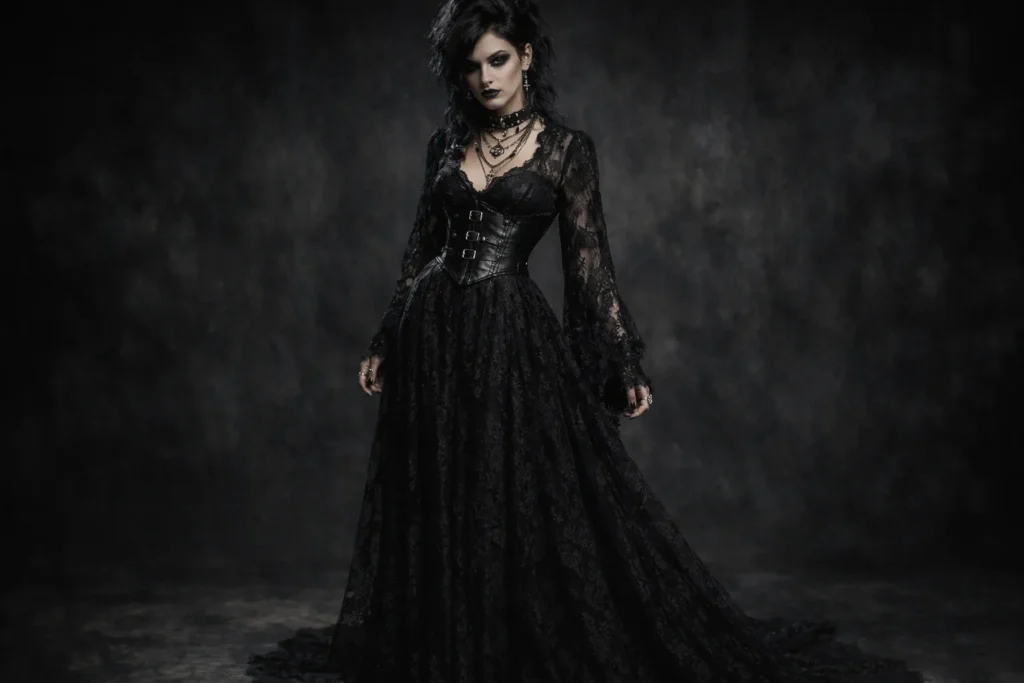
The goth scene is not a monolith. It is a vibrant collection of subcultures, each with its own distinct fashion, music, and philosophical leanings. Understanding these differences can help you find the goth outfit style that resonates most with you.
Trad Goth (Traditional Goth)
The original style that emerged from the 80s post-punk scene. It is heavily influenced by the musicians of the era.
- Key Features: Big, teased, and backcombed hair (often black), pale skin, and dramatic eye makeup.
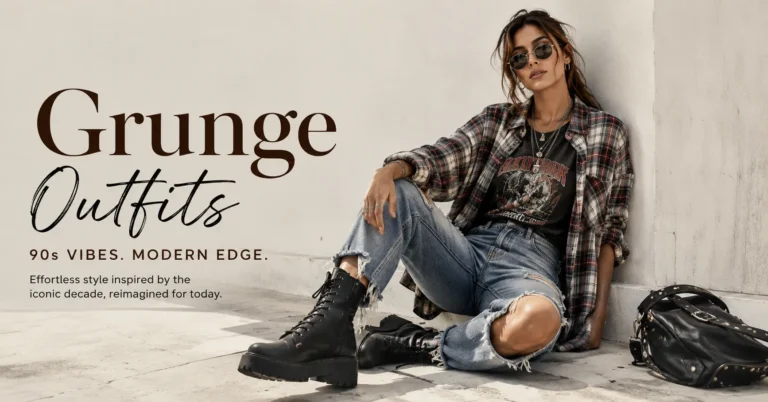
- Clothing: Ripped fishnets, leather jackets adorned with band patches, band t-shirts, winklepickers or pointed boots, and heavy use of silver jewelry.
- The Vibe: A raw, DIY aesthetic rooted in the early music scene. It’s about celebrating the pioneers of the subculture.
- Example Outfit: A Siouxsie and the Banshees t-shirt, a torn-up black mini-skirt over ripped fishnets, a studded leather jacket, and chunky combat boots.
Romantic Goth & Victorian Goth
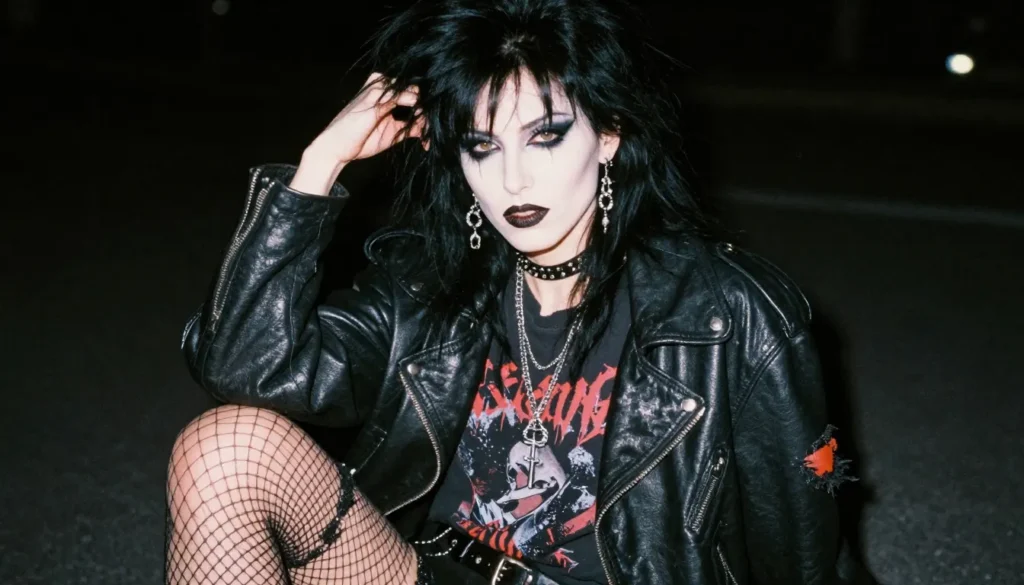
This style draws inspiration from the romanticism of the 19th century, focusing on beauty, emotion, and nature. Victorian Goth is a subset that specifically references the mourning attire and elaborate fashion of the Victorian era.
- Key Features: Flowing, elegant silhouettes and luxurious fabrics.
- Clothing: Long velvet or lace gowns, corsets, ruffled blouses, tailcoats, and brocade vests. Colors like deep red, purple, and blue are common.
- The Vibe: Darkly elegant, theatrical, and melancholic. It evokes images of gothic literature characters from novels like Dracula or Wuthering Heights.
- Example Outfit: A floor-length black velvet dress with lace trim, a tight-laced corset, a delicate silver necklace with a cameo, and elegant heeled boots.
Cybergoth
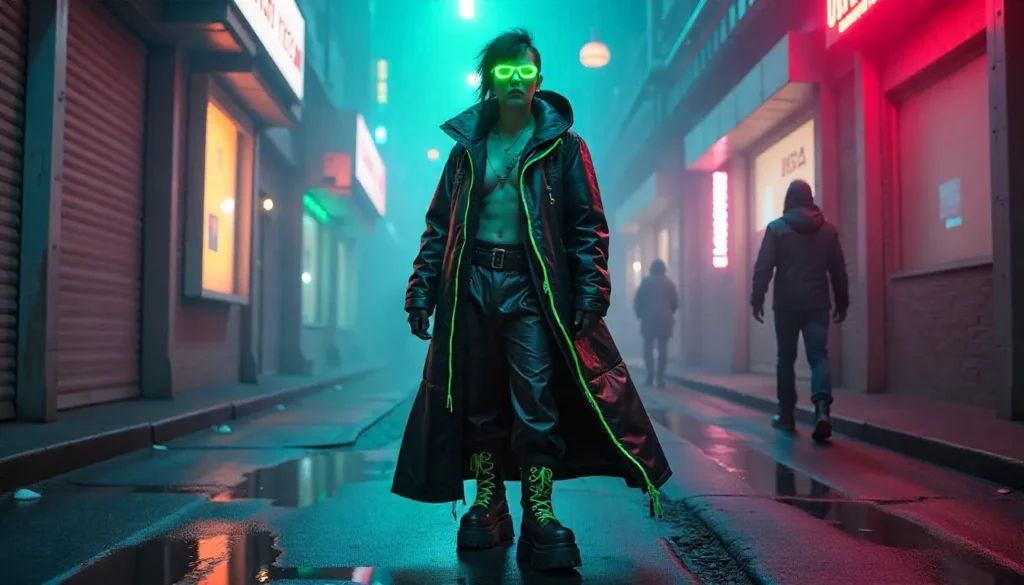
A futuristic and neon-infused take on goth fashion that emerged in the late 90s. It blends traditional goth elements with industrial and rave culture aesthetics.
- Key Features: A base of black clothing contrasted with bright, fluorescent colors (UV-reactive green, pink, blue).
- Clothing: PVC or vinyl clothing, cargo pants, platform boots, and futuristic accessories. Hair is often styled with synthetic dreads (“falls”) in neon colors.
- The Vibe: High-energy, futuristic, and synthetic. It’s a look designed for the dance floor of an industrial club.
- Example Outfit: Black vinyl pants, a black mesh top, a neon green harness, massive platform boots, and goggles worn on the forehead.
Deathrock
Hailing from the American West Coast punk scene, Deathrock is a spookier, more horror-influenced cousin of Trad Goth.
- Key Features: A more theatrical and often androgynous look. Mohawks and “deathhawks” are common hairstyles. Makeup is often stark and skeletal.
- Clothing: Heavily torn and distressed clothing, band shirts (Christian Death, 45 Grave), fishnets, and an abundance of punk-style accessories like safety pins and studs.
- The Vibe: Horror movie camp meets punk rock attitude. It’s spooky, playful, and aggressive.
- Example Outfit: A torn Christian Death t-shirt held together with safety pins, black skinny jeans, a studded belt, and combat boots.
Nu Goth & Strega
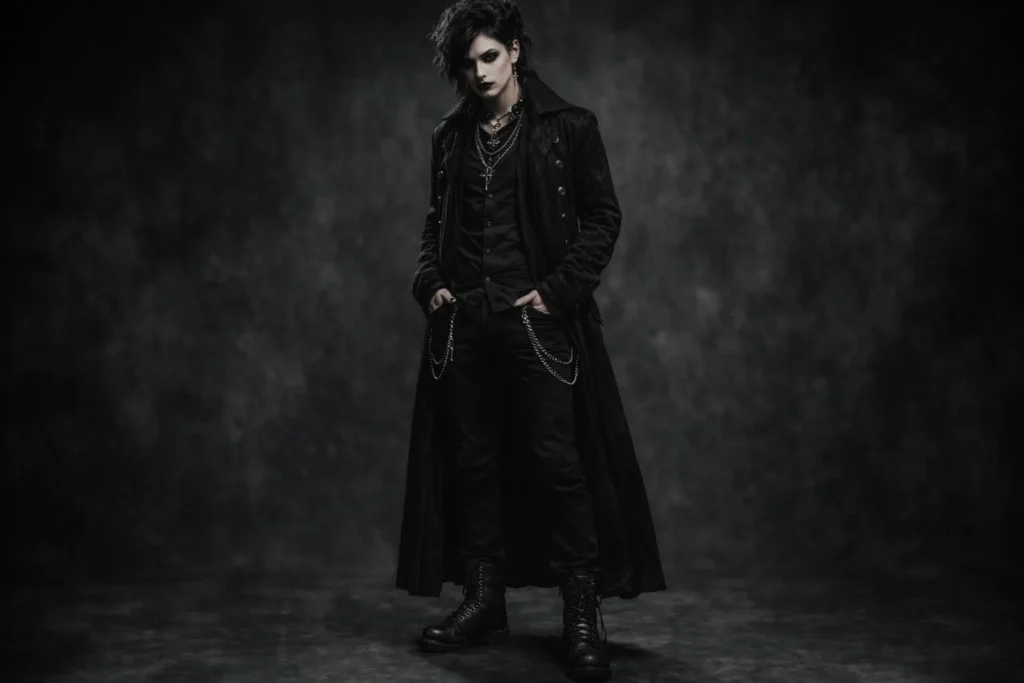
Nu Goth is a modern, minimalist interpretation of goth fashion that has gained popularity through social media. It often incorporates occult and witchy symbols. Strega (Italian for “witch”) is a related style that focuses more on natural, layered, and often asymmetrical clothing.
- Key Features: A monochromatic palette with a focus on interesting shapes and layers. Wide-brimmed hats, harnesses, and occult-themed jewelry are common.
- Clothing: Asymmetrical dresses, long cardigans, leggings, and platform shoes. The silhouette is often relaxed and comfortable yet still dark.
- The Vibe: Modern, witchy, and fashion-forward. It’s an accessible and highly customizable entry point into gothic style.
- Example Outfit: A long, black asymmetrical tunic over leggings, a wide-brimmed black fedora, a leather harness, and chunky platform ankle boots.
Corporate Goth (Corp Goth)
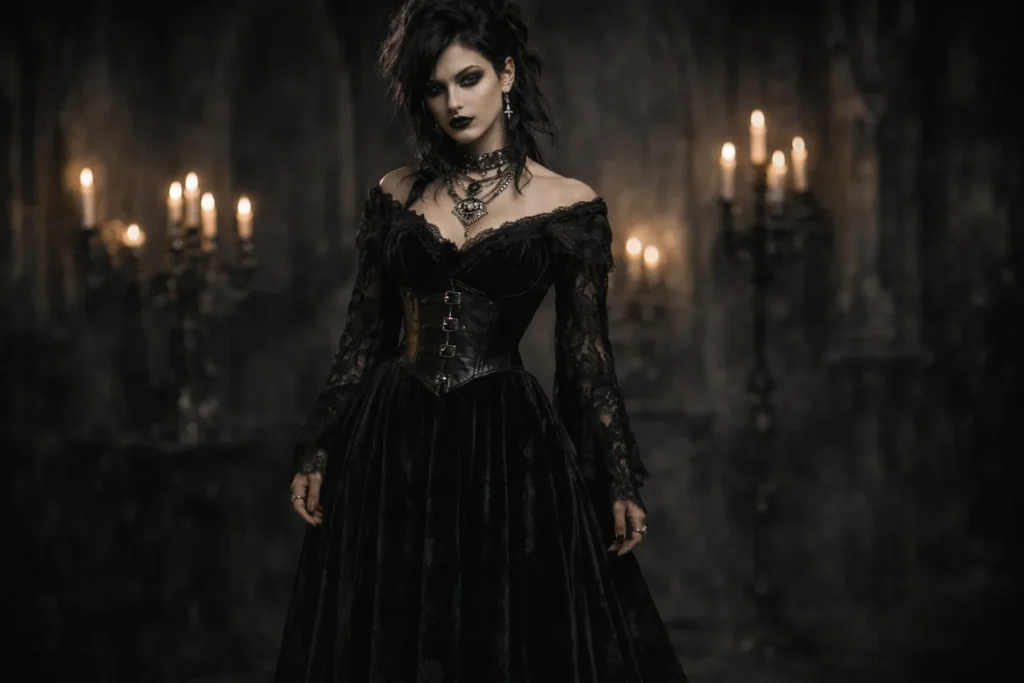
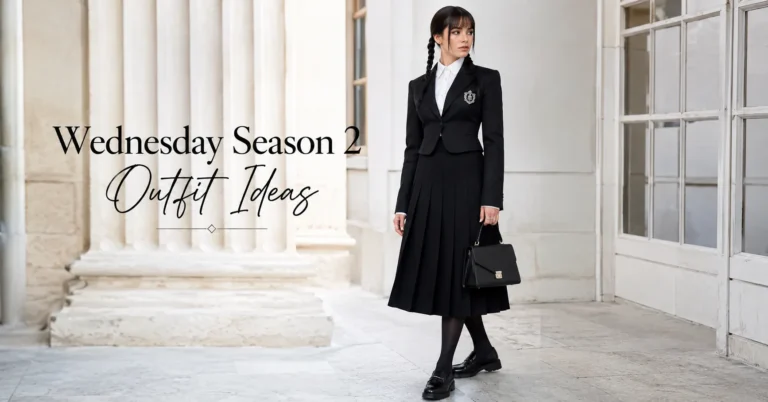
For the goth who needs to navigate a professional environment. This style subtly integrates gothic elements into standard office wear.
- Key Features: A smart, tailored, and professional look that maintains a dark aesthetic.
- Clothing: Black pencil skirts, tailored black trousers, button-down shirts in dark colors, blazers, and simple but elegant silver jewelry. A lace-trimmed camisole under a blazer or a spiderweb-patterned scarf can add a subtle goth touch.
- The Vibe: Professional, sophisticated, and secretly spooky. It’s about expressing your identity within the constraints of a dress code.
- Example Outfit: A sharp black blazer over a dark purple silk blouse, black tailored trousers, and pointed-toe black heels, accented with a silver bat-shaped pin on the lapel.
The Finishing Touches: Accessories, Makeup, and Hair
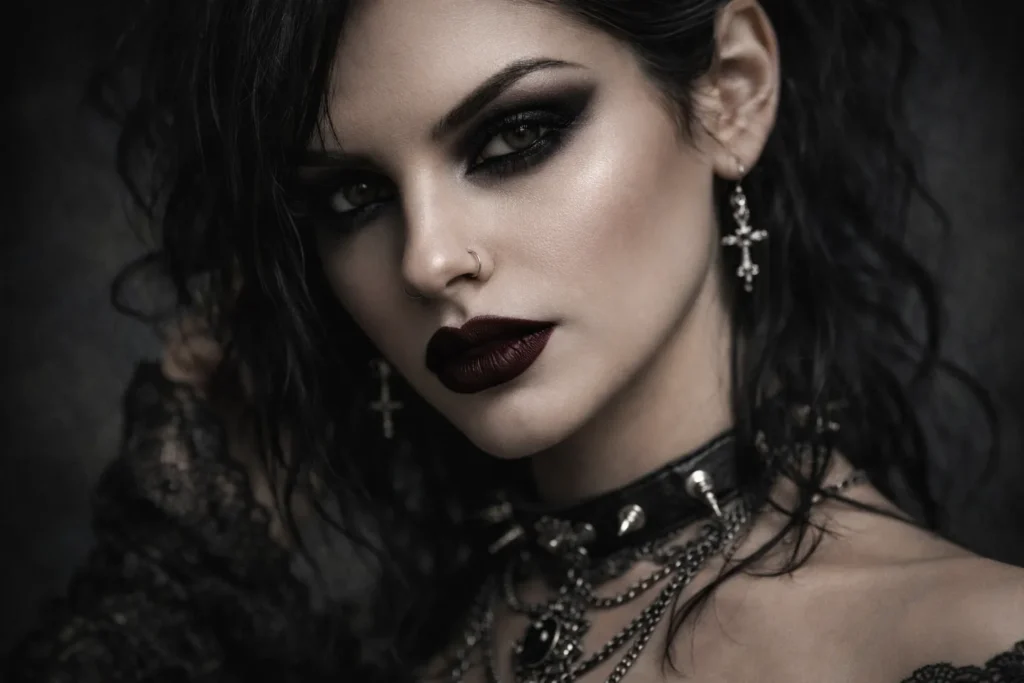
A goth outfit is incomplete without considering the details. Accessories, makeup, and hair are what elevate a collection of black clothes into a true gothic statement.
Essential Goth Accessories
Accessories are where you can truly personalize your look and nod to specific subgenres.
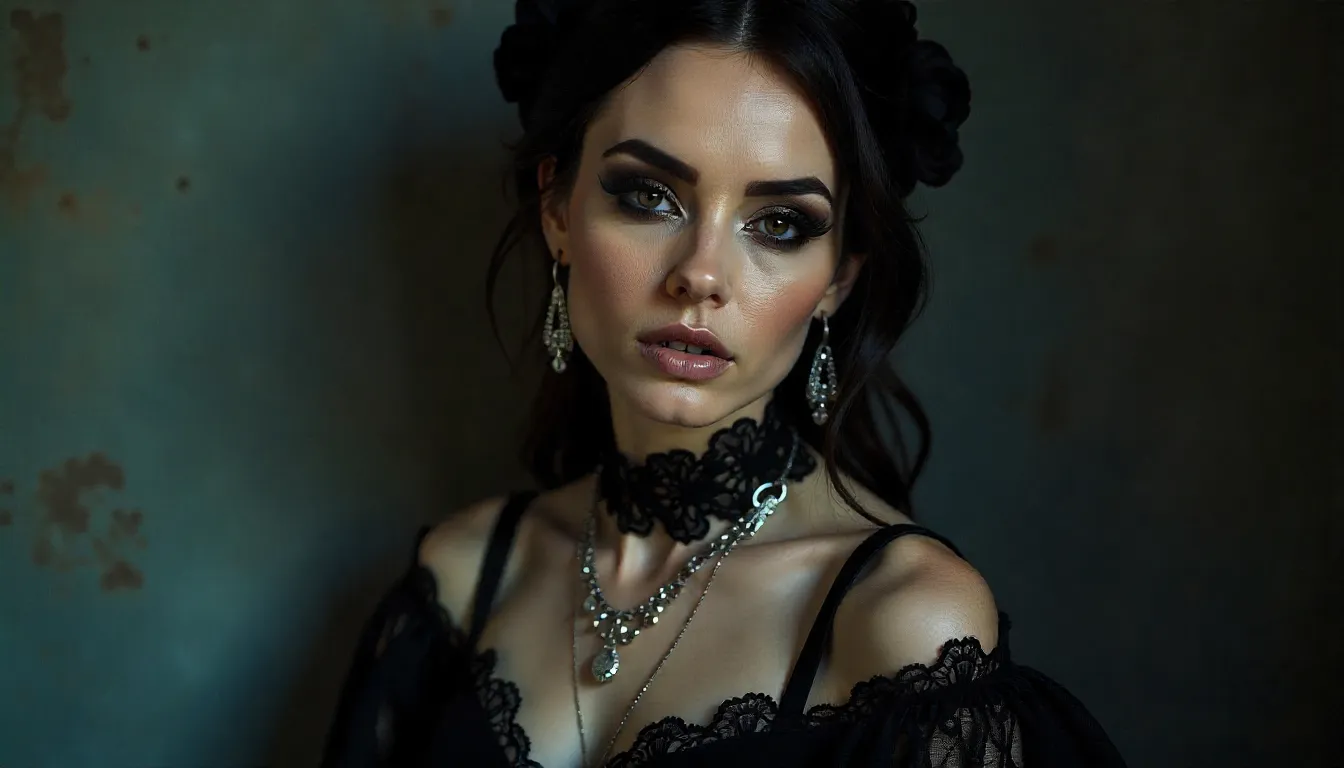
- Jewelry: Silver is the metal of choice. Look for pieces with occult symbols (pentagrams, ankhs), nature motifs (bats, spiders, moons), or religious iconography (crosses, rosaries). Chokers of all kinds—velvet, lace, leather, spiked—are a quintessential accessory.
- Belts: Wide leather belts with large, ornate buckles, studded belts, or harness-style belts can define the waist and add an edge.
- Gloves: From delicate lace gloves to fingerless fishnet or leather gloves, this accessory adds a touch of drama and elegance.
- Bags: Look for bags made of leather or velvet, often adorned with studs, gothic symbols, or shaped like coffins or bats.
- Hats: A wide-brimmed fedora for a Nu Goth look, a Victorian top hat for a formal occasion, or a simple black beanie can complete an outfit.
Iconic Goth Makeup
Gothic makeup is about high contrast and dramatic expression.
- The Base: A pale foundation is traditional, creating a stark canvas. This isn’t about looking sickly, but rather creating a high-contrast look reminiscent of silent film stars or Victorian portraits.
- The Eyes: This is the focal point. Heavy black eyeliner is a must, often drawn in sharp, angular shapes like a cat-eye or more complex, graphic designs. Dark eyeshadows (black, grey, deep red, purple) are blended for a smoky effect.
- The Lips: Dark lipstick is key. Classic choices include matte black, deep blood red, or rich burgundy. A sharply defined lip line is preferred.
- The Eyebrows: Eyebrows are typically thin, arched, and sharply defined to frame the dramatic eye makeup.
Gothic Hairstyles
Hair is another primary mode of expression in the goth subculture.
- Color: Jet black is the classic choice. Deep reds, purples, or stark white/silver are also popular. Cybergoths often opt for bright neon colors.
- The Cut and Style:
- Trad Goth: Big, teased, and backcombed hair, often held in place with a lot of hairspray.
- Deathrock: The “deathhawk,” a wider, teased-out version of a mohawk.
- Romantic Goth: Long, flowing hair, sometimes styled in intricate Victorian updos.
- Modern Styles: Sleek, straight, jet-black hair or a sharp bob are popular in Nu Goth circles.
How to Build Your Goth Wardrobe on a Budget
You don’t need a massive budget to create an amazing goth outfit. The subculture has deep roots in DIY ethics, and creativity is more valued than cost.
- Thrift Stores are Your Best Friend: Second-hand shops are treasure troves for goth staples. Look for black dresses, vintage blouses, leather jackets, and unique accessories. Don’t be afraid to buy something that isn’t perfect—you can modify it.
- DIY (Do It Yourself): This is the heart and soul of punk and goth fashion. Rip up old t-shirts, add safety pins, sew on lace trim, or paint band logos onto a jacket. Dyeing clothes black is an easy way to transform mainstream items.
- Invest in Key Pieces: While you can save on many items, it’s wise to invest in a few high-quality staples that will last. A good pair of boots (like Doc Martens), a well-made corset, or a durable leather jacket can be the foundation of your wardrobe for years.
- Shop Sales: Many alternative fashion brands have seasonal sales. Sign up for newsletters to be notified of discounts.
Conclusion:
Creating the perfect goth outfit is an act of self-discovery and creativity. It’s about more than just a fashion choice; it’s a way to visually express your connection to a rich, artistic subculture that values individualism, history, and a darker sensibility.
Start by exploring the different subgenres to see what resonates with you. Begin building your wardrobe with a few essential pieces and then personalize your look with unique accessories, makeup, and hairstyles. Whether you are drawn to the romantic elegance of Victorian Goth, the raw energy of Deathrock, or the modern minimalism of Nu Goth, the most important rule is to wear what makes you feel authentic and empowered. Your goth outfit is your armor, your art, and your statement to the world.
Frequently Asked Questions (FAQs)
Q1: Do I have to listen to goth music to wear goth outfits?
A1: While the fashion is intrinsically linked to the music scene, there’s no gatekeeping. However, exploring the music (Bauhaus, The Cure, Sisters of Mercy, Siouxsie and the Banshees) will give you a deeper appreciation and understanding of the subculture’s roots and context.
Q2: Can I wear colors other than black in a goth outfit?
A2: Absolutely! While black is the foundation, colors like deep red, purple, forest green, and white are frequently used to add contrast and personality. Cybergoth styles even incorporate bright neon colors. The key is maintaining a dark, cohesive aesthetic.
Q3: What’s the difference between goth and emo?
A3: Though both are alternative subcultures, they have different origins and aesthetics. Goth emerged from the 80s post-punk scene and focuses on darker, more romantic, or spooky themes. Emo evolved from the 90s hardcore punk scene and is often associated with more emotionally expressive lyrics, with a fashion style that typically includes skinny jeans, band t-shirts, and side-swept bangs.
Q4: How can I create a goth look for work or school?
A4: This is where “Corporate Goth” or “Casual Goth” styles come in. Integrate gothic elements subtly. Wear a black blazer, a dark-colored blouse, or a pencil skirt. Use accessories like a spiderweb-print scarf, a bat-shaped lapel pin, or a silver ankh necklace to add a personal touch without violating a dress code.
Q5: Where can I buy goth clothing?
A5: You can find goth clothing at specialty alternative fashion stores online (like Killstar, Dolls Kill, or Disturbia), on marketplaces like Etsy for unique handmade items, and, most importantly, in thrift and vintage stores for budget-friendly and authentic finds.