Stovepipe Jeans Explained: Powerful Fashion Tips & Outfit Ideas
Denim shopping gets confusing fast. Skinny, straight, slim, tapered, wide, and everything between all promise a flattering fit, yet few deliver a clean, versatile line. That is exactly where stovepipe jeans come in. This straight, narrow cut sits somewhere between skinny and classic straight-leg jeans, giving you a sleek shape without the tightness. If you have been searching for a denim style that works across seasons, body types, and occasions, this guide will help you understand why stovepipe jeans deserve a spot in your wardrobe.
We will cover what makes this cut special, how it compares to other denim styles, and how to style jeans like these for real life. By the end, you will know how to choose, wear, and love your pair.
What Are Stovepipe Jeans?
Stovepipe jeans take their name from an old-fashioned stove chimney: straight, narrow, and uniform from top to bottom. The leg runs in a clean, consistent line from the knee to the ankle, without the taper of a slim cut or the flare of a bootcut.
Think of them as the middle ground in denim. They hug your shape a little more than a true straight-leg but never cling like skinny jeans. That balance is the whole appeal.
Here is what defines the cut:
- Straight, uniform leg from hip to hem
- Narrow but not tight fit through the thigh
- A clean vertical line that lengthens the legs
- Ankle-grazing or full-length hem options
The result is a shape that reads as polished and modern. It flatters without effort, which is a big reason the cut keeps returning across denim trends.
Where the Name Comes From
The term borrows directly from the tall, straight metal pipes once used to vent wood stoves. Those pipes were slim and columnar, with no bends or bulges.
Denim makers used the word to describe trousers with the same clean, straight silhouette. The name stuck because it captures the look so precisely. A good pair of stovepipe jeans really does fall in one smooth line.
Stovepipe Jeans vs. Other Denim Cuts

Denim terms overlap a lot, and that causes plenty of confusion at the store. Knowing how stovepipe jeans differ from similar cuts helps you shop with confidence.
The key difference lies in the leg width and how it changes from knee to ankle. Skinny jeans taper hard. Straight-leg jeans stay wide and boxy. Stovepipe jeans sit right between them, offering a slim column that never narrows too much.
Here is a quick comparison:
| Denim Cut | Thigh Fit | Leg Shape | Best Known For |
| Skinny | Very tight | Tapers to ankle | Body-hugging look |
| Slim | Fitted | Slight taper | Modern, close fit |
| Stovepipe | Narrow, easy | Straight column | Clean, sleek line |
| Straight-leg | Relaxed | Wide, boxy | Classic, casual feel |
| Bootcut | Fitted | Flares at hem | Balancing curves |
| Wide-leg | Loose | Very wide | Bold, relaxed style |
As the table shows, stovepipe jeans offer a rare mix of slimness and ease. They give you a tailored look without the restrictive feel of skinny denim.
Stovepipe vs. Straight-Leg Jeans
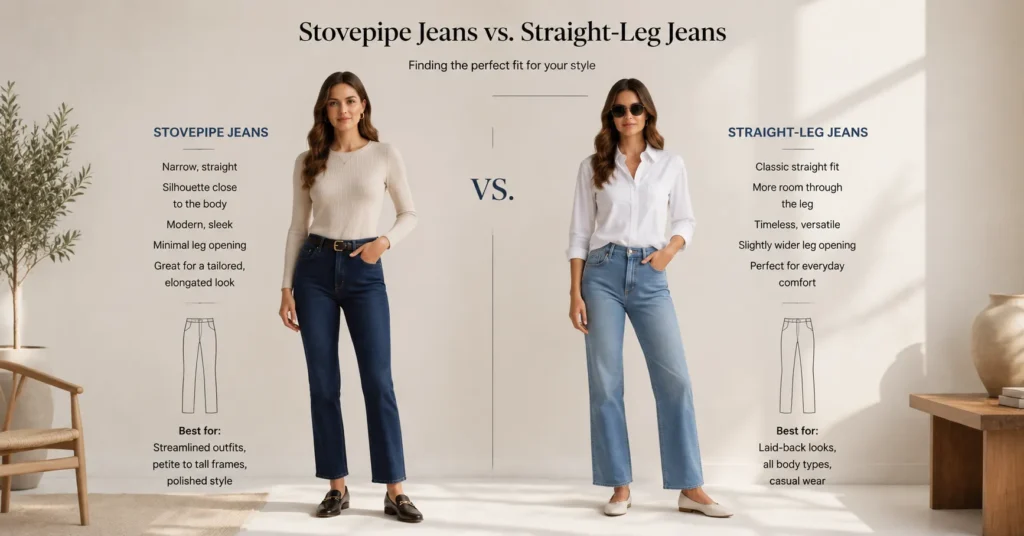
People often mix these two up, and it is easy to see why. Both keep a straight line down the leg. The difference is in the width.
Straight-leg jeans tend to run wider and more relaxed, especially through the thigh and calf. Stovepipe jeans stay narrower and closer to the body, creating a leaner silhouette. If you want a slimmer version of the classic straight cut, stovepipe is your answer.
Stovepipe vs. Skinny Jeans

Skinny jeans cling from waist to ankle, often with plenty of stretch. They show every line of the leg.
Stovepipe jeans skim instead of grip. They still look slim, but they leave room to move and breathe. For anyone who loves the sleek look of skinny denim but hates the tight feel, this cut is a comfortable upgrade.
Why Stovepipe Jeans Are So Popular
Trends shift fast in fashion, yet some cuts keep coming back. Stovepipe jeans are one of them, and the reasons are practical as much as stylish.
First, the clean line flatters nearly everyone. Second, the fit balances comfort and structure. Third, the style pairs with almost anything, from sneakers to heels. That versatility makes them a smart wardrobe investment.
A few standout benefits:
- Timeless appeal that survives passing denim trends
- Leg-lengthening effect thanks to the straight line
- Easy styling with tops, shoes, and layers of all kinds
- Comfort that skinny jeans simply cannot match
When a single pair works for the office, the weekend, and a night out, it earns its place. That is the quiet strength of stovepipe jeans.
A Brief History of the Stovepipe Cut
The straight, narrow trouser has roots that stretch back well beyond modern denim. Slim, columnar legs appeared in menswear long before jeans became everyday wear.
In the denim world, the cut gained traction as an alternative to both boxy classics and skin-tight styles. It offered a cleaner, more refined line that suited both casual and dressed-up looks. Over the decades, it has cycled in and out of the spotlight, always returning when minimal, tailored shapes come back in style.
Today, stovepipe jeans sit comfortably alongside vintage jeans and modern cuts. They carry a retro edge while feeling completely current, which explains their lasting popularity in women’s denim and menswear alike.
How to Choose the Right Pair of Stovepipe Jeans

Buying denim online or in-store can feel like a gamble. The right pair depends on fit, rise, fabric, and length. Get those four right, and your stovepipe jeans will feel made for you.
Start with the rise, since it shapes the whole look. Then consider the fabric, which affects both comfort and structure. Finally, check the length, as the clean line depends on a good hem.
Pick the Right Rise
Rise refers to how high the waistband sits. It changes both comfort and proportion.
- High-waist jeans elongate the legs and define the waist
- Mid-rise offers a balanced, everyday fit
- Low-rise creates a relaxed, retro vibe
High-waist stovepipe jeans are especially popular. The raised waistband pairs beautifully with the straight leg to create a long, lean line.
Choose the Right Fabric
Fabric decides how the jeans hold their shape and how they feel all day. This is where many people go wrong.
Rigid or lightly stretched denim keeps that crisp, straight stovepipe line best. Heavy stretch can soften the shape and cause bagging over time. Look for a fabric with a touch of stretch for comfort but enough structure to stay sharp.
Get the Length Right
Length makes or breaks the clean silhouette. Because the cut relies on a straight line, the hem matters more than usual.
- Full-length for a classic, elongated look
- Ankle-length to show off shoes and add a modern touch
- Cropped for a fresh, casual feel
When in doubt, a slight break at the ankle suits most heights. A quick tailor visit can perfect the hem if needed.
Here is a simple fit checklist:
| Factor | What to Look For | Why It Matters |
| Rise | High or mid for most | Shapes proportion |
| Fabric | Structured with slight stretch | Keeps the clean line |
| Thigh fit | Narrow, not tight | Defines the silhouette |
| Length | Full or ankle | Completes the look |
Best Stovepipe Jeans for Your Body Type

A common myth says only tall, slim people can wear this cut. That is simply untrue. The right styling makes stovepipe jeans flattering across body types. The trick is matching the rise, length, and top to your shape.
The straight column of the leg naturally lengthens and balances. From there, small adjustments tailor the look to you.
Here is a quick guide:
| Body Type | Best Rise | Styling Tip |
| Petite | High-waist | Choose ankle length to elongate legs |
| Curvy | High-waist, structured | Pair with a fitted or tucked top |
| Athletic | Mid to high | Add a flowy top for softness |
| Tall | Any rise | Lean into full-length for balance |
| Pear-shaped | High-waist | Draw the eye up with statement tops |
For Petite Figures
Petite frames benefit most from a high waist and a slightly cropped hem. This combination stretches the legs and avoids overwhelming a shorter frame.
Pair your stovepipe jeans with a tucked top and pointed shoes to add even more length. Vertical lines are your friend here.
For Curvy Shapes
Curvy figures look great in structured stovepipe jeans with a high rise. The narrow leg balances fuller hips while the raised waist defines the middle.
Choose denim with a little stretch for comfort over the hips, but keep enough structure to hold the shape. A fitted top completes the flattering line.
For Athletic Builds
An athletic build pairs well with a mid-to-high rise and a softer top. The clean leg line adds shape, while a flowy blouse or knit brings gentle contrast.
This mix keeps the look balanced and feminine without hiding the sleek silhouette that makes the cut so appealing.
How to Style Stovepipe Jeans
The best part of this cut is how flexible it is. A single pair of stovepipe jeans can shift from casual to polished with a quick change of top and shoes. That range is what makes them worth owning.
Think of the jeans as a clean base. Because the line is so simple, almost any top works. The shoes then set the mood, from relaxed to refined.
Casual Everyday Looks

For daily wear, keep it easy. Stovepipe jeans with a simple tee and sneakers make a reliable, comfortable outfit.
Try these casual combinations:
- White tee, stovepipe jeans, white sneakers
- Striped top, denim jacket, ankle boots
- Chunky knit, stovepipe jeans, loafers
Roll the hem or add a belt for small tweaks that freshen the look.
Smart-Casual and Office Style

Stovepipe jeans dress up more easily than most denim. The clean line reads as tidy, which suits smart-casual settings.
Pair them with a tailored blazer, a crisp shirt, and loafers or heeled boots. Tuck in the top to define your waist and keep the silhouette sharp. This is one of the easiest jeans outfit ideas for a modern office.
Evening and Dressed-Up Looks

For evenings, lean into contrast. A silky top, statement heels, and simple jewelry turn stovepipe jeans into a going-out outfit.
Dark-wash denim works best here, since it feels dressier and more refined. Add a structured bag and you are ready for dinner or drinks.
Here is a quick styling cheat sheet:
| Setting | Top | Shoes | Wash |
| Casual | Tee or knit | Sneakers | Light or medium |
| Smart-casual | Blazer, shirt | Loafers | Medium or dark |
| Evening | Silky top | Heels | Dark |
| Weekend | Sweater | Ankle boots | Any |
Stovepipe Jeans Through the Seasons
One reason this cut earns its keep is how well it adapts year-round. The same pair shifts with the seasons through simple layering and shoe swaps. That flexibility makes stovepipe jeans a true wardrobe staple.
Let us look at how to wear them across the calendar.
Spring

Spring calls for light layers. Pair your stovepipe jeans with a light knit or a denim jacket and clean white sneakers. Roll the hem slightly for a fresh, easy feel.
Summer

In warm weather, keep it airy. A linen shirt or a simple tank with ankle-length stovepipe jeans and sandals stays cool and sleek. Lighter washes suit the season best.
Autumn
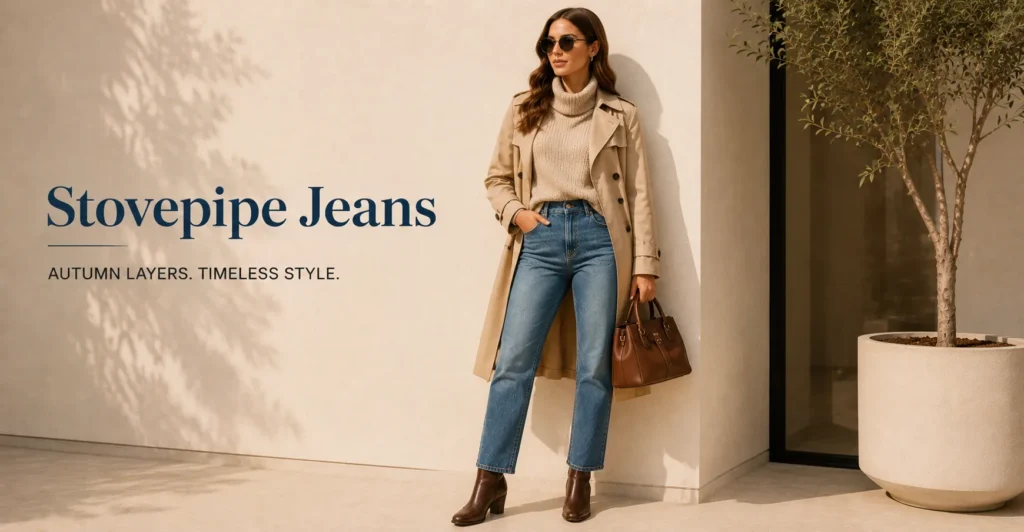
Autumn is prime denim season. Layer a chunky sweater or a trench over your jeans and finish with ankle boots. Medium and dark washes feel right for the cooler months.
Winter
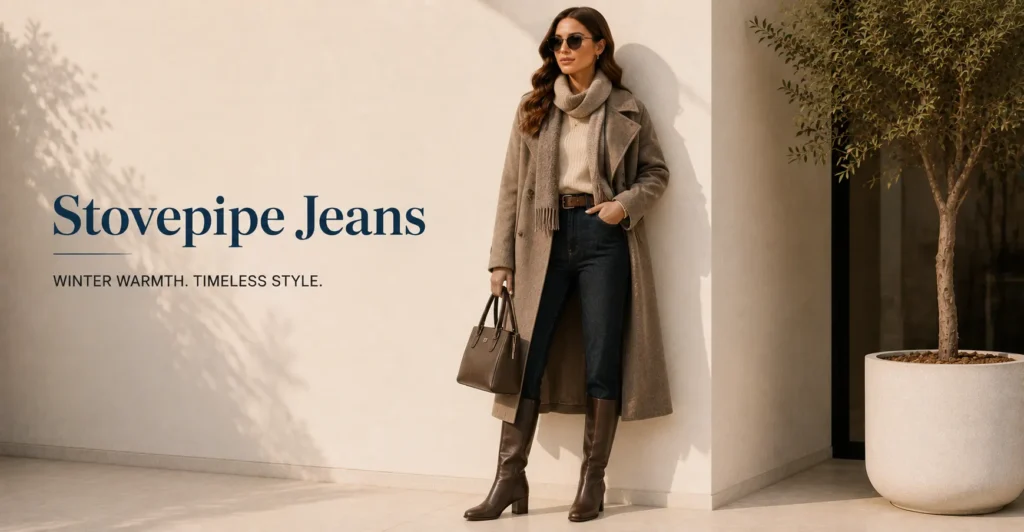
For winter, focus on warmth without losing the clean line. Tuck stovepipe jeans into tall boots and add a wool coat and a cozy knit. Dark denim pairs beautifully with heavier layers.
Here is a seasonal outfit guide:
| Season | Layer | Footwear | Best Wash |
| Spring | Light knit, denim jacket | Sneakers | Light |
| Summer | Linen shirt, tank | Sandals | Light |
| Autumn | Sweater, trench | Ankle boots | Medium/dark |
| Winter | Wool coat, knit | Tall boots | Dark |
Choosing the Right Wash and Color

Wash and color change the whole feel of your stovepipe jeans. The same cut can look casual or refined depending on the shade you pick.
Lighter washes feel relaxed and summery. Darker washes read as dressier and more versatile. Black and off-white offer bold alternatives that stretch your styling options.
Popular options worth considering:
- Dark indigo for a polished, dress-up-friendly look
- Medium blue for everyday, all-purpose wear
- Light wash for a casual, retro feel
- Black for a sleek, modern edge
- White or cream for a fresh, statement piece
If you want maximum versatility, start with a dark or medium wash. Those pair with the widest range of outfits and settings.
Caring for Your Stovepipe Jeans
Good denim lasts for years with the right care. Neglect it, and even a great pair fades, stretches, or loses its shape. A few simple habits keep your stovepipe jeans looking sharp.
Washing is where most damage happens. Frequent hot washes fade the color and break down the fibers faster.
Follow these care tips:
- Wash less often to preserve color and fit
- Turn jeans inside out before washing to protect the wash
- Use cold water and a gentle cycle
- Air dry instead of using high heat
- Spot clean small marks between washes
These small steps protect the fabric and keep that clean stovepipe line crisp. Treated well, a quality pair becomes a long-term favorite.
Common Styling Mistakes to Avoid
Even a flattering cut can fall flat with a few missteps. Knowing what to avoid keeps your stovepipe jeans looking their best.
Watch out for these common errors:
- Wrong length: a hem that pools breaks the clean line
- Too much stretch: loose denim bags out and loses shape
- Ignoring rise: the wrong rise throws off your proportions
- Overly baggy tops: they hide the sleek silhouette
- Mismatched shoes: clunky footwear can shorten the leg
When in doubt, keep it simple. The strength of stovepipe jeans is their clean shape, so let that line do the work.
Real Outfit Examples to Copy
Sometimes the fastest way to start is to copy a look you love. Here are five complete outfits built around stovepipe jeans, ready to recreate.
Outfit 1 – The Everyday Classic
Dark stovepipe jeans, white tee, denim jacket, white sneakers. Simple, comfortable, and always right.
Outfit 2 – The Office Edit
Medium-wash stovepipe jeans, tucked shirt, tailored blazer, loafers. Polished enough for work.
Outfit 3 – The Evening Look
Black stovepipe jeans, silky cami, strappy heels, small clutch. Sleek and confident for a night out.
Outfit 4 – The Cozy Weekend
Light stovepipe jeans, chunky knit, ankle boots. Relaxed but put-together.
Outfit 5 – The Fresh Summer Fit
Cream stovepipe jeans, linen shirt, flat sandals, straw bag. Cool and breezy for warm days.
Each look uses the same clean base in different ways. That flexibility is the whole point of the cut.
Why Stovepipe Jeans Are Worth the Investment
Trends come and go, but a flattering, versatile pair of jeans always earns its place. Stovepipe jeans deliver on both fronts. The clean line suits nearly everyone, and the cut moves easily between casual and dressy settings.
There is a practical payoff too. When one pair works across seasons, occasions, and outfits, you buy less and wear more. That saves money and simplifies getting dressed.
Beyond function, the style carries a quiet confidence. The sleek, tailored line looks considered without any fuss. That mix of ease and elegance is exactly why stovepipe jeans remain a lasting favorite in women’s denim and beyond.
Conclusion
Choosing the right stovepipe jeans comes down to a few clear ideas. Pick a rise that flatters your shape. Choose structured denim that holds the clean line. Get the length right, and keep your styling simple so the silhouette stands out.
The beauty of this cut is its range. It bridges skinny and straight-leg jeans, offering a slim look with real comfort. From casual weekends to polished office days, one good pair covers a lot of ground.
Start simple. Find a dark or medium wash in a high-waist fit, learn a few go-to outfits, and build from there. Before long, your stovepipe jeans will feel like the most reliable piece in your closet.
Frequently Asked Questions about Stovepipe Jeans
What are stovepipe jeans?
Stovepipe jeans are a straight, narrow denim cut that runs in a clean, uniform line from hip to hem. They sit between skinny and straight-leg jeans, offering a slim look without the tight feel of skinny denim.
How are stovepipe jeans different from straight-leg jeans?
Both keep a straight line, but stovepipe jeans run narrower and closer to the body. Straight-leg jeans tend to be wider and more relaxed through the thigh and calf, while stovepipe creates a leaner silhouette.
Are stovepipe jeans flattering on all body types?
Yes. The straight column naturally lengthens and balances the legs. With the right rise and length, stovepipe jeans flatter petite, curvy, athletic, and tall figures alike. High-waist versions suit most shapes especially well.
What is the best rise for stovepipe jeans?
High-waist jeans are a popular choice because they elongate the legs and define the waist. Mid-rise works well for everyday comfort. The best rise depends on your body type and the proportion you want to create.
How should I style stovepipe jeans for the office?
Pair them with a tucked shirt, a tailored blazer, and loafers or heeled boots. A medium or dark wash reads as tidy and refined, making this one of the easiest smart-casual jeans outfit ideas.
What shoes go best with stovepipe jeans?
Sneakers keep them casual, loafers and ankle boots add polish, and heels dress them up for evenings. Avoid clunky footwear that can shorten the leg line and disrupt the clean silhouette.
What wash should I choose for the most versatile pair?
Start with a dark or medium wash. Dark indigo pairs easily with dressier outfits, while medium blue works for everyday wear. Both suit the widest range of settings and denim styles.
How do I keep stovepipe jeans in good shape?
Wash them less often, turn them inside out, use cold water, and air dry. These habits protect the color and keep the clean, straight line crisp for years.
Can stovepipe jeans be worn year-round?
Absolutely, Pair them with light knits and sneakers in spring, linen tops and sandals in summer, sweaters and ankle boots in autumn, and wool coats with tall boots in winter. The cut adapts to every season.
Are stovepipe jeans the same as vintage jeans?
Not exactly, though they share a retro edge. Stovepipe jeans have appeared across many denim trends and carry a classic, tailored feel. They sit comfortably alongside vintage jeans while looking completely current.